| # | Product | Our Rating | ||
|---|---|---|---|---|
| 1 |  | Best OverallREDMOND Goat Mineral Supplement (5 lb) | ★★★★★ | Check Price |
| 2 |  | Wholesome Harvest 16% Goat Feed (10 lb) | ★★★★☆ | Check Price |
| 3 |  | Manna Pro Goat Treats | ★★★★☆ | Check Price |
Search “is cabbage poisonous to goats” and you will find owners talking each other into a panic over a vegetable that is mostly harmless. The confusion is understandable, because the risk that does exist has almost nothing to do with the word poison.
Cabbage will not toxify your herd the way a nightshade plant can. What it can do, if you hand over half a head at once, is set off a digestive problem that moves fast.
This guide walks through the actual mechanism, the right portion for each goat, and the few cabbage forms you should never put in the feeder.
Can goats eat cabbage?
Yes, goats can eat cabbage, and most of them go after it with real enthusiasm. It sits in the “safe in moderation” tier alongside carrots and squash, nowhere near the danger zone with onions or avocado.
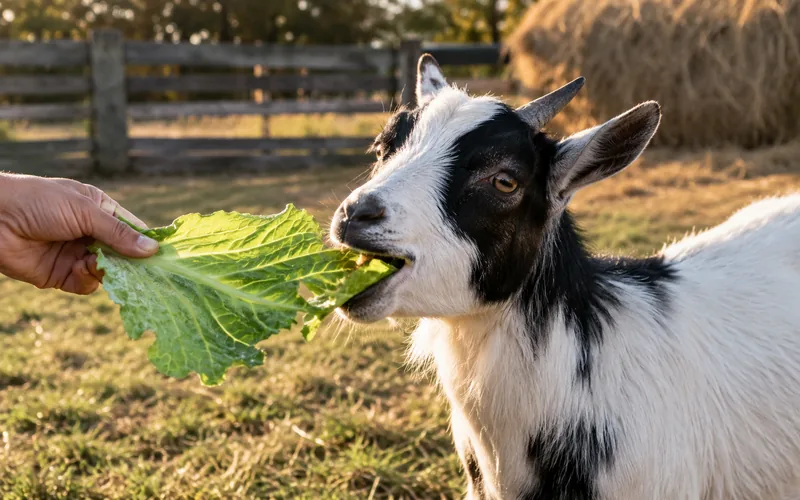
Goats are ruminants, which means a population of microbes in the rumen ferments fibrous plant material before the rest of the digestive tract ever sees it. That system copes well with leafy greens, so a few cabbage leaves rarely cause any trouble at all.
The catch is quantity. A goat that has never met cabbage can handle a couple of leaves easily, but a goat that raids a garden row and eats a full head is a different story.
What cabbage adds to a goat’s diet
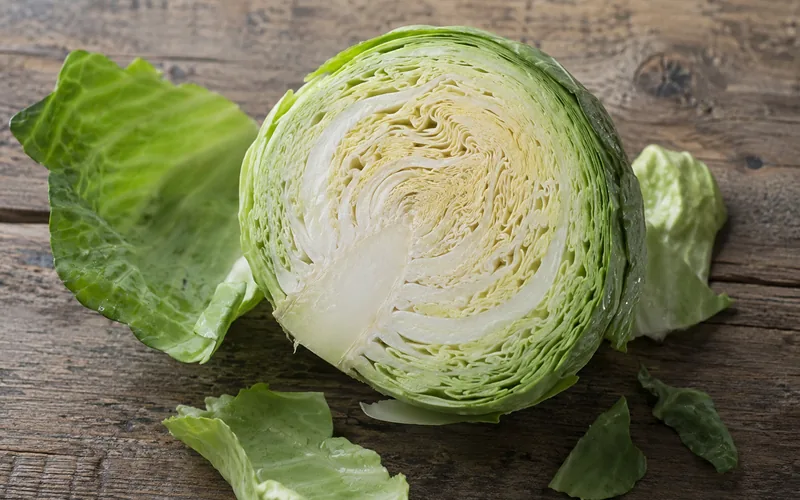
Cabbage is a low-calorie, water-rich vegetable that delivers a genuine nutritional bump on top of a forage diet. It carries vitamin C, vitamin K, folate, and potassium, plus a modest amount of fiber that goats digest without issue.
None of that makes cabbage a staple, and it should not try to be one. Hay and browse supply the long fiber a goat’s gut is built around, and cabbage is best treated as a supplement that adds variety and a few extra micronutrients.
It also behaves very differently from a scoop of grain. Grain is energy-dense and dangerously easy to overfeed, while cabbage is mostly water and fiber, so it scratches the treat itch without the same risk of tipping the rumen into acidosis.
This is worth keeping in perspective. Goats are intermediate browsers that can eat up to 6.5 percent of their body weight in dry matter each day, according to the Merck Veterinary Manual, and the bulk of that intake should come from hay, pasture, and browse rather than treats.
Think of cabbage the way you’d think of a snack for yourself. Pleasant, useful in small doses, and no substitute for a real meal.
The real risk is bloat, not poisoning
Cabbage is not toxic to goats, and true poisoning is rare. The real hazard is bloat, a fast-moving digestive emergency that follows eating too much at once.
The scary search results about cabbage almost always circle back to one condition, and it isn’t poisoning. It’s bloat, a digestive emergency that follows eating too much of a gas-producing food too fast.
Bloat comes in two forms, frothy (primary) and free-gas (secondary), as the Merck Veterinary Manual explains. Cabbage is linked to the frothy kind, where fermentation gas gets trapped in a stubborn foam the goat cannot belch out.
How glucosinolates trigger bloat
Cabbage belongs to the Brassica family, the same group that includes kale, broccoli, and Brussels sprouts. Every plant in that family contains sulfur compounds called glucosinolates.
When rumen microbes ferment those compounds, the process releases gas quickly. In a small serving the goat simply burps the gas away, but a large brassica load can generate foam faster than the animal can clear it.
Glucosinolate levels vary across the family, and cauliflower sits at the mild end with a lower load than cabbage carries.
That fermentation speed is exactly why brassicas earn caution. The Merck Veterinary Manual lists rape, kale, and turnips among the crops known to bring on frothy bloat in ruminants, and cabbage sits in that same botanical neighborhood.
The classic bloat case is not careful feeding at all. It is a goat that noses open a gate, finds the vegetable patch, and eats several heads before anyone notices, exactly the sudden brassica overload the rumen cannot keep pace with.
What a bloated goat looks like
Frothy bloat is an overdistention of the rumen with gas caught in foam, and the outward signs are hard to miss once you know them. The left side of the abdomen swells and feels tight, like a drum.
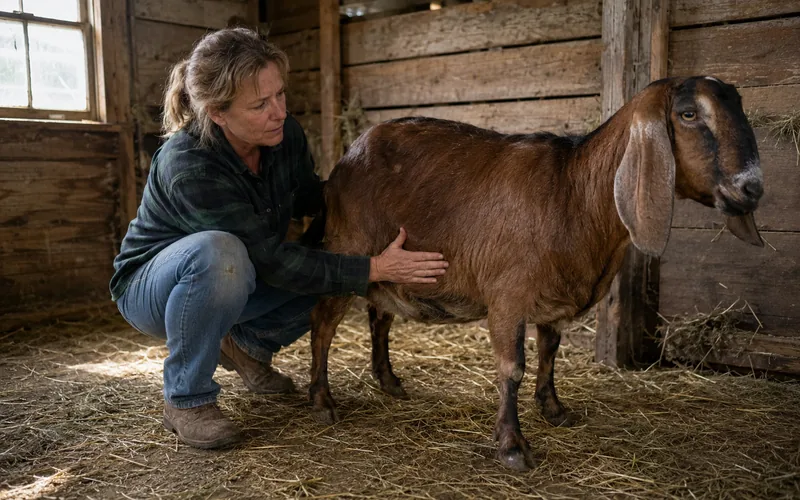
A bloated goat often goes off its food, paces or drops down again and again, grinds its teeth, drools, and breathes with visible effort. In a bad case that pressure pushes on the lungs, and the animal struggles for air.
This is a same-day emergency, not a wait-and-see situation. If the belly stays distended and the goat is in distress, call your vet, because severe bloat can be fatal within hours.
Cabbage, iodine, and the thyroid
There is a slower, less dramatic reason to keep cabbage occasional. In consistently high amounts, glucosinolates act as goitrogens, meaning they interfere with the thyroid’s ability to take up iodine.
A goat nibbling cabbage twice a week is nowhere near that threshold. The concern only becomes real if brassicas make up a large, daily share of the diet over weeks, which is one more argument for treating cabbage as a rotation item rather than a fixture.
How cabbage compares to other brassicas
Not every brassica carries the same risk, and cabbage happens to sit near the safer end. Its loose, watery leaves have a lower glucosinolate density per bite than the tight florets and buds of its cousins.
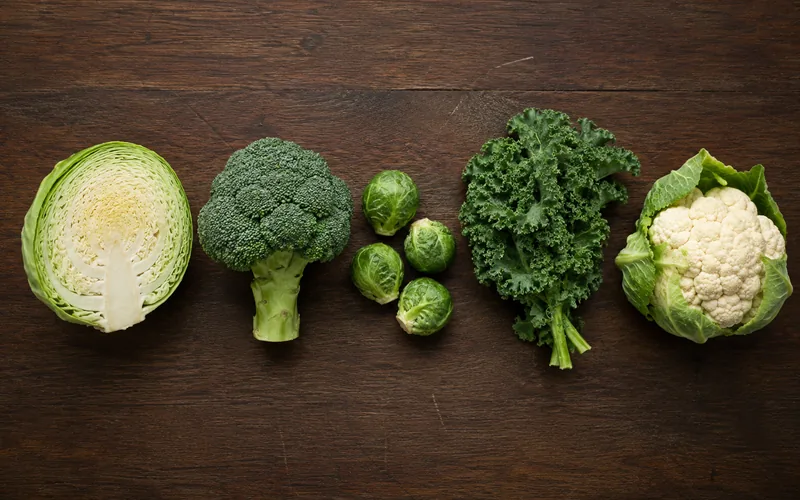
That difference matters when you are deciding portions. A denser brassica packs more gas-forming compounds into the same mouthful, so it calls for a smaller serving.
| Brassica | Relative glucosinolate load | Practical caution |
|---|---|---|
| Cabbage leaves | Lower | Safest everyday option, still limit portions |
| Cauliflower | Moderate | Denser head, feed smaller amounts |
| Broccoli | Moderate to high | Florets are concentrated, treat sparingly |
| Kale | High | Rich in glucosinolates, best in small doses |
| Brussels sprouts | Highest | Very dense, the tightest portion control |
If your goats already get other members of this family, factor that in. The same herd that gets a handful of Brussels sprouts as a treat does not also need a big cabbage serving on the same day, since the glucosinolate load stacks up.
Can goats eat cabbage and broccoli?
Yes, but treat the two as a single brassica serving rather than two separate treats. Because broccoli packs a heavier glucosinolate load than cabbage, pairing them on the same day stacks the gas-forming compounds, so keep the combined portion small.
Which types of cabbage are safe
In short, every common cabbage variety is goat-safe. Green, red, napa, and savoy differ only slightly in texture and pigment.
Good news for anyone with a garden or a produce aisle nearby. Every common cabbage variety is safe for goats, with only minor differences between them.
Green, red, napa, and savoy
Green cabbage, red cabbage, napa, and savoy are all fine to feed. Red cabbage carries extra anthocyanin pigments and a slightly different compound profile, but nothing that changes how you should serve it.
Napa and savoy have looser, more tender leaves that many goats find easier to tear into. Whichever variety you have on hand, the moderation rule stays the same.
Leaves versus the dense head
Most goats will pick the loose outer leaves first and leave the packed inner core for last. Those outer leaves are also the part you are most likely to have spare, since they get stripped off before a head hits the kitchen.
The dense inner head isn’t dangerous, but it ferments just as readily as the rest. If you feed the core, count it toward the daily portion rather than treating it as a freebie.
Can goats eat cabbage seeds?
Cabbage seeds are best skipped. Brassica seeds concentrate glucosinolates far more tightly than the leaves do, so even a small quantity delivers a disproportionate dose of the gas-forming compounds.
There’s no nutritional reason to bother with them. Stick to leaves and heads, and let a bolted or seeding cabbage plant go to the compost instead of the feeder.
How much cabbage to feed
A sensible ceiling for a full-grown goat is a few loose leaves, roughly a cup or two of chopped cabbage, at any one sitting. That is enough to be a real treat without swamping the rumen.
Frequency matters as much as size. Two or three servings a week is plenty, and cabbage should never crowd out the hay, pasture, or browse that anchors the diet.
A useful frame is the ten percent rule that guides most treat feeding. Cabbage and every other snack combined should stay under roughly a tenth of daily intake, which for a standard doe eating several pounds of forage leaves room for a modest handful, not a whole head.
Introduce it gradually with any goat that has not had it before. Offer a leaf or two, wait a day, and watch for a tight belly or off behavior before you scale up.
Cabbage for kids, pregnant, and nursing does
Young kids shouldn’t get cabbage at all. Their rumen is still developing in those first weeks and months, and it isn’t equipped to handle a fermenting brassica load, so keep them on milk, hay, and starter feed.
Pregnant and nursing does can have cabbage in small amounts, but their real dietary priority is quality forage. A doe in late gestation or heavy milk benefits far more from good alfalfa hay and minerals than from a pile of vegetable treats.
How to prepare and serve cabbage
Here’s what matters most: serve cabbage raw, plain, rinsed, and sized to the goat.
Preparation is refreshingly simple. Quarter a head, or toss in a handful of clean outer leaves, and the goats do the rest with no chopping required for adults.
Raw, plain, and rinsed
Always feed cabbage raw and plain. Cooked cabbage, and anything dressed with salt, butter, oil, or seasoning, doesn’t belong anywhere near a goat’s diet.
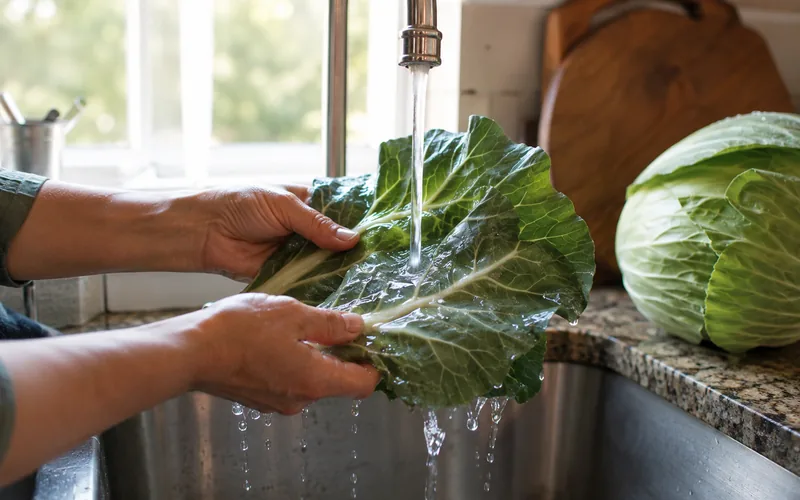
Give store-bought cabbage a good rinse first, since conventionally grown heads can carry pesticide residue on the outer leaves. Cabbage from your own untreated garden or an organic source is the safest bet, and if you spray anything nearby, confirm it is livestock-safe before your goats browse.
For small or young goats that are old enough for treats, shred or chop the cabbage to lower any choking risk. Mixing shredded leaves into hay, or alongside a few carrot pieces, turns it into a tempting bite for picky eaters.
What to never feed
Sauerkraut and coleslaw are both off limits. The vinegar, salt, sugar, and preservatives in those products can upset the rumen and undo the balance those microbes depend on.
Salted vegetable snacks fail for the same reason, which is why salted edamame needs a rinse before any of it goes over the fence.
Skip any cabbage that has turned slimy or grown mold, the same way you would with hay. Slightly wilted or yellowed outer leaves are fine, but moldy feed of any kind is a genuine hazard for goats.
Can goats eat cabbage every day?
Daily cabbage isn’t the goal, even though your goats would happily vote for it. The worry isn’t one generous serving but the cumulative glucosinolate load that builds when a brassica shows up in the feeder every single day.
Kept to a couple of times a week, cabbage stays a healthy, low-risk treat. Fed daily in large amounts over the long term, it edges toward the thyroid and bloat concerns that make brassicas worth managing.
Rotation is the simple fix. Alternate cabbage with other safe vegetables and greens, such as lettuce or spinach, so no single food dominates and the diet stays varied.
A bag of spring mix covers both at once, since it usually holds baby lettuces and spinach.
Feeding cabbage through winter
Cabbage stores well, which makes it a handy cold-weather green when pasture is gone. The trimmed outer leaves that get stripped before storage are exactly the part goats enjoy most, so a small farm can feed them out slowly over weeks from a cool spot or root cellar.
On a working farm this fits a larger habit of routing garden and kitchen trimmings to the herd instead of the compost pile. Cabbage is a good fit for that cycle because it holds up in storage and the parts people discard are the parts goats want.
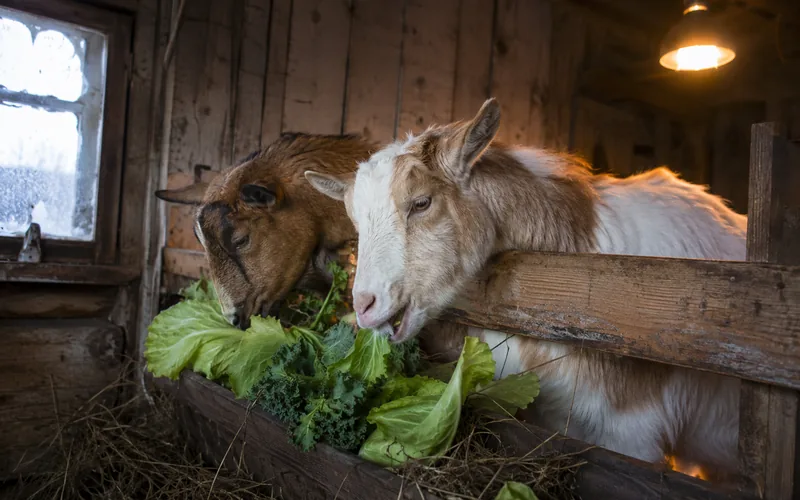
The winter rules don’t change. Keep portions modest, introduce new stores gradually, and toss anything that has gone soft or moldy in storage.
Fresh greens can also flavor the milk of a dairy goat, so time larger cabbage servings with that in mind if you drink the milk straight. Many keepers sidestep the issue entirely by turning milk into cheese or yogurt, where subtle feed flavors disappear.
Final thoughts
Cabbage is a safe, useful treat that most goats love, as long as you respect the one real risk. The danger is bloat from overeating a gas-forming brassica, not poisoning, and that risk is easy to sidestep with portion control.
Serve it raw and plain, cap it at a couple of loose leaves a few times a week, keep it away from young kids, and rotate it with other vegetables. Do that, and those spare outer leaves from the garden become a genuine asset instead of a worry.
Frequently Asked Questions
Keep goats away from onions, garlic, and other alliums, plus nightshade-family plants like raw potato, tomato leaves, and eggplant. Avocado, rhubarb leaves, and anything moldy or fermented are also off the list. Cabbage is not on it, though it should stay an occasional treat rather than a daily food.
Cabbage does not cause classic poisoning because it is low in nitrates. The real warning signs come from bloat after overeating: a swollen left flank, restlessness, grinding teeth, drooling, labored breathing, and reluctance to move. Bloat can turn serious within hours, so call a vet if the belly stays tight and distended.
Internal parasites, especially the barber pole worm, are the leading killer of goats in most regions. Digestive emergencies like bloat and enterotoxemia also rank high. Cabbage is not a common cause of death, but overfeeding any rich treat can trigger the digestive upset that leads to those emergencies.
Most goats love carrots, pumpkin, squash, lettuce, and cucumber, along with leafy greens and cabbage. Palatability varies by animal, and many goats prefer loose cabbage leaves over the dense head. Rotate a few safe vegetables so no single treat makes up too much of the diet.