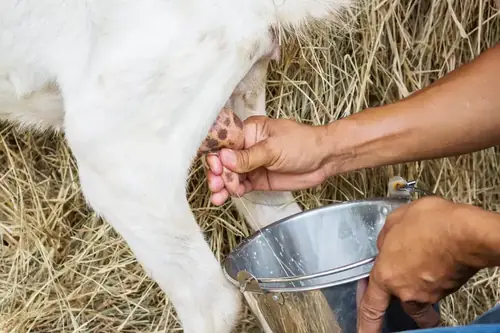

Goat yogurt has quietly become one of those “people foods” dog owners keep reaching for, and honestly, it earns the attention. Fermented goat dairy is gentle, nutrient-dense, and easy to stir into almost any meal.
Here’s the short version: a spoonful of plain, unsweetened goat yogurt is safe and often good for healthy adult dogs. The longer version, which is where most owners slip up, comes down to which yogurt, how much, and how often.
This guide covers the benefits, the real risks, exact serving sizes by weight, and how goat yogurt compares to goat milk and kefir. By the end, you’ll know exactly how to add it to your dog’s bowl without going overboard.
What makes goat yogurt different from regular yogurt?
In simple terms, goat yogurt is cultured goat’s milk, and it’s naturally lower in lactose and easier to digest than the cow’s milk version.
Goat yogurt is made by fermenting goat’s milk with live bacterial cultures, the same basic process behind cow’s milk yogurt. The difference lives in the milk itself, and for dogs, that difference actually matters.
Goat’s milk is built mostly around A2 casein protein, and it has naturally smaller fat globules than cow’s milk. Those smaller globules break down faster, which is a big reason so many dogs handle goat dairy more comfortably.
Cow’s milk leans on A1 casein, which plenty of dogs and people find harder to digest. Goat’s milk skips most of that, which is why it tends to sit so well with sensitive stomachs.
Some parents switch toddlers over one to goat milk for the same reason.
Fermentation piles on a second advantage. The live cultures eat through much of the milk’s lactose, so finished goat yogurt carries less lactose than plain goat milk does.
For a lactose-sensitive dog, that low-lactose, easy-to-digest combination is the whole point. You get the nutrition of dairy at a smaller digestive cost.
Look for a live and active cultures seal on the label, too. Strains like Lactobacillus and Bifidobacterium are the ones doing the digestive heavy lifting.
What are the health benefits of goat yogurt for dogs?
The short answer is probiotics, protein, calcium, and key vitamins, all in a package that supports digestion, immunity, and coat health.
Stick to a plain, unsweetened product and goat yogurt brings a genuinely useful nutrient stack to the bowl.
- Probiotics for gut health. Live and active cultures help build up your dog’s gut microbiome, which supports digestion and firmer stools.
- Immune support. A huge share of immune function lives in the gut, so a healthier microbiome usually means a steadier immune response.
- Protein and calcium. Goat yogurt delivers easy-to-absorb protein for muscle and calcium for bones and teeth.
- Easier digestion. The A2 casein and smaller fat globules make it lighter on the stomach than most cow dairy.
- A topper picky eaters love. Its soft, creamy texture is an easy way to make plain kibble far more tempting.
Beyond the cultures, goat yogurt is quietly rich in nutrients. You’re looking at vitamin A, vitamin B12, riboflavin, potassium, and phosphorus, all in a form that’s easy for a dog’s body to use.
Goat fat also carries medium-chain fatty acids, which the body burns quickly for energy. That’s part of why goat dairy feels lighter than the cow version.
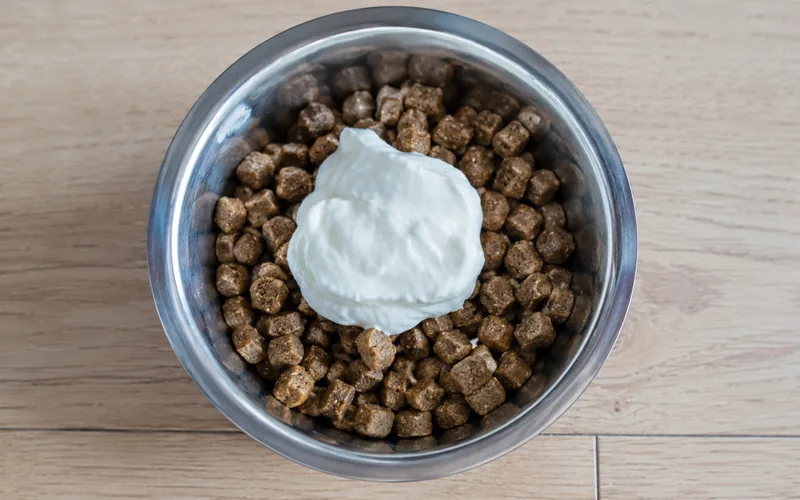
The American Kennel Club notes that plain yogurt’s probiotics can aid canine digestion, though it’s still a supplement, not a cure. It works best as a small, regular addition rather than a meal swap.
How quickly does goat yogurt help a dog’s digestion?
Most dogs show firmer stools and easier digestion within a few days to two weeks of small, consistent daily servings.
Probiotics need time to colonize the gut, so steady feeding beats a one-off spoonful. If nothing improves after two weeks, it’s worth reassessing the diet with your vet.
Can dogs have goat yogurt for an upset stomach or mild diarrhea?
Yes, a small spoon of plain goat yogurt can ease mild cases by replenishing good gut bacteria. Ongoing or severe diarrhea, though, needs a vet rather than a kitchen fix.
Pair it with a bland diet like boiled chicken and rice for the best effect. Stop if symptoms worsen, since dairy can sometimes set a sensitive gut back.
Is goat yogurt safe for puppies?
Yes, weaned puppies can have a little plain, pasteurized goat yogurt, as long as you start tiny and watch closely.
Puppies can have small amounts of plain goat yogurt once they’re weaned and eating solid food. The probiotics can be helpful while a young gut is still finding its footing.
Start with a tiny taste, maybe a quarter teaspoon for a little pup, then watch for any loose stool. Puppies have less room for error than adults, so go slow and only introduce it after their regular food is well established.
Stick with plain, pasteurized yogurt for any puppy, and skip raw versions until they’re older. A developing immune system handles fewer bacterial surprises than an adult one does.
If you’re dealing with a very young or bottle-stage animal, a formulated product is the safer call. Pet goat formula can supplement a young pup, but it won’t replace a complete puppy milk replacer.
Can dogs have goat yogurt every day?
Put simply, daily goat yogurt is fine for healthy dogs as long as the portion stays small and topper-sized.
Yes, most healthy dogs can have a small serving of goat yogurt daily. Consistency is actually where probiotics shine, since the gut does best with a steady supply of friendly bacteria.
The operative word is small. Daily yogurt should be a topper-sized portion, not a bowlful, so the extra calories and fat don’t quietly stack up over a week.
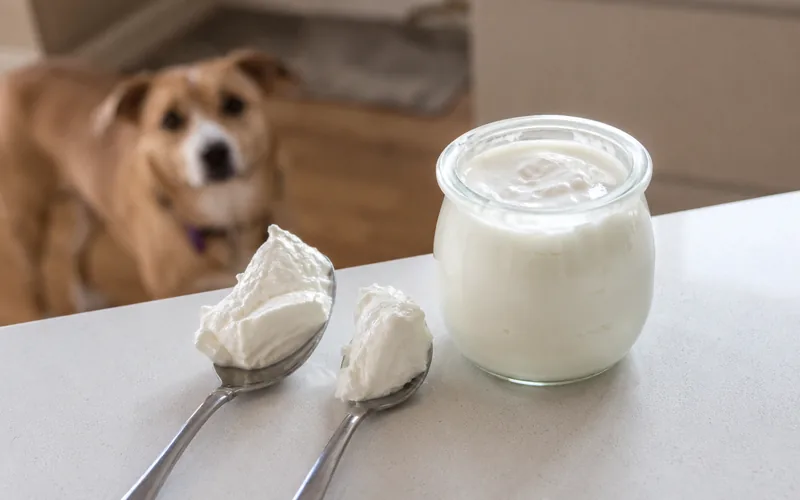
If your dog also drinks goat milk, count the combined dairy together. Daily goat milk is fine for most dogs too, as long as the total stays topper-sized.
How much goat yogurt can dogs have?
Here’s what matters: portions scale with body weight, from about half a teaspoon for tiny dogs up to a few tablespoons for large breeds.
Treats like yogurt should stay inside the 10 percent rule, meaning no more than a tenth of daily calories. Use the table below as a starting point, then adjust down for less active or overweight dogs.
| Dog size | Approx. weight | Daily goat yogurt |
|---|---|---|
| Extra small | Under 10 lb | half to 1 teaspoon |
| Small | 10 to 25 lb | 1 to 2 teaspoons |
| Medium | 26 to 50 lb | 1 to 2 tablespoons |
| Large | 51 to 90 lb | 2 to 3 tablespoons |
| Extra large | Over 90 lb | 3 to 4 tablespoons |
Treat these as guidelines, not prescriptions. Any dog that’s new to dairy should sit at the low end of its range for the first week.
Frequency matters as much as amount. A small daily spoon is gentler than a big serving twice a week, since the gut prefers steady input over sudden spikes.
What are the risks of feeding goat yogurt to dogs?
The main risks are xylitol, added sugar, leftover lactose, excess fat, and dairy allergies, and most are easy to avoid.
Goat yogurt is gentle, but it isn’t risk-free. A handful of hazards can turn a healthy snack into a problem.
- Xylitol and artificial sweeteners. This is the big one. According to the ASPCA, xylitol is toxic to dogs and can trigger a dangerous blood-sugar crash and liver failure, so never feed sweetened or light yogurts.
- Added sugar and flavorings. Fruit-on-the-bottom and vanilla tubs pack sugar your dog doesn’t need, and that feeds weight gain and yeast issues.
- Residual lactose. Fermentation lowers lactose but doesn’t erase it, so lactose-intolerant dogs can still end up gassy or loose.
- Fat and pancreatitis. Too much full-fat dairy can set off pancreatitis in sensitive dogs, especially smaller breeds.
- Allergies. Some dogs are simply allergic to dairy proteins and will react no matter how clean the yogurt is.
Read every label before you serve. If the ingredient list runs beyond milk and live cultures, it’s the wrong product for your dog.
Common mistakes to avoid when feeding goat yogurt
Most problems trace back to flavored tubs, oversized portions, and toxic mix-ins rather than the yogurt itself.
Even a safe food can go sideways with the wrong habits. These are the slip-ups that land most dogs at an upset stomach.
- Grabbing flavored tubs. Vanilla, honey, and fruit versions hide sugar and sometimes xylitol.
- Treating it as a meal. Yogurt is a topper, and too much crowds out balanced nutrition.
- Adding toxic mix-ins. Skip raisins, chocolate, and grapes, which are all dangerous for dogs.
- Ignoring the first reaction. Loose stool on day one means scale back, not push through.
- Going straight to raw. For most dogs, pasteurized is the smarter starting point.
Safe mix-ins do exist if you want variety. A few blueberries, a spoon of plain pumpkin, or a little mashed banana all pair well without the risk.
Which goat yogurt is best for dogs?
The best choice is plain, unsweetened goat yogurt with live cultures and a short, two-ingredient label.
The best goat yogurt for dogs is the most boring tub on the shelf. You want plain, unsweetened, loaded with live and active cultures, and nothing else.
Plain Greek goat yogurt is fine too, and slightly higher in protein, as long as it skips added thickeners or sweeteners. Steer clear of flavored, low-fat-with-sweetener, and dessert-style options.
Flip the tub over and read the back, not the front. Marketing words like natural or wholesome mean nothing, while the ingredient list tells the real story.
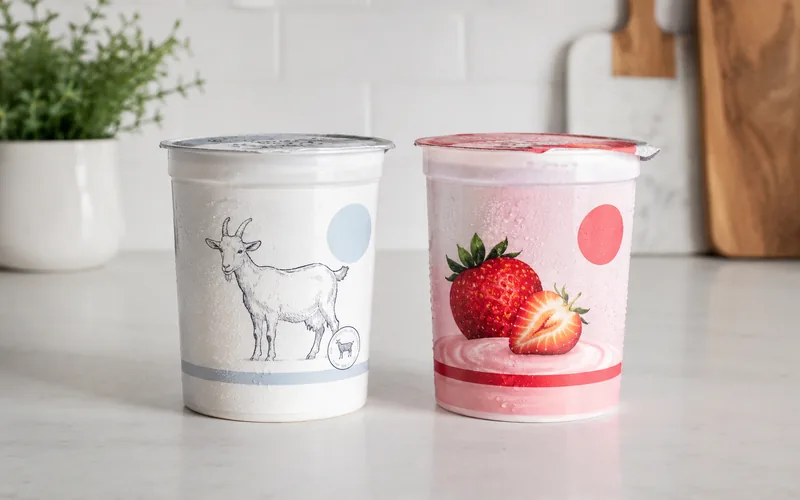
Sodium and added milk powders are worth avoiding too. The cleaner the label, the better it sits with a sensitive dog.
Raw versus pasteurized comes up a lot. Pasteurized plain goat yogurt is the safest default for most homes, while raw products carry a small bacterial risk that matters most for puppies, seniors, and immune-compromised dogs.
How to introduce goat yogurt to your dog safely
Introduce it gradually: a tiny taste first, then build up over a week or two while watching the stool.
Bring goat yogurt in the way you’d add any new food, slowly and with your eyes open. A gradual start lets you catch a sensitivity before it becomes a mess on the floor.
- Test a tiny amount. Offer a lick or quarter teaspoon, then wait 24 hours.
- Watch the stool. Loose stool, gas, or vomiting means stop and wait.
- Build up gradually. Over a week or two, work toward the weight-based portion above.
- Use it as a topper or treat. Spoon it over kibble, smear it on a lick mat, or freeze it inside a toy for a hot-day treat.
Room-temperature yogurt sits easier than cold-from-the-fridge for sensitive dogs, so let a portion warm up briefly before serving.
Frozen goat yogurt cubes make an easy enrichment snack, and a lick mat slows down the fast eaters. However you serve it, keep the running total inside the daily portion.
You can even make it at home with goat’s milk and a yogurt starter, which gives you full control over the ingredients.
Goat yogurt vs. goat milk vs. kefir: which is best for dogs?
All three aid digestion, but goat yogurt is the easy middle ground, kefir is lowest in lactose, and goat milk is best for hydration.
These three goat-dairy options overlap, but they aren’t interchangeable. The right pick really depends on your dog’s digestion and what you’re after.
| Option | Lactose | Probiotics | Best for |
|---|---|---|---|
| Goat yogurt | Low | High | A probiotic topper on food |
| Goat milk | Highest | Moderate | Hydration and picky drinkers |
| Goat kefir | Lowest | Highest | Sensitive or dairy-shy dogs |
For most dogs, yogurt is the convenient middle ground. If your dog handles dairy poorly, kefir’s lower lactose might suit it better, and if you just want a simple drink, goat milk is the easiest.

You don’t have to commit to just one forever, either. Many owners rotate between yogurt and kefir depending on how their dog’s stomach is doing that week.
Goat dairy isn’t the only goat-based food dogs can enjoy, either. If yours loves lean protein, plain cooked goat meat is a safe, easy-to-digest option.
When to skip goat yogurt and call your vet
Skip goat yogurt for dogs with dairy allergies, pancreatitis, or severe lactose intolerance, and call your vet if symptoms linger.
Those dogs are usually better off with a non-dairy probiotic. Goat yogurt is gentle, but it isn’t right for every gut.
Lactose intolerance and a true allergy aren’t the same thing. Intolerance shows up as gas or loose stool, while an allergy can bring itching, ear infections, or skin flare-ups.
Keep an eye out after feeding for persistent diarrhea, vomiting, bloating, or itchy skin. A little gas that fades is normal in the first few days, but anything lingering past 48 hours is worth a call to your vet.
Dogs with health conditions
Overweight, diabetic, and pancreatitis-prone dogs need smaller portions or a non-dairy probiotic instead.
Overweight dogs should get the low end of any portion, since dairy adds calories fast. Diabetic dogs should only have unsweetened yogurt, and only with a vet’s blessing.
When a chronic condition is in the picture, your vet’s guidance always beats a general chart. A quick conversation now saves a bigger problem later.
Final thoughts
Goat yogurt is one of the easier wins in canine nutrition. Plain and unsweetened, it hands your dog probiotics, protein, and calcium in a form most stomachs handle comfortably.
So what does that mean day to day? Keep portions weight-appropriate, treat xylitol and added sugar as absolute dealbreakers, and introduce it slowly.
Do that, and a daily spoonful is a safe, useful boost for a healthy dog. Treat it as a supplement rather than a meal, start small, and let your dog’s gut tell you it’s working.
Frequently Asked Questions
Yes, most healthy dogs can have a small daily serving of goat yogurt. Keep it topper-sized so the extra calories and fat stay within about 10 percent of daily intake.
Often, yes. Goat dairy's A2 casein, smaller fat globules, and fermentation-lowered lactose make it easier on many dogs' stomachs than cow's milk yogurt.
Yes, in small amounts once they are weaned and on solid food. Start with a quarter teaspoon of plain pasteurized goat yogurt and watch for loose stool.
Any yogurt containing xylitol or other artificial sweeteners is toxic to dogs. Xylitol can cause a dangerous blood-sugar drop and liver damage even in small amounts.