| # | Product | Our Rating | ||
|---|---|---|---|---|
| 1 |  | Best OverallREDMOND Goat Mineral Supplement (5 lb) | ★★★★★ | Check Price |
| 2 |  | Wholesome Harvest 16% Goat Feed (10 lb) | ★★★★☆ | Check Price |
| 3 |  | Manna Pro Goat Treats | ★★★★☆ | Check Price |
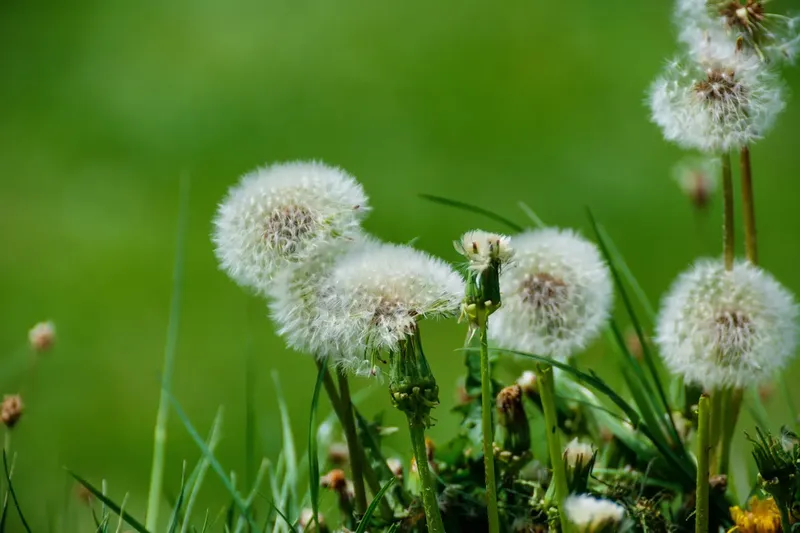
A dandelion is a yellow-flowered broadleaf weed that grows in almost any pasture across North America. Most landowners spend money killing it off, and goat keepers are the ones who don’t.
That gap comes down to how a goat eats. They browse rather than graze, so a mixed pasture full of broadleaf growth suits them better than a clean stand of grass.
This guide covers the safety answer, the nutrition, and how much dandelion to hand-feed. It also shows which parts are edible and the one risk worth watching.
After that, you’ll find the flowers and weeds to keep well away from the herd.
Can Goats Eat Dandelions?
Yes. Goats can eat dandelions, and few things in a pasture are safer.
Taraxacum officinale, the common dandelion, holds nothing that harms goats. It sits on the edible side of nearly any safe-forage list, even the long-running one kept by Fias Co Farm.
Dandelions are not poisonous to livestock, and goats go further than most animals in seeking them out.
For a goat, that’s a first choice rather than a last one.
The plant earns the word weed by where it grows, not by any risk it carries. Weeds like dandelion, clover, and plantain are the broadleaf greens goats seek out first when given a choice.
Goats are browsing ruminants, which means a four-part stomach and a rumen full of microbes doing the real digestion. That system handles tough, fibrous forage with no trouble, so a dandelion moves through the digestive tract without harm.
What Animals Eat Dandelions?
Plenty of them. Goats, sheep, cattle, horses, rabbits, and chickens all eat dandelion, and honeybees work the flowers for early spring nectar.
Sheep and horses graze the greens much as goats do. People eat them too, usually the young leaves picked before flowering.
Which Parts of the Dandelion Are Safe?
All of them. Leaves, flowers, stems, seeds, and roots are edible for goats, which is rare even among safe forage.
Dandelion leaves are the part goats eat first. They are also the richest part for calcium, iron, and folate.
Dandelion flowers come next. A goat will strip the yellow blooms off a patch within minutes, and the flower heads are as safe as the greens.
The short version: nothing on a dandelion has to be removed before feeding.
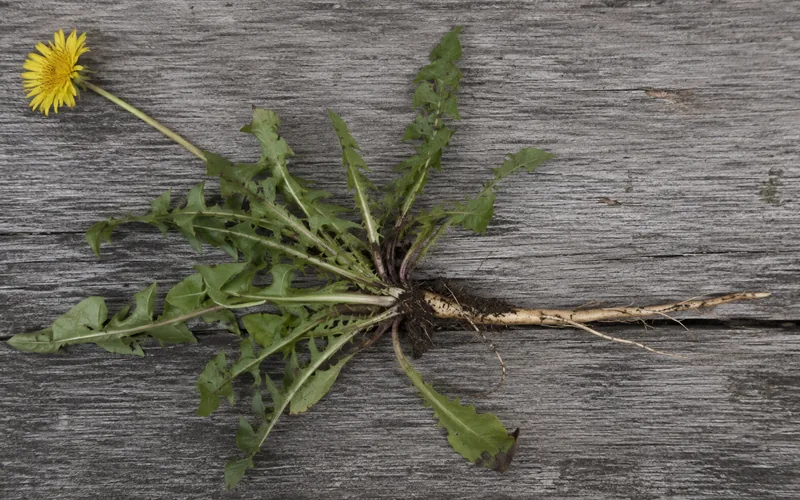
Dandelion seeds are safe too. Once the flower forms its white puffball, it stays edible from top to bottom.
Roots are the part most keepers never see. The deep taproot pulls minerals out of subsoil that shallow-rooted grasses can’t reach.
That’s part of why dandelion greens test so well for calcium.
Nutritional Benefits of Dandelions for Goats
Dandelions supply vitamins A, B, C, D, E, and K along with calcium, folate, iron, magnesium, phosphorus, potassium, and zinc. Hobby Farms describes the plant as antiparasitic, anti-inflammatory, and helpful for both digestion and the immune system.
That mineral spread is why lactating does are the group that gains most. A doe in milk draws heavy calcium out of her own body each day, and dandelion greens help replace it next to alfalfa hay.
Vitamin A supports eyesight and skin. Iron and folate feed red blood cell production, which matters most in late pregnancy and early lactation.
It gets better. Dandelion also acts as a natural diuretic, which supports kidney function and urinary tract health across the herd.
| Nutrient in dandelion greens | Why it matters for goats |
|---|---|
| Calcium | Bone strength and milk production |
| Iron | Red blood cell formation |
| Vitamin A | Eyesight, skin, and immune function |
| Vitamin C | Antioxidant support |
| Vitamin K | Blood clotting and bone health |
| Folate | Cell growth during pregnancy |
| Potassium | Nerve and muscle function |
Those benefits hold up in the lab too, not just on the farm. Researchers at Southwest University found that dandelion extracts improved amino acid and lipid metabolism in dairy goats over a six-week trial.
How Dandelions Support Rumen Health
The rumen is where a goat’s digestion happens, and dandelion appears to help it run smoothly.
A 2025 trial published in Veterinary Sciences fed Guanzhong dairy goats a high-concentrate diet with 1% dandelion extract added. Against the high-concentrate group alone, the supplemented goats held a steadier ruminal pH.
Here’s why: grain-heavy diets push goats toward subacute ruminal acidosis, and a stable pH is what holds that off.
The same trial reported that dandelion enriched Prevotella bacteria in the rumen, and those rose along with acetate. Acetate is one of the volatile fatty acids a goat turns into energy and milk fat.
Bacteroidetes and Firmicutes stayed the dominant rumen phyla throughout. Dandelion also raised Proteobacteria, shifting the microbe mix rather than replacing it.
Why Give Baking Soda to Goats?
Baking soda works as a rumen buffer, steadying pH after a grain-heavy meal. Most keepers offer it free choice in its own dish.
It targets the same problem the dandelion trial did, only faster and only when a goat decides to take some.
How Much Dandelion Can Goats Eat?
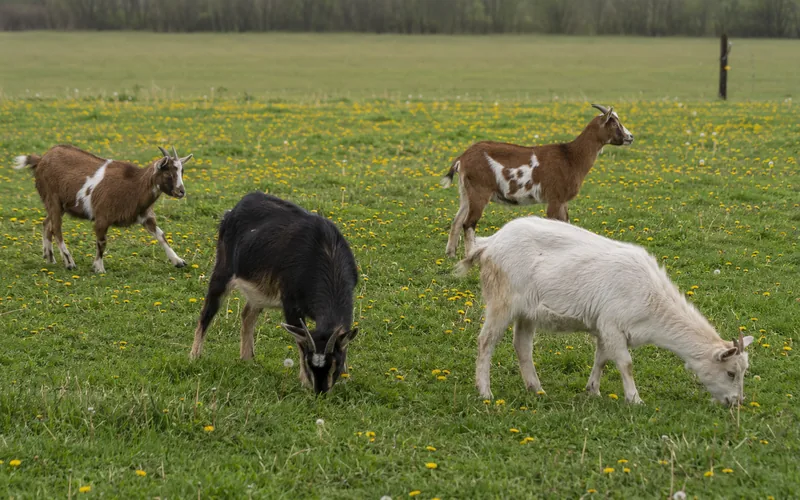
Dandelion growing in your own pasture needs no limit at all. Goats on mixed pasture eat what they need, and it is just one of many things they work through in a day.
Cut or hand-fed dandelion is a different matter. Treats and extras should stay under 10% of a goat’s daily diet, with hay and pasture doing the rest of the work.
Hobby Farms puts that same 10% ceiling on fruit and vegetables such as carrots and apples. Dandelion joins the same treat group the moment it comes off the plant and into a bucket.
But there’s a catch. A goat that has never eaten dandelion shouldn’t get a full bucket on day one.
Any sudden diet change can upset the rumen microbes and cause bloat. Offer a handful, wait two days, then build the amount up from there.
Can goats eat dandelions every day? Yes, a daily serving is fine as long as forage still makes up the bulk of the diet.
Feeding trials use small inclusion rates for a reason. The Veterinary Sciences study used just 1% dandelion extract and still measured a rise in serum IgA, an antibody marker of immune function.
Weaned kids handle dandelion well, and it makes a good early treat. Just wait until they’re eating solid forage, usually around eight to twelve weeks.
The Herbicide and Pesticide Warning
The genuine risk with dandelion isn’t the plant at all. It’s whatever has been sprayed on it.
It is the most targeted broadleaf weed in lawn care, so roadside and suburban patches are often sprayed. Products with 2,4-D, dicamba, or glyphosate are common on home lawns.
What this means for you: yellowing, curled, or twisted leaves are a sign that patch was sprayed.
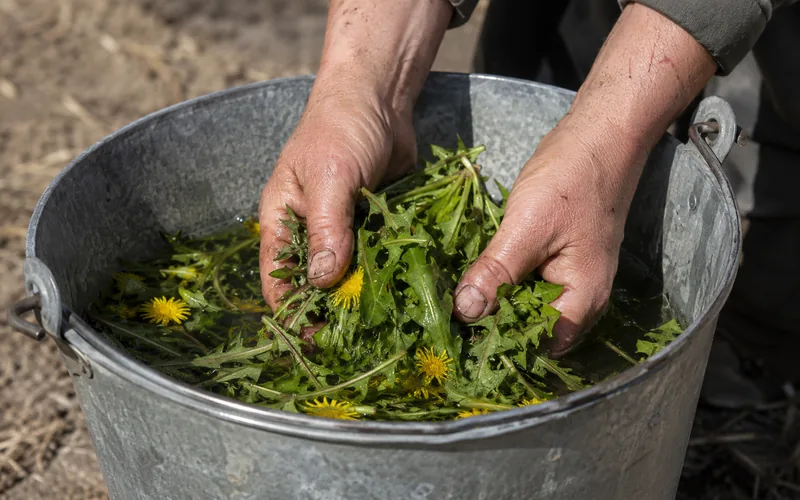
Never pick dandelion from a roadside, a public park, or a neighbor’s lawn without asking first. Road verges also collect car exhaust residue that settles onto the leaves.
Garden vegetables and fruit pick up spray drift too, so anything grown beside a sprayed lawn deserves the same caution.
Rinse any hand-picked dandelion before feeding, the same way you would wash carrots or apples for the herd. Your own untreated pasture stays the safest source you have.
Flowers and Weeds That Are Toxic to Goats
Dandelion is safe, but plenty of common flowers are not. Milkweed, rhododendron, mountain laurel, azalea, and wilted wild cherry leaves cause the poisonings veterinarians see most often in goats.
Garden flowers split the same way. Tall hollyhocks carry no toxin in any part of the plant, while the azalea planted beside them can kill.
Those five are worth learning by sight. A goat that eats rhododendron or mountain laurel can get seriously ill within hours, and treatment is time-sensitive.
Toxic weeds make up a longer list. Burdock, cocklebur, horse nettle, jimsonweed, Johnson grass, lambs quarter, lily of the valley, and nightshade all belong on it, along with poison hemlock.
Checking any brush trimmings before tossing them into the pen prevents most accidents, since not every plant is safe for goats to browse.
Goats normally avoid toxic plants when they have enough good browse. The danger climbs when pasture runs short and a hungry herd samples whatever is left standing.
Ask your county extension office for a toxic plant list covering your region, since risk varies by state.
Growing Dandelions for Your Herd
Put simply, growing more dandelion means doing less to the pasture.
Some keepers stop pulling it and start encouraging it instead. Leaving one corner unmowed lets them flower and reseed on their own.
Skip the herbicide on any ground your goats graze. That single change often brings the weed back within a season or two.
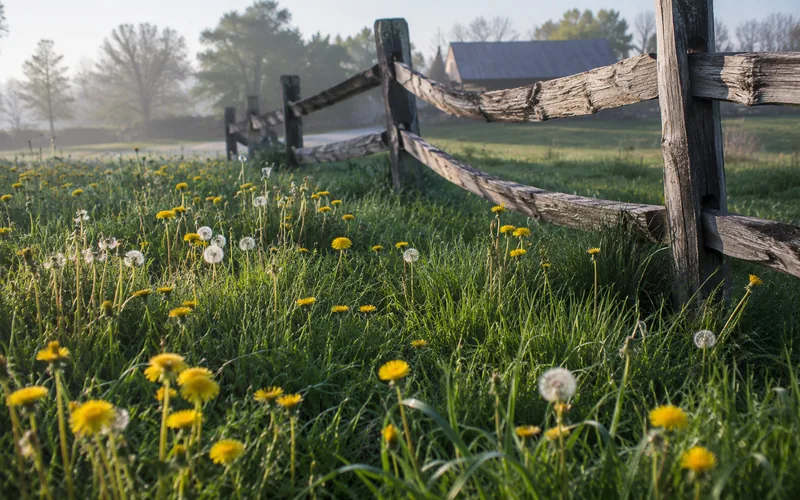
You can also seed it into a browse mix with clover, plantain, and chicory. Those add mineral variety that grass alone doesn’t deliver.
Garden herbs work the same way, as an extra on top of forage. Goats do well on herbs like fresh cilantro, basil, and parsley, and dandelion sits in that same treat group.
Leftover vegetables and fruit from the garden count toward that same 10% cap.
It pairs well with a free-choice loose mineral mix rather than standing in for one. Forage mineral content swings with soil type, so a supplement keeps intake steady.
Should You Feed Dandelions to Your Goats?
Dandelions are safe, nutritious, and already growing where your goats are. Every part of the plant is edible, from the flower down to the taproot, and the mineral profile helps does in milk.
Let pasture dandelion go uncounted and keep hand-fed servings under 10% of the daily diet. Watch where it grew, not how much of it your goats ate.
Frequently Asked Questions
Dandelions are not poisonous to livestock. Cattle, sheep, horses, and goats all graze them safely, and pasture specialists treat dandelion as a normal part of mixed forage. The plant carries no toxins, so the only real caution is herbicide residue on lawns and roadsides.
Several common flowers are toxic to goats. Milkweed, rhododendron, mountain laurel, azalea, and wilted wild cherry leaves cause the plant poisonings veterinarians see most often. Learn those five by sight and keep them out of reach of the herd.
Yes. Burdock, cocklebur, horse nettle, jimsonweed, Johnson grass, lily of the valley, nightshade, and poison hemlock are all unsafe for goats. Toxic weed lists vary by region, so ask your county extension office for one that matches your state.
Baking soda buffers the rumen and helps steady its pH after a grain-heavy meal. Most keepers offer it free choice in a separate dish so goats can take it when they want it. It is a safeguard against acidosis, not a daily supplement.