| # | Product | Our Rating | ||
|---|---|---|---|---|
| 1 |  | Best OverallARS 140DXR Hoof Trimming Shears | ★★★★★ | Check Price |
| 2 | 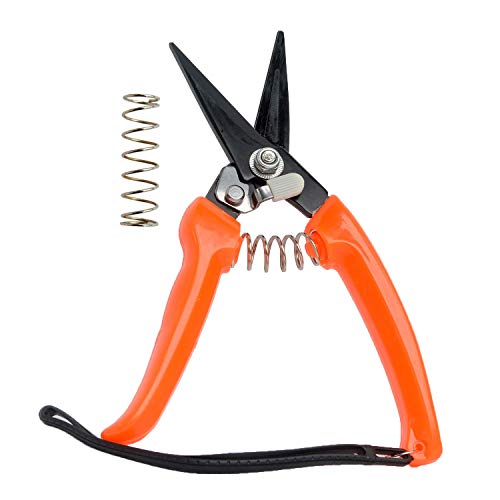 | Carbon Steel Goat Hoof Trimmers | ★★★★☆ | Check Price |
| 3 |  | 8-Inch Goat Hoof Trimming Scissors | ★★★★☆ | Check Price |
Hoof rot itself rarely kills a goat directly, but a severe untreated case can lead to systemic infection and sepsis that absolutely can be fatal. The good news is that hoof rot is both preventable and treatable if you catch it early and stay on top of hoof care.
Can hoof rot kill a goat?
In most cases, hoof rot causes pain, limping, and weight loss because the goat stops walking to the feeder. A goat that hurts every time it takes a step will spend most of its time lying down, and that means less eating, less drinking, and a slow decline that can lead to anemia and further complications.
Left alone for weeks or months, the infection can spread into deeper tissue and eventually reach the bloodstream. Once bacteria enter the blood, sepsis sets in, and that’s a life-threatening emergency that requires immediate veterinary intervention.
So while the hoof rot itself is rarely the direct killer, the cascade of problems it triggers can absolutely take a goat down. A goat that can’t walk to food and water is a goat in serious trouble.
What’s hoof rot and what causes it in goats?
Hoof rot is a bacterial infection caused primarily by Dichelobacter nodosus, often working alongside Fusobacterium necrophorum. These bacteria thrive in wet, muddy conditions where hooves stay damp for extended periods.
Overgrown hooves trap moisture and manure against the sole, creating the perfect environment for infection to take hold. Goats on soft, wet ground are far more susceptible than those on rocky, dry terrain where hooves wear down naturally.
Poor nutrition can also play a role, since goats deficient in zinc or other trace minerals tend to grow weaker hoof tissue that’s more prone to cracking and infection. Feeding a proper diet including quality hay and a good loose mineral mix goes a long way toward hoof health.
Copper is one of the trace minerals goats most often lack, so watch for signs of copper deficiency too.
The symptoms of hoof rot in goats
The first thing you’ll notice is limping, often on one or more feet. Pick up the foot and you’ll find a foul smell that’s hard to miss, along with soft, crumbly hoof tissue and separation between the hoof wall and sole.
In more advanced cases, you may see a gray or greenish discharge between the two toes of the cloven hoof. The goat will spend more time lying down and less time eating, which leads to rapid weight loss if you don’t step in quickly.
Heat and swelling around the coronary band, the area where the hoof meets the skin, is another red flag. A goat dealing with hoof issues is also more susceptible to mite infestations since their weakened immune system invites secondary problems.
If you see swelling creeping up the leg above the hoof, the infection may be spreading deeper and you need a vet involved.
How to treat hoof rot in goats?
Start by trimming away all the damaged, underrun hoof tissue with a sharp pair of hoof shears. You need to expose the infected area to air, because the bacteria responsible for hoof rot are anaerobic and can’t survive in the open.
After trimming, stand the goat in a copper sulfate or zinc sulfate footbath at a 10 percent solution for 5 to 10 minutes. Repeat the footbath daily for at least a week, keeping the goat on dry ground between treatments.
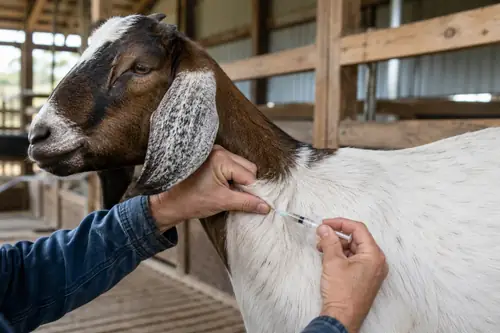
For severe cases, your vet may prescribe injectable antibiotics like oxytetracycline or penicillin to fight the infection from the inside, similar to treating listeriosis. Keep the goat in a clean, dry pen with fresh bedding until the hoof tissue firms up and new growth appears.
Prevention tips for hoof rot in goats
Trim hooves every 6 to 8 weeks without exception. Regular trimming keeps hooves short and allows air to reach the sole, which makes the environment hostile to the bacteria that cause rot.
Keep bedding dry and clean out wet, muddy areas where goats congregate. A weekly footbath near the barn entrance using zinc sulfate solution is one of the most effective preventive measures, especially during rainy seasons or in areas with clay soil that holds water.
Check hooves during every trimming session for early signs of softening or separation. A proper CDT vaccination schedule and regular hoof care go hand in hand as the basics of preventive medicine.
Catching a problem when it’s the size of a dime is a whole lot easier than dealing with one that has taken over the entire sole.
Final Thoughts
Hoof rot won’t kill your goat overnight, but ignoring it long enough can lead to infections that will. Staying on a regular trimming schedule and keeping living areas dry is the cheapest and most effective prevention there’s.
If you smell that unmistakable rotten odor when you pick up a hoof, don’t wait. Trim it, treat it, and dry it out.
Catching hoof rot early turns a 15-minute barn chore into a full recovery instead of a vet emergency.
Frequently Asked Questions
Hoof rot rarely kills a goat directly, but a severe untreated case can lead to systemic infection and sepsis, which is life-threatening. A goat that can't walk to food and water will lose body condition rapidly.
Hoof rot, also known as foot rot, is a fairly common condition in goats that's caused by various different factors. In most cases, hoof rot is the result of exposure to unsanitary conditions or poor maintenance of the animal's hooves.
At the most basic level, good hygiene and sanitation practices can help to minimize the spread of hoof rot between animals.
There are a number of steps that can be taken to help prevent or treat hoof rot in goats. First and foremost, regular maintenance of your goat's hooves is essential.