| # | Product | Our Rating | ||
|---|---|---|---|---|
| 1 |  | Best OverallAgri-Pro Veterinary Thermometer | ★★★★★ | Check Price |
| 2 |  | Goat Nutri-Drench (1 Pint) | ★★★★☆ | Check Price |
| 3 |  | Probios Oral Gel for Goats (30g) | ★★★★☆ | Check Price |
A goat with pneumonia can look fine in the morning and be fighting for breath by night. It is one of the most common causes of death in goats, and it hits kids especially hard.
The encouraging part is that goats often recover well when you catch it early and treat it fast.
This guide covers how to recognize pneumonia, what causes it, how it is treated, the special danger it poses to kids, and how to keep it out of your barn.
Important: Pneumonia is a serious illness that needs prescription antibiotics. This article is educational, not a substitute for a veterinarian. If a goat is breathing hard or running a high fever, call your vet promptly.
What Is Goat Pneumonia?
Pneumonia is inflammation and infection of the lungs. In goats it is usually bacterial, though viruses, mycoplasma, and lungworms can be involved, and it often takes hold after something else has lowered the goat’s defenses.
That “something else” is usually stress or bad air: shipping, weaning, a cold snap, or a damp, poorly ventilated barn.
The bacteria most often responsible are Pasteurella multocida and Mannheimia haemolytica, organisms that many healthy goats already carry harmlessly in their airways. When stress or ammonia-laden air weakens the lungs, those bacteria multiply and turn into full-blown pneumonia.
Because it sets in fast and worsens quickly, pneumonia belongs on the short list of goat problems, alongside bloat and scours, where acting the same day really matters.
Symptoms of Pneumonia in Goats
The earliest signs are easy to miss because they look like a goat just feeling off. Learn to spot them before breathing becomes a struggle.
Watch for:
- Coughing, sometimes dry, sometimes wet and rattly
- Fast or labored breathing (a resting goat normally breathes about 15 to 30 times a minute)
- Nasal discharge, often thick, yellow, or green
- Fever above 104°F (normal is roughly 101.5 to 103.5°F)
- Dullness, drooping ears, and standing apart from the herd
- Going off feed, the same red flag behind so many illnesses in a goat that stops eating
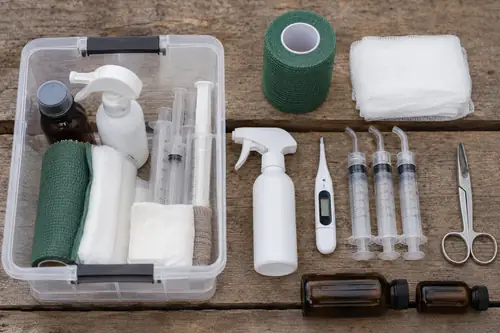
A thermometer is your best early tool, so keeping one in your kit is worth it. As pneumonia advances, you may see open-mouth breathing, a stretched-out neck, grunting with each breath, and blue-tinged gums, all signs the goat is in real trouble and needs help now.
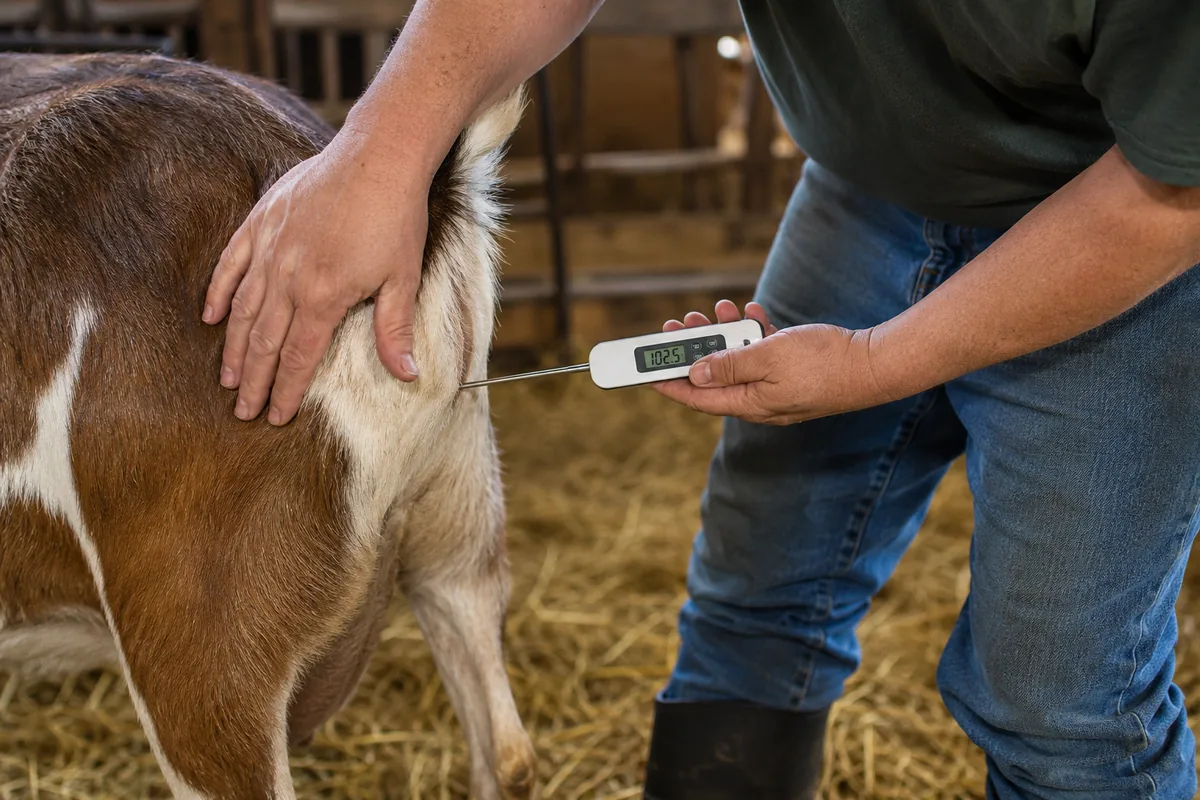
The single most useful habit is taking a temperature any time a goat seems off. A fever turns “maybe it’s nothing” into “this needs treatment today.”
That habit pays off far beyond pneumonia, across nearly every goat health problem.
What Causes Pneumonia in Goats?
Pneumonia is almost always a combination of a pathogen and a trigger that lowers the goat’s resistance. Remove the triggers and you prevent most cases.
The usual culprits are bacteria (Pasteurella and Mannheimia), sometimes following a virus or mycoplasma infection. The triggers that let them take over include:
- Poor ventilation and ammonia buildup in closed-up barns, the biggest one
- Cold, damp, drafty conditions and sudden weather swings
- Stress from weaning, shipping, rehoming, or handling
- Crowding and dirty, wet bedding
- A heavy parasite load or other illness draining the immune system
There is also aspiration pneumonia, caused by fluid going down the wrong way, classically from drenching a goat too fast or bottle-feeding a kid carelessly. That is a good reason to go slow and careful any time you put liquid in a goat’s mouth, whether it is medication from your goat medicine cabinet or milk for a kid.
Cold weather gets blamed a lot, but a dry, well-ventilated goat handles cold fine. It is the stuffy, humid, ammonia-filled barn that does the damage, which is why owners ask whether their goats can get sick from the cold when the real issue is the air inside.
How to Treat Goat Pneumonia
Bacterial pneumonia needs antibiotics, and the sooner the better. This is a call-the-vet situation, both because the antibiotics are prescription and because the right choice and dose matter.
The mainstays your vet may reach for include oxytetracycline (LA-200), florfenicol (Nuflor), or other antibiotics, given by injection for several days. Whatever is prescribed, finish the full course even after the goat looks better, stopping early is how infections come roaring back.
Bring down the fever and inflammation. An anti-inflammatory such as flunixin meglumine (Banamine) reduces fever and eases the lung inflammation, but only at a correct, vet-confirmed dose, the same caution that applies to any goat medication dosing.
Support the goat while the antibiotics work:
- Keep it warm, dry, and out of drafts
- Keep it eating and drinking; offer tempting feed and fresh water, and use probiotics
- B vitamins (especially thiamine) and good nutrition help recovery
- Isolate it from the herd if you can, to rest it and limit spread
Most goats that are treated early turn the corner within a couple of days. The ones that struggle are almost always the ones whose owners waited, hoping the cough would pass on its own.
Pneumonia in Goat Kids
Kids are the most vulnerable of all, and they go downhill faster than adults. A kid with pneumonia can be playing one afternoon and critically ill the next morning.
Several things stack against kids: their immune systems are still developing, they are often grouped together where infection spreads, and a kid that missed good colostrum in its first hours never got the antibody head start it needed.
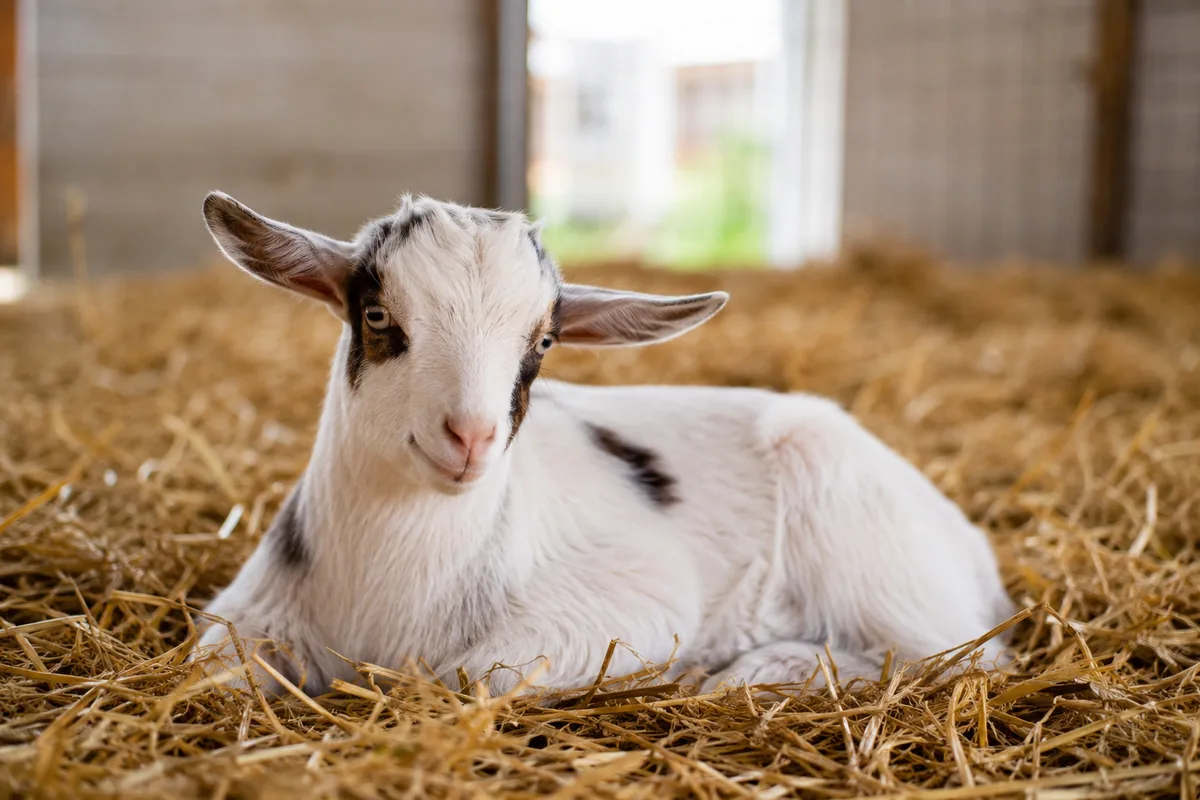
With kids, do not wait. Take a temperature at the first sign of dullness or a cough, and call your vet the same day if it is feverish or breathing hard. Early colostrum, clean dry bedding, draft-free but well-ventilated housing, and low stress are what keep kids out of trouble in the first place.
How to Prevent Goat Pneumonia
Prevention is mostly about air and stress, not warmth. Get those right and pneumonia becomes rare:
- Ventilate without drafts. Let moisture and ammonia escape near the roofline while keeping the goats themselves out of direct wind at floor level. If your barn smells of ammonia, it is already a pneumonia risk.
- Keep bedding dry and clean. Damp, dirty bedding feeds both ammonia and bacteria.
- Minimize stress, especially around weaning, transport, and weather changes, and don’t overcrowd.
- Quarantine new goats for at least 30 days so you don’t import respiratory infections.
- Get kids their colostrum within the first few hours of birth.
- Ask your vet about pneumonia vaccines (Mannheimia and Pasteurella) if your herd has a history of outbreaks.
Goats are far more cold-hardy than most owners think, so resist the urge to seal the barn up tight in winter. The trapped damp air does more harm than the cold ever would.
Healthy adult goats do fine outside in winter as long as they stay dry and out of the wind.
A dry, airy barn and an unstressed herd prevent more pneumonia than any medicine cabinet.
Sources and Further Reading
Compiled and cross-checked against established veterinary and small-ruminant references:
- The Merck Veterinary Manual, Respiratory Diseases of Sheep and Goats
- American Association of Small Ruminant Practitioners (AASRP) resources
- Langston University, Meat Goat Production Handbook, health and respiratory disease
- University extension publications (Penn State, Cornell) on goat respiratory health
Pneumonia requires prescription treatment; confirm antibiotics, dosing, and any vaccine plan with your own veterinarian.
Frequently Asked Questions
Early signs are coughing, faster or harder breathing than normal, a snotty nose, dullness, and dropping off feed. A fever above 104°F is a strong clue, since a healthy goat's temperature is about 101.5 to 103.5°F. As it worsens you may see open-mouth breathing, extended neck, grunting, and a goat that stands apart looking miserable. Catching it at the cough-and-fever stage, before breathing gets labored, gives the best chance of recovery.
Bacterial pneumonia needs prompt antibiotics prescribed by a vet, commonly oxytetracycline (LA-200), florfenicol (Nuflor), or similar, given at the correct dose for several days. An anti-inflammatory like flunixin (Banamine) helps bring down fever and lung inflammation, and supportive care matters too: keep the goat warm, dry, hydrated, and eating, with probiotics and B vitamins. Start treatment early and finish the full antibiotic course even after the goat perks up.
Yes, many goats recover fully if treated early and aggressively. The goats that die are usually the ones caught late, after breathing is already labored and the lungs are badly damaged. Kids decline faster than adults, so they need treatment within hours, not days. Recovery odds drop sharply once a goat is breathing with its mouth open or its neck stretched out.
It can be. Many of the bacteria and viruses behind it spread between goats, especially in crowded, poorly ventilated housing, and outbreaks can move through a herd after stress like weaning or shipping. Isolate a sick goat when practical, improve airflow, and watch the rest of the herd closely. Mycoplasma forms in particular are known for spreading and being hard to clear.
Cold itself is less the problem than damp, still, ammonia-laden air. Owners often seal barns up tight to keep goats warm, which traps moisture and ammonia from urine and creates perfect conditions for respiratory infection. Sudden temperature swings and the stress of cold, wet weather also weaken immunity. Goats handle cold far better than a stuffy, humid barn, so ventilation matters more than warmth.