| # | Product | Our Rating | ||
|---|---|---|---|---|
| 1 |  | Best OverallProbios Probiotic Oral Gel for Goats | ★★★★★ | Check Price |
| 2 |  | Manna Pro Goat Electrolyte Powder | ★★★★☆ | Check Price |
| 3 |  | Nutri-Drench Goat & Sheep Supplement (8 oz) | ★★★★☆ | Check Price |
A goat with a swollen face from a wasp sting, a sudden hive-covered belly after a vaccine, or a runny-nosed buck during pollen season will send most owners straight to the medicine cabinet. Benadryl is the cheap, familiar antihistamine sitting right there, and plenty of experienced keepers do reach for it.
The honest answer? It can help in the right situation and harm a goat in the wrong one. Below: the dose by weight, the safest forms, the overdose signs, and when to call a vet.
Important: Diphenhydramine is used extra-label in goats, so it is not FDA-approved for them. The figures below are educational, not a prescription; your vet must confirm the dose, form, and withdrawal time first.
Can Benadryl Hurt a Goat?
Yes, it can, even though plain diphenhydramine is one of the more forgiving over-the-counter drugs. The harm almost always comes from how it’s used, not the molecule itself.
It hurts goats in four main ways:
- Overdose. Too many tablets or too much liquid stacks the sedative effect and can slow breathing and heart rhythm.
- Fast-acting liquid. It absorbs fast and can drop a goat into alarming grogginess within minutes.
- Combination products. Boxes that also contain decongestants or acetaminophen carry ingredients that are genuinely toxic to goats.
- Wrong situation. Used for an emergency like airway swelling, it wastes minutes a goat needs for epinephrine and a vet.
Used right, it’s usually safe; trouble starts the moment a guardrail slips.
What Benadryl Does and When Goats Need It
Put simply, Benadryl calms allergy-type reactions, stings, hives, sneezing, but it won’t touch an infection.
Benadryl is the brand name for diphenhydramine, a first-generation antihistamine. It blocks histamine, the chemical released during an allergic response, easing itching, swelling, and congested airways.
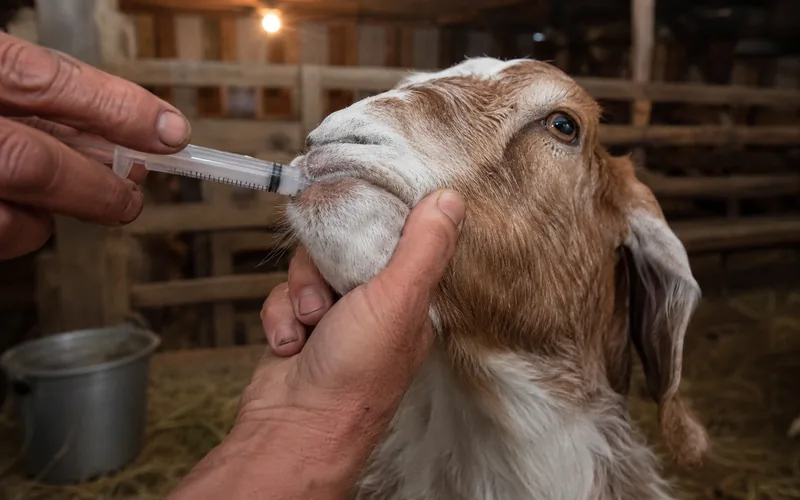
In goats, it is most often used for:
- Insect stings and bites from wasps, bees, or flies.
- Mild allergic reactions, like hives or facial puffiness after a vaccine or new feed.
- Seasonal or environmental allergies, with sneezing, watery eyes, and nasal congestion.
- Mild itching, under veterinary guidance.
A goat with thick green nasal discharge and a fever likely has pneumonia or a respiratory infection, not allergies, and needs an antibiotic.
Benadryl Dosage for Goats by Weight
Standard diphenhydramine comes as 25 mg tablets or children’s liquid at 12.5 mg per 5 mL. A widely cited goat dose is 1 to 2 mg per pound, every 8 to 12 hours.
Always weigh the goat first; guessing is the most common dosing mistake and pushes the dose too high.
| Goat weight | Dose at ~1 mg/lb | 25 mg tablets | Children’s liquid (12.5 mg/5 mL) |
|---|---|---|---|
| 20 lb (kid) | 20 to 25 mg | ~1 tablet | 8 to 10 mL |
| 50 lb | 50 mg | 2 tablets | 20 mL |
| 75 lb | 75 mg | 3 tablets | 30 mL |
| 100 lb | 100 mg | 4 tablets | 40 mL |
| 150 lb | 150 mg | 6 tablets | 60 mL |
| 200 lb | 200 mg | 8 tablets | 80 mL |
References allow up to 2 mg per pound for stubborn reactions, but only with vet direction. For kids, prefer counted tablets over large volumes of liquid.
The same caution applies to any human medication in goats, from aspirin in baby goats to Pepto-Bismol.
Tablets vs Liquid vs Injectable
The short answer: tablets are safest, liquid works fastest but oversedates, and injectable is vet territory.
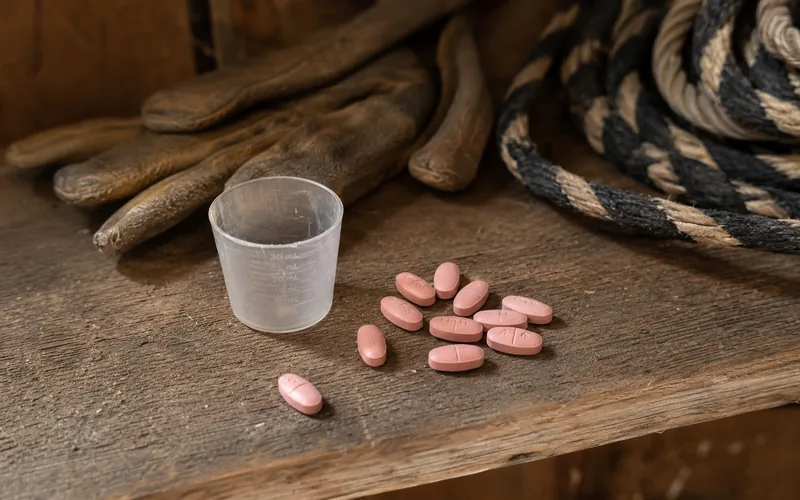
The form you choose affects safety more than the dose does.
- Tablets are the safest at-home option: they absorb gradually, are easy to count, and sedate predictably.
- Liquid works fast but can leave a goat groggy or knocked out within minutes, scaring owners into thinking it’s dying.
- Injectable diphenhydramine is reserved for serious reactions and belongs in veterinary hands.
If you use liquid, dose conservatively and watch the goat for 30 minutes. Fast, heavy grogginess is a warning sign, not a normal result.
The Combo-Product Trap to Avoid
Here’s what matters: give only plain diphenhydramine. Combination “Benadryl” products with decongestants or acetaminophen can seriously harm a goat.
This is the biggest hidden danger, and most goat articles skip it. Many products on the “Benadryl” shelf are not plain diphenhydramine.
Read the active-ingredient panel and confirm it lists diphenhydramine only. Avoid these combination formulas:
- Benadryl Allergy Plus Congestion, which adds phenylephrine or pseudoephedrine, decongestants that spike heart rate and blood pressure.
- Nighttime or “PM” formulas, which often add acetaminophen, far more toxic to a goat than the antihistamine.
- Topical creams and gels, which a goat licks off and ingests.
When in doubt, buy a generic bottle listing only diphenhydramine hydrochloride. Keep that bottle in your goat first aid kit so you’re not reading labels in a hurry.
Signs of a Benadryl Overdose in Goats
At a correct dose, the worst you’ll see is mild drowsiness. Trouble shows up when the dose is too high, the liquid absorbed too fast, or it was stacked with another sedating drug.
Watch for these overdose signs:
- Extreme sedation or collapse, a goat that can’t stand or stay alert.
- Rapid or irregular heartbeat, often with restlessness before the crash.
- Dry mouth and trouble swallowing, which can disrupt eating and drinking.
- Difficulty urinating, a known effect of antihistamine overdose.
- Tremors or seizures in severe cases, which are an emergency.
If you see these, stop dosing, call your vet, and bring the product and dosing notes.
When to Skip Benadryl and Call Your Vet
In a few situations Benadryl is the wrong tool, and reaching for it costs time a goat doesn’t have.
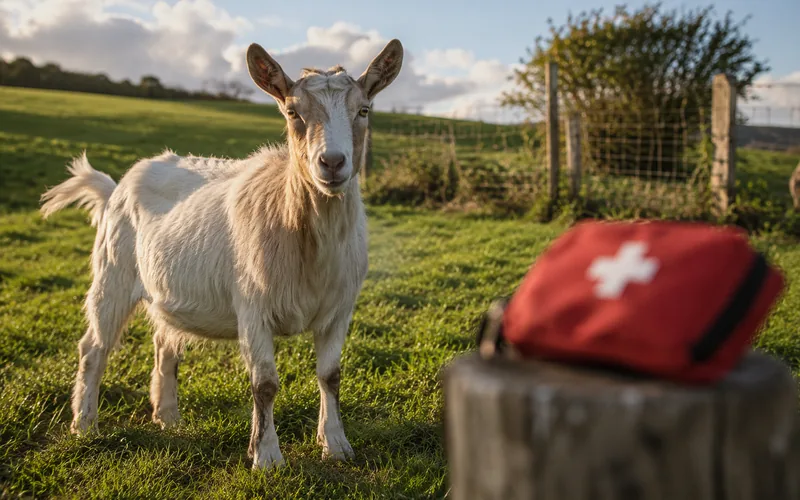
Skip the antihistamine and get veterinary help when you see:
- Airway swelling, collapse, or severe trouble breathing. This is anaphylaxis, and it needs epinephrine, not Benadryl.
- Pregnancy. Clear the dose with your vet first, as you would with other medications in pregnant does.
- A goat already on sedatives or muscle relaxants, since the effects stack dangerously.
- A reaction that keeps worsening after a dose instead of calming within an hour.
If it looks more like a cold than an allergy, see goats getting sick from cold weather before reaching for Benadryl.
Meat and Milk Withdrawal Times
Because diphenhydramine is extra-label in goats, your vet must assign the legal withdrawal time for meat and milk. There’s no automatic, label-printed number to rely on.
Until your vet confirms one, discard the milk and don’t slaughter a treated animal. Every other common goat drug has its own dose and withdrawal time, so check each one before treating.
Sources and Further Reading
Cross-checked against established veterinary references:
- VCA Animal Hospitals: diphenhydramine use and effects in animals
- FARAD: extra-label drug and withdrawal guidance for food animals
- The Merck Veterinary Manual, antihistamines and allergic reactions in ruminants
- Long-standing breeder references (Onion Creek Ranch / Tennessee Meat Goats; Fias Co Farm)
Frequently Asked Questions
Plain diphenhydramine is considered safe for goats at roughly 1 to 2 mg per pound when a vet confirms the dose. It becomes unsafe when owners overdose it, reach for fast-acting liquid that drops a goat into heavy sedation, or grab a combination product that also contains a decongestant or acetaminophen. The drug is used extra-label in goats, so it is not FDA-approved for them and should be given under veterinary guidance.
A commonly published reference dose is about 1 to 2 mg of diphenhydramine per pound of body weight, every 8 to 12 hours. That works out to roughly one 25 mg tablet per 25 pounds at the lower end. Always weigh the goat instead of guessing, and let your veterinarian set the exact dose, especially for kids and pregnant does.
Yes. Drowsiness is the most common effect, and liquid forms can hit fast and hard, leaving a goat groggy or looking knocked out within minutes. The sedation usually wears off in a few hours, but deep, sudden grogginess after a liquid dose is a sign you gave too much or absorbed it too quickly.
Plain diphenhydramine at a correct dose rarely causes death, but a large overdose can cause dangerous sedation, racing heart, seizures, and respiratory depression. The bigger real-world risk is a combination product: decongestants and acetaminophen found in some 'Benadryl' boxes are far more toxic to a goat than the antihistamine itself.
No. For true anaphylaxis, swelling of the airway, collapse, or severe difficulty breathing, Benadryl is too slow and too weak. That is a veterinary emergency that needs epinephrine, so call your vet immediately rather than relying on an antihistamine.