| # | Product | Our Rating | ||
|---|---|---|---|---|
| 1 |  | Best OverallMerck Safe-Guard Goat Dewormer (125 ml) | ★★★★★ | Check Price |
| 2 |  | Advanllent Fenbendazole Goat Dewormer (150 ml) | ★★★★☆ | Check Price |
| 3 | 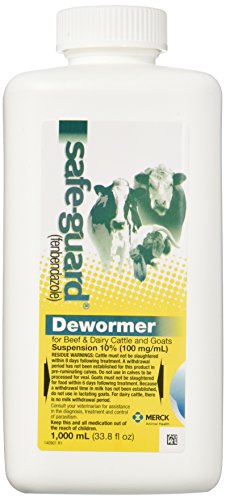 | Safe-Guard Dewormer Suspension (1000 ml) | ★★★★☆ | Check Price |
Cattle dewormer blocks are tempting because they seem convenient. Just set one out and let the goats lick it when they want.
But this approach is a bad idea for goats, and most experienced goat owners and veterinarians will tell you to avoid them. Much like knowing the right medications to use, proper dosing matters enormously with dewormers.
The core problem is that goats metabolize dewormers differently than cattle and need much higher doses to get an effective parasite kill.
Can goats have cattle dewormer blocks?
Technically, a goat can lick a cattle dewormer block. But the real question is whether it’ll do any good, and the answer is almost always no.
Goats process dewormers faster than cattle, so they need significantly higher doses per pound of body weight to achieve the same effect. A free-choice block can’t deliver a controlled, adequate dose to any individual goat.
Some goats will barely touch it while others will lick it constantly, and neither scenario results in proper dosing.
What are cattle dewormer blocks and what do they do for goats?
Cattle dewormer blocks are compressed mineral and medication blocks designed for cattle to lick over time. They typically contain a deworming agent like morantel tartrate or fenbendazole mixed into a salt or mineral base.
For cattle, the slow, steady intake from licking works reasonably well because cattle are consistent lickers and the dose rates are calibrated for their metabolism. Goats are a completely different animal in this regard.
Their faster drug metabolism means the trickle of dewormer they get from a block is almost never enough to kill the parasites they’re carrying.
What are the benefits of using cattle dewormer blocks on goats?
Honestly, there are very few benefits. The only real advantage is convenience for the farmer, but that convenience comes at a steep cost to herd health.
An underdosed goat is worse than an untreated goat in many cases. Subtherapeutic doses of dewormer kill off the weakest parasites while leaving the resistant ones alive to breed.
The resulting anemia from resistant worms can be devastating. Over time, this creates a population of drug-resistant worms in your pastures that no dewormer can touch.
Are there any risks associated with using cattle dewormer blocks on goats?
Your biggest risk? building parasite resistance through consistent underdosing. Once your worm population becomes resistant to a particular drug class, that drug is useless on your farm permanently.
There’s also a false sense of security. You might think your goats are being dewormed because the block is out there, but without consistent therapeutic doses, the parasites are thriving.
Meanwhile, your goats could be developing dangerous worm loads while you assume they’re protected.
How to use cattle dewormer blocks on goats?
The straightforward recommendation is to not use them. Instead, deworm your goats individually using oral or injectable products at goat-specific dose rates.
Goats generally need about twice the cattle dose for most dewormers. Fenbendazole (SafeGuard), for example, is dosed at 5 mg per kg in cattle but needs 10 mg per kg in goats.
Ivermectin needs to be given orally to goats at 0.4 mg per kg, double the cattle injectable dose. Always weigh your goats or use a weight tape rather than guessing.
Things you need to consider before using cattle dewormer blocks on goats
Consider whether you actually need to deworm at all. Make sure you also understand the guidelines for deworming pregnant goats before treating does in late gestation.
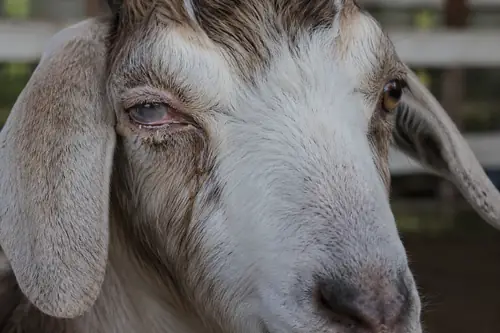
Many experienced goat owners have moved to targeted selective treatment, where only the goats that need deworming get it based on FAMACHA scoring or fecal egg counts.
This approach preserves dewormer effectiveness by maintaining a population of drug-susceptible worms on the pasture (called refugia). It’s the opposite philosophy from putting out a block and hoping every goat gets enough medication.
Work with your vet to develop a parasite management plan that fits your herd.
Are there any alternative options to using cattle dewormer blocks on goats?
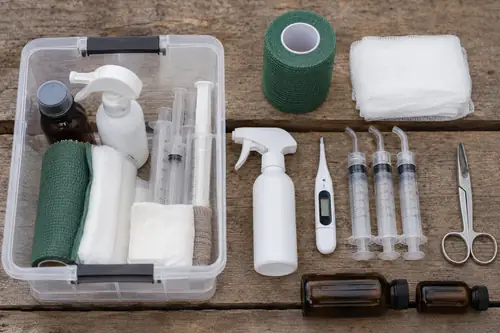
Oral drenching with a syringe is the gold standard for deworming goats. It delivers a precise dose directly into the goat’s mouth, ensuring the animal actually receives the full amount.
Injectable dewormers like ivermectin or moxidectin can also be used, though many vets prefer oral administration for goats because oral delivery provides better parasite kill rates in the gut. Pasture rotation, avoiding overgrazing, keeping hoof rot in check, and using the FAMACHA eyelid color chart to identify which goats actually need treatment are all part of a solid herd management program.
Final thoughts
Cattle dewormer blocks aren’t appropriate for goats. They deliver inconsistent, subtherapeutic doses that promote drug-resistant parasites rather than controlling them.
Deworm your goats individually with the right products at the right doses. It takes a few more minutes per goat, but it’s the difference between a deworming program that works and one that’s quietly destroying your options for the future.
Frequently Asked Questions
While a goat can lick a cattle dewormer block, the approach isn't recommended. Goats process dewormers faster than cattle and need significantly higher doses. A free-choice block can't deliver a controlled, adequate dose.
Cattle dewormer blocks are compressed mineral and medication blocks designed for cattle to lick over time. They contain deworming agents mixed into a salt or mineral base, but the dose rates are calibrated for cattle metabolism, not goats.
There are very few benefits. Subtherapeutic doses kill only the weakest parasites while leaving resistant ones to breed, creating drug-resistant worm populations on your farm. Individual oral drenching with goat-specific doses is far more effective.
The biggest risk is building parasite resistance through consistent underdosing. Once your worm population becomes resistant to a drug class, that drug is useless on your farm permanently. There's also a false sense of security while parasites thrive.