| # | Product | Our Rating | ||
|---|---|---|---|---|
| 1 |  | Best OverallVetericyn Plus All Animal Wound Care Spray (16 oz) | ★★★★★ | Check Price |
| 2 |  | Agri-Pro Veterinary Thermometer | ★★★★☆ | Check Price |
| 3 |  | Nutri-Drench Goat & Sheep Supplement (8 oz) | ★★★★☆ | Check Price |
A goat first aid kit is the difference between handling a problem at 2 a.m. and watching it spiral while you dig through the barn for supplies. Goats hide illness until they are very sick, so when something does go wrong, it usually goes wrong fast.
This guide lays out exactly what to stock, organized by the emergencies you will actually face: wounds, scours and dehydration, bloat, parasites, and the tools to monitor and dose safely. Build it once, keep it in a labeled tote near the barn, and restock it every spring.
A first aid kit handles the small stuff and buys time on the big stuff. It does not replace a vet. Program your regular vet and an after-hours livestock clinic into your phone now, before you ever need them.
What Goes in a Goat First Aid Kit
The short version: tools to monitor, supplies to treat wounds and scours, and a few emergency items your vet signs off on. A solid starter kit covers five jobs, and the rest of this guide explains how to use each group.
Here is the master checklist:
- Monitoring: a digital veterinary thermometer and a notebook to track readings
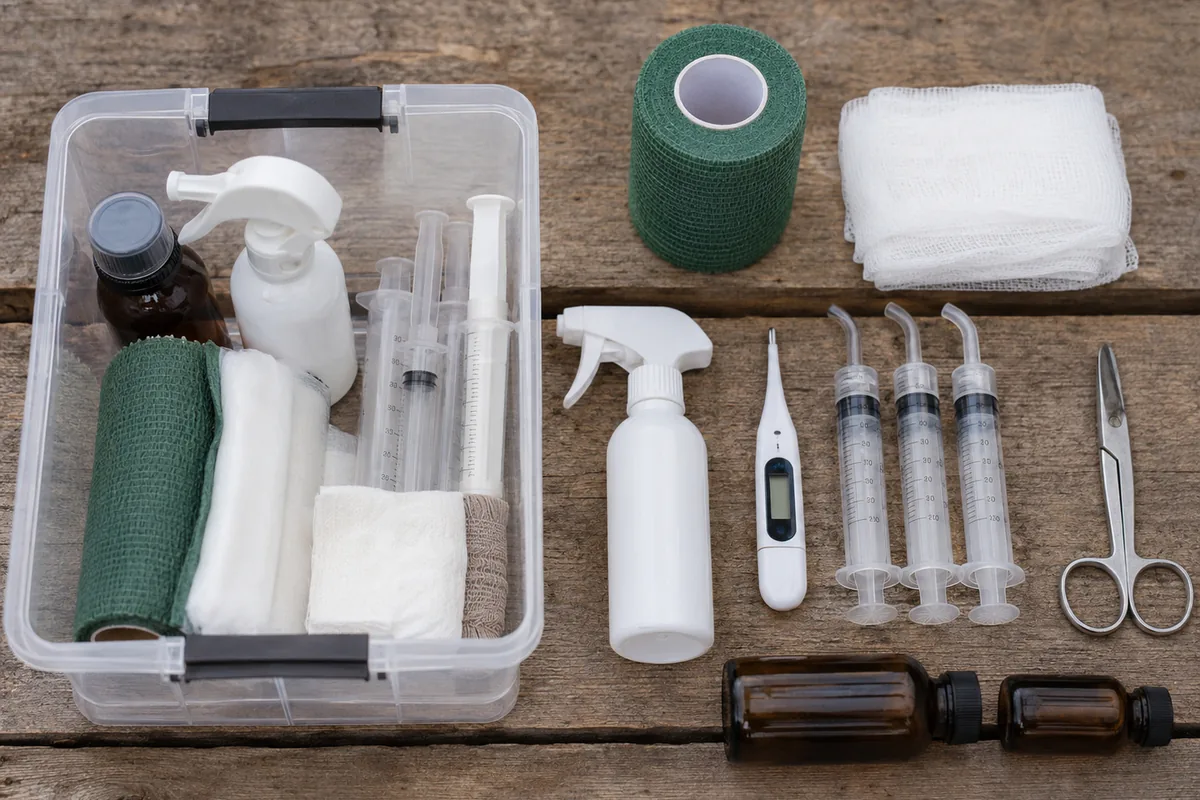
- Wound care: saline, a wound-care spray, gauze, vet wrap, and blunt scissors
- Digestive and dehydration: electrolytes, a probiotic, Nutri-Drench, activated charcoal, and baking soda
- Dosing tools: drench syringes, dose syringes, a weight tape, and any needles your vet supplies
- Parasites and skin: a dewormer that works on your farm and a louse treatment
Keep it all in a sealed, labeled tote with your vet’s number taped inside the lid, and check the expiration dates twice a year. A kit works best when you catch trouble early, so learn the basics of goat health too.
Wound and Injury Supplies
Goats find ways to cut, scrape, and snag themselves on almost anything. For a minor wound the routine is simple: rinse it with saline or clean water, spray a wound-care product over it, and keep it clean while it heals.
Stock gauze, self-adhesive vet wrap, and blunt-tipped scissors for dressing a leg or covering a scrape. A spray that is safe to use near the eyes and mouth earns its place, because goats injure their faces more often than you would expect.
Skip the urge to slather everything in thick ointment. Plenty of owners ask whether Neosporin is safe on goats, and a thin layer on a small cut is fine, but deep, gaping, or infected wounds need a vet and likely antibiotics, not a tube of cream.
Skin ointments aren’t safe for eyes, and a squinting, runny eye is a classic sign of goat pink eye.
Digestive and Dehydration Supplies
Most goat emergencies are gut emergencies. Scours, bloat, and going off feed all show up fast, and they all lean on the same handful of supplies.
Keep electrolytes for any goat with diarrhea, because dehydration is what actually kills, especially in kids who need electrolytes early. Pair them with a probiotic to rebuild the rumen and Nutri-Drench for a fast energy boost in a weak or off-feed animal.
For a goat that is not eating, take its temperature and feel the left side for rumen movement first. With goat diarrhea, fluids come before anything else.
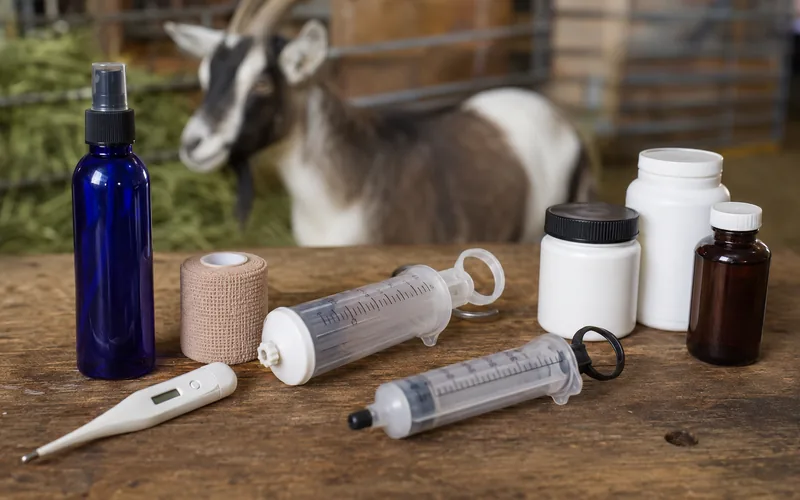
Two more items belong here. Activated charcoal binds toxins if a goat eats something it should not, and plain baking soda offered free choice helps buffer the rumen in mild bloat. Severe bloat, where the left side goes drum-tight, is an emergency that cannot wait for the kit.
Tools: Thermometer and Dosing
A digital thermometer is the single most useful tool you own, because temperature tells you fast whether a quiet goat is fighting an infection or shutting down. Normal goat temperature runs about 101.5 to 103.5 degrees Fahrenheit. A reading above that points to infection, and a reading below it in a chilled or weak animal is a warning the goat is crashing.
Add oral drench syringes for fluids and electrolytes, dose syringes for liquid medications, and any needles and syringes your vet provides for injectables. A weight tape lets you dose by body weight instead of guessing, which matters because goats need more of most drugs per pound than the label states. Keep a printed copy of the goat medication dosage chart in the lid of the tote.
Parasites and Emergency Medications
Round out the kit with the treatments you reach for most. Keep a dewormer that still works on your farm, confirmed with a fecal egg count, since worms are the top killer of goats. A louse and mite treatment handles the most common skin problem, which flares up under winter coats.
For coccidiosis in kids, keep a coccidiostat such as amprolium (Corid) in the kit. Worms and coccidia cause similar scours but need completely different drugs, so run a fecal test before you treat for goat worms.
A word on stronger drugs. As of 2023, medically important antibiotics like penicillin and oxytetracycline require a prescription in the United States, so you cannot just stock them off the shelf. Pain and anti-inflammatory medications such as Banamine are prescription items too. Build that side of the kit with your vet, not from a forum.
When to Call the Vet
A kit handles minor cuts, mild scours, and routine parasites. Some things cannot wait, and knowing the line is what saves the animal.
Call the vet right away for a tight, drum-like bloated belly, a kid with bloody or relentless diarrhea, a goat that is down and cannot rise, labored breathing, a deep or heavily bleeding wound, a buck straining to urinate, or any goat that has not eaten in 24 hours. A phone call is free, and a dead goat is not.
After a hard knock to the head, watch for stumbling or circling, which can point to a concussion.
Sources and Further Reading
- Merck Veterinary Manual, Routine Health Care of Goats
- University of Maryland Extension, Small Ruminant Program
- FDA Guidance for Industry #263, on the prescription status of medically important antibiotics
This article is educational and does not replace veterinary care. Always confirm drugs, doses, and meat or milk withdrawal times with your veterinarian.
Frequently Asked Questions
The core kit covers five jobs. For monitoring, a digital veterinary thermometer. For wounds, saline, a wound-care spray, gauze, vet wrap, and blunt scissors. For the gut, electrolytes, a probiotic, Nutri-Drench, activated charcoal, and baking soda. For dosing, drench and dose syringes plus a weight tape. For parasites, a dewormer that works on your farm and a louse treatment. Keep it in a labeled tote with your vet's number inside the lid.
Your vet's phone number, then a thermometer. Temperature is the fastest way to tell whether a quiet goat is fighting an infection or simply resting, and it guides almost every decision that follows. After that, electrolytes and Nutri-Drench save the most lives, because dehydration and a crashing energy level are what actually kill a sick or scouring goat while you arrange care.
As of 2023, medically important antibiotics such as penicillin and oxytetracycline require a veterinary prescription in the United States, so you cannot simply stock them off the shelf. Talk with your vet about what to keep for your herd, the correct doses, and the meat and milk withdrawal times. Do not stockpile or guess at antibiotics, because the wrong drug or dose breeds resistance and can harm the goat.
A healthy goat runs about 101.5 to 103.5 degrees Fahrenheit, a little higher than people. A reading above that range usually means infection, while a reading below it in a weak, chilled, or newborn goat is a serious red flag that the animal is crashing. Take the temperature rectally with a digital thermometer and write it down, because a trend over a few hours tells you more than a single number.
For a minor cut or scrape, rinse it with saline or clean water, spray a wound-care product over it, and keep it clean and dry while it heals. Cover a leg wound with gauze and vet wrap if the goat will leave it alone. Deep, gaping, heavily bleeding, or infected wounds, and anything near a joint or the eye, need a vet and often antibiotics rather than home care.