
| # | Product | Our Rating | ||
|---|---|---|---|---|
| 1 |  | Best OverallMerck Safe-Guard Goat Dewormer (125 ml) | ★★★★★ | Check Price |
| 2 |  | Advanllent Fenbendazole Goat Dewormer (150 ml) | ★★★★☆ | Check Price |
| 3 | 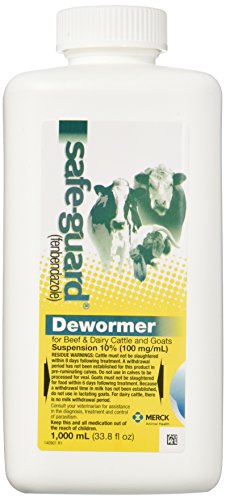 | Safe-Guard Dewormer Suspension (1000 ml) | ★★★★☆ | Check Price |
Coccidiosis is one of the deadliest things that can hit a goat kid, and Corid is the medication most owners reach for. It works, but it is also widely misdosed, and the way it works (by blocking thiamine) means a careless course can trade one killer for another.
Every bad coccidiosis outbreak I’ve dealt with in my own herd hit kids right around weaning, the classic stress point, and it taught me to have the treatment plan, and the thiamine, ready before the first scour ever shows up.
This guide covers the Corid dosage for goats, how to give it, and the thiamine safety rule that too many quick answers skip.
As with most goat medication doses, the Corid dose scales with body weight, so weigh the goat first.
Important: Corid is used extra-label in goats (it is not FDA-approved for them), and published goat doses vary widely. The figures here are commonly cited references for education, not a prescription. Your veterinarian should confirm the exact dose and the treatment plan, especially for young kids.
What Corid Treats and How It Works
Corid is the brand name for amprolium. It treats coccidiosis, an intestinal infection caused by single-celled protozoa called coccidia that damage the gut lining and cause scours (often bloody), dehydration, and stunting in kids.
Amprolium works by mimicking thiamine (vitamin B1), a nutrient the coccidia need to multiply. By starving the parasites of thiamine, it stops the infection from spreading.
Hold onto that detail, it is also the source of Corid’s biggest danger, covered below.
Corid is not a dewormer. It does nothing against stomach worms like the barber pole worm.
If a kid has both coccidia and worms (common in a stressed, scouring kid), each needs its own treatment, and dewormer safety margins vary by drug.
Corid Dosage for Goats by Weight
The most common form is Corid 9.6% oral solution (liquid). A widely cited treatment dose is about 1 mL per 5 lb of body weight, by mouth, once daily for 5 days.
| Goat weight | Corid 9.6% per day (~1 mL/5 lb) | Course |
|---|---|---|
| 10 lb | 2 mL | 5 days |
| 20 lb | 4 mL | 5 days |
| 30 lb | 6 mL | 5 days |
| 40 lb | 8 mL | 5 days |
| 50 lb | 10 mL | 5 days |
| 75 lb | 15 mL | 5 days |
| 100 lb | 20 mL | 5 days |
Treat this as a starting reference, not a fixed rule. Published goat protocols range from roughly 1 mL per 4 lb (stronger) down to lower flat doses (for example, 5 mL/day for kids and 10 mL/day for adults).
Because amprolium is risky when overdosed, your vet should set the exact dose, particularly for newborn and very young kids.
How to Give Corid to Goats
You can give Corid two ways:
- Oral drench (recommended for sick goats). Draw the dose into a drench syringe and give it directly by mouth, once daily for the full course. This guarantees each goat gets the right amount.
- In drinking water (for groups or prevention). Mix Corid into the herd’s only water source per your vet’s or the label’s directions. The catch: a sick kid that feels miserable often stops drinking, so it gets too little drug exactly when it needs it most.
For a sick kid, always drench. Save the water method for prevention or large groups, and remove other water sources so the medicated water is the only option.

Finish the full 5 days even if the scours clear up after two, the coccidia life cycle outlasts the visible symptoms, and stopping early invites a relapse.
The Thiamine Warning: Why Corid Can Cause Goat Polio
This is the part most quick answers leave out, and it is the one that kills goats.
Because amprolium blocks thiamine (vitamin B1), a too-high dose or a too-long course can push a goat into thiamine deficiency, goat polio (polioencephalomalacia). The signs are neurological: a “stargazing” head tilted up and back, circling, stumbling, blindness, and seizures.
Two rules keep you safe:
- On longer or repeated courses, give vitamin B1 (thiamine) alongside Corid, many breeders give a daily B1 injection during treatment. Ask your vet.
- Stop Corid immediately and call your vet if you see any neurological sign. Goat polio is treatable with high-dose thiamine if caught fast. If you want the full picture, see whether a goat can recover from polio.
Using Corid to Prevent Coccidiosis
Prevention beats treatment every time, because by the time a kid is scouring, the gut damage is already done. Your main tools:
- A coccidiostat in the feed. Once kids start nibbling solids around 2-3 weeks, offer a starter or creep feed medicated with decoquinate (Deccox), lasalocid (Bovatec), or monensin (Rumensin). Keep it up through about 10-12 months.
- Management. Clean, dry, uncrowded pens; raised feeders and waterers so they aren’t contaminated with manure; and low stress around weaning, the classic trigger.
Some owners also run a low-dose amprolium “prevention” course at known stress points (weaning, shows, weather swings), do this only on your vet’s advice, and remember the thiamine caveat.
Signs of Coccidiosis in Goats
Catch it early and most kids pull through. Watch for:
- Diarrhea, often dark, watery, or streaked with mucus and blood
- A kid that is hunched, dull, and dropping weight despite eating
- Dehydration (tacky gums, skin that tents) and a rough coat
- Kids 3 weeks to 5 months old, especially right after weaning
A kid that stops eating and goes down needs more than Corid, rehydration and a vet. Keep electrolytes and probiotics in your kit for any scouring goat.
Corid vs Albon vs Baycox
| Drug | Type | Typical use | Notes |
|---|---|---|---|
| Corid (amprolium) | Thiamine blocker | 5-day treatment or prevention | Cheap, widely available; thiamine/polio risk |
| Albon / Di-Methox (sulfadimethoxine) | Sulfa antibiotic | 5-day treatment | Also hits secondary bacterial infection; no thiamine risk |
| Baycox / Marquis (toltrazuril / ponazuril) | Triazinone | Often a 1-2 day course | Very effective; more expensive, harder to source |
Many vets favor a sulfa like Albon or a single course of toltrazuril for active outbreaks, partly to sidestep amprolium’s thiamine problem. Each of these alternatives has its own coccidiosis dosing schedule, so don’t reuse Corid’s numbers.
Sources and Further Reading
Cross-checked against established veterinary and goat references:
- The Merck Veterinary Manual, Coccidiosis in goats and amprolium
- University extension publications on coccidiosis in small ruminants
- Onion Creek Ranch / Tennessee Meat Goats, coccidiosis treatment and prevention
Amprolium is extra-label in goats and published doses vary widely; confirm the exact dose and the thiamine plan with your veterinarian.
Frequently Asked Questions
A commonly cited treatment dose is about 1 mL of Corid 9.6% oral solution per 5 lb of body weight, by mouth, once daily for 5 days. Published goat protocols vary quite a bit (some use roughly 1 mL per 4 lb, others use lower flat doses), and amprolium is dangerous if overdosed, so confirm the exact dose with your veterinarian before treating.
Yes. Corid (amprolium) works by blocking thiamine (vitamin B1), the same vitamin goats need for brain function. Overdosing or treating for too long can trigger thiamine deficiency, also called goat polio (polioencephalomalacia), which causes stargazing, circling, blindness, and death. On longer courses, give vitamin B1 alongside Corid and stop if you see neurological signs.
Drenching each goat individually by mouth is more reliable than medicating the water, because a sick goat that feels bad often stops drinking and then gets too little drug. The water method (mixing Corid into the herd's only water source) can work for prevention or large groups, but for treating a sick kid, drench it directly.
A standard course is 5 consecutive days, and severe cases are sometimes extended to 10 days under veterinary guidance. Do not stop early just because the diarrhea improves; the coccidia life cycle outlasts the visible symptoms.
No. Corid (amprolium) treats coccidia, which are single-celled protozoa, not worms. It will not kill stomach worms like barber pole worm. Coccidiosis and worms are separate problems that need separate medications, though a sick kid can have both at once.