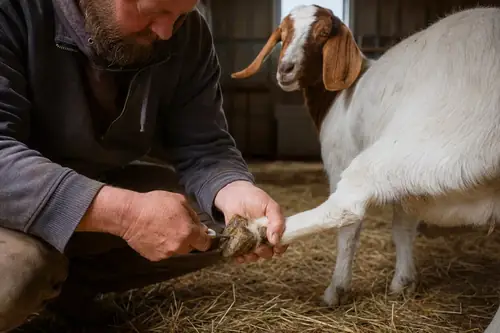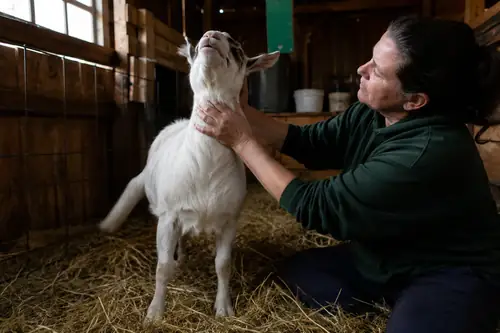

Goats have become a fixture at petting zoos, hobby farms, and backyard homesteads across the country. All that hands-on contact raises a fair question about what those friendly nuzzles might leave behind on your skin.
The concern is real but very manageable. Most healthy adults who clean up properly never get sick, yet a handful of germs goats carry are a genuine cause of stomach upset and loose stools.
Can Goats Really Give People Diarrhea?
Yes, they can. A goat can look perfectly healthy while quietly shedding bacteria and parasites that irritate a human gut.
These illnesses belong to a group called zoonotic diseases, meaning infections that travel from animals to people. Veterinary programs at institutions like Cornell University track several of them in sheep and goats.
Here’s the reassuring part: diarrhea from goat contact is almost always preventable. It really comes down to germs reaching your mouth, not the simple act of petting an animal.
How Goats Spread Diarrhea-Causing Germs
Nearly every case traces back to a single route: fecal-oral transmission. Tiny, invisible traces of manure end up on your hands, then reach your mouth when you eat, drink, or rub your face.
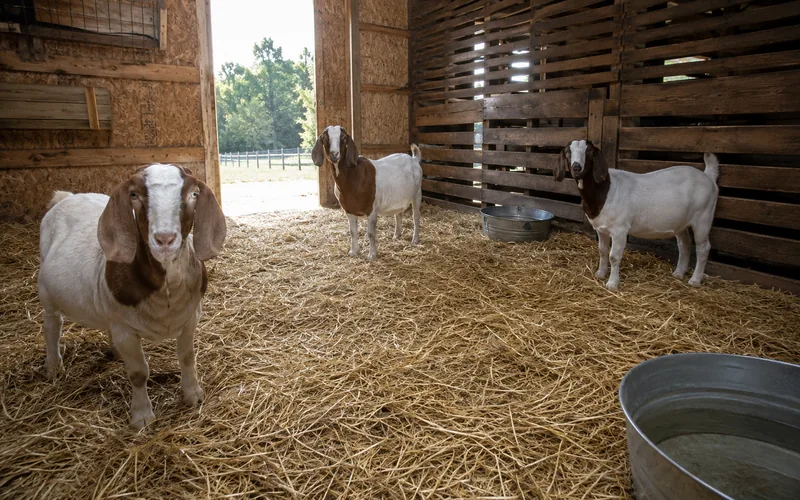
Goats are messy by nature. Their droppings cling to their coats, hooves, fences, feed buckets, and the bedding where they sleep.
You never have to touch manure directly to be exposed. Petting a goat’s flank, topping off a water trough, or leaning on a gate can move germs onto your skin without you noticing.
Many of these organisms also linger on hard surfaces for hours or days. That staying power means a railing, a boot, or a child’s stroller wheel can carry the germs home long after you leave the barn.
Can a goat licking or nuzzling you cause diarrhea?
A friendly lick rarely makes you sick on its own. The catch is that a goat’s muzzle can carry manure germs from grazing and grooming, so rinse any spot it mouths and wash up before you eat.
Diarrhea-Causing Germs Goats Carry at a Glance
A few specific pathogens account for most human cases. The table below sums up the main ones, how fast they act, and what they feel like.
| Germ | Type | Typical onset | Common symptoms |
|---|---|---|---|
| Cryptosporidium | Parasite | 2 to 10 days | Watery diarrhea, cramps, nausea |
| Salmonella | Bacteria | 1 to 3 days | Diarrhea, fever, stomach cramps |
| Campylobacter | Bacteria | 2 to 5 days | Cramping, fever, bloody stools |
| E. coli O157:H7 | Bacteria | 3 to 4 days | Bloody diarrhea, severe cramps |
| Giardia | Parasite | 1 to 3 weeks | Greasy stools, gas, bloating |
Cryptosporidium: The Most Common Culprit
Cryptosporidium parvum is the parasite most often tied to goat contact, especially with kids, the baby goats. It causes cryptosporidiosis, marked by watery diarrhea, cramping, and nausea.
It’s also a frequent culprit behind the illness outbreaks traced to petting zoos and county fairs each year. Health departments routinely log clusters after a single weekend event.
What makes it so stubborn is its armored outer shell, called an oocyst. Those oocysts shrug off chlorine and can survive on surfaces for days, which is why hand sanitizer alone won’t reliably kill them.
Young goats with scours shed the parasite in large numbers. If you help bottle-feed or treat a goat with diarrhea, your own risk of exposure climbs sharply.
Salmonella From Goats and Their Pens
Salmonella is a classic barnyard bacterium that goats pass in their feces. In people it brings on diarrhea, fever, and abdominal cramps that usually run their course over several days.
Infected goats frequently show no signs at all. That silent carriage is exactly why a healthy-looking animal can still leave germs on your hands and clothes.
The bacteria also persist in soil, bedding, and on feeders for weeks. Cleaning out a pen or refilling a hayrack can expose you just as easily as touching the goat itself.
Campylobacter and Goat Handling
Campylobacter jejuni is one of the leading causes of bacterial diarrhea worldwide, and goats are a known reservoir. Its symptoms include cramping, fever, and sometimes bloody stools.
In rare cases, a Campylobacter infection can trigger Guillain-Barre syndrome, a serious disorder that attacks the nerves. That complication is uncommon, but it’s worth knowing about if your symptoms turn severe.
E. coli and the Risk of Severe Illness
Most E. coli is harmless, but the O157:H7 strain is dangerous and can live in a goat’s intestines. It produces Shiga toxins that cause bloody diarrhea and intense cramping.
The biggest worry is hemolytic uremic syndrome, a type of kidney failure that mainly threatens young children. The CDC has documented several petting-zoo outbreaks linked to this exact strain.
Are baby goats more likely to make people sick?
Yes. Kids, the baby goats, shed far more bacteria and Cryptosporidium than healthy adult goats, especially when they have scours. They also draw the most hands-on attention, so supervise children closely whenever they handle them.
Giardia and Other Parasites
People often ask whether they can catch parasites from goats, and Giardia duodenalis is the usual suspect. It causes giardiasis, which brings greasy stools, gas, and persistent bloating.
Goat-specific worms are a much smaller concern, since most cannot complete their life cycle in humans. The real damage from goat worms happens inside the herd, not in the people tending it.
External parasites like goat lice are host-specific too, so they can’t survive on people.
Raw Goat Milk: A Separate Risk
Drinking raw, unpasteurized goat milk is one of the most common ways these same germs reach people. That’s exactly why public health agencies like King County push so hard for pasteurization.
Raw milk can carry Campylobacter, Salmonella, E. coli, and Listeria straight to your gut. For pregnant women the stakes climb higher, so goat milk during pregnancy should always be pasteurized.
Listeria is also what causes circling disease in goats, so never drink raw milk from a sick goat.
Who Is Most at Risk
Healthy adults usually fend off these germs with mild symptoms or none at all. The people who get seriously ill tend to share a few traits.

Children under five, adults over 65, pregnant women, and anyone immunocompromised face the greatest danger. Their bodies clear infections more slowly, so dehydration and complications set in faster.
Young children are also the most hands-on visitors at any farm or petting zoo. They touch everything, then put their fingers in their mouths, which is the perfect setup for fecal-oral spread.
How to Avoid Getting Diarrhea From Goats
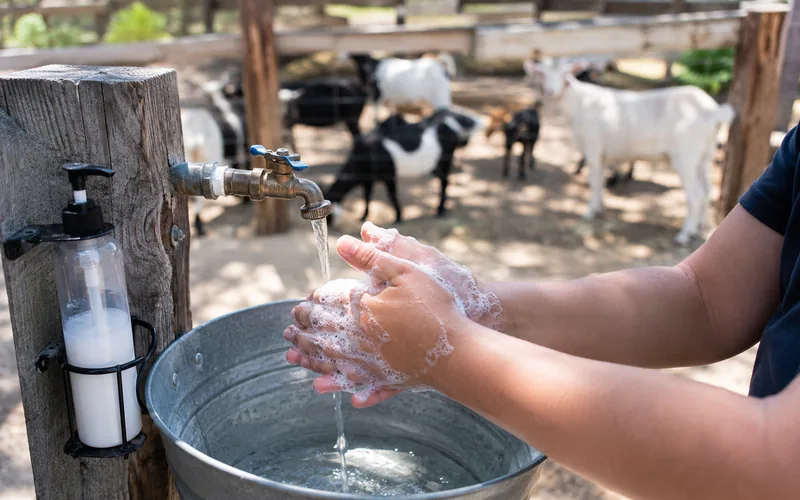
Prevention here is simple, and it works remarkably well. The single most important habit is washing your hands with soap and running water after any contact with goats.
- Wash hands right after touching goats, pens, or equipment, and always before eating.
- Never eat, drink, or smoke inside the goat area.
- Keep food and beverages well away from where the animals roam.
- Pasteurize goat milk before drinking it or sharing it.
- Supervise children closely and wash their hands for them.
- Clean and dry pens often to limit manure buildup.
Hand sanitizer is a backup, not a substitute, because it misses Cryptosporidium.
Goats can pass other diseases to people too, though goat lice can’t live on humans.
When to See a Doctor
Most cases clear up on their own with rest and plenty of fluids. Still, certain symptoms call for prompt medical attention.
See a doctor for bloody diarrhea, a high fever, signs of dehydration, or diarrhea that lasts more than a few days. Mention your goat contact, since it helps the provider test for the right pathogen.
Watch young children especially closely for sunken eyes, very little urine, or unusual drowsiness. Those are warning signs of dehydration that can turn serious quickly and deserve same-day care.
Dogs kept near your herd can catch several of the same germs, including Giardia and Salmonella.
Sources and Further Reading
- Cornell University College of Veterinary Medicine, Animal Health Diagnostic Center: Zoonotic Diseases of Sheep and Goats
- Centers for Disease Control and Prevention (CDC): Healthy Pets, Healthy People, Farm Animals
- King County Public Health: Goats and Livestock Zoonotic Diseases
Frequently Asked Questions
Yes. Cryptosporidium and Giardia are the main parasites that pass from goats to people through fecal contact, and both cause diarrhea. Most goat-specific worms, on the other hand, do not survive well in the human body.
Petting alone is low risk, but germs on the goat's coat can reach your mouth if you do not wash your hands afterward. Clean hands before eating or touching your face are what keep petting safe.
It depends on the germ. Salmonella and Campylobacter usually cause symptoms within one to five days, while Cryptosporidium can take two to ten days to appear.
It can be. Goat manure may contain Salmonella, E. coli, and Cryptosporidium, so always wash your hands and avoid touching your face after handling it or cleaning pens.