| # | Product | Our Rating | ||
|---|---|---|---|---|
| 1 |  | Best OverallProzap Insectrin Livestock Louse Dust | ★★★★★ | Check Price |
| 2 |  | Permectrin CDS Permethrin Pour-On (1 Pint) | ★★★★☆ | Check Price |
| 3 |  | Durvet Synergized Permethrin 1% Pour-On | ★★★★☆ | Check Price |
Yes, mites are one of the most common external parasites in goats. They cause intense itching, hair loss, and crusty skin, and they can spread through your entire herd fast if you don’t catch them early.
Can goats get mites?
Goats are very susceptible to mites, especially during the colder months when they’re spending more time crowded together in barns and shelters. The warm, damp conditions inside a winter barn are exactly what mites need to multiply.
Mites spread through direct contact between goats and through shared bedding, brushes, and equipment. A new goat brought into the herd without a quarantine period is one of the fastest ways to introduce a mite problem to your whole flock.
What are mites and what do they do to goats?
Mites are tiny arthropods that feed on skin, blood, or lymph fluid depending on the species. You usually can’t see them with the naked eye, so by the time you notice symptoms, the infestation has already taken hold.
They cause intense irritation that drives goats to scratch, rub, and bite at their skin constantly. Untreated mite infestations can lead to hoof rot and other secondary issues as the goat’s immune system becomes stressed.
This leads to hair loss, raw patches, scabs, and secondary bacterial infections in the damaged skin.
Signs that your goat may have a mite infestation
The first thing most people notice is excessive scratching and rubbing against fences, posts, and feeders. If a goat is losing hair in patches, especially on the legs, face, or ears, mites should be high on your list of suspects.
Crusty or scabby skin is another telltale sign. Ear mites cause head shaking, dark waxy debris in the ear canal, and sometimes a tilted head.
A goat dealing with mites is also more vulnerable to anemia from blood-sucking varieties. If you see several of these symptoms in one goat, check the rest of the herd immediately because mites don’t stay on one animal.
How to treat a goat for mites?
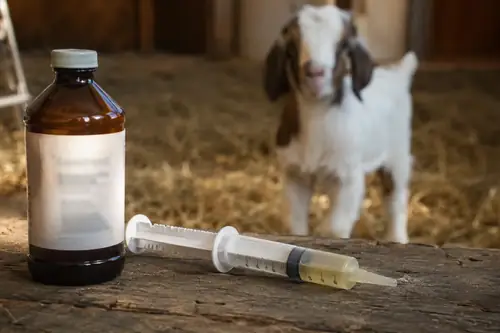
Ivermectin injection is the most common and effective treatment. Give it subcutaneously at the proper dose for your goat’s weight, then repeat 10 to 14 days later to catch any mites that hatched after the first dose.
Permethrin spray can be applied directly to affected areas for quick relief. You also need to strip out all bedding from the barn, clean the stall thoroughly, and put down fresh bedding.
Treat every goat in the herd at the same time, even the ones that look fine, because they’re likely carrying mites without showing symptoms yet.
Preventing mites in goats
Quarantine any new goats for at least two weeks before mixing them with your existing herd. Inspect them thoroughly for signs of mites, lice, or other skin problems during that quarantine period.
Keep your barn clean and dry with fresh bedding, and avoid overcrowding. Mites thrive in damp, crowded conditions where goats are in constant close contact.
A preventive ivermectin treatment in early fall, before cold weather pushes everyone into the barn, can head off winter mite outbreaks.
What kind of mites do goats get?
There are three main types. Sarcoptes mites burrow into the skin and cause severe mange with intense itching and thick, crusty lesions.
This is the most serious type and can spread to humans temporarily.
Chorioptes mites affect the lower legs and feet, causing scaly, itchy skin that’s sometimes called “foot rot mites.” Psoroptes mites target the ears and body, causing scabby patches and ear infections.
All three types respond to ivermectin treatment, and a vet experienced with treating conditions like goat polio and mite infestations can help you identify the right approach.
Final Thoughts
Mites are a common and treatable problem in goats. The key is catching them early and treating the whole herd at once, not just the goats that are showing symptoms.
Two rounds of ivermectin spaced 10 to 14 days apart, combined with a thorough barn cleanout, will knock out most infestations. Prevention comes down to quarantining new animals, keeping the barn clean, and treating before winter drives the herd indoors.
Frequently Asked Questions
Yes, goats are very susceptible to mites, especially during colder months when they spend more time crowded in barns. Mites spread through direct contact and shared bedding, brushes, and equipment.
Mites are tiny arthropods that thrive in warm, humid environments. There are many different species of mites, and they can infest animals, plants, and even humans. Goat mites are a type of mite that specifically target goats.
Ivermectin injection is the most common and effective treatment. Give it subcutaneously at the proper dose, then repeat 10 to 14 days later. Strip all bedding, clean the stall, and treat every goat in the herd at the same time.
Prevention is the best approach. Quarantine new goats for at least two weeks before mixing them with your herd. Keep barns clean and dry, avoid overcrowding, and consider a preventive ivermectin treatment in early fall before winter.