| # | Product | Our Rating | ||
|---|---|---|---|---|
| 1 |  | Best OverallManna Pro Goat Electrolyte Powder | ★★★★☆ | Check Price |
| 2 |  | Nutri-Drench Goat & Sheep Supplement (8 oz) | ★★★★☆ | Check Price |
| 3 |  | Probios Probiotic Oral Gel for Goats | ★★★★☆ | Check Price |
Winter panics a lot of first-time goat owners, and for good reason. A herd that looks miserable in a snowstorm can leave you wondering whether the cold itself might kill them overnight.
The honest answer is more reassuring than most people expect, but it comes with real conditions attached. Goats are built for cold far better than for heat, yet the wrong shelter or a single soaking rain can turn a survivable night into a fatal one.
This guide breaks down exactly how cold is too cold, which animals in your herd are most fragile, and the specific steps that keep goats alive when the thermometer drops.
Can Goats Actually Die From Cold Weather?
Yes, goats can die from cold, but the temperature reading on your porch is almost never the direct cause. A healthy adult goat with a thick winter coat, a dry place to stand, and a belly full of hay is remarkably resilient in freezing conditions.
What actually kills goats in winter is a chain of secondary problems. Wet fur that loses its insulation, a draft that steals body heat faster than the animal can generate it, or a respiratory infection that takes hold in a damp, crowded barn.
Think of cold as the setting rather than the weapon. The real dangers are moisture, wind, and neglect, and every one of them is something you can control.
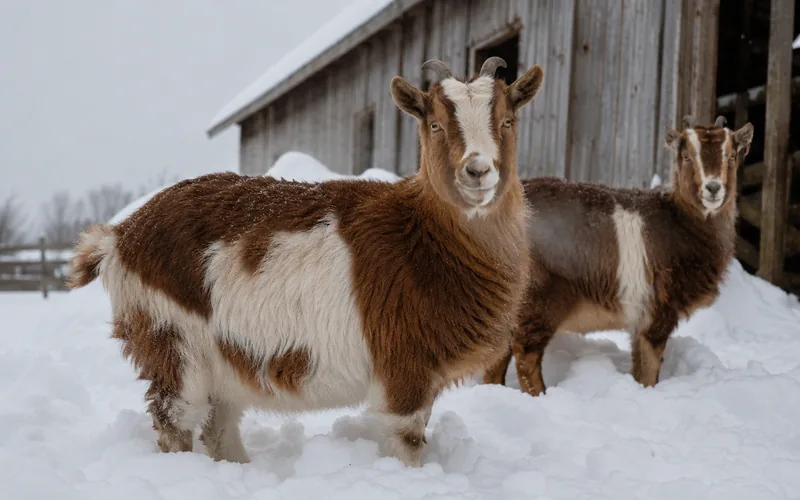
Newborn kids are the major exception to this rule. A wet kid born onto frozen ground can slip into fatal hypothermia in under an hour, which is why kidding season deserves its own plan entirely.
What Temperature Is Too Cold for Goats?
The short answer: healthy adults in full coat handle about 0°F (-18°C) when dry, while newborn kids need help below 40°F (4°C).
Adult goats are comfortable at temperatures that feel brutal to us. In dry, still air with access to shelter, a healthy goat in full coat handles conditions down to around 0 degrees Fahrenheit (-18 degrees Celsius) without any trouble.
The picture changes the moment moisture or wind enters the equation. A calm, dry day at 15 degrees is far safer than a rainy 40-degree day, because water flattens the coat and destroys its insulating loft.
Use the table below as a working reference for how cold is too cold across your herd. These are planning thresholds, not hard cutoffs, and any wet or sick goat needs help sooner.
| Goat type | Comfortable down to | Watch closely | Danger zone (act now) |
|---|---|---|---|
| Healthy adult, full coat | 0°F / -18°C | 0 to -10°F / -18 to -23°C | Below -10°F / -23°C, or any wet cold |
| Dairy breeds (thinner coat) | 20°F / -6°C | 10 to 20°F / -12 to -6°C | Below 10°F / -12°C or wind and rain |
| Nigerian Dwarf and Pygmy | 10°F / -12°C | 0 to 10°F / -18 to -12°C | Below 0°F / -18°C or soaked coat |
| Newborn and young kids | 40°F / 4°C | 32 to 40°F / 0 to 4°C | Below 32°F / 0°C, especially if wet |
| Sick, old, or thin goats | 30°F / -1°C | 20 to 30°F / -6 to -1°C | Below 20°F / -6°C |
Why Wind and Moisture Beat the Thermometer
A goat’s winter coat works by trapping a layer of warm air against the skin. Wind strips that layer away, and wet fur collapses it completely, so the actual air temperature tells only half the story.
That’s why wind chill and rain matter more than any single number. A goat standing in a 25-degree downpour is in far more danger than one bedded down in dry straw at 5 degrees, even though the thermometer says the opposite.
Wet cold is also the classic setup for illness. Once a coat is soaked and its body temperature starts to drop, a goat is far more likely to get sick from the cold, because damp conditions open the door to respiratory infection.
Which Goats Are Most Likely to Die in the Cold?
Put simply, newborn kids, thin or elderly goats, wet animals, and fine-coated breeds face the greatest danger.
Not every goat carries the same risk, and knowing your weak links lets you focus your attention where it counts. Some animals can shrug off a blizzard while others need close watching once frost appears.
Newborn and very young kids top the list by a wide margin. Their tiny bodies lose heat rapidly, they arrive wet, and they have almost no fat reserves to burn for warmth.
Thin, elderly, and sick goats come next. A goat carrying poor body condition has less insulation and less fuel to generate heat, so cold that a robust animal ignores can push a frail one into decline.
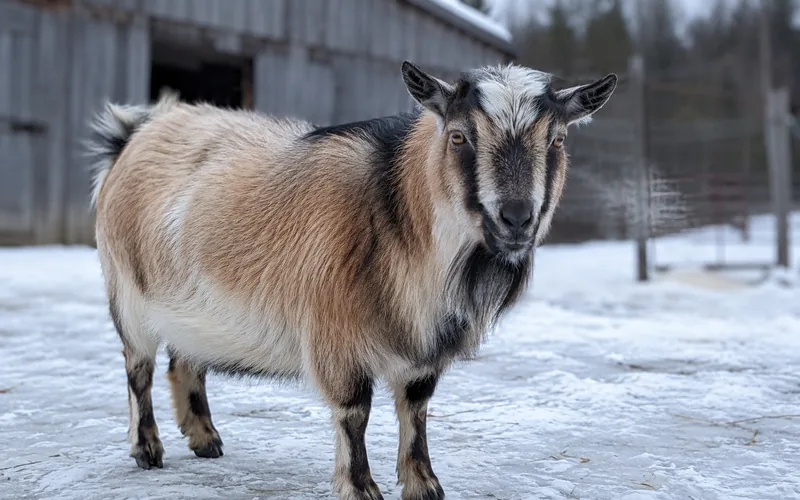
Small and fine-coated breeds also feel the cold sooner. Miniature goats such as Nigerian Dwarf and Pygmy lose heat faster because of their size, while sleek dairy breeds like Saanen and Nubian lack the dense coat of a Boer or an Angora.
Don’t overlook freshly kidded does, either. A doe that has just given birth is tired, often damp, and pouring energy into milk, which leaves less in reserve for staying warm.
How Goats Stay Warm in Winter Without Help
In simple terms, goats heat themselves from the inside through rumen fermentation, a dense winter coat, and huddling with the herd.
Before you worry too much, it helps to understand just how well equipped goats are for cold. Their bodies run a heating system that works quietly through the worst of winter.
The biggest engine is the rumen. As gut microbes ferment hay and forage, they throw off a steady stream of heat, effectively turning every goat into a walking furnace fueled by roughage.
Their coat does the rest. Most breeds grow a dense undercoat in autumn that traps warm air against the skin, and many double that protection by huddling together to share body heat.
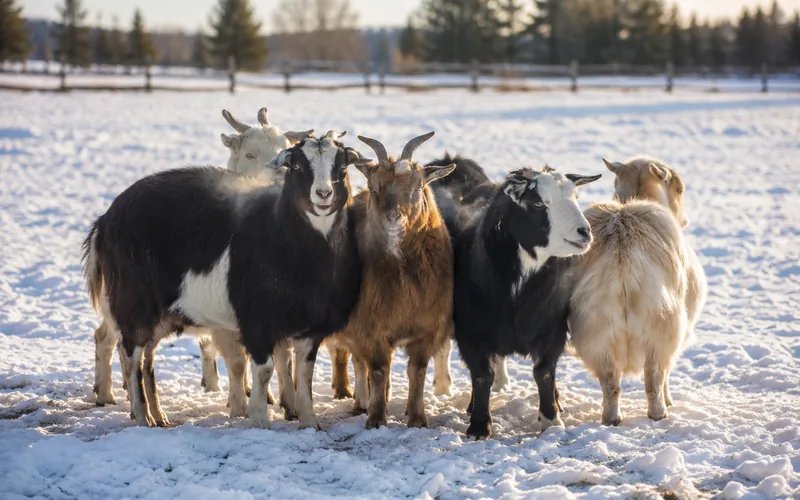
And then there’s behavior. Goats seek out sheltered corners, turn their backs to the wind, and cut down on movement to conserve energy, all instincts honed by their mountain ancestry.
So the goats staring at you pitifully through the snow are usually just fine. Give them dry ground and steady food, and their own biology handles the temperature.
Warning Signs a Goat Is Dangerously Cold
Here is what matters: prolonged shivering, cold ears or gums, a hunched posture, and lost appetite are the red flags.
Even with all those defenses, individual goats can and do get into trouble. Catching cold stress early is the difference between a quick recovery and an emergency, so learn the signals.
Shivering is the first and most obvious sign. It means the goat is actively burning energy to make heat, and while brief shivering is normal, prolonged or violent shivering signals the body is falling behind.
A more sinister clue is when shivering suddenly stops in a goat that is still cold. That can mark the shift into true hypothermia, where the body has run out of fuel to keep fighting.
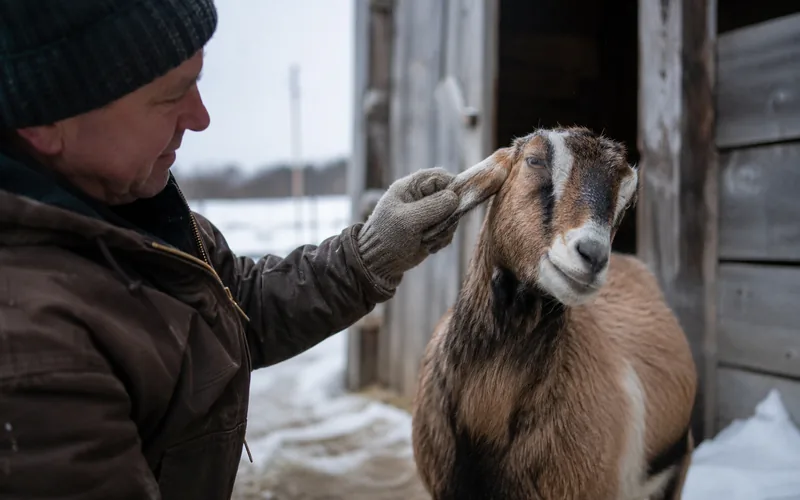
Check the extremities and mouth with your hands. Cold ears, a cold tail, and especially a cold mouth or gums point to a dropping core temperature that needs immediate action.
Prolonged deep cold also brings a risk of frostbite on the parts that lose heat first. Watch the ear tips, the tail, and a doe’s teats for pale, hard, or swollen patches, and get a vet involved before the damaged tissue darkens and dies.
Watch behavior as well. A dangerously cold goat often stands hunched with its back arched, tucks its legs under itself, grows listless, and loses interest in food.
If several goats show respiratory symptoms alongside the cold, you may be dealing with more than chill. Rapid breathing, coughing, or nasal discharge can signal the onset of goat pneumonia, which spreads fast in damp winter housing.
How to Keep Goats From Dying in Cold Weather
In short, the essentials are dry draft-free shelter, deep bedding, round-the-clock hay, unfrozen water, and skipping the heat lamp.
Keeping a herd alive through winter comes down to a handful of non-negotiables. Get these right and the temperature outside stops mattering.
Provide Dry, Draft-Free Shelter
Shelter is the single most important factor in winter survival. Goats need a structure that blocks wind and keeps them dry, whether that is a barn, a run-in shed, or a simple three-sided shelter facing away from prevailing winds.
The trick is blocking drafts without sealing the space airtight. You want no cold gusts at goat level, but enough airflow up high to let moisture and ammonia escape, since a damp sealed barn breeds far more illness than a cold ventilated one.
Livestock specialists make the same point in their winter goat-care guidance: steady airflow that clears damp air from the barn matters as much as trapped warmth.
Build Up Deep Bedding
A thick layer of straw does double duty as insulation and a heat source. Straw traps body warmth better than shavings and gives goats a dry, lofted surface that keeps them off frozen ground.
Many owners use the deep litter method through winter. You add fresh straw over the old rather than stripping it out, and the packed lower layers slowly compost and release gentle heat from below.
Keep Hay in Front of Them Around the Clock
Free-choice hay is your herd’s internal furnace, so this isn’t the season to ration it. Digesting forage generates the body heat that keeps goats warm, which means intake should go up as temperatures fall.
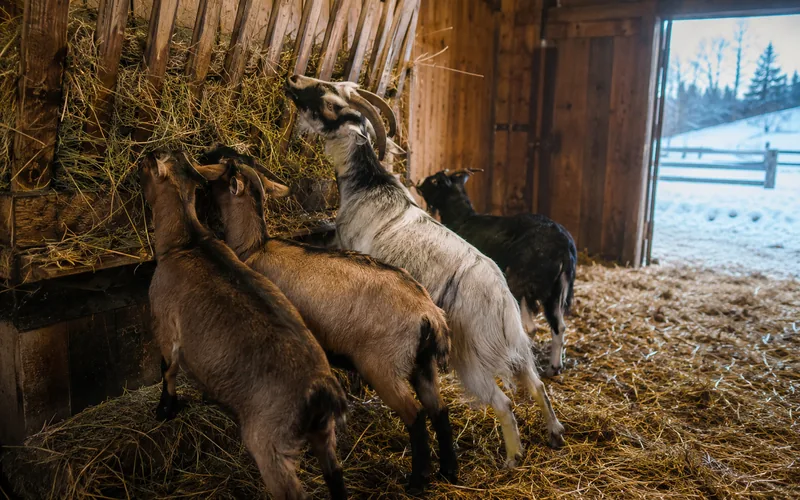
Focus on grass hay for warmth rather than grain. Long-stem forage ferments slowly in the rumen and produces far more lasting heat than concentrates do, so a full hay feeder matters more than any supplement.
Prevent Water From Freezing
Cold, iced-over water is a hidden winter killer, because goats drink less when it is freezing and low intake slows the rumen that keeps them warm. Dehydration in winter also raises the risk of deadly conditions like urinary blockages in bucks and wethers.
Keep water liquid and ideally slightly warm. A heated bucket or tank de-icer encourages steady drinking, and the same logic around water intake applies whenever goats are kept outdoors through the winter.
Extension winter management advice for goats confirms that intake falls sharply once the only water available turns icy.
Skip the Heat Lamp
It feels natural to want to add heat, but for healthy adult goats a heat lamp does more harm than good. Straw, dust, and curious goats combine with a hot bulb to create one of the most common causes of barn fires.
Reserve any supplemental heat for genuine emergencies with newborn kids, and even then use a safer option. A well-secured heat panel or a warming box mounted out of reach beats a dangling bulb every time.
Blanket Only the Vulnerable
Most goats never need a coat, and blanketing a healthy adult can actually flatten its insulating fur. The exceptions are thin, sick, elderly, or freshly shorn goats, along with newborn kids during a hard freeze.
For those animals a fitted goat coat or a dog jacket can bridge a dangerous night. Keep it dry, remove it once the weather breaks, and never leave a wet blanket on a goat, since damp fabric chills faster than bare fur.
Protecting Newborn Kids in Freezing Weather
The priorities are simple: dry each kid fast, get colostrum in early, and warm any chilled kid right away.
If cold is going to kill a goat on your farm, it will almost always be a newborn. Kids are born wet, tiny, and nearly out of fuel, which makes the first hour of life the most dangerous cold exposure they will ever face.
Timing kidding away from the deepest freeze helps enormously. When that isn’t possible, be present at birth to dry each kid with towels before its damp coat freezes.
Colostrum is the second lifeline. That first milk delivers both the antibodies and the energy a kid needs to start generating its own heat, so make sure every newborn nurses well within the first hour or two.
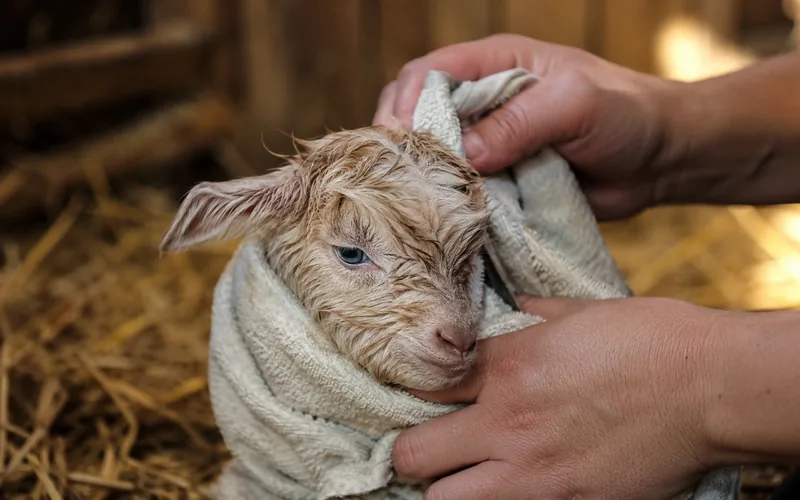
A kid that is already chilled needs warming before anything else. Get it into a warm space, dry it thoroughly, and use a warming box or warm water bath, keeping the head above water, until its temperature recovers.
Once a cold kid is warmed, gentle rehydration supports the recovery. Warm fluids paired with electrolytes formulated for baby goats help restore energy, and a weak kid that will not nurse may need fluids given carefully by syringe under a vet’s guidance.
Cold Snaps and Warm-Climate Herds
In practice, a sudden freeze often beats steady cold, because an unacclimated herd hasn’t grown a full winter coat yet.
Goats in mild regions face a different kind of risk than herds in the far north. A sudden hard freeze in a place like Texas or the Deep South can be more dangerous than a steady cold in Minnesota, and the reason is acclimation.
Goats grow their winter coats in response to gradually shortening days and falling temperatures. When a warm-climate herd is hit by an unexpected arctic blast, those animals may still be carrying a light coat that offers little protection.
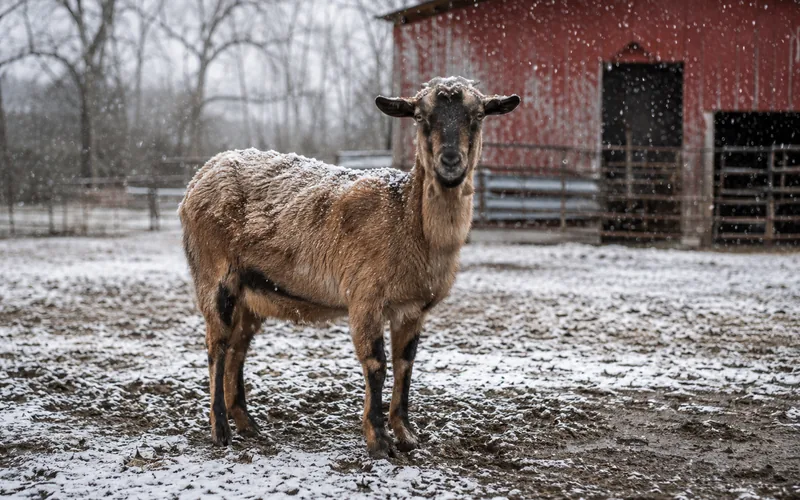
Preparation is the answer when a cold snap is forecast. Stock extra bedding, close off drafts in shelters that usually stay open, top up hay, and make sure water will not freeze before the front arrives.
Pay special attention to any goat that was recently sheared or is unusually thin. These animals lack the buffer that a full-coated herd relies on, and they’re the ones most likely to need a coat or a warmer stall during the worst of the freeze.
Final Thoughts
Cold weather rarely kills a well-managed goat, but poor winter care absolutely can. The temperature on the thermometer matters far less than whether your herd is dry, sheltered from wind, and eating enough hay to keep their internal furnaces running.
Focus your energy where the real risk lives, which is moisture, drafts, and the fragile newborns of kidding season. Handle those three things well and your goats will not just survive the cold, they will spend the winter looking perfectly at home in it.
Frequently Asked Questions
Healthy adult goats in full winter coats tolerate temperatures down to about 0 degrees Fahrenheit (-18 degrees Celsius) when kept dry and out of the wind. Trouble starts once readings sit below 20 degrees Fahrenheit (-6 degrees Celsius) combined with rain, wet coats, or steady wind, and newborn kids need help long before adults do.
Most adult goats are comfortable down to roughly -18 degrees Celsius in dry, still conditions. The danger zone begins around -6 degrees Celsius when moisture or wind chill is added, and any newborn kid exposed below about 4 degrees Celsius while still wet can become hypothermic within minutes.
Healthy adult goats do not need supplemental heat. A dry, draft-free shelter with deep bedding and free-choice hay keeps them warm through their own body heat and rumen activity. Heat lamps are a serious fire risk in straw-filled barns and should be reserved only for newborn kids in severe weather, and even then used with extreme caution.
Internal parasites, especially the barber pole worm, are the leading killer of goats overall. In winter specifically, the biggest threats shift to pneumonia and hypothermia, both of which stem from wet, drafty, or overcrowded conditions rather than cold temperatures on their own.
Nigerian Dwarf and Pygmy goats handle cold surprisingly well thanks to their thick coats, but their small bodies lose heat faster than full-size breeds. They benefit from extra bedding, wind protection, and closer monitoring during hard freezes, and their kids are especially vulnerable to chilling.
Yes, though it is uncommon for a healthy adult with proper shelter. Freezing deaths almost always involve a wet coat, prolonged wind exposure, or an animal that was already weak, and newborn kids are by far the most likely to freeze.
Feel the ears, and if they are warm the goat is fine, since cold ears are an early sign of dropping body temperature. Contented goats also chew cud, lie down in the bedding, and settle in together, whereas a cold goat stands hunched, restless, or apart from the herd.
Rain is far more dangerous than snow. Snow tends to sit on top of a goat's coat without penetrating, while rain soaks through to the skin and destroys the coat's insulation, which is why a cold rainy day poses a greater threat than a dry snowy one.