| # | Product | Our Rating | ||
|---|---|---|---|---|
| 1 |  | Best OverallProbios Probiotic Oral Gel for Goats | ★★★★★ | Check Price |
| 2 |  | Manna Pro Goat Electrolyte Powder | ★★★★☆ | Check Price |
| 3 |  | Nutri-Drench Goat & Sheep Supplement (8 oz) | ★★★★☆ | Check Price |
Few things scare a goat owner like walking out to find a goat circling, head tilted, staggering, or down and paddling. The word that jumps to mind is stroke.
Here is the useful truth: true strokes are rare in goats, and the conditions that mimic them are both more common and more treatable. Knowing what you are probably looking at, and how fast to move, is what saves the goat.
Do Goats Actually Have Strokes?
Strokes in the human sense, a clot or bleed cutting off blood to part of the brain, are documented in goats but genuinely uncommon. Veterinary references treat them as a rarity, not a working diagnosis.
That is good news in disguise. When an owner reports a goat “having a stroke,” the vet’s mental shortlist is a set of conditions that respond to treatment if you move quickly.
The practical rule: treat stroke-like signs as an emergency symptom, not a diagnosis. The job is not to decide what it is, but to get treatment started within hours.
What Looks Like a Stroke in Goats?
Three conditions cause nearly all the “my goat is having a stroke” calls. They share sudden onset and neurological signs, and they split apart on the details.
| Condition | Telltale Signs | The Cause |
|---|---|---|
| Goat polio (polioencephalomalacia) | Stargazing (head thrown back), apparent blindness, staggering, then down | Thiamine deficiency, often after grain changes or illness |
| Listeriosis (circling disease) | Circling one direction, head tilt, facial droop on one side, drooling | Listeria bacteria, classically from spoiled feed or silage |
| Pregnancy toxemia / hypocalcemia | Late-pregnancy doe gets dull, wobbly, weak, goes down | Energy or calcium crash carrying multiple kids |
Goat polio and listeriosis are the famous pair, and they look similar enough that vets routinely treat for both at once rather than waiting to be sure. The differences between polio and listeriosis still matter, because each needs its own drug.
The third column matters in spring: a heavily pregnant doe with stroke-like dullness is a pregnancy toxemia emergency until proven otherwise. Same-day vet, no exceptions.
Where Does Anemia Fit In?
Severe anemia is the other great mimic, and it arrives more quietly. A goat drained by parasites gets weak, wobbly, and collapse-prone in a way that owners sometimes read as a stroke.
The culprit is almost always the barber pole worm, the blood-sucking stomach parasite that is the number one killer of goats. The tell is in the eyelids: pale white inner eyelids mean dangerous anemia, while a healthy goat’s are deep pink.
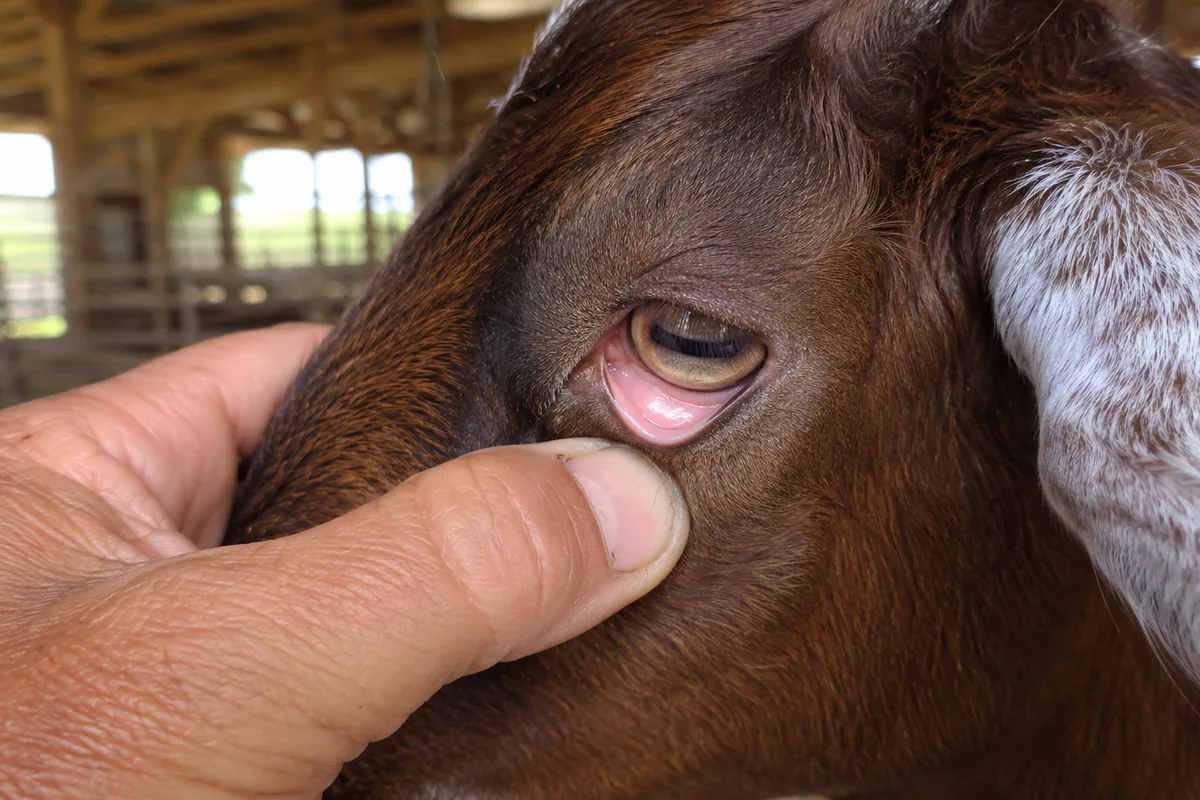
That thirty-second eyelid check is worth doing on any “off” goat before you even call the vet, because it changes the conversation. A pale, staggering goat needs deworming and possibly supportive care fast, and the FAMACHA scoring covered in our deworming guide is the skill that catches it early.
What Should You Do Right Now?
If a goat is showing stroke-like signs as you read this, here is the order of operations. Minutes count with every cause on the list.
Call your vet first and describe exactly what you see: circling, head tilt, stargazing, blindness, down and paddling, plus whether the goat is pregnant and what feed changes happened lately. Those details often point to the diagnosis over the phone.
While you wait, move the goat somewhere quiet, safe, and shaded where it cannot injure itself, and do not force food or water on a goat that cannot hold its head normally. Check the eyelid color and take a temperature if you safely can, since both findings help your vet.
Expect the treatment to start fast and broad: thiamine injections for polio, antibiotics for listeriosis, often both together, and calcium or energy support for a toxemic doe. Keep the goat medicine cabinet basics stocked so supportive care can start the moment your vet directs it.
Recovery is genuinely possible, and often dramatic, when treatment beats the clock. The goats that die from these conditions are mostly the ones that waited overnight.
Sources and Further Reading
Compiled and cross-checked against veterinary and extension references:
- Merck Veterinary Manual, polioencephalomalacia and listeriosis in ruminants
- Michigan State University Extension, polioencephalomalacia in sheep and goats
- University extension resources on pregnancy toxemia and small ruminant neurology
- American Consortium for Small Ruminant Parasite Control, anemia and FAMACHA resources
A goat that looks like it is having a stroke is a goat asking you to move fast. Make the call, start the clock, and let the vet sort the label later.
Frequently Asked Questions
True strokes, meaning a blood clot or bleed in the brain, are documented but genuinely rare in goats. In practice, nearly every goat that suddenly shows stroke-like signs has goat polio, listeriosis, pregnancy toxemia, or severe anemia instead. That distinction matters because those conditions are treatable if you act within hours, which is why the right response to stroke symptoms is an immediate vet call, not a wait-and-see.
A seizing goat typically goes down, stiffens or paddles its legs, arches its neck back, and may chomp or froth at the mouth, with episodes usually lasting under a few minutes. Seizures in goats point to the same short list as stroke signs: goat polio, listeriosis, tetanus, or poisoning. Keep the goat from injuring itself, note how long the episode lasts, and call your vet immediately.
Sudden staggering, circling, or partial paralysis in goats is most often goat polio or listeriosis affecting the brain. Other causes include severe barber pole anemia, pregnancy toxemia and hypocalcemia in late-term does, meningeal worm in areas with white-tailed deer, tick paralysis, and poisoning. All of them share one instruction: this is an emergency vet call, because the treatable causes have a window of hours.
Yes, often, if treatment starts fast. Goat polio caught early responds dramatically to thiamine injections, sometimes within a day, and listeriosis is survivable with aggressive antibiotics when started at the first signs. The longer the brain signs continue before treatment, the worse the odds, which is why hours matter more than anything else in the outcome.
Most cases trace to management: avoid sudden grain increases and moldy feed, which trigger polio and listeriosis respectively, never feed spoiled silage, keep up parasite control so anemia never gets severe, and watch late-pregnancy does closely for toxemia. A stable forage-first diet, clean feed storage, and routine FAMACHA checks prevent the large majority of these emergencies.