| # | Product | Our Rating | ||
|---|---|---|---|---|
| 1 |  | Best OverallCorid 9.6% Amprolium Solution | ★★★★★ | Check Price |
| 2 |  | ToltraMax Toltrazuril 5% Oral Suspension | ★★★★☆ | Check Price |
| 3 |  | Premier 1 BlueLite Sheep & Goat Electrolytes | ★★★★☆ | Check Price |
Coccidiosis is one of the most common and costly diseases in goat kids, and it kills more young goats than almost anything except worms. It is caused by a microscopic gut parasite, not a worm, so the dewormer in your cabinet will not touch it.
The good news is that coccidiosis is both treatable and largely preventable once you understand how it works. This guide covers the symptoms, what causes it, how to treat it with amprolium and other drugs, and the management that stops outbreaks before they start.
A kid with profuse or bloody diarrhea can dehydrate and die within a day. If a young goat is weak, cold, sunken-eyed, or down, treat it as an emergency and call your vet. The guidance below is educational and not a substitute for veterinary care.
What Is Coccidiosis in Goats?
Coccidiosis is an infection of the gut lining caused by single-celled protozoa in the genus Eimeria. Nearly every goat carries some coccidia, so the parasite itself is normal. Disease happens when the parasite multiplies out of control and damages the intestine faster than the goat can repair it.
That tipping point almost always involves young kids in a dirty, crowded, or stressful environment. Adult goats usually carry coccidia without getting sick, because they built immunity as youngsters.
The parasite is also host-specific, which clears up a question new owners ask a lot. The Eimeria species that infect goats do not infect chickens, dogs, or people, and the coccidia from those animals do not infect your goats. Goats catch it from other goats.
Symptoms of Coccidiosis in Goats
The hallmark sign is diarrhea in a kid between three weeks and five months old. It often starts pasty and turns dark, watery, or bloody, with a strong foul smell.
Watch for these signs together:
- Diarrhea that is dark, bloody, or mucousy, sometimes with visible straining
- A kid that is hunched, dull, and slow to nurse or eat
- Weight loss, poor growth, and a rough or staring coat
- A potbellied look with thin hindquarters
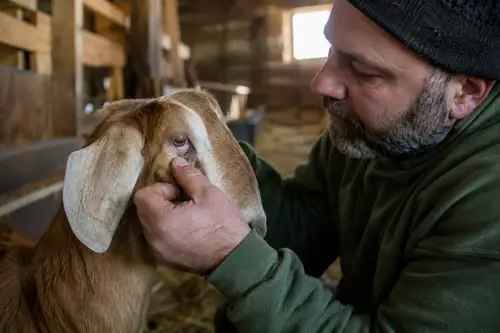
- Dehydration, shown by sunken eyes, tacky gums, and skin that tents when pinched
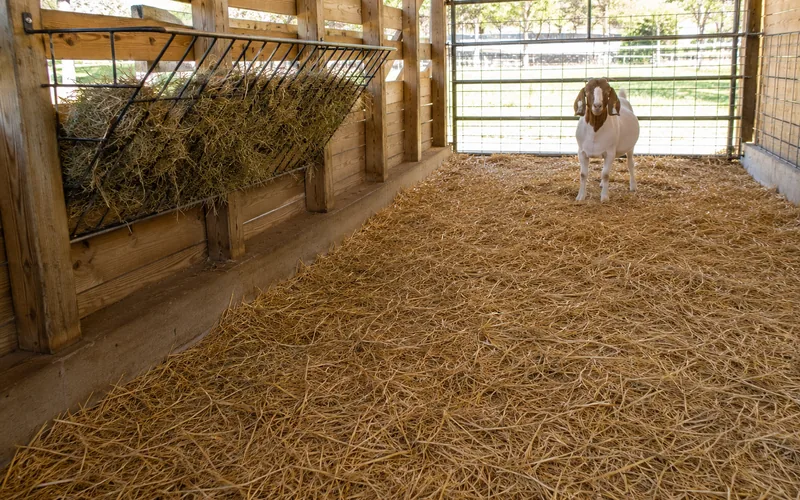
One of the cruelest parts of coccidiosis is that it does damage even without obvious scours. A subclinical infection can permanently scar the gut lining and stunt a kid for life, so a young goat that simply fails to thrive deserves a fecal test even if its manure looks normal. Because the runny manure overlaps with so many other problems, it is easy to confuse with worm-related goat diarrhea until a test sorts it out.
What Causes Coccidiosis in Goats?
Coccidiosis spreads by the fecal-oral route. Infected goats pass tough little eggs called oocysts in their manure, those oocysts ripen in warm and moist conditions, and the next goat swallows them off contaminated feed, water, or bedding.
The numbers are what make it explosive. The parasite multiplies through several stages inside the gut wall, so a single infected kid can shed millions of oocysts back into the bedding, and each one waits there ready to start the cycle again. That snowball is why a pen can go from one scouring kid to half the group in under a week.
A few conditions turn a normal carrier load into a full outbreak:
- Overcrowding, which concentrates manure and oocysts in a small space
- Wet, dirty bedding and pens that never fully dry out
- Feeders and waterers low enough to catch droppings
- Stress from weaning, shipping, weather swings, or a sudden diet change
Kids are the main victims for a simple reason. They lose the passive immunity from their dam’s colostrum at a few weeks of age, and they have not yet built their own, so the window from about three weeks to five months is the danger zone. Weaning stress landing right in that window is why so many outbreaks follow it.
How to Treat Coccidiosis in Goats
Treatment has two parts: a drug that stops the parasite, and supportive care that keeps the kid alive while its gut heals. Dose every drug by accurate body weight, and loop in your vet, because the effective goat doses are off-label and a wrong amount either fails or harms.
The standard treatments are:
- Amprolium (Corid), a thiamine blocker that starves the coccidia, usually given in water or drenched for five days. Because it blocks thiamine, it can rarely trigger goat polio, so many vets pair it with a B-complex or thiamine injection. The Corid dose for goats is set by body weight.
- Sulfa drugs such as sulfadimethoxine (Albon, Di-Methox), typically a five-day course from your vet.
- Toltrazuril (Baycox) or ponazuril, very effective and often a single or short course, but not approved for food animals, so use it only under veterinary guidance and mind the meat and milk withdrawals.
Here is how the common options compare. Treat it as a starting reference to confirm with your vet, not a prescription.
| Treatment | Active ingredient | Typical course | Food-animal approved |
|---|---|---|---|
| Corid | Amprolium | 5 days, in water or drenched | Yes, at off-label goat doses |
| Albon, Di-Methox | Sulfadimethoxine | 5-day oral course | Yes, off-label |
| Baycox | Toltrazuril | Single dose or short course | No, vet guidance only |
| Marquis | Ponazuril | Single or short course | No, vet guidance only |
Amprolium is the most widely available option and the one most owners reach for first, while toltrazuril and ponazuril are the heavy hitters that vets save for stubborn cases. Whatever you use, finish the full course even after the kid looks better, because stopping early lets the survivors rebound.
Supportive care matters as much as the drug in a young kid. Push fluids and electrolytes to fight dehydration, keep the kid warm and out of drafts, and offer a probiotic to help the gut recover.
A kid too weak to stand and nurse needs fluids handled carefully rather than force-fed, which is why owners ask how to give a sick goat water by syringe safely. Every other drug in the kit is dosed by weight too, so keep the goat medication dosage chart close.
One thing to be clear about: dewormers do not treat coccidia. Reaching for ivermectin or fenbendazole wastes time a sick kid does not have.
How to Prevent Coccidiosis in Goats
Prevention beats treatment every time, and it comes down to sanitation plus a coccidiostat during the risky stretches.
On the management side, the basics do most of the work:
- Keep bedding clean and dry, and clean pens often through kidding season
- Raise feeders and waterers so manure cannot fall in, and never feed on the ground
- Avoid overcrowding, the single biggest driver of outbreaks
- Provide clean water daily and scrub the troughs
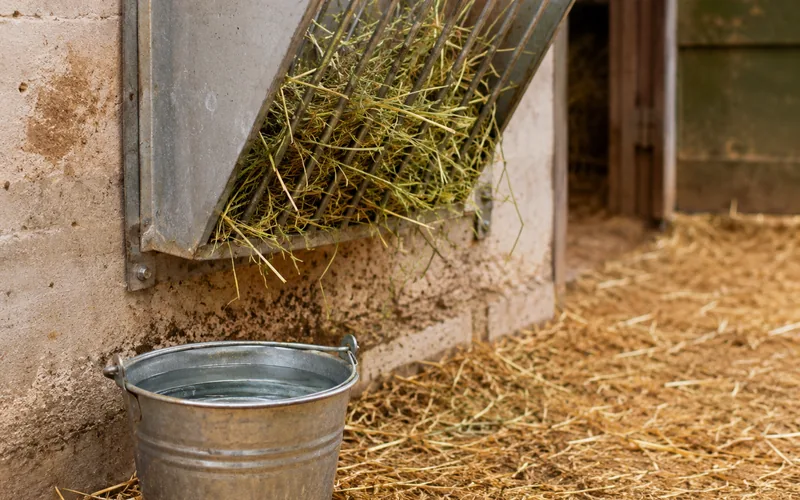
On the medication side, a coccidiostat during high-risk periods stops the parasite from ever building up. Medicated kid feeds and creep feeds often contain decoquinate (Deccox), lasalocid (Bovatec), or monensin (Rumensin), and some keepers run a preventive amprolium course around weaning. Monensin is toxic to horses, so store medicated feed where equines cannot reach it. Strong colostrum in the first hours of life also gives kids the early immunity that carries them through their most vulnerable weeks.
Other keepers put bred does on a decoquinate ration before kidding, since adult carriers shed oocysts into the kidding pen.
Coccidiosis vs Worms in Goats
Coccidiosis and worms are the two big causes of scours and poor growth in kids, and owners mix them up constantly. The difference decides the treatment, so it is worth getting straight.
Coccidia is a protozoan, treated with a coccidiostat, and it strikes kids in that three-week to five-month window. Worms, especially the blood-sucking barber pole worm, are treated with dewormers and show up more as anemia, a pale eyelid, and bottle jaw.
The FAMACHA eyelid check and the dewormers that work on worms do nothing for coccidia. When a kid has stubborn scours, coccidia is the more likely culprit, and a simple fecal test confirms it.
Keeping both in check covers two of the biggest goat health threats kids face.
Sources and Further Reading
- Merck Veterinary Manual, Coccidiosis of Sheep and Goats
- American Consortium for Small Ruminant Parasite Control (wormx.info)
- University of Maryland Extension, Small Ruminant Program
- Cornell University College of Veterinary Medicine, Goat health resources
This article is educational and does not replace veterinary care. Always confirm drugs, doses, and meat or milk withdrawal times with your veterinarian.
Frequently Asked Questions
The classic picture is a kid between three weeks and five months old with diarrhea that turns dark, watery, or bloody, along with straining, weight loss, and a rough coat. Subclinical cases show up only as poor growth, so a young goat that fails to thrive deserves a look even with normal manure. The only way to confirm it is a fecal flotation that counts coccidia oocysts, which your vet can run or you can do with a microscope. Because the signs overlap with worms, that test is what tells them apart.
In healthy adult goats, yes, because they built immunity as kids and carry a low load without getting sick. In kids with active coccidiosis, no. Untreated clinical coccidiosis can be fatal within days or leave permanent gut damage that stunts the kid for life. Treat any kid showing real symptoms rather than waiting it out.
No. Ivermectin, fenbendazole, and every other dewormer target worms, and coccidia is a single-celled protozoan, not a worm. Dewormers do nothing against it. Coccidiosis needs a coccidiostat such as amprolium (Corid), a sulfa drug, or toltrazuril. Reaching for a dewormer just wastes time a sick kid does not have.
No. Coccidia are host-specific, so the Eimeria species that infect goats do not infect chickens, and the species that infect chickens do not infect goats. Goats catch coccidiosis from other goats, by swallowing oocysts shed in manure that contaminate feed, water, or bedding. Sharing ground with poultry does not pass it between species.
There is no proven natural cure, and home remedies should never replace treatment in a sick kid. The most effective natural control is prevention through sanitation: clean dry bedding, raised feeders and waterers, no overcrowding, and clean water. Some keepers add things like apple cider vinegar to water as a mild support, but the evidence is weak. A clinical case still needs a real coccidiostat and often a vet.
Amprolium and sulfa drugs are usually given as a five-day course, while toltrazuril often works in a single dose or short course. Most kids start improving within a few days, but the gut needs longer to heal, so keep up fluids, electrolytes, and clean conditions. Re-clean the pen during and after treatment, because reinfection from a dirty environment is common.