
| # | Product | Our Rating | ||
|---|---|---|---|---|
| 1 |  | Best OverallProbios Probiotic Oral Gel for Goats | ★★★★★ | Check Price |
| 2 |  | Manna Pro Goat Electrolyte Powder | ★★★★☆ | Check Price |
| 3 |  | Nutri-Drench Goat & Sheep Supplement (8 oz) | ★★★★☆ | Check Price |
Goats taste their surroundings the way dogs sniff them. It’s a useful trait in the wild, but it becomes a real liability on farms full of synthetic materials.
One plastic bag blown into a pasture can set off a chain of internal damage, from mild discomfort to organ failure. A goat’s digestive anatomy makes plastic far more dangerous than most other foreign objects.
Below, we’ll cover the biology behind the danger, the warning signs to look for, and exactly what to do if it happens on your property.
Why Plastic Is a Serious Threat to Goats
Plastic is indigestible in a goat’s rumen. Synthetic polymers stay permanently inside the stomach, blocking fermentation and slowly starving the animal of nutrients.
A goat’s digestive tract has four stomach chambers: the rumen, reticulum, omasum, and abomasum. The rumen is the largest, holding up to five gallons of material, and works as a fermentation vat where billions of microbes break plant fiber into usable nutrients.
Plastic completely bypasses this system. Unlike cellulose, which rumen microbes can decompose, polyethylene and polypropylene are biologically inert inside the stomach.
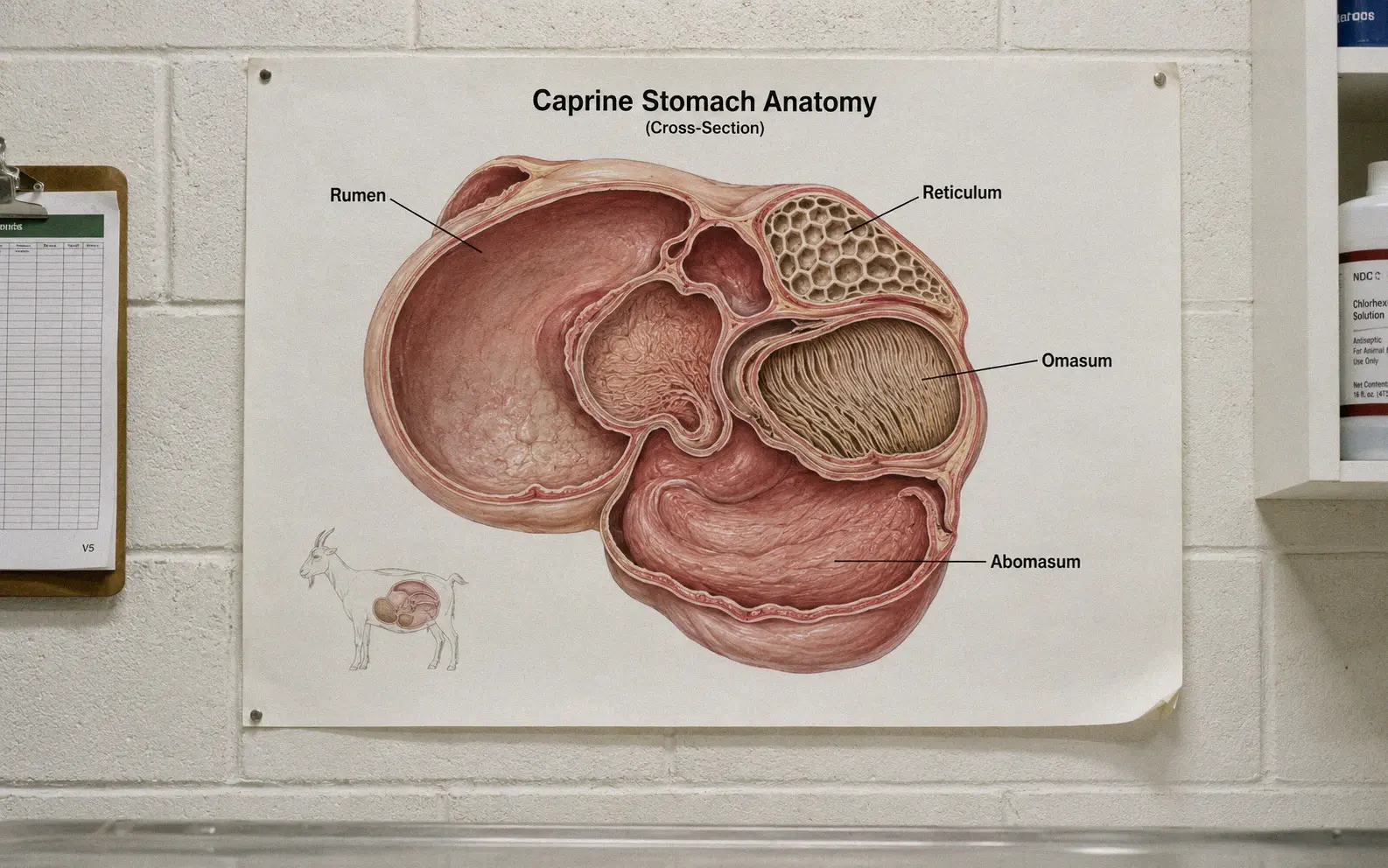
Veterinary research confirms that plastic bags float on top of the rumen fluid instead of mixing with digesta. That floating barrier keeps incoming feed from reaching the microbes below, which essentially shuts down fermentation at the surface.
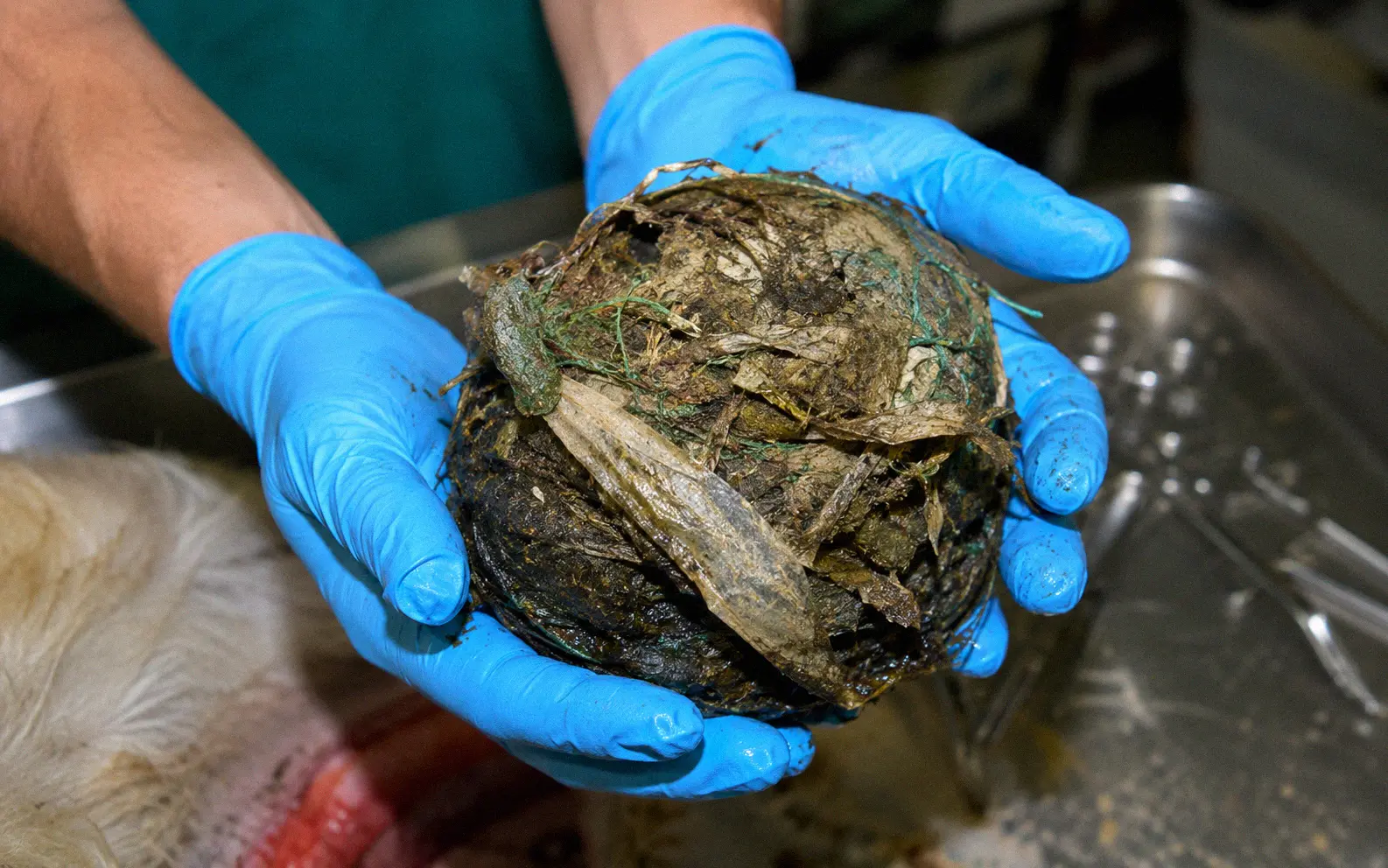
Over weeks and months, additional pieces of plastic bond with mineral salts and food residue to form hardened clumps called polybezoars. A study published in the journal Animals examined goats across five districts in Malawi and found plastic foreign bodies in roughly one out of every four animals at slaughter.
That rate held true in both rural and urban settings.
The rumen simply wasn’t built for synthetic polymers. Even a small buildup reduces fermentation efficiency and quietly pushes the goat toward malnutrition, something most owners don’t catch until body condition has visibly deteriorated.
What Happens Inside a Goat After Swallowing Plastic
Put simply, the plastic tangles with feed inside the rumen and gradually seals off the passage between stomach compartments, shutting down the digestive process.
Once a goat tears off a piece of plastic and swallows it, that material drops straight into the rumen. Since the chamber churns constantly, the plastic starts tangling with partially digested feed almost immediately.
This tangled mass grows denser with each passing day. As it expands, it drifts toward the reticulo-omasal orifice, the narrow passage connecting the reticulum to the omasum where food transitions to the next stage of digestion.
When that opening narrows or seals shut, digesta flow stops completely. Gas builds up fast because fermentation keeps producing carbon dioxide and methane with nowhere to go.
The rumen swells visibly, and you’ll see distension on the goat’s left side. Rumen contractions weaken and eventually stop altogether, a condition called rumen stasis.
Without functional contractions, even unblocked feed can’t move forward through the system.
In severe cases, the stretched rumen wall loses blood supply and tissue begins to die. Without emergency surgery, the damage is irreversible.
A goat can go from perfectly fine to critically ill within days if a large piece creates a complete obstruction.
Symptoms of Plastic Ingestion in Goats
Here’s what makes plastic ingestion so tricky: a goat can look completely normal in the hours right after swallowing it. How fast things progress depends on the size of the piece, where it lodges, and whether the blockage is partial or complete.
First 24 to 72 hours:
A drop in appetite is usually the first sign. She’ll approach the feeder but turn away after a few bites, or refuse to chew cud altogether.
You might also spot a subtle drop in manure output, though that’s hard to catch when goats are housed together.
Three to seven days:
Visible bloating appears, particularly on the left flank where the rumen sits beneath the skin. The goat starts grinding her teeth, a reliable pain signal in ruminants.
She separates from the herd, stands with her head low, and shows zero interest in normal herd activity. Manure production drops significantly or stops altogether.
Beyond one week:
Weight loss accelerates quickly because the digestive system has essentially shut down. Dehydration shows up as sunken eyes, tacky gums, and skin that doesn’t snap back when you pinch it on the neck.
She may press her head against a wall or fence post, a behavior that signals severe abdominal pressure or neurological distress from toxin buildup.

If you notice unusual changes in your goat’s droppings that diet and weather cannot explain, plastic ingestion should be on your differential list.
How Quickly Do Symptoms Appear
It depends entirely on the size of the piece. A whole bag can cause symptoms within hours, while smaller fragments often build up undetected for months.
A whole grocery bag can produce noticeable signs within 24 hours because the large surface area balls up quickly and obstructs flow almost immediately.
Smaller fragments are far more insidious. A goat nibbling on a feed sack corner every few days may accumulate plastic for months before hitting a critical threshold.
Slaughterhouse surveys across Africa consistently find plastic in goats whose owners reported no symptoms during the animals’ lifetimes.
The safest bet is to treat every observed plastic ingestion as potentially dangerous. Monitor the goat for a full 72 hours minimum and contact your vet at the first sign of appetite change, abnormal manure, or abdominal distension.
Can a goat die from eating a plastic bag?
Yes. A complete gastrointestinal blockage from plastic can be fatal without veterinary treatment.
Even partial obstructions are life-threatening because the goat slowly loses her ability to absorb nutrients from feed. Early intervention is the single biggest factor in survival.
Immediate Steps When You Catch a Goat Eating Plastic
Act fast but stay calm. Remove visible plastic from the mouth, isolate the goat, and call your vet right away.
If you witness a goat chewing on a plastic bag, move toward her calmly. Startling the goat increases the chance she swallows whatever is currently in her mouth.
Gently open her jaw and pull out any plastic you can see in her mouth. Check between the teeth, along the gum line, and under the tongue for small fragments.
Don’t reach deep into the throat or tug on anything you can’t clearly see. You could lacerate soft tissue or push the plastic further down the esophagus.
Isolate the goat in a pen or small paddock where you can observe her behavior without distraction from herdmates. Note the approximate time and try to estimate how much she ate based on what’s left of the bag.

Provide clean water continuously and offer high-quality hay to encourage normal rumen motility. Do not administer mineral oil, laxatives, or bloat drenches as a preventive measure.
Purgatives don’t work against plastic obstructions. They can actually make things worse by adding fluid to an already compromised system.
Oil and anti-foaming drenches are meant for frothy bloat, like the kind frosted clover can trigger.
Call your veterinarian and describe what happened in detail. Even if the goat seems fine at first, getting a professional evaluation within 48 hours makes a big difference if things take a turn later.
When Rumenotomy Surgery Becomes Necessary
Rumenotomy is the surgical procedure where a veterinarian opens the rumen through an incision in the left flank to manually extract foreign bodies. It remains the only proven treatment for plastic impaction in goats according to current veterinary literature.
No medication, supplement, or home remedy can dissolve plastic once it’s formed a mass inside the rumen. Anti-bloat agents and purgatives have failed repeatedly in clinical trials.
How is plastic ingestion diagnosed in goats?
Diagnosis is difficult without surgery because X-rays don’t reliably detect soft plastic. Most cases are confirmed during an exploratory rumenotomy, the standard treatment for suspected foreign body syndrome in ruminants.
Vets rely on physical symptoms like bloating and appetite loss combined with the owner’s account of plastic exposure.
During the procedure, the vet removes all plastic, twine, polybezoars, and other indigestible debris while inspecting the rumen wall for adhesions, ulceration, or early infection. These secondary issues show up frequently in goats that have been silently accumulating plastic over time.
Post-surgical recovery generally takes two to three weeks. The goat needs a restricted diet of easily digestible hay, constant access to clean water supplemented with electrolytes, and a complete course of antibiotics to prevent wound infection.
Rumenotomy typically costs several hundred dollars, not counting follow-up care. Between the expense and the stress on the animal, prevention is always the better investment.
Chemical Toxins That Leach From Swallowed Plastic
Blockages aren’t the only way plastic hurts goats. Even fragments that never cause a physical obstruction leach harmful chemicals into the warm, acidic rumen environment over time.
Plastics contain manufacturing additives including bisphenol A (BPA), di-(2-ethylhexyl) phthalate (DEHP), and polychlorinated biphenyls (PCBs). These substances act as endocrine disruptors, interfering with hormone regulation in ways that reduce fertility, suppress immune function, and impair normal growth.

Heavy metals such as cadmium and lead also bind to plastic particles during manufacturing and subsequent environmental degradation. Once plastic sits in the rumen, body heat and stomach acid speed up the release of these compounds into the bloodstream.
Research documents that goats carrying long-term plastic accumulations show lower body condition scores, reduced carcass fat, and elevated oxidative stress markers. It’s cumulative and gradual, often unnoticed until the goat’s health has clearly declined.
For dairy goats, the stakes are even higher. Contaminants that enter the bloodstream through rumen absorption pass directly into the milk.
Any goat producing milk for human consumption or actively nursing kids must be kept completely away from plastic sources.
Goats showing unexplained anemia or weakness should be evaluated for chronic foreign body accumulation as a possible contributing factor.
Types of Farm Plastic That Pose the Biggest Risk
Not every plastic material carries equal danger to goats. What matters is how easily a goat can swallow it and how much damage it does once inside.
Thin-film plastic bags (grocery bags, trash bags, bread bags) represent the single highest risk category. They’re thin and flexible enough that goats swallow them without effort, and the material compresses into dense, sticky clumps inside the rumen faster than any other plastic type.
Baling twine and net wrap rank immediately behind bags in terms of danger. Goats chew the loose, dangling ends of polypropylene twine, and the long fibers create what veterinarians call linear foreign bodies.
These strands can loop around intestinal structures, saw through tissue with peristaltic motion, and trigger fatal peritonitis.
Woven polypropylene feed sacks attract goats because residual grain dust and salt adhere to the fabric weave. A goat working on an empty feed sack is consuming material with zero nutritional value while steadily loading her rumen with indigestible synthetic fiber.
Silage wrap and stretch film are thicker and more difficult for goats to tear initially. But fragments still get swallowed when a determined goat keeps working at a loose edge day after day.
Rigid plastic (bucket shards, PVC pipe, container fragments) presents the lowest ingestion risk because goats can’t easily bite off swallowable pieces. Lower risk, but not zero.
Goat-Proofing Your Property Against Plastic Exposure
Eliminating plastic from your goats’ environment is the single most effective way to prevent ingestion incidents. It takes consistent habits, not occasional cleanup.
Conduct weekly pasture walks. Cover every area your goats can physically access and remove any bags, twine scraps, packaging fragments, or synthetic debris you find.
If your property borders a road or neighboring lot, windblown trash is a constant issue.
Secure all feed storage immediately. Transfer grain, supplements, and minerals into metal bins or hard-sided containers the moment they arrive on your property.
Cut twine from hay bales before loading them into feeders, then dispose of the twine in a sealed, lidded container placed where goats cannot reach it.

Install windbreak barriers along exposed fence lines. A solid perimeter fence, dense hedgerow, or purpose-built debris netting catches airborne plastic before it enters grazing areas.
One investment here prevents the majority of airborne trash from ever reaching your goats.
Separate all waste zones completely. Trash bins, burn piles, and compost areas must be physically inaccessible.
Goats are agile climbers, and they’ll clear barriers built for cattle or sheep easily.
Any goat that spends extended periods outdoors in open pasture needs that area verified clear on a recurring schedule.
Address underlying mineral deficiencies. Research consistently links pica (the compulsive eating of non-food items) with calcium and phosphorus deficiency in ruminants.
A quality loose mineral supplement and adequate forage go a long way toward reducing the urge to mouth random objects.
Brief everyone who enters goat areas. Family members, farmhands, delivery drivers, and visitors must understand that plastic bags, food wrappers, and packaging should never pass the fence line under any circumstances.
Frequently Asked Questions
Small fragments sometimes pass through the digestive tract without harm. Whole bags rarely exit naturally because they get trapped in the rumen, the first and largest stomach compartment. Never assume a swallowed bag will work its way out. Monitor the goat for at least 72 hours and consult your veterinarian about whether intervention is needed.
A large piece can produce visible symptoms within 24 hours, primarily appetite loss and left-side bloating. Smaller fragments accumulate silently and may not cause detectable problems for weeks or months until the total volume inside the rumen reaches a critical mass. Slaughterhouse data from multiple countries confirms that many goats carry plastic in their rumens with no outward clinical signs during their lifetime.
No breed is inherently more prone to plastic ingestion. All goats investigate their environment by mouthing and tasting objects, regardless of breed, size, or age. Kids and younger goats tend to be less discriminating in what they sample, but adults of every breed will chew on accessible plastic if given the opportunity. Goats with mineral deficiencies or restricted forage access show statistically higher rates of non-food material consumption.
Yes. Chemical additives embedded in plastic, particularly BPA, phthalates, and bound heavy metals, leach into rumen fluid over time, enter the bloodstream through absorption, and transfer directly into milk during production. Dairy goats carrying accumulated plastic in their rumens produce milk with measurably elevated concentrations of these chemical contaminants, posing a food safety concern for both human consumers and nursing kids.