| # | Product | Our Rating | ||
|---|---|---|---|---|
| 1 |  | Best OverallProbios Probiotic Oral Gel for Goats | ★★★★★ | Check Price |
| 2 |  | Manna Pro Goat Electrolyte Powder | ★★★★☆ | Check Price |
| 3 |  | Nutri-Drench Goat & Sheep Supplement (8 oz) | ★★★★☆ | Check Price |
Sodium bicarbonate sits on the shelf in nearly every goat barn across the country. Owners reach for it to settle digestive upset, buffer rumen acidity, and calm a gassy animal after a grain binge.
The part most keepers miss is the downstream effect on the urinary system. Every dose of baking soda absorbed into the bloodstream eventually passes through the kidneys, and that changes urine chemistry in ways that put certain goats at serious risk.
Below, we’ll cover the biological pathway, which animals face the highest risk, and how to prevent stones without sacrificing rumen health.
How Baking Soda Affects a Goat’s Urinary Tract
Baking soda raises urine pH in goats, creating alkaline conditions where urinary stones form.
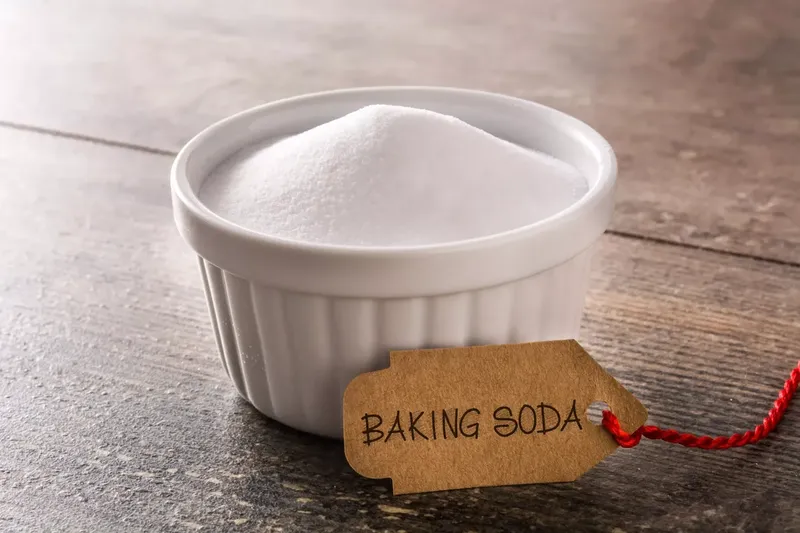
Baking soda is sodium bicarbonate, a compound that neutralizes acid wherever it reaches. Inside the rumen, it buffers volatile fatty acids and stabilizes pH, which is exactly why goat owners have relied on it for generations.
The trouble starts after absorption. Once sodium bicarbonate enters the bloodstream, the kidneys filter excess bicarbonate into the urine and shift its pH from a normal slightly acidic range toward a more alkaline state.
Alkaline urine changes the solubility of minerals dissolved in it. Calcium carbonate and struvite crystals, also known as magnesium ammonium phosphate, form far more readily when urine pH climbs above 7.0.
These crystals are the building blocks of urinary calculi, the hard stones that obstruct the urinary tract in goats.
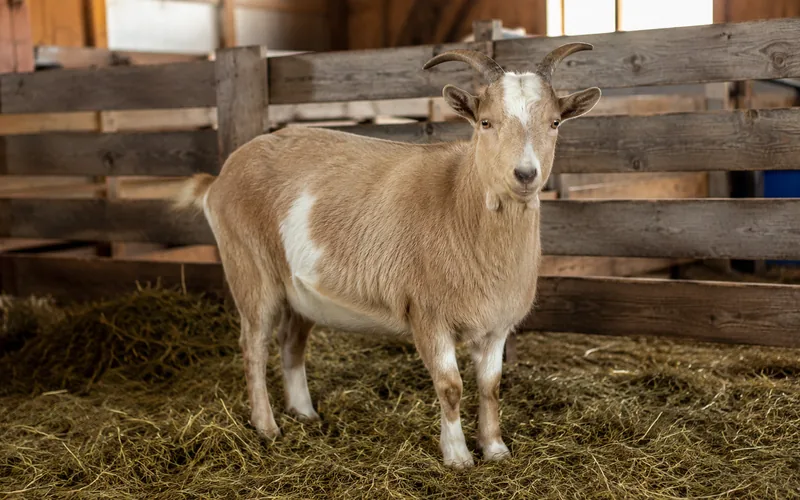
A single therapeutic dose during bloat rarely pushes pH high enough to trigger urinary calculi. It’s the repeated daily exposure that really matters because it keeps urine persistently alkaline and gives crystals time to grow and harden into stones large enough to block the tract.
You might also hear this called urolithiasis or water belly, one of the top preventable killers of male goats on high-concentrate diets.
Why Male Goats Are Most Vulnerable
In short, male goats have a narrow, curved urethra that traps crystals female goats would pass without issue.
Anatomy is the primary reason males suffer from urinary calculi far more often than females. A buck’s urethra is long, narrow, and follows an S-shaped curve called the sigmoid flexure near the base of the pelvis.
Small crystals that a doe would pass without noticing get trapped at this bend in a male. That’s why urinary calculi are overwhelmingly a male goat problem.
Wethers face an even higher risk of urinary calculi than intact bucks. When a buckling is castrated before four to six months of age, testosterone drops early and the urethra stops developing at its current diameter.
That leaves them with a permanently narrower passage that catches stones far more easily. Early castration is one of the strongest predictors of future urinary calculi in domestic goats.
Intact bucks produce testosterone throughout their lives, which allows the urethra to reach full adult diameter. That doesn’t make them immune to urinary calculi, but it does give them more margin before a stone causes a complete obstruction.
Does pass stones routinely because their urethra is short, wide, and straight. Most female goats with crystals in their urine never show a single symptom and clear them naturally during normal urination.
Any male goat consuming baking soda regularly, especially a wether on a grain-heavy ration, sits in the highest risk category for urinary calculi that can turn fatal within 24 to 48 hours.
Free-Choice Access vs. One-Time Therapeutic Doses
Daily free-choice access creates chronic stone risk, while a single dose during bloat poses little urinary danger.
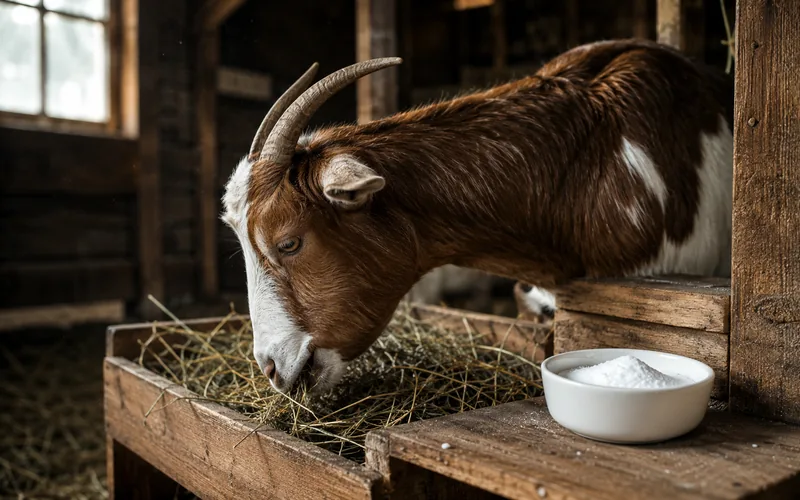
The old recommendation was simple: keep a dish of baking soda next to the mineral feeder. Decades of real-world experience have shown how dangerous that approach can be, especially for male goats.
Free-choice access means some goats consume baking soda daily, often in amounts far beyond what their rumen actually requires. That daily intake creates a chronic alkaline shift in urine pH that never fully resets between feedings.
A targeted therapeutic dose during an actual bloat episode is a completely different situation. One tablespoon dissolved in water and drenched into a distressed goat produces a short-term pH spike that resolves within hours as the kidneys excrete the excess bicarbonate.
The difference matters because this kind of risk builds steadily over time. A goat that gets baking soda once during a real digestive emergency faces minimal danger.
But a goat with around-the-clock access builds up crystal deposits over weeks and months until a stone blocks urine flow entirely. Taking away the free-choice baking soda dish is the single best thing you can do to protect male goats from urinary calculi caused by alkaline urine.
How much baking soda is too much for a goat?
There’s no established safe daily amount for ongoing use. A single tablespoon in water is the standard therapeutic bloat dose, but any regular consumption raises alkaline urine risk in males.
Dietary Factors That Increase Stone Formation
High-grain feeds, excess calcium from alfalfa, and low water intake all compound stone-forming risk from baking soda.
Baking soda rarely acts alone. Several common feeding practices accelerate urinary calculi, and pairing any of them with free-choice baking soda multiplies the danger.
Grain-heavy diets top the list. Corn, wheat, barley, and commercial sweet feeds contain disproportionately high phosphorus relative to calcium.
When phosphorus intake exceeds calcium, phosphate crystals concentrate in the urine and form urinary calculi. The target calcium-to-phosphorus ratio for male goats is 2:1 to 2.5:1, and learning more about how urinary calculi develop from grain-heavy rations helps you evaluate if your herd’s ration is dangerously out of balance.
Alfalfa hay and beet pulp play a role too, though for entirely different reasons. Both are high in calcium, and excess calcium in alkaline urine forms calcium carbonate stones that are particularly hard and resistant to dietary correction.
Low water intake concentrates every mineral passing through the kidneys. Goats that drink less during cold months produce smaller volumes of highly concentrated urine, which accelerates crystal formation regardless of other dietary factors.
A proper mineral program for goats built around loose minerals, not cattle or sheep blocks, keeps the calcium-to-phosphorus ratio in check and reduces urinary calculi risk regardless of baking soda exposure.
Recognizing a Urinary Blockage Early
Here’s what to watch for: a goat straining to urinate, flagging its tail, or crying out may have a urinary calculi blockage.
The earliest signs of urinary calculi are subtle and easy to mistake for constipation or mild colic. A goat that stretches out repeatedly, arches his back, and stands with his rear legs spread wider than normal may be straining to pass urine rather than straining to defecate.
Watch for tail flagging, frequent posturing without producing any urine, and vocalizing during urination attempts. Dribbling small amounts of urine, sometimes tinged pink or red with blood, indicates a partial obstruction that needs immediate veterinary attention.
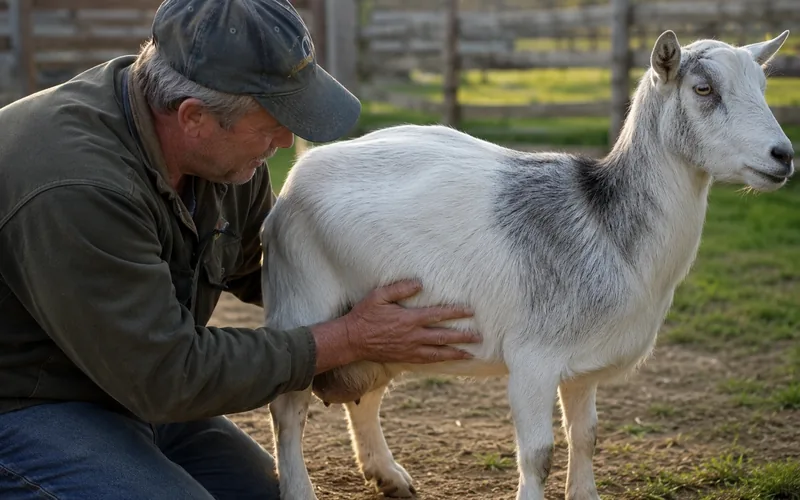
Complete blockage is a true emergency. The goat stops eating, grinds his teeth from pain, kicks at his belly, and eventually becomes lethargic as uremic toxins accumulate in the bloodstream.
A ruptured bladder follows within 24 to 48 hours if the urinary calculi obstruction is not relieved, and that rupture is almost always fatal. If you suspect urinary calculi have caused a full blockage, every hour counts.
Check the prepuce for salt crystal deposits or a gritty white residue around the sheath opening. This residue means concentrated mineral-laden urine has been drying at the tip and strongly suggests stones are forming higher in the urinary tract.
Catching this early warning sign can mean the difference between a treatable partial blockage and a catastrophic rupture that no vet can fix.
Emergency Steps When a Goat Cannot Urinate
This is a veterinary emergency. A full blockage can kill within 24 to 48 hours if the bladder ruptures.
A blocked goat needs veterinary care immediately. No home remedy reliably dissolves a stone that has already lodged in the urethra, and delay kills more goats than the stones themselves.
While waiting for the vet or driving to a large-animal clinic, remove all baking soda, grain, and concentrate feed. Offer fresh, clean water and nothing else.
Don’t force water or fluids into a goat with a suspected full blockage, no matter how dehydrated the animal looks. Increasing fluid volume behind an obstruction accelerates bladder pressure and raises the rupture risk dramatically.
Your veterinarian will likely start with sedation and manual manipulation of the urethra. If the stone sits near the pizzle, the urethral process, the vet may snip it to release the blockage.
Larger or deeper stones may require catheterization or more involved surgical intervention to clear.
After the crisis passes, the vet will typically prescribe ammonium chloride to acidify the urine and dissolve remaining crystals before they grow into new stones. Follow the prescribed dosing schedule precisely, as the correct medication dosage varies by body weight and the severity of the episode.
Recurrence rates for urinary calculi are high. Any goat that has blocked once should be considered permanently at risk and managed with lifelong dietary adjustments and ongoing monitoring.
Long-Term Strategies to Prevent Urinary Calculi
The most effective prevention combines a proper calcium-to-phosphorus ratio, ammonium chloride supplementation, and delayed castration.
Preventing urinary calculi isn’t complicated once you know what causes them. The foundation is a diet built around high-quality grass hay, browse, and natural forage rather than grain concentrates.
Maintain a calcium-to-phosphorus ratio between 2:1 and 2.5:1 across the total diet. This adjustment alone eliminates the phosphorus excess behind the majority of urinary calculi cases in domestic goats.
Add ammonium chloride to the feed of all at-risk male goats at the rate your veterinarian recommends, typically one teaspoon per 75 pounds of body weight mixed into daily grain. Ammonium chloride acidifies urine and keeps pH in the range where crystals dissolve before they can grow into stones.
Delay castration until bucklings reach at least four to six months of age. Those extra months of testosterone allow the urethra to grow wider, giving the animal a real safety margin against future blockages.
Provide unlimited access to clean, fresh water year-round. In cold weather, use heated buckets or tank heaters to keep goats drinking when they’d otherwise cut back due to icy temperatures.
Monitor alfalfa pellet intake carefully and limit their proportion in the overall diet to prevent calcium overloading while still delivering the fiber and nutrients that growing and lactating goats need.
Digestive Alternatives That Protect the Urinary Tract
Apple cider vinegar, forage-first feeding, and ruminant probiotics all support digestion without baking soda’s urinary risks.
Goat owners reach for baking soda because their animals have real digestive problems that need solving. Fortunately, several alternatives support rumen health without alkalizing the urine or promoting urinary calculi.
Apple cider vinegar added to drinking water at one tablespoon per gallon provides gentle rumen buffering while actually acidifying the urine. That acidic shift makes apple cider vinegar a urinary calculi preventive rather than a risk factor, the exact opposite of what baking soda does.
A forage-first approach naturally reduces bloat risk by promoting healthy rumen fiber mat formation. Goats that eat predominantly hay, brush, and browse develop fewer gas pockets than goats loaded with rapidly fermentable grain concentrates and processed feeds.
Ruminant probiotics support beneficial bacteria in the rumen and improve fermentation efficiency. A healthy rumen produces less gas, holds stable pH on its own, and rarely needs chemical correction.
Reserve baking soda for acute bloat emergencies when a goat’s left side is visibly distended and drum-tight. Even then, treat it as a one-time intervention and address the dietary cause rather than relying on repeated doses.
Is apple cider vinegar safer than baking soda for goats?
For male goats, yes. Apple cider vinegar buffers the rumen while acidifying urine, which helps prevent urinary calculi rather than promote them.
Switching from free-choice baking soda to apple cider vinegar and solid forage management protects the urinary tract while giving you reliable tools to manage rumen health.
Frequently Asked Questions
Does face far less urinary risk from baking soda because their short, wide urethra passes small crystals easily. Free-choice baking soda is still unnecessary for healthy does on a balanced diet, but the life-threatening blockage risk applies almost exclusively to males.
Crystal formation can begin within weeks of daily baking soda consumption, though visible symptoms of blockage may take months to appear. The timeline depends on water intake, overall diet composition, and the individual goat's mineral metabolism.
Ammonium chloride acidifies urine and can dissolve small crystals that have not yet solidified into hard stones. Once a stone has fully formed and lodged in the urethra, ammonium chloride alone cannot clear it, and veterinary intervention is required for complete blockages.
A ratio between 2:1 and 2.5:1, calcium to phosphorus, is the target range recommended by veterinary nutritionists. Most urinary calculi cases trace back to ratios closer to 1:1 or even inverted, where phosphorus exceeds calcium in the total diet.
A single large dose rarely does harm because goats self-regulate, but chronic free-choice access keeps a male's urine alkaline and raises his stone risk over time.
A common emergency approach is about one tablespoon of baking soda in warm water as a drench, adjusted for the goat's size, followed by a call to your vet if the bloat doesn't ease.
Ammonium chloride is the standard preventative because it acidifies urine and helps dissolve phosphate crystals, the exact opposite of baking soda. Pair it with a forage-based diet and constant water.
No, the root cause is a diet too high in phosphorus and too low in water. Baking soda only makes things worse by alkalizing urine, so it's an accelerant rather than the sole cause.