| # | Product | Our Rating | ||
|---|---|---|---|---|
| 1 | 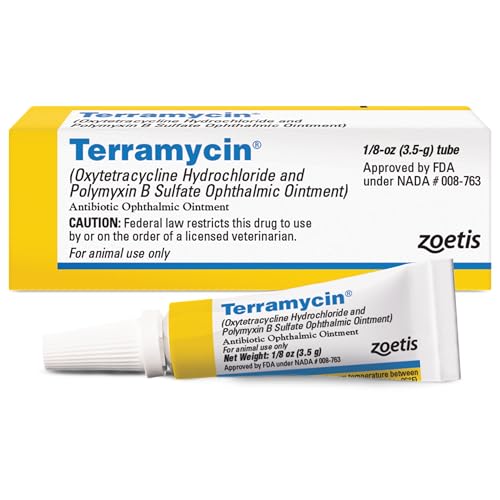 | Best OverallTerramycin Ophthalmic Ointment | ★★★★★ | Check Price |
| 2 |  | Vetericyn Plus All Animal Eye Wash (3 Pack) | ★★★★☆ | Check Price |
| 3 |  | Vetericyn Plus Eye Gel | ★★★★☆ | Check Price |
Pink eye can sweep through a goat herd faster than almost any other illness. One goat squinting with a runny eye on Monday can become half the pen by the weekend.
It looks alarming, and a bad case is genuinely painful, but most goats recover well with simple treatment and a little patience.
This guide covers how to recognize pink eye, what causes it, how to treat it, whether you can catch it, and how to stop it spreading through your herd.
Note: Most pink eye clears with basic treatment, but a deeply ulcerated, bulging, or unimproving eye needs a vet to rule out injury, a foreign body, or entropion. This article is educational, not a substitute for veterinary care.
What Is Goat Pink Eye?
Pink eye in goats is properly called infectious keratoconjunctivitis, an infection of the conjunctiva (the pink tissue around the eye) and the cornea (the clear surface). It is not the same illness as human pink eye, even though they look similar.
It is one of the most contagious conditions in goats, and it spreads through a herd by flies, dust, and direct contact.
The good news is that pink eye is rarely fatal and usually self-limiting, meaning many goats would recover on their own given a few weeks. The reasons to treat it anyway are to ease the goat’s pain, prevent the cornea from ulcerating or scarring, and slow the spread to the rest of the herd.
Left alone, a severe case can cause temporary blindness, which is dangerous if the goat can’t find food, water, or its way around safely.
Symptoms of Pink Eye in Goats
Pink eye usually starts in one eye and is easy to spot once you know the progression. Catching it early makes treatment simpler and limits spread.
Typical signs, roughly in order:
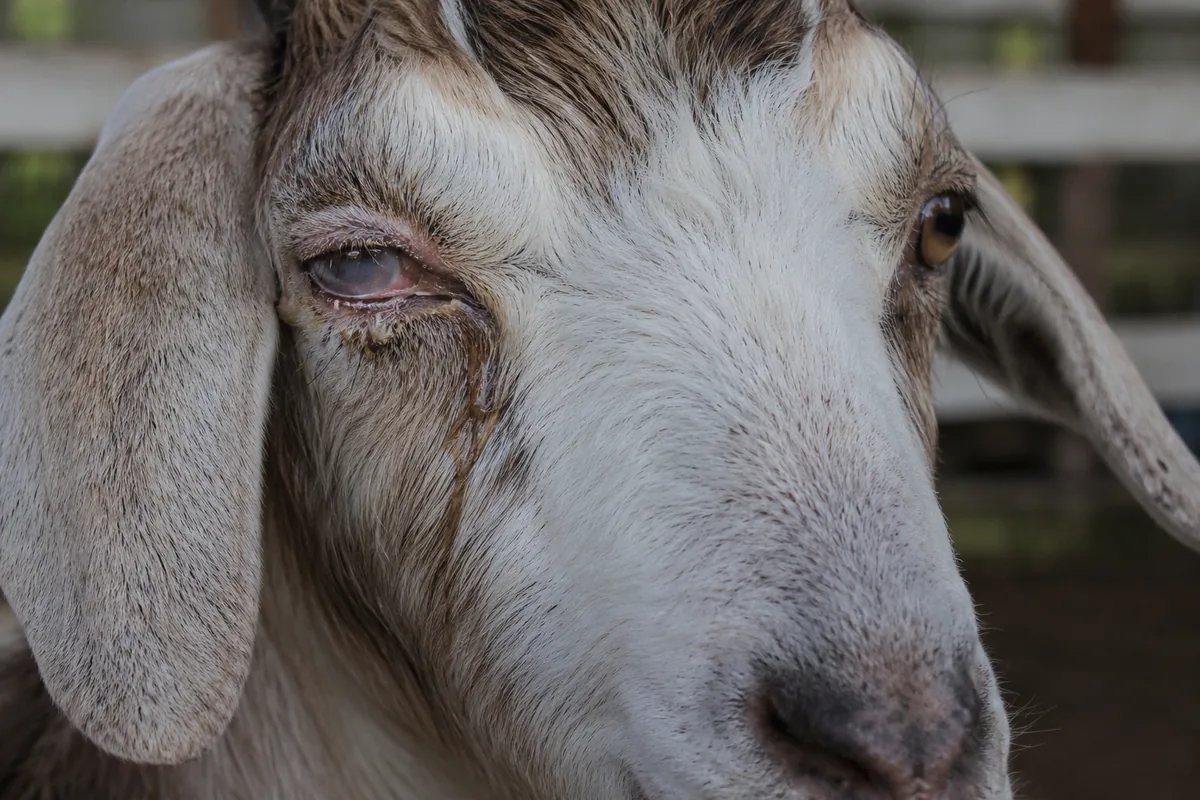
- Watery, runny eye and tear-staining down the face
- Squinting and holding the eye partly or fully shut
- Redness and swelling of the inner eyelids and the white of the eye
- A cloudy, blue-white or gray haze spreading across the surface of the eye
- Obvious light sensitivity, seeking shade and keeping the eye closed
- In severe cases, a raised ulcer, a red or bulging eye, and temporary blindness
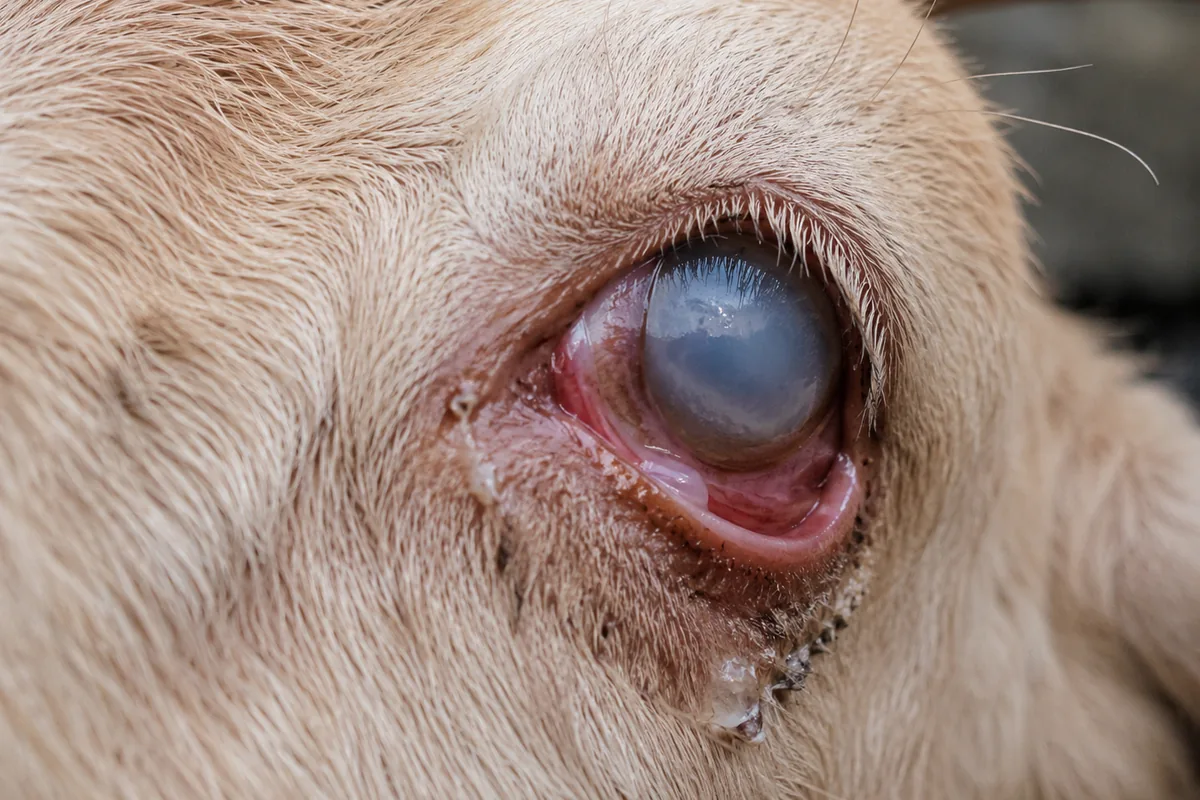
It often jumps to the second eye and to penmates within days. A goat that can’t see well will go off feed and stand apart, the same withdrawn behavior you see in a goat that stops eating for other reasons, so don’t assume it’s only the eye if the goat seems generally unwell.
What Causes Pink Eye and How It Spreads
Goat pink eye is almost always infectious, caused most often by Mycoplasma conjunctivae, and sometimes by Chlamydophila or Moraxella organisms. These bugs are carried in eye and nose secretions and passed around easily.
The main ways it spreads:
- Flies, especially face flies, that move from eye to eye
- Dust and irritants from hay, dry lots, and dusty feed that scratch the eye and open the door to infection
- Direct contact, nose-to-nose and crowding at shared feeders and hay racks
- Stress and bright sunlight, which lower resistance
Anything that pokes or irritates the eye, like eating from overhead hay feeders that drop chaff into faces, makes an outbreak more likely. That is why the design of your feeders and the dustiness of your barn matter as much as the germ itself.
It is worth ruling out non-infectious causes too. A single goat with a weepy eye and no spread might have a hay seed, a scratch, or entropion (an inturned eyelid in kids) rather than true pink eye, which is one reason a stubborn case is worth a vet’s look.
How to Treat Goat Pink Eye
The workhorse treatment is oxytetracycline eye ointment (Terramycin ophthalmic ointment), applied directly to the affected eye two to four times a day for several days.
Pull the lower lid down gently and lay a ribbon of ointment along it, then let the goat blink it across the eye. It is fiddly with a squinting goat, but it works.
For a fast-moving herd outbreak, a vet may reach for injectable long-acting oxytetracycline (LA-200) to treat many animals at once, or give a subconjunctival injection for a severe individual eye. Antibiotic dosing should always be confirmed against a reliable reference like the goat medication dosage chart and your vet.
A few supportive points that make a real difference:
- Isolate affected goats to slow the spread
- Provide shade, since bright light hurts and slows healing
- Keep dust and flies down around the recovering goats
- Don’t put random ointments in the eye. Skin products are not eye-safe, which is a common mistake, so this is not the place for the kind of topical antibiotic you’d dab on a cut
Most eyes improve within a few days to a week of starting ointment. If an eye ulcerates, bulges, turns deep red, or simply won’t improve, get a vet involved before it does lasting damage.
Is Goat Pink Eye Contagious to Humans?
This is the question every owner asks while wiping a goat’s eye, so here is the straight answer: goat pink eye rarely spreads to people.
The organisms behind it (Mycoplasma conjunctivae and the others) are largely specific to sheep and goats, and they are not the same germs that cause the contagious human pink eye you catch from other people.
That said, basic hygiene is always smart around livestock. Wash up after treating an eye and don’t rub your own eyes, since some goat diseases can infect people.
In short: treat the goats, wash up afterward, and don’t lose sleep about catching it yourself.
How to Prevent Pink Eye in Goats
Because flies, dust, and crowding drive most outbreaks, prevention targets those three:
- Control flies with traps, fly predators, and good manure management, especially in summer
- Cut down dust with better feeder design and clean, less dusty hay; avoid feeders that drop chaff into goats’ faces
- Don’t overcrowd, and give goats space at feeders so they aren’t pressing eye-to-eye
- Isolate new arrivals for at least 30 days, and isolate any goat showing eye signs immediately
- Reduce stress and provide shade from harsh sun
Once pink eye shows up, fast isolation and fly control are what keep it from rolling through the whole herd. Catch the first squinting goat early, and you often stop an outbreak before it starts.
Those same habits, from fly control to roomy feeders, pay off across goat health as a whole.
Sources and Further Reading
Compiled and cross-checked against established veterinary and small-ruminant references:
- The Merck Veterinary Manual, Infectious Keratoconjunctivitis (Pinkeye) in ruminants
- American Association of Small Ruminant Practitioners (AASRP) resources
- Langston University, Meat Goat Production Handbook, eye and infectious disease
- University extension publications (Penn State, Cornell) on goat eye health
If an eye ulcerates or fails to improve, see your veterinarian to rule out injury and protect the goat’s sight.
Frequently Asked Questions
It starts with a watery, runny eye and squinting, usually in one eye first. The white of the eye and inner lids turn red and inflamed, and within a day or two a cloudy, blue-white haze spreads across the surface of the eye. Bad cases swell, weep, and become so light-sensitive the goat keeps the eye shut, and the cornea can ulcer or turn the eye temporarily blind. It often spreads to the second eye and to other goats.
The standard treatment is an oxytetracycline eye ointment (such as Terramycin ophthalmic) applied to the affected eye two to four times a day for several days. Isolate affected goats, keep them out of bright sun and dust, and for fast-moving herd outbreaks a vet may give injectable long-acting oxytetracycline or a subconjunctival injection. Most cases improve within a week of starting treatment. See a vet if the eye ulcerates, bulges, or does not improve, to rule out injury or a foreign body.
Often yes, mild cases clear on their own in one to three weeks. The problem is that an untreated eye can ulcerate and scar, the goat suffers in the meantime, and it keeps spreading to the rest of the herd. Treating speeds recovery, reduces pain and complications, and slows the outbreak, so it is worth doing even though many goats would eventually recover anyway.
Generally no. Goat pink eye is usually caused by Mycoplasma conjunctivae or Chlamydia organisms that are largely specific to sheep and goats, and it is not the same as the human pink eye you catch from people. Human cases from goats are rare. Still, wash your hands after handling an infected goat or its ointment and avoid touching your eyes, simple hygiene that is always worth it around livestock.
Most cases run one to three weeks. With prompt oxytetracycline ointment, individual eyes often improve noticeably within a few days to a week. In a herd, an untreated outbreak can roll from goat to goat for a month or more, which is why isolating affected animals and controlling flies early makes such a difference.