| # | Product | Our Rating | ||
|---|---|---|---|---|
| 1 |  | Best OverallProbios Probiotic Oral Gel for Goats | ★★★★★ | Check Price |
| 2 |  | Manna Pro Goat Electrolyte Powder | ★★★★☆ | Check Price |
| 3 |  | Nutri-Drench Goat & Sheep Supplement (8 oz) | ★★★★☆ | Check Price |
Few things rattle a new goat owner more than the first hard freeze of the season. The instinct is to seal the whole herd inside a closed barn, yet that move usually causes more trouble than the cold itself ever would.
Whether goats can be outside in winter has far less to do with the thermometer than with wind, moisture, and the goat itself. Descended from mountain animals, their bodies are quietly built for cold in ways most newcomers never expect, so the real skill is reading which conditions they shrug off and which ones put them in danger.
At what temperature is it too cold for goats?
Generally, a healthy adult goat with a full coat is fine outside down to about 0°F, as long as it stays dry and out of the wind.
There’s no single magic number here, because cold tolerance comes down to the goat, its coat, and the weather wrapped around it. A dry, acclimated adult in still air shrugs off far colder temperatures than the thermometer alone would suggest.
As a working rule, a healthy adult goat with a full winter coat stays comfortable down to about 0°F as long as it is dry and out of the wind. Problems start climbing fast once you drop below minus 10°F, or any time wind and moisture enter the picture.
The table below gives realistic outdoor thresholds for different goats and situations.
| Goat type or condition | Generally fine outside | Watch closely below |
|---|---|---|
| Healthy adult, full coat, dry and out of wind | Around 0°F | Minus 10°F to minus 20°F |
| Thin-coated dairy breed (such as Nubian) | Around 20°F | 10°F |
| Newborn or young kid | Above roughly 50°F | Freezing (32°F) |
| Wet or wind-blown goat | Around 45°F | 32°F |
| Sick, elderly, or underweight goat | Above roughly 40°F | Freezing (32°F) |
Treat these as starting points, not hard cutoffs, since your herd, barn, and local humidity all shift where the real line sits.
Wind and moisture are the real winter threats
Wind and wet pull body heat away far faster than cold air alone, which makes them the true winter danger.
Dry cold is something goats shrug off surprisingly well. It’s wind and water that actually pull the heat out of their bodies and turn a manageable night into a dangerous one.
Wind strips away the warm layer of air trapped against the skin, which is exactly the insulation a goat’s coat works so hard to build. A 20°F day with a stiff breeze can feel punishing to a goat even though the same temperature in still air would barely register.
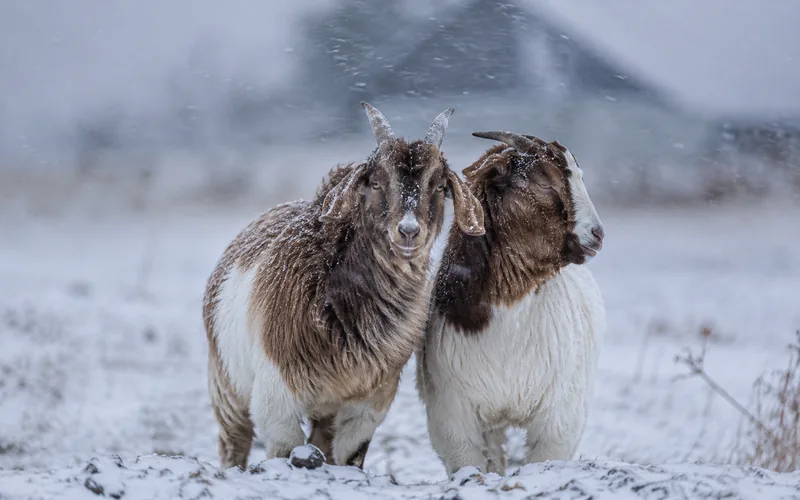
Moisture is worse still. A wet coat lies flat and loses almost all of its insulating value, so a soaked goat in freezing weather chills far faster than a dry one in much colder air.
Livestock specialists at MSU Extension stress the same priority, noting that wind chill and wet conditions strip heat away faster than still, dry cold ever does.
That’s why cold and wet together is the combination that most often turns deadly for an otherwise healthy animal. Freezing rain, sleet, and slushy mud do more damage than a clean, dry snowfall at a far lower temperature.
How a goat’s winter coat handles the cold
Here’s what matters: a dense two-layer coat traps body heat so well that an acclimated goat stays warm even as snow settles on its back.
Goats grow a remarkable two-layer coat as daylight shortens in fall. The outer guard hairs shed snow and rain, while a soft, dense undercoat traps body heat close to the skin.
That undercoat is the same fiber that fine breeds are prized for, the cashmere-style down that develops underneath the longer hair. It is a natural insulating blanket that no manufactured coat can fully match.
That’s also why acclimation matters so much. A goat that lives outside through the cooling weeks of autumn grows a thicker coat and a sharper cold tolerance than one that’s been kept warm indoors.
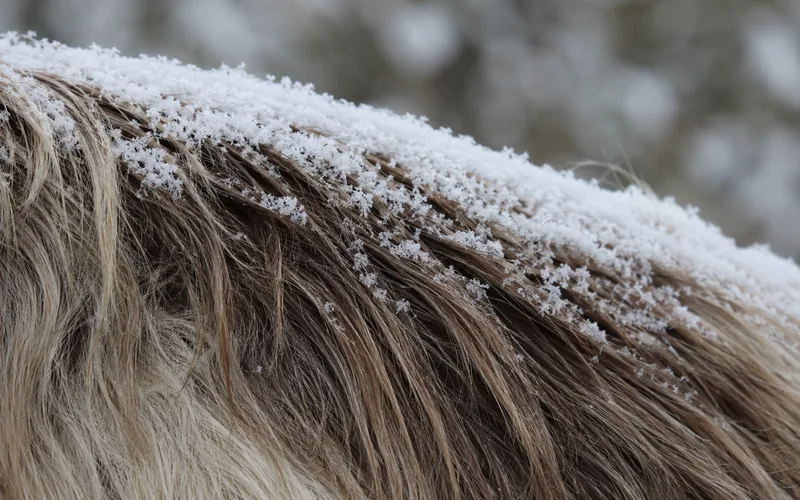
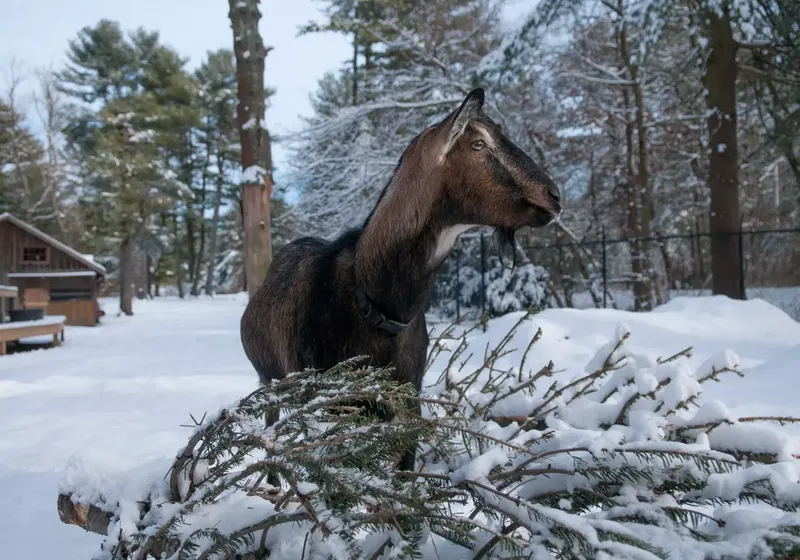
Here’s a detail that reassures nervous owners: snow resting on a goat’s back without melting is a good sign, because it means almost no body heat is escaping to thaw it.
Keep in mind that all that warm, dense fiber is also where lice tend to multiply over winter, so part your goat’s coat and check the skin every few weeks. A heavy coat hides a developing problem until it is well established.
Building a winter shelter that keeps goats safe
The short answer: goats need a dry, draft-free, three-sided shelter that blocks the wind while still letting air move overhead.
Shelter is the single most important thing you provide in winter, and it doesn’t need to be elaborate or heated. It just has to stay dry, block the wind, and still breathe.
A simple three-sided shed works best
A three-sided shed with the open face turned away from your prevailing wind covers the needs of most herds. It lets goats step out of wind and precipitation while still giving them the airflow they depend on.
Size it with room to spare, because a cramped shelter fails the moment the whole herd crowds in at once. A rough target is 15 to 20 square feet of dry, covered space per standard goat, with a little extra for horned animals that need room to move.
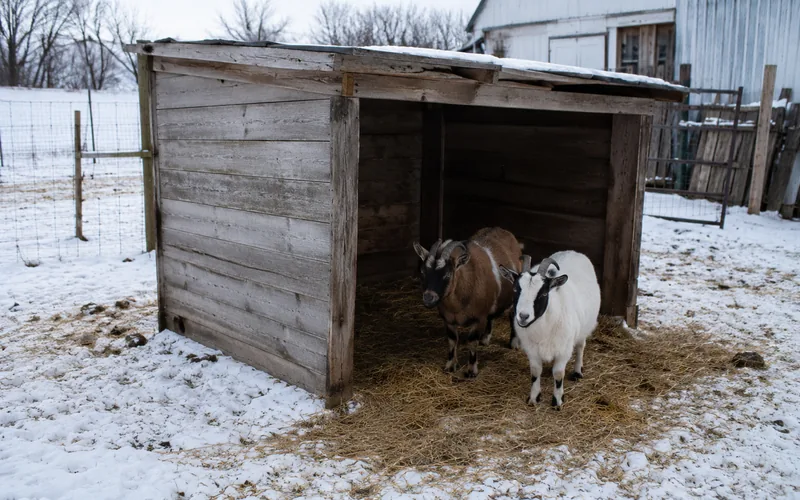
Resist the urge to seal the structure up tight. Goats give off a surprising amount of moisture and ammonia from their breath and urine, and a closed box traps those fumes right where they breathe.
That stagnant, damp air is a direct path to respiratory trouble, including pneumonia, which spreads quickly in poorly ventilated winter housing. The goal is steady airflow up high while drafts stay blocked down at goat level.
Bedding and the deep litter method
Deep, dry bedding does a lot of the heat-keeping work for you. Straw is the favorite because its hollow stems trap air and goats can nestle down into it.
Many keepers switch to the deep litter method for winter. Instead of stripping the floor clean every few days, you add fresh straw on top of the soiled layers and let the pack build up.
The material breaking down underneath gives off gentle heat, often holding the floor warmer than the open air. Just monitor the smell at ground level, and if ammonia stings your nose, add more bedding or clear part of the pack.
Feeding goats to stay warm
Put simply, extra hay is the best winter fuel, because digesting forage in the rumen generates a goat’s own body heat.
A goat’s best internal furnace is its own rumen, and you keep it burning with forage. Digesting fibrous hay produces a steady flow of body heat, which is why a goat with a full belly weathers a cold night far better than a hungry one.
Offer free-choice grass hay and keep the feeders stocked, especially in the evening before temperatures bottom out overnight. A goat that runs empty at two in the morning on a single-digit night has lost its main source of warmth.
University extension guidance on winter goat management makes the same point, that forage is the most dependable internal heat source you can offer. As a rough benchmark, plan for roughly 3 to 4 percent of body weight in hay through hard cold, up from the usual 2 to 3 percent.
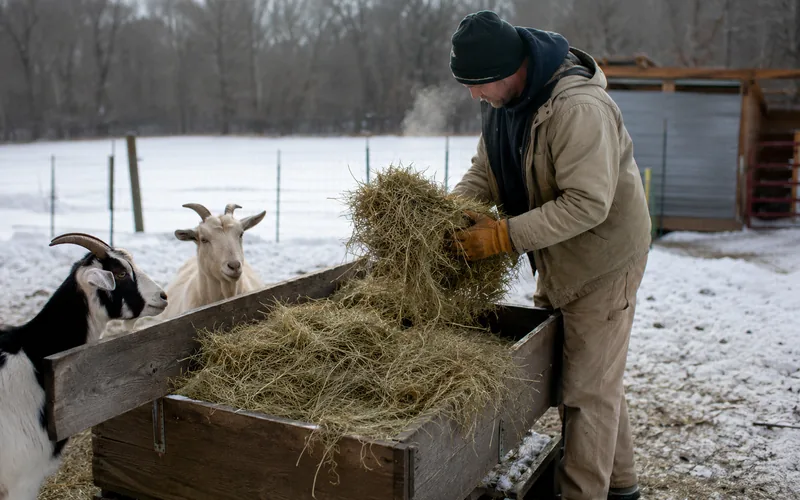
Goats also burn more calories simply staying warm, so winter rations naturally run higher than summer ones. For hard-working animals like pregnant does or thin goats, a little grain helps cover the extra energy demand.
Black oil sunflower seeds are a popular winter add-in because their fat content supports both warmth and coat condition. Sprinkle a small handful over feed rather than serving them as a meal.
Don’t overdo the grain, though. Sudden rich feeding can upset the rumen, so bump up any concentrate slowly over a week or more.
Keeping water from freezing
Goats need unfrozen water all winter, since they drink far less when it’s icy and quickly slide toward dehydration.
Water is just as critical as hay in cold weather, and it’s the thing owners neglect most. Goats drink far less when water is icy or frozen, and that low intake quietly raises the risk of dehydration and digestive impaction.
A heated bucket or a submersible stock-tank de-icer is the most dependable fix. Check it at least twice a day during deep cold, because even heated units can fail when you least expect it.
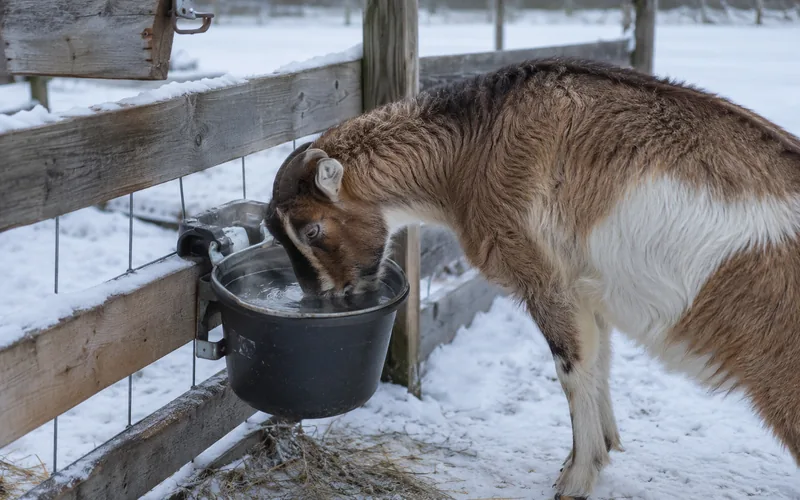
Lukewarm water tempts goats to drink more, so a warm refill morning and evening is a small habit with real payoff. The more they drink, the better their rumen runs and the more heat they produce.
If you ever find a weak or off goat that flatly refuses to drink, water can be carefully offered by syringe until it recovers its appetite. Refusing to drink in cold weather is a red flag worth acting on quickly.
Which goat breeds tolerate winter best?
Fiber and mountain breeds like Cashmere and Alpine tolerate cold best, while thin-coated Nubians need the most help.
Not every goat meets winter on equal footing. Coat type, body size, and breed origin all shape how well an animal copes when the temperature drops.
These breeds generally have the edge, while thin-coated dairy breeds with large surface area need more help. The table below sums up where the common breeds tend to land.
| Breed | Cold tolerance | Notes |
|---|---|---|
| Cashmere | Excellent | Dense insulating undercoat, thrives in cold climates |
| Angora | Very good | Heavy mohair fleece, but vulnerable right after shearing |
| Pygmy | Good | Compact body holds heat efficiently |
| Nigerian Dwarf | Good | Hardy and grows a solid winter coat |
| Alpine and Saanen | Good | Swiss mountain origins make them naturally cold-hardy |
| Boer | Moderate | Meat breed that does fine with proper shelter |
| Nubian | Lower | Thin coat and long ears are prone to frostbite |
Regardless of breed, almost any healthy adult goat with a full coat and access to shelter, hay, and unfrozen water comes through winter in good shape. Breed simply tells you how much extra attention an individual is likely to need.
When goats should not be left outside
As a rule, bring goats in when they are newborn, sick, elderly, soaked, or facing a blizzard or sustained sub-zero cold.
For all their toughness, some goats and some conditions call for you to step in. Knowing those exceptions is what separates confident winter keeping from guesswork.
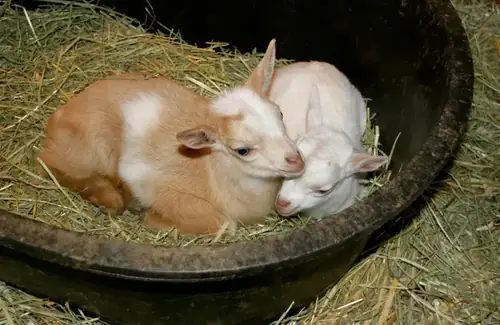
Newborn and very young kids top the list, since they have little body mass and a thin coat that cannot hold heat. In freezing weather they need a draft-free space, deep bedding, and close monitoring, and sometimes a temporary kid coat.
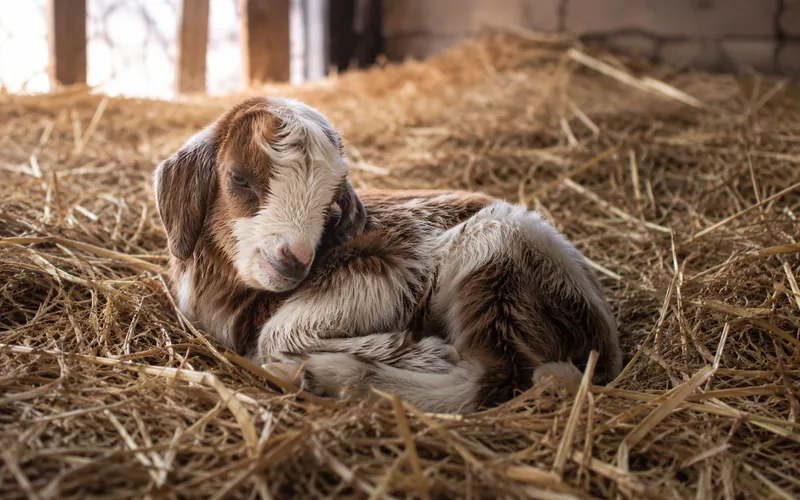
Sick, elderly, and underweight goats also struggle, because they lack the reserves to keep generating heat through a long cold night. The same goes for any goat that is wet to the skin or has been recently sheared and lost its fleece.
Severe weather changes the math for the whole herd. Blizzards, ice storms, and long sub-zero stretches are times to bring goats into sturdier shelter rather than trusting the pasture.
When you’re unsure, watch the animal rather than the forecast. A goat that seeks out shelter, hunches up, and stays put is telling you it’s had enough of the cold.
Winter care for pregnant does and newborn kids
Newborn kids and late-pregnancy does are the most cold-vulnerable goats, so the birth hour and first feeding deserve the closest attention.
Pregnant does and brand-new kids are the most weather-sensitive members of any herd. If your goats are due in the cold months, this is where a little extra planning pays off the most.
A doe in late pregnancy is carrying a heavy energy load, so she needs extra forage and often a bit of grain to hold condition and stay warm. Thin does heading into a cold snap are most likely to develop pregnancy problems, so watch their body condition closely.
The riskiest moment is the hour a kid is born. A wet newborn in freezing air can chill dangerously within minutes, so many keepers make a point of being there for winter births.
Dry the kid quickly with towels, make sure it nurses warm colostrum within the first hour, and tuck the family into a deep-bedded, draft-free pen. Colostrum is the kid’s internal fuel, and a full belly does more to warm it than any lamp.
If a kid gets chilled and goes limp, warm it gradually with towels, your body heat, or a warm bath kept clear of its head. A floppy, cold kid is an emergency that moves fast, so act the moment you spot it.
Once kids are dry, fed, and active, they handle cold far better than people expect. The danger window is mostly those first hours, not the weeks that follow.
Do goats need coats or heat lamps?
In short, most goats need neither; heat lamps risk barn fires, and a natural undercoat outperforms any fabric coat.
This is where well-meaning owners most often go wrong.
Heat lamps deserve a firm warning. They are one of the leading causes of barn fires, since dust, straw, and a curious goat are a dangerous mix around a hot bulb, and the risk isn’t worth it for animals built to handle cold.
There’s a second problem with artificial heat. A goat kept warm by a lamp never fully acclimates, so it turns more cold-sensitive and lands in real trouble the moment the power fails or it steps outside.
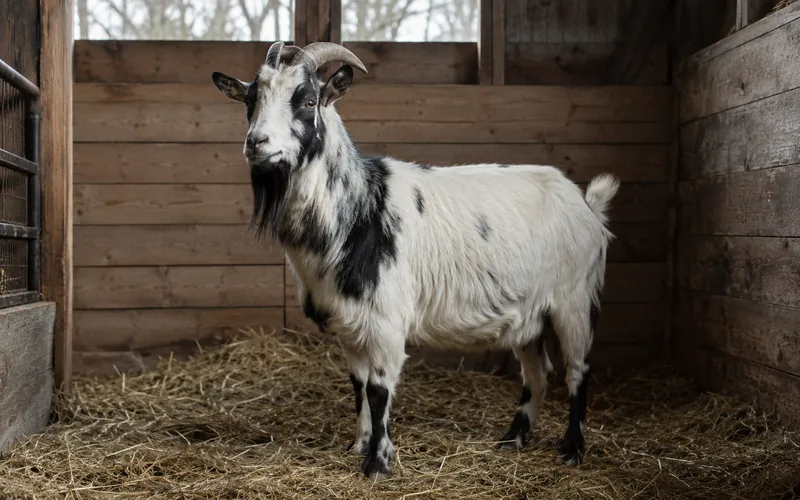
Coats follow the same logic. A natural undercoat outperforms fabric, and a coat can flatten that insulation or trap dampness against the skin if used on a healthy adult.
Save coats for the genuine exceptions, the newborn kids, the sick, the elderly, the very thin-coated, and the recently sheared. For everyone else, dry bedding and a wind block do the job far more safely than any heat source.
Warning signs your goat is too cold
Watch for hunching, shivering, icy or pale ears, and any goat that stops eating, all clear signs it is too cold.
Goats are stoic, so you have to read the quiet signals before a chill becomes a crisis. Catching cold stress early is usually the difference between a quick fix and an emergency.
A cold goat hunches its back, tucks its legs, and tries to make itself small to conserve heat. Visible shivering or a goat standing alone and miserable while the herd huddles is a clear call to get it somewhere dry and warm.
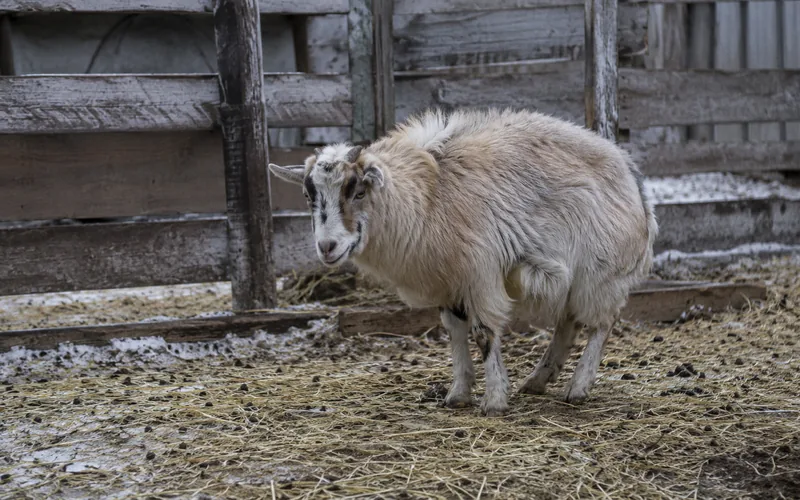
Check the ears and extremities. Cool ears are normal, but ears that feel like ice or look pale, swollen, or waxy can signal frostbite, and long-eared breeds like Nubians are most at risk.
Pay close attention to appetite, because a goat that stops eating in the cold is in serious danger. The rumen is the furnace, and once it goes quiet the body temperature can crash, leaving the animal able to catch a chill that slides into something far worse.
If you find a goat that’s cold, wet, and listless, move it into a dry shelter, dry it off, and offer warm water and tempting hay right away. A goat that can’t warm up on its own may be slipping into hypothermia and needs hands-on help fast.
Your daily winter goat checklist
A short routine keeps small winter problems from becoming big ones. Run through these every day during the cold months.
- Confirm shelter is dry inside and the open side still faces away from the wind.
- Break ice and top off water, ideally with slightly warm water, and check that any heater is working.
- Keep hay feeders full, especially before the coldest part of the night.
- Do a quick head count and watch for any goat that is hunched, shivering, or off on its own.
- Glance at ears and feet for signs of frostbite during deep cold.
- Clear ice from gateways and feeding spots so goats aren’t slipping on frozen ground.
- Add fresh straw whenever bedding looks damp or the air smells of ammonia.
None of this takes long once it becomes habit. Five attentive minutes morning and evening is what carries a herd safely from the first freeze to spring.
Final Thoughts
Goats are far better equipped for winter than most newcomers believe, and the cold itself is rarely the enemy. Keep them dry, keep them out of the wind, keep hay in front of them, and keep their water thawed, and a healthy herd handles the season with ease.
Step in for the kids, the sick, the elderly, and the truly brutal storms, and otherwise trust the coat nature gave them. Do that, and your goats will walk into spring healthy and unbothered by the months behind them.
Frequently Asked Questions
A healthy adult goat with a full winter coat and a dry, wind-free spot is comfortable down to around 0°F. Below roughly minus 10 to minus 20°F, or any time a goat is wet, young, sick, or thin-coated, you need to step in with extra bedding, shelter, or warmth.
No, and heat lamps are best avoided entirely. They are a leading cause of barn fires and they stop goats from acclimating to the cold. A dry, draft-free shelter with deep straw bedding keeps goats far safer than any heat source.
Most goats never need a coat because their natural undercoat works better than any fabric. Coats only make sense for newborn kids, sick or elderly goats, very thin-coated breeds, or animals that were recently sheared and have not regrown their fleece.
Yes, a well-acclimated goat with a thick coat can rest outside during snowfall, and snow settling on its back without melting is a sign its insulation is working. It still needs the choice to step into a dry, sheltered spot whenever wind or freezing rain moves in.
A heated bucket or a submersible stock-tank de-icer is the most reliable option. Goats drink far less when water is icy, and low winter water intake raises the risk of dehydration and digestive problems, so keeping it thawed matters as much as feeding hay.