| # | Product | Our Rating | ||
|---|---|---|---|---|
| 1 |  | Best OverallSafe-Guard Fenbendazole Liquid (125ml) | ★★★★★ | Check Price |
| 2 |  | Durvet Ivermectin Sheep Drench | ★★★★☆ | Check Price |
| 3 |  | Cydectin Moxidectin Oral Drench (1L) | ★★★★☆ | Check Price |
Internal parasites kill more goats than any other single cause. The frustrating part is that worms rarely announce themselves until the goat is already in trouble, and the old habit of deworming everything every few weeks has quietly made the problem worse.
The good news is that worms are manageable once you know what to watch for and how to treat the right animals at the right time. Getting them under control is the single biggest win in goat health.
This guide covers the worms goats actually get, how to spot a problem early, how to deworm correctly without breeding resistance, and how to keep worm pressure low in the first place.
A note on dosing: Almost every goat dewormer is used off-label, and goats clear these drugs faster than sheep or cattle. Confirm products and doses for your herd with a goat-savvy vet, and dose by accurate body weight every time.
What Worms Do Goats Get?
Goats carry several internal parasites, but a handful do most of the damage. Knowing which one you are likely dealing with shapes how urgently you act.
The barber pole worm (Haemonchus contortus) is the worst by a wide margin. It lives in the abomasum (the true stomach) and feeds on blood, so a heavy infection causes severe, sometimes fatal, anemia within days rather than weeks.
It thrives in warm, wet, humid weather, which is why late spring through early fall is the dangerous window across most of North America.
Beyond the barber pole, goats deal with the brown stomach worm, the bankrupt worm (both more associated with scouring and weight loss than blood loss), and liver flukes in wet, marshy regions. Tapeworms show up as rice-like segments in droppings but are rarely the real threat people assume they are.
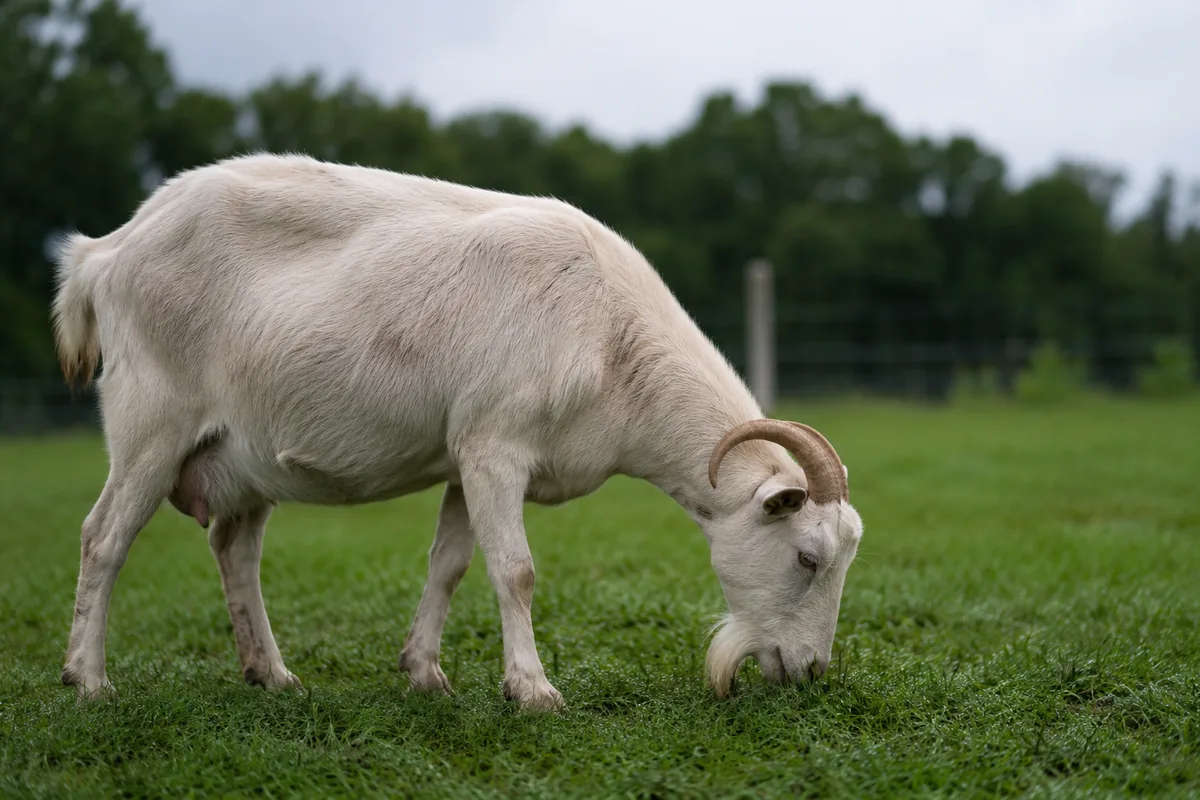
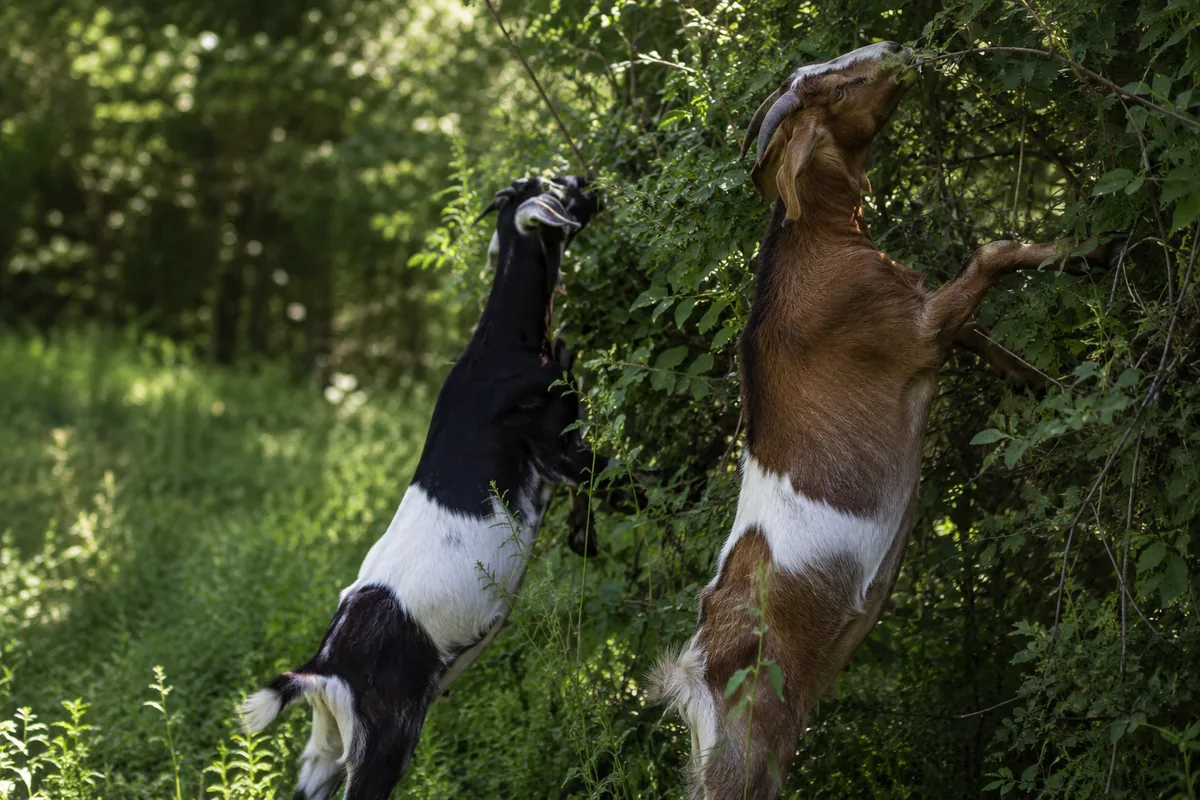
Most of these parasites live in the gut and pass eggs in the manure, which hatch on pasture and get eaten again as the goat grazes. That cycle is the key to both diagnosis and prevention, and it is why goats that browse up high stay healthier than goats grazing short, contaminated pasture.
Symptoms of Worms in Goats
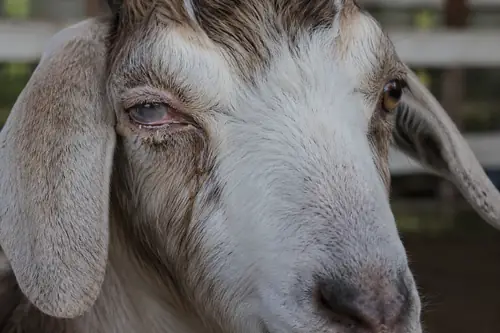
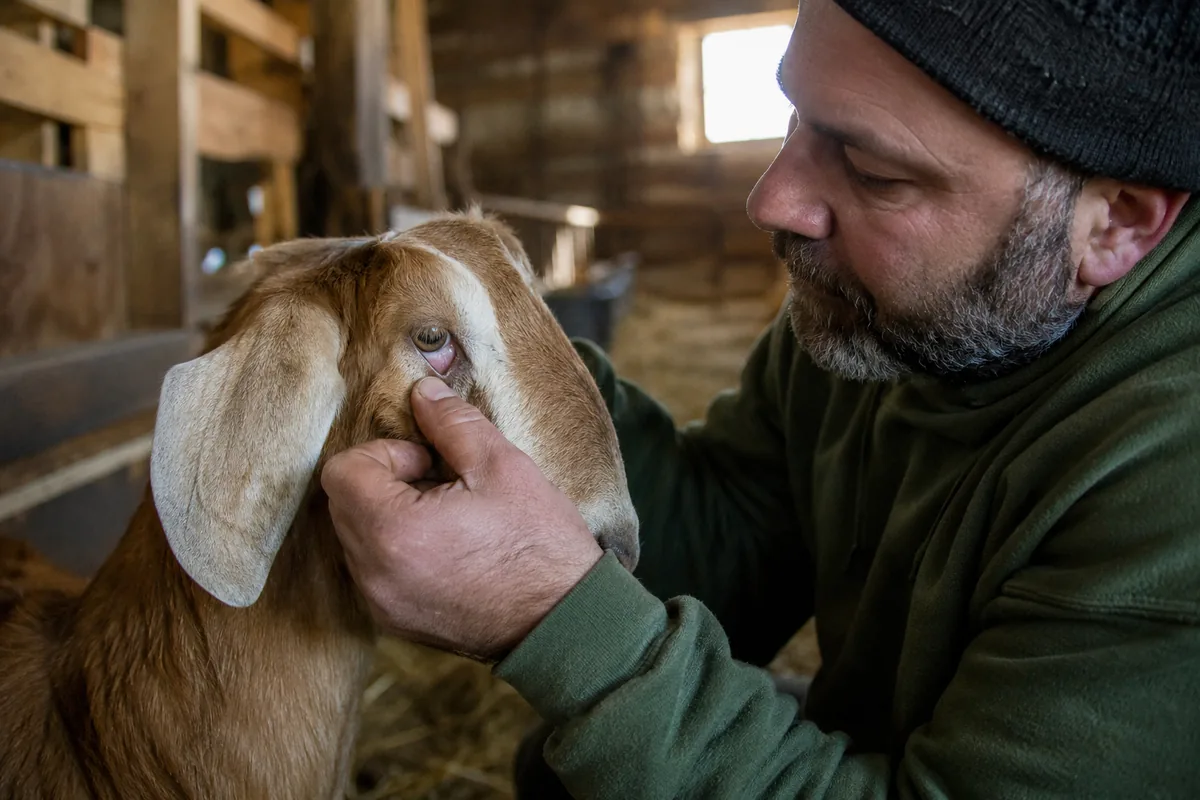
The single most useful sign is anemia, because the deadliest worm is a blood feeder. Pull down the goat’s lower eyelid: healthy tissue is deep pink to red, while pale pink or white means the goat is losing blood to the barber pole worm and needs help now.
Other common signs build up over days or weeks:
- Weight loss and poor condition despite a normal or even big appetite
- A rough, dull, or faded coat that won’t shine up
- Bottle jaw, a soft fluid swelling under the jaw, a red flag for advanced anemia
- Weakness, lagging behind the herd, and reluctance to move
- Diarrhea or a pot-bellied look, more typical of other worms and of coccidia in kids
Severe anemia can progress to collapse and death, and it is sometimes mistaken for other crises, which is why owners confuse it with problems like a stroke or sudden anemia.
The hard truth is that a goat usually looks fine until the worm load is already heavy. That is exactly why you check eyelid color on a schedule instead of waiting for a sick goat.
How to Tell If a Goat Needs Deworming
This is where modern goat keeping has changed the most. Instead of deworming on a calendar, you deworm the individual goats that show they need it, using two simple tools.
FAMACHA scoring rates the color of the lower inner eyelid on a 1 to 5 card. A score of 1 (dark red) is healthy, while a 4 or 5 (pale pink to white) signals severe anemia and means that goat needs treatment immediately.
Check FAMACHA every two weeks during warm, wet months when the barber pole worm is active. The official FAMACHA card and training are worth getting, because eyelid color is hard to judge from memory alone.
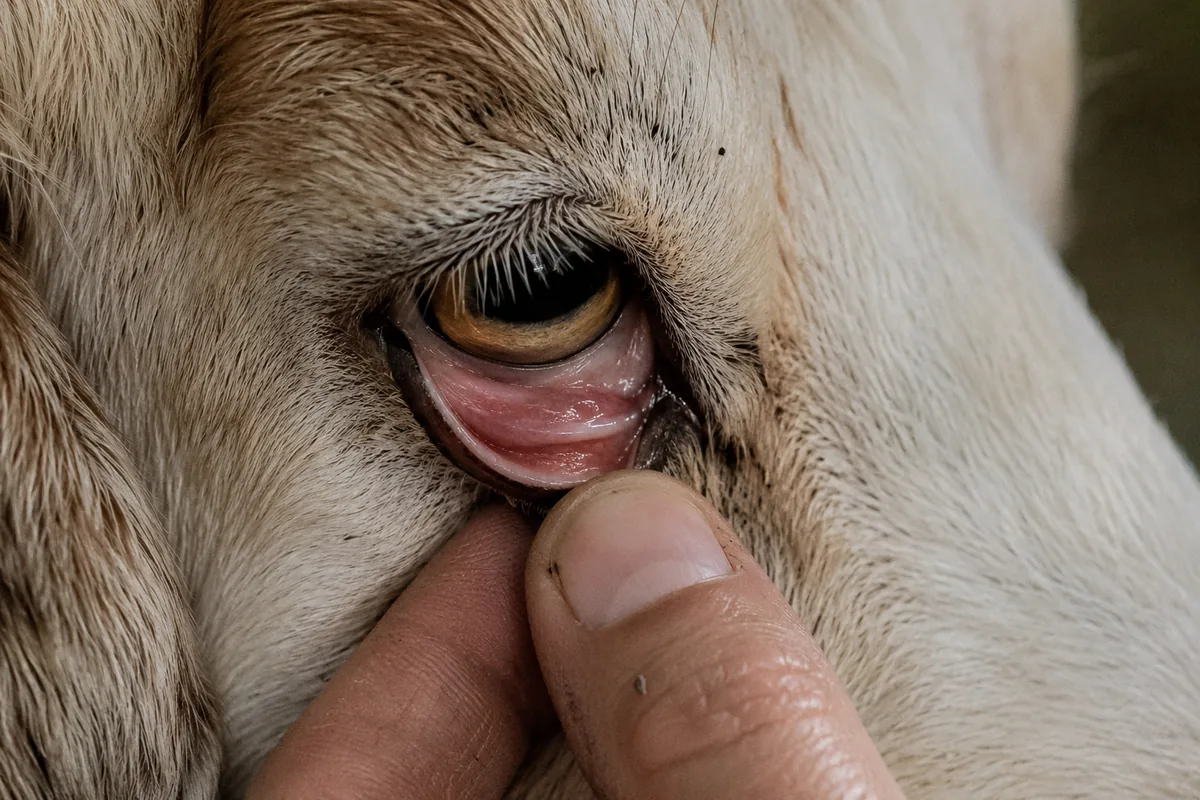
Fecal egg counts are the other half. Your vet (or you, with a microscope) counts worm eggs per gram of manure, which tells you both whether a goat has a real burden and, when repeated after treatment, whether your dewormer actually worked.
That follow-up test is called a fecal egg count reduction test, and it is the only honest way to know if a product still works on your farm. Pair eyelid color with body condition scoring and a watch for bottle jaw, and you can find the animals that need treatment without dosing the whole herd.
How to Deworm a Goat
Once you have identified a goat that needs treatment, three things matter most: the right drug class, the right dose, and an accurate weight.
There are three main dewormer classes, and using the wrong one (or a class your worms already resist) wastes the treatment:
- Benzimidazoles, the “white dewormers,” including fenbendazole (Safe-Guard, Panacur) and albendazole (Valbazen)
- Macrocyclic lactones, including ivermectin and moxidectin (Cydectin)
- Levamisole (Prohibit, LevaSol), in its own nicotinic class
Goats metabolize these drugs faster than sheep and cattle, so the label dose on the bottle is almost always too low. Dose by accurate body weight using a scale or weight tape, and give most dewormers orally, which works better against gut worms than pour-on or injectable forms.
Underdosing is one of the surest ways to breed resistant worms, the same risk that comes from overusing dewormer pellets or relying on convenience products like cattle dewormer blocks that goats can’t self-dose from. Pour-ons made for cattle are also a poor fit, which is why owners ask whether ivermectin pour-on belongs on goats at all.
Here are the commonly cited oral starting points, but treat them as a reference to confirm with your vet, not a prescription:
| Dewormer | Active ingredient | Oral dose (goats) | Resistance level |
|---|---|---|---|
| Safe-Guard / Panacur | Fenbendazole | 10 mg/kg for 3 days | High (often ineffective) |
| Ivermectin | Ivermectin | 0.4 mg/kg | Moderate |
| Cydectin | Moxidectin | 0.4 mg/kg | Low (reserve for heavy loads) |
| Prohibit | Levamisole | 8 mg/kg | Low |
Moxidectin (Cydectin) is currently the strongest option against barber pole worm on many farms, so save it for heavy infections to keep it working. For severe resistance, vets increasingly use two classes together, but combination deworming should be done with professional guidance, not guessed at.
Every dewormer is dosed by weight, so keep the goat medication dosage chart close. Always check before deworming a pregnant doe, since some dewormers aren’t safe in pregnancy.
Coccidia Is Not a Worm
This trips up a lot of new owners. Coccidia is a single-celled protozoan parasite, not a worm, and dewormers do nothing against it.
It hits kids hardest, usually between three weeks and five months old, and causes severe or bloody diarrhea that can permanently scar the gut lining and stunt growth. A kid with relentless scours is far more likely to have coccidia than worms.
Because the symptoms overlap with worm-related diarrhea, a fecal test is what tells them apart. Coccidia is treated with a coccidiostat such as amprolium, sold as Corid, or with sulfa drugs from your vet.
The takeaway: if a young kid is scouring, think coccidia first, and don’t assume a dewormer will fix it.
How Often Should You Deworm Goats?
As rarely as the goats let you. Routine, whole-herd, calendar-based deworming is what created the drug-resistant worms that now kill goats, because it kills off the susceptible worms and leaves only the resistant survivors to breed.
The modern standard is targeted selective treatment: monitor with FAMACHA and fecal counts, then treat only the individual animals with real burdens. On a well-managed farm, a meaningful share of adult goats may go a whole season without needing a dewormer at all, while a few heavy shedders carry most of the load.
Resist the old advice to “rotate dewormers every season.” Use a product that still works (confirmed by testing), and only move on when a fecal egg count reduction test shows it has failed.
How to Prevent Worms in Goats
Because worms cycle through manure and pasture, prevention is mostly about breaking that cycle and keeping your goats’ resistance high:
- Let goats browse, not graze short pasture. Worm larvae crawl up only the bottom few inches of grass, so goats eating leaves, brush, and tall forage pick up far fewer.
- Rotate pasture and avoid overstocking, which concentrates manure and worm eggs.
- Don’t feed on the ground. Use raised feeders and clean water troughs so goats aren’t eating off contaminated dirt.
- Cull the chronic shedders. A small number of goats carry most of a herd’s worms; breeding from parasite-resistant animals pays off for years.
- Quarantine and deworm new arrivals before they join the herd, so you don’t import resistant worms.
Good nutrition and loose minerals matter too, since a goat in solid body condition handles a worm load far better than a thin, stressed one. Strong management does more to keep worms in check than any bottle of dewormer.
Sources and Further Reading
Compiled and cross-checked against established veterinary and small-ruminant references:
- American Consortium for Small Ruminant Parasite Control (ACSRPC), FAMACHA and targeted selective treatment guidance
- Langston University, Meat Goat Production Handbook, internal parasite management
- The Merck Veterinary Manual, Gastrointestinal Parasites of Ruminants
- University extension publications (Penn State, Cornell) on goat parasite control
Parasite control is farm-specific; confirm dewormer choice and dosing with your own veterinarian, and recheck what works on your herd with periodic fecal testing.
Frequently Asked Questions
The classic signs are a pale lower eyelid and gums (anemia from the barber pole worm), weight loss despite eating, a rough or faded coat, weakness, and sometimes a soft swelling under the jaw called bottle jaw. Diarrhea and a pot-bellied look are common with other worms and with coccidia in kids. By the time a goat looks obviously sick, the worm load is already heavy, so check FAMACHA eyelid color every couple of weeks in warm, wet months rather than waiting for symptoms.
Only when an individual goat needs it, not on a fixed schedule. Routine calendar deworming is what created today's drug-resistant worms. Use FAMACHA scoring and fecal egg counts to find the goats with real worm burdens and treat just those animals. Most healthy adults on good management need deworming far less often than people expect.
There is no single best dewormer, because it depends on what still works on your farm. The main classes are benzimidazoles (fenbendazole/Safe-Guard), macrocyclic lactones (ivermectin and moxidectin/Cydectin), and levamisole (Prohibit). Moxidectin is often the most effective against barber pole worm, so many owners reserve it for heavy infections. The only way to know what works on your goats is a fecal egg count reduction test through your vet.
Yes. Overusing dewormers, especially deworming the whole herd on a schedule or underdosing, is exactly how worms become resistant to the drug, leaving you with nothing that works. Giving a single large overdose can also harm the goat. Dose by accurate weight, treat only the goats that need it, and confirm the product still works rather than reaching for it out of habit.
Usually much less than in the warm season. The barber pole worm thrives in warm, wet, humid conditions, so worm pressure drops in cold weather. Many keepers do a strategic treatment of heavily burdened animals in late fall, but routine winter deworming of healthy goats is rarely necessary. Keep using FAMACHA and fecal counts to decide rather than the calendar.