Every garden has a week when the zucchini won’t quit and the lettuce bolts overnight. That’s usually when you end up at the fence with a bucket of extras, asking: what vegetables can goats eat?
The answer is mostly good news, because a goat’s rumen is built to ferment plant matter. A few crops still flip from treat to trouble, depending on the part, the ripeness, or the amount.
After a decade-plus with goats, I sort garden vegetables for goats into three piles: easy treats, small servings, and never. Everything below follows that sort, grouped the way the plants grow.
What Vegetables Can Goats Eat at a Glance
Here are the vegetables goats can eat, plus the one they can’t, with a sensible portion for each. Portions are for a standard-size adult, so give miniature breeds like Nigerian Dwarfs about half.
| Vegetable | Safe? | How much (standard adult) | Watch out for |
|---|---|---|---|
| Lettuce | Yes | A few handfuls | Mostly water |
| Spring mix | Yes | A handful or two | Slimy or spoiled leaves |
| Spinach | In moderation | A handful, a few times a week | Oxalates that bind calcium |
| Kale | In moderation | A handful | Gas and bloat |
| Broccoli | In moderation | A loose handful, 2 or 3 times a week | Gas, seeds, and sprouts |
| Cabbage | In moderation | A few raw leaves, up to twice a week | Bloat, not for young kids |
| Cauliflower | In moderation | About 1 cup chopped, 2 or 3 times a week | Counts toward the brassica total |
| Brussels sprouts | In moderation | 2 or 3 sprouts, a few times a week | Strongest brassica per bite |
| Radishes | Yes | 2 or 3 radishes, a few times a week | Mild gas in big amounts |
| Carrots | Yes | 1 or 2 medium carrots a day | Choking on large chunks |
| Sweet potatoes | Yes | Up to half a medium one a day | Sugar, sprouted or moldy roots |
| Celery | Yes | 2 or 3 stalks, a few times a week | Choking on long stalks |
| Asparagus | Yes | A few spears, 2 or 3 times a week | Ornamental asparagus fern |
| Cucumbers | Yes | Up to half a cucumber a day | Pickles and wild cucumber |
| Zucchini | Yes | About half a pound, a few times a week | Bitter fruit |
| Squash | Yes | A few chunks | Ornamental gourds, bitter squash |
| Pumpkin | Yes | A few chunks a day | Mold, paint, candle wax |
| Pumpkin leaves and vines | Yes | As occasional browse | Goats will strip the patch |
| Tomatoes | Ripe fruit only | A couple of cherry tomatoes | Leaves, vines, green fruit |
| Bell peppers | Fruit only | About 1 small pepper, 2 or 3 times a week | Plant leaves and stems, hot peppers |
| Potatoes | Small amounts only | A few small pieces, once or twice a week | Green skin, sprouts, vines |
| Onions | No | None | Red blood cell damage |
| Corn on the cob | In moderation | A couple of ears, now and then | Starch overload |
| Edamame pods | Yes | About a quarter cup, 2 or 3 times a week | Salt and seasoning |
| Basil | Yes | A few leaves, about twice a week | Strong oils in bulk |
| Cilantro | Yes | A large handful, 2 or 3 times a week | Slimy or spoiled bunches |
Leafy Greens: Lettuce, Spring Mix, and Spinach
Salad greens are the easiest place to start, since none of the common ones are toxic. They’re mostly water, though, so they work as a snack rather than real feed.
Lettuce is about 95 percent water, which makes romaine or iceberg more of a crunchy drink than a meal. Romaine carries the most vitamins, and a few handfuls per goat is plenty.
A bag of leftover spring mix works too, since it’s mostly baby lettuces with some spinach, arugula, and chard. Offer a handful or two per goat, and throw out any leaves that have turned slimy.
Spinach is safe in moderation, but it carries oxalates that can block calcium when it’s fed heavily for weeks. A handful a few times a week is fine, and pregnant does should stick to small amounts.
Can Goats Eat Broccoli, Cabbage, and Other Brassicas?
Brassicas are the cabbage family, and they’re safe for goats in moderation. They’re also the vegetables most likely to cause trouble when a goat eats too much at once.
The problem is fast fermentation in the rumen. The Merck Veterinary Manual lists kale, rape, and turnips among the crops that can cause bloat in grazing livestock.
In frothy bloat, gas gets trapped in foam that won’t break down, so the goat can’t burp it up. That’s why a whole head of cabbage is a problem, while a few leaves aren’t.
None of this makes a few florets dangerous. Keep every brassica serving small, and know the warning signs of bloat before a garden raid happens.
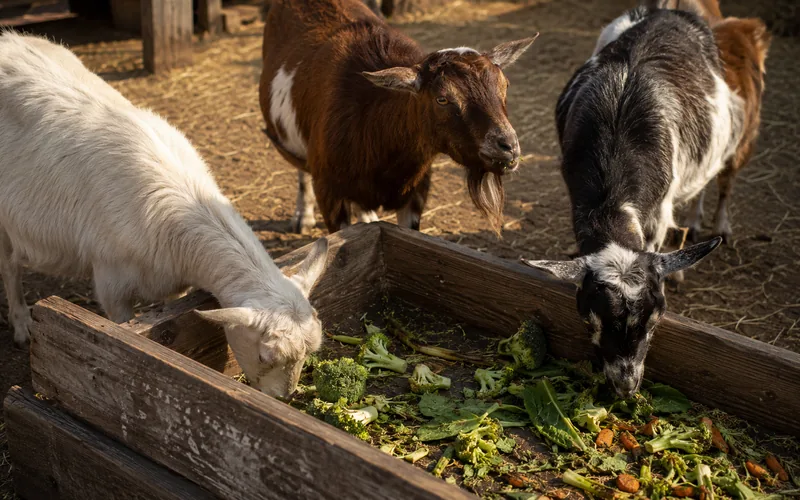
Goats can eat broccoli florets, stems, and leaves, raw or plainly cooked. A loose handful two or three times a week suits an adult, but skip the seeds and sprouts.
Feed cabbage raw and plain, a few loose leaves at a time, a couple of times a week at most. Skip sauerkraut and coleslaw, and keep young kids off cabbage entirely.
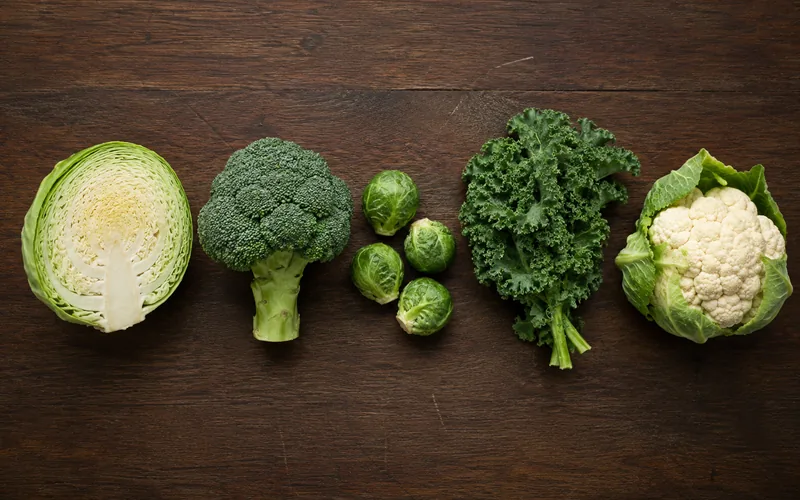
Every part of the cauliflower plant is safe, including the outer leaves, the thick stalk, and the seeds. About a cup of chopped cauliflower two or three times a week suits a standard adult doe or wether.
Brussels sprouts pack the strongest brassica punch per bite, so they get the smallest serving. Two or three halved sprouts per adult, a few times a week, is the limit.
Raw kale leaves are nutritious and safe, but a big pile can cause gas and bloat like any brassica. A handful per goat is the right treat size, and heavy feeding can give milk a stronger flavor.
Count all brassicas as one running total. Broccoli on Monday and kale on Tuesday still add up, and heavy feeding over weeks can also strain the thyroid.
Root Vegetables: Carrots, Sweet Potatoes, and Radishes
Root vegetables are some of the safest treats in the garden. The real risks are choking on hard chunks and too much sugar at once.
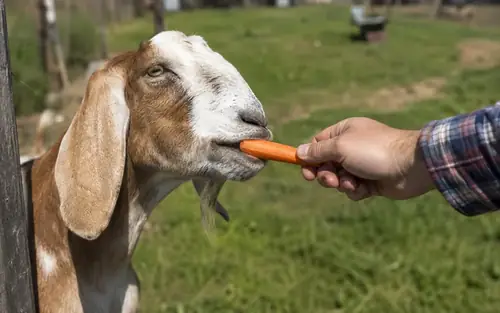
Carrots are safe from root to feathery top, and the greens carry more calcium and vitamin C than the root. One or two medium carrots a day suits a standard adult, and daily feeding is fine at that amount.
Cut carrots into 2 to 3 inch chunks or long strips before serving. A whole root can lodge in a goat’s throat, and choking is the most common carrot emergency.
Sweet potatoes aren’t related to regular potatoes at all. They’re in the morning glory family, so the roots, skin, vines, and leaves are all safe.
They’re sugary, though, so half a medium sweet potato a day is the upper limit for a standard goat. Chop the roots into 1 to 2 inch pieces, and skip any that have sprouted or grown mold.
Goats can eat radishes and their greens, and the leafy tops carry more nutrition than the roots. Radishes are brassicas, so two or three a few times a week keeps gas in check.
Not every goat likes the peppery bite, so don’t worry if yours walk away from it.
Stalk Vegetables: Celery and Asparagus
No part of the celery plant is toxic, and the leafy tops carry the most nutrition. Two or three stalks a few times a week makes a good adult serving.
Chop the stalks into pieces about two inches long first. Whole stalks are long, stringy, and stiff, which is exactly how choking happens.
Garden asparagus is a safe treat raw or plainly cooked, and goats happily gnaw the woody ends you’d snap off. A few spears two or three times a week, cut into 2 to 3 inch pieces, is plenty.
Skip canned or seasoned asparagus. Keep goats away from ornamental asparagus fern too, the hanging-basket houseplant, since it’s mildly toxic to them.
If you let the herd clean up the asparagus bed after harvest, pull any stems carrying small red berries first. Those berries hold saponins that can irritate a goat’s gut.
Squash, Pumpkin, Zucchini, and Cucumbers
The squash family is a goat favorite, and every part of the garden varieties is safe to feed.
Every common squash, from butternut and acorn to yellow crookneck, is safe raw or plainly cooked. Flesh, skin, seeds, and stringy insides are all edible, but chop hard winter squash first.
Overgrown zucchini that’s too tough for dinner is perfect goat food, skin and seeds included. About half a pound per adult goat a few times a week is a sensible serving.
Goats love plain pumpkins, and they’ll eat the flesh, seeds, and rind. A few chunks per goat a day is plenty, and the seeds are no substitute for a real deworming plan.
Leftover jack-o’-lanterns are fine if they’re plain. Skip any that are painted, glittered, moldy, or coated in candle wax.
Pumpkin leaves and vines are safe too, along with the big yellow flowers. Goats will strip a patch to the dirt, so fence off any pumpkins you want to harvest.
Goats can eat cucumbers, skin and seeds included, plus the vines, leaves, and flowers. Half a cucumber a day is the ceiling for a full-size goat, and a quarter for a miniature breed.
Scrub store-bought cucumbers with a brush, since pesticide residue settles into the waxy skin. Never feed pickles, relish, or pickle juice, because the salt and vinegar upset the rumen.
One warning covers the whole family. Wild cucumber, ornamental gourds, and bitter-tasting squash can carry cucurbitacins, compounds that can make goats sick.
Are Tomatoes, Peppers, and Potatoes Safe for Goats?
Tomatoes, peppers, and potatoes all belong to the nightshade family. With all three, the food you’d eat and the plant it grows on get two different answers.
The leaves, stems, and vines are the danger. North Carolina State Extension says the potato plant’s green parts all carry solanine, including sprouts and green skin.
Ripe tomatoes, red or yellow, are a safe treat in small amounts. The leaves, stems, and vines are toxic, and green tomatoes should be skipped too.
Pull off every bit of stem before serving. A couple of cherry tomatoes or a few slices is plenty, since tomatoes are acidic and can loosen droppings.
Sweet bell peppers of any color are safe, seeds and core included, because they carry no capsaicin. About one small chopped pepper two or three times a week suits a standard adult.
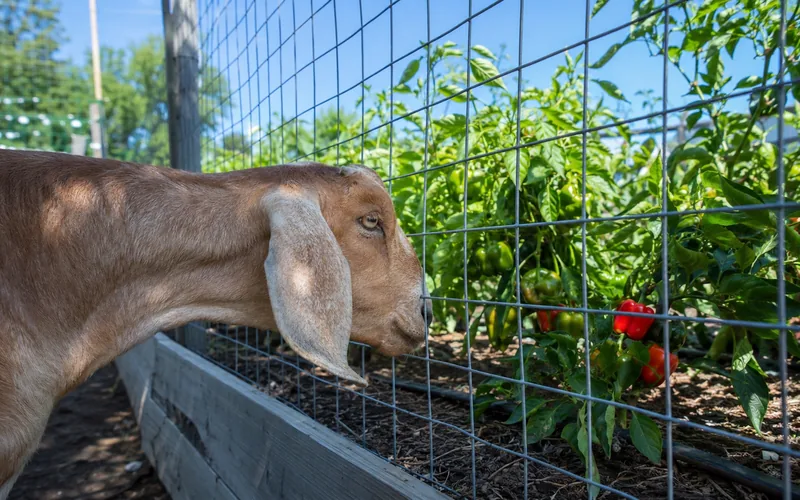
The pepper plant itself is another story, since its leaves, stems, and roots carry nightshade alkaloids. Keep goats fenced out of the garden, and keep hot peppers out of the pen.
A firm, plain potato with no green spots is fine as an occasional treat. Offer a few small pieces once or twice a week, ideally boiled or baked with nothing added.
Green-skinned or sprouted potatoes go in the trash, and chips or fries never go in the pen. Keep potato vines out of reach too, even after harvest.
Signs of solanine poisoning include drooling, trembling, weakness, and trouble breathing. If a goat gets into the tomato or potato patch, call your vet right away.
Corn on the Cob and Edamame Pods
Goats can eat fresh corn on the cob, including the kernels, cob, husks, and silk. It’s high in starch, though, so a couple of ears per adult is an occasional treat.
Too much corn at once can cause acidosis, which can make a goat seriously sick within hours. Serve it plain, choose fresh sweet corn over dried field corn, and lock up any corn you store.
Edamame is just young soybeans, and goats digest the fibrous pod without trouble. Plain edamame pods are safe, but most store-bought edamame is heavily salted.
Rinse store-bought pods and skip anything seasoned, glazed, or flavored. About a quarter cup two or three times a week is plenty for an adult.
Which Garden Herbs Can Goats Eat?
Most goats love a strong-smelling herb, and basil and cilantro are both safe. The trick with any herbs goats can eat is keeping portions small.
Fresh basil is non-toxic, but its essential oils can upset digestion in bulk. A few leaves twice a week suits an adult, and holy basil should stay at a leaf or two.
Every part of the cilantro plant is safe, including the stems, flowers, and coriander seeds. A large handful two or three times a week works for a standard adult, though some goats refuse the smell.
Not every herb makes the cut. Comfrey, wormwood, and pennyroyal belong on the avoid list, so identify any plant before the herd browses it.
Which Vegetables Should Goats Never Eat?
Onions top this list, and the answer is a plain no. Onions damage red blood cells, and repeated or large helpings can lead to hemolytic anemia.
Every part counts, from the bulb and skin to the green tops, and cooking doesn’t make onions safe. Garlic, leeks, chives, and shallots carry the same kind of compounds, so skip the whole onion family.
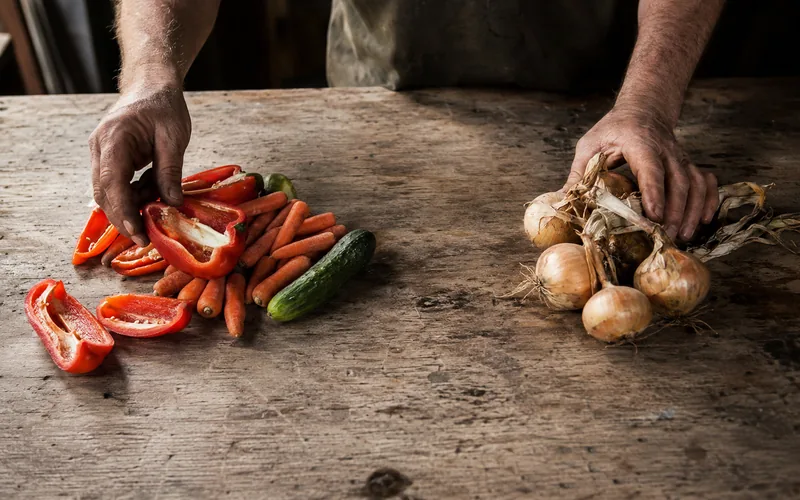
A single stolen bite from the garden isn’t an emergency. Still, watch for pale gums, dark urine, or weakness for a few days, and call your vet if they appear.
Beyond onions, these vegetables and plant parts should stay out of the feed bucket:
- Potato leaves, vines, sprouts, and green-skinned potatoes
- Tomato leaves, stems, and vines, plus green tomatoes
- Pepper plant leaves, stems, and roots, plus hot peppers
- Rhubarb leaves, which carry oxalates
- Wild cucumber, ornamental gourds, and bitter squash
- Ornamental asparagus fern
- Pickles, sauerkraut, coleslaw, and salted or seasoned vegetables
- Anything moldy, slimy, or rotten
Garden cleanup is where most of these slip through. Pulled vines and trimmings tossed over the fence are a common way poisonous plants end up in a pen.
How Many Vegetables Can a Goat Eat?
Keep vegetables and every other treat under about 10 percent of what a goat eats each day. Hay, pasture, browse, and minerals make up the rest of a goat’s diet.
That allowance is shared. Apples and other fruit count against it, and so does every other kind of treat.
Can goats eat vegetables every day? A few, like carrots, are fine daily, but most on this list work best two or three times a week.
Miniature breeds like Nigerian Dwarfs and Pygmies need about half the portions in the table, and sometimes less. Brussels sprouts are a good example, since a dwarf goat should get about one halved sprout.
Kids and Weanlings
Kids shouldn’t get vegetables until they eat hay and solid feed reliably. Start with two or three thumbnail-sized pieces, and check the manure the next day.
Skip cabbage for young kids entirely, and hold off on celery until about three months old. Cut everything smaller than seems necessary, since a kid’s throat is narrow.
Pregnant and Nursing Does
Pregnant and nursing does can have most safe vegetables, but brassicas deserve a lighter hand. The Merck Veterinary Manual notes that goats eating goitrogenic plants like brassicas can run short on iodine even with normal intake.
Severe iodine deficiency can cause goiter and small, weak kids at birth. Keep a good loose mineral available and brassica servings small through pregnancy.
Wethers and Bucks
Wethers and bucks need a careful hand with corn. Its phosphorus runs high without the calcium to balance it, and chronic overfeeding can lead to urinary stones.
Overweight goats don’t need sugary extras like carrots and sweet potatoes either. Cucumber slices give them the same crunch with far less sugar.
How to Feed Vegetables to Goats Safely
A few habits keep vegetable treats safe for the whole herd. If I could give new keepers just one, it would be chopping everything smaller than seems necessary.
- Wash store-bought produce to remove pesticide residue. Homegrown, unsprayed vegetables just need a rinse.
- Chop hard or long vegetables like carrots, celery, and broccoli stems into small pieces.
- Serve everything plain, with no butter, salt, oil, dressing, garlic, or onion.
- Introduce one new vegetable at a time, starting with a piece or two.
- Spread treats out so one bossy goat can’t eat everyone’s share.
- Toss anything moldy or slimy, since mold can carry toxins that hurt goats.
Loose manure is usually the first sign of overdoing it, and plain hay and water often settle it. A tight, swollen left side, teeth grinding, or a goat that stops chewing its cud points to bloat.
Bloat can turn deadly within hours, so call your vet as soon as you see it. The same goes for drooling, staggering, or weakness after a goat raids the garden.
Final Thoughts
Most garden vegetables make a safe, happy extra for goats. Brassicas just need small servings, and with nightshades, the plant is the danger rather than the ripe produce.
Onions are the one clear no. Keep treats small, keep hay in front of your goats, and call your vet if anything looks off.
Frequently Asked Questions
Onions and the rest of the onion family, including garlic, leeks, chives, and shallots, should stay out of the feed bucket. Also skip potato leaves, vines, sprouts, and green potatoes, plus tomato and pepper plants and green tomatoes. Rhubarb leaves, wild cucumber, ornamental gourds, and anything pickled, salted, or moldy are out too.
Yes, as long as the scraps are plain, fresh, and from vegetables on the safe list. Carrot peels, lettuce ends, squash rinds, and broccoli stems all work well. Skip anything cooked with butter, salt, oil, or seasoning, anything mixed with onion or garlic, and anything slimy or moldy.
No, cabbage isn't toxic to goats, and most of them love it. The real risk is bloat, because cabbage and other brassicas ferment fast in the rumen. A few raw, plain leaves a couple of times a week is fine for adults, but young kids should skip it.
Kids can try vegetables once they eat hay and solid feed reliably, not while they live on milk alone. Start with two or three tiny pieces of something gentle, like carrot, and check the manure the next day. Skip cabbage for young kids, and wait on celery until they're about three months old.
Some can. Heavy feeding of brassicas like kale or cabbage can give milk a stronger flavor, and onions and garlic are well known for tainting it. Mild picks like bell peppers and a treat-sized handful of cilantro won't carry through. Feeding strong greens right after milking gives the flavor time to fade before the next session.