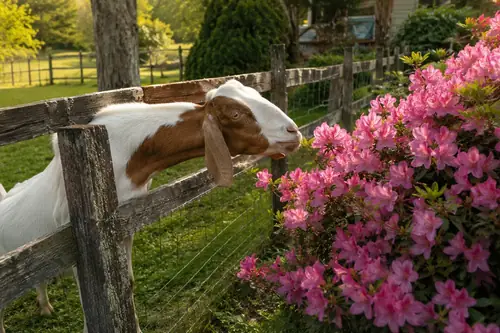
Goats are browsers at heart. They’d rather pick leaves, twigs, and wild fruit than graze grass all day, so a sweet bite suits them fine.
What fruits can goats eat without trouble? New keepers ask me that all the time, usually while a goat is chewing on something it shouldn’t.
A goat’s rumen runs on fiber, and its microbes ferment sugar fast. That’s why fruit makes a great treat and a poor meal, and why the details below matter.
Quick Chart: What Fruits Can Goats Eat?
Here’s each fruit at a glance, with a typical serving for a full-size adult. Halve it for Nigerian Dwarfs and Pygmies, and start kids far smaller.
Pumpkins, tomatoes, cucumbers, and squash are fruit to a botanist, but keepers feed them like garden vegetables. This chart sticks to the sweet stuff.
| Fruit | Safe? | Adult serving | Watch out for |
|---|---|---|---|
| Apples | Yes, seeds out | About 1 apple | Seeds, rotten windfalls |
| Pears | Yes, cored | 1 to 2 pears | Seeds, fermented drops |
| Peaches | Yes, pit out | 1 to 2 peaches | Pits, wilted leaves |
| Plums | Yes, pit out | 1 to 2 plums | Pits, wilted leaves |
| Blueberries | Yes | 10 to 15 berries | Canned or baked forms |
| Blackberries | Yes, whole plant | A small handful | Sprayed or moldy patches |
| Strawberries | Yes, tops too | 3 to 5 berries | Mold, pesticide residue |
| Grapes | Yes, seeds too | 5 to 10 grapes | Mold, sprayed vines |
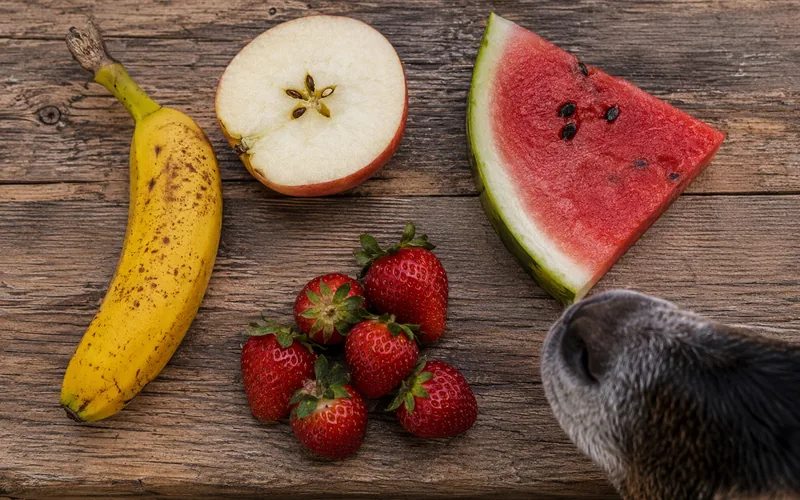
| Watermelon | Yes, rind too | A few slices | Moldy or fermented melon |
| Cantaloupe | Yes, rind too | About 1 cup | Dirty rind, mold |
| Bananas | Yes, peel too | 1 to 2 bananas | Stickers, very ripe fruit |
| Pineapple | Yes, skin off | A few chunks | Spiny skin, canned syrup |
| Kiwi | Yes, skin too | 1 to 2 kiwis | Produce stickers |
| Oranges | Yes, peel too | 1 to 2 oranges | Acid in big amounts |
| Applesauce | Plain only | 1 to 2 tablespoons | Added sugar, xylitol |
| Avocado | No, toxic | None | All parts of the plant |
Treat each number as a ceiling, not a target. If a goat already had grapes today, trim or skip the banana.
Which Tree Fruits Are Safe for Goats?
Orchard fruit is where many keepers start. It’s also where the seed and pit rules matter most.
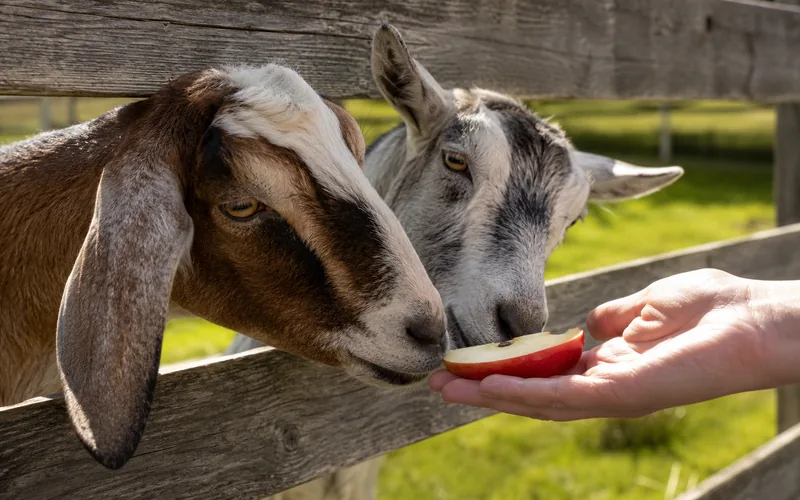
Goats will sprint to the fence for a sliced apple, and the flesh and skin are completely safe. The seeds are the one part to remove, because they hold amygdalin, which releases cyanide when chewed.
About one apple is plenty for a standard adult, and half is enough for a Pygmy or Nigerian Dwarf. Slice it thin for small breeds, whose narrow throats can choke on big chunks.
Pears follow the apple rules. Leave the skin on, but cut out the core and seeds, which carry the same amygdalin.
Soft pears are easy on older goats with worn teeth, and a couple per adult makes a good occasional treat. Just skip any pear that smells boozy from sitting on the ground.
Peach flesh and fuzzy skin are safe, and most goats go nuts for them. The pit is the problem, since it carries the same cyanide risk as apple seeds.
Halve ripe peaches and pop out the pit before they go over the fence. A couple per goat, once or twice a week, is plenty.
Plums work exactly like peaches, with safe flesh and a pit that has to come out. Juicy plums also bring vitamins A and C, and a couple per goat makes a nice treat.
If a plum tree drops fruit into the pasture, pick it up daily or fence the tree in fruiting season. A goat left alone with a carpet of fallen plums will eat far too many.
Apricots and cherries are stone fruits too, so their pits come out and their wilted leaves stay out of reach. Cherries are fiddly to pit one by one, so I skip them and feed other fruit instead.
Which Berries Can Goats Eat?
Berries are the easiest fruit to feed. Most need no cutting, their tiny seeds are harmless, and each one makes a neat single-bite reward.
A small handful of fresh blueberries, about 10 to 15, suits a full-size adult two or three times a week. The whole bush is safe to browse, from the leaves to the woody stems.
Blackberries go a step further. Goats can eat the berries, the leaves, and even thorny blackberry canes that would shred a cow’s lips.
The ripe berries are sugary, so cap them at a small handful two or three times a week. The leaves and canes are high-fiber browse, and goats can work an unsprayed bramble patch freely.
Goats can eat whole strawberries, green tops included, and the plants are safe browse too. Give an adult 3 to 5 berries and a kid 1 or 2, and cut big ones in half.
Grapes worry a lot of owners because they’re dangerous for dogs. That risk doesn’t carry over to goats, whose rumens handle grapes, seeds and all.
Give an adult 5 to 10 grapes two or three times a week, and fewer for minis. Rinse store-bought bunches first to wash off pesticide residue.
Which Melons Can Goats Eat?
Melons are my favorite summer treat for goats, and the part we toss is the part they should get most. Rinds carry more fiber and less sugar than the sweet flesh inside.
Chilled watermelon is about 92 percent water, which makes it a smart pick on a hot afternoon. The flesh, rind, and seeds are all safe, and a few slices per goat is plenty.
Frozen chunks make a great hot-day treat, but let them soften a bit so nobody chips a tooth. Throw out any melon that’s been sitting long enough to smell off.
Cantaloupe is safe whole, rind and seeds included. The netted cantaloupe rind is the better half for a goat, so save it instead of composting it.
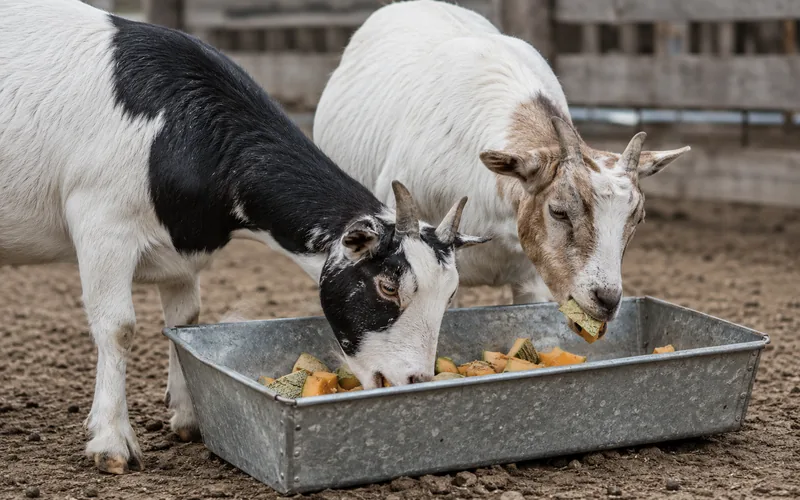
Serve about one cup of chunks per adult once or twice a week, and half that for minis. Scrub the netted rind first to clear out trapped soil and residue.
Honeydew is safe too, rind included. Its smooth skin is tougher than cantaloupe’s netting, so cut it into smaller pieces.
Can Goats Eat Tropical Fruit and Citrus?
Most tropical fruit from the grocery store is fine for goats, with avocado as the big exception. Here the worries are mostly tough skins and sugar.
Plenty of goats will mug you for a ripe banana, and the peel is just as safe as the fruit. Limit an adult to one or two bananas a few times a week.
Ripeness changes the math. A firm banana ferments more slowly, while a brown-speckled one is sweeter and deserves a smaller serving.
Fresh pineapple is a safe treat once you cut away the tough, spiny skin. Offer a few one-inch chunks once or twice a week, and skip canned pineapple in syrup.
Kiwi needs almost no prep, because the fuzzy skin and tiny seeds are both safe. Just halve a ripe kiwi and hand it over.
A couple per goat makes a fine occasional treat. The kiwi vine is non-toxic too, though goats will strip a young one bare.
Oranges are safe, and so are the peel and the tree’s leaves and bark. Some goats love the bitter peel, while others back away from the strong citrus smell.
You’ll see advice to skip citrus completely because of the acid. In practice, the acid is a reason to keep servings small, not to ban oranges.
Stick to one or two oranges per goat once or twice a week, and peel them for kids. Tangerines and clementines follow the same small-portion rule.
Mango flesh works like pineapple, a few sweet chunks at a time. Pull out the big, hard pit first to avoid choking.
Can Goats Eat Dried or Processed Fruit?
Processing changes fruit more than people expect. Drying packs the sugar tighter, canning usually adds syrup, and pureeing lets sugar hit the rumen faster.
Plain unsweetened applesauce is safe in spoonfuls, and it’s a handy way to hide bitter medicine. One or two tablespoons, once or twice a week, is the ceiling for an adult.
Read the label before you buy. Skip sweetened and cinnamon jars, and watch for no-sugar-added versions made with xylitol, a sweetener that’s toxic to many animals.
Dried fruit is safe in tiny amounts, but treat it like candy. Two or three raisins equal a full serving of grapes.
Prunes and banana chips are concentrated too, so offer only a few. Pick plain chips with no added sugar or oil.
Canned fruit in syrup, pie filling, and fruit pastries don’t belong in the pen. The flour, fat, and added sugar do far more harm than the fruit does good.
Juice is sugar with the fiber stripped out, so it hits the rumen even faster than whole fruit. If it came from the dessert aisle or the juice cooler, keep it out of the barn.
What Fruit Is Toxic to Goats?
Only one common fruit is off limits in every form. Everything else on the danger list is a pit, a seed, a leaf, or fruit that’s gone bad.
Avocado: Toxic in Every Part
Avocado contains persin, a toxin that damages heart muscle and udder tissue in goats. Every part carries it, from the leaves and bark to the pit, skin, and soft green flesh.
No amount is safe, and a large dose can be fatal. The Merck Veterinary Manual reports that goats develop severe mastitis after eating 20 grams of avocado leaves per kilogram of body weight.
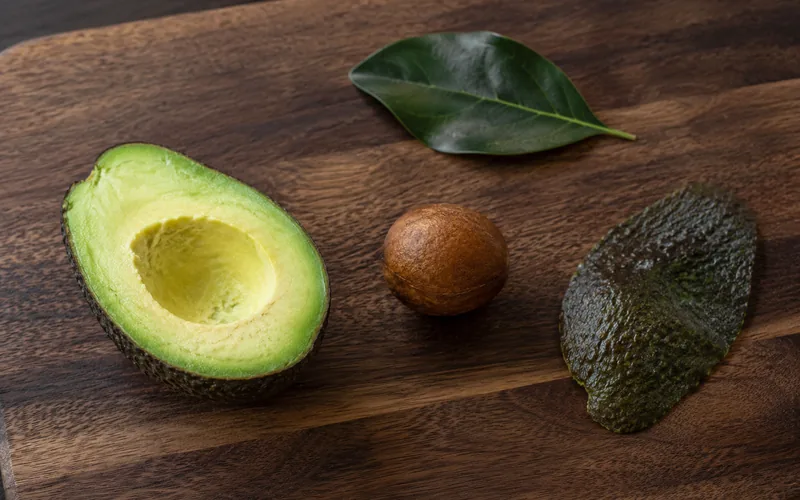
The leaves are the most toxic part, so a tree near the fence is a bigger threat than the fruit bowl. Fence goats away from any avocado tree, and call your vet if a goat eats any part of it.
Pits and Seeds
Apple seeds, pear seeds, and the pits of peaches, plums, cherries, and apricots all contain amygdalin. When a goat crushes them between its molars, that compound breaks down into cyanide.
A stray apple seed won’t hurt an adult, but there’s no reason to gamble. Big pits add a second problem, because they can choke a goat or block its gut.
Plenty of seeds are fine, though. Grape, melon, berry, and kiwi seeds pass through without trouble, so don’t waste time picking them out.
Wilted Stone-Fruit Leaves
Fresh peach and plum leaves on the tree are generally fine if a goat grabs a few. Once stone-fruit leaves wilt, from a storm-snapped branch or a pile of prunings, they release cyanide.
Wilted cherry leaves are the classic killer. Penn State Extension warns that cyanide signs can appear within 15 to 20 minutes of eating them, and ruminants are especially vulnerable.
That’s why wilted stone-fruit leaves make the short list of plants poisonous to goats. Walk the fence line after each storm, and never toss prunings into the pen.
Most other fruit plants make safe browse, as long as nothing has been sprayed. Apple, pear, and orange leaves are fine, and so are blackberry canes, grapevines, and kiwi vines.
Moldy or Fermented Fruit
Fallen fruit ferments as it sits, turning sugar into alcohol. A goat that gorges on rotting windfalls can stagger, bloat, and get genuinely sick.
Moldy fruit is just as risky, since mold can carry toxins that cause serious digestive illness. Rake up drops daily in fruit season, and toss anything fuzzy, slimy, or boozy-smelling.
How Much Fruit Can a Goat Eat?
Keep fruit and all other treats under about 10 percent of what a goat eats in a day. Hay, browse, pasture, and minerals make up the rest of a goat’s diet, and fruit should never crowd them out.
That 10 percent covers all snacks, so count other goat treats against the same budget. If the herd already got something sweet today, trim the fruit.
Why so strict? Sugar ferments fast, and a flood of it can tip the rumen into acidosis or bloat.
The Merck Veterinary Manual even names gorging on apples and grapes as one cause of grain overload. That’s the same dangerous acid buildup a goat gets from raiding the feed bin.
Spread fruit across the week instead of feeding the same treat daily. Rotating a few favorites keeps the sugar load low and treat time interesting.
Kids and Young Goats
Kids can try fruit once they’re reliably eating hay and solid feed. Start with a bite or two, cut small, and keep milk and forage at the center of their diet.
A few fruits need extra patience. Hold off on grapes until about three months old and on applesauce until weaning.
Pregnant and Milking Does
Pregnant and milking does can have the usual small servings. Their extra energy should come from good hay and a balanced ration, not a pile of fruit.
In late pregnancy, lean toward the low end of each range. Berries and grapes in treat amounts won’t change how the milk tastes, so dairy keepers can relax on that front.
Wethers and Easy Keepers
Wethers and overweight goats belong at the bottom of those ranges. They have no kids or milk to fuel, so extra sugar does them no favors.
How Do You Feed Fruit to Goats Safely?
A minute of prep turns fruit from a gamble into an easy reward. These habits prevent most of the problems I’ve run into.
- Wash store-bought fruit to cut pesticide residue, and peel off any produce stickers.
- Remove apple and pear seeds, cores, and all stone-fruit pits.
- Cut pieces to fit the goat, with thin slices for kids and minis.
- Feed fruit after hay, so fiber reaches the rumen first.
- Hand-feed or spread portions out so a bossy goat can’t steal everyone’s share.
Introduce one new fruit at a time, starting with a few small pieces. Watch the droppings for a day or two before you offer a full serving.
Signs of Trouble
The signs of too much fruit usually show up within a day or two. Watch for loose or purple-tinted droppings, a goat that ignores its hay, or one that stops chewing its cud.
A swollen left side, teeth grinding, or obvious pain can signal a case of bloat, which turns serious fast. Pull all treats, offer hay and water, and call your vet if the goat doesn’t settle quickly.
Poisoning looks different and moves faster. If a goat got into avocado or wilted leaves and starts drooling, gasping, or swelling, call your vet right away.
Final Thoughts
Fruit is one of the easy joys of keeping goats. Nearly every common fruit is safe in small amounts, and the few real dangers are simple to plan around.
Pull the pits and seeds, keep avocado out of reach, and clear wilted leaves and rotten drops. Do that, keep treats under 10 percent, and your herd will come running whenever you walk out with a fruit bowl.
Frequently Asked Questions
Avocado is the one fruit to never feed, because every part contains persin, which damages the heart and udder. Otherwise the danger sits in certain parts. Remove apple and pear seeds and all stone-fruit pits. Keep goats away from wilted peach, plum, and cherry leaves, and throw out anything moldy or fermented.
It varies from goat to goat, but most love sweet, soft fruit. Bananas, apples, grapes, and watermelon are common favorites, and plenty of goats grab melon rind before the flesh. Oranges split the herd, since some goats love the peel and others refuse the smell. Save the favorites for training rewards so they stay special.
A small piece won't hurt a healthy adult, but most fruit works best a few times a week. Daily fruit makes it easy to blow past the 10 percent treat limit and load the rumen with sugar. Rotate a few different fruits across the week and keep hay as the main meal.
Yes, once they're reliably eating hay and solid feed. Start with a bite or two of soft fruit, cut small, and watch their droppings for a day. Hold off on grapes until about three months old and skip applesauce until weaning. Milk, hay, and starter feed should still do nearly all the work.
Most peels are safe. Banana and orange peels, kiwi skin, apple and pear skins, and melon rinds are all fine. Melon rind even carries less sugar than the flesh. Wash store-bought fruit first to cut pesticide residue. The two exceptions are pineapple skin, which is too tough and spiny, and avocado skin, which is toxic.