Open a bag of chips anywhere near the goat pen and watch what happens. Every head swings your way, and at least one goat tries to climb the fence to help.
That begging is what makes goat treats tricky. Goats will happily eat people food that upsets their stomachs, so the job of saying no falls to you.
I’ve kept goats for over a decade, and most treat trouble I’ve seen started with kindness, not neglect. Below, you’ll see which human foods are safe, how much is too much, and how to put treats to work.
What Treats Can Goats Eat? The Quick List
Here’s where the most common human foods and kitchen scraps land. Use it as a cheat sheet, then read on for the details behind each verdict.
| Treat | Safe? | How much | Watch out for |
|---|---|---|---|
| Fresh fruit and vegetables | Yes, most | A few small pieces | Pits, apple seeds, avocado, onion |
| Bread | Sometimes | A few bites a week | Mold, raw dough, garlic or raisin loaves |
| Cooked pasta | Sometimes | About a quarter cup, once or twice a week | Sauce, instant noodles, dry shards |
| Cooked rice | Sometimes | About a quarter cup, once or twice a week | Raw rice, butter, seasoning |
| Plain popcorn | Sometimes | A small handful, weekly at most | Butter, salt, unpopped kernels |
| Peanuts | Yes | A small handful a few times a week | Salt, mold, a musty smell |
| Peanut butter | Sometimes | A tablespoon or less | Xylitol, kids under six months |
| Raw sweet almonds | Yes | Up to 1 to 2 ounces a day | Bitter almonds, salted or coated nuts |
| Black oil sunflower seeds | Yes | A quarter to half cup a day | Salted, rancid, or moldy seeds |
| Brown sugar | Only a pinch | A pinch, rarely | Acidosis, weight gain |
| Peppermint candy | Sometimes | One or two, not daily | Sugar, chocolate coatings |
| Horse treats | Yes, most | Two or three a day | Sugar, chocolate, xylitol, big hard pieces |
| Plain kitchen leftovers | Sometimes | A small side, never a meal | Onion, garlic, seasoning, mold |
| Juice | No | None | Sugar and acid |
| Chocolate | No | None | Theobromine, worst in cocoa powder |
| Cheese | No | None | Lactose, fat, salt |
| Meat | No | None | Goats are herbivores |
| Dog food | No | None | Animal protein, fat, copper |
Notice the pattern. The safe treats are plain, and most risky ones come loaded with salt, sugar, sauce, or fat.
What Are the Healthiest Treats for Goats?
The healthiest goat treats don’t come from the snack cupboard at all. Fresh fruit and vegetables carry water, fiber, and vitamins along with the flavor.
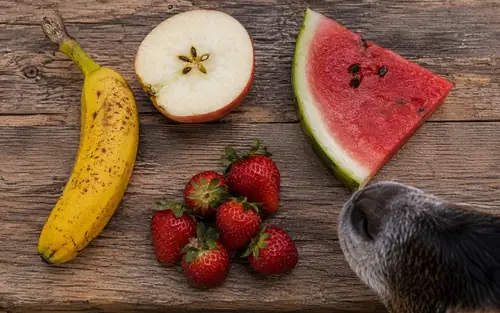
Most fruit treats are safe once you remove pits and apple seeds, and bananas can go in peel and all. Avocado is the big exception, since every part of it is toxic to goats.
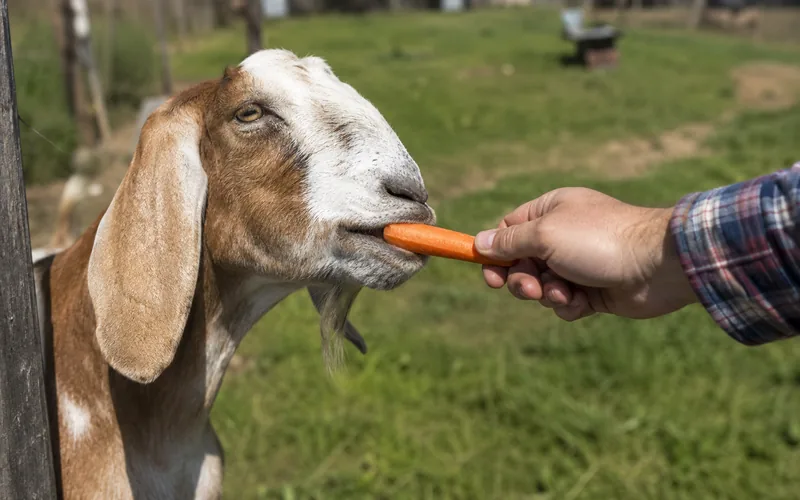
On the vegetable side, carrots, squash, pumpkin, and celery all make great rewards. Skip onions, green or sprouted potatoes, and the leaves and vines of tomato plants.
Cut produce into bite-size pieces, and keep fruit to a few slices at a time. Natural sugar still feeds the same acid-making microbes that candy does.
Can Goats Eat Bread, Pasta, Rice, and Popcorn?
Starchy people food is the easiest treat to overdo. A rumen ferments fiber slowly, but refined starch ferments fast and floods it with acid.
The Merck Veterinary Manual lists bread and raw dough among the less common causes of grain overload in ruminants. Too much at once can also trigger frothy bloat, and either problem can turn deadly fast.
Bread is fine as a few torn pieces a week, and whole wheat beats white because it carries more fiber. Moldy bread and raw dough are never okay, though.
Mold toxins can’t be cut away like a bad spot on an apple. The live yeast in raw dough is just as bad, because it keeps rising inside a warm rumen.
Plain cooked noodles are safe at about a quarter cup, once or twice a week. The sauce is the real problem, since onion, garlic, salt, and fat all upset a goat.
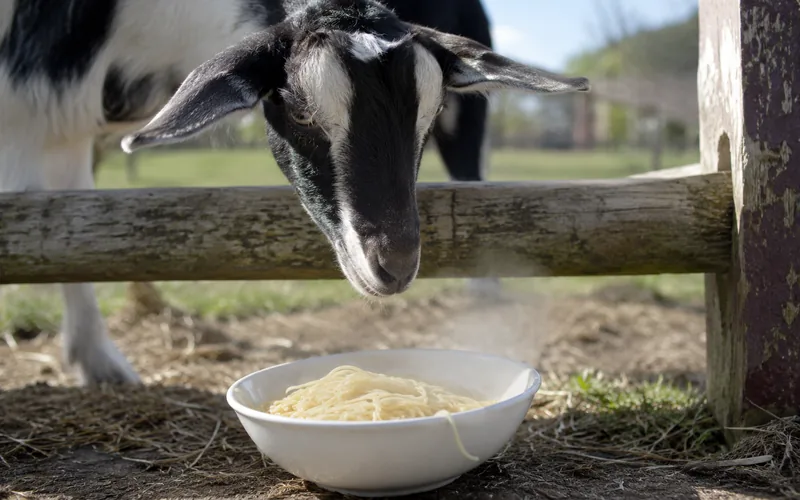
Pull a few noodles out before the sauce goes on, because rinsing won’t make sauced pasta safe. Skip instant noodles too, since the seasoning packet is loaded with salt, onion powder, and garlic powder.
Rice follows the same rules, as long as it’s cooked and plain. Raw rice is the one to avoid, because the dry grains are hard to digest and can cause bloating.
Stick to about a quarter cup of cooked rice mixed into feed, once or twice a week. Plain white rice can even help settle mild loose droppings, though lasting diarrhea needs a vet.
A small handful of plain air-popped popcorn makes a fun weekly treat. Sift out unpopped kernels, which can choke a goat or crack a tooth, and skip microwave popcorn.
Which Nuts and Seeds Can Goats Eat?
Nuts and seeds are some of the best treats you can hand a goat. They carry real protein and fat, and that fat is also the reason portions stay small.
Plain, unsalted peanuts are safe raw or roasted, and most goats crunch through them shell and all. Start with two or three, then work up to a small handful a few times a week.
Toss any peanuts that look moldy or smell musty. Peanuts are prone to aflatoxin, a mold toxin that damages the liver.
A thin smear of peanut butter hides a pill better than anything else in the barn. Keep it to a tablespoon or less, skip any jar with xylitol, and don’t give it to kids under six months.
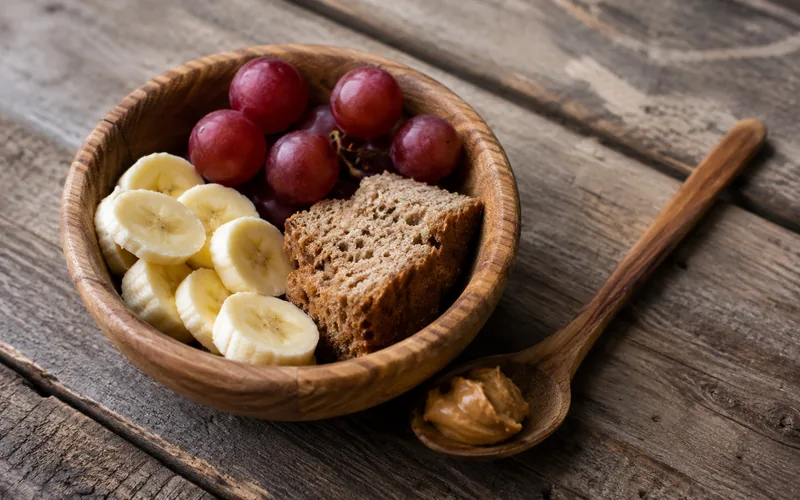
Skip big spoonfuls, since a thick glob can stick to the roof of a goat’s mouth. Mixing a small dab into grain works just as well.
A small handful of raw sweet almonds is safe, and that’s the kind every grocery store sells. Bitter almonds are the danger, because they release cyanide as they’re digested.
Cap almonds at 1 to 2 ounces a day for a big adult like a Nubian, and chop them for kids. Salted, flavored, or chocolate-coated almonds stay in the pantry.
Black oil sunflower seeds, or BOSS, are more supplement than snack. They bring fat, vitamin E, and selenium, and most coats start to shine within a couple of weeks.
Feed a quarter to half a cup per adult goat a day, raw and unsalted, shells included. Store the bag somewhere cool and dry, because warm, damp seeds go rancid and grow mold.
Can Goats Have Sugar, Peppermints, or Juice?
Goats have a serious sweet tooth, which is exactly why sugar needs a hard limit. Sugar ferments fast in a rumen, so a little goes a long way.
A pinch of brown sugar won’t hurt a healthy goat, but it gives back nothing except calories. A goat that raids the whole bag can end up with acidosis and need a vet fast.
Pygmies and other small breeds gain weight easily, so they have even less reason to eat it. A sweet apple slice satisfies the same craving and brings fiber along.
One or two peppermint candies make a favorite reward, as long as they don’t become a daily habit. Fresh peppermint leaves are even better, and chocolate-dipped candy canes are off the table.
Skip fruit juice entirely, even watered down. It packs the sugar of several fruits into a few gulps, adds acid, and strips out the fiber.
Clean water is the only drink an adult goat needs. Sweet water can also teach a goat to snub the plain trough it relies on.
What Human Foods Should Goats Never Eat?
A few foods never belong in the treat bucket, no matter how hard a goat begs. Most look harmless, which is why they catch kind visitors off guard.
Chocolate tops the list because cocoa carries theobromine, a stimulant a goat’s body clears slowly. A nibble rarely harms an adult, but larger amounts cause tremors, a racing heart, and seizures.
Cocoa powder and baking chocolate carry the most theobromine, and white chocolate carries almost none. If a goat eats chocolate, call your vet the same day with the type, the amount, and the goat’s weight.
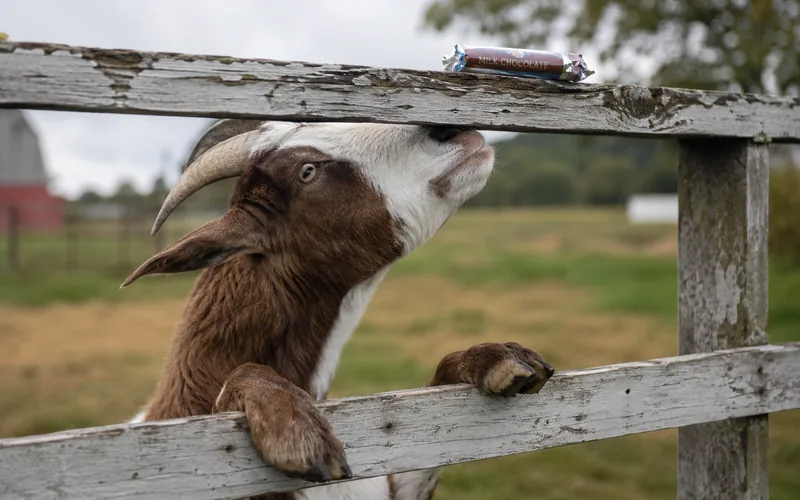
The Merck Veterinary Manual reports deaths in livestock fed cocoa byproducts and in animals that ate cocoa hull mulch. Keep that garden mulch well away from the pen.
Adult goats make little lactase, so the milk sugar in a slice of cheese ferments into gas instead of digesting. Add the fat and salt, and cheese never earns a treat spot, even though a stolen lick rarely hurts.
Goats are herbivores, so meat has no place in their diet at all. A goat that keeps chewing bones is usually short on minerals like phosphorus or calcium, not craving meat.
The dog bowl is a sneakier risk. A single mouthful of dog food rarely matters, but daily raids load a goat with animal protein, fat, and copper.
Feed the dog where goats can’t reach, and keep the bag in a sealed bin. Cat food is even worse, since it packs more animal protein and fat.
Avocado, onion, garlic, caffeine, and anything moldy round out the never list. So does any food sweetened with xylitol.
How Many Treats Can a Goat Have?
Keep all treats combined under 10 percent of what a goat eats in a day. I aim closer to 5 percent, which still leaves room for training rewards.
For a 60-pound pygmy, that works out to a couple of ounces of treats a day, total. That’s a few carrot slices or a small scoop of seeds, not both plus a slice of bread.
Hay, browse, and minerals make up the rest of a goat’s diet, and treats should never push them aside. A goat that fills up on snacks eats less of the forage that keeps its rumen working.
Bread, pasta, horse treats, and other starchy snacks act like grain in the rumen. Most adult goats do fine with little or no grain at all.
Wethers need the tightest limits, because grain is a leading trigger of urinary stones in male goats. Keep their treats small and lean on fresh produce.
Kids need extra care, because their rumens are still building the microbes adult digestion depends on. Skip bread before three months, peanut butter before six months, and rice, pasta, and juice altogether.
Once a kid eats solid feed well, a thin sliver of fruit or a chopped nut is plenty. Kids are also the most at risk from chocolate, since their small bodies reach a toxic dose fast.
Pregnant does need their treat budget spent on nutrition, not starch. Extra weight raises the risk of pregnancy toxemia, so keep bread, rice, and pasta small in late pregnancy.
A few plain peanuts are a smarter pick for a doe in late gestation. Their protein and fat can actually help her.
Small breeds sit at the low end of every range. A 30-pound pygmy gets half a small slice of bread, while a 150-pound dairy doe can have a full slice.
How to Use Goat Treats for Training and Handling
Treats are the best training tool a goat keeper owns. Goats work for food, so a small reward turns hoof trims, milking, and leading into something they walk toward.
Goats learn quickly, and they remember what earned them a snack. In a 2014 study in Frontiers in Zoology, most goats learned a food puzzle within about 12 tries.
Tested again up to 10 months later, they solved it within two minutes. That memory works in your favor when the same treat marks the same good behavior every time.
Use rewards small enough to swallow in a second, like a single peanut or a pinch of seeds. Every training treat counts toward the daily share, so a long session means fewer snacks later.
Bite-size horse treats work well, since most are made from oats, barley, flaxseed, and fruit flavoring. Read the label for chocolate, cocoa, xylitol, or garlic before you share.
Two or three a day is plenty for a standard goat, and one or two for a pygmy or Nigerian Dwarf. Break hard ones in half for small breeds, and skip them for any goat that’s already overweight.
Only reward a goat that’s calm and standing politely. A goat that learns shoving pays off will keep shoving, and that gets risky with a big buck.
Hand-feeding also builds trust fast with shy or new goats. Just space rewards away from big meals so the rumen stays settled and the goat stays eager.
How to Feed Treats and Kitchen Scraps Safely
Kitchen scraps can make good treats, as long as you sort them first. Before feeding leftovers, pull out anything seasoned, salty, fried, or moldy.
Small amounts of veggie peels, fruit trimmings minus pits and apple seeds, and plain cooked rice or pasta are fair game. Anything cooked with onion or garlic stays out, since both can damage a goat’s red blood cells.
Introduce one new treat at a time, starting with a bite or two. Then watch that goat for the next 24 hours before you offer more.
Cut treats into small pieces, especially for kids and small breeds. Hard chunks, unpopped kernels, and dry pasta shards are the usual choking culprits.
Hand treats to each goat or spread them out, so one bossy doe doesn’t eat everyone’s share. And store every treat bag in a sealed bin, since a goat that finds an open bag will eat until it’s sick.
Most goats handle a small new treat with no reaction at all. Over the next day, watch for these signs that it didn’t agree with them:
- Loose or watery droppings
- A hunched stance or teeth grinding
- No interest in hay, or no cud chewing
- A tight, swollen left side
A swollen left side points to bloat, so call your vet right away. The same goes for any goat that ate chocolate, raided the grain bin, or seems to be in pain.
Final Thoughts
The best goat treats are small, plain, and mostly from the produce drawer. Bread, nuts, and the odd peppermint are fine in tiny amounts.
Chocolate, cheese, meat, dog food, and juice stay off the menu for good. Everything else fits inside that 10 percent share, with hay doing the heavy lifting.
Used well, treats make hoof trims and vet visits far less of a wrestling match. Your goats will still mob you at the fence, and honestly, that’s half the fun.
Frequently Asked Questions
In small amounts, goats can eat plain bread, plain popcorn, and cooked pasta or rice. Unsalted peanuts, sweet almonds, and sunflower seeds are safe too. Most fruits and vegetables are fine as well, once you remove pits and apple seeds. Never feed chocolate, cheese, meat, or dog food, and skip anything salty, sugary, seasoned, or moldy.
Most goats go wild for carrots, apple slices, banana pieces, and black oil sunflower seeds. Peanuts, peppermints, and horse treats rank high too. Every goat has its own taste, so offer a small piece of something new and let the goat decide.
Keep all treats combined under 10 percent of what a goat eats each day. Closer to 5 percent is even better. For a 60-pound pygmy, that works out to a couple of ounces in total. Training rewards count toward that share, so keep each piece small.
Young kids should stick to milk, hay, and age-appropriate feed while their rumens develop. Skip bread before three months and peanut butter before six months, and never give juice, rice, or pasta. Once a kid eats solid feed well, a thin sliver of fruit or vegetable makes a safe first treat.
Never feed goats chocolate, avocado, onion, garlic, moldy food, raw bread dough, or anything with xylitol or caffeine. Meat, cheese, and dog or cat food stay off the list too, since a rumen handles animal protein and dairy poorly. Juice is out too, because its sugar and acid upset the rumen fast.