
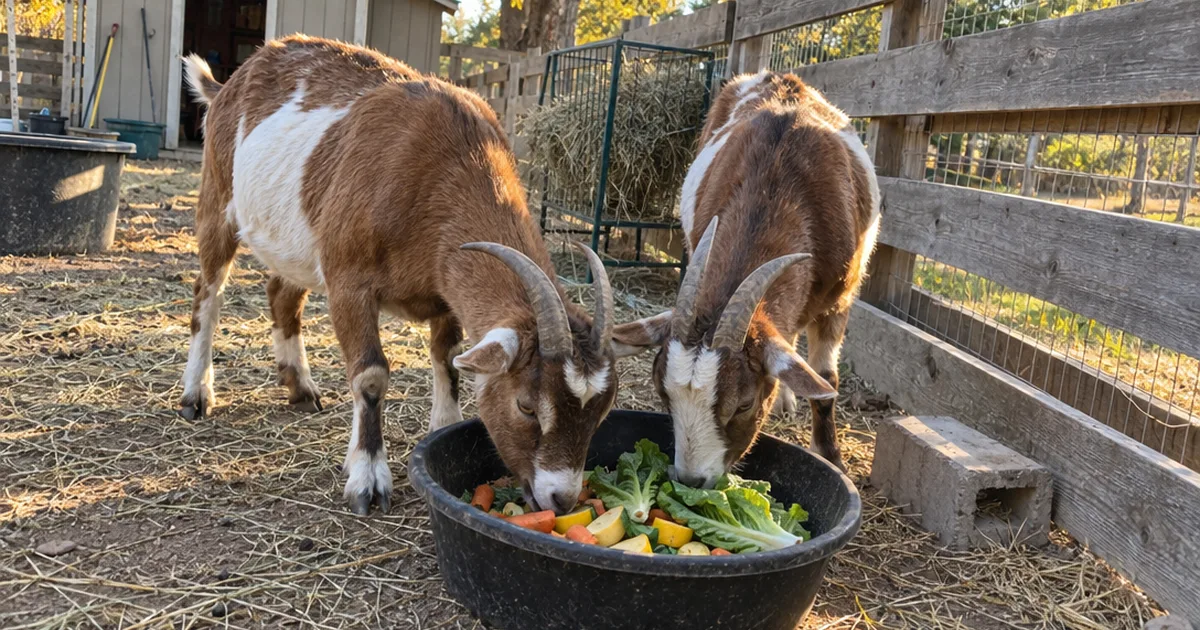
A 150-pound goat’s daily vegetable allowance weighs under 5 ounces.
That’s the 10% treat cap Kalmbach Feeds sets, applied to a goat that eats about 2% of its body weight a day.
So with vegetables for goats, the list of safe ones is long and the serving is small.
Below you’ll get a verdict on 24 vegetables, grouped by type, the treat limit worked out by your goat’s weight, and the short list to keep out of the bucket. Vegetables are one small corner of the full goat diet, and this page is where that corner starts.
Safe Vegetables for Goats by Type
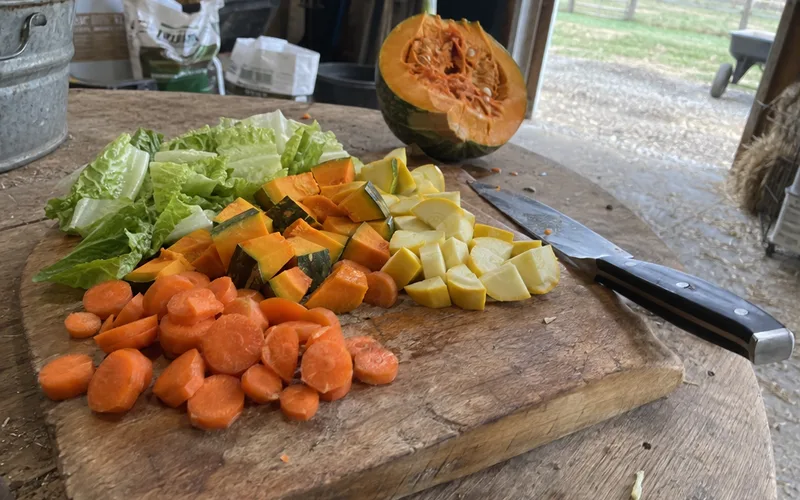
Goats can eat most common garden vegetables as treats, led by the 4 that Kalmbach Feeds rates as excellent: carrots, pumpkin, squash and leafy greens. Chop the firm ones small to prevent choking, and keep the nightshade and onion families out entirely.
Every vegetable in these groups has its own page with portions and prep. If you want every vegetable in one long read instead, the full safe vegetable list goes deeper, with portions by life stage.
Squash, Pumpkin and Cucumbers
The squash family is the easiest group to start with, because 2 of its members sit on that excellent list.
- Pumpkin for goats: one of the 4 top picks, cut into chunks.
- Squash for goats: also on that list, and a regular at Zoo Atlanta.
- Zucchini slices: a summer squash, so the same small-portion rule applies.
- Cucumbers for goats: firm enough that you should chop them first.
Root Vegetables
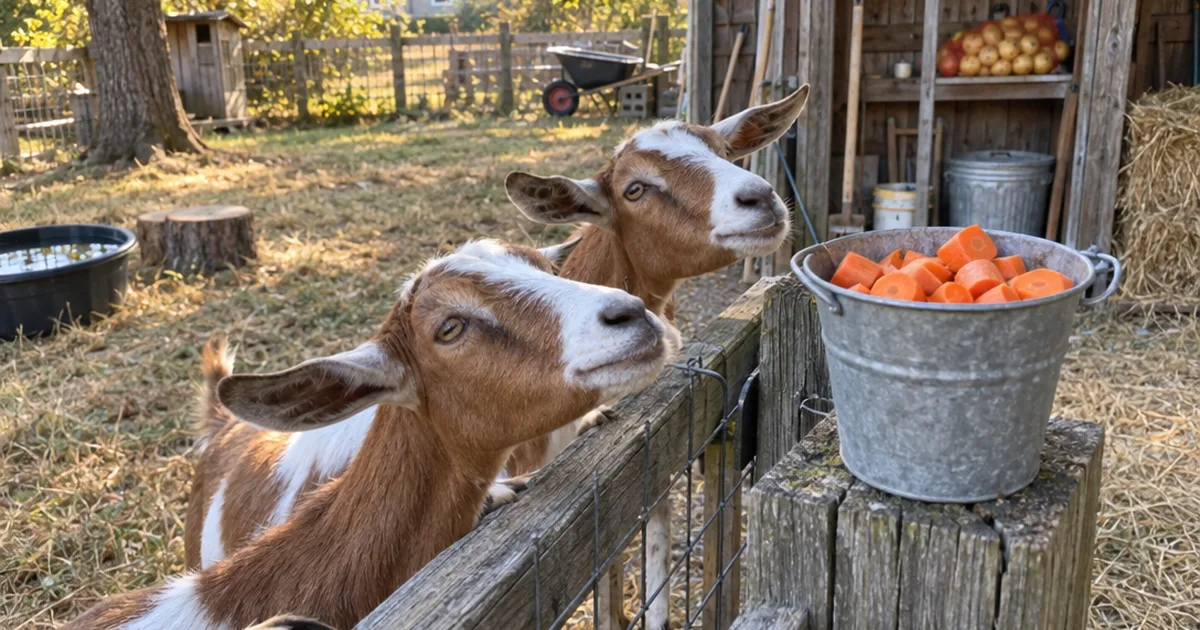
Carrots are the classic goat treat, and they’re the example the feed maker uses to show how fast treats add up.
- Chopped carrots: daily portions, plus what to do with the tops and seeds.
- Sweet potatoes: how much to give and how to serve them.
- Radishes and their greens: a root that’s also a brassica, so keep servings small.
Leafy Greens and Stalks
Leafy greens round out the excellent list, and Zoo Atlanta feeds both lettuce and celery to its goats.
- Lettuce for goats: serving size and prep.
- Spring mix greens: what’s in a bagged mix and how much to share.
- Spinach leaves: a small handful only, and the page explains why.
- Celery stalks: the safe portion, plus leaves, seeds and juice.
- Asparagus spears: what’s safe and how to prep it.
Brassicas: Small Amounts Only
Goats can eat broccoli, cabbage, kale, cauliflower and Brussels sprouts, but only a few pieces at a time. These brassicas carry natural goitrogen compounds, which can block iodine uptake by the thyroid, and a big helping can upset a goat’s stomach.
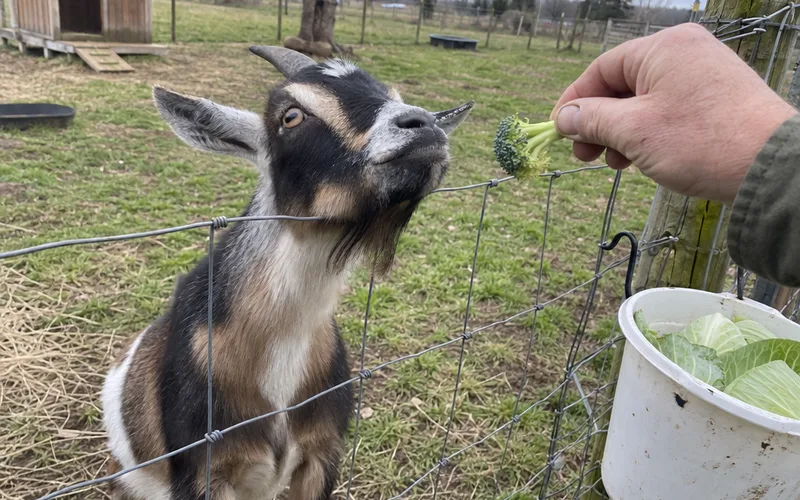
So treat this group as a taste, not a meal:
- Broccoli florets: portions, risks and how to feed it.
- Cabbage leaves: safe portions and the real bloat risk.
- Kale for goats: portions and what it adds.
- Cauliflower for goats: which parts are safe and where the limit sits.
- Brussels sprouts: portions, risks and prep.
Other Garden Vegetables
A few favorites don’t fit a family, and one of them tops the Zoo Atlanta list.
- Bell peppers for goats: the zoo’s goats rank them first.
- Corn on the cob: portions and how often to offer it.
- Edamame shells: pods, salt and portions.
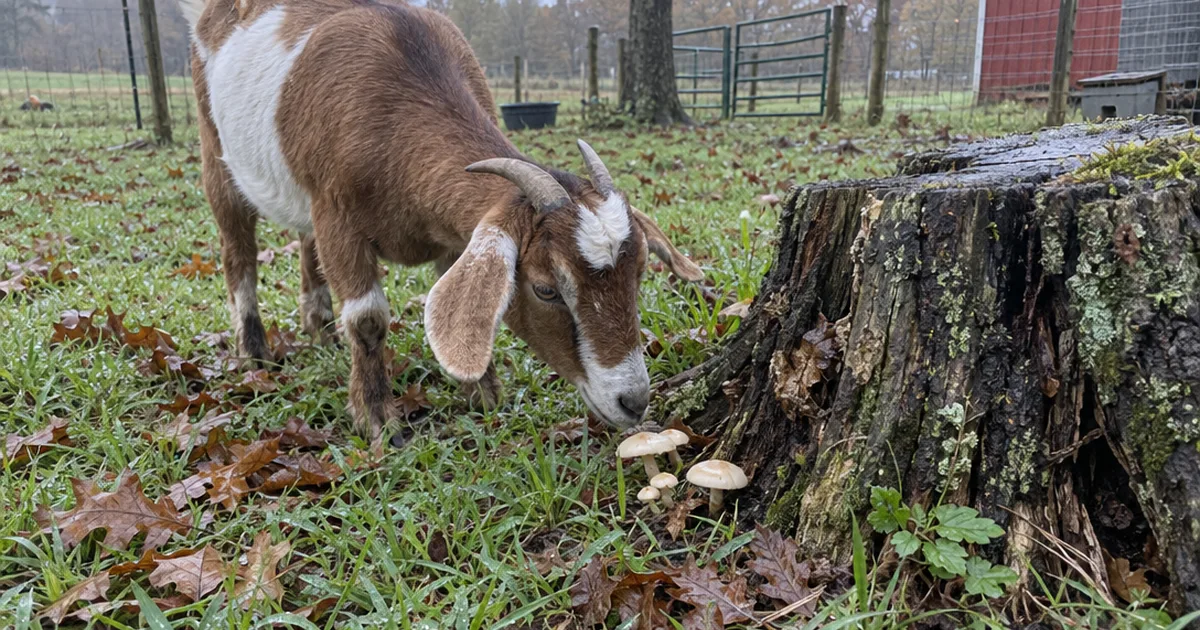
- Store-bought mushrooms: the moderation rules, and why wild ones differ.
In other words, the safe list is long. The amount is the part that needs care.
How Much Vegetable Can a Goat Eat a Day?
A goat should get no more than 10% of its daily diet from treats, vegetables included, according to Kalmbach Feeds, which is under 1 ounce a day for a 30-pound pygmy goat. A goat eats about 2% of its body weight a day, so the cap grows with size.
Here’s that math by body weight:
| Goat weight | Food per day (2%) | Treat cap (10%) |
|---|---|---|
| 30 lb (pygmy) | About 0.6 lb | Under 1 oz |
| 75 lb | About 1.5 lb | About 2.4 oz |
| 150 lb (large dairy goat) | About 3 lb | About 4.8 oz |
The feed maker rounds the 30-pound goat to about half a pound, or 8 ounces, and warns that even a couple of cups of carrots could crowd out its balanced feed. For a small goat, a day’s vegetables are a few carrot coins, not a bowlful.
That’s why its practical limit is a handful or less per treat. And if fruit is on the menu too, fruit treats for goats count against the same 10% cap.
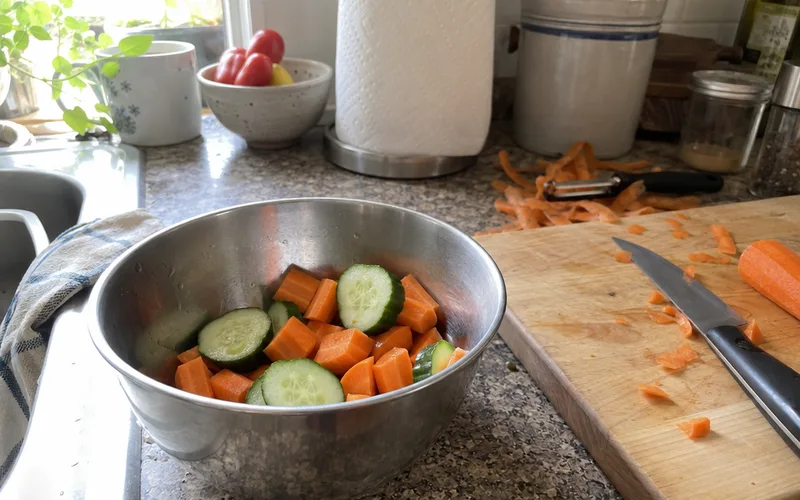
Key Takeaway: Weigh your goat’s vegetables once, against the treat cap for its weight, and you’ll know what a real handful looks like.
Which Vegetables Should Goats Never Eat?
Goats should not be fed onions, garlic, rhubarb or nightshade vegetables such as potatoes, tomatoes and eggplant, the foods Kalmbach Feeds puts on its avoid list. Keep their plants, peels and leftovers out of the goat pen too.
Onions and garlic need no fine print. Feed none on purpose.
Note: Vegetables aren’t the only plants in a backyard, so check the list of plants poisonous to goats before you let a herd clear a garden.
Are Tomato and Potato Plants Poisonous to Goats?
Yes, tomato and potato plants are nightshades, the family on that avoid list, and nightshades make the toxin solanine. Pull the vines and leaves before goats can reach them, and keep green or sprouted potatoes out of the scrap bucket.
For the fruit and the tuber themselves, the tomato safety rules and the potato precautions go part by part.
Can Goats Eat Garden Scraps and Leftover Plants?
Goats can eat garden scraps from safe vegetables such as carrots, squash, pumpkin and lettuce, as long as the pile holds no tomato, potato, eggplant, onion, garlic or rhubarb plants. Those are the same foods on the avoid list, so the sorting rule is simple.
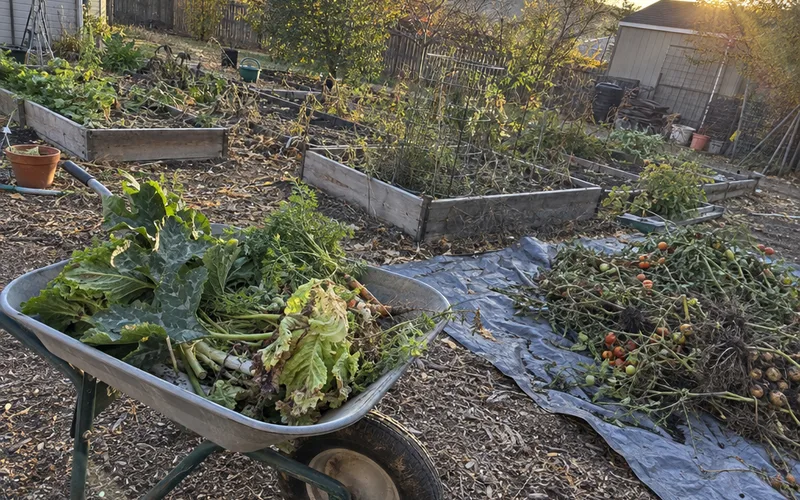
Before the bucket goes over the fence, run this check:
- Pull every nightshade plant, vines and leaves included.
- Pull the onion family and any rhubarb.
- Chop firm leftovers like carrots and squash into small pieces.
- Weigh what’s left against your goat’s 10% treat cap.
That last step matters most at harvest time, when the feed maker notes many goats get fresh pumpkin chunks and a full bed of squash can outweigh a goat’s whole day of food. Hand it out over a week instead of all at once.
How to Feed Vegetables to Goats Safely
Feed vegetables to goats as small, chopped treats on top of a hay-based diet, introducing one new vegetable at a time. Here’s how to do it in order:
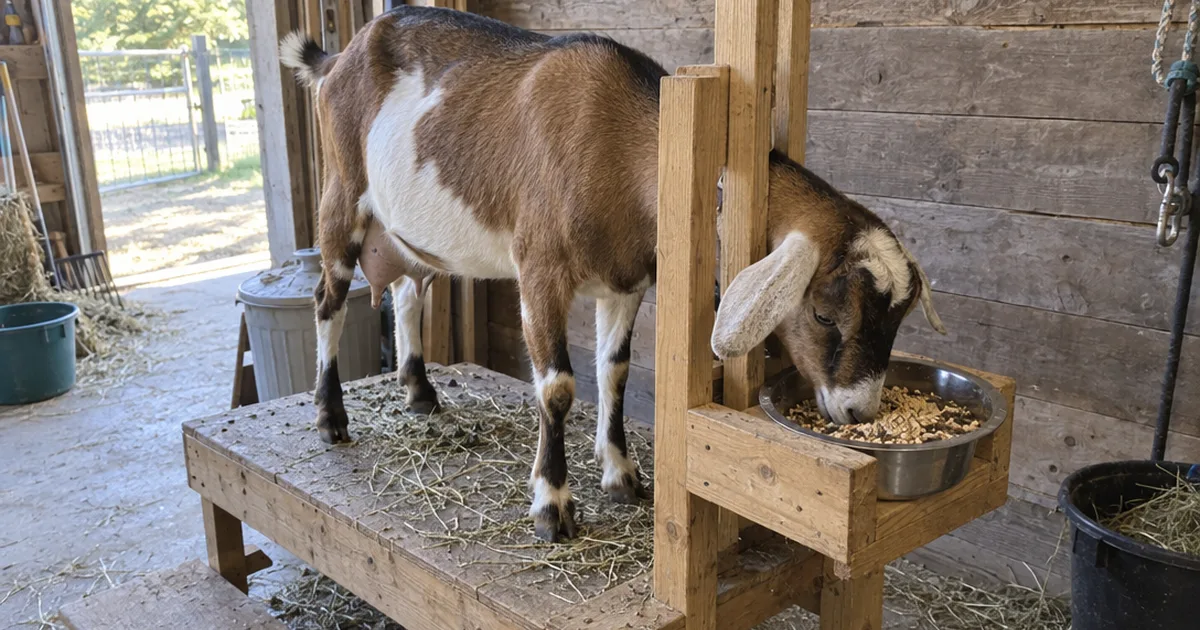
- Start with hay. The lead keeper at Zoo Atlanta says most goats would be healthy eating hay as their only daily food, and the zoo gives vegetables as enrichment. Get the right hay for goats sorted first, then add vegetables.
- Chop firm vegetables small. Carrots, pumpkin and squash go in as pieces, not whole, so they don’t cause choking.
- Add one new vegetable at a time. The feed maker’s advice is to add new treats slowly and watch for changes in behavior, appetite or digestion.
- Stop at a handful. Use the treat cap for your goat’s weight as the ceiling, not the target.
Why go slowly? Goats ferment their hay in the rumen, the first stomach chamber, as the Zoo Atlanta keeper explains.
And too many treats can cause bloating, diarrhea or rumen acidosis, Kalmbach warns.
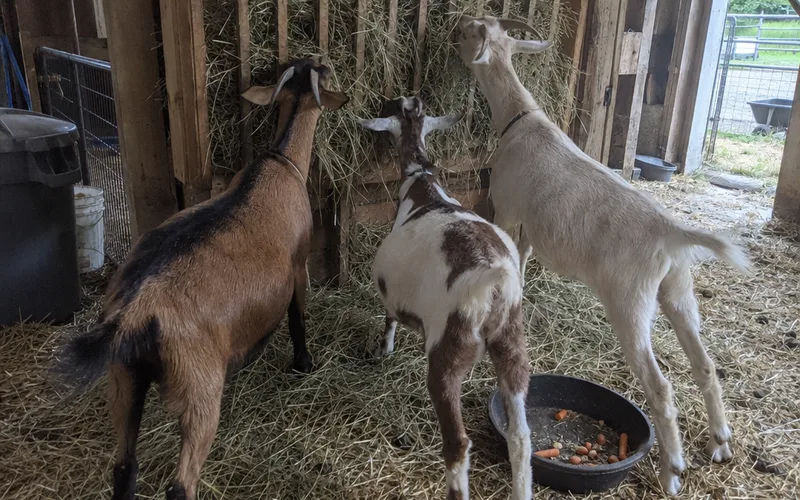
If a goat looks bloated after a new vegetable, learn the goat bloat signs and act fast. Loose droppings are your cue to cut back, and the causes of goat diarrhea show when it needs more than that.
The same 10% cap covers store-bought goat treats, so count those too.
Your Next Step
The biggest takeaway: vegetables are a treat that fits inside 10% of your goat’s diet, and hay does the real work.
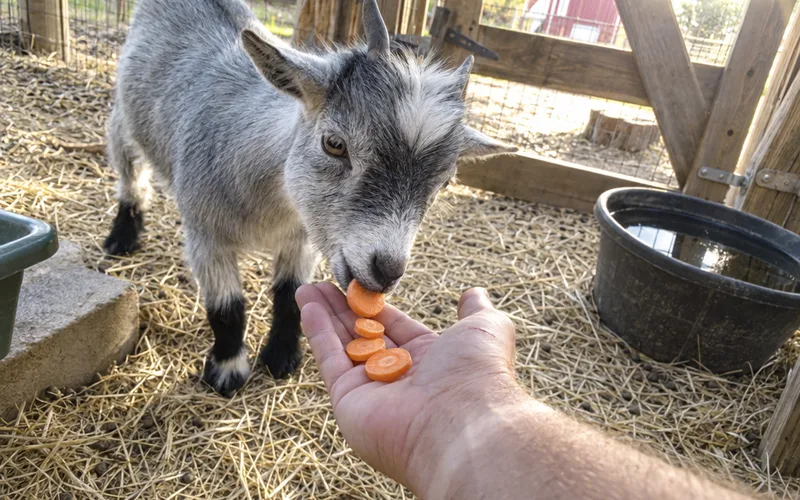
This week, pick one vegetable from the safe groups, chop a handful and watch how your goat handles it for a day.
Frequently Asked Questions
What vegetables can goats eat every day?
Goats don’t need any vegetables every day, because the lead keeper at Zoo Atlanta says most goats would be healthy on hay alone. If you give a daily treat, a handful or less of a safe vegetable such as carrots or squash keeps it under the 10% treat cap Kalmbach Feeds sets.
What vegetables do goats like best?
Bell peppers are the absolute favorite of the goats at Zoo Atlanta, which also get squash, celery, carrots, lettuce and pumpkins. Kalmbach Feeds adds that many goats love fresh carrot pieces and pumpkin chunks.
Should you cook vegetables before feeding them to goats?
No, goats eat vegetables fresh: Kalmbach Feeds lists its picks as fresh vegetables and says to chop the harder ones into small pieces. Chopping, not cooking, is the prep step that prevents choking.
What can goats eat?
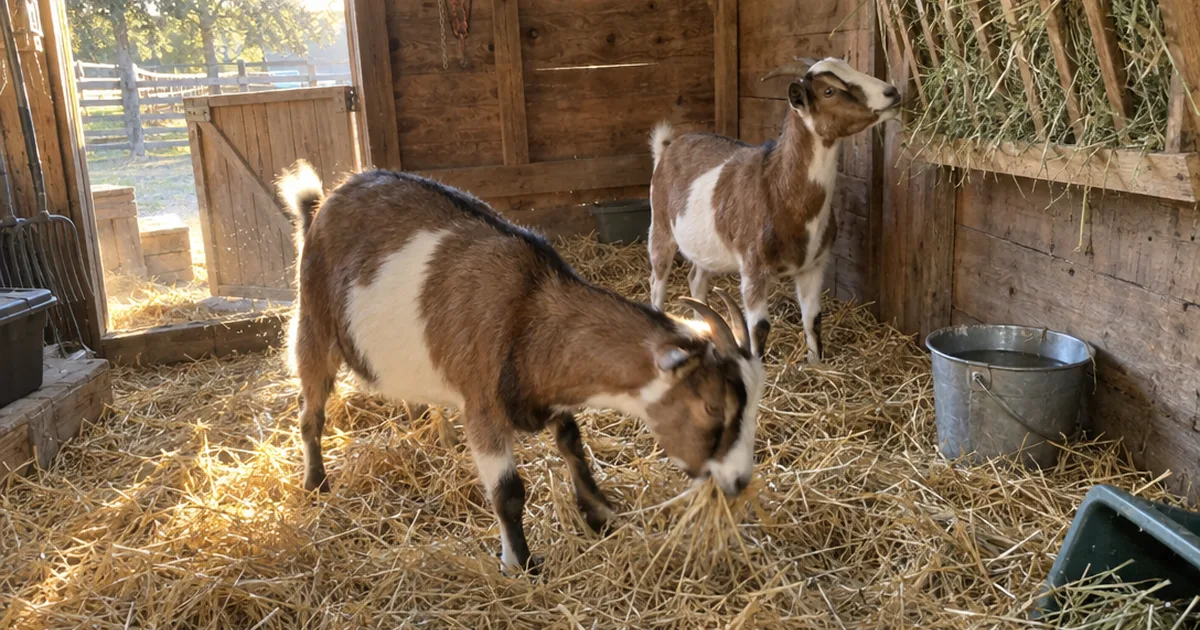
Goats eat mainly hay plus browse such as leaves and shrubs, and the lead keeper at Zoo Atlanta says most goats would be healthy on hay alone. Vegetables, fruit and other treats are extras that Kalmbach Feeds says should stay under 10% of the diet.