
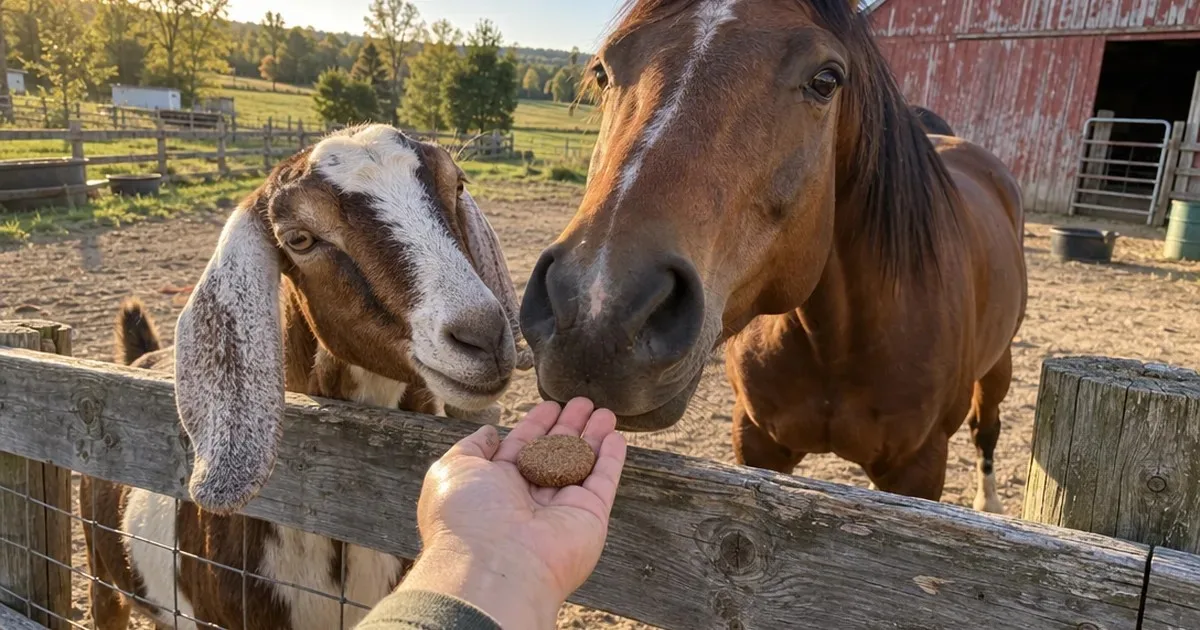
A 30-pound pygmy goat eats only about half a pound of food a day.
So 3 or 4 chunky horse cookies can quietly become a big slice of its whole menu.
That’s the part most “yes, they’re fine” answers skip.
The good news? With the right serving size and a quick label check, horse treats make a safe, handy reward for most goats.
Our Top Goat Feeding Essentials
| # | Picture | Product | Our Rating | Check Price |
|---|---|---|---|---|
| 1 |  | Best OverallREDMOND Goat Mineral Supplement (5 lb) | Check Price | |
| 2 |  | Wholesome Harvest 16% Goat Feed (10 lb) | Check Price | |
| 3 |  | Manna Pro Goat Treats | Check Price |
Are Horse Treats Safe for Goats?
Horse treats are safe for healthy adult goats in small amounts, because the usual ingredients (grain, molasses, apple or carrot flavor and peppermint) aren’t toxic to goats. The risk comes from how much a goat eats, not from the treat itself.
Here’s why the amount matters so much.
Goats and horses digest food in completely different ways.
Goats are ruminants, which means they ferment food in a large first stomach called the rumen before it moves on. The microbes in that rumen are tuned for hay, browse and other high-fiber food.
Horses aren’t ruminants at all.
A horse has one stomach and does most of its fermenting farther down the gut, so horse treats are designed around a horse’s body, its size and its sweet tooth.
What does that mean for you?
A treat that’s a small reward for a horse can be a big dose of sugar and starch for a goat.
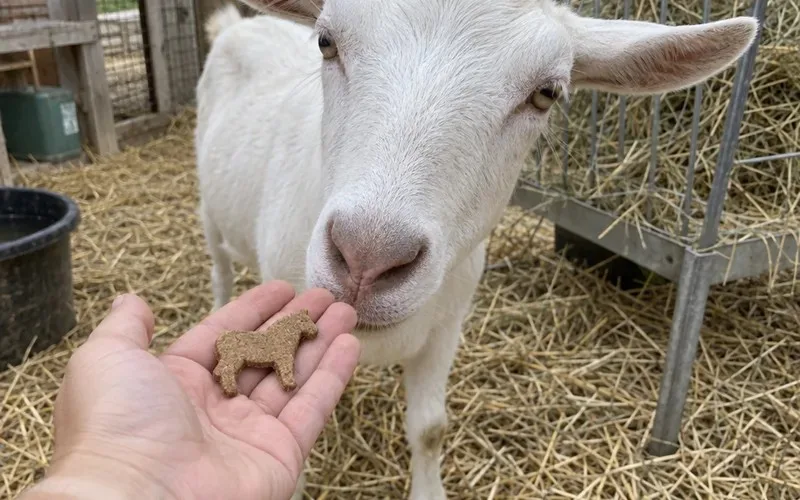
If your goats share a barn or field with horses, the bigger concern is daily access to horse food, not the one cookie you hand over. There’s more on keeping goats and horses together if you’re setting up a shared space.
The short version: a horse treat now and then is fine, but a goat that eats them like hay will get sick.
What Ingredients in Horse Treats Are Bad for Goats?
The ingredients in horse treats that cause trouble for goats are molasses and other sugars in large amounts, heavy grain content, added salt, and any drug on a “medicated” tag. Most plain apple, carrot and oat treats are fine in small pieces.
Most commercial horse treats are built on a grain base, sweetened with molasses, and flavored with apple, carrot or peppermint.
That combination makes them tasty to goats too.
So the fastest way to judge any bag is the feed tag on the back, not the picture on the front.
Here’s what to look for on the label:
| Label item | Why it matters for goats | What to do |
|---|---|---|
| Molasses or sugar near the top | Fast-fermenting sugar | Give a small piece only |
| Oats, corn, wheat or barley | Starch and phosphorus | Limit for wethers |
| Peppermint or mint | Usually just flavor | Fine in bits |
| Salt high in the list | Extra salt intake | Keep water nearby |
| “Medicated” on the tag | Drug dosed for horses | Don’t feed |
Ingredients are listed from most to least by weight, so the first 3 tell you what the treat really is.
If molasses or a sweetener shows up in those first 3, treat it like candy for your goat.
Peppermint horse treats come up a lot, since they’re one of the most popular kinds.
The peppermint itself is usually just flavoring, and goats can have peppermint treats in small amounts. The sugar coating is what you’re really limiting.
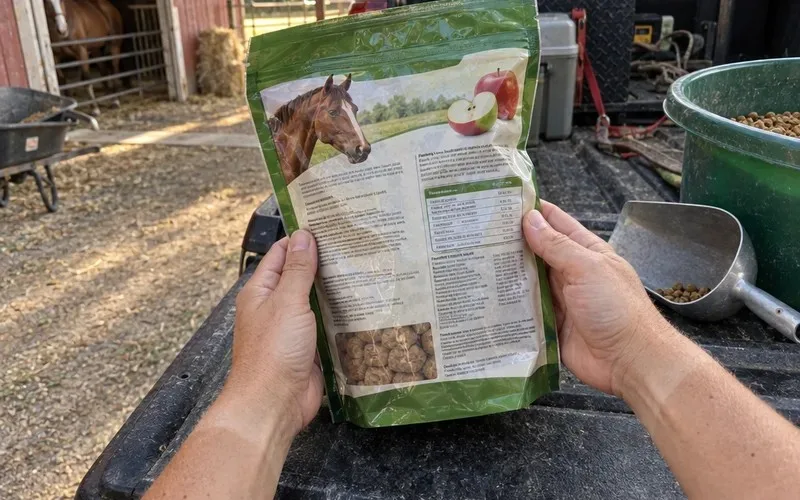
Note: A “medicated” label means the treat or feed carries a drug at a dose set for horses. Skip it completely, because you can’t tell how a goat would handle that dose.
How Many Horse Treats Can a Goat Have?
A goat can have only a small share of its daily food as horse treats, because a goat eats around 2% of its bodyweight per day, according to a feed nutritionist writing for Tri-County Feed. For most goats, that means 1 or 2 small pieces, not a handful.
Let’s put real numbers on that.
The same Tri-County Feed guide says a 30-pound pygmy goat eats around half a pound a day.
That’s 8 ounces of food for the whole day.
Here’s how the math works for a few sizes, using that 2% figure:
- 30-pound pygmy goat: about 0.6 pounds of food a day
- 75-pound Nigerian Dwarf doe: about 1.5 pounds a day
- 150-pound dairy doe: about 3 pounds a day
Now say a horse cookie weighs about 1 ounce (a made-up but realistic size for a pressed treat).
For the pygmy goat, 1 cookie is already about one-eighth of everything it eats that day.
In other words, 4 cookies would be half its daily food, and almost none of it is the hay and browse its rumen needs.
That’s why the right serving for a small goat is a piece of one treat, not a whole treat.
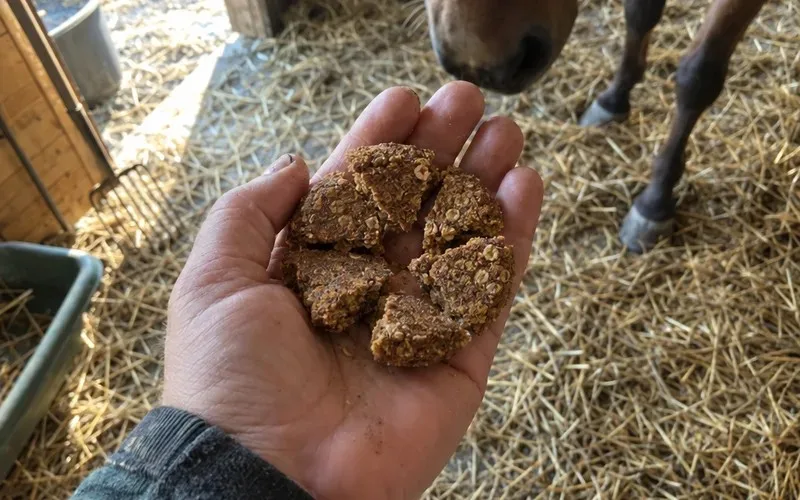
For a big dairy doe, 1 whole treat is a much smaller share, so you have more room.
Even so, the Tri-County Feed nutritionist says you don’t want more than a small percentage of a goat’s total diet to be treats. Treats fill a goat up without giving it a balanced meal.
Pro Tip: Break one horse cookie into 4 to 6 pieces and use those as rewards for hoof trims or leading practice. Your goat gets several treats, but the total stays tiny.
Is the Molasses in Horse Treats Safe for Goats?
The molasses in horse treats is safe for goats only in small amounts, because too many high-starch treats can cause digestive upset and even bloat, a Tri-County Feed nutritionist warns. Molasses and grain both ferment fast in the rumen.
Here’s what happens inside a goat that eats too many.
The rumen’s microbes break down fiber slowly and steadily.
When a goat suddenly gets a big load of sugar or starch, other microbes take over and ferment it fast. That burst of fermentation makes acid and gas much faster than the rumen can handle.
The result can be anything from loose droppings and a goat that skips its hay, to a rumen that swells with gas.
That swelling is bloat in goats, and it can turn into an emergency within hours.
So how much molasses is too much?
There’s no single cutoff that fits every goat, so the safest habit is simple: keep sweet treats small and rare, and never give them on an empty stomach.
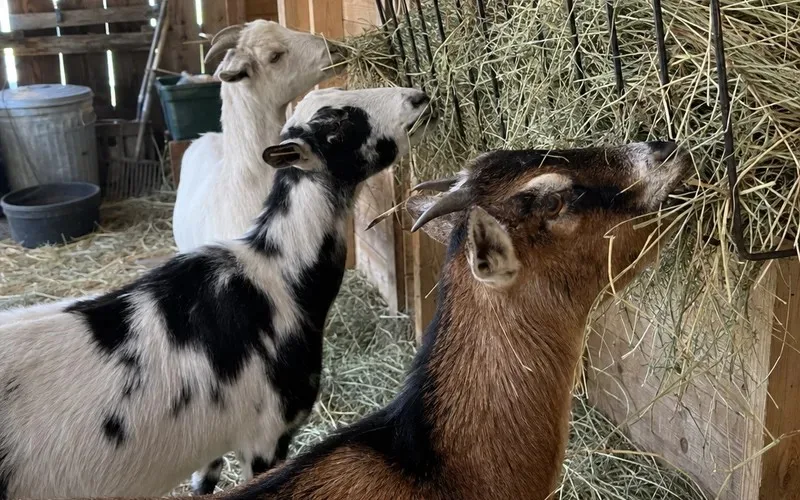
A goat that has a belly full of hay ferments a small treat alongside all that fiber. A hungry goat that gets the same treat first thing in the morning has nothing to slow it down.
Key Takeaway: Feed horse treats after hay, not before, and keep molasses-heavy treats to a bite at a time.
Are Horse Treats Safe for Wethers and Bucks?
Horse treats need extra care for wethers and bucks, because grain is high in phosphorus, and Mississippi State University Extension Service says a goat’s calcium to phosphorus ratio should stay between 1:1 and 2:1 to avoid urinary calculi. Male goats are the ones most likely to block.
Urinary calculi are mineral stones that form in the urinary tract.
In does, they usually pass. In wethers (castrated males) and bucks, the urethra is long and narrow, so a stone can get stuck and stop the goat from peeing.
That’s a true emergency.
So where do horse treats fit in?
Mississippi State University Extension Service notes that cereal grains and concentrates are high in phosphorus. Most horse treats are made from those same grains.
One cookie won’t flip a goat’s mineral balance on its own.
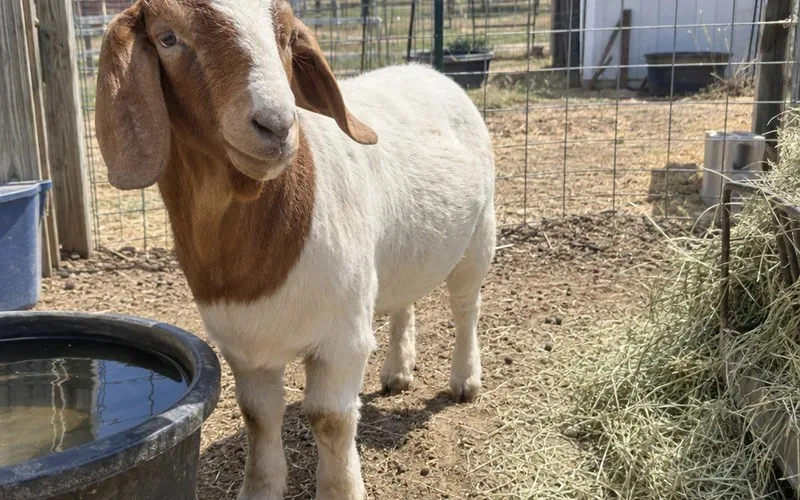
But a wether that gets grain-based treats every day, on top of grain in its feed, keeps pushing phosphorus up. The same extension guide warns that ratio should stay between 1:1 and 2:1, which is hard to hold when grain keeps creeping in.
If you keep wethers, learn the signs of urinary calculi in goats: straining, dribbling, crying out while trying to pee, or standing hunched.
For wethers, plain carrot or apple slices beat grain-based horse cookies as a regular reward.
Are Lickits Safe for Goats?
Lickits and other molasses lick blocks made for horses aren’t a good fit for goats, because Mississippi State University Extension Service warns that molasses-flavored tubs can lead to overconsumption and toxicity. Goats can chew or lick them far past a sensible amount.
Lickits and similar horse licks are hard, sweet blocks meant to keep a stalled horse busy.
Goats are curious, persistent and good at working their teeth into things. If a goat gets free access to a horse lick, it can eat a big chunk in one session.
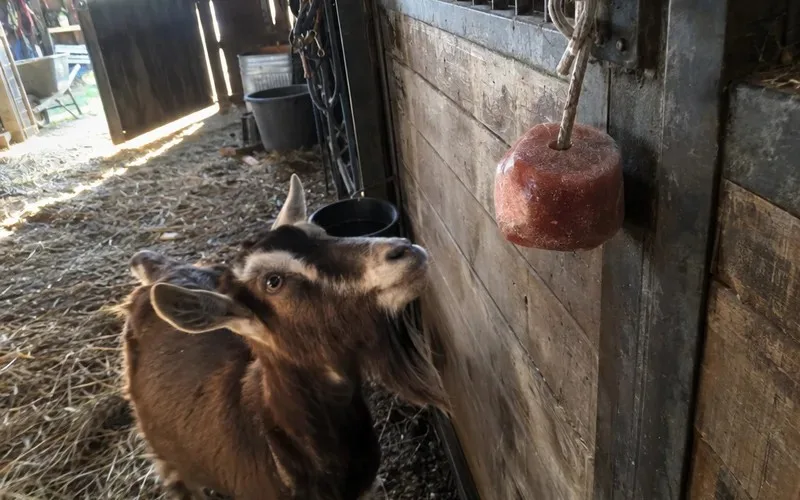
The extension service raises a related point about molasses tubs: they’re flavored to make animals eat more, which is why goats can overeat them. A horse lick has the same pull with even less nutrition behind it.
If you want your goats to have something to lick, give them a loose mineral made for goats instead. That covers their real nutrient needs without the sugar rush.
Note: If your goat does get into a horse lick, take it away and watch for the bloat signs covered in the emergency steps further down this page.
How to Give a Goat a Horse Treat Safely
You can give a goat a horse treat safely by checking the label, breaking the treat into small pieces, feeding it after hay, and handing it over one piece at a time. Each step lowers the risk of choking, bloat or one goat hogging the bag.
Here’s the routine that works:
- Read the tag first. Skip anything medicated, and note whether molasses or grain sits near the top of the ingredient list.
- Break the treat into small pieces. Horse cookies are sized for a horse’s big mouth, so a goat can choke on a hard, whole treat.
- Feed hay before treats. A full rumen handles a little sugar much better than an empty one.
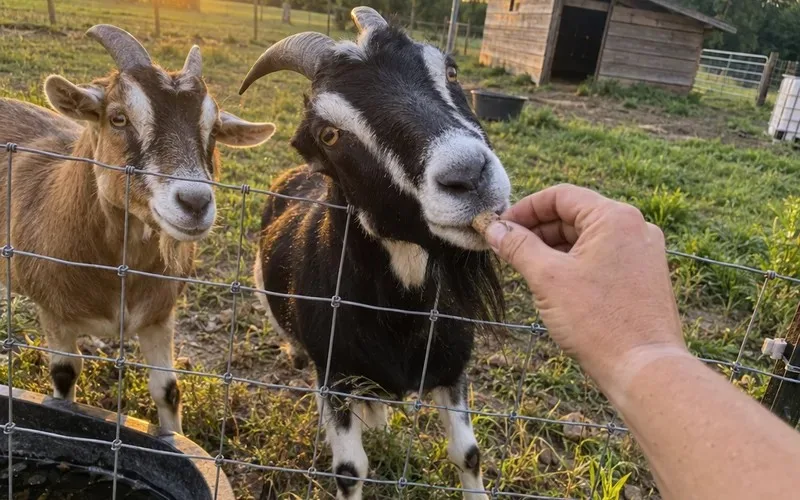
- Hand-feed one piece at a time. Tossing a pile into the pen lets the boss goat eat most of it.
- Store the bag where goats can’t reach it. A sealed bin with a latch beats a paper bag on a shelf.
Step 4 matters more than it looks.
In most herds, one goat pushes the others aside, so tossing 4 pieces into a group can mean 1 goat eats 3. Hand-feeding keeps each share small and even.
Step 5 is where most real problems start.
Goats are good at getting into feed rooms, and a goat with a torn bag of horse treats will keep eating long after it should stop. A metal or thick plastic bin with a clamp lid keeps that from happening.
Pro Tip: Keep a small jar of pre-broken pieces by the gate. You won’t be tempted to hand over a whole cookie when a goat starts begging.
Using Horse Treats to Train Goats
Horse treats work well as training rewards for goats when you break each one into tiny pieces, because a goat learns from how often it’s rewarded, not from how big the reward is. One cookie can cover a whole short session.
This is where a bag of horse treats really earns its place in a goat barn.
Goats learn fast when food is involved.
So a crumb of a horse cookie can teach a goat to come when called, walk on a lead, stand for hoof trims or hop onto a milk stand.
Here’s an example.
Say you’re teaching a young doe to stand still for hoof trims. You break 1 cookie into 6 pieces, then reward her each time she holds a foot up for a few seconds.
By the end of the session, she’s had 6 rewards and only 1 treat in total.
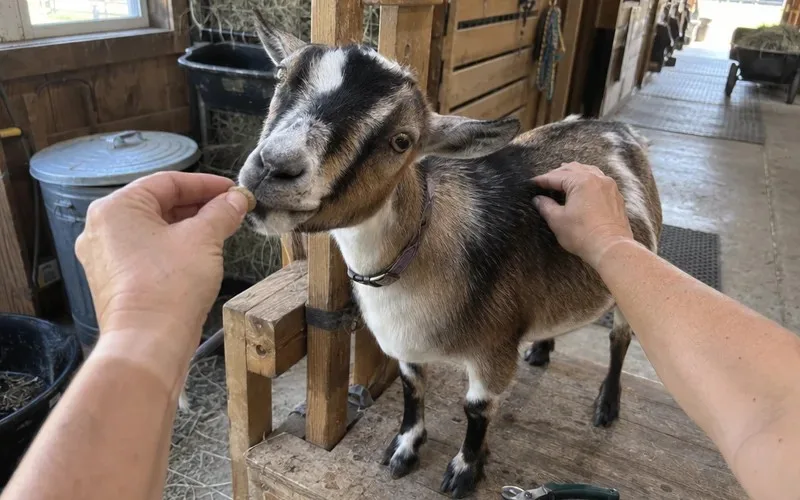
That’s the whole trick: lots of small rewards, very little sugar.
A few habits make treat training smoother:
- Keep sessions to 5 or 10 minutes, so you don’t run through the pieces
- Reward the exact moment the goat does the right thing
- Ask for the behavior again before handing over the next piece
- Stop while the goat is still keen, not when it’s full
Goats that get hand-fed a lot can start butting hands or jumping up for food. If that starts, only reward a goat that’s calm and standing on all 4 feet.
Key Takeaway: Count rewards, not treats. A single horse cookie can pay for a full training session.
Can Baby Goats or Pregnant Does Have Horse Treats?
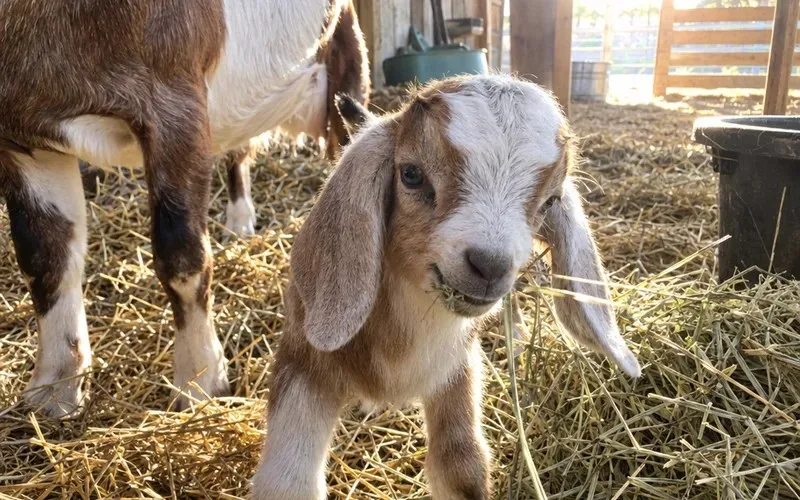
Baby goats shouldn’t get horse treats until they’re eating hay and solid food well, because a kid’s rumen is still developing and handles sugar and starch poorly. Pregnant and milking does can have the occasional piece, but their main diet matters far more.
Kids start life on milk.
Their rumens grow as they start nibbling hay and browse, which is why those foods come first.
Once a kid is weaned and eating hay well, a crumb-sized piece of horse treat is plenty as a reward. Plain leafy browse or a pinch of hay also work as rewards for kids, with none of the sugar.
Pregnant does are a different case.
They need a steady, balanced diet as kidding gets closer, and that diet should come from good hay, a goat feed if they need one, and loose minerals.
A small piece of horse treat won’t upset that balance.
What can upset it is the treat habit that grows over time. A doe that’s used to begging for cookies may fill up on extras and pick at her hay.
For kids, pregnant does and milking does, the same rule applies: small pieces, after hay, and never as a replacement for real feed.
What to Do If a Goat Eats a Whole Bag of Horse Treats
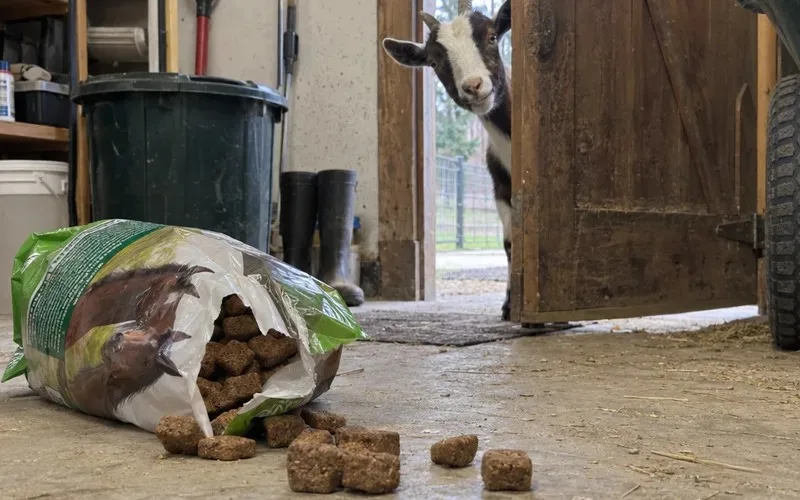
If a goat eats a whole bag of horse treats, take away any remaining treats and grain, offer plain hay and water, and call your vet, because a big load of sugar and starch can cause bloat. Act within the first few hours, before symptoms show.
Here’s the order to work in:
- Remove the bag and any other grain or treats the goat can reach.
- Estimate how much it ate. Check the bag’s weight on the label against what’s left.
- Call your vet and tell them the goat’s size, the treat brand and the amount.
- Offer plain grass hay and fresh water, but don’t force-feed anything.
- Watch the goat closely for the next day.
Why call before symptoms show?
A goat can look fine for a while after a grain or sugar binge, then go downhill as the rumen ferments it. Your vet can tell you whether the amount your goat ate needs treatment right away.
So what should you watch for?
- A swollen left side, high up behind the ribs
- Refusing hay or acting dull
- Loose or pasty droppings
- Teeth grinding, groaning or kicking at the belly
- Staggering or lying down and not wanting to get up
Any of those signs means call your vet again right away.
A goat that skips meals for a day after a binge needs attention too. There’s more on what to check when a goat stops eating, which is often the first sign something’s wrong.
Don’t wait to see if it passes: a goat that ate a whole bag needs a vet’s advice, even if it looks normal.
Can Goats Eat Horse Feed or Sweet Feed?
Goats can eat a little horse feed or sweet feed without harm, but neither should be a regular part of their diet, because horse feeds are balanced for horses and sweet feed is grain coated in molasses. Feed a goat ration made for goats instead.
Horse treats and horse feed are different questions.
Treats come in pieces. Feed comes by the scoop, so a goat that eats a horse’s ration gets far more grain and sugar than any treat could give it.
That’s why owners on goat forums keep asking about “keeping goats out of horse feed.”
It’s the daily scoop that causes trouble, not the occasional cookie.
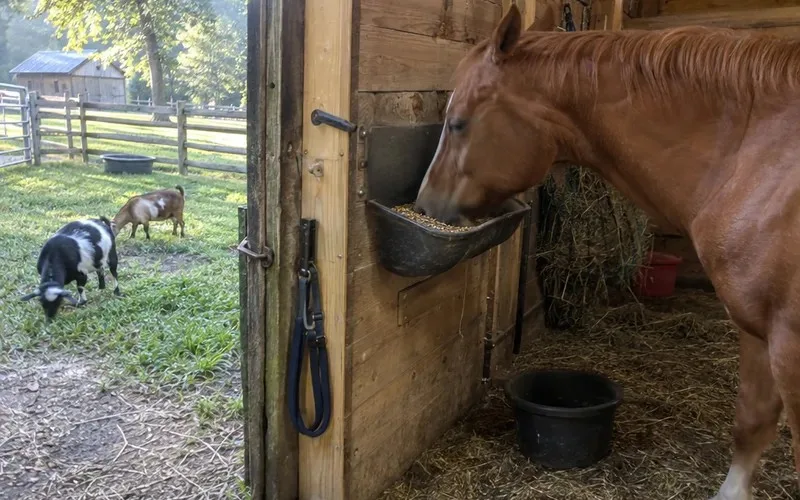
If your goats share space with horses, set up feeding so goats can’t reach the horse ration. Feed horses in stalls or at a feeder mounted higher than a goat can climb to, and stay nearby until the horses finish.
Sweet feed is the riskiest of the horse feeds for goats.
It’s a grain mix coated in molasses, so it brings the same starch and sugar problem as a pile of treats.
If your goats need extra feed at all, the bigger question is whether they need grain in the first place. Many adult goats do fine on good hay, browse and minerals.
Readers on goat forums also ask about senior horse feed, which is softer and easier to chew than other horse feeds. It’s still balanced for a horse, so it isn’t a goat ration either.
When you do buy feed, read the tag the same way you would for a treat. The same caution applies to other livestock feeds: cattle feed can carry additives that are dangerous for goats.
Store horse feed and goat feed in separate, labeled bins, so nobody grabs the wrong scoop at chore time.
Better Treats to Give Your Goats
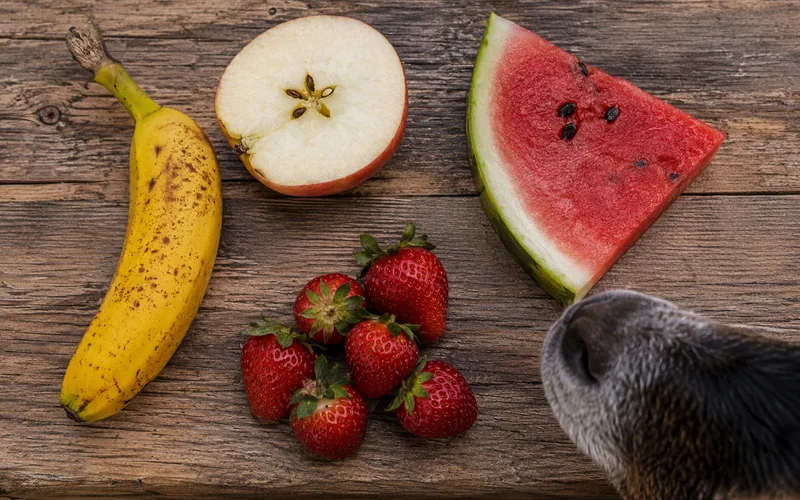
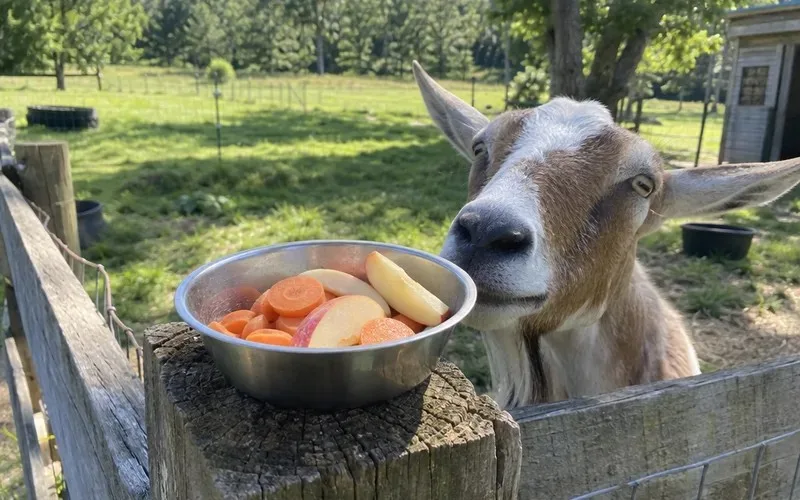
The best treats to give goats are small pieces of fruit and vegetables, such as apple slices, carrots and bananas, because they’re lower in concentrated sugar and starch than molasses-based horse cookies. Give them in small amounts, like any other treat.
Here’s a short list of goat treats that work well:
- Apple slices with the seeds removed
- Carrots, chopped into coins or sticks
- Banana slices, peel and all
- Strawberries or watermelon chunks in summer
- A few plain oats or a small handful of leafy browse
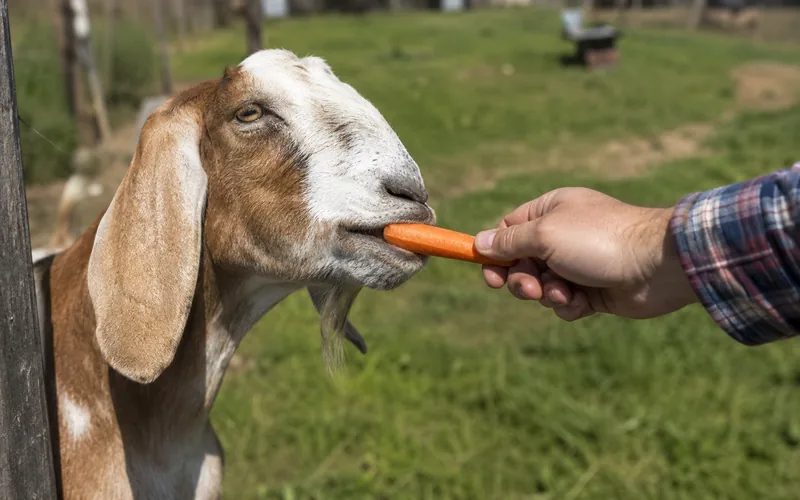
Carrots for goats are a favorite because they’re crunchy, cheap and easy to cut into small pieces. Apples are popular too, as long as you cut out the core and seeds first.
For a fuller list, see these fruits goats can eat, with portion sizes for each.
Some foods stay off the list completely.
Tomatoes, onions, garlic and citrus fruits are ones to skip, and chocolate is toxic to goats. If you want a single place to check what’s safe, this list of goat treats covers common kitchen foods and how much to give.
Key Takeaway: Fresh produce makes a better everyday reward, and a broken-up horse cookie works as an occasional extra.
The Bottom Line
Horse treats are fine for goats as a rare, broken-up snack after hay.
Wethers, small breeds and goats with access to the whole bag need the most care.
Check your treat bag’s tag today, and move it into a goat-proof bin before your herd finds it.
Frequently Asked Questions
Can goats eat horse treats every day?
Goats can have a horse treat on most days only if it stays a tiny piece of the day’s food, since a goat eats about 2% of its bodyweight daily. For small breeds and wethers, keep horse treats to a few times a week and use plain carrot or apple slices on the other days.
Can goats eat the same grain as horses?
Goats can eat plain grains like oats that horses also eat, but they shouldn’t share a horse’s grain ration or sweet feed. Horse feeds are balanced for horses, and Mississippi State University Extension Service notes that grains are high in phosphorus, which matters for wethers prone to urinary stones.
Are peppermint horse treats safe for goats?
Peppermint horse treats are safe for most goats in small amounts, since the risk comes from their sugar, not the peppermint. Hard peppermint candies and pressed mint cookies should be broken into small bits so a goat can’t choke on them.
What treats are safe for goats to eat?
Safe goat treats include apple slices with the seeds removed, carrots, bananas, strawberries and watermelon, all in small amounts. The Tri-County Feed nutritionist also lists animal crackers and pretzels in moderation, while tomatoes, onions, garlic and citrus are ones to skip.
Can goats eat apple and carrot horse treats?
Goats can eat apple and carrot horse treats in small pieces, and they’re usually the gentler choice next to molasses nuggets. Check the tag anyway, because many apple and carrot cookies are still mostly grain with fruit flavoring.