| # | Product | Our Rating | ||
|---|---|---|---|---|
| 1 |  | Best OverallLamb & Goat Bottle with Pritchard Teat | ★★★★★ | Check Price |
| 2 |  | Manna Pro Goat Kid Milk Replacer (4 lb) | ★★★★☆ | Check Price |
| 3 |  | Pritchard Teat Nipples (12 Pack) | ★★★★☆ | Check Price |
Mixing a 70-pound dairy breed with a 250-pound meat breed raises legitimate concerns about safety, logistics, and offspring quality. The height and weight gap between Nigerian Dwarf bucks and Boer does is substantial, and getting the pairing right requires understanding which direction works and which one puts lives at serious risk.
This guide covers the physical mechanics of breeding across a major size gap, what the offspring bring to your homestead, and the one direction you should never attempt.
Can a Nigerian Dwarf Buck Physically Mount a Boer Doe
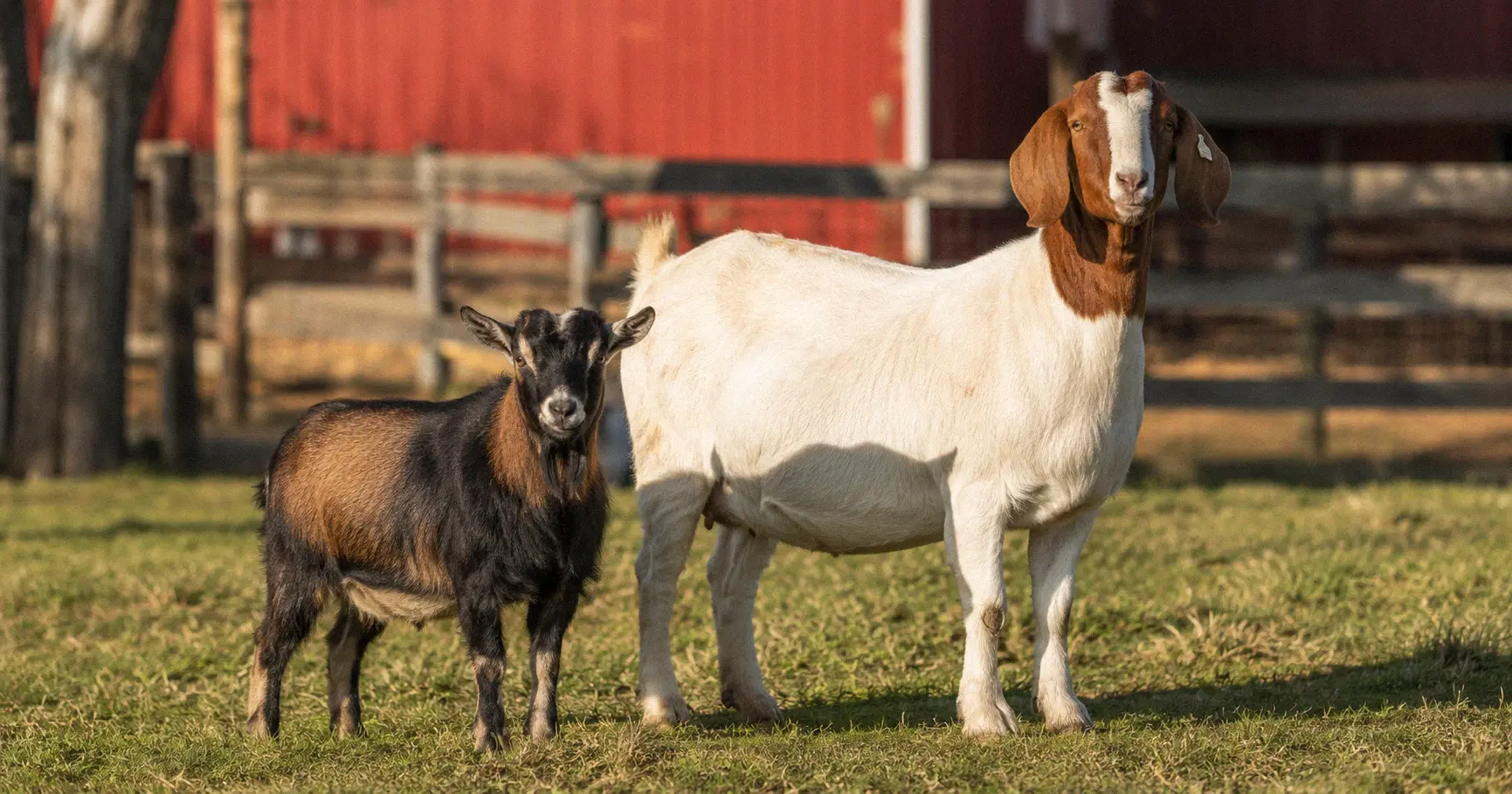
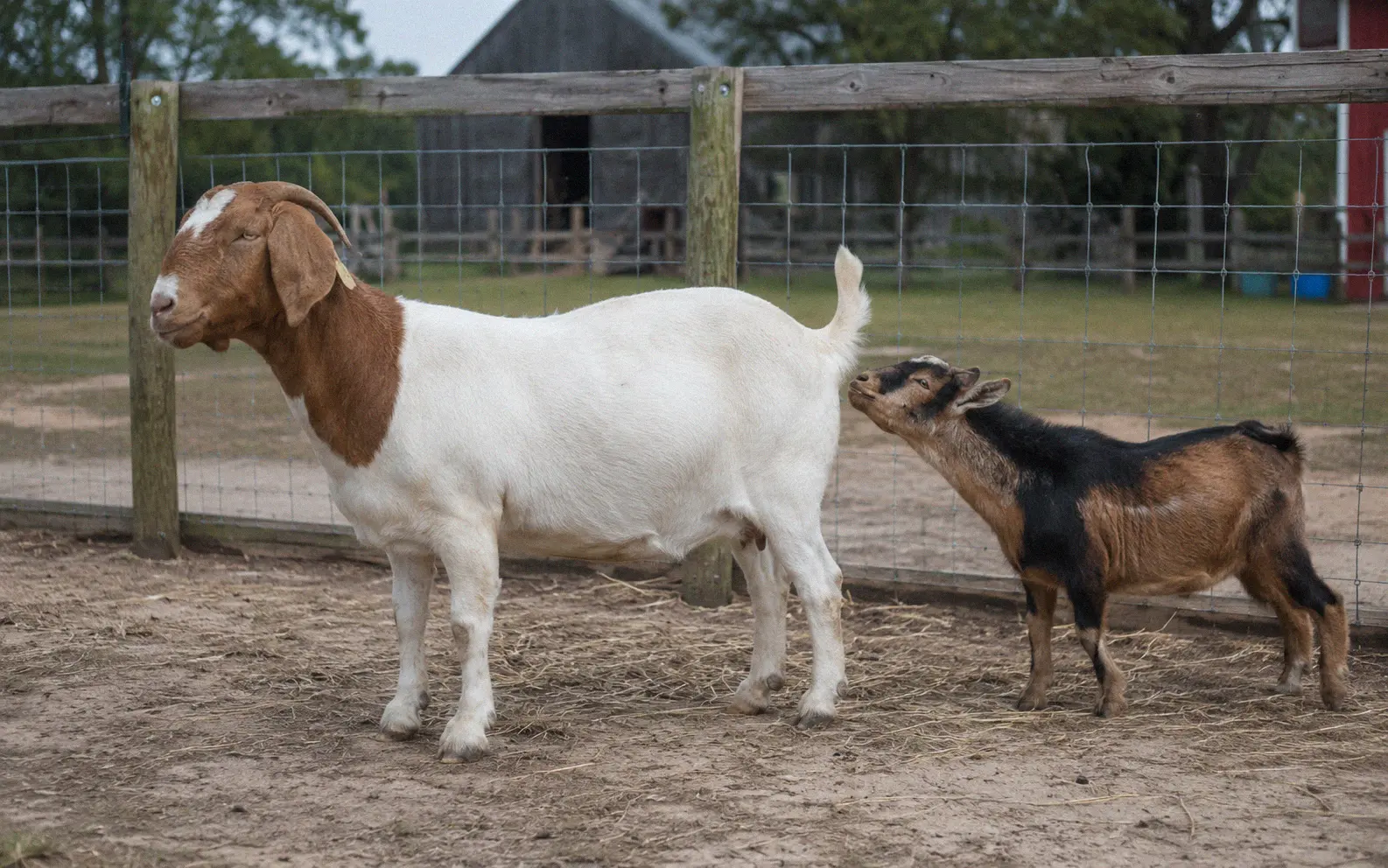
Yes, a Nigerian Dwarf buck can physically mount and breed a Boer doe despite the significant height difference between these two breeds.
A Nigerian Dwarf buck stands roughly 19 to 23 inches at the withers and weighs between 60 and 80 pounds. A full-grown Boer doe measures 25 to 30 inches at the shoulder and tips the scale at 200 to 250 pounds.
That height gap is real, but it doesn’t stop a determined buck. Nigerian Dwarf bucks are persistent breeders and will find a way to mount a doe that’s several inches taller.
Plenty of breeders have pulled off Nigerian buck to Boer doe pairings without any help at all. The buck will often wait until the doe is lying down, standing on a slope, or positioned near a raised surface.
Because both breeds belong to the same species, Capra aegagrus hircus, their reproductive systems are fully compatible. There’s no genetic barrier preventing fertilization or healthy offspring from this pairing.
The pregnancy carries lower risk than most people expect, too. A smaller sire typically produces moderately sized kids that a large-framed Boer doe can deliver without complications.
It’s no surprise this cross has caught on with homesteaders who want a compact, dual-purpose goat. The pairing combines the Nigerian Dwarf’s rich milk genetics with the Boer’s muscular frame and fast growth rate.
Why Breeding Direction Matters With Different-Sized Goats
If there’s one rule you can’t break with Nigerian Dwarf and Boer goat crossbreeding, it’s breeding direction. The smaller breed must always be the sire, and the larger breed must always be the dam.
A Boer doe has the skeletal frame, pelvic width, and body capacity to carry and deliver kids sired by a Nigerian buck. Her birth canal can handle kids that fall somewhere between the two parent breeds in size.
Flip it around, though, and you’ve got a potentially fatal mismatch. Boer genetics tend to produce large-headed, broad-shouldered kids that a tiny Nigerian doe simply can’t deliver safely.
Veterinary literature on dystocia in small ruminants confirms that fetal-maternal disproportion is one of the leading causes of difficult births in goats. The condition occurs most often when large-breed sires are mated with small-breed dams.
This same rule holds for all goat breeds, not just Nigerians and Boers. Anytime you cross breeds with a significant size gap, the larger breed needs to carry the pregnancy.
Think of it simply: the doe’s body sets the ceiling for how big the kids can be at birth. A Nigerian Dwarf doe’s ceiling is dangerously low for Boer-influenced genetics.
How To Help a Nigerian Buck Mount a Larger Boer Doe
The simplest fixes are a hay bale, a natural slope, or a small breeding pen that keeps both animals close together.
Height difference is the main physical obstacle when breeding a Nigerian Dwarf buck to a Boer doe. Most bucks figure it out on their own, but a few simple setup changes make things faster and less stressful for both animals.
Using a Hay Bale or Natural Slope
Place a sturdy hay bale or wooden platform behind the Boer doe in the breeding pen. Bucks catch on fast and start using the extra height right away.
A natural hillside works even better if your property has one. Position the doe facing uphill so her rear end sits lower relative to the buck standing behind her.
Some breeders dig a shallow trench where the doe stands and leave the surrounding ground level for the buck. This drops the doe by a few inches without any extra equipment.
Avoid anything unstable or slippery that could cause injury to either animal. The buck’s hind legs need solid footing to maintain balance during breeding.
Pen Breeding vs Pasture Breeding
Pen breeding gives you the most control over a size-mismatched pairing. A small enclosure, roughly 10 by 10 feet, keeps the doe from wandering off and puts them in close quarters.
Pasture breeding works fine once the buck has proven he can handle the height difference. Many experienced Nigerian bucks kept alongside larger breeds need no assistance in an open field.
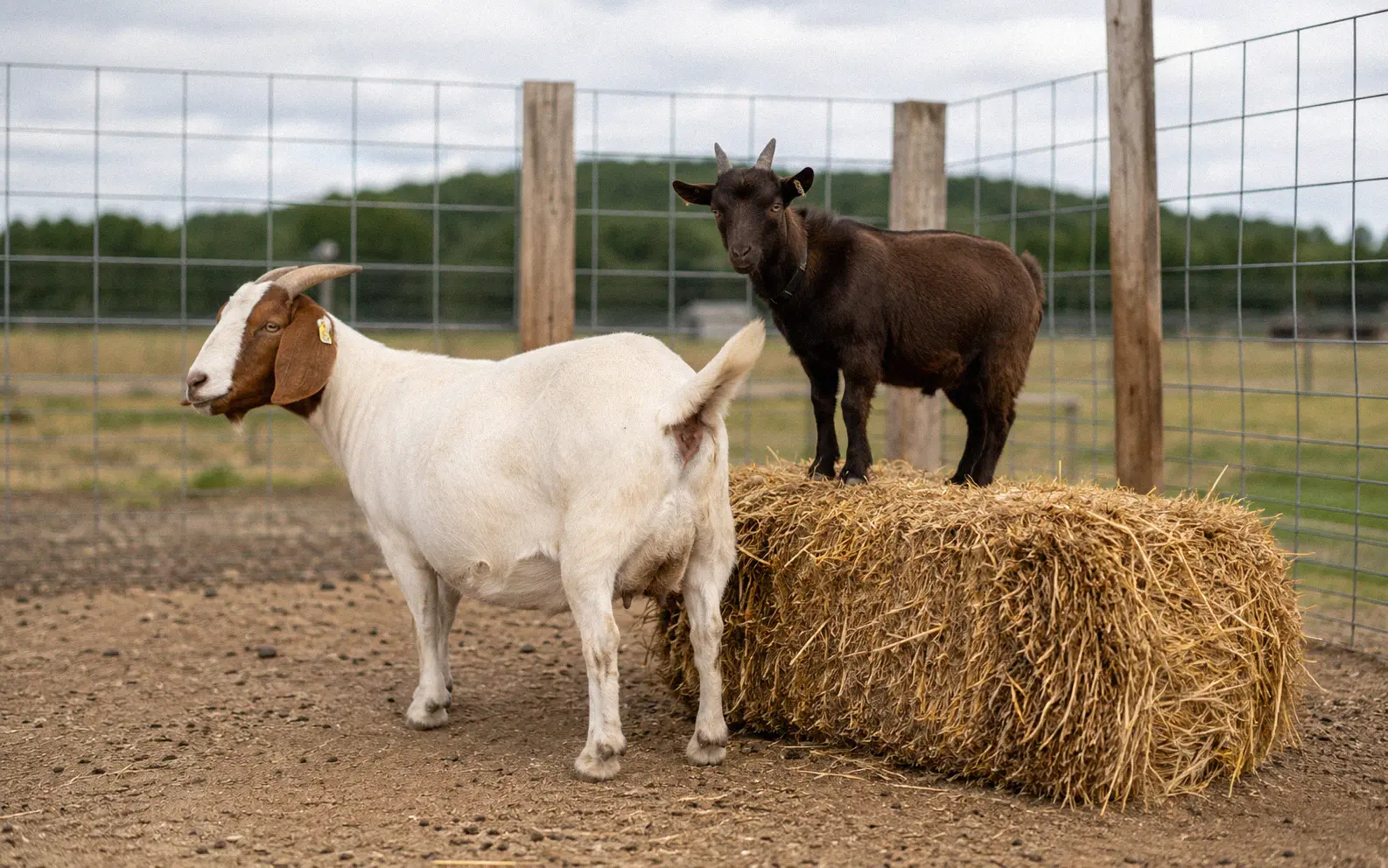
Hand breeding is another option where you physically hold the doe steady while the buck mounts. It also lets you pin down the exact breeding date, which makes your kidding timeline much more accurate.
Record every breeding date in a log. Knowing the exact date of service lets you calculate the 145- to 155-day gestation window and prepare your kidding stall in advance.
The Danger of Breeding a Boer Buck to a Nigerian Dwarf Doe
Using a Boer buck on a Nigerian Dwarf doe is one of the worst breeding mistakes you can make. Breeders and vets alike have been sounding the alarm on this pairing for years.
We’re not talking about slightly harder deliveries here. This direction can kill the doe and every kid she’s carrying.
Dystocia and Fetal-Maternal Disproportion
Dystocia, the veterinary term for difficult birth, is most commonly triggered by fetal-maternal disproportion in size-mismatched goat crosses. It happens when kids grow too large for the doe’s pelvis and birth canal to handle.
Boer genetics carry a strong tendency toward large-headed, wide-shouldered kids. When those genes express in a fetus growing inside a 40- to 60-pound Nigerian Dwarf doe, the outcome is predictably grim.
Breeders on goat forums have reported Nigerian does requiring emergency intervention after being accidentally bred by Boer bucks. In several cases, a single kid had a head larger than a full-term Nubian kid and couldn’t pass through the birth canal.
A Nigerian Dwarf doe’s pelvic opening measures roughly half the width of a standard Boer doe’s pelvis. Even one Boer-cross kid can become lodged during labor, causing hours of unproductive contractions that lead to exhaustion and death.
Emergency C-Section Costs and Risks
A goat C-section typically costs between $300 and $800 depending on your location and the time of day. Emergency after-hours calls can push that bill past $1,500 with no guarantee of saving the doe or kids.
Even when surgery goes well, post-op complications are common. Infections, retained fetal membranes, acute metritis, and peritonitis are all real risks following emergency cesareans in goats.
The doe’s recovery takes two to four weeks of intensive monitoring, antibiotics, and restricted activity. She may never breed safely again depending on the extent of internal damage.
Compare that to the Nigerian buck on Boer doe direction, where kidding typically proceeds normally without veterinary assistance. The cost difference between the two breeding directions, both financial and emotional, is staggering.
What Nigerian Dwarf x Boer Cross Offspring Look Like
These F1 crosses are mid-sized goats that typically weigh 50 to 100 pounds with compact, muscular builds and highly variable coat colors.
First-generation Nigerian Dwarf x Boer cross kids pull visible traits from both parents. Their appearance lands between the two breeds, though some kids lean more heavily toward one side than the other.
Size and Physical Build
Adult Nigerian x Boer crosses typically weigh between 50 and 100 pounds at maturity. That puts them squarely between a purebred Nigerian Dwarf at 60 to 80 pounds and a purebred Boer at 200 to 300 pounds.
Height at the withers ranges from 21 to 26 inches for most crosses. Females tend to stay on the smaller end, while bucks push closer to standard goat height.
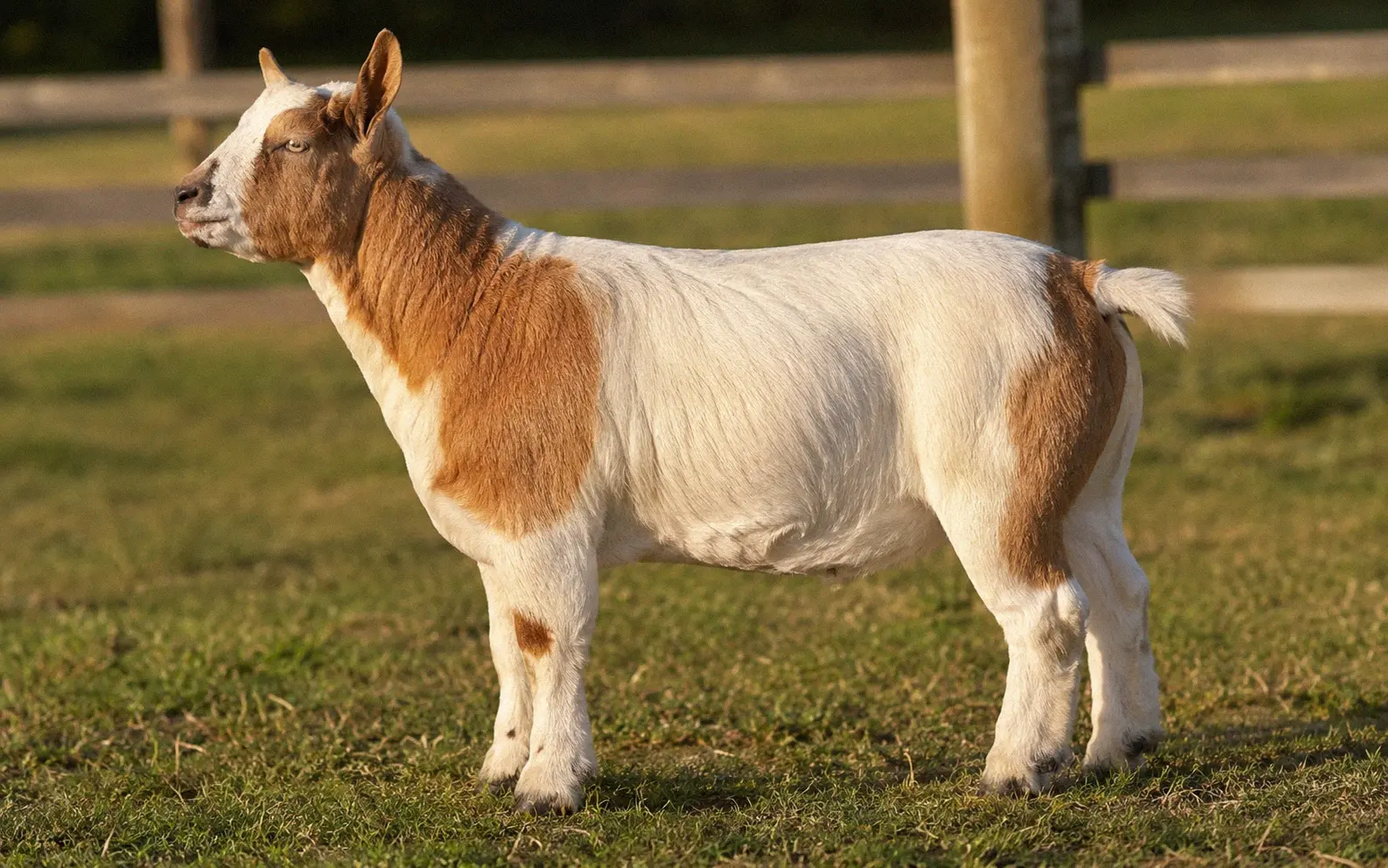
The body structure shows noticeable Boer influence with a broad chest, thick legs, and pronounced muscling through the hindquarters. You’ll notice more substance than a purebred Nigerian, but they’re still compact enough to handle easily on a small property.
Coat Color and Appearance
Coat color in these crosses is wildly unpredictable. You might see the classic Boer pattern of a white body with a red-brown head, solid colors from the Nigerian Dwarf side, or any combination in between.
Spotted, patterned, and multicolored kids are all common in the same litter, which makes kidding day a bit of a surprise. Some breeders specifically select for unique color combinations that make the offspring more appealing as pets or small-herd additions.
Ears vary between the Boer’s long, pendulous style and the Nigerian’s shorter, upright shape. Most first-generation crosses have medium-length ears that stand partially erect.
How Long Do Nigerian x Boer Crosses Live
Most Nigerian Dwarf x Boer crosses live 10 to 15 years with proper care. Their lifespan falls between the Nigerian Dwarf’s 12 to 14 year average and the Boer’s typical 8 to 12 year range, with hybrid vigor often pushing them toward the higher end.
Temperament of Nigerian x Boer Cross Goats
Both parent breeds have calm, friendly dispositions, and the cross picks that up reliably. Nigerian Dwarf goats rank among the most personable goat breeds, while Boers are famously docile and easy to handle.
These goats handle well, behave around children, and rarely show any aggression. A lot of owners describe their Nigerian x Boer crosses as more dog-like than most purebred breeds.
They’re smart, too. They learn routines quickly, respond well to training, and tend to be less destructive with fencing than some high-energy purebred lines.
This temperament makes the cross especially popular among hobby farmers with small properties. Families that want a goat for both light production and companionship find the Nigerian x Boer personality hard to beat.
Milk Production From a Nigerian x Boer Cross Doe
Expect roughly two to four quarts per day with 4 to 6 percent butterfat from a Nigerian x Boer cross doe, making her a capable dual-purpose milker.
Nigerian Dwarf does produce between one and two quarts of milk daily with butterfat content ranging from 6 to 10 percent. That rich, creamy milk is one of the main reasons breeders introduce Nigerian genetics into meat-breed crosses.
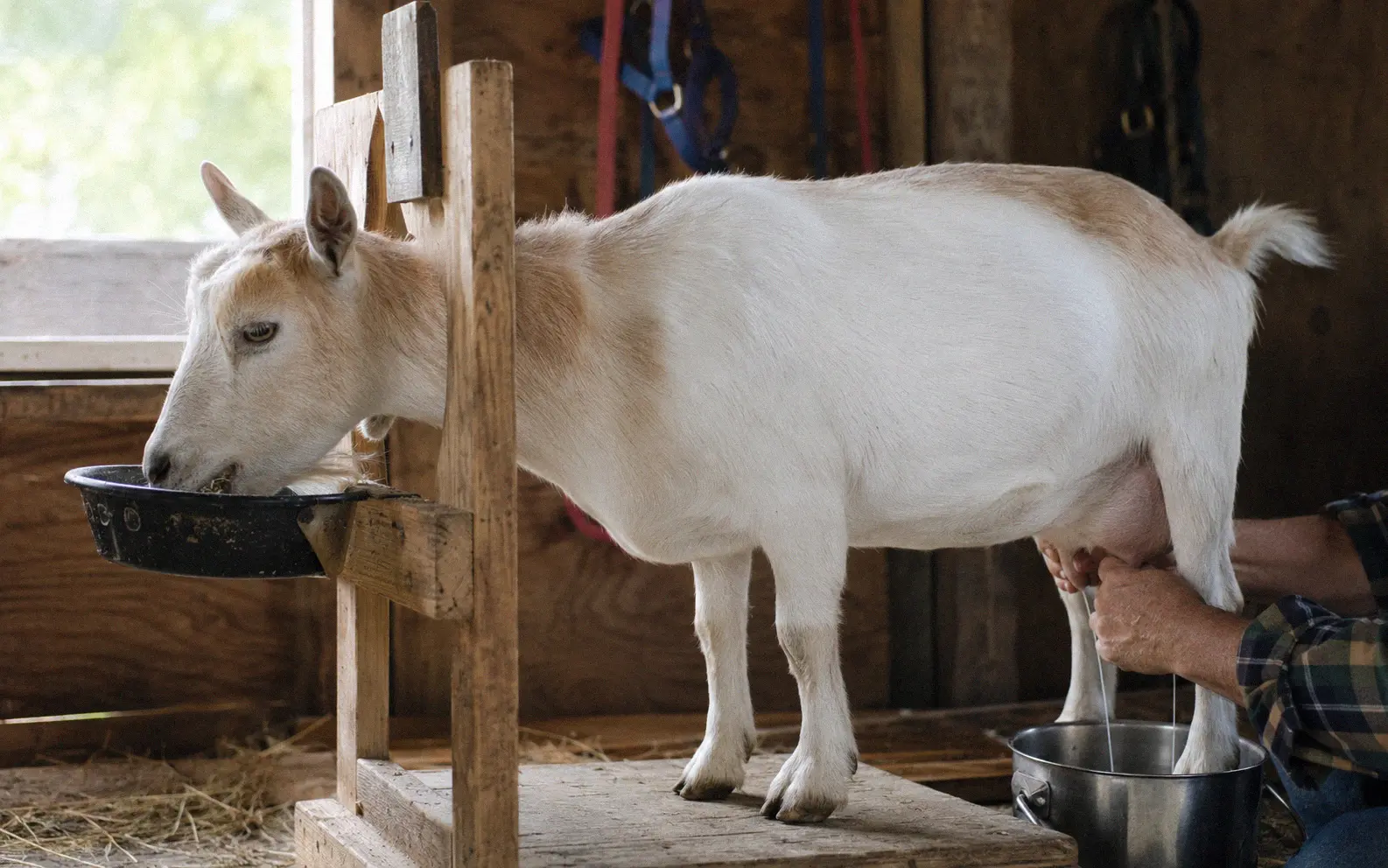
A Nigerian x Boer cross doe typically produces two to four quarts of milk per day once she settles into lactation. The volume exceeds a purebred Nigerian, though the butterfat percentage usually drops to the 4 to 6 percent range.
Where you’ll see the most variability is lactation length. Purebred Nigerian Dwarfs can milk for up to 305 days, while Boer does typically dry up within 90 to 120 days after kidding.
Most Nigerian x Boer cross does hold production for 150 to 200 days. It’s a shorter window than purebred dairy breeds, and that’s the main trade-off of having Boer genetics on the dam side.
The milk works well for cheese, soap, yogurt, and direct consumption. Higher protein content from the Boer influence actually improves cheese yield per gallon compared to some standard dairy breeds.
Meat Quality and Yield From Nigerian x Boer Crosses
Nigerian x Boer crosses produce tender, mild-flavored goat meat and reach a market weight of 50 to 70 pounds by six to eight months of age.
Boer goats set the standard for goat meat production in the United States, and that influence shows clearly in the cross. Nigerian x Boer crosses put on muscle faster and dress out heavier than purebred Nigerian Dwarfs by a wide margin.
A market-weight Nigerian x Boer cross reaches 50 to 70 pounds by six to eight months of age. The dressing percentage, meaning usable meat compared to live weight, typically falls between 45 and 50 percent.
The meat itself is tender, lean, and mild-flavored with less gamey taste than some full-sized breeds. Breeders who sell at farmers markets report strong demand for this size, particularly in communities where cabrito and chevon are dietary staples.
Buck kids not kept for breeding make excellent freezer goats for families producing their own protein. They reach harvestable size faster than purebred Nigerian Dwarfs while remaining small enough to process at home without commercial equipment.
There’s a feed efficiency angle here, too. Faster growth means less total feed consumed before reaching market weight, which drops your cost per pound of finished meat.
Gestation Timeline and Kidding Expectations
Gestation for a Boer doe carrying Nigerian-sired kids runs the standard 145 to 155 days, with most deliveries happening right around day 150. The cross doesn’t change the normal goat gestation window in any meaningful way.
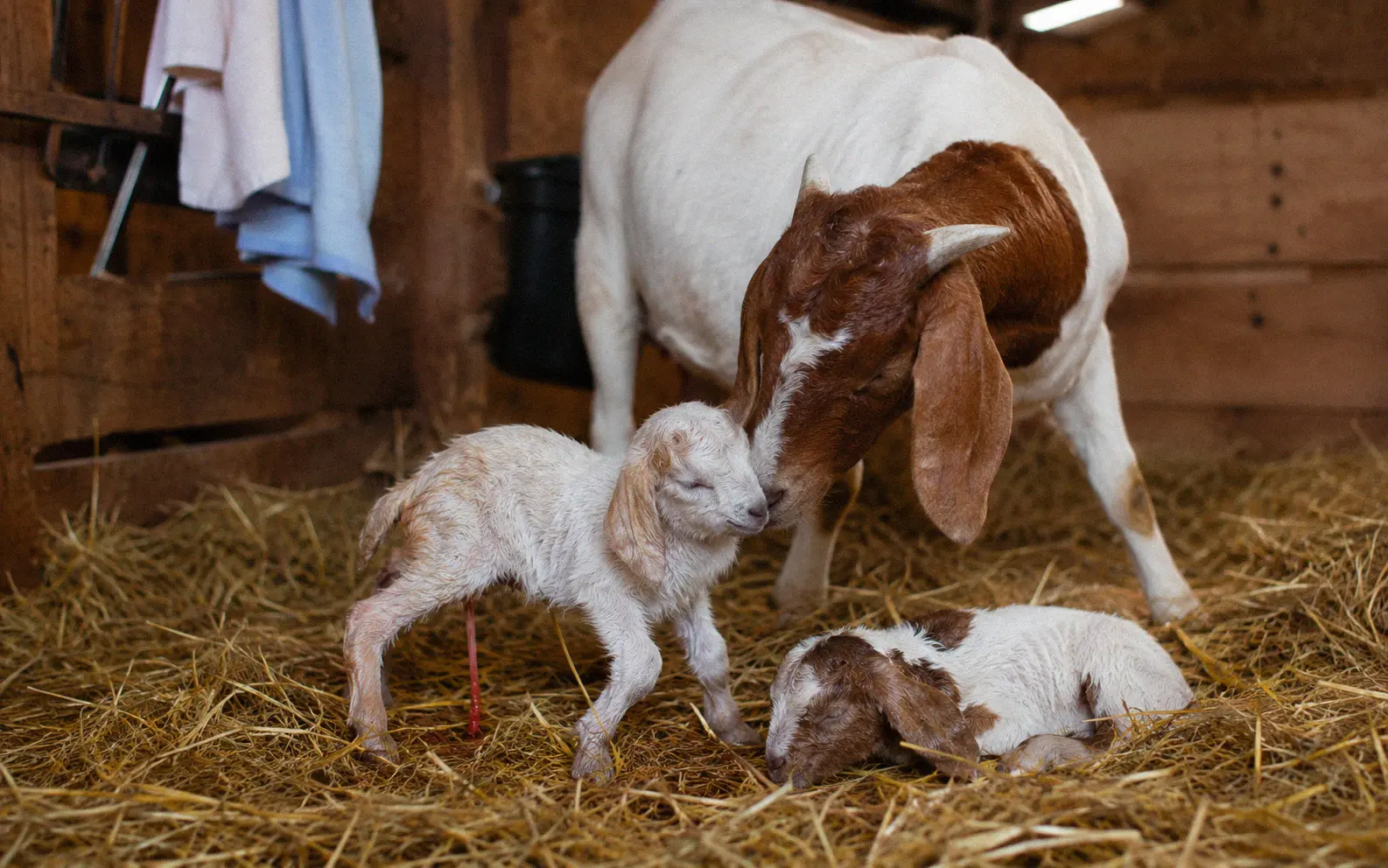
You’ll usually get a good-sized litter with this pairing. Boer does commonly throw twins, and triplets aren’t unusual when bred to Nigerian bucks since the smaller sire genetics keep individual kid size manageable.
Kid birth weights typically range from 4 to 7 pounds each. That is smaller than purebred Boer kids, which often arrive at 7 to 10 pounds, making the entire delivery process smoother for the doe.
Most Boer does bred to Nigerian bucks deliver without any help at all. Smaller kids plus the Boer’s naturally wide pelvis?
That’s about as easy a kidding scenario as you’ll find.
Watch for standard signs of approaching labor including udder filling, ligaments softening around the tail head, and nesting behavior. Having a clean kidding stall prepared by day 140 gives you a comfortable buffer before the due date.
Keep iodine for dipping navels, clean towels, and a bulb syringe in your kidding kit. Even with low-risk deliveries, being prepared prevents small problems from becoming emergencies during the night.
Feeding a Boer Doe Carrying Nigerian Cross Kids
A pregnant Boer doe’s nutritional needs increase significantly during the final six weeks before kidding. That’s when the kids are growing fastest, and the doe’s body needs extra calories, protein, and minerals to keep up.
Provide free-choice grass hay throughout the entire pregnancy and add one to two pounds of grain daily during the last trimester. A 16-percent protein feed supports fetal development without causing the kids to grow excessively large.
Loose goat minerals should be available at all times, with particular attention to calcium, phosphorus, and selenium levels. Deficiencies in any of these minerals can cause weak kids, retained placentas, and poor milk production after delivery.
Selenium deficiency specifically causes white muscle disease in newborn kids and is common in many regions of the United States. A BoSe injection administered to the doe 30 days before her due date provides reliable protection for both the doe and her offspring.
Fresh water consumption often drops in late pregnancy as the growing kids compress the doe’s rumen capacity. Offering warm water in cold months helps keep her drinking enough.
Overfeeding is just as dangerous as underfeeding during this stage, and it’s a mistake more common than you’d think. Obese does face higher rates of pregnancy toxemia and difficult deliveries regardless of which sire breed was used.
How To Start a Nigerian Buck x Boer Doe Breeding Program
A solid cross-breeding program starts well before the first breeding date. Your buck and doe selection directly shapes the quality and marketability of every kid you produce.
Picking the Right Breeding Stock
Choose a Nigerian Dwarf buck from registered, health-tested lines with strong dairy genetics and a proven track record. Bucks with negative test results for CAE, CL, and Johne’s disease mean you’re starting your program on solid ground.
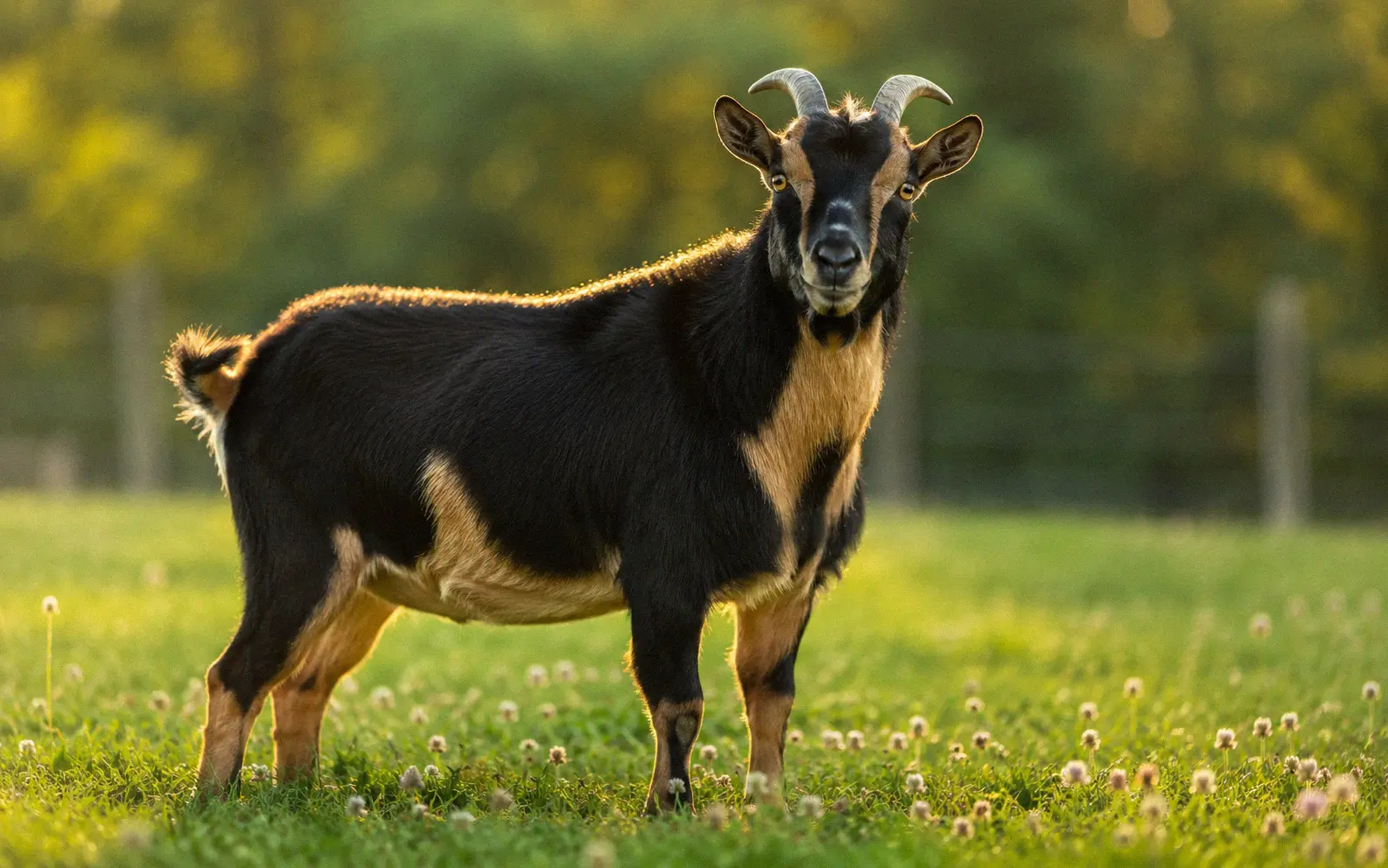
Select Boer does with good conformation, wide pelvises, and documented maternal instincts from their dam line. A doe from a family known for easy kidding and strong milk production sets you up for the strongest cross-bred kids.
Avoid breeding any doe under 80 percent of her mature body weight. For Boer does, that means waiting until she reaches at least 160 pounds, which typically happens between 12 and 18 months of age.
Best Time To Breed
Boer does are seasonal breeders with peak fertility running from August through January in most climates. Breeding in September or October produces kids in February or March, which aligns perfectly with warming spring weather and fresh pasture growth.
Nigerian Dwarf bucks breed year-round, so the buck’s readiness is never the limiting factor. Focus your breeding schedule entirely around the Boer doe’s natural estrus cycle for the best conception rates.
Planning kidding for early spring gives kids the longest possible growing season before their first winter. Spring-born kids have access to high-quality browse and pasture that supports rapid growth without heavy grain supplementation.
Spotting Heat Cycles in Boer Does
Boer does cycle into heat every 18 to 21 days during breeding season, with each standing heat lasting 24 to 48 hours. Missing the window means waiting another three weeks for the next opportunity.
Watch for tail flagging, increased vocalization, swollen and reddened vulva, and clear mucous discharge from the vaginal area. A doe in standing heat will brace herself firmly when pressure is applied to her lower back, signaling she is ready to accept the buck.
Keeping a Nigerian buck in an adjacent pen during breeding season helps you detect heat faster. The doe will pace the fence line, call to the buck, and press against the shared fence when she’s cycling.
A buck rag, a cloth rubbed on a buck’s scent glands and stored in a sealed jar, works as a heat detection tool if you don’t keep the buck on-site year-round.
Can You Breed Nigerian x Boer Crosses Back to Purebreds
Yes, but the offspring move further from either purebred standard with each generation. Breeding a cross doe back to a purebred Nigerian Dwarf buck produces kids with stronger dairy traits, while breeding back to a Boer emphasizes meat production and frame size.
Health Issues To Watch in Cross-Bred Kids
Nigerian x Boer cross kids benefit from hybrid vigor, which generally produces animals with stronger immune systems than either purebred parent alone. Still, certain health challenges need hands-on management from day one.
Parasite Management
Internal parasites, particularly barber pole worm (Haemonchus contortus), remain the biggest health threat to goats, full stop. Cross-bred kids need a solid deworming protocol from the day they start grazing.
Use the FAMACHA scoring system to check eyelid color every two weeks during warm months. Pale or white inner eyelid membranes indicate anemia from heavy parasite load and require immediate treatment with an effective dewormer.
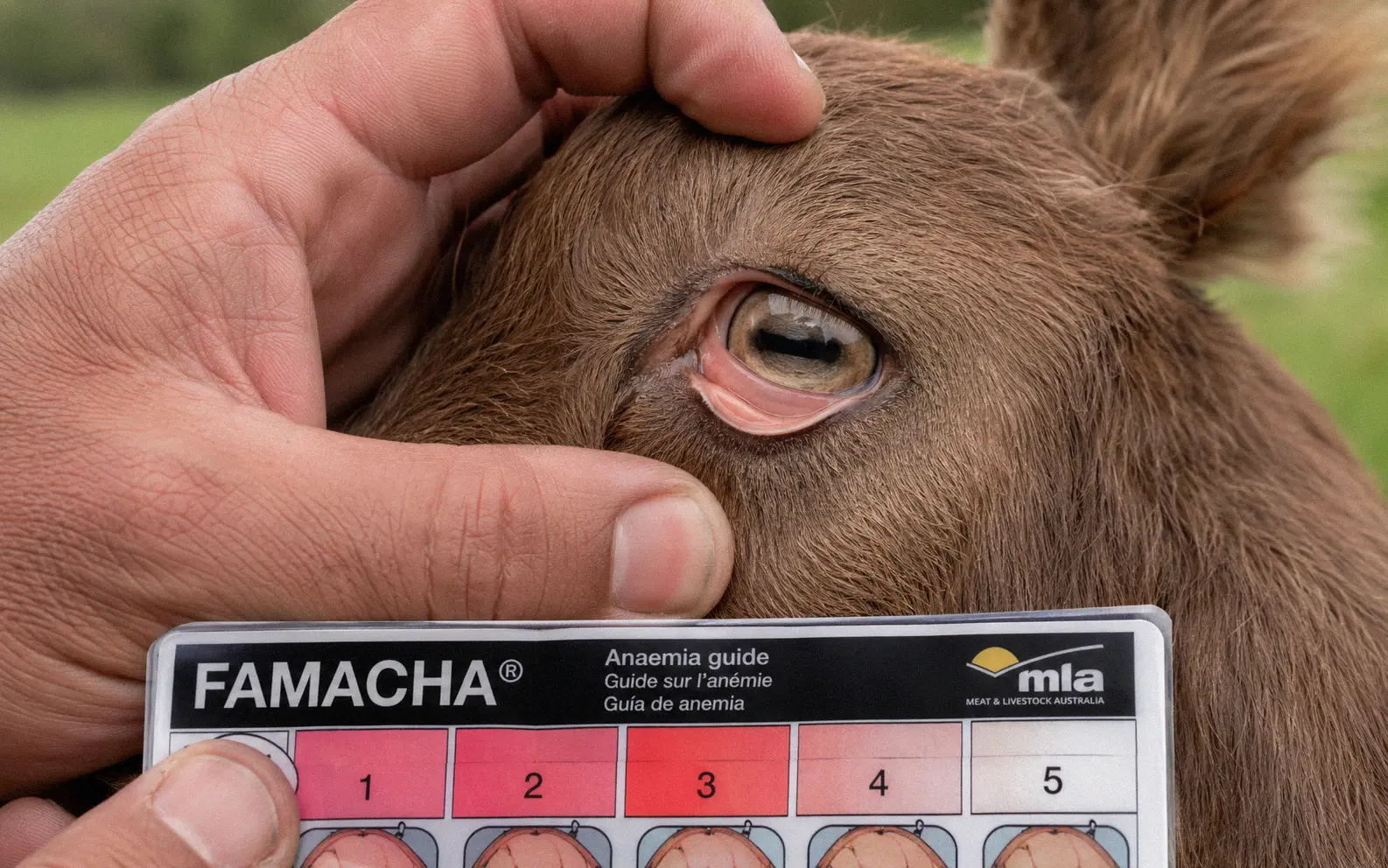
Rotate pastures whenever possible to break the parasite lifecycle on your property. Moving goats to fresh ground every three to four weeks dramatically reduces worm burden without relying exclusively on chemical treatments.
Fecal egg counts from your vet give you hard data on actual parasite loads. Targeted treatment based on those numbers preserves dewormer effectiveness far better than blanket dosing.
Hoof Care and Foot Rot Prevention
Boer goats are genetically predisposed to hoof problems, and that tendency can pass to cross-bred offspring. Trim hooves every six to eight weeks to prevent overgrowth, cracks, and bacterial infections from taking hold.
Foot rot thrives in wet, muddy conditions and spreads quickly through a herd. Keep loafing areas well-drained and bed stalls with dry straw or wood shavings to minimize moisture contact with the hooves.
Weekly zinc sulfate foot baths during wet seasons add solid protection against hoof infections.
Housing and Fencing for Mixed-Size Herds
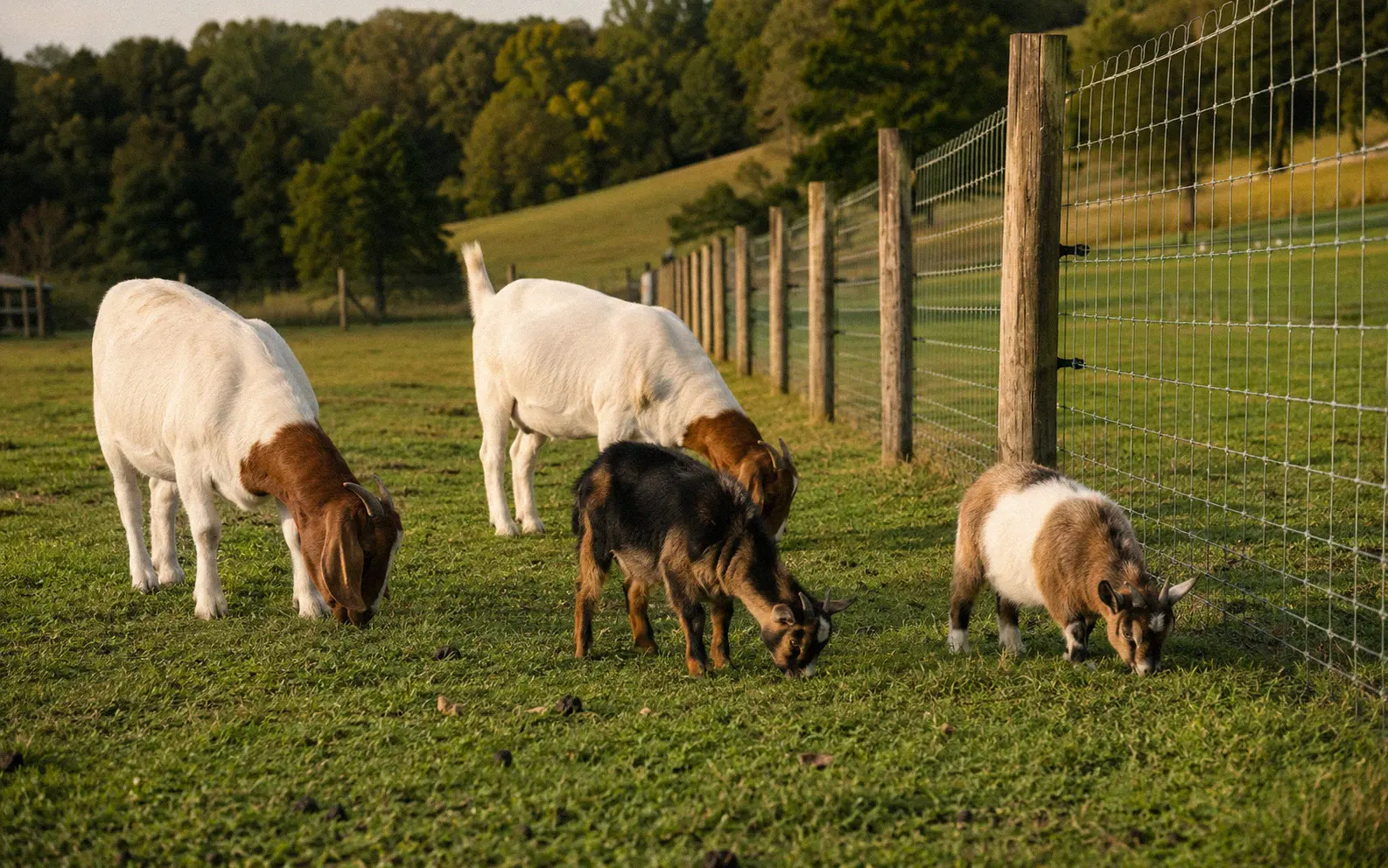
Keeping Nigerian Dwarf bucks and Boer does together means your fencing has to work for both breeds. Nigerian Dwarfs are notorious escape artists that can squeeze through gaps a full-sized Boer wouldn’t even attempt.
Use welded wire fencing with 4-inch by 4-inch openings or smaller around the perimeter. Standard cattle panels with 6-inch spacing allow Nigerian Dwarfs to walk straight through, which defeats the purpose of controlled breeding schedules.
Shelter needs are modest for both breeds. Provide 15 to 20 square feet per adult goat inside a three-sided shelter that blocks prevailing wind and rain.
Nigerian Dwarfs and Boers cohabitate peacefully in shared housing despite their size difference. You won’t need any special setup beyond draft protection and dry bedding.
Separate the buck from the does outside of breeding season to prevent unplanned pregnancies. Bucks in rut also produce a strong musk that taints the milk if a doe you are milking is housed too close.
A dedicated breeding pen with the modifications described earlier, such as hay bales and slopes, streamlines the process when breeding season arrives.
Feeding stations should accommodate both sizes without conflict. Ground-level hay feeders work for both breeds, but grain troughs may need dividers or separate stations to prevent the larger Boer does from shouldering out the Nigerian buck at mealtime.
Is a Nigerian Dwarf x Boer Cross Worth the Effort
The Nigerian Dwarf x Boer cross fills a niche that neither purebred serves on its own. You get a mid-sized goat that produces decent milk with good butterfat and puts on enough muscle to justify raising buck kids for the freezer.
Small-acreage homesteaders benefit the most from this cross. A 50- to 100-pound goat requires less feed, less fencing, and less infrastructure than a full-sized Boer while producing significantly more meat than a purebred Nigerian Dwarf.
Market demand for Nigerian Dwarf cross goats continues to grow as more small-scale producers discover the dual-purpose advantage. Doelings sell well as family milkers, and buck kids move quickly through meat markets and direct-to-consumer sales channels.
The main limitation is breed registration with established organizations. Neither ADGA nor the American Boer Goat Association registers Nigerian x Boer crosses, which means you cannot show them in purebred classes or command purebred breeding stock prices.
For a production-focused homestead that values versatility over breed papers, the cross delivers strong return on investment. Good feed conversion, manageable size, and a genuinely friendly temperament make these goats a solid pick for families raising livestock on five acres or less.
Frequently Asked Questions
Adults typically weigh 50 to 100 pounds and stand 21 to 26 inches tall at the withers. Females stay closer to 50 to 70 pounds while bucks can reach 80 to 100 pounds at full maturity around two years of age.
Yes, both breeds coexist peacefully and share pasture, shelter, and feed without issues. Use fencing with 4-inch or smaller openings to prevent the smaller Nigerian Dwarfs from escaping through gaps that would easily contain a Boer.
Nigerian Dwarf bucks reach sexual maturity as early as 7 to 8 weeks old, but responsible breeding should wait until the buck is at least 7 months old and weighs a minimum of 50 pounds. The Boer doe should be at least 12 months old and at 80 percent of her mature body weight before breeding.
Boer does commonly produce twins when bred to Nigerian bucks, and triplets are not unusual. Single kids are less common with this cross since the smaller sire genetics tend to produce moderately sized kids that leave room for multiples in the uterus.