| # | Product | Our Rating | ||
|---|---|---|---|---|
| 1 |  | Best OverallLamb & Goat Bottle with Pritchard Teat | ★★★★★ | Check Price |
| 2 |  | Manna Pro Goat Kid Milk Replacer (4 lb) | ★★★★☆ | Check Price |
| 3 |  | Pritchard Teat Nipples (12 Pack) | ★★★★☆ | Check Price |
Toggenburg goats are one of the oldest and most recognizable dairy breeds in the world. Here’s where they came from and what makes them worth owning.
Where did Toggenburg goats originate?
Toggenburgs come from the Toggenburg Valley in northeastern Switzerland. Written records of the breed go back to the 1600s, making them the oldest known registered dairy goat breed.
They were first imported to the United States in 1893. Swiss farmers bred them in the cold, mountainous Alpine terrain, which is why they do so well in cooler climates today.
What are Toggenburg goats?
Toggenburgs are a medium-sized dairy breed, with does weighing around 120 pounds and bucks reaching 150 pounds or more. They produce an average of about 2,000 pounds of milk per lactation.
Their milk runs lower in butterfat than Nubian milk, typically around 3-4%. That makes it better for drinking and fluid milk products than for cheese or butter, though plenty of people use it for both.
Proper udder care and teat health directly impacts how much milk you can collect.
What do Toggenburg goats look like?
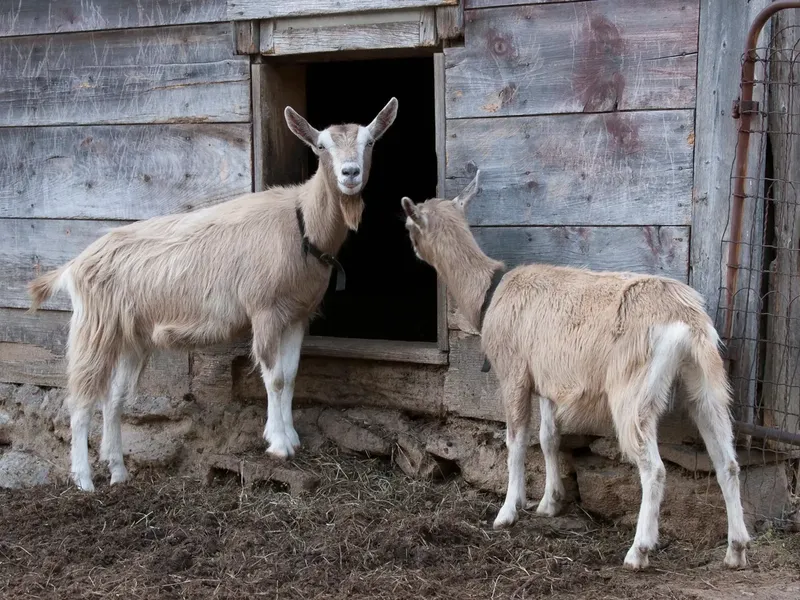
You can spot a Toggenburg from across the pasture by their coloring. They’re light brown to chocolate brown with white facial stripes running from above each eye to the muzzle.
They also have white ears, white lower legs, and a white triangle on each side of the tail. Their ears are upright and medium-sized, and most have straight or slightly dished faces.
What are the benefits of owning Toggenburg goats?
Toggenburgs are consistent, reliable milkers that hold their production well through the entire lactation. A good doe at prime breeding age will give you milk for 10 months or longer without dropping off much.
They’re also cold-hardy goats that handle winter weather better than most dairy breeds. If you’re looking for a meat breed instead of dairy, Kiko goats from New Zealand are the top contender.
If you live somewhere with real winters, Toggenburgs will outperform heat-loving breeds like Nubians during the cold months.
What’s the temperament of a Toggenburg goat?
Toggenburgs are active, curious, and sometimes stubborn enough to test your patience. They’re the kind of goat that will figure out how to open a gate latch if you give them enough time.
They bond well with their owners and are generally friendly, but they can be pushy with other goats in the herd. In mixed flocks with sheep, Toggenburgs typically end up as the dominant animals.
First-time goat owners sometimes find their strong personalities a bit much compared to calmer breeds like Saanens.
How to take care of your Toggenburg goats?
Provide quality hay, fresh water, and a loose mineral supplement formulated for dairy goats. Toggenburgs in milk need grain on the milk stand to keep up body condition and production.
Trim hooves every 6-8 weeks, keep their shelter dry and well-ventilated, and deworm based on fecal egg counts rather than on a calendar schedule. Keeping good breeding records prevents accidental inbreeding between relatives as your herd grows.
Regular veterinary care and CDT vaccinations twice a year round out the basics.
Final Thoughts
Toggenburgs are a proven dairy breed with centuries of history behind them. They’re hardy, productive, and full of personality.
If you want a reliable milker that handles cold weather well and keeps things interesting around the barn, a Toggenburg is a solid choice. Just make sure your gate latches are goat-proof.
Frequently Asked Questions
Toggenburg goats come from the Toggenburg Valley in northeastern Switzerland. Written records of the breed go back to the 1600s, making them the oldest known registered dairy goat breed. They were first imported to the United States in 1893.
Toggenburg goats are a species of dairy goat known for their distinctive appearance and high milk production.
Toggenburg goats are named after the Toggenburg region of Switzerland, where they were first bred in the late 1800s. With their impressive size and shaggy brown coats, Toggenburg goats are easily recognizable.
Toggenburgs are consistent, reliable milkers that produce about 2,000 pounds of milk per lactation. They hold their production well through the entire lactation period, and they're cold-hardy goats that handle winter weather better than most dairy breeds.