| # | Product | Our Rating | ||
|---|---|---|---|---|
| 1 |  | Best OverallLamb & Goat Bottle with Pritchard Teat | ★★★★★ | Check Price |
| 2 |  | Manna Pro Goat Kid Milk Replacer (4 lb) | ★★★★☆ | Check Price |
| 3 |  | Pritchard Teat Nipples (12 Pack) | ★★★★☆ | Check Price |
Running a herd that earns its keep on the milk stand and on the trail sounds like a homesteading fantasy. The biology of goat lactation and the physical demands of hauling gear actually create a natural rhythm that makes this arrangement more practical than most people realize.
Whether you’re exploring the idea for the first time or already own dairy goats and want to add trail utility, this guide covers breed selection, seasonal scheduling, nutrition, gear, and the health considerations that keep a dual-purpose herd thriving.
Why Dual-Purpose Goats Attract Small-Farm Owners
Put simply, a single dairy goat that milks and packs saves money, space, and feed compared to keeping separate animals for each role.
Small farms operate on tight margins, and every animal that fills only one role is a luxury. A goat that provides fresh milk for the family and carries supplies into the backcountry represents real economic value per square foot of barn space.
Feed is the biggest line item in any goat budget. A 150-pound Alpine doe that produces a gallon of milk per day and carries 35 pounds of gear during the off-season pays for herself faster than a doe that only milks.
Goats fit small acreage better than horses or mules. A pack horse needs 2 to 3 acres and 20 pounds of hay daily, while a dairy goat needs a quarter acre and 4 to 5 pounds.
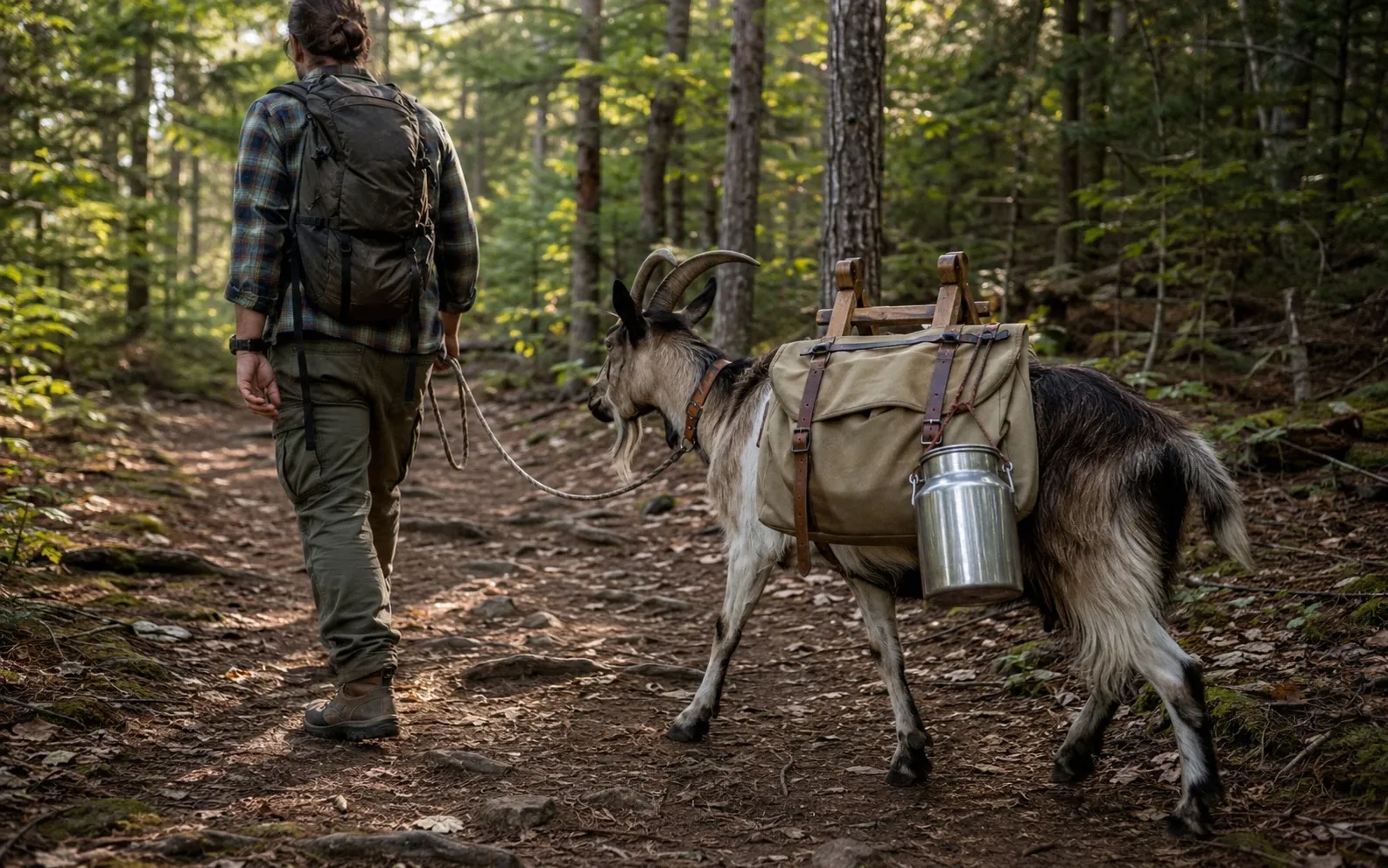
Goat packing has grown popular enough that homesteaders running dairy herds are paying attention. Organizations like the North American Pack Goat Association (NAPgA) have pushed to open trail systems that previously excluded goats from designated wilderness areas.
Land-use regulations also favor goats over horses and mules in many jurisdictions. Several national forests and Bureau of Land Management districts now permit pack goats on trails that restrict horses due to erosion concerns.
Goats leave a lighter footprint because their hooves compress soil less than steel-shod horseshoes.
There’s a self-sufficiency angle, too, especially for off-grid homesteaders. A dual-purpose herd can produce milk you drink fresh in the morning and haul water, firewood, or fencing supplies across your property in the afternoon without fuel.
Insurance and liability costs run lower too. Pack goats are less likely to injure handlers than horses or mules because of their smaller size and generally docile temperament.
A 200-pound goat that spooks on the trail is far easier to control than a 1,200-pound horse doing the same thing.
How Goat Lactation Shapes Your Packing Season
The lactation cycle controls your entire calendar. Does produce milk for about 10 months after kidding, then enter a 60-day dry period that opens the door for pack work.
Everything about running a dual-purpose herd ties back to this rhythm. A dairy goat’s year splits into two distinct phases, and each one dictates what role she can fill.
After kidding, a doe enters lactation and reaches peak milk production between weeks four and eight. During this peak window she may produce 1 to 1.5 gallons per day depending on breed and individual genetics.
Lactation typically lasts 284 days, though many breeds continue for a full 10 months before output tapers. Throughout, her udder stays full and caloric demands remain high.
The dry period follows weaning and lasts roughly 60 days before the next kidding. During this window the udder shrinks, mammary tissue regenerates, and the doe’s body redirects energy toward the developing kids inside her.
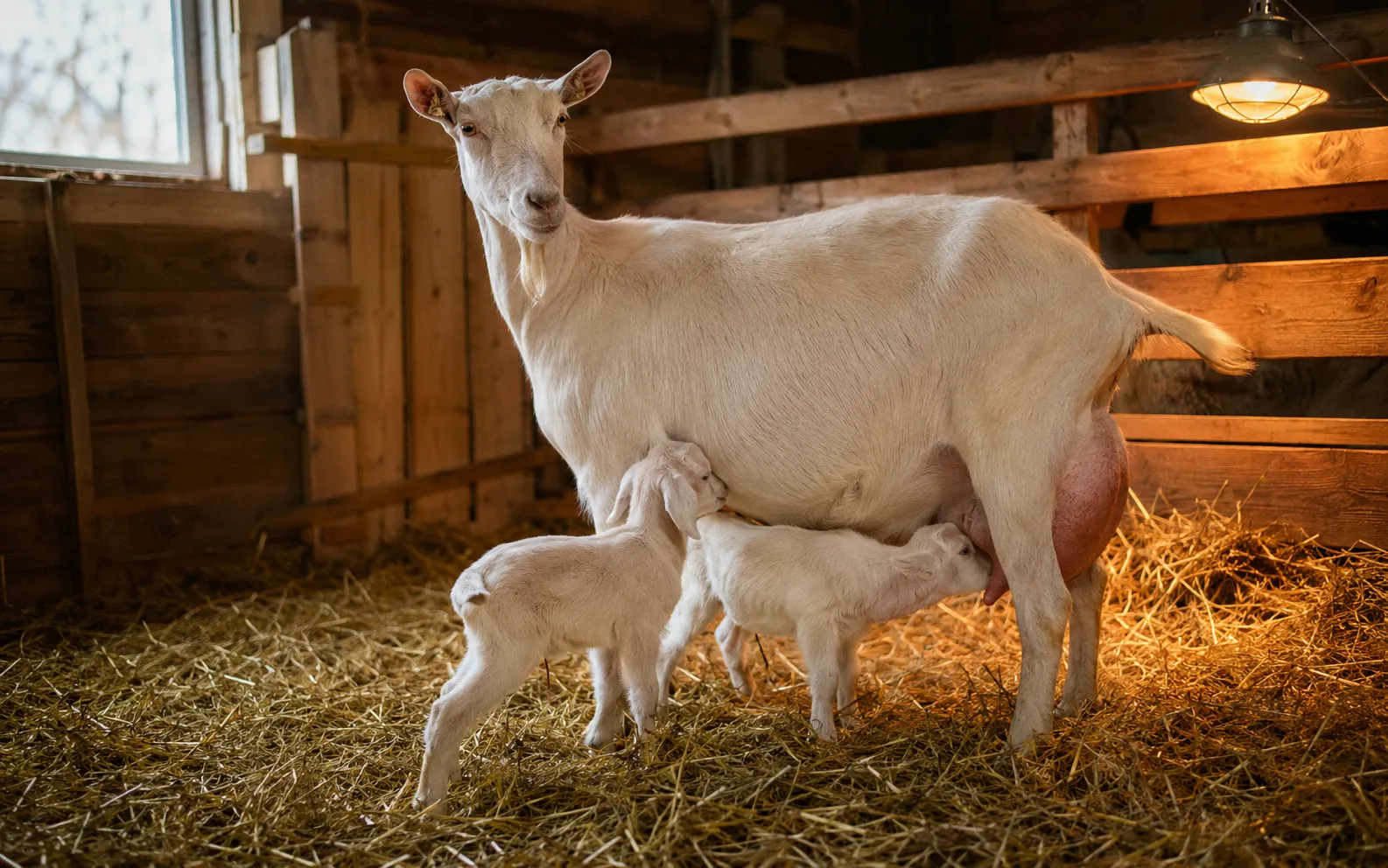
That 60-day dry window is your primary packing season for a lactating doe. Her udder is small enough to sit comfortably under a saddle, and her energy needs drop since she is no longer manufacturing milk.
Some owners extend the packing window by milking once per day instead of twice as production tapers in months eight and nine. This gradual reduction in output shrinks the udder enough for light pack loads on moderate terrain.
There’s another approach worth knowing about: extended lactation. If you skip breeding for a season, many does will keep producing at a reduced volume for 18 months or longer.
This stretches both your milk supply and your packing calendar, though total yield per day will fall steadily as the months pass.
Milk production follows a predictable decline curve after peak. By month six, daily output typically drops to 60 to 70% of peak volume.
By month eight, it falls to 40 to 50%. Tracking this curve for each doe lets you pinpoint exactly when her udder reaches a packable size.
A doe milked once daily in late lactation typically produces 1 to 2 quarts, which shrinks the udder to roughly the same profile as a dry doe by mid-afternoon. Timing your pack trips for the afternoon on these days gives you the best of both worlds: fresh milk in the morning and trail work after lunch.
Here’s the bottom line: udder volume and pack comfort work against each other. A doe producing a gallon a day has a heavy, swinging udder that chafes under any saddle, while a doe in late lactation or a dry doe has a flat, tucked udder that clears the cinch and panniers just fine.
Breed-by-Breed Breakdown for Milking and Packing
Five standard dairy goat breeds consistently perform well in both roles: Alpines, Saanens, LaManchas, Oberhaslis, and Nubians. Not every breed has the frame, stamina, or temperament for trail work, but these five rank at the top for milk output, body size, and trail manners.
Alpine Goats
Alpines are the most popular breed in the pack goat community, and the reasons are rooted in their mountain origins. Does weigh 135 to 155 pounds and stand 30 to 35 inches at the withers, while bucks and large wethers can reach 220 pounds and 40 inches.
A mature Alpine doe produces roughly 2,100 pounds of milk per lactation with butterfat averaging 3.5%. That output ranks among the highest of any standard dairy breed in total volume.
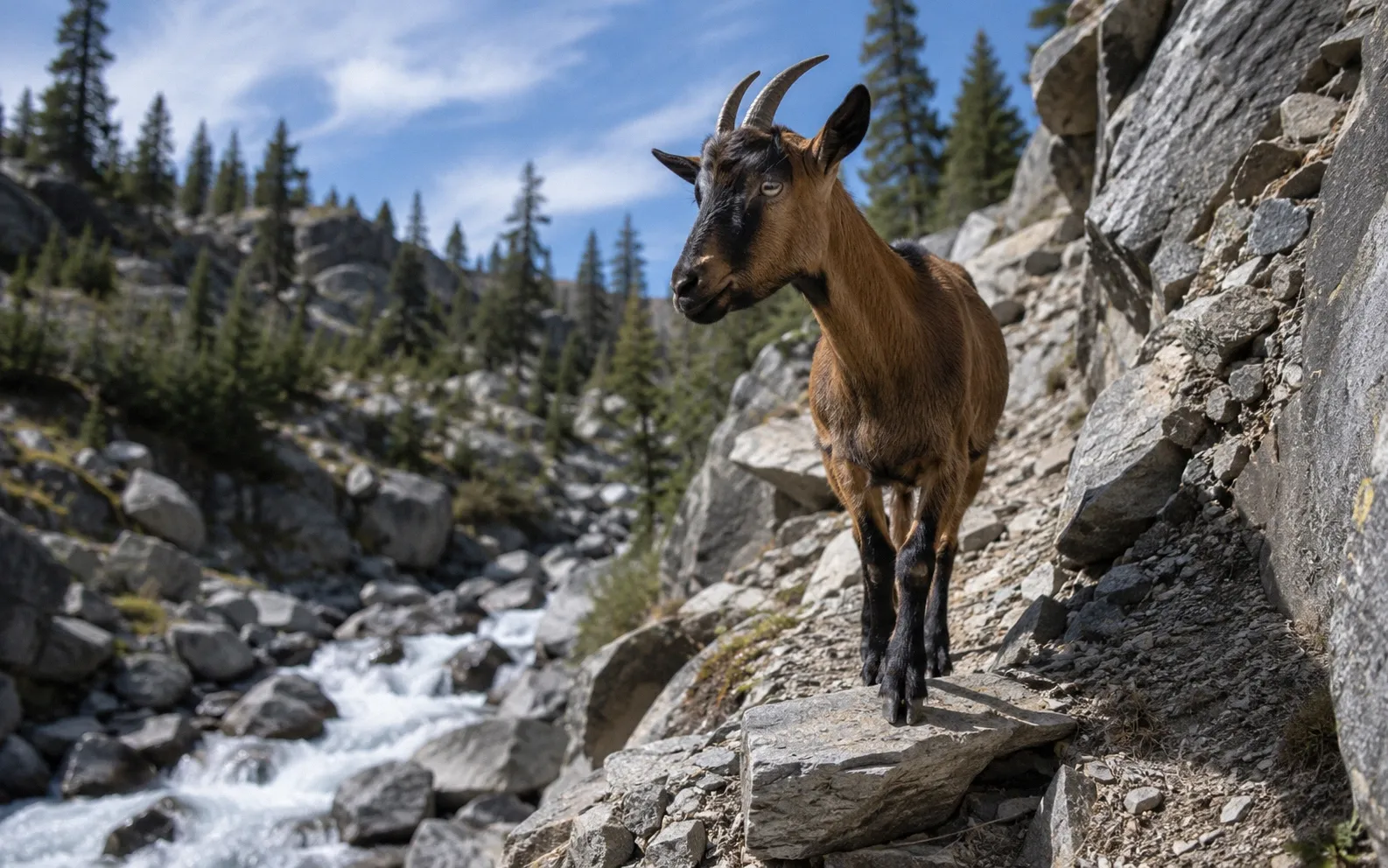
On the trail, Alpines are sure-footed and calm across rough terrain. Their lean, leggy build handles steep switchbacks and rocky creek crossings without the stumbling that stockier breeds sometimes exhibit.
The breed originated in the French Alps, which means centuries of natural selection for mountain travel are built into their genetics. That background gives them a real edge over lowland breeds on steep terrain and uneven footing.
Saanen Goats
Saanens are the largest standard dairy breed, with does averaging 150 pounds and bucks exceeding 200. Breeders selecting for pack size have produced Saanens reaching 290 pounds and 40 inches at the withers.
Milk production is the Saanen’s strongest selling point. They are the volume champions of the dairy world, capable of producing over a gallon per day at peak with lactations exceeding 2,500 pounds annually.
Their white coat is a drawback in hot, sunny climates because they sunburn more easily than darker breeds. If your packing terrain is exposed above the treeline, Saanens need zinc-based sunscreen on their ears and udder during summer trips.
They’re mellow and easy to work with, which makes pack training straightforward. Saanens bond to their handlers and follow voice commands well on tight trail sections.
LaMancha Goats
LaManchas are immediately recognizable by their tiny ears and unflappable disposition. Does weigh around 130 pounds and produce 1,800 to 2,800 pounds of milk per lactation with butterfat around 3.8 to 4.2%.
The breed’s calm, quiet personality makes them exceptional trail partners. They rarely spook at wildlife, stream crossings, or unfamiliar obstacles, which reduces stress for both the goat and the handler on busy public trails.
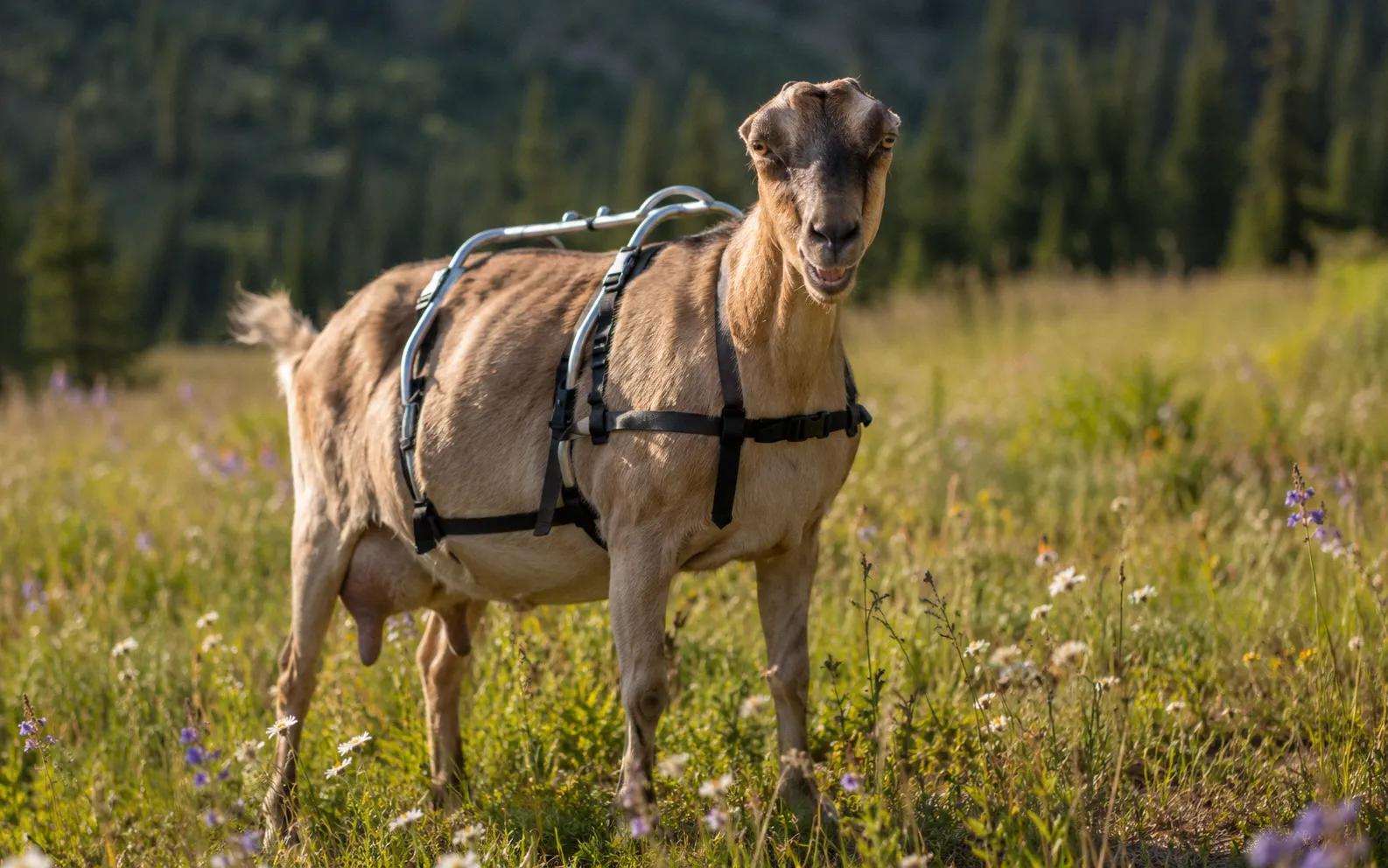
Their milk is prized for cheesemaking and soap production because of its high protein and fat content. This gives dual-purpose LaMancha owners an additional revenue stream through value-added dairy products during milking season.
Size is the main limitation for serious packing. At 130 pounds, a LaMancha doe can carry only about 32 pounds safely under the 25% body weight guideline.
Crossing LaManchas with larger breeds like Alpines produces offspring that keep the calm temperament while adding 20 to 30 pounds of frame.
Oberhasli Goats
Oberhaslis don’t get the attention they deserve from dual-purpose owners. They weigh 120 to 150 pounds, stand 28 to 32 inches, and put out a steady 1,500 to 2,000 pounds of milk per lactation.
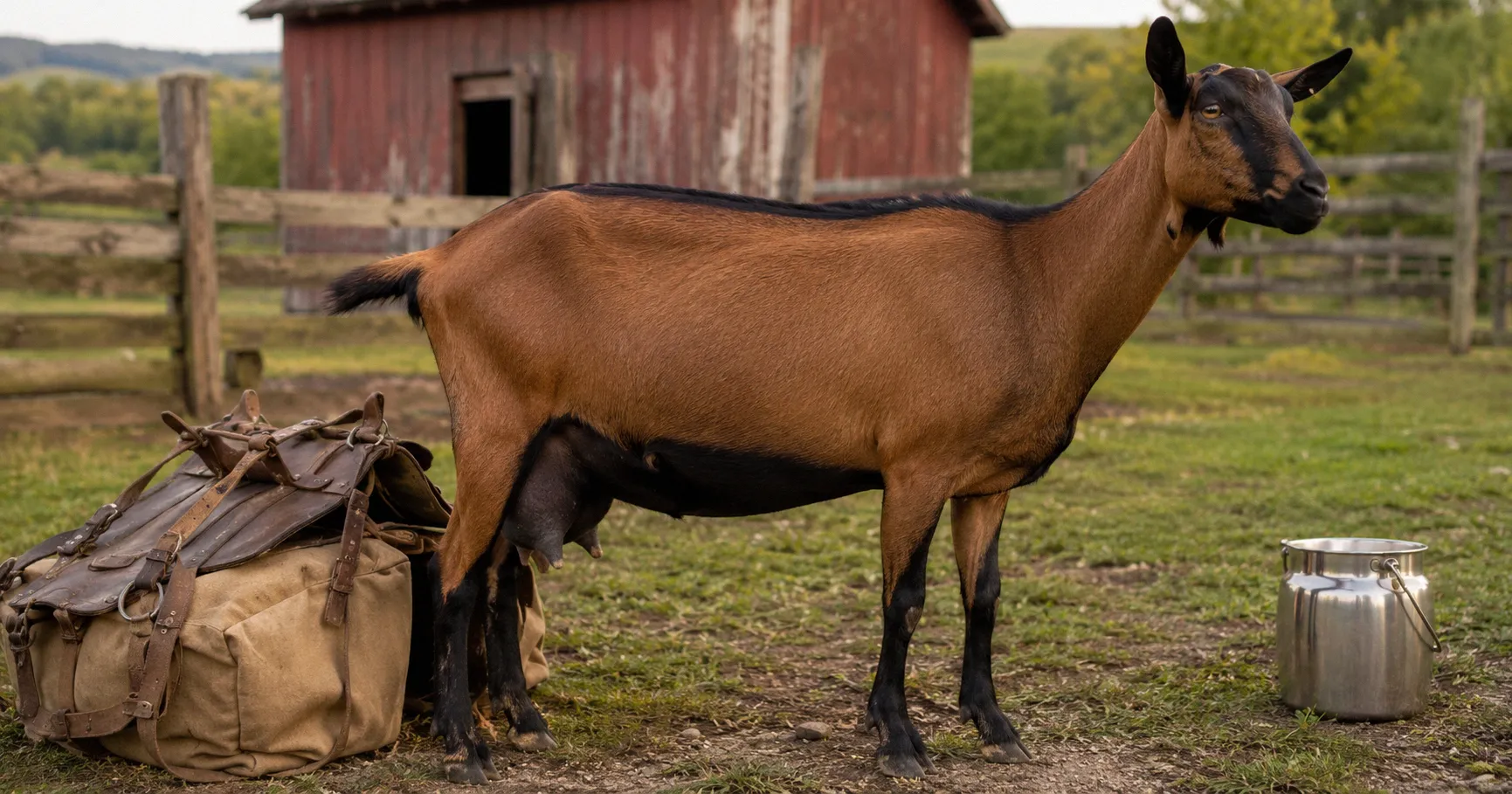
Their bay-colored coat with black markings gives them natural camouflage in forested environments. Beyond aesthetics, the darker pigmentation means less sunburn risk than white-coated breeds on exposed alpine trails.
They’re alert and active without being spooky or flighty. They adapt quickly to new trails and terrain, which shortens the training timeline compared to some of the more cautious dairy breeds.
Oberhaslis are less common than Alpines or Saanens, so finding breeding stock may require a longer search. The American Dairy Goat Association (ADGA) registry is the best starting point for locating breeders with production-tested lines.
Nubian Goats
Nubians carry the heaviest bone and muscle density among standard dairy breeds. Does weigh 130 to 175 pounds, and their milk averages the highest butterfat of any full-sized breed at 4.5 to 5%.
The trade-off is volume. Nubians produce less total milk than Alpines or Saanens, typically averaging 1,500 to 1,800 pounds per lactation.
For a family that values daily richness over volume, high-butterfat Nubian milk is also ideal for making butter and fresh soft cheese.
The biggest packing concern? They’re vocal.
Nubians are the loudest dairy breed, and their persistent calling on the trail can disturb wildlife and other hikers.
Not every individual is loud, but the breed tendency is strong enough to factor into your decision.
Their long, pendulous ears also need monitoring on brushy trails. Thorns and branches can catch and tear ear tissue if the goat pushes through dense undergrowth without a clear path.
Breed Comparison at a Glance
All things considered, the Alpine comes out on top for dual-purpose work. It offers the best combination of frame size, milk volume, and mountain instinct.
Saanens win on pure carrying and milking capacity but lose points in hot, exposed environments. LaManchas bring the best temperament but lack the frame for heavy loads without crossbreeding.
Oberhaslis are the dark horse pick for owners who value trainability and moderate output. Nubians deliver the richest milk but carry noise and ear-damage risks that experienced packers weigh seriously.
Top breeds ranked for dual-purpose work:
- Alpine: best all-around frame, milk volume, and mountain instinct
- Saanen: highest carrying and milking capacity, heat-sensitive
- Oberhasli: trainable with moderate output, underrated pick
- LaMancha: calmest temperament, smaller frame limits heavy loads
- Nubian: richest butterfat, vocal on trails
Crossbreeding between these breeds is common in the pack goat world. An Alpine-LaMancha cross, for example, combines the Alpine’s size with the LaMancha’s calm demeanor and high-fat milk.
First-generation crosses also benefit from hybrid vigor, which often produces larger, healthier animals than either parent breed alone.
Does, Bucks, and Wethers: Assigning Roles in a Mixed Herd
Here’s what matters: wethers handle dedicated year-round packing, does provide milk with seasonal trail duty during dry periods, and bucks stay home for breeding only.
Every animal in a dual-purpose herd needs a clear job based on sex, size, and reproductive status. Trying to force every goat into every role is where most operations fall apart.
Wethers (castrated males) are your dedicated pack string. They grow 20 to 40% larger than does of the same breed, they carry no udder to interfere with the saddle, and their temperament stays even year-round without hormonal cycling.
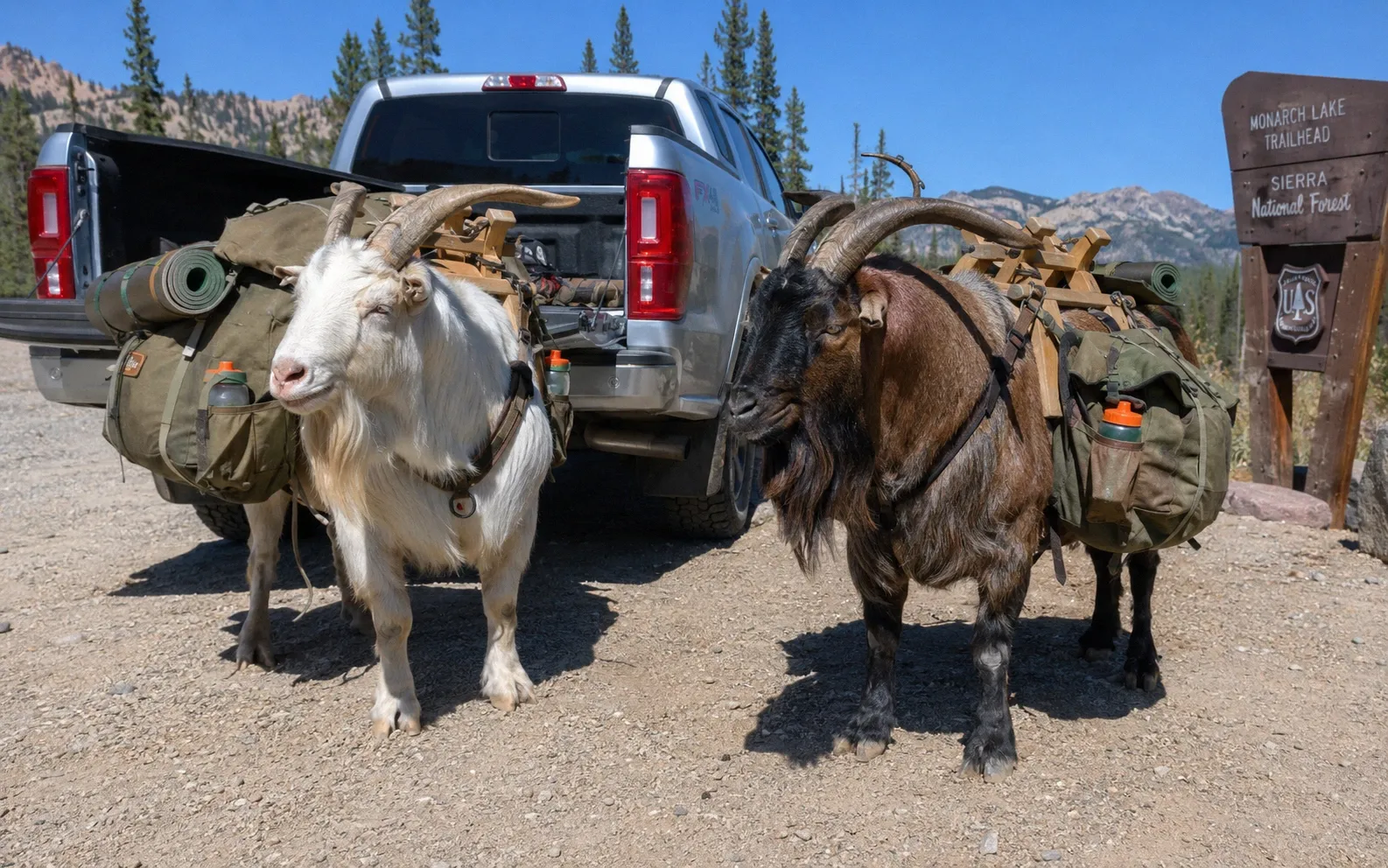
A large Alpine or Saanen wether can reach 200 to 250 pounds and carry 50 to 60 pounds of gear at the standard 25% body weight guideline. That payload handles a full day of supplies for one or two hikers without overtaxing the animal.
Does serve as your dairy producers with seasonal pack duty during the dry period. Expect their pack capacity to run roughly 60 to 70% of what a similarly sized wether can manage, partly because of frame differences and partly to protect udder tissue from pressure injuries.
Keep at least one buck or arrange access to a proven buck through a stud service for breeding. Intact bucks should never be used as pack animals because the musk glands behind their horns create an overpowering odor that permeates everything in the panniers.
A starter herd of three does, two wethers, and stud access gives you year-round milk through staggered breeding, a reliable pack string for trail trips, and enough genetic diversity for the first several seasons.
If packing is your focus, skew toward more wethers. If milk comes first, add more does.
Herd dynamics matter more than most new owners expect. Goats establish a strict pecking order, and the dominant animal in the group often makes the best trail leader because the rest of the herd follows her voluntarily.
Observe your herd for several weeks before choosing which animal leads the pack string.
Wethers from dairy lines are not automatically good pack animals. Screen for structural soundness by evaluating leg straightness, pastern angle, hoof shape, and chest width.
A wether with cow hocks or weak pasterns will break down under load regardless of how large his frame grows.
Month-by-Month Schedule for a Dual-Purpose Operation
A fall breeding cycle aligns kidding with spring, peaks lactation through summer, and opens the fall dry period for packing.
Getting the calendar right makes or breaks a dual-purpose herd. The schedule below assumes that fall breeding cycle, which lines up with the natural estrus season for most standard dairy breeds.
September through October is breeding season. Does come into estrus every 18 to 22 days, with each heat lasting 24 to 48 hours.
Breed your does on a staggered schedule, spacing them 4 to 6 weeks apart, so you maintain overlap in milk production year-round.
November through January is a rest and gestation period for bred does. They are in early to mid-pregnancy and still lactating from the previous kidding cycle.
Milk production is declining naturally, and light packing on moderate terrain is possible for does whose udders have started to shrink.
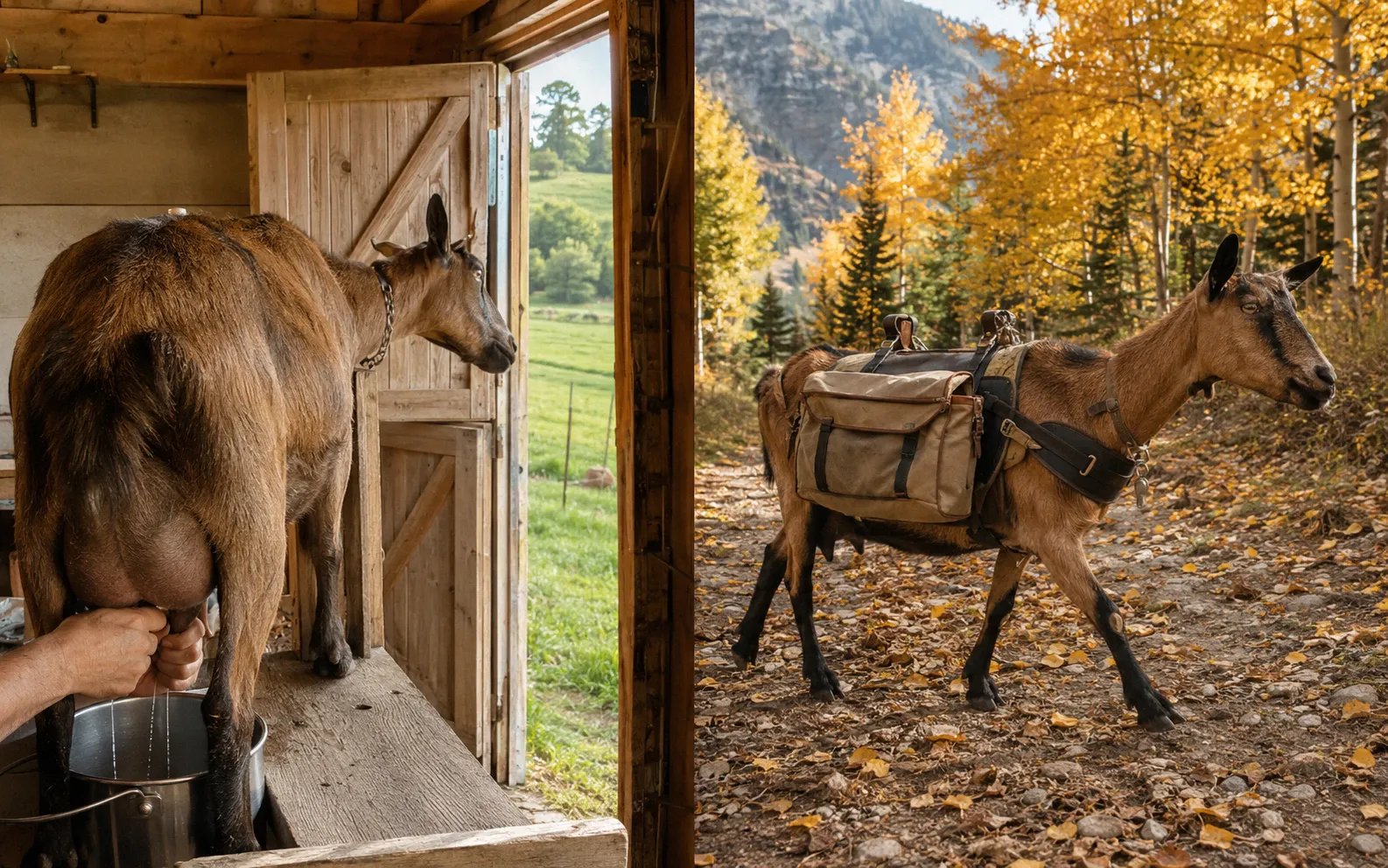
February through March is when you dry off does approaching their kidding date. Taper milking gradually over a two-week period to reduce mastitis risk.
This is also the window to stock the right hay for the increased nutritional demands of late pregnancy.
March through April is kidding season. All trail activity for pregnant and freshly kidded does stops completely.
Focus on neonatal care, colostrum delivery within the first hour, and establishing the twice-daily nursing schedule.
April through September is peak lactation and prime hiking season. Does are milking twice daily and are unavailable for pack work during these months.
Your wethers carry the entire packing load, which works out naturally since summer is when most people hit the trails.
July through August offers the heaviest packing window for wethers. They are in peak physical condition from summer forage, and long daylight hours support extended trail days.
Does in late lactation that have been reduced to once-daily milking may handle short, flat trips with 15 to 20 pounds.
October through November marks the dry period for does that bred in September. Once milking stops and the udder flattens over the following 2 to 3 weeks, these does become available for moderate packing while wethers continue their year-round trail role.
How Far Can a Pack Goat Travel in a Day?
Most conditioned pack goats cover 8 to 12 miles per day on moderate terrain with a working load. Steep mountain trails or heavy brush cut that range to 5 to 7 miles, and rest days every third day keep joints and hooves sound on longer backcountry trips.
Feeding a Goat That Works and Produces Milk
A goat splitting her energy between making milk and hauling gear burns through feed faster than you’d expect. Underfeed a working dairy doe and you’ll see declining milk volume, weight loss, and weakened immune function.
A lactating doe needs roughly 4 to 6 pounds of quality hay per day plus 1 to 2 pounds of grain depending on her production level. Browse and forage supplement the hay ration, but hay should form the backbone of the daily diet.
Alfalfa hay provides the calcium and protein that lactation demands. A doe producing over a half gallon per day needs at least 16% crude protein in her total ration, and alfalfa delivers 15 to 20% protein naturally without the need for expensive concentrate feeds.
During the dry period when she transitions to pack work, you can scale back the grain ration and shift to a grass hay base. Packing burns calories through sustained walking and load-bearing, but the energy demand is lower than active milk production.
Trail nutrition matters on multi-day trips. Carry a supplemental grain ration of 1 to 1.5 pounds per day per goat and allow them to browse along the route.
Most goats eat 6 to 8 hours per day when given access to diverse forage, so schedule long lunch breaks near meadows or brushy areas.
Loose minerals are non-negotiable year-round. Calcium, phosphorus, copper, and selenium are the four critical minerals to monitor.
A goat packing in selenium-deficient soil regions, which includes most of the Pacific Northwest and Great Lakes areas, needs supplemental selenium or she risks white muscle disease.
Fresh water consumption increases by 30 to 50% during heavy lactation and by a similar margin during strenuous pack work in warm weather. On the trail, plan water stops every 2 to 3 miles when temperatures climb above 75 degrees Fahrenheit.
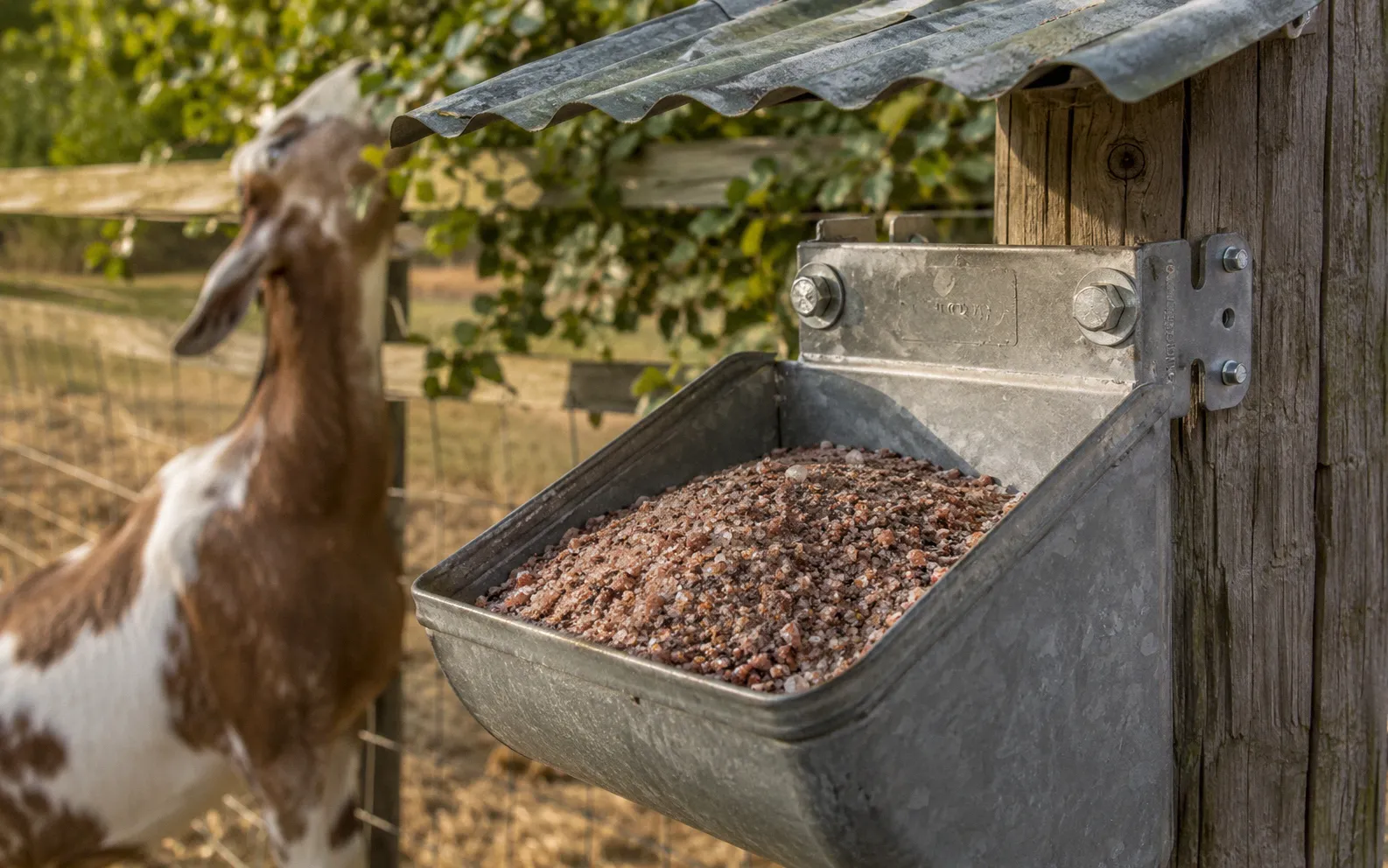
Salt blocks alone won’t cut it for sodium. Goats can’t lick enough salt from a block to cover their daily needs, so provide loose salt blended with your mineral supplement in a covered trough or wall-mounted feeder.
Body condition scoring tells you whether your feeding program is keeping up. Run your hand over the goat’s ribs, spine, and hip bones monthly.
You should feel the ribs with light pressure but not see them. Visible ribs mean the doe is losing condition and needs more calories before she works again.
Electrolyte supplements become critical during hot-weather pack trips. A goat carrying 25% of her body weight up a mountain trail in 85-degree heat can lose significant electrolytes through respiration and panting.
Oral electrolyte powder mixed into water at rest stops prevents dehydration and performance collapse.
Equipment That Pulls Double Duty
Most dual-purpose setups need just four core items: a cross-buck saddle, soft panniers, a portable milking stand, and hobbles.
The gear investment is smaller than you’d think. A handful of items work just as well in the milking parlor as they do on the trail.
A cross-buck saddle is the standard pack saddle design for goats. It distributes weight across the shoulders and ribcage through two X-shaped wooden or aluminum frames connected by leather or nylon webbing.
A quality cross-buck runs $150 to $300 and lasts for years with basic leather conditioning.
Soft-sided panniers attach to the saddle and hold your gear in separate compartments. For dairy does doing occasional pack work, choose panniers with high bottom clearance so they do not press against the udder when the goat moves over uneven ground.
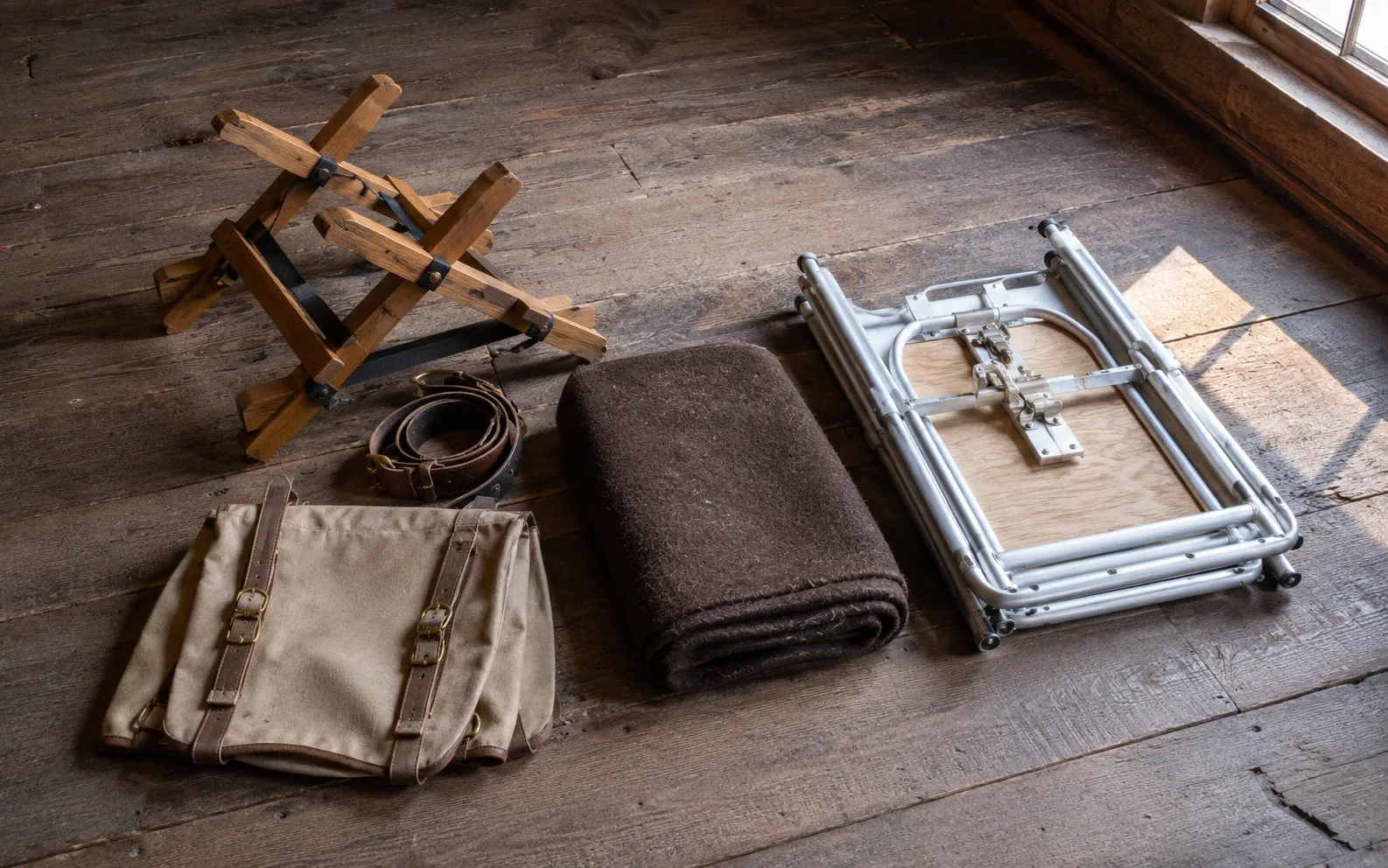
A portable milking stand is essential if you plan to milk during multi-day trips. Collapsible aluminum stands weigh 15 to 20 pounds and fold flat for packing on a wether.
The doe stands on the platform while you milk, and the stand doubles as an elevated feeding station in camp.
Hobbles work the same in both settings. On the milking stand, they keep a fidgety doe from kicking the bucket.
On the trail, they prevent a loose goat from wandering into hazardous terrain during overnight camps.
Neoprene or wool saddle pads prevent chafing during pack work and fold into cushions for the milking station. They conform to the goat’s body and wick moisture, reducing fungal infection risk under the cinch.
Hoof picks, trimming shears, and a first aid kit travel with you whether you’re heading to the milking parlor or a remote trailhead. Hoof condition matters more than almost any other factor.
A lame goat can’t carry weight or walk out of the backcountry on her own.
Do Pack Goats Need Hoof Boots?
Pack goats generally don’t need boots on dirt and grass trails, but rocky terrain above the treeline wears hoof walls faster than they grow. Carry a set of goat-specific trail boots for extended trips on sharp volcanic rock or talus fields where hoof wear outpaces natural growth.
Protecting the Udder Under a Pack Saddle
Udder damage is the single biggest risk when you use a dairy doe for packing. One badly fitting saddle can cause bruising, tissue scarring, or teat injuries that permanently reduce milk production in the following lactation.
The cinch is where trouble starts. It wraps around the goat’s barrel just behind the front legs and needs to sit well forward of the udder at all times.
If the cinch slides backward during steep descents, it presses directly against mammary tissue.
Anti-slip cinch pads and breast collars prevent that rearward migration. A breast collar anchors the saddle’s front to the chest, stopping the rig from shifting backward on sustained downhill sections.
Udder conformation determines how much clearance exists between the saddle and the mammary system. Does with tight, high-set udders that tuck up between the rear legs are ideal for packing.
Pendulous udders that hang low and swing laterally contact the panniers and chafe with every stride.
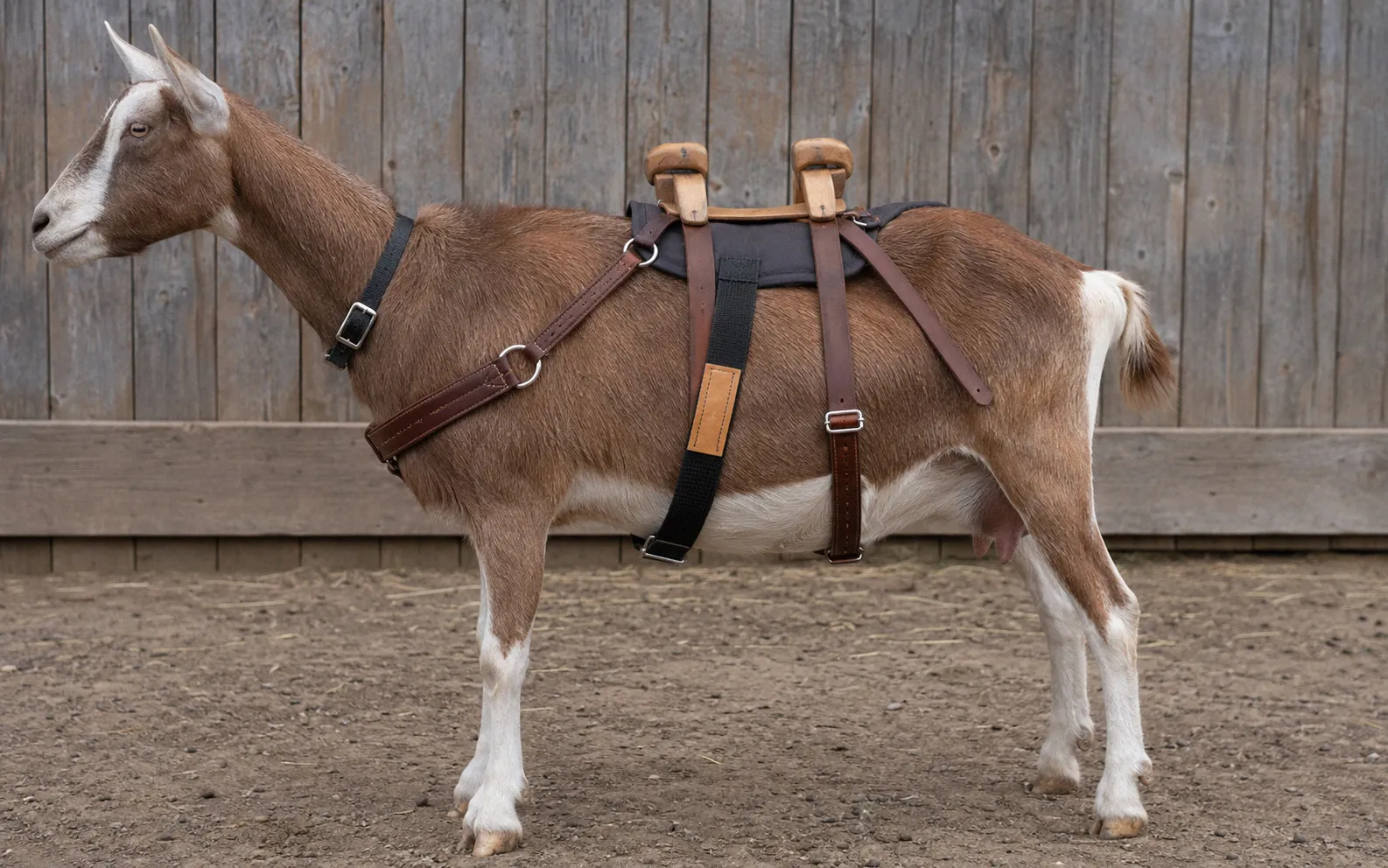
If you breed specifically for dual-purpose animals, select bucks whose daughters consistently produce tight, well-attached udders. Udder attachment scores from the ADGA linear appraisal system give you hard numbers on this trait, so you’re not guessing when choosing a sire.
Between trips, inspect the udder for heat, swelling, or asymmetry. Any sign of mastitis after a pack trip means the saddle fit needs adjustment or the terrain was too demanding before you take that doe out again.
During the final 4 to 6 weeks of lactation, the shrinking udder creates enough natural clearance for most saddle designs. This is the sweet spot for combining light pack duty with the tail end of milk production before the dry period begins.
Starting a Dual-Purpose Herd From Scratch
Building a herd from scratch isn’t complicated if you start with the right animals and a clear goal. Impulse purchases at farm auctions lead to mismatched genetics and disappointment within the first season.
Begin with two registered does from a reputable ADGA breeder. Registered animals come with production records, health testing documentation, and known pedigrees that help you predict both milk output and mature body size.
Choose a breed that aligns with your primary objective. If packing is your main activity and milk is a side benefit, start with Alpines for their frame and trail aptitude.
If dairy production is the priority and packing is seasonal, Saanens or Nubians give you higher volume or richer butterfat.
Buy your first wether from a pack goat breeder who selects for size, temperament, and trail willingness. A bottle-raised wether that’s imprinted on humans will follow you without a lead rope, and that bond is the foundation of good pack goat behavior.
Raise kids from your own does as the herd grows. Wether kids from your dairy does can enter the pack string at 18 months with an empty saddle and reach full working capacity by age 3.
Doeling kids expand your milk line and provide breeding flexibility.
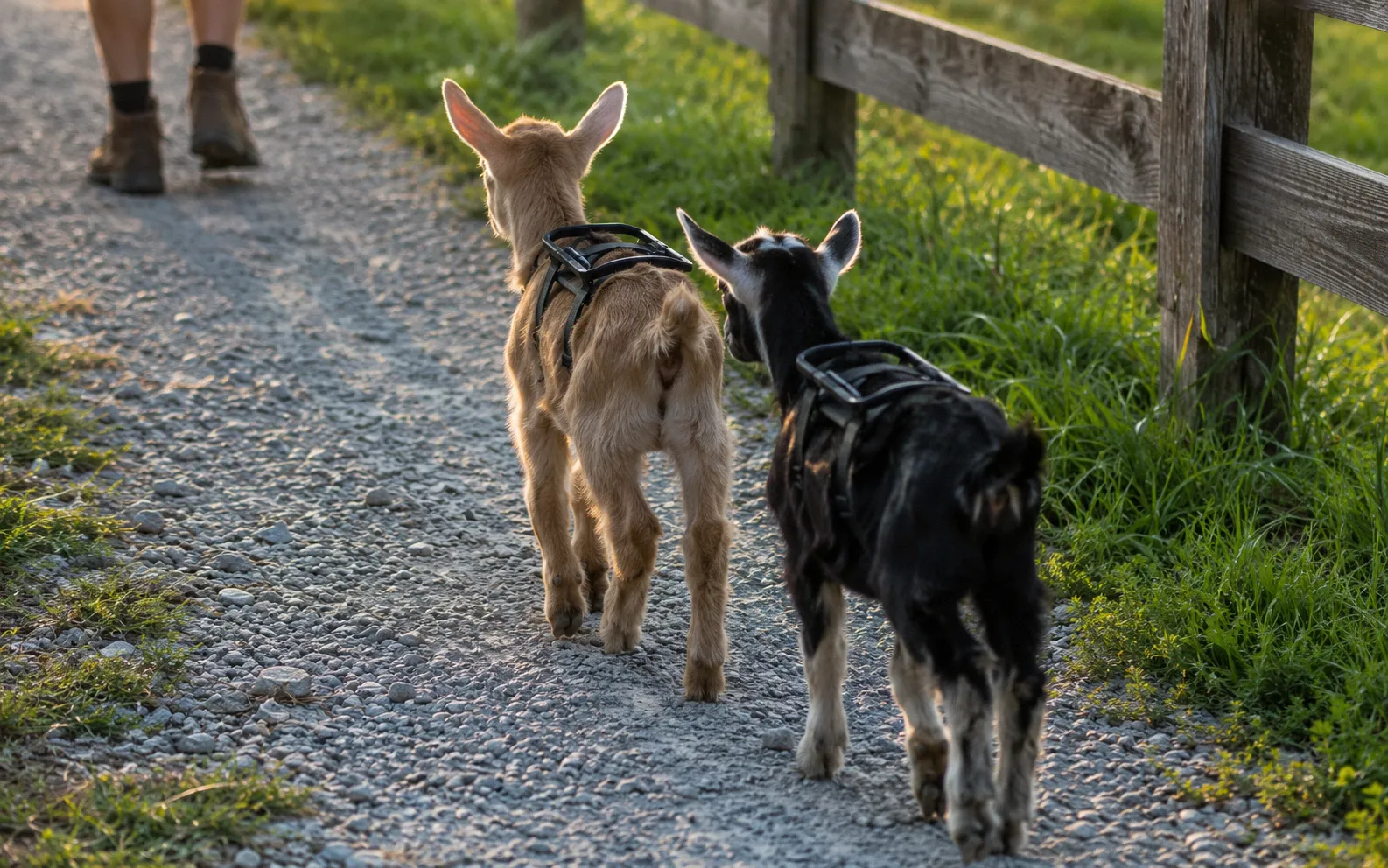
Plan your barn and pasture infrastructure for separation from the start. Breeding bucks need their own space away from does and wethers because of scent and aggression.
Kidding pens should be isolated for biosecurity, and a shared pasture for does and wethers during the day keeps the herd social.
Budget $300 to $500 per registered doe, $150 to $250 per wether from pack lines, and $200 to $400 for a saddle and pannier setup. Your first-year investment for two does and two wethers runs roughly $1,500 to $2,500 including equipment.
That investment pays back through milk savings, trail utility, and surplus kid sales. A registered doeling from proven lines can bring $400 to $600, which offsets annual feed costs.
Socialization is what most new owners skip, and it shows on the trail. Goats that spend daily time with handlers from birth develop the trust that pack work demands.
Spend at least 15 to 20 minutes per day handling each kid during its first 3 months, including touching hooves, ears, and the barrel area where the saddle will eventually sit.
Fencing requirements for a dual-purpose herd are straightforward but firm. Cattle panels or welded wire fencing at least 4 feet high keeps standard-sized dairy breeds contained.
Goats are escape artists, so reinforce gates with latch clips and inspect fence lines monthly for gaps or weak spots.
Disease Screening for Goats Doing Both Jobs
Dual-purpose goats face exposure risks from both the farm environment and the trail. A disease that might stay contained in a closed dairy herd can enter through contact with wild ungulates or shared water sources on public land.
Test every animal in your herd annually for Caprine Arthritis Encephalitis (CAE). This viral disease causes chronic joint inflammation that destroys a pack goat’s ability to travel over rough terrain and progressively reduces milk production in affected does.
Caseous Lymphadenitis (CL) produces abscesses that rupture and contaminate shared trail areas, milking equipment, and barn surfaces. A CL-positive animal should never be taken on public trails where other livestock or wildlife may graze in the same corridor.
Johne’s disease causes chronic wasting and persistent diarrhea that makes sustained physical effort impossible. It spreads through fecal contamination of feed and water, which means shared water sources along popular trail routes pose a real transmission risk to your herd.
Test for brucellosis before breeding, especially if you acquired animals from auction or private sales without full health histories. Brucellosis causes reproductive failure and can spread to humans through contact with birth fluids or unpasteurized milk.
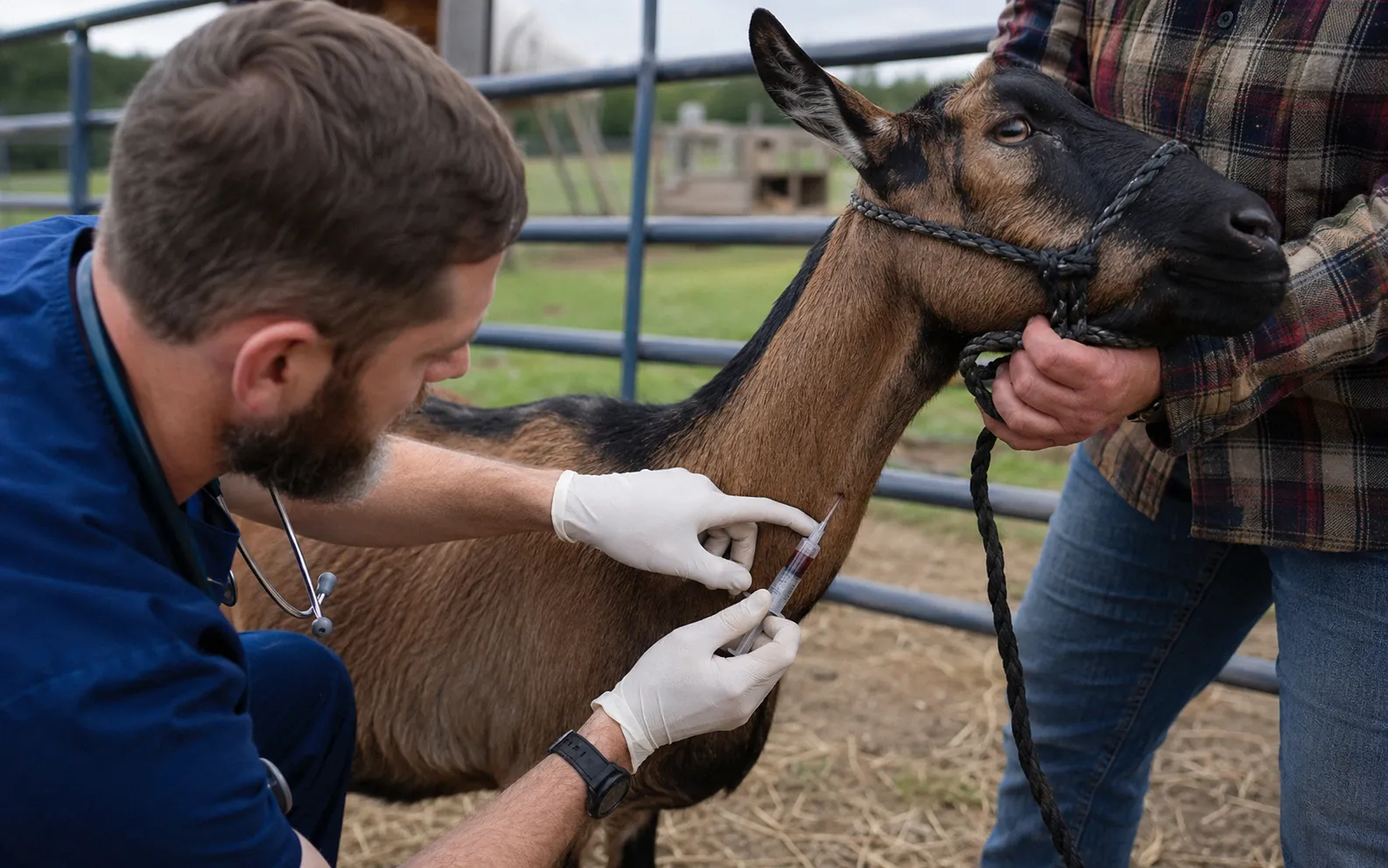
Hoof rot and foot scald are trail-acquired conditions that thrive in wet mountain environments. Pack goats that travel through boggy meadows and snowmelt crossings are at higher risk than goats that stay on dry pasture year-round.
Carry a basic trail first aid kit that includes hoof treatment solution, wound spray, electrolyte powder, and a digital thermometer. A goat’s normal rectal temperature runs 101.5 to 103.5 degrees Fahrenheit, and anything above 104 on the trail warrants immediate rest and evaluation.
Vaccinate with the CDT combination vaccine for Clostridium perfringens types C and D (enterotoxemia) and tetanus. Working goats that consume unfamiliar browse on the trail face a heightened risk of enterotoxemia from sudden dietary changes at high altitude.
Mistakes That Undermine a Dual-Purpose Setup
The mistake people make most often is piling too much weight on a dairy doe’s first pack trip. She might handle the load physically for a short stretch, but the stress can tank her milk production for weeks after she gets home.
Start every doe with an empty saddle and add weight in 5-pound increments over multiple short training outings. A doe that has never carried a pack before needs 3 to 4 practice trips on familiar ground before she handles a working load on real trail terrain.
Skipping the dry period to squeeze out every last drop of milk is another frequent mistake. The mammary tissue needs those 60 days of rest to regenerate the secretory cells that produce milk.
Does that milk straight through without a break produce measurably less in the following lactation and face higher mastitis rates.
Ignoring hoof maintenance cripples pack capacity faster than any other management oversight. A goat with overgrown hooves compensates by shifting her gait, which cascades into joint stress, back soreness, and eventually outright refusal to carry weight.
Trim hooves every 6 to 8 weeks throughout the year.
Breeding exclusively for milk volume and hoping the frame follows is a genetics trap. A doe from a line selected purely for udder capacity may carry narrow shoulders, light bone, and poor hoof structure that cannot support sustained trail work under load.
Mixing untested animals into an established herd without quarantine can devastate years of careful work. A 30-day quarantine with CAE, CL, and Johne’s testing protects your investment in healthy breeding and working stock.
Skipping conditioning before packing season is asking for a pulled muscle or worse. Just like a human hiker getting back on the trail after a sedentary winter, a goat needs progressive cardiovascular and muscular conditioning before she carries weight over elevation.
Packing a doe during early pregnancy rounds out the list of preventable mistakes. Many owners do not realize their doe conceived until several weeks into gestation, and the physical stress of hauling a loaded saddle during early embryonic development can cause resorption or spontaneous abortion.
A dual-purpose goat herd works when you respect the lactation cycle, match each animal to its strongest role, and invest in the conditioning and health screening that keeps everyone on the trail and on the milk stand for years to come. Start with the right breed, build the calendar around biology instead of convenience, and the setup pays for itself.
Frequently Asked Questions
You can if the doe is still lactating and you bring a lightweight collapsible milking stand or hobbles. However, most experienced packers prefer to schedule trail trips during the dry period so milking logistics don't cut into hiking time.
Most pack goat trainers introduce an empty saddle at 12 months and begin adding light weight around 18 months. Full loads of 20-25% body weight should wait until the goat reaches full skeletal maturity at about 3 years of age.
No. Only does (female goats) produce milk, and only after they have kidded at least once. Bucks and wethers cannot lactate. Wethers are preferred for dedicated packing because their larger frame and lack of udder make saddle fitting simpler.
A minimum of three works well: two does that you breed on staggered schedules so one is always in milk, and one wether for dedicated pack duty year-round. This setup gives you continuous milk production and a reliable trail animal regardless of season.
Nigerian Dwarfs are excellent dairy goats with high butterfat milk, but they stand only 17-21 inches at the withers and weigh 60-80 pounds. That limits their pack capacity to roughly 15-20 pounds, which is too light for most backcountry trips.