| # | Product | Our Rating | ||
|---|---|---|---|---|
| 1 |  | Best OverallLamb & Goat Bottle with Pritchard Teat | ★★★★★ | Check Price |
| 2 |  | Manna Pro Goat Kid Milk Replacer (4 lb) | ★★★★☆ | Check Price |
| 3 |  | Pritchard Teat Nipples (12 Pack) | ★★★★☆ | Check Price |
Quads show up more often than most goat owners expect. Nigerian Dwarfs throw quads regularly, and certain Boer lines produce them as well.
It’s not the delivery that’s hard. The trouble starts the moment those kids go looking for a teat, and she’s only got two.
The milk math behind feeding four kids
The daily milk demand for four kids ranges from 96 to over 160 ounces depending on breed, and most does peak well below that threshold.
A newborn Nigerian Dwarf kid needs between 24 and 32 ounces of milk per day during its first few weeks. Multiply that by four, and the doe faces a daily demand of 96 to 128 ounces just to keep everyone fed.
Standard-sized breeds push those numbers higher. A Boer kid may require 40 or more ounces per day as it grows, meaning a set of Boer quads could need upward of 160 ounces daily.
Few does reach those production numbers. A strong Nigerian Dwarf produces around six to six and a half pounds of milk per day at peak lactation, which equals roughly 96 ounces and barely covers four kids at the low end of their needs.
That gap only gets worse as the kids grow. By three or four weeks old, each kid drinks more per feeding, but the doe’s output tends to plateau if she isn’t getting enough calories and protein.
Most does hit peak lactation around four to six weeks post-kidding. If she hasn’t caught up by then, supplementation stays part of the routine until weaning.
Which goat breeds can handle quads
Dairy goat breeds with heavy lactation records handle quads best — Saanens and Alpines lead for volume, while Boer does almost always need bottle support.
Not every breed has the udder capacity to keep four hungry kids fed. High-producing dairy lines give you the best odds, while meat breeds almost always need help.
Nigerian Dwarfs produce quads frequently, and does from tested milking lines that yield over a quart and a half daily have a realistic shot at keeping up through the first few weeks. Their milk also has a higher butterfat content, which delivers more calories per ounce.
Nubians and LaManchas bring larger udder capacity and rich milk to the table. A strong Nubian doe at peak lactation can produce a gallon per day, which is enough for quads when the kids rotate on and off the teats efficiently.
Understanding how many babies goats typically have at a time helps set realistic expectations based on your specific breed.
Boer goats face the steepest challenge. Most Boer does produce far less milk than dairy breeds, and four large-framed kids drain their reserves fast.
Supplemental feeding is almost always necessary with Boer quads from the very first day.
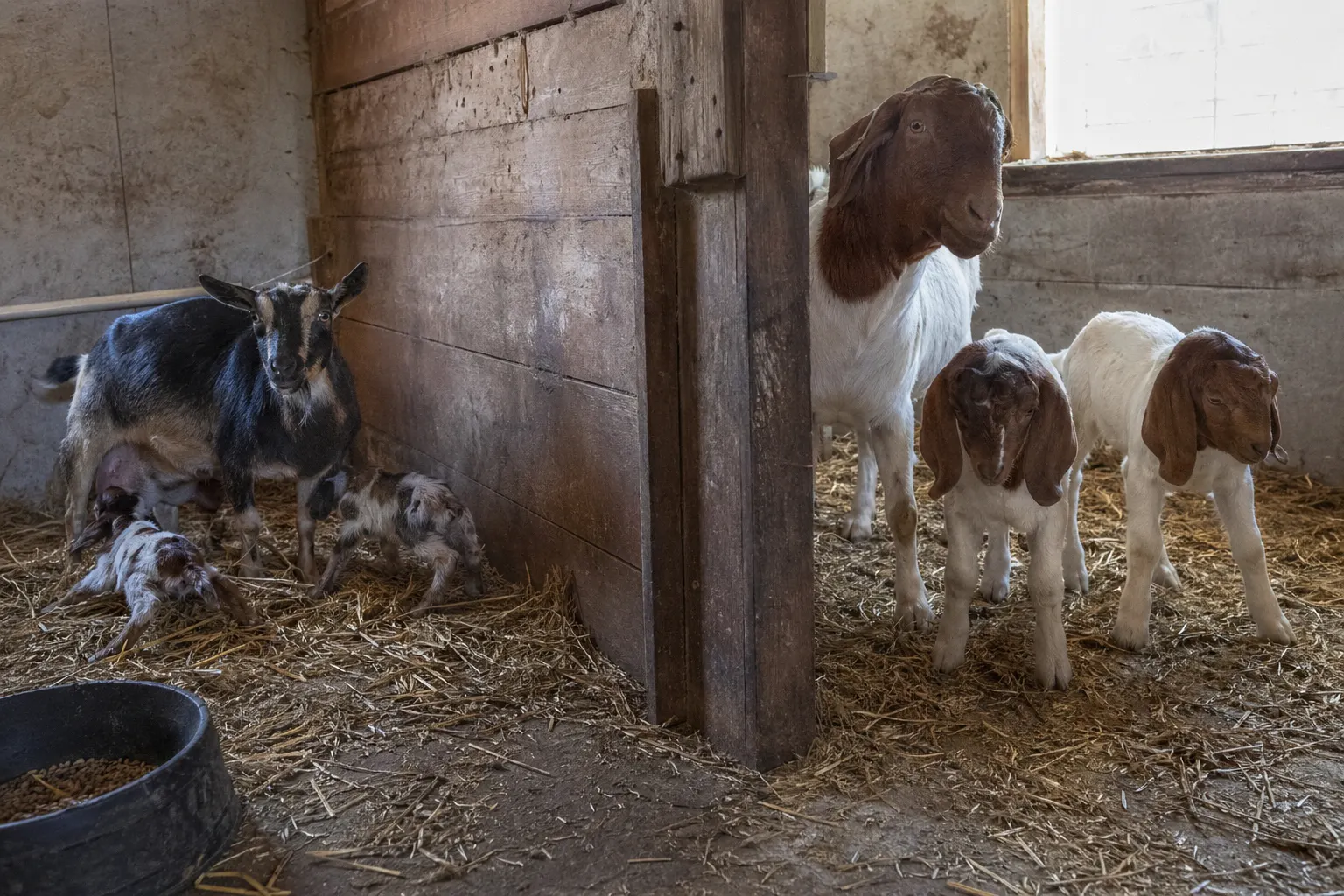
Saanens and Alpines sit at the top for raw milk volume. These Swiss breeds routinely produce over a gallon daily, giving them the best chance at feeding four kids naturally.
If your herd includes Saanens that kid throughout the year, their track record for heavy lactation works in your favor.
Toggenburgs and Oberhaslis are often overlooked, but both are consistent milkers that average around three-quarters of a gallon daily. They won’t outproduce a Saanen, but they hold up well through a full lactation curve and rarely crash in output during weeks three and four when quad demand peaks.
Preparing your kidding setup for quads
Quad births go sideways fast without preparation. Stage your supplies before the doe goes into labor — the first 48 hours set the tone for the entire litter.
Set up two kidding pens side by side, each at least five feet by five feet. One is for the doe and whichever pair of kids is currently nursing, and the second holds the other pair during rotations.
Stock a kidding kit specifically for multiples. You’ll need at least four clean towels, iodine for dipping navels, a bulb syringe for clearing airways, a digital kitchen scale, two Pritchard teats, two bottles, and frozen colostrum from a previous kidding.
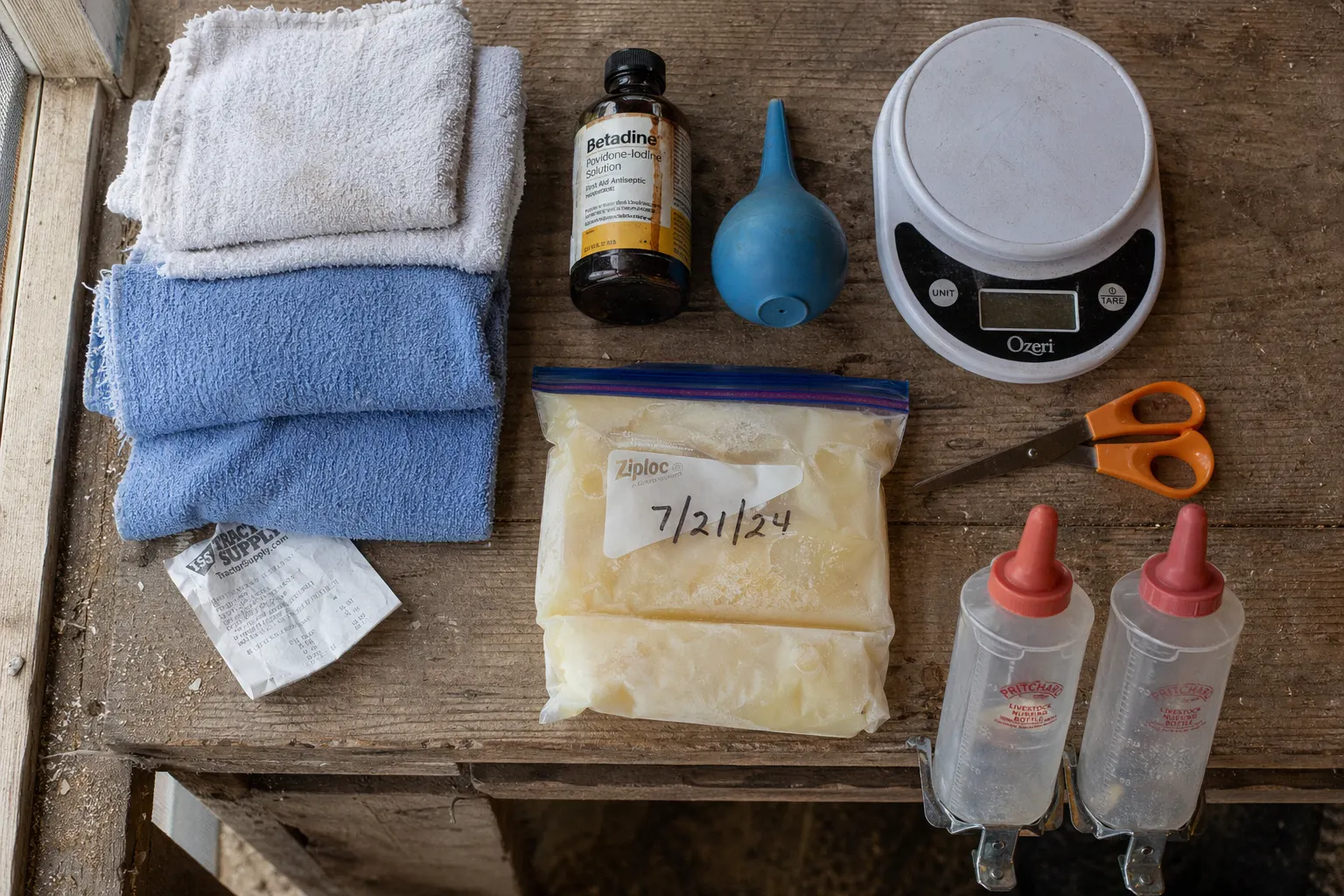
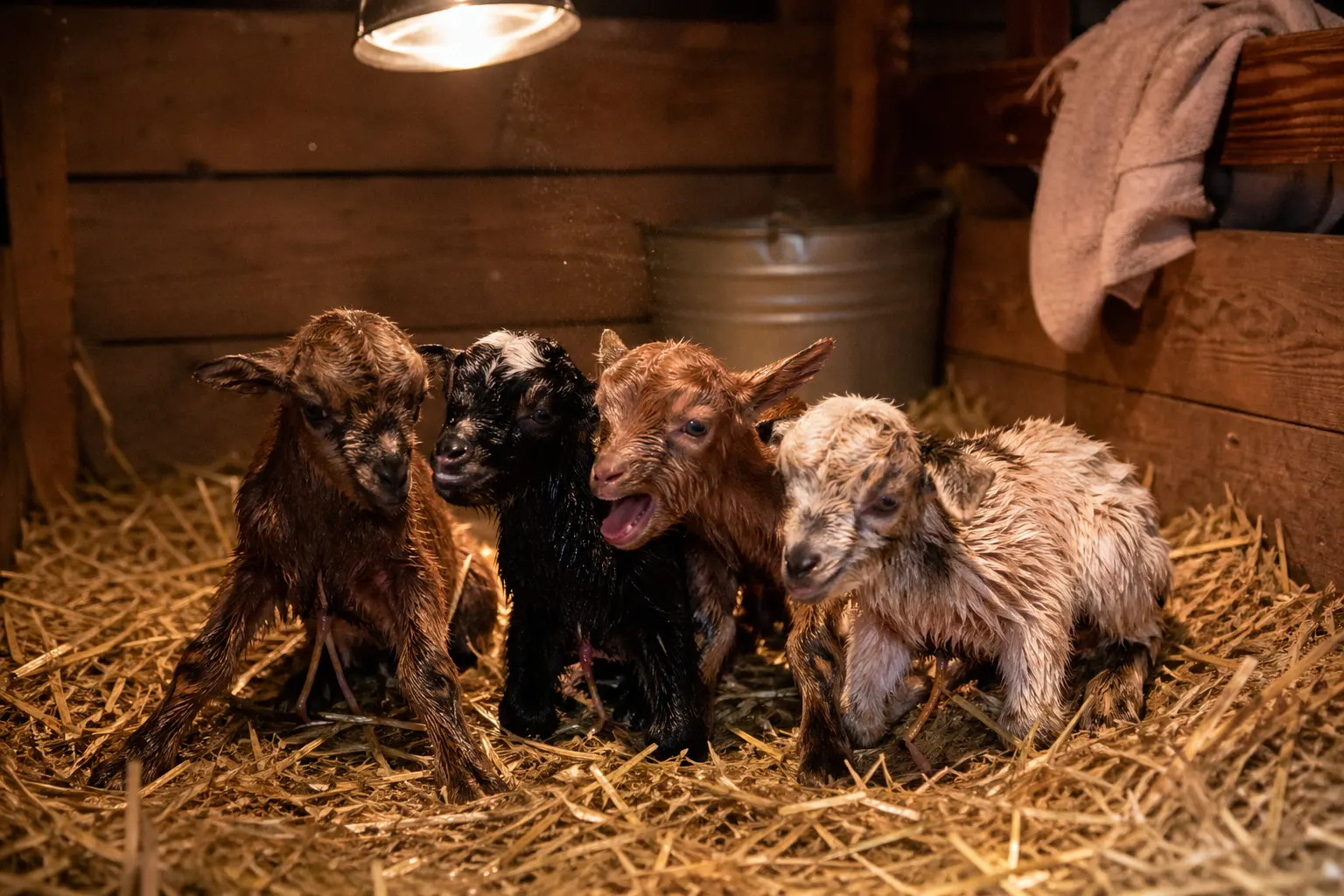
A heat lamp or warming box is worth having on standby, especially for late-winter births. The fourth kid out is often smaller and colder than the rest and may need help regulating body temperature during its first few hours.
If you suspect quads based on the doe’s size at day 120 or a vet ultrasound, start bumping her grain ration two to three weeks before her due date. This pre-kidding nutritional flush helps her body stockpile the energy it’ll need for early lactation.
Log each kid’s birth weight, feeding times, and daily gains in a notebook or phone app. With four kids, memory alone won’t catch one slipping behind.
Bed the kidding pens with thick straw rather than shavings. Straw insulates better and doesn’t stick to wet newborns.
Replace soiled bedding at least twice a day during the first week to keep bacterial exposure low.
If your barn drops below 40 degrees in winter, a warming box with a heat pad set to low is safer than a heat lamp for the smallest kid between nursing rotations.
Colostrum management during the first 48 hours
With only two teats and four kids, a deliberate rotation is the only way to guarantee each newborn absorbs colostrum — and the passive immunity it carries — within the critical first-hour window.
Every kid must receive colostrum within the first one to two hours after birth. This first milk contains antibodies the kids can’t produce on their own, and their gut’s ability to absorb them shuts down within about 24 hours.
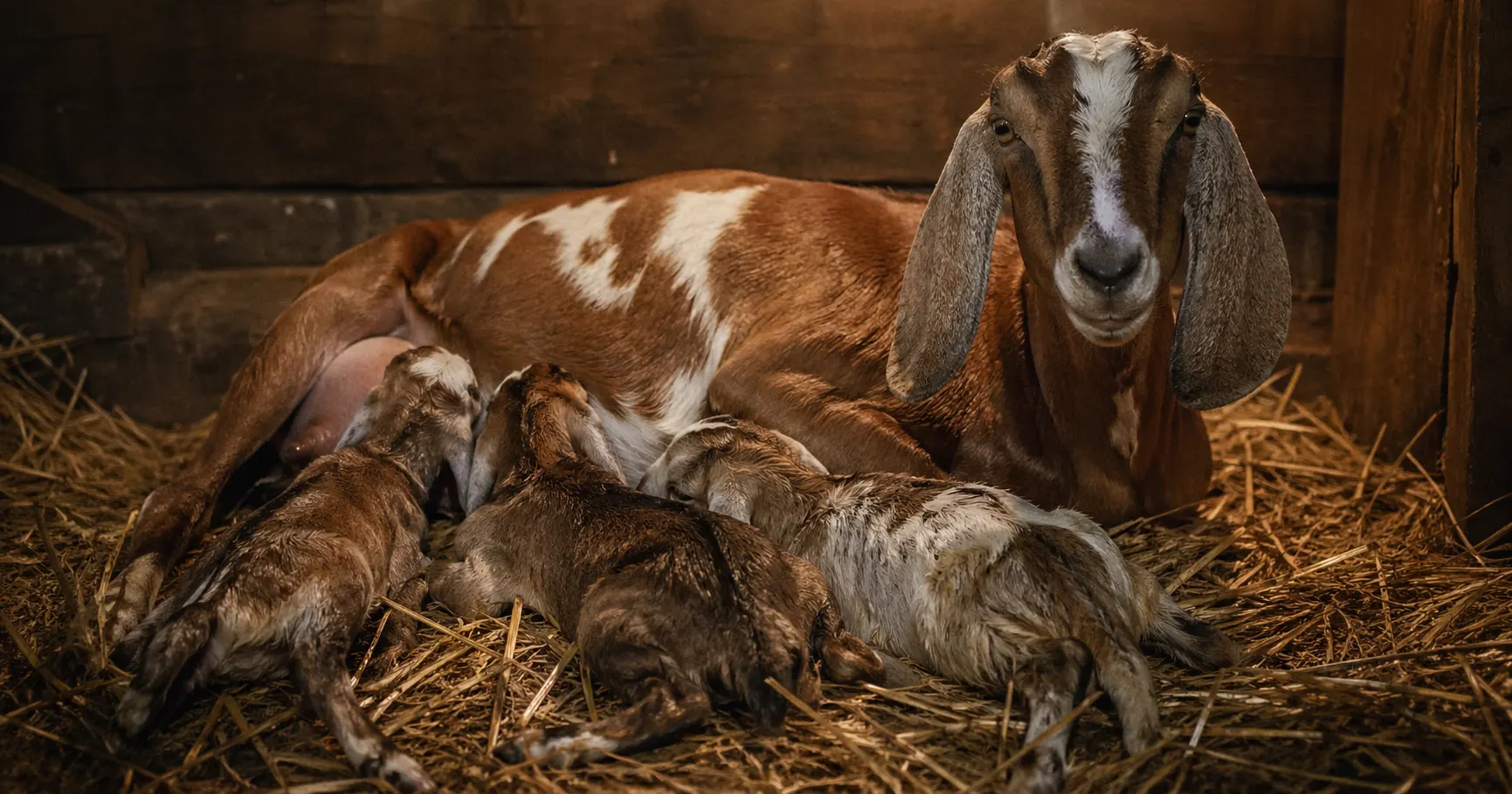
With four kids competing for two teats, the first pair to latch usually gets the lion’s share. The remaining two need help reaching the udder as soon as the first pair finishes.
Hand-milk colostrum into a bottle if the doe is not standing well or if a kid is too weak to latch on its own. Each kid should receive at least 10 percent of its body weight in colostrum over the first 24 hours.
A rotation system works well for quads during this critical window. Let the two strongest kids nurse first, then move them to a small holding pen while the two weaker ones get uninterrupted access to the udder.
Repeat this rotation every two hours for the first full day. It’s a lot of work, but those early hours determine whether each kid picks up enough antibodies to build a working immune system.
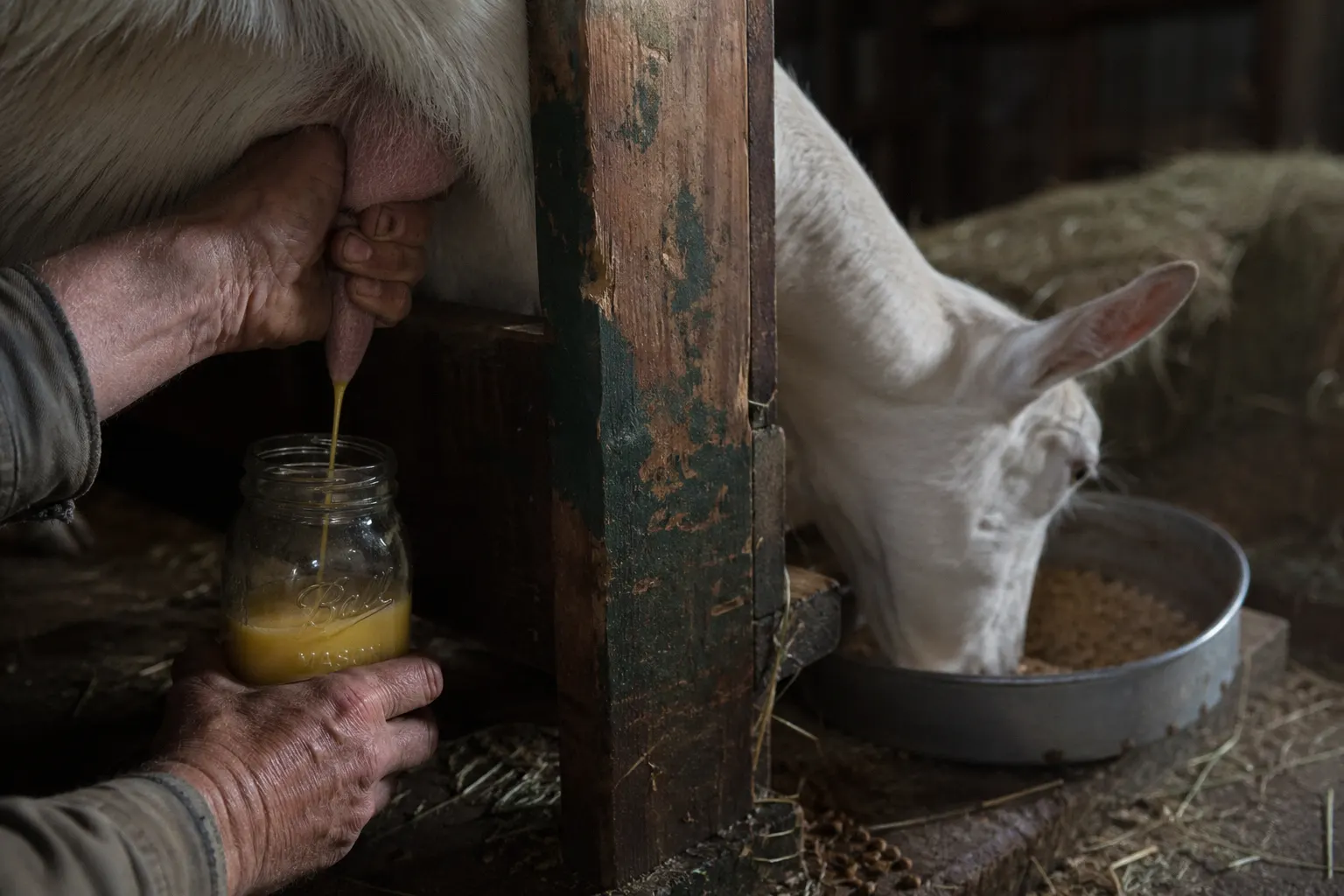
Freeze extra colostrum from another doe in your herd whenever a large litter is expected. The University of Tennessee College of Veterinary Medicine recommends storing colostrum in small portions so you can thaw exactly what you need.
Thaw it slowly in warm water rather than microwaving, since high heat destroys the antibodies that make colostrum valuable.
How to supplement without pulling kids off the doe
A hybrid feeding strategy works best for most quad litters — leave all four kids on the dam and offer supplemental bottles to the weakest kids two to three times daily.
Pulling kids off the doe completely isn’t always the right call. A hybrid approach lets her handle most of the feeding while you fill in the gaps for the kids that need it.
Keep all four kids with the dam around the clock for warmth, bonding, and socialization. Offer a bottle to the smallest one or two kids two to three times per day on top of whatever they get from nursing.
That way, the kids don’t become fully dependent on the bottle, and nobody goes hungry. Kids who keep nursing from their mother also tend to have fewer digestive issues than those raised entirely on replacer.
Fresh goat milk from another doe on your farm is the best supplement. If you only have one lactating doe, whole pasteurized cow milk works well and is far superior to most commercial milk replacers for young kids.
Start with four ounces per supplemental feeding for Nigerian Dwarf kids and six to eight ounces for standard-sized breeds. If the kid drains the bottle and still roots around afterward, bump it up by an ounce at the next session.
Warm the milk to about 101 to 103 degrees Fahrenheit before offering it. Cold milk slows digestion and can cause stomach cramps, especially in kids under two weeks old.
A quick test on the inside of your wrist works the same way it does for human babies.
Pritchard teats are the gold standard for bottle feeding goat kids. The red nipple fits standard soda bottles, and the controlled flow prevents kids from gulping too fast and developing bloat.
Cut the X-shaped slit slightly larger for bigger breed kids that need a faster flow.
Hold the bottle at a slight upward angle so the kid’s neck extends naturally, similar to how it would nurse from the doe. Feeding with the bottle too low forces the kid into an unnatural head position and increases the risk of aspiration pneumonia.
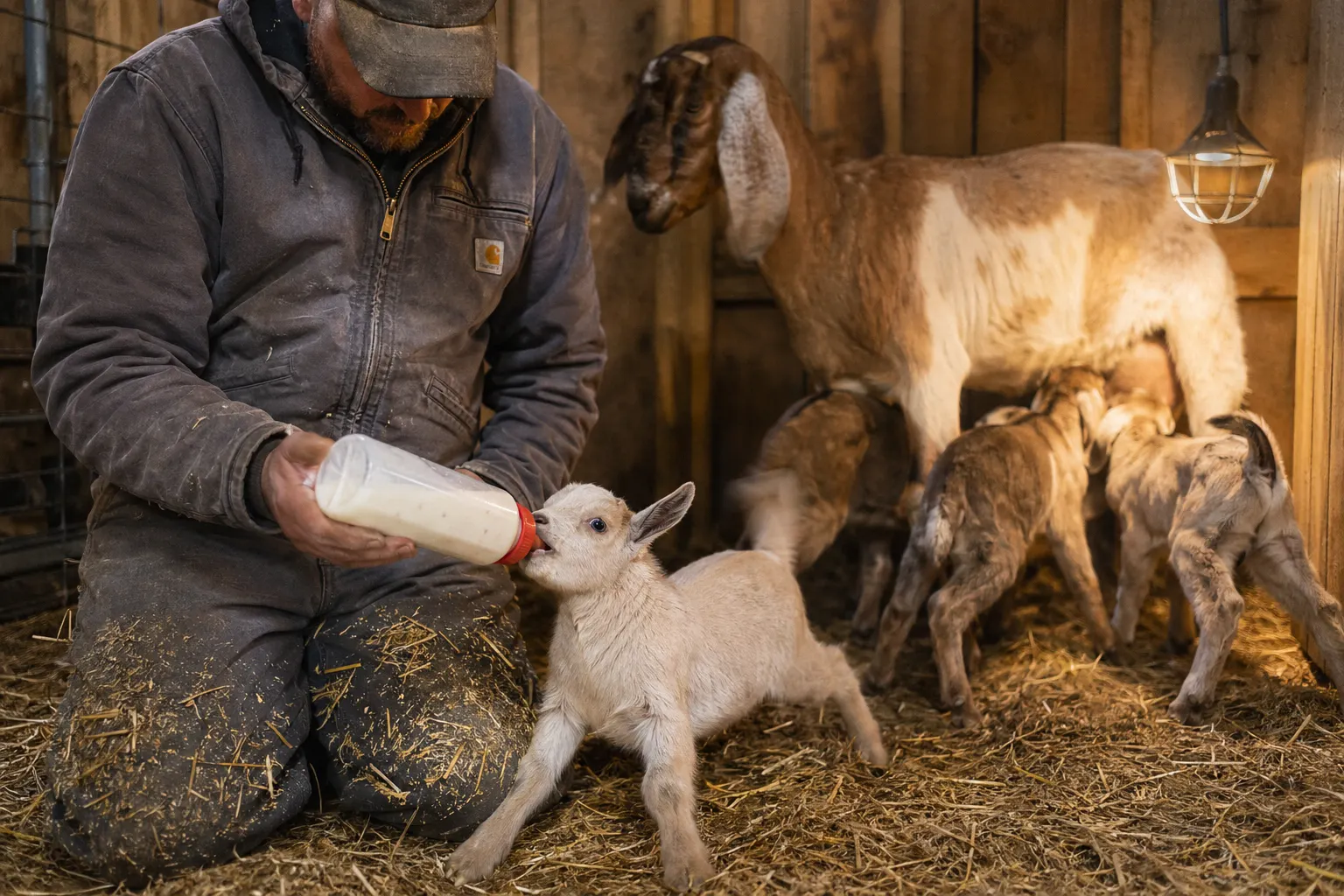
If you know how to transition a bottle-fed kid back to nursing, you’ve got flexibility later when the doe’s production catches up and the extra bottles aren’t needed anymore.
Grafting a quad kid onto another doe
Grafting means transferring one quad kid to a different lactating doe — typically one that kidded with a single or recently lost a kid — to split the nursing demand between two mothers.
If another doe in your herd recently kidded with a single or lost a kid, grafting one of the quads onto her is often the best solution. It takes the pressure off the quad mom and gives the grafted kid a dedicated milk supply.
Timing matters. Grafting works best within the first 24 to 48 hours once both does are done delivering.
After that window, the recipient doe is more likely to reject an unfamiliar kid.
The simplest grafting method is to rub the orphan kid with the recipient doe’s placental fluids or afterbirth. If the afterbirth has already been cleaned up, smear some of the doe’s own milk on the kid’s head and back to mask its scent.
Hold the recipient doe in a stanchion for the first few nursing sessions. Let the grafted kid latch while you keep the doe still, and repeat three to four times per day until she accepts the kid without restraint.
Some does accept a grafted kid within a day. Others need a full week before they stop rejecting the newcomer.
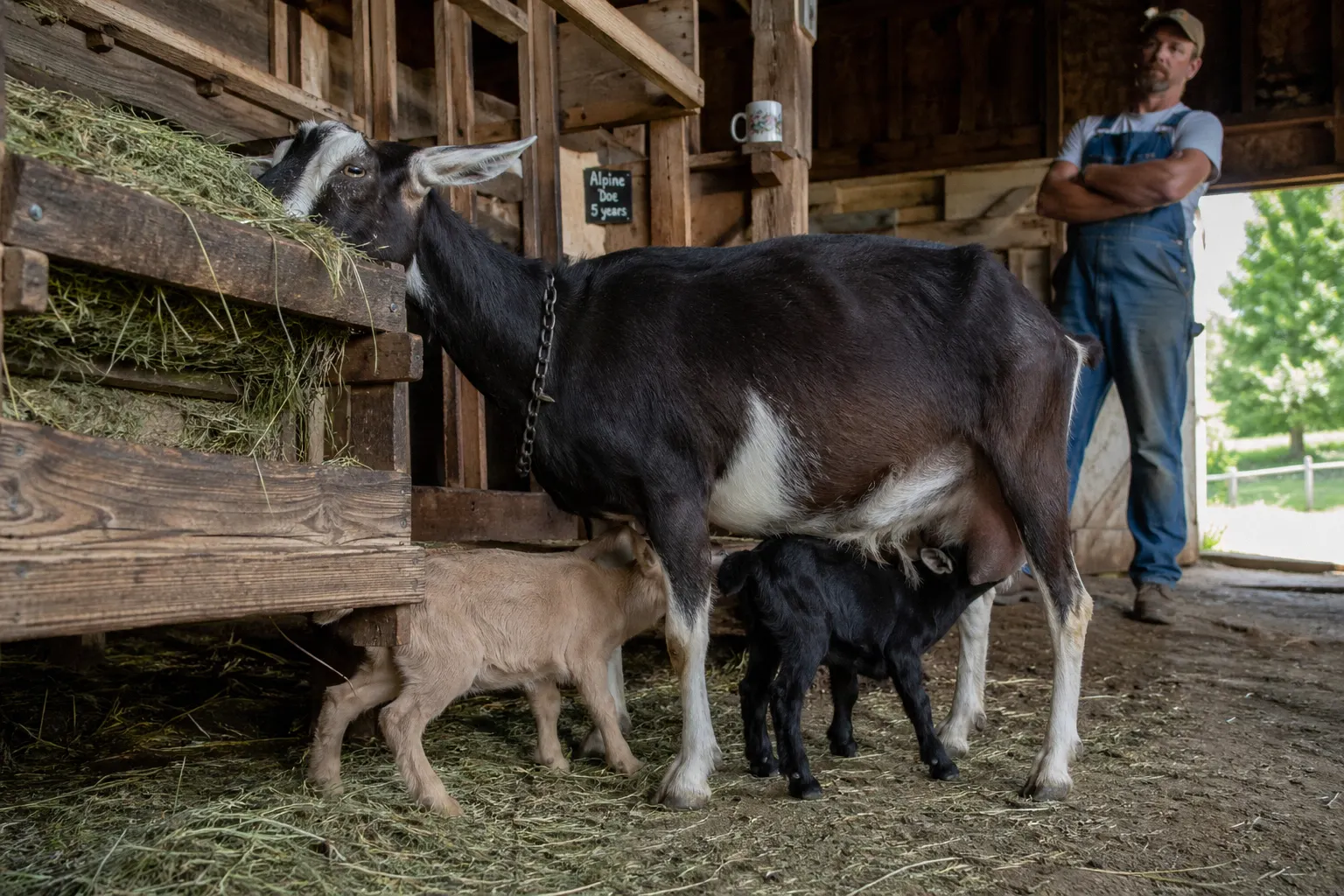
If grafting fails after a week, switch to bottle feeding. Forcing it stresses the recipient doe and can reduce her own milk output.
Co-nursing — where two does share a pen and kids nurse from either mother — is another option. It only works with docile, accepting does, but it’s the lowest-effort way to spread the feeding load without pulling kids to a bottle.
Signs that a kid is falling behind
The three earliest red flags are a hollow belly after nursing, nonstop crying between feedings, and stalled weight gain over two or more consecutive days.
A hollow belly after nursing is the earliest warning sign. Kids that just finished feeding should have a rounded lower abdomen that feels full but not drum-tight.
Constant bleating and restlessness between feedings point to hunger. A well-fed kid sleeps or plays quietly between meals.
One that cries nonstop and tries to nurse off other does or even other kids is not getting what it needs. Pay close attention during the first two weeks when competition for the udder is most intense.
Check for dehydration by gently pinching the skin on the kid’s neck. If the skin tents up and stays there for more than a second or two instead of snapping back flat, the kid is dehydrated and needs fluids on top of milk.
Daily weight checks tell the real story. Use a kitchen scale for Nigerian Dwarf kids and a hanging fish scale for larger breeds.
A healthy kid gains at least two to four ounces per day during the first two weeks. Any kid stuck at the same weight for two consecutive days needs immediate intervention.
A dull coat, lethargy, and a hunched posture usually mean the kid has been underfed for days already. At that point, tube feeding may be the only option if the kid is too weak to suckle from a bottle.
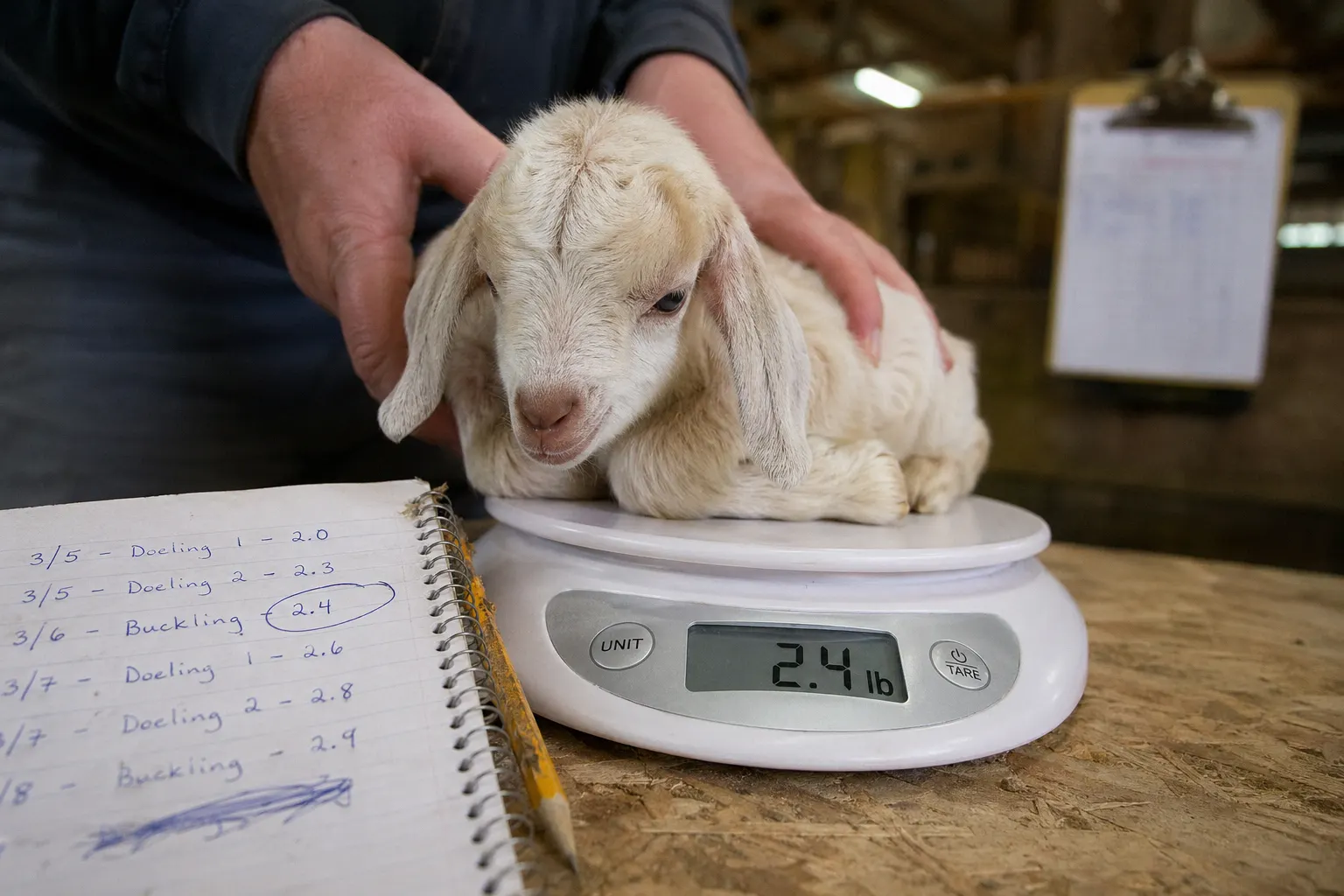
Watch the doe’s udder between feedings as well. If it never looks or feels full, the kids are draining her completely and still likely not getting enough.
When to call a vet for quad kids
Call immediately for hypothermia below 100°F, floppy kid syndrome, retained placenta past 12 hours, or any doe that stops eating within a day of delivery.
Most quad births don’t need a vet, but some situations go beyond what you can handle with a bottle and a scale. Knowing the triggers ahead of time keeps you from second-guessing during a crisis.
Call immediately if a kid’s body temperature drops below 100 degrees Fahrenheit. Hypothermia in newborn quads happens fast, especially with the smallest kid, and warming alone may not be enough if the kid is also hypoglycemic.
Floppy kid syndrome is another emergency. A kid that was nursing fine yesterday but suddenly can’t stand, feels limp, and has a distended belly needs vet intervention within hours.
This condition mimics other problems and is easy to misdiagnose without professional help.
On the doe’s side, a retained placenta that hasn’t passed within 12 hours of delivering the last kid is a vet call. So is any sign of uterine prolapse, heavy bleeding that doesn’t slow within the first hour, or a doe that goes completely off feed within 24 hours of kidding.
Establish a relationship with a goat-experienced vet before kidding season, not during it. Large-animal vets are often booked solid in the spring, and a doe with quads can’t wait two days for an appointment.
A kid that was gaining well and suddenly stops eating or develops watery, foul-smelling diarrhea may be dealing with enterotoxemia or a severe coccidiosis flare. Both conditions move fast in young kids, and quad-born kids with any history of nutritional stress are especially vulnerable.
Keep your vet’s after-hours number saved in your phone. Most quad emergencies happen at night or on weekends, and you don’t want to be searching for contact info while holding a limp kid.
What the doe needs to keep up with four kids
Free-choice alfalfa, gradually increased grain, two to three gallons of water daily, and loose minerals are the baseline — anything less and her milk output drops within hours.
A doe nursing quads burns through calories faster than most first-time owners expect. Her nutritional needs roughly triple compared to when she was dry.
Switch her to free-choice alfalfa hay or alfalfa pellets immediately after kidding. Alfalfa has the calcium and protein she needs to keep her milk production up.
Grain intake should increase gradually over the first two weeks postpartum. A Nigerian Dwarf doe nursing quads may need up to one and a half cups of grain daily, split between morning and evening.
Standard-sized does may need two to three pounds of grain per day, consistent with University of Missouri Extension guidelines for lactating dairy goats. Increase the ration slowly to avoid digestive upset and rumen acidosis.
Fresh, clean water is non-negotiable. A lactating doe can drink two to three gallons per day, and even mild dehydration cuts her milk output sharply within hours.
Put out loose goat minerals in her feeding area instead of a mineral block. Does nursing multiple kids need the extra selenium, copper, and phosphorus that blocks just don’t deliver well enough.
This is especially important if the doe was already nutritionally stressed from a difficult pregnancy where you were watching for signs of partial miscarriage along the way.
Watch for ketosis and milk fever during the first week after delivery. A doe that stops eating, acts sluggish, or grinds her teeth may need a calcium drench or propylene glycol immediately.
Both can turn life-threatening within hours if you don’t catch them. Keep calcium gluconate and propylene glycol on hand before kidding season starts.
Monitor her body condition score weekly by feeling along her spine and ribs. A doe that’s dropping condition despite eating well may need even more calories, or she may have an underlying parasite load that’s competing with her milk production.
Black oil sunflower seeds mixed into her grain ration at about a tablespoon per feeding add fat calories that support richer milk without the acidosis risk that comes with piling on more grain.
When full bottle feeding becomes necessary
Pull a kid to full bottle feeding if it hasn’t gained weight in three or more days despite supplements, or if the doe develops mastitis or refuses to nurse.
Sometimes supplemental bottles aren’t enough, and one or two kids need to come off the doe entirely. Catching that moment early keeps a weak kid from sliding past the point of recovery.
Pull a kid if it has not gained weight in three or more consecutive days despite receiving supplemental bottles. A kid that falls below 80 percent of its siblings’ weight by the end of the first week is unlikely to catch up while still competing for the udder.
If the doe shows signs of mastitis, drops weight fast, or flat-out refuses to let kids nurse, pull at least two off her. Protecting her recovery is how you protect the milk supply for the remaining two.
When transitioning a kid to full bottle feeding, use the schedule below and adjust based on the kid’s weight and appetite.
| Age | Feedings Per Day | Nigerian Dwarf (per feeding) | Standard Breed (per feeding) |
|---|---|---|---|
| Days 1-3 | 5-6 | 2-3 oz | 4-6 oz |
| Days 4-14 | 4 | 4-6 oz | 8-10 oz |
| Weeks 3-4 | 3 | 6-8 oz | 12-16 oz |
| Weeks 5-8 | 3 | 8-10 oz | 16-20 oz |
| Weeks 9-12 | 2 | 10-12 oz | 20-24 oz |
Weaning typically happens between 8 and 12 weeks. A kid that chews its cud, eats at least a quarter cup of grain daily, and maintains steady weight gain is ready to begin the transition off milk.
Rushing the weaning process often leads to coccidiosis and growth stalls. Let the kid’s rumen development dictate the timeline rather than picking an arbitrary date.
During the transition, drop one feeding at a time over a two-week period rather than going cold turkey. A kid that was getting three bottles a day should go to two for a week, then one for another week before stopping completely.
Keep weaned quad kids together in the same pen for the first week off milk. They tend to handle the stress of weaning better when they have familiar pen mates and aren’t suddenly isolated from the group they’ve been with since birth.
Weekly weight targets for quad kids
Weighing on a set schedule is the clearest way to know if your feeding plan is actually working. The benchmarks below apply to kids getting adequate nutrition, whether entirely from the doe or with bottle supplements.
Nigerian Dwarf quads:
- Birth: 2 to 3 pounds
- Week 1: 3 to 4 pounds
- Week 2: 4 to 5 pounds
- Week 4: 6 to 8 pounds
- Week 8: 10 to 14 pounds
Standard dairy breed quads (Nubian, Alpine, Saanen):
- Birth: 5 to 8 pounds
- Week 1: 7 to 10 pounds
- Week 2: 9 to 13 pounds
- Week 4: 14 to 20 pounds
- Week 8: 25 to 35 pounds
Boer quads:
- Birth: 5 to 9 pounds
- Week 1: 7 to 11 pounds
- Week 2: 10 to 14 pounds
- Week 4: 16 to 22 pounds
- Week 8: 30 to 40 pounds
Any kid that falls 20 percent or more below these benchmarks at a checkpoint needs a change in strategy right away. Sometimes the problem traces back to kids that arrived unexpectedly close together, leaving the doe’s body less time to gear up for peak production.
Long-term development of quad-born kids
One of the biggest concerns owners have after the initial survival stage is whether quad kids ever catch up to kids born as twins or singles. The short answer is that most do, but it takes longer than you might expect.
Quad kids that receive adequate nutrition through supplementation or grafting typically reach normal adult weight by eight to ten months of age. Kids that were underfed during the first four weeks, even briefly, often show a permanent size gap that never fully closes.
Birth weight is a strong predictor. A quad kid born at a normal weight for its breed that receives consistent milk access from day one has the same long-term growth potential as any twin-born kid.
The problem isn’t being a quad — it’s the milk deficit that often comes with it.
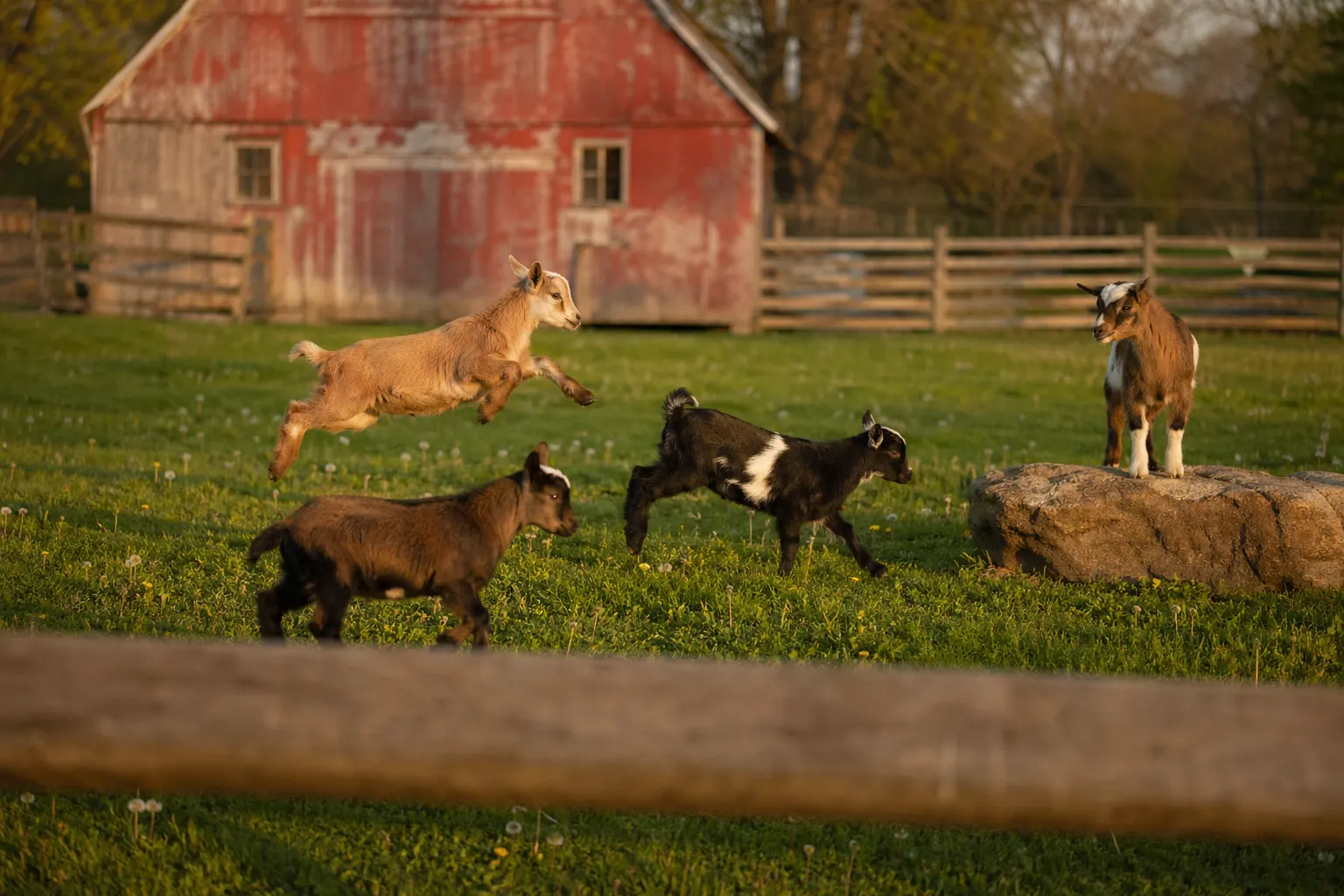
For dairy breeds, does that were born as quads and raised well produce just as much milk as their twin-born herdmates once they freshen. There’s no inherent disadvantage to being quad-born if the nutritional support was there during development.
Meat breed quads are a slightly different story. Boer kids that were runts from a quad litter and fell behind early sometimes never reach the frame size of their siblings.
If you’re selecting replacement does from quad litters, pick from the kids that gained steadily from day one, not the ones that needed rescue at week two.
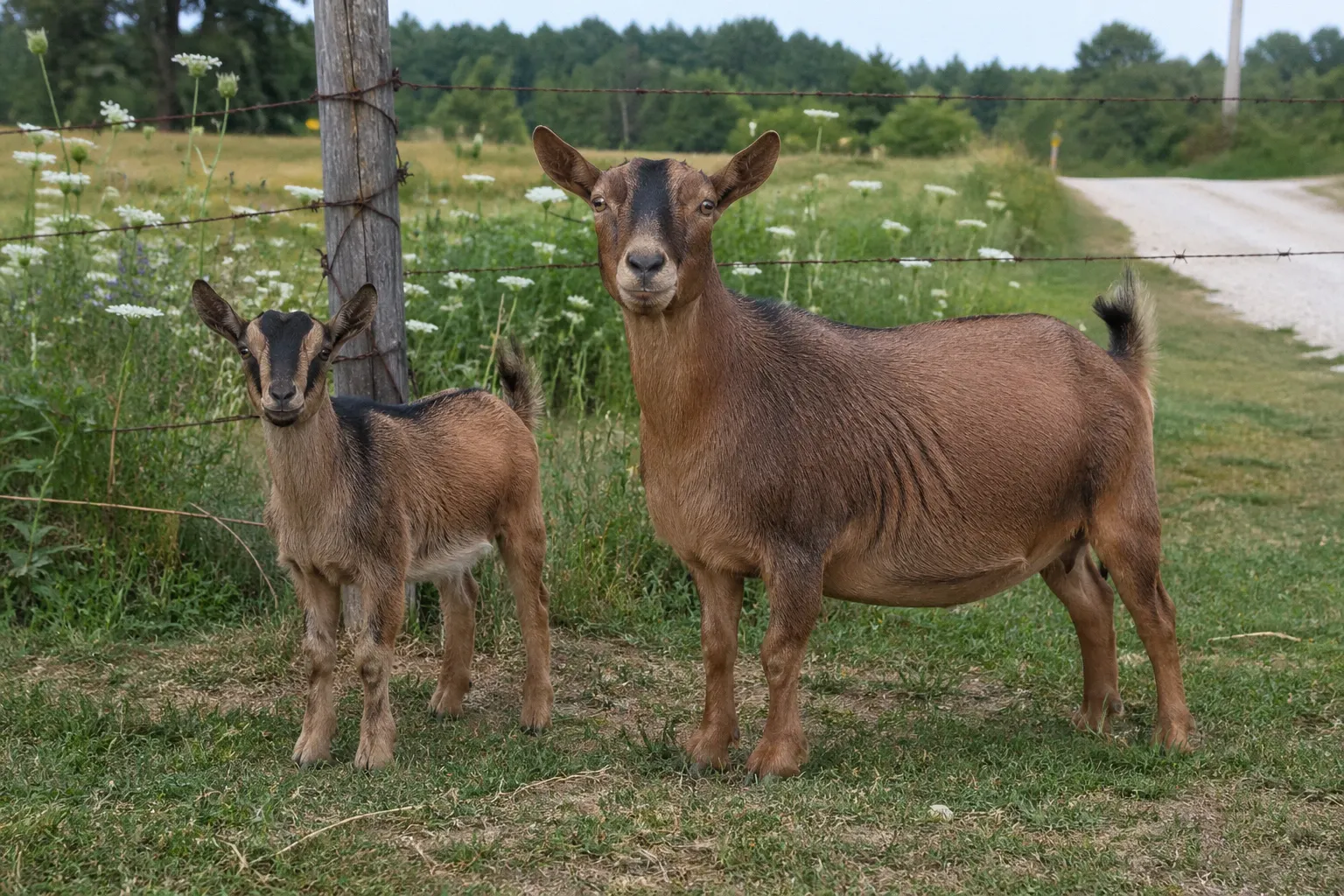
From a breeding standpoint, does that throw quads tend to repeat the pattern in future kiddings. If a doe successfully raised quads in her second freshening, plan for the same or more in year three.
That history should factor into your pre-kidding preparation.
Bucks also play a role in litter size. Some buck lines consistently sire larger litters, so if you’re trying to avoid quads altogether, tracking sire-to-litter-size data across a few seasons can help you make smarter breeding decisions.
For owners who show or sell registered stock, quad-born kids with strong growth records and correct conformation are just as competitive as twin-born animals in the ring. Judges evaluate the animal standing in front of them, not the litter size printed on the registration papers.
Common mistakes owners make with quad kids
Even experienced breeders slip up when quads arrive. These are the patterns that show up again and again on farms that lose a kid or end up with runts that never fully recover.
Assuming the doe can handle it. This is the most common mistake by far.
Owners see all four kids nursing and assume everything is fine.
By the time they notice one kid falling behind, it’s already a week or more into a deficit that’s hard to reverse.
Waiting too long to start supplementing. The window between “this kid is a little small” and “this kid is too weak to nurse” is shorter than most people think.
If a kid isn’t gaining by day three, don’t wait until day seven hoping it’ll turn around on its own.
Using cheap milk replacer. Generic livestock milk replacer causes more cases of scours in quad kids than almost anything else.
If you can’t source fresh goat milk, whole pasteurized cow milk from the grocery store is a far better option.
Overfeeding the doe’s grain too quickly. Jumping her grain ration from a half cup to three cups overnight invites rumen acidosis and can crash her milk supply right when the kids need it most.
Increase by a quarter cup every two to three days.
Skipping the colostrum rotation. When four kids are born and the first two latch immediately, it’s tempting to leave them and deal with the other two later.
Those other two can’t wait.
Every kid needs colostrum within the first couple of hours, and the only way to guarantee it with quads is a deliberate rotation.
Not weighing daily. Eyeballing a kid’s condition is unreliable, especially when you’re comparing four kids against each other.
A five-dollar kitchen scale catches problems that your eyes won’t pick up until days later.
Weaning too early to save time. Pulling the bottle at six weeks because the kid is eating some hay is a gamble that often results in a coccidiosis flare or a growth stall.
Eight to twelve weeks is the safe window for quads, and cutting corners here rarely pays off.
Final Thoughts
Raising quad kids comes down to honest assessment and consistent monitoring. The scale tells you more than your eyes ever will, and it should be your go-to tool from day one through weaning.
Stock frozen colostrum, clean bottles, and quality milk before kidding season starts. Quads born into a prepared setup have a far better survival rate than those born to an owner scrambling for supplies after the fact.
Four kids is more than most does can handle alone, and stepping in with a bottle is not a failure. It is the difference between four thriving kids and one or two that never quite catch up.
The breeders who raise healthy quads year after year aren’t the ones with the best does. They’re the ones who were ready before the first kid hit the ground.
Frequently Asked Questions
Quads are uncommon but not rare, especially in Nigerian Dwarfs and prolific Boer lines. First-time does almost always have singles or twins. Does in their second or third kidding season are more likely to produce triplets or quads.
It is extremely unlikely. First fresheners produce less milk than experienced does and may struggle to nurse even twins adequately. Supplemental bottles are essential with a first-time doe nursing four kids.
Fresh goat milk from another doe is always the best choice. If that is not available, whole pasteurized cow milk works well. Commercial milk replacers should be a last resort because they often cause digestive upset in young kids.
Most quad kids need supplemental bottles for at least four to six weeks. Some does increase production enough by week three that bottles are no longer needed, but daily weighing is the only reliable way to confirm this.