
| # | Product | Our Rating | ||
|---|---|---|---|---|
| 1 |  | Best OverallLamb & Goat Bottle with Pritchard Teat | ★★★★★ | Check Price |
| 2 |  | Manna Pro Goat Kid Milk Replacer (4 lb) | ★★★★☆ | Check Price |
| 3 |  | Pritchard Teat Nipples (12 Pack) | ★★★★☆ | Check Price |
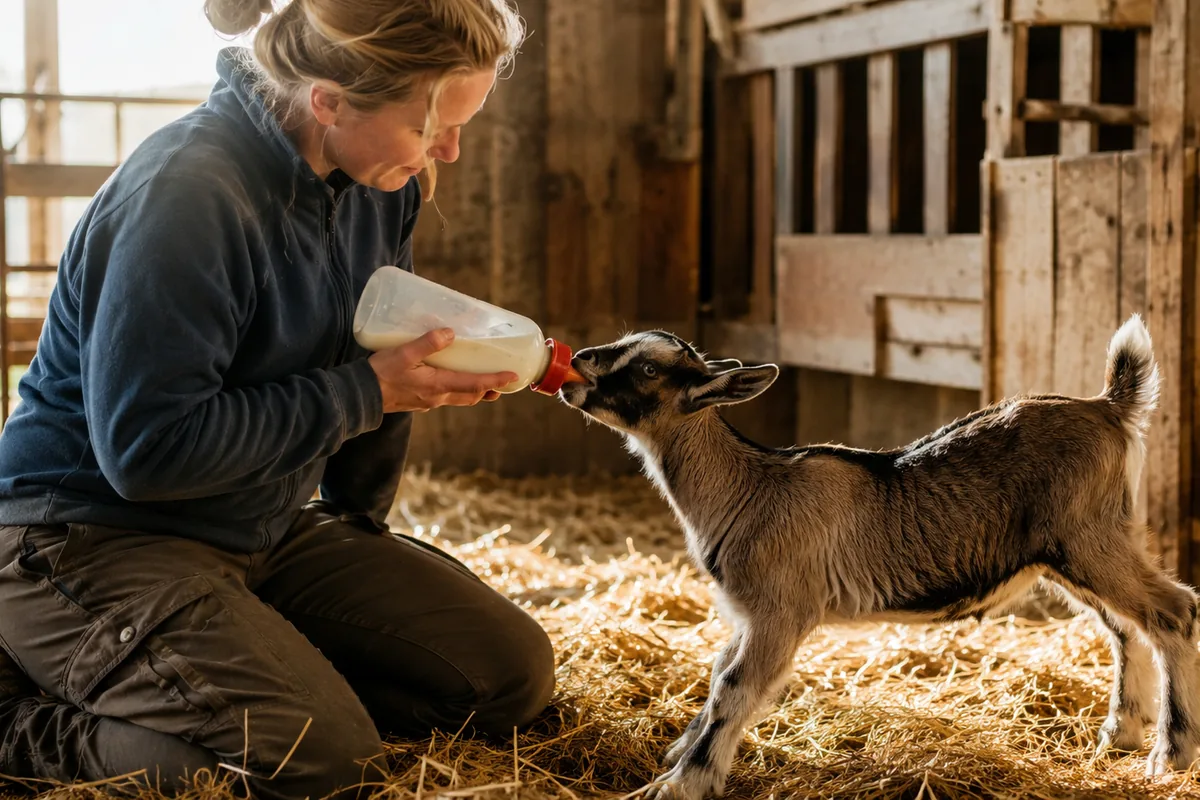
Sooner or later every goat keeper ends up with a bottle baby. A doe rejects a kid, a litter of quads outnumbers the teats, or an orphan lands in your lap, and suddenly you are the milk source.
The job is genuinely easy once you know the amounts, and that is where most new owners go wrong, because kids will happily drink far more than is safe. The chart below is the whole game.
Feed by the numbers, warm every bottle properly, and a bottle baby is one of the most rewarding animals on the farm. If you’re breeding goats, have bottles, teats, and frozen colostrum ready before kidding starts.
Goat Bottle Feeding Chart by Age
Colostrum comes first and is not optional. This antibody-rich first milk is the kid’s entire starter immune system, and in the first 24 hours a kid needs about 10 percent of its body weight in it, roughly 11 ounces for a 7-pound kid, split across several small feedings.
From day two onward, this schedule works for standard-size breeds:
| Age | Amount Per Feeding | Feedings Per Day | Daily Total |
|---|---|---|---|
| Days 1-3 | 2-4 oz | Every 2-4 hours (incl. one overnight) | 12-24 oz |
| Days 4-14 | 6-8 oz | 4 | 24-32 oz |
| Weeks 3-4 | 10-12 oz | 3 | 30-36 oz |
| Weeks 5-8 | 12-16 oz | 2 | 24-32 oz |
| Weeks 8-12 | Taper to one bottle, then none | 1-2 | Weaning |
Scale down by roughly a third to a half for miniature breeds like Nigerian Dwarfs and Pygmies, and judge by body condition rather than appetite. A kid that finishes the bottle and still screams for more is normal; a kid that leaves milk behind twice in a row needs a temperature check.
Warm every bottle to 101 to 103 degrees Fahrenheit, right around goat body temperature. Cold milk causes digestive upset and refusals, and a cheap thermometer beats guessing against your wrist.
What Should You Feed a Baby Goat?
After the colostrum window closes, you have three realistic options. They are not equal, but all three raise healthy kids when handled right.
| Milk Option | Verdict | Notes |
|---|---|---|
| Whole goat milk | Best | Ideal nutrition; raw or pasteurized from your own herd |
| Goat kid milk replacer | Standard substitute | Choose one formulated for goat kids; mix exactly per label |
| Whole cow milk (store) | Workable backup | Whole fat only; some keepers add a little buttermilk or cream |
If you use replacer, mix it precisely and consistently, because ratio drift causes scours faster than almost anything else. Switching between milk types should happen gradually over several days, and the same goes for mixing replacer with cow milk during a transition.
Whatever you feed, never microwave milk into hot spots. Warm bottles in a hot-water bath and shake before the temperature check.
How Often Should You Bottle-Feed a Baby Goat?
The frequency rule is small and often early, bigger and rarer later. Tiny rumens cannot hold much, so newborns need milk around the clock, while a month-old kid does fine on three square bottles.
The overnight question has a forgiving answer. Only the first week or so truly demands a night feeding; by two weeks old, a thriving kid can sleep a 6 to 8 hour stretch, which means you can too.
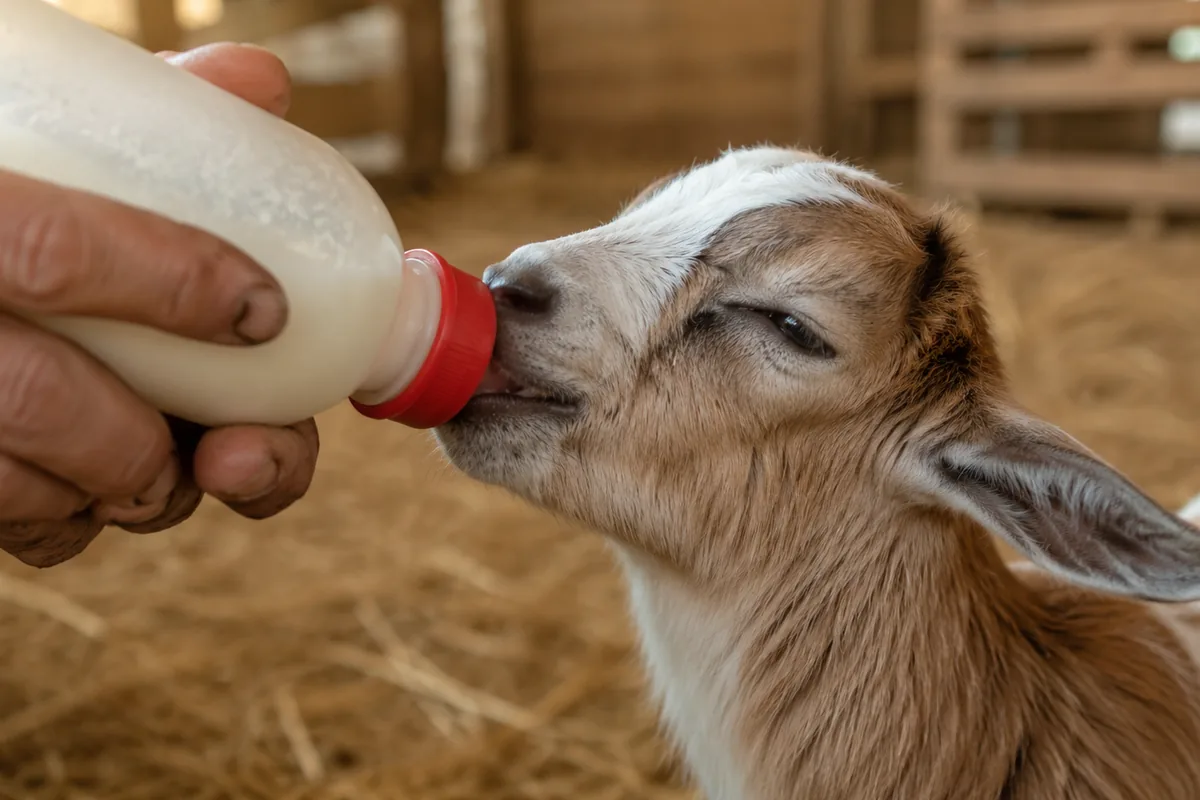
Consistency matters as much as the count. Space the feedings roughly evenly, keep amounts steady from day to day, and make increases gradual rather than jumping a kid two rows down the chart because it seems hungry.
Kids being raised on a doe handle this scheduling themselves, nursing tiny amounts dozens of times a day. The bottle schedule is our practical approximation, and a doe raising quads often needs you to run both systems at once, topping up the smallest kid.
How Do You Get a Kid to Take the Bottle?
A hungry newborn usually latches in seconds, but a kid that has nursed a doe first can fight the bottle hard. Patience and position win.
Hold the kid standing or snug against you, never on its back, and slide the teat in over the tongue with the bottle angled so the neck stretches slightly up and forward, the same posture as nursing. Cup the eyes gently with your free hand if the kid struggles, which mimics the dark of pressing under mom’s flank.
Use a Pritchard-style teat with the flow set so milk drips, not streams, when inverted. If a stubborn kid refuses for more than a feeding or two, dab milk on the teat, try while the kid is sleepy, and keep sessions short rather than wrestling.
Going the other direction is harder: moving a bottle baby back onto a doe takes a willing foster and some scent tricks. Most bottle babies stay bottle babies until weaning.
Overfeeding and Other Common Mistakes
If you remember one thing, make it this: overfeeding kills more bottle babies than underfeeding ever does. A kid’s appetite is not a safety gauge, because bottles flow easier than udders and kids evolved to grab every calorie offered.
Too much milk, too fast, or too cold causes scours, and persistent scours dehydrate a kid alarmingly fast. Keep livestock electrolytes on hand for scouring kids, offered in separate feedings rather than mixed into the milk.
Fast-growing, greedy drinkers between roughly 3 and 10 days old are also the classic floppy kid syndrome candidates, suddenly going limp from metabolic acidosis. If you are raising several bottle babies at once, a multi-nipple lamb bar feeder keeps the chore manageable, but the per-kid amounts still follow the same chart.
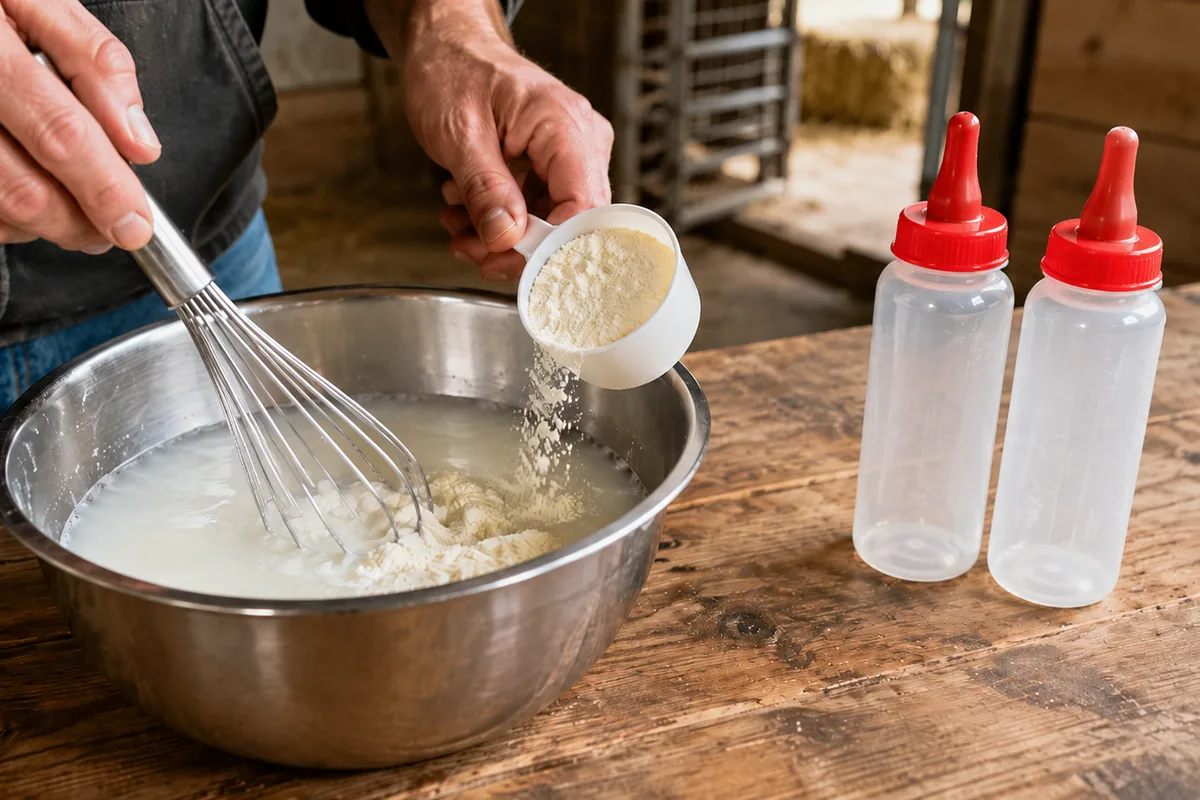
The other classic errors are all avoidable. Skipping colostrum, mixing replacer by eyeball, microwaving bottles, sudden brand switches, and weaning by birthday instead of body weight cause most of the grief in a bottle baby’s first months.
Start offering free-choice hay and a small dish of 16 to 18 percent kid grain by two weeks old, since early nibbling is what builds the rumen. The grain rules for adult goats kick in later; growing kids are the one class that genuinely earns a measured ration.
By 8 to 12 weeks, with the weight targets met and the kid eating solids reliably, taper the bottles off over a week or so. Next season, knowing the signs of goat labor helps you be there when a newborn kid needs help most.
Sources and Further Reading
Compiled and cross-checked against established livestock and extension references:
- Purina Animal Nutrition and Manna Pro kid-raising guidelines
- Langston University, Meat Goat Production Handbook, kid management chapter
- University extension publications (Penn State, Oklahoma State) on artificial rearing of kids
- Merck Veterinary Manual, neonatal ruminant nutrition
Treat the chart as the framework and the individual kid as the final word, adjusting with your vet when growth lags. Feed warm, feed measured, and enjoy it, because nothing on a farm is more persuasive than a bottle baby who knows the schedule better than you do.
Frequently Asked Questions
Newborns eat small and often: 2 to 4 ounces every 2 to 4 hours for the first three days, including at least one overnight feeding. From day four through two weeks, four bottles a day works, then three bottles daily in weeks three and four, and twice daily from week five until weaning. The pattern is simple: amounts go up as frequency comes down.
Only the first few nights truly require an overnight feeding. Newborns up to about a week old should not go much more than 4 to 6 hours without milk, but by two weeks a healthy, well-fed kid can comfortably sleep a 6 to 8 hour overnight gap. If a kid is weak, chilled, or was a difficult delivery, keep the night feedings going a little longer.
The homestead standard is a regular bottle fitted with a Pritchard teat, the small red rubber nipple with a yellow screw-on base. Its size and flow suit newborn kids far better than calf nipples, which are too large and flow too fast. Keep spares on hand, because kids chew through nipples, and always check that milk drips rather than streams when the bottle is inverted.
Overfeeding is the most common bottle-baby mistake and causes scours, painful bloat, and in fast-growing kids a condition called floppy kid syndrome. A kid will eagerly drink past full because the bottle flows easier than an udder, so you have to be the portion control. Stick to the chart amounts, warm the milk properly, and resist the begging, because a slightly hungry kid is far safer than an overfed one.
Most kids wean at 8 to 12 weeks, but weight and rumen development matter more than the calendar. A standard-breed kid should reach 30 to 40 pounds and a Nigerian Dwarf 15 to 20 pounds, while reliably eating hay, nibbling kid grain, and drinking water before the last bottle disappears. Wean gradually by dropping to one bottle daily for a week rather than stopping cold.