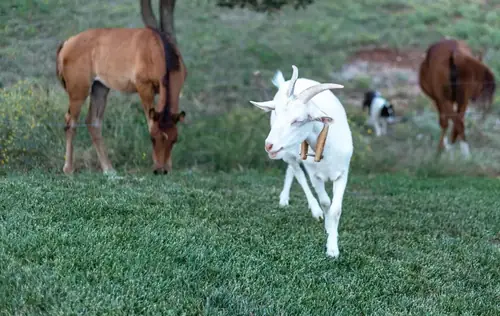
Yes, mini horses and goats make great pasture companions. Plenty of small farm owners keep them together on purpose, and the pairing works well as long as you manage a few key differences.
Can mini horses live with goats?
Mini horses and goats are close enough in size that the injury risk from kicking or rough play stays low. Both animals are social and do poorly when kept alone, so they fill each other’s need for companionship.
The pairing works best when you have at least two goats alongside the mini horse. A single goat and a single mini horse can bond, but goats are herd animals and do better with at least one buddy of their own species.
If you add sheep to the mix, keep them off goat minerals, since the copper can poison sheep.
Why mini horses and goats make good companions
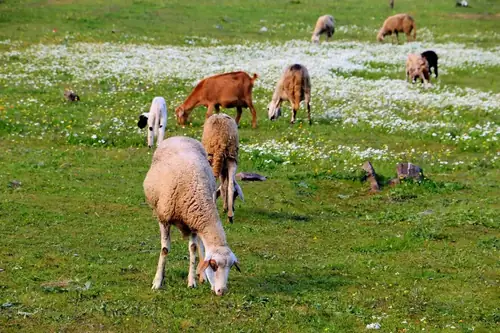
They graze differently, which is actually a benefit. Horses eat grass down low while goats prefer to browse on brush, weeds, and leaves up higher.
This means they don’t compete much for food and together they keep pastures cleaner than either animal would alone.
Both species are curious and playful, so they keep each other entertained. Many mini horse owners specifically get goats because a lonely mini horse develops bad habits like cribbing, pacing, and fence-walking.
Keep in mind that goats are natural escape artists and can climb fences if the barrier isn’t goat-proof.
Mini horses can still kick, and a solid kick to a goat can break ribs. Watch for signs of aggression during feeding time, since that’s when most conflicts happen.
Separate feeding stations solve this problem quickly.
Feeding concerns when keeping them together
The biggest danger runs the other way, with the mini horse getting into goat or cattle feed that contains monensin. This ionophore is used in some medicated goat and cattle feeds, and a small amount can kill a horse.
A handful of the wrong feed can kill a goat within hours.
Check every goat feed label, and pick an unmedicated feed if the horse could ever reach it. Better yet, feed each species in its own stall or pen so neither can reach the other’s bucket.
Goats will also happily raid the horse’s grain, which throws off their nutrition and can cause bloat. Sharing horse treats with goats is fine in small amounts if you read the label first.
Keeping feed buckets separated is non-negotiable when housing these animals together.
Fencing and shelter requirements
Goats need much tighter fencing than mini horses. Standard horse fencing with wide-spaced boards or wire won’t hold a goat in for a week.
You’ll need woven wire or cattle panels with openings small enough that goats can’t squeeze through or get their heads stuck.
Shared shelter works fine as long as there’s enough space for everyone. Allow at least 15 to 20 square feet per animal in a run-in shed so nobody gets cornered.
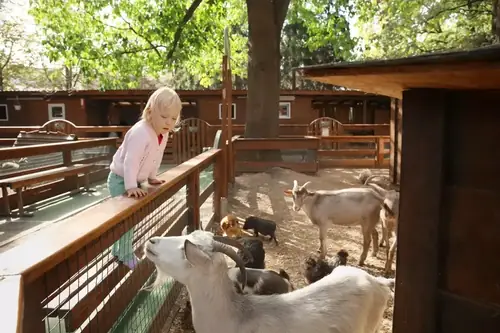
A few owners also house mini pigs alongside fainting goats in mixed barnyard setups.
Make sure the goats have a raised sleeping area or platform inside the shelter. Goats prefer to sleep off the ground, and it gives them a spot to retreat if the mini horse gets pushy.
How to introduce a miniature horse to a goat
Start with a fence line between them for a few days so they can see and smell each other safely. If you also keep a Nigerian Dwarf buck, learning whether Nigerian Dwarfs can live with Nubians follows the same introduction process.
Once the curiosity settles and neither animal seems stressed, let them share a pasture during the day while you can supervise.
Keep first interactions short and watch body language closely. Pinned ears on the mini horse or constant head-butting from the goats are signs you need to slow the introduction down.
Quarantine a new mini horse before introductions, even though strangles rarely jumps to goats.
Most animals sort out the social order within a week. After that, they settle into a routine and largely ignore each other unless it’s feeding time.
Final Thoughts
Mini horses and goats are one of the best multi-species pairings for a small farm. They graze differently, keep each other company, and coexist peacefully once they’ve been introduced properly.
Just keep medicated feed away from the horse, use goat-proof fencing, and give everyone enough space in the shelter. Get those basics right and you’ll have a happy mixed herd for years.
Frequently Asked Questions
Mini horses can live with goats without any problem as long as they have enough space. The two animals are very compatible because they're both social creatures that enjoy the company of others and they're similar in size.
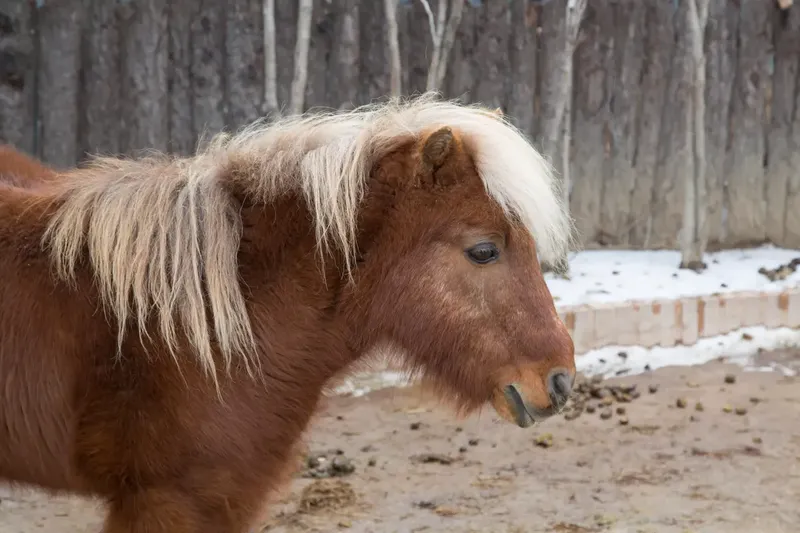
Miniature horses are small equine animals that are typically no taller than 34 inches in height. They have a stocky build and thick coat of hair, which comes in various colors including brown, black, white, and gray.
When keeping mini horses with goats, the most important thing is to keep feed separate. Some goat and cattle feeds contain monensin, an additive that can kill a horse even in small amounts. Always check feed labels and use separate feeding stations.
Miniature horses eat grass and hay as the bulk of their diet. When housed with goats, keep every feed bucket separate, and never let the mini horse near medicated goat feed that lists monensin.