| # | Product | Our Rating | ||
|---|---|---|---|---|
| 1 |  | Best OverallLamb & Goat Bottle with Pritchard Teat | ★★★★★ | Check Price |
| 2 |  | Manna Pro Goat Kid Milk Replacer (4 lb) | ★★★★☆ | Check Price |
| 3 |  | Pritchard Teat Nipples (12 Pack) | ★★★★☆ | Check Price |
Finding out a young Nigerian Dwarf doeling might have been exposed to an intact male sends most first-time goat owners into a panic. It happens more often than you would expect, especially when bucklings stay with the herd a few weeks too long.
The real concern is not whether a 4-month-old can conceive. The concern is what happens to her still-growing body over the next five months if she does.
Nigerian Dwarfs reach sexual maturity weeks ahead of standard goat breeds, and that early fertility catches people off guard. Below, we’ll cover the biology behind early puberty, the real health risks of a premature pregnancy, safe breeding weight and age thresholds, and what to do whether you’re trying to prevent it or already dealing with it.
Can a 4-Month-Old Nigerian Dwarf Doeling Get Pregnant
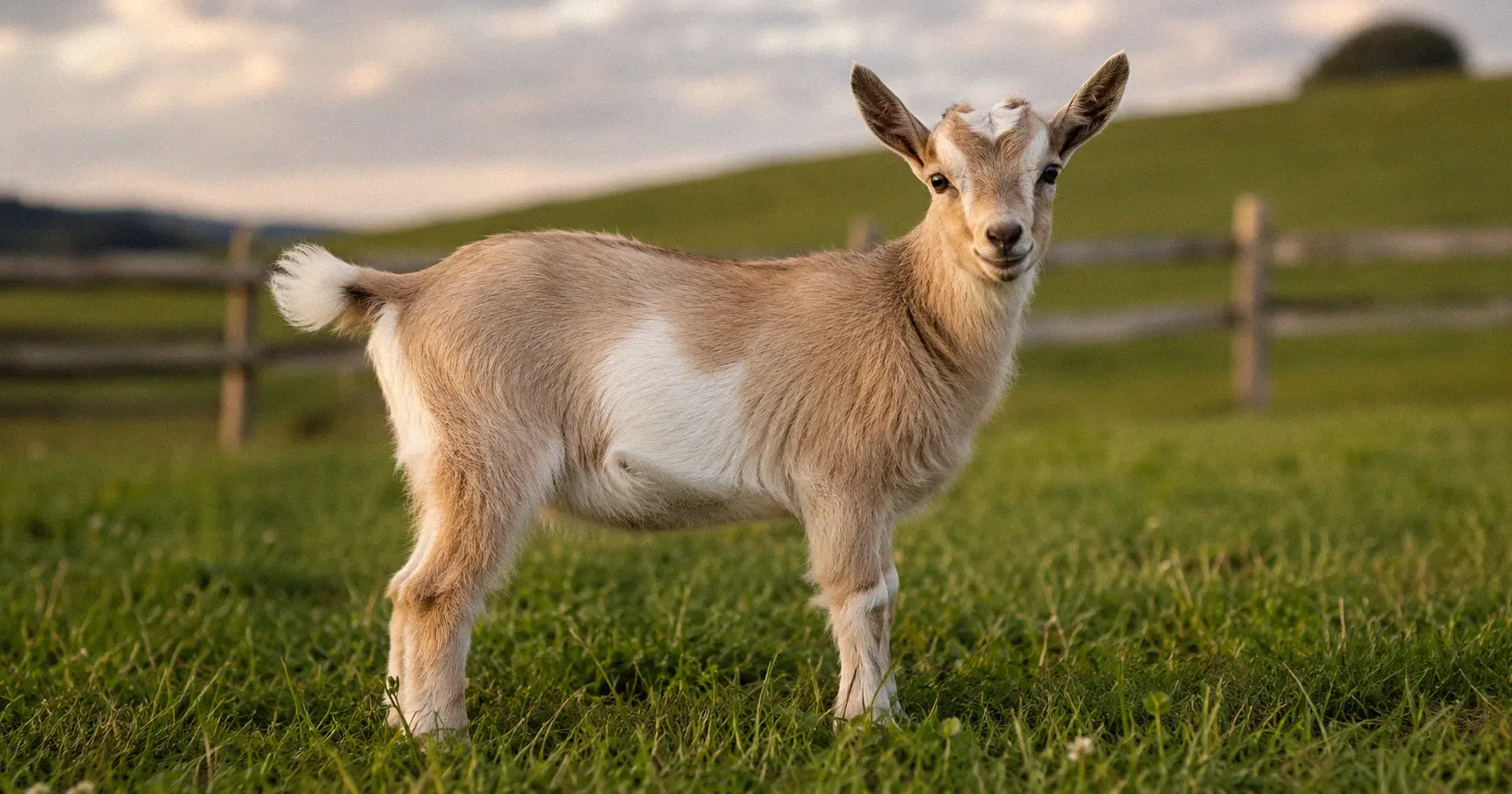
She absolutely can. Nigerian Dwarf goats, a popular miniature dairy breed, are among the earliest-maturing goat breeds in the world, and doelings can enter their first estrus cycle as young as 3 months of age.
A 4-month-old doeling is fully capable of ovulating and conceiving if she’s had any contact with an intact male. Breeders and vets alike have documented pregnancies in Nigerian Dwarf doelings at this age, and it’s more common than most people think.
Puberty Hits Earlier Than Most Owners Expect
Nigerian Dwarfs don’t follow the same developmental clock as full-size dairy breeds. A Nubian or Alpine doe usually reaches puberty between 5 and 7 months, but a Nigerian Dwarf doeling can cycle as early as 8 to 12 weeks of age.
This timing gap is the main reason accidental breedings happen so frequently in the breed. Owners who plan to separate bucklings “around 3 or 4 months” often discover they were already weeks too late.
Even seasoned goat keepers who raise multiple breeds underestimate how fast Nigerian Dwarf doelings mature. A doeling that looked like a baby two weeks ago can quietly slip into her first heat and conceive before anyone picks up on the behavioral changes.
Physical Capability Is Not the Same as Safety
Just because her reproductive system has switched on doesn’t mean the rest of her body is ready for pregnancy. At 4 months, a Nigerian Dwarf doeling typically weighs just 15 to 25 pounds, well under half the minimum safe breeding weight for the breed.
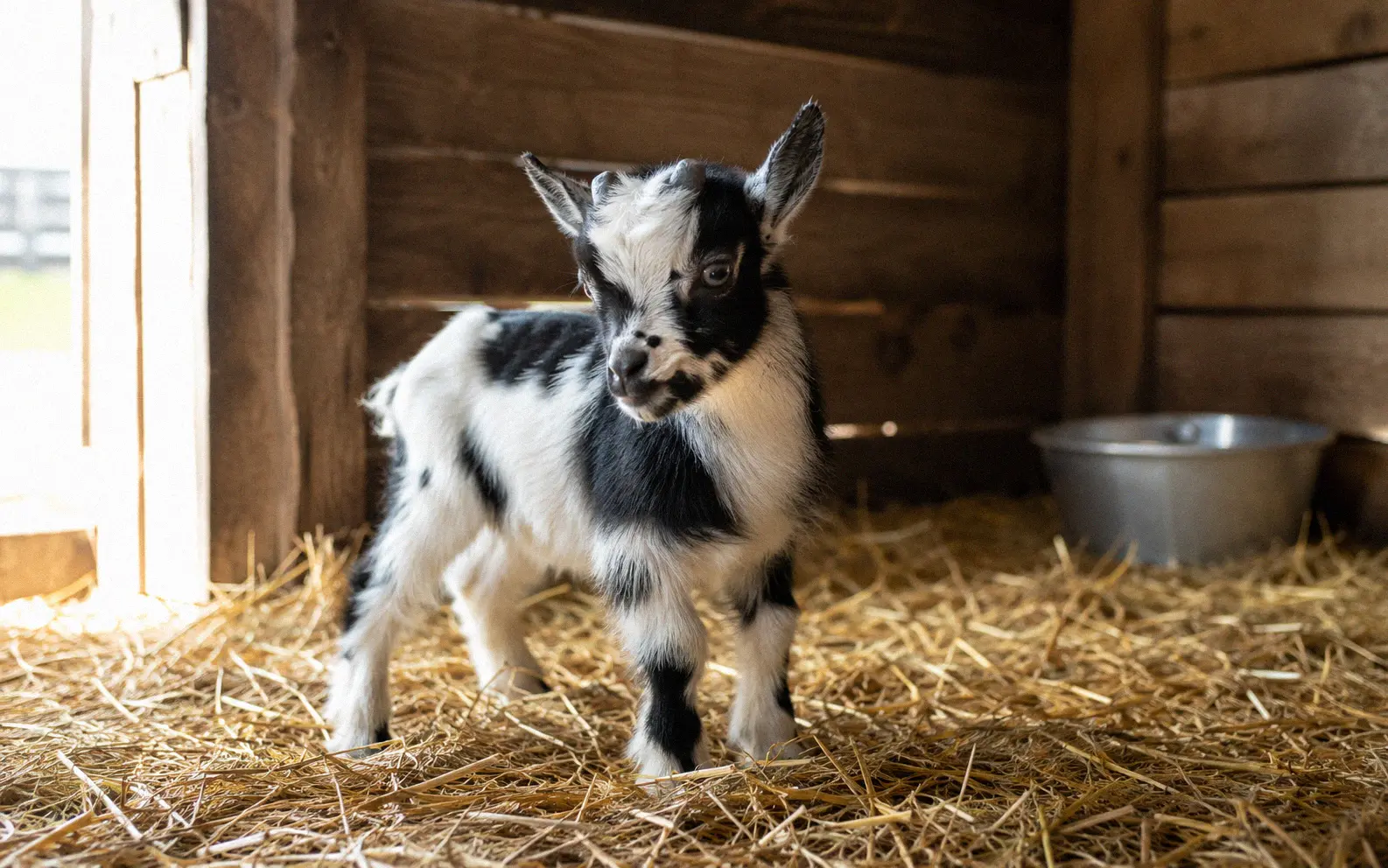
Her pelvis hasn’t widened yet, her long bones are still growing, and her organs are nowhere near finished developing. Pregnancy at this stage forces her body to split every calorie and every gram of calcium between her own growth and the developing fetuses.
When Do Nigerian Dwarf Doelings Reach Puberty
Most Nigerian Dwarf doelings reach reproductive maturity between 3 and 4 months of age, far earlier than standard dairy goat breeds. That short timeline is exactly why so many owners get caught off guard.
Hormonal Development Timeline
Most Nigerian Dwarf doelings show their first signs of estrus between 3 and 4 months of age. A handful of especially precocious individuals have been documented cycling as early as 8 weeks, though that’s on the uncommon end of the spectrum.
By comparison, standard dairy breeds like Saanens and Alpines typically reach puberty between 5 and 7 months. Nubians land somewhere between 4 and 6 months.
The Nigerian Dwarf’s compact frame reaches reproductive maturity well ahead of its structural maturity, which creates a dangerous window where conception is possible but safe pregnancy is not.
Factors That Trigger Early Puberty
Nutrition plays a big role in how fast a doeling reaches her first heat. Doelings on high-quality feed with adequate protein and balanced minerals tend to hit puberty sooner than those on marginal pasture or low-grade hay.
Living near a buck is another trigger that catches new owners off guard. Pheromones from an intact male can push a doeling into her first estrus cycle weeks earlier than she would have cycled on her own.
Breeders call this the “buck effect,” and it is one of the strongest arguments for early separation of intact males from young doelings.
Genetics also play a part. Some bloodlines consistently produce doelings that cycle earlier than the breed average, so if the dam or her sisters hit puberty young, expect the same pattern in her daughters.
Photoperiod has far less influence on Nigerian Dwarfs than on seasonal breeds. Because they’re polyestrous and can breed year-round, Nigerian Dwarfs don’t depend on shortening autumn daylight to trigger estrus the way Alpines or Toggenburgs do.
Season alone will never protect a young doeling from an unplanned conception.
Why Breeding a Doeling at 4 Months Is Dangerous
This isn’t a gray area. Vets and longtime breeders agree that a pregnancy at 4 months puts both the young doe and her unborn kids in serious jeopardy.
Her Skeleton Is Still Growing
At 4 months, a Nigerian Dwarf doeling’s bones are still lengthening and her skeletal system is still actively mineralizing. Pregnancy reroutes calcium, phosphorus, and other critical minerals away from her own bone development and funnels them straight to the growing fetuses.
Long term, you end up with a doe that never reaches her genetic potential for frame size. Her bones may also develop lower density, leaving her more prone to stress fractures during labor or even normal activity for years afterward.
Higher Risk of Dystocia and Kidding Complications
Dystocia, or difficult labor, is the single greatest immediate danger of breeding a doeling before her pelvis has finished widening. A narrow birth canal simply can’t accommodate full-term kids without mechanical difficulty.
According to the MSD Veterinary Manual, dystocia rates in goats are generally under 5 percent. That number climbs sharply when the doe is undersized or bred before her pelvis is fully developed.
Nigerian Dwarfs already carry a higher rate of twins and triplets compared to many other breeds. A 4-month-old doeling carrying multiples faces a substantial risk of obstructed labor that requires veterinary intervention, manual repositioning of kids, or an emergency cesarean section.
Retained placenta is another common complication when does kid too young. An undersized uterus may not contract hard enough to expel the afterbirth completely, which can lead to uterine infection and potentially life-threatening sepsis.
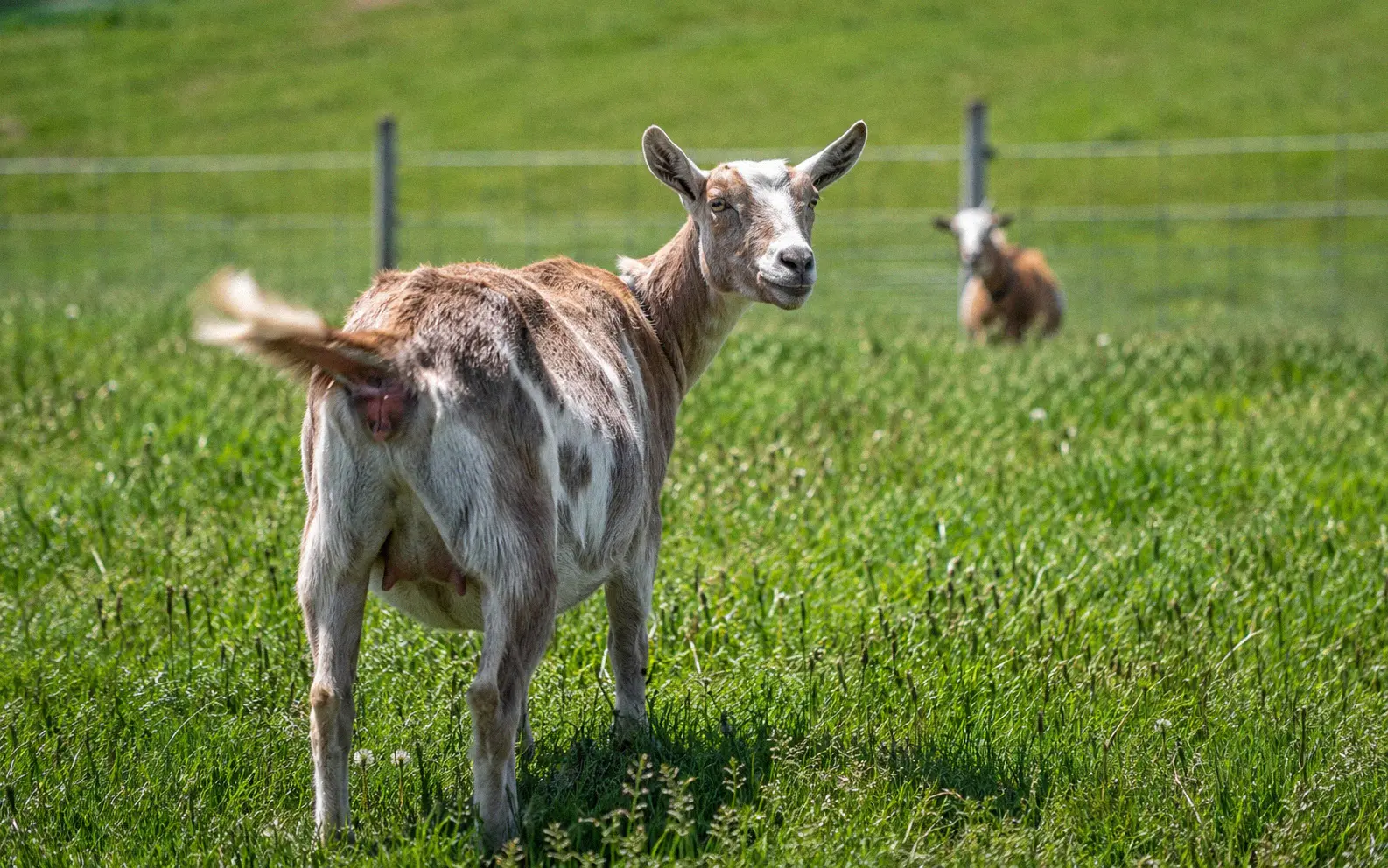
Vaginal tearing is more likely too, because the birth canal is undersized relative to the kids passing through it. Even with a single small kid, a 4-month-old doeling’s tissues are less elastic and more prone to trauma than a fully mature doe’s.
Stunted Growth and Long-Term Health Damage
A doeling bred at 4 months will almost certainly end up smaller as an adult than she would’ve been if she’d finished growing first. Pregnancy and lactation compete directly with her own developmental needs during the most critical growth window of her life.
First-lactation milk production in an underdeveloped doe is typically poor. Insufficient udder tissue means less colostrum for newborn kids, which compromises their passive immunity and raises the risk of neonatal mortality.
Some young does bred too early never fully bounce back. They struggle to put weight on between kiddings, give less milk year after year, and face harder deliveries in later pregnancies because their frame never caught up.
Does Early Breeding Affect a Doe’s Future Fertility?
Not usually. A doe bred at 4 months can still conceive in later seasons.
The bigger concern is lasting damage from her first kidding.
A traumatic delivery can cause pelvic injuries or internal scarring that complicate future births. And because her udder tissue never fully developed, milk production may stay below her genetic potential for life.
Minimum Weight and Age for Safely Breeding a Nigerian Dwarf
In short: wait until she weighs at least 40 pounds and is a minimum of 7 months old. Weight matters more than age.
Ask any experienced breeder and you’ll hear the same thing: breed by weight first, age second. A date on the calendar means nothing if the doeling hasn’t reached the physical development needed to carry kids safely.
The 80 Percent Body Weight Rule
The widely accepted guideline is to wait until a doeling reaches at least 60 to 80 percent of her expected adult body weight before her first breeding. For Nigerian Dwarf does that can cross with other breeds, size matching is even more critical because of the potential for larger kids.
A mature Nigerian Dwarf doe typically weighs between 50 and 75 pounds depending on her bloodline and build. That means a doeling should weigh somewhere between 40 and 60 pounds before her first exposure to a buck.
Most Nigerian Dwarf doelings reach the 40-pound mark between 7 and 9 months of age when fed a proper growth diet with quality hay, measured grain, and free-choice minerals. This is why the 7 to 8 month window is the most widely cited minimum breeding age for the breed among both small-farm breeders and registered herd managers.
Breed-Specific Weight Milestones
| Breed | Adult Weight | Min Breeding Weight | Typical Breeding Age |
|---|---|---|---|
| Nigerian Dwarf | 50–75 lbs | 40–60 lbs | 7–9 months |
| Pygmy | 50–75 lbs | 40–60 lbs | 8–10 months |
| Nubian | 130–175 lbs | 80+ lbs | 8–12 months |
| Alpine | 125–155 lbs | 80+ lbs | 8–12 months |
| Saanen | 130–175 lbs | 80+ lbs | 8–12 months |
| Boer | 150–225 lbs | 80+ lbs | 10–12 months |
| LaMancha | 125–155 lbs | 80+ lbs | 8–12 months |
A typical 4-month-old Nigerian Dwarf doeling weighs between 15 and 25 pounds. That’s less than half the minimum safe breeding weight, which should tell you everything about how far from ready she really is.
Signs a Young Doeling May Have Already Been Bred
A missed heat cycle is the earliest red flag, but appetite changes, personality shifts, and a firmer lower abdomen also point toward pregnancy.
Accidents happen even in well-managed herds. If your doeling spent any unsupervised time with an intact buck or buckling, watch for these indicators in the weeks that follow.
Early Pregnancy Indicators
The earliest reliable sign of pregnancy is a missed heat cycle. If your doeling was cycling every 18 to 21 days and suddenly stops, conception is one of the most likely explanations.
Appetite changes are another early signal worth watching. A bred doeling may eat noticeably more than usual or develop a sudden interest in loose minerals she previously ignored.
Some does become distinctly calmer and less playful within the first two to three weeks after conception.
You might also notice her seeking out the company of other does more than usual, or standing apart from the herd during feeding time. Behavioral shifts can be subtle, so knowing your doeling’s normal personality helps you spot changes early.
Physical changes show up later. By 6 to 8 weeks after breeding, you may feel a slight firmness in the lower abdomen during gentle palpation, though it’s easy to miss in small doelings if you don’t have hands-on experience.
A doe that has not shown any visible heat signs recently may have been bred before you realized she was cycling. Silent heats, where the doe ovulates without displaying obvious behavioral signs, are not uncommon in young animals experiencing their first few cycles.
When to Call Your Vet
A veterinarian can confirm pregnancy through a BioPRYN blood test as early as 28 to 30 days after the suspected breeding date. Ultrasound becomes reliable by day 30 to 45 and provides the added benefit of revealing how many kids she is carrying, which directly affects risk planning.
Don’t sit on it if you suspect your 4-month-old has been bred. The sooner you get a diagnosis, the more time you have to adjust her nutrition, line up a vet experienced in goat obstetrics, and prepare for a higher-risk delivery.
What to Do if Your 4-Month-Old Doeling Is Already Pregnant
Finding out your young doeling is carrying kids is stressful, but panicking won’t help her. A calm, systematic approach gives her the best shot at a safe outcome for both her and her kids.
Your first step should be scheduling a veterinary exam. Discuss the specific risks for a doeling her size and age, get an accurate fetal count via ultrasound, and build a kidding plan together that includes clear emergency protocols.
Nutrition Adjustments for a Growing Doe in Kid
A pregnant 4-month-old needs far more calories, protein, and minerals than a normal kid her age. She’s growing her own body and growing fetuses at the same time, which doubles the nutritional load on a frame that was already in its most demanding growth phase.
Increase her grain ration gradually over the first three months of pregnancy, starting with an extra quarter cup per day and adjusting based on her body condition. Free-choice grass hay should be available around the clock so she can eat whenever her body signals hunger.
Add alfalfa hay in the last six weeks for the extra calcium and protein both she and the fetuses need during the final growth surge before delivery. Selenium deficiency in particular causes white muscle disease in newborn kids and weakens uterine contractions during labor, so keep a quality loose goat mineral with copper, selenium, and zinc in front of her throughout the entire pregnancy.
Preparing for a High-Risk Kidding
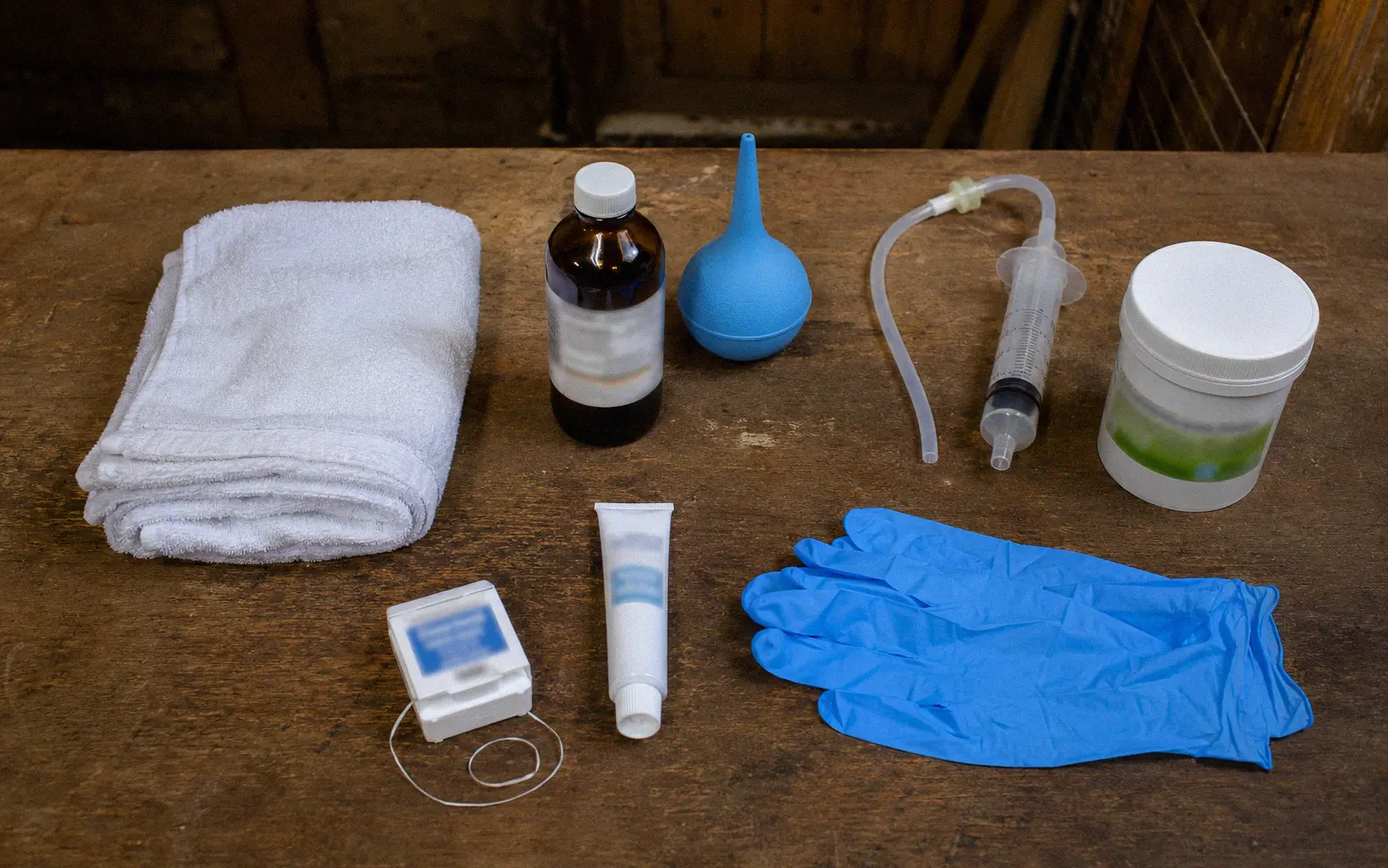
Get your kidding kit together well before her due date. You’ll need clean towels, 7 percent iodine for navel dipping, a bulb syringe for clearing airways, unwaxed dental floss for tying cords, colostrum replacer, a tube feeder for weak kids, and obstetric lubricant for assisted deliveries.
Nigerian Dwarf gestation runs 145 to 155 days, with 150 being the average. Mark the calendar from the suspected breeding date and start twice-daily observation checks as that window approaches.
If she’s been in active labor for more than 30 minutes without visible progress, intervention is likely needed. Recognizing stalled labor early is especially critical with a young, undersized doe who has limited physical reserves.
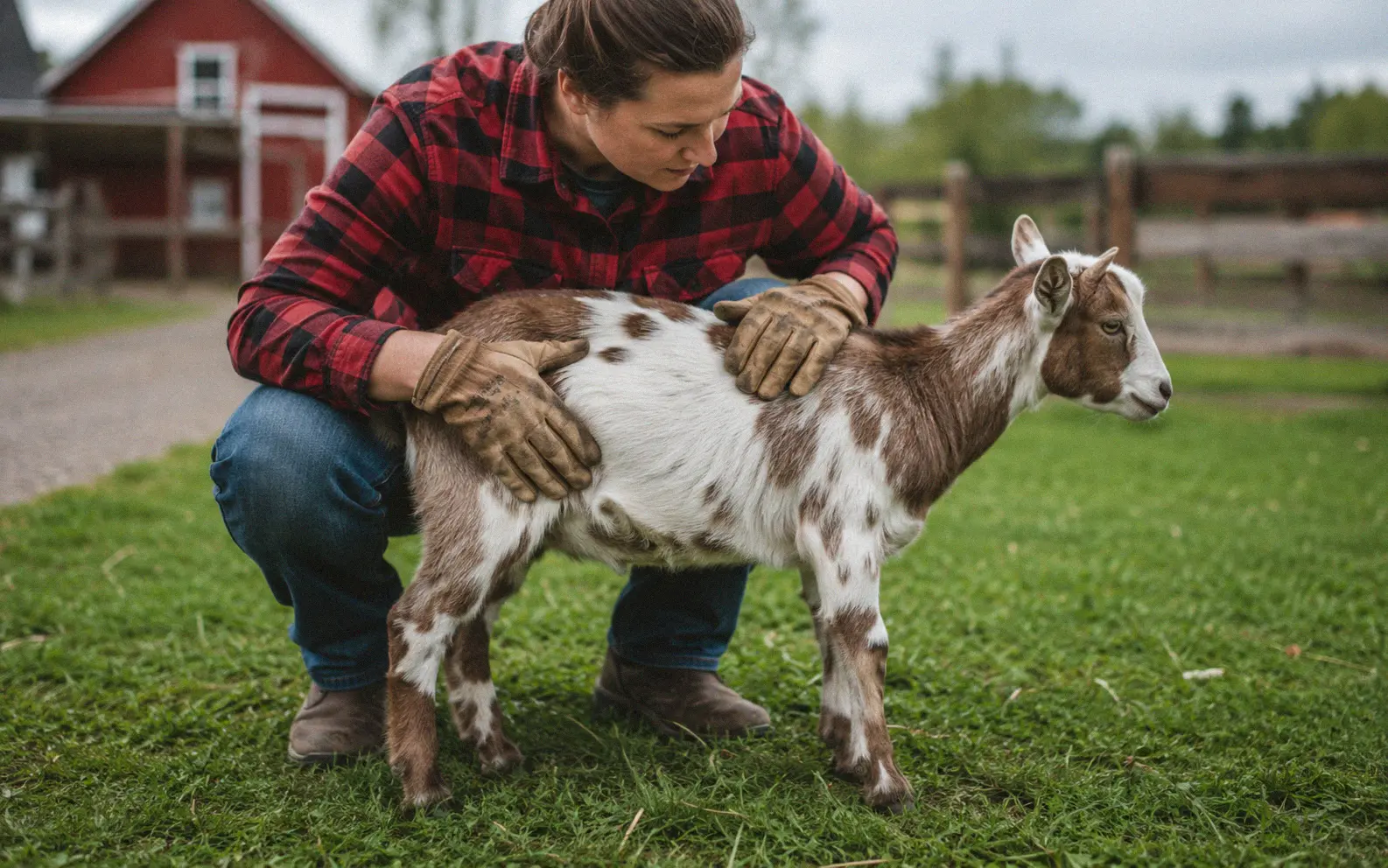
Post your vet’s emergency after-hours number in the barn where anyone helping with chores can find it. A young doe with a narrow pelvis may need assistance pulling kids, and the window between “something seems off” and “this is a medical emergency” is shorter than most owners realize.
If she has trouble delivering kids spaced far apart, act immediately and contact your vet.
It’s also worth arranging for an experienced breeder or vet tech to be on call during the actual kidding. A second pair of trained hands can make the difference between a successful delivery and a fatal outcome.
How to Prevent Accidental Early Breeding
The single most important step is separating all intact bucklings from the doe herd by 8 weeks of age.
Preventing an early breeding is always going to be simpler and safer than managing a crisis pregnancy in a doeling whose body isn’t ready to carry kids.
Separate Bucklings by 8 Weeks
The most effective thing you can do is pull intact males out of the doe herd early. Male Nigerian Dwarf kids can produce viable sperm as young as 7 to 8 weeks of age, meaning they’re capable of settling a doeling before they even look like adults.
Don’t wait until you see mounting behavior to separate them. By the time a buckling is actively chasing does, he may have already bred one or more doelings without you witnessing it.
Move all bucklings to their own separate pen no later than 8 weeks of age.
If a buckling isn’t going to be used as a herd sire, wether him early. Banding is straightforward, inexpensive, and takes the risk off the table completely.
Most breeders band pet-quality bucklings between 8 and 12 weeks for this reason.
Fencing and Housing Tips
Standard woven wire field fencing won’t hold a determined buck that smells a doe in heat on the other side. Nigerian Dwarf bucks are small, agile, and remarkably persistent when rut kicks in.
Use welded wire cattle panels or chain-link fencing with mesh gaps no larger than 4 inches. Secure every gate latch with a snap clip or carabiner, because bucks are notorious for learning to work loose hardware within days of watching you operate it.
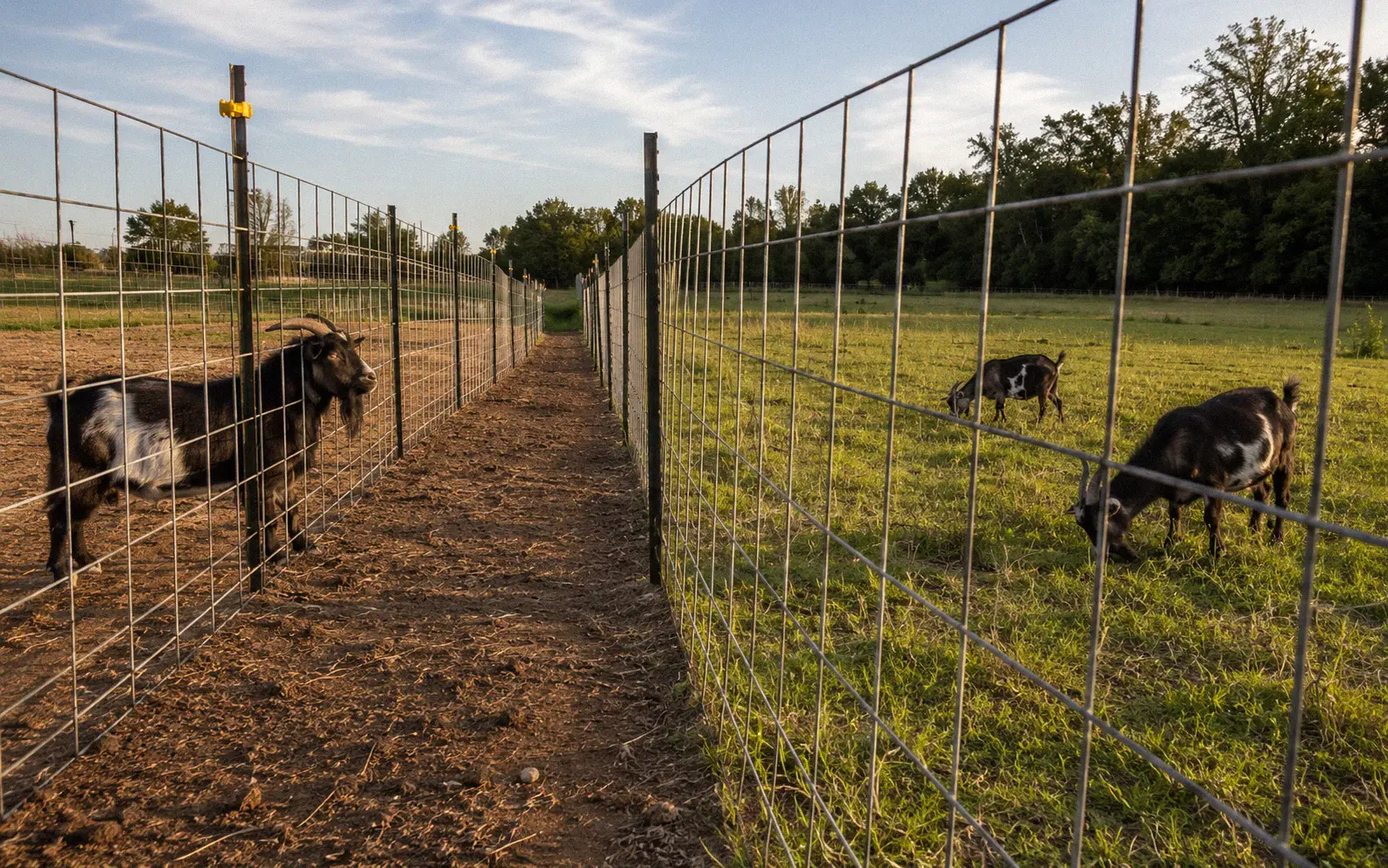
A double-fence system with a 3 to 4 foot buffer zone between the buck pen and the doe area is the gold standard for preventing unplanned breedings. No accidental nose-to-nose contact, no fence-line breeding, no surprises.
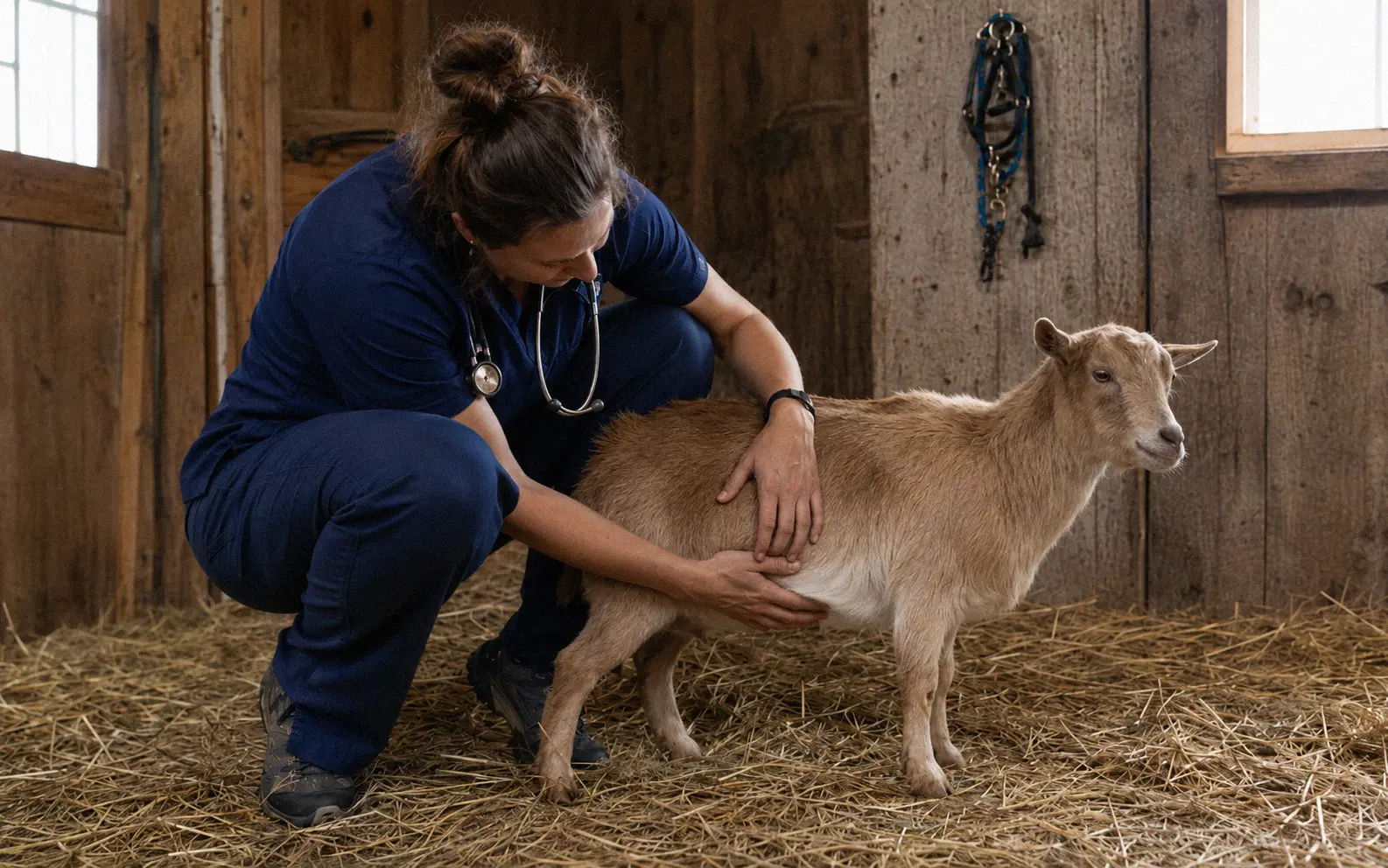
Whenever your property layout allows it, house bucks and bucklings downwind from the does. The pheromones from an intact male stimulate earlier and stronger heat cycles in doelings through the buck effect, so both physical distance and airflow direction matter when you’re planning your barn and pen setup.
Nigerian Dwarf Heat Cycle Basics Every Owner Should Know
If you understand the estrus cycle, you can predict when a doeling is fertile, spot heat signs early, and run your breeding program on your terms instead of scrambling after the fact.
How Often and How Long
Nigerian Dwarf does cycle every 18 to 21 days, all year long. Each heat period lasts roughly 24 to 48 hours total, with the actual standing heat window, when she’ll accept a buck, running about 12 to 24 hours within that span.
Common heat signs include tail flagging (rapid side-to-side tail wagging), a swollen and reddened vulva, increased vocalization, mounting other does, decreased appetite, and a clear to white mucous discharge. Some owners also track body temperature changes as an additional method for confirming cycle timing.
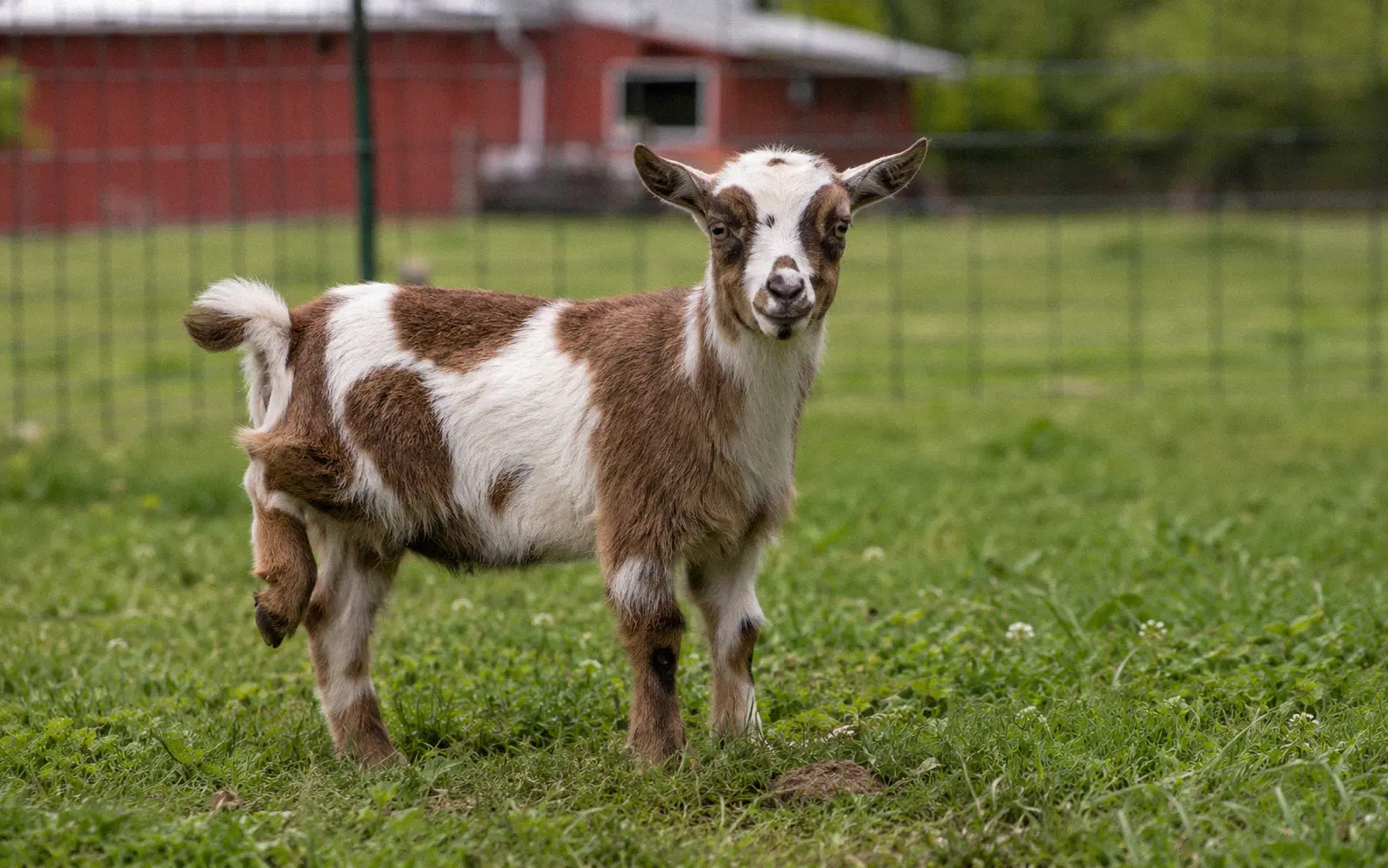
Not every doe shows every sign during every cycle, either. Quiet or “silent” heats are fairly common in young doelings during their first few cycles, which is part of what makes accidental breedings so hard to catch in time.
Year-Round Breeding Ability
Unlike seasonal breeds such as Alpines, Toggenburgs, and Saanens that cycle only from roughly August through January, Nigerian Dwarfs are classified as polyestrous. They can and do come into heat during every month of the calendar year.
That year-round fertility is a big part of why accidental breedings happen more often with Nigerian Dwarfs than with seasonal breeds. There’s no natural off season, so the risk of an unplanned pregnancy exists every day that intact males and fertile females share space or sit in adjacent pens.
For owners with mixed herds that include both Nigerian Dwarfs and seasonal breeds, this can be especially tricky to manage. Your Alpines and Saanens might be done cycling for the winter, but the Nigerian Dwarfs in the next pen are still coming into heat every three weeks.
When Your Nigerian Dwarf Doeling Is Truly Ready to Breed
Getting the timing right sets your doe up for a healthy pregnancy, a smooth kidding, and solid milk production for years to come. Rushing it saves nothing and costs you in vet bills, lost kids, and reduced long-term productivity.
Physical Maturity Checklist
Confirm that your Nigerian Dwarf doeling meets every one of these benchmarks before her first intentional breeding:
- Weighs at least 40 pounds, with 50 to 60 pounds being ideal
- Is at least 7 months old
- Has a wide, well-sprung rib cage with good depth through the barrel
- Has completed a minimum of 3 regular and consistent heat cycles
- Is current on CDT vaccination and any other regional vaccines your vet recommends
- Has a clean fecal egg count or has been recently dewormed under veterinary guidance
- Shows no signs of respiratory illness, foot rot, parasitic anemia, or other active health problems
Pelvic width matters too, though it’s harder to assess without experience. A vet can evaluate pelvic structure during a pre-breeding exam and flag any doe who might face higher dystocia risk even if she meets the weight threshold.
A doeling that checks every box is a much stronger candidate for a smooth first pregnancy than one that barely scrapes past the minimum weight. An extra month or two of growth before breeding costs you almost nothing and dramatically cuts her risk.
Body Condition Scoring for First-Time Does
Body condition scoring gives you an objective read on readiness that goes beyond what the scale says. Run your fingertips along her spine, over her ribs, and across her loin area, scoring from 1 to 5.
A score of 3 to 3.5 is the sweet spot for a first breeding. A doe that scores below 2.5 needs more nutrition and time regardless of her age or weight on the scale.
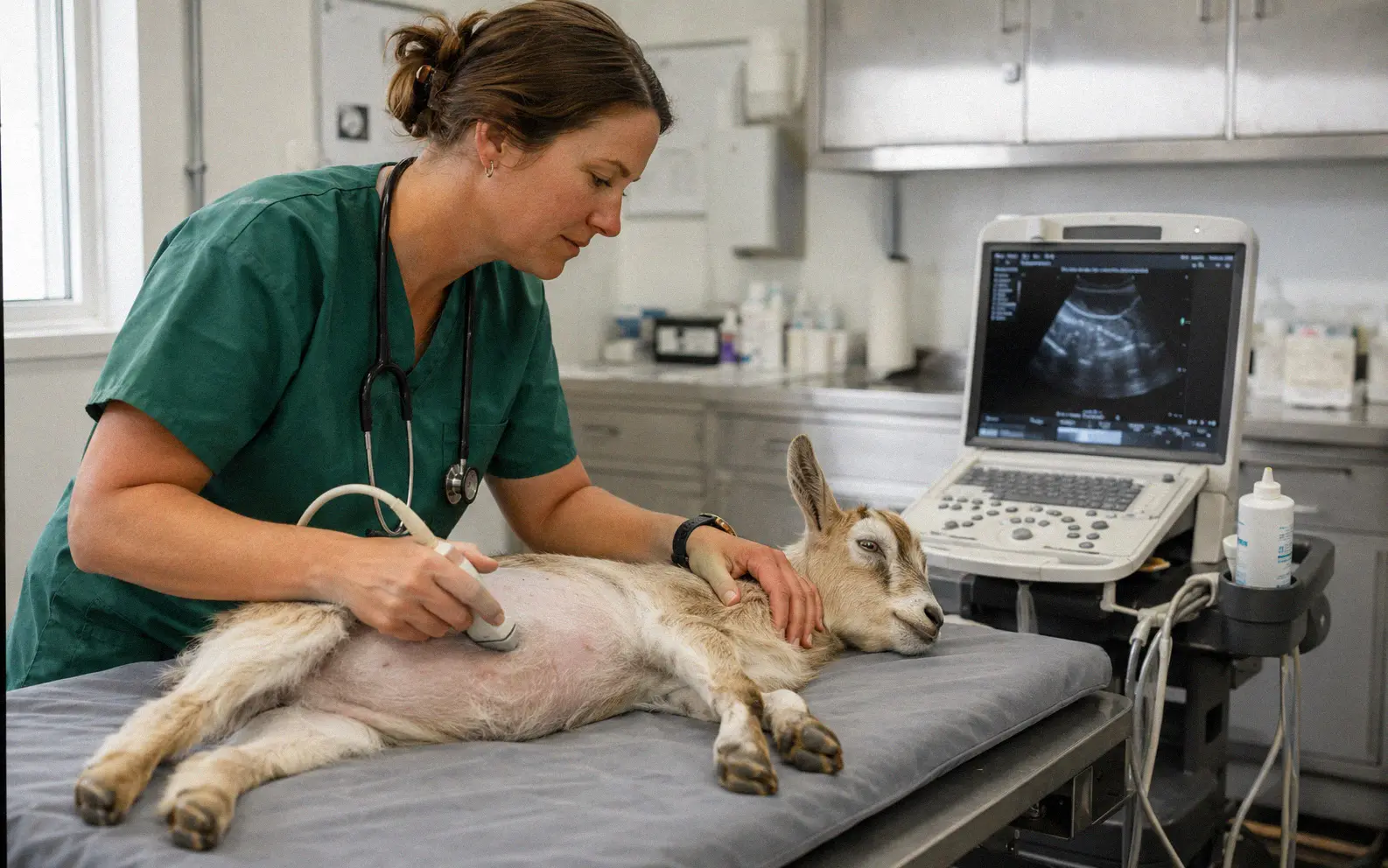
A score above 4 signals excess fat, which creates its own problems during pregnancy and delivery, including a higher risk of ketosis in late gestation.
Start recording her weight and body condition score monthly around 5 months of age. The trend over time tells you far more about her growth trajectory and breeding readiness than any single weigh-in ever will.
If you are also managing parasite loads during pregnancy, having this baseline data on file helps your vet make better treatment decisions.
Final Thoughts
A 4-month-old Nigerian Dwarf doeling can physically get pregnant, but she should never be bred on purpose at this age. Her skeleton, pelvis, and body as a whole need several more months of growth before they can handle carrying kids and surviving delivery.
If she’s already been accidentally bred, get your vet involved right away, boost her nutrition, and put a detailed kidding plan together with emergency protocols ready to go. Early detection and hands-on management give her the best possible odds.
If she hasn’t been bred, take action now to separate intact males and shore up your fencing. The patience to wait until 7 to 8 months of age and a minimum of 40 pounds on the scale pays off with easier kiddings, healthier kids, and a doe that produces well for years to come.
Frequently Asked Questions
Yes, some goat breeds reach puberty as early as 3 months, and Nigerian Dwarfs are among the earliest. However, the health risks are even more severe at 3 months than at 4 months, and no experienced breeder would intentionally breed a doeling this young.
The youngest safe kidding age is around 12 to 14 months, which means breeding no earlier than 7 to 9 months. This gives the doeling time to reach a safe body size before labor. Kidding before 12 months significantly increases the chance of dystocia.
No. First heat cycles are often irregular and may not result in successful conception. Waiting until your doeling has completed at least 3 regular cycles gives her reproductive system time to stabilize and gives you time to confirm she has reached a safe breeding weight.
Nigerian Dwarf gestation averages 145 to 155 days, or roughly 5 months. First-time does occasionally carry a few days past their expected due date. Knowing the exact breeding date is essential for preparing your kidding supplies and monitoring schedule.
Usually not. Underdeveloped udder tissue produces less colostrum and lower overall milk volume. Have colostrum replacer and kid milk replacer on hand if your young doe kids. You may need to bottle-feed some or all of her kids to ensure they get adequate nutrition.
Any doeling under 35 pounds should not be bred. The generally accepted minimum is 40 pounds, with 50 to 60 pounds being a safer target for first-time does. Weight is a more reliable indicator of breeding readiness than age alone.