| # | Product | Our Rating | ||
|---|---|---|---|---|
| 1 |  | Best OverallGoat Marking Harness with Crayons (3 Pack) | ★★★★★ | Check Price |
| 2 |  | Agri-Pro Veterinary Thermometer | ★★★★☆ | Check Price |
| 3 |  | EZ-Mark Harness Crayon Refills | ★★★★☆ | Check Price |
If you want kids in the spring, it all starts with catching a doe in heat at the right moment. Miss the window and you wait three more weeks for another chance.
The good news is that the goat heat cycle is predictable once you know what to look for. Most does advertise their heat loudly, and even the quiet ones leave clues.
This guide covers how often goats cycle, the signs that matter, how long heat lasts, and the timing that gives you the best odds of a successful breeding.
How Often Do Goats Go Into Heat?
Does come into heat every 18 to 21 days during the breeding season. In most of North America, that season runs from roughly August through January, triggered by the shortening days of late summer and fall.
Sheep follow the same short-day timing, so a buck in a mixed flock may try to breed ewes too.
At the very start of the season, it is normal for a doe to throw one or two short cycles of just 5 to 7 days before settling into her regular rhythm. Do not panic if your doe seems to be in heat again a week after the last one in early fall.
Breed matters a great deal here. The Swiss dairy breeds, including Saanen, Alpine, Toggenburg, and Oberhasli, are strongly seasonal, while Nigerian Dwarfs, Pygmies, and many Boer and Spanish goats can cycle year-round.
| Heat Cycle Fact | Typical Range |
|---|---|
| Cycle length (heat to heat) | 18-21 days |
| Length of each heat | 12-48 hours |
| Standing heat (fertile window) | 12-36 hours |
| Breeding season (North America) | August-January |
| First heats possible (doelings) | As young as 2-3 months |
| Safe first breeding | 7-8 months and at proper weight |
That last row deserves emphasis. Doelings can have fertile heats shockingly young, which is why bucklings should be separated from doelings by 8 weeks of age.
What Are the Signs of a Goat in Heat?
Most does announce their heat clearly once you know the signals. The classic giveaway is flagging, a rapid side-to-side tail wag that looks like nothing else a goat does.
Vocal changes are usually just as obvious. A normally quiet doe that suddenly bleats all day, especially toward the buck pen, is very likely in heat.

Here are the seven signs worth checking every time:
| Sign | What You Will See |
|---|---|
| Tail flagging | Rapid, constant side-to-side tail wagging |
| Vocalization | Loud, frequent bleating, often aimed at the buck pen |
| Swollen vulva | Puffy, reddened vulva, sometimes with clear discharge |
| Fence pacing | Standing or pacing at the fence line closest to the buck |
| Mounting behavior | Mounting other does, or standing to be mounted |
| Personality change | Clingy, restless, or off feed for a day or two |
| Milk drop | A noticeable dip in production in does being milked |
A buck rag makes a great detection tool if you do not keep a buck. Rub a cloth on a buck’s scent glands, store it in a sealed jar, and present it to your does each morning; the doe that goes wild for it is in heat.
Some owners also track temperature, since a doe’s rectal temperature can rise slightly during standing heat. It is a useful supporting clue, but behavior is far more reliable than the thermometer alone.
How Long Does a Goat Stay in Heat?
A goat’s heat lasts anywhere from 12 to 48 hours, with about 24 to 36 hours being typical. Young does and early-season heats often run shorter, which is part of why first breedings get missed.
Within that window, the part that matters is standing heat. This is when the doe stops running from the buck and stands firmly to be mounted, and it is the only phase when breeding actually works.
Ovulation happens toward the end of standing heat. That biological detail drives all the timing advice that follows, because sperm needs to be waiting when the egg arrives.
The practical rule many breeders use is morning and evening checks. If a doe first stands for the buck in the morning, breed her that evening; if she first stands in the evening, breed her the next morning.
When Should You Breed a Doe in Heat?
Aim to breed about 12 hours after a doe first stands to be mounted. One to three matings during standing heat is plenty, and most breeders watch for at least two good ones before separating the pair.
Make sure the doe is actually ready for motherhood before any of this. Standard breeds should be at least 7 to 8 months old and around 80 pounds, while Nigerian Dwarfs should hit roughly 40 pounds first.
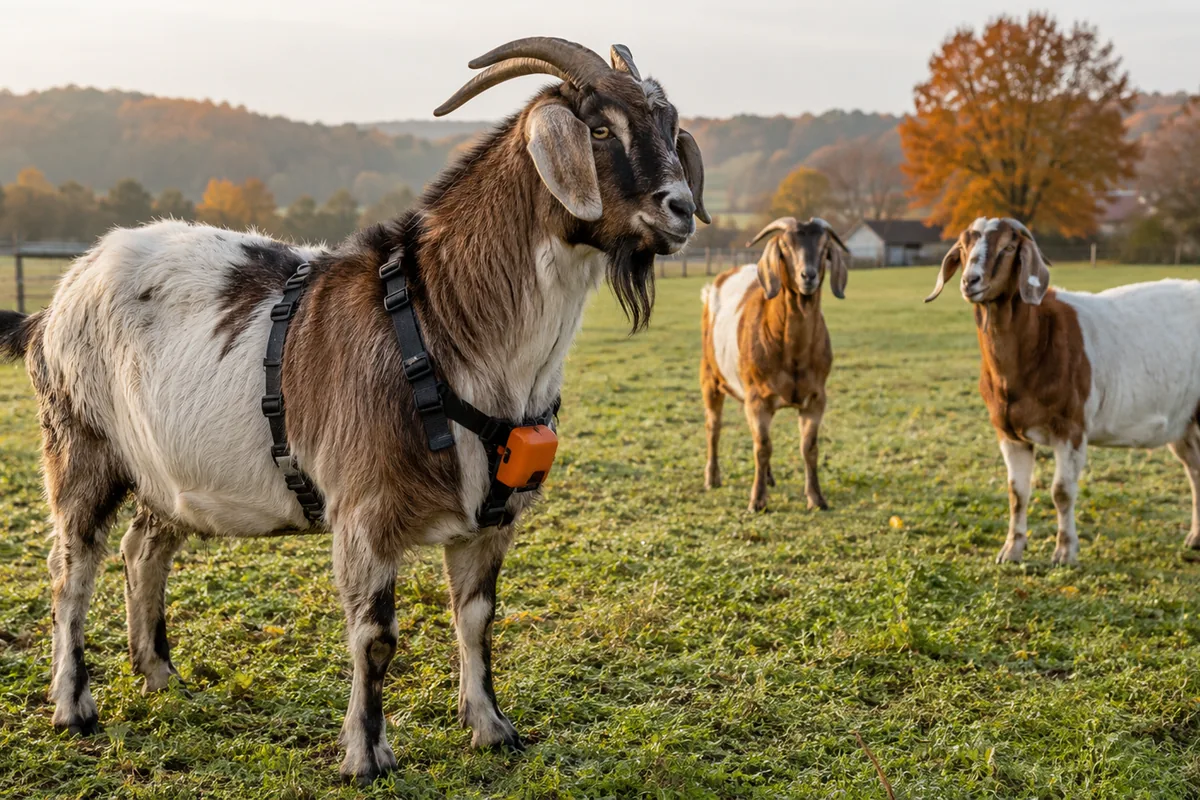
If you run the buck with the herd instead of hand breeding, a marking harness takes the guesswork out of it. The crayon leaves a mark on every doe he covers, and changing crayon colors every 17 days shows you which does needed a second try.
Afterward, the calendar becomes your pregnancy test. A doe that does not return to heat 18 to 21 days after breeding has very likely settled, and you can confirm the pregnancy with a blood test from 30 days on.
Once she is confirmed bred, count forward about 150 days to kidding. A goat gestation calculator does the math for you, and it helps to know how many kids to expect by breed.
Silent Heats and Bringing a Doe Into Heat
Some does are silent cyclers that show almost no outward signs. They cycle normally on the inside, which is why a doe can seem to get pregnant without ever being in heat.
For silent does, the buck rag trick and a teaser buck are your best tools. Watching the does’ behavior in the pasture also helps, since herd mates often notice a heat before you do.
You can also nudge heat along. The most powerful natural trigger is the buck effect: keep does fully separated from any buck, with no shared fence line, then introduce one suddenly, and many does will cycle within about a week.
True out-of-season breeding takes more work. Sixty days of artificial light at 16 hours per day, followed by a switch back to natural light, can trigger cycling in spring, and vets can place a CIDR progesterone insert that brings a doe into heat 24 to 48 hours after removal.
Expect a tradeoff with off-season methods. Conception rates run a little lower and litters a little smaller than with natural fall breeding, which is why most homesteads simply work with the season.
How Do You Track Heat Cycles?
A simple breeding journal beats memory every time. The day you first see standing heat, write it down and mark the calendar 18 to 21 days out, because that window is when you watch for the next one.
Two or three recorded cycles reveal a doe’s personal rhythm, and most does repeat their own interval almost to the day. That precision is what lets you plan hand breedings, book a driveway breeding, or time a buck lease for exactly the right week.
Track the buck side of the equation too. Bucks enter rut in late summer with unmistakable signs, from the smell and constant vocalizing to the lip-curling flehmen response, and a buck in full rut makes every doe’s heat easier to spot.
After a breeding, the same journal closes the loop. Note the date, count 18 to 21 days, and if she does not return to heat, move her to the pregnancy side of the page and count 150 days forward.
Sources and Further Reading
Compiled and cross-checked against established veterinary and extension references:
- Merck Veterinary Manual, puberty and estrus in goats
- Langston University, Meat Goat Production Handbook, reproduction chapter
- Penn State Extension and Oklahoma State University small ruminant reproduction resources
- American Dairy Goat Association (ADGA) breeding management resources
Every doe runs her own version of the textbook cycle, so keep notes on what her normal looks like. Catch the flagging, count the days, time the breeding, and the rest is mostly patience.
Frequently Asked Questions
Does come into heat every 18 to 21 days during the breeding season, which runs from about August through January in most of North America. Some does throw a few short 5 to 7 day cycles at the very start of the season before settling into a normal rhythm. Year-round breeds like Nigerian Dwarfs and Pygmies can cycle in any month, so their owners watch for heat signs all year.
The most reliable signs are rapid tail wagging called flagging, much louder and more frequent bleating, a swollen and reddened vulva, and clear mucous discharge. A doe in heat often paces the fence line nearest the buck, mounts other does or stands to be mounted, and may go off feed or drop in milk production. The definitive sign is standing heat, when she stands still and lets a buck mount instead of running off.
A goat's heat typically lasts between 12 and 48 hours, with most does showing strong signs for about a day to a day and a half. The fertile window, called standing heat, is shorter than the full heat and usually runs 12 to 36 hours. Because ovulation happens late in standing heat, breeding around 12 hours after a doe first stands for the buck catches the most fertile timing.
The simplest natural trigger is the buck effect: housing does completely away from any buck, then suddenly introducing one, often brings cycling does into heat within about a week. For true out-of-season breeding, breeders use 60 days of artificial light followed by a return to natural light, or a vet-supervised CIDR progesterone insert that triggers heat 24 to 48 hours after removal. Out-of-season breedings tend to produce slightly lower conception rates and smaller litters than natural fall breeding.
No, a doe can only conceive during her fertile window around standing heat, because that is the only time she ovulates and will accept the buck. What looks like an out-of-heat pregnancy is almost always a silent heat, where the doe cycled normally but showed few or no outward signs. This is why surprise pregnancies happen in herds that run a buck with the does year-round.