| # | Product | Our Rating | ||
|---|---|---|---|---|
| 1 | 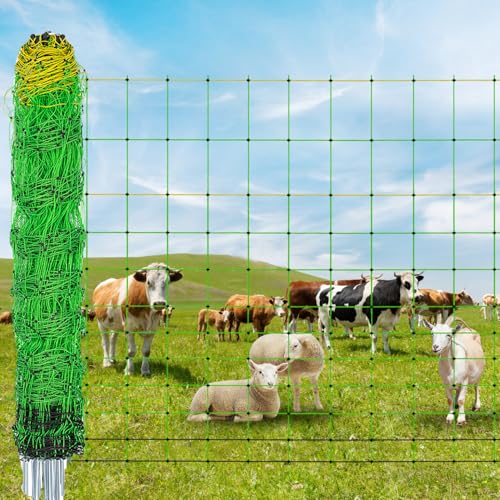 | Best OverallElectric Net Fence for Goats | ★★★★★ | Check Price |
| 2 | 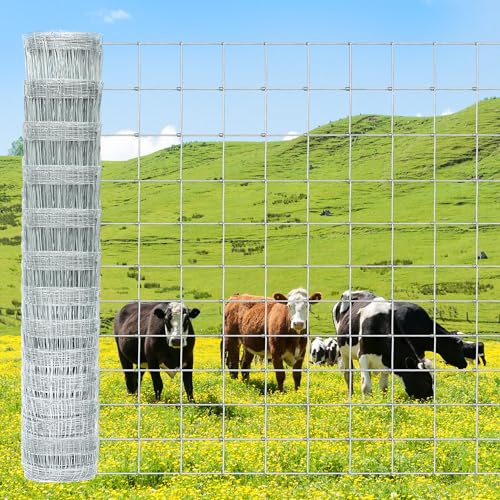 | Heavy-Duty Goat Field Fence (Woven Wire) | ★★★★☆ | Check Price |
| 3 |  | Zareba Electric Fence Charger | ★★★★☆ | Check Price |
There is an old saying among goat keepers: if your fence will not hold water, it will not hold a goat. It is an exaggeration, but only just.
Goats climb, jump, lean, and squeeze through gaps that no cow or horse would even notice. Getting the fence right is the single most important thing you will do for your herd.
This guide breaks down the fence types that actually work, the heights that hold goats, how to use electric fencing, and the common mistakes that turn your pasture into an open gate.
What Makes a Good Goat Fence?
A good goat fence does three jobs at once: it keeps goats in, keeps predators out, and survives constant abuse. Goats rub on fences, stand on them, and test every weak spot daily.
The two qualities that matter most are height and mesh size. Too short and agile goats jump it, while openings that are too large trap the heads of horned goats and give climbers a foothold, which is exactly why so many owners ask whether goats can climb fences in the first place.
Strong posts and tight tension matter just as much as the wire itself. A sagging fence on weak posts becomes a goat trampoline within a season.
Plan the fence around your worst escape artist, not your calmest goat. If it holds the Nigerian Dwarf doe who treats the fence like playground equipment, it will hold the rest of the herd.
The Best Types of Goat Fencing
There is no single best fence, only the best fence for your situation. Here are the four options that actually work, with their strengths.
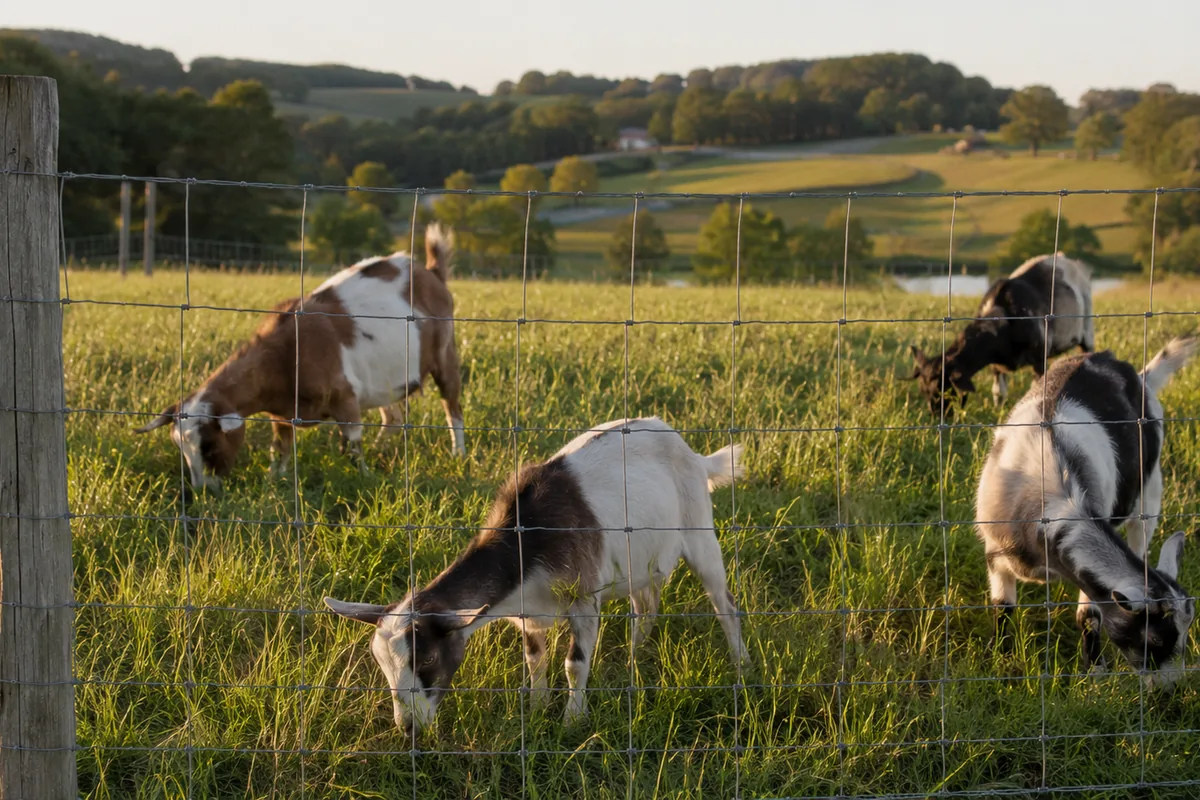
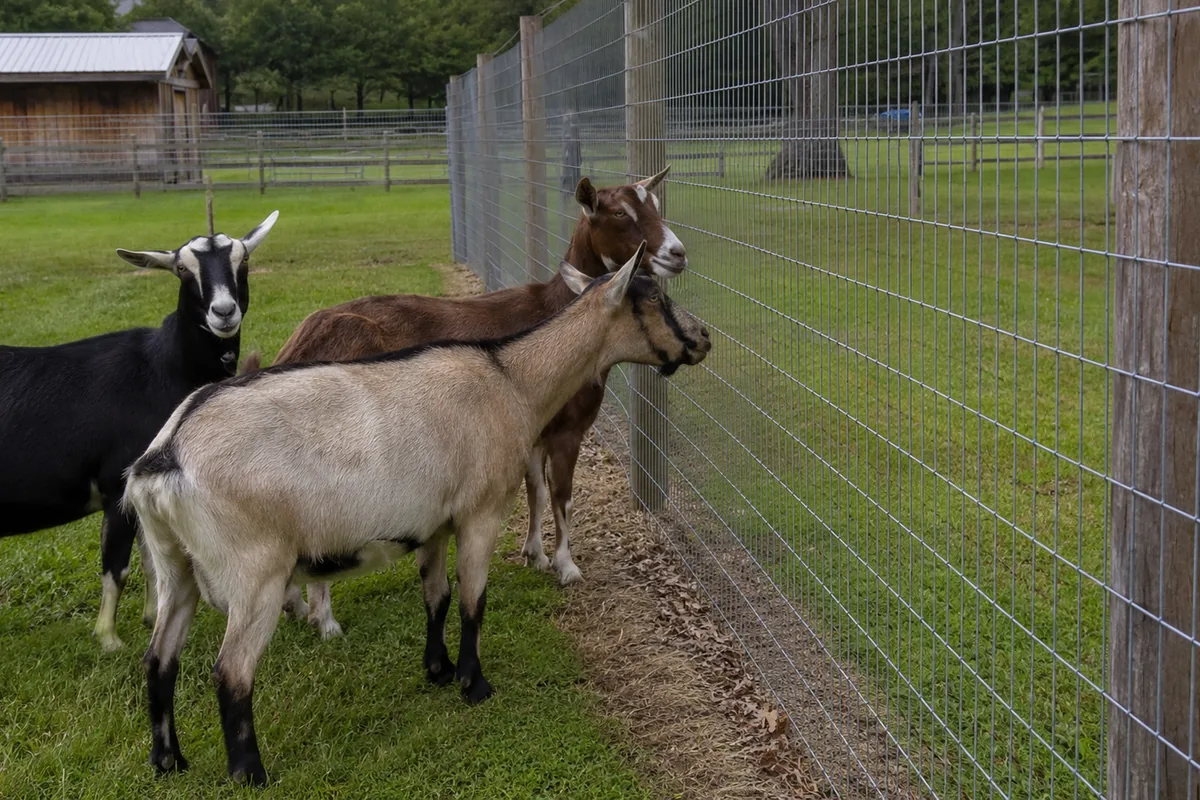
Woven wire (field fence) is the gold-standard permanent option. The best version is no-climb mesh with small 2x4 inch openings, which horns cannot fit through and hooves cannot climb. Standard field fence with large 6 inch openings is cheaper but traps horned goats, so spend the extra on no-climb if you can.
Electric netting is portable, quick to set up, and ideal for rotational grazing or temporary paddocks. It is the easiest way to move goats around fresh forage, though it needs a charger and regular checking to stay hot.
Livestock and cattle panels are rigid 16 foot welded sections that are nearly indestructible. They shine for small pens, buck pens, and kidding stalls, but the large squares can trap horned goats, so they suit smaller enclosures over big perimeters.
High-tensile electric uses several smart wires on a permanent line. It is cheaper than woven wire over long distances and excellent for large acreage, but goats must be trained to it and it is less forgiving of a dead charger.
Many experienced keepers combine methods: no-climb woven wire for the perimeter plus a single hot offset wire to stop climbing and rubbing. That combination beats any single fence type.
How Tall Should a Goat Fence Be?
Height is where most new owners go wrong. Four feet is the practical minimum, and five feet is the safer target for nearly everyone.
Small, agile breeds like Nigerian Dwarfs and Pygmies jump far better than their size suggests, which is the same athleticism behind their reputation for jumping surprisingly high. Bucks, especially during breeding season, will go through or over almost anything to reach a doe in heat.
Anything a goat can climb on near the fence effectively shortens it. A four foot fence next to a three foot rock pile is a one foot fence.
| Goat type | Minimum height | Recommended |
|---|---|---|
| Standard does and wethers | 4 ft | 4.5 to 5 ft |
| Miniature breeds (jumpers) | 4 ft | 5 ft |
| Bucks | 5 ft | 5 ft+ with hot wire |
| Kidding / small pens | 4 ft panels | 4 to 5 ft panels |
When you are unsure, build taller. Adding height to an existing fence is far more work than building it right the first time.
Electric Fencing for Goats
Electric fencing works well for goats once they respect it, and it doubles as predator control. The catch is that a goat’s thick coat insulates it, so the system has to be set up correctly.
Use a strong charger. A small paddock needs at least 0.5 to 1 joule of output, and longer runs need more, so size the energizer to your fence length rather than guessing.
Goats learn the fence by touching it with their nose or ears, where the coat is thin. Train new goats in a small area first so they get a clear lesson before you trust the fence on open pasture.
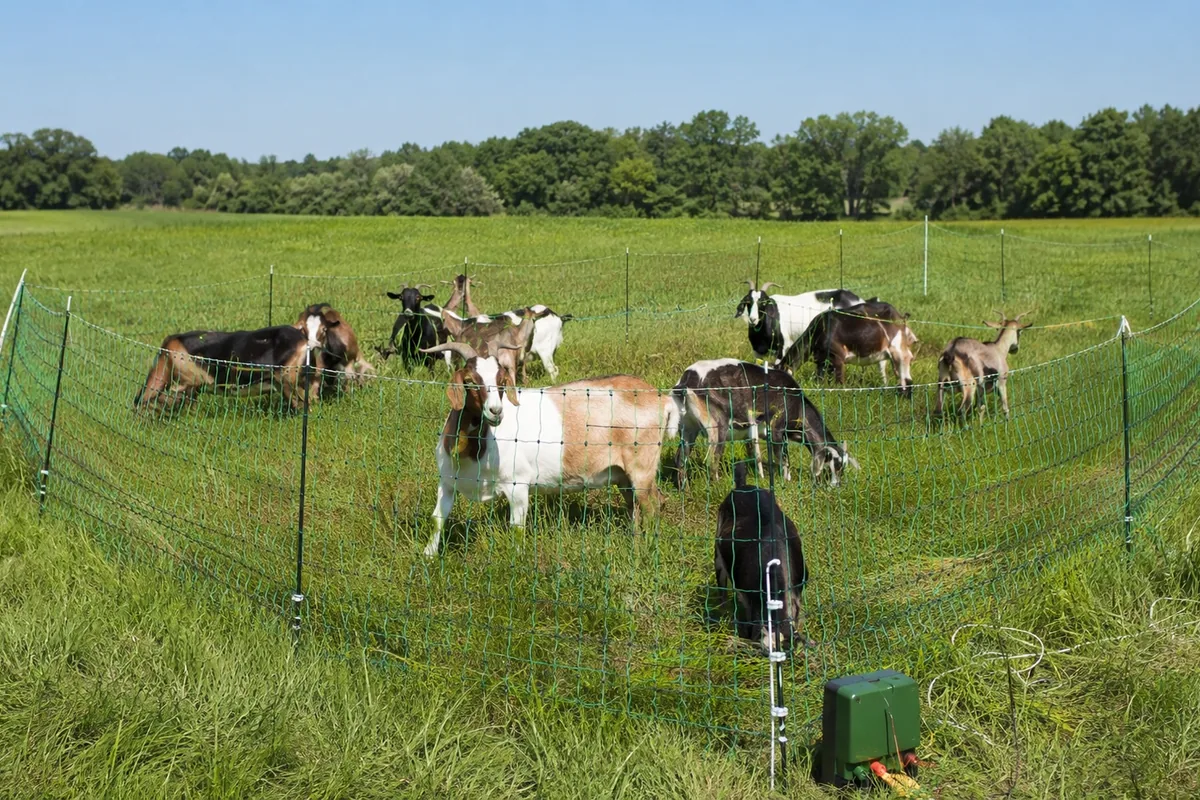
The most reliable setup for many farms is a hybrid: a solid woven wire perimeter with one electrified offset wire running along the top or inside at goat height. The hot wire stops the leaning and climbing that wears fences out, while the woven wire is the real barrier even if the power fails. Electric netting on its own is excellent for moving goats, and it is a far safer containment method than tethering a goat, which leaves animals exposed to predators and tangling.
Common Goat Fencing Mistakes
Most goat escapes trace back to a handful of avoidable mistakes:
- Building too short. A fence that holds a calm adult will not hold a bored kid or a buck in rut. Default to 5 feet.
- Mesh openings too large. Six inch field fence and cattle panel squares trap horned goats by the head. Use 2x4 inch no-climb mesh.
- Weak posts and loose tension. Goats lean and rub constantly, so use solid corner posts, closer line-post spacing than you would for cattle, and keep the wire tight.
- Climbable objects against the fence. Hay feeders, water tubs, stumps, and buckets become ladders. Keep the fence line clear.
- Relying on electric alone with no backup. A dead charger turns a hot-wire-only fence into open pasture overnight. Pair electric with a physical barrier where you can.
Walk your fence line regularly and fix small problems before a goat finds them. The herd is testing the fence every single day, so you should too.
Your fence is only half of good goat housing, and the other half is a dry, draft-free shelter.
Sources and Further Reading
Compiled and cross-checked against established livestock and extension references:
- Premier1 Supplies, electric netting and goat fencing guides
- University extension publications (Penn State, Oklahoma State) on small-ruminant fencing
- American Dairy Goat Association (ADGA) management resources
- Langston University, Meat Goat Production Handbook, facilities and fencing
Fencing needs vary by terrain, predator pressure, and breed. Plan around your most determined goat, and build it once, build it right.
Frequently Asked Questions
For a permanent perimeter, 4 to 5 foot woven wire with a small 2x4 inch no-climb mesh is the gold standard, ideally with one hot wire along the top or inside to stop leaning and climbing. For rotational grazing or temporary paddocks, portable electric netting is the easiest option. Rigid livestock or cattle panels are best for small pens, buck pens, and kidding areas. The right choice depends on whether you need a fixed boundary or a movable one.
Four feet is the practical minimum, and five feet is safer, especially for smaller breeds that jump, for bucks, and anywhere goats have something to climb on near the fence. Nigerian Dwarfs and other agile goats clear low fences easily, and a goat that can get its front feet on the top wire will often go over. When in doubt, build taller, because adding height after the fact is far harder than doing it once.
Yes, once the goats are trained to respect it, electric fencing is very effective and also helps keep predators out. Goats have thick coats that insulate them, so you need a strong charger (at least 0.5 to 1 joule for a small setup, more for long runs) and the goats must touch the wire with their nose or ears to learn it. Many owners pair woven wire with a single hot offset wire, which stops climbing and rubbing without relying on electric alone.
Horned goats push their heads through fence openings to reach grass on the other side, then cannot pull back because their horns catch. This happens most with large-mesh field fence (6 inch openings) and welded wire. The fix is small 2x4 inch no-climb mesh that horns cannot fit through, or running a hot wire along the fence at head height so goats do not lean into it. Cattle panels with large squares are the worst offender for horned goats.
Yes. Goats climb and jump better than almost any livestock, and they will use horizontal wires, rails, gates, and anything leaning against the fence as a ladder. Avoid large horizontal openings they can get a foothold in, keep buckets, hay feeders, and structures away from the fence line, and add a hot wire near the top. A determined goat treats a weak fence as a suggestion, not a barrier.