| # | Product | Our Rating | ||
|---|---|---|---|---|
| 1 | 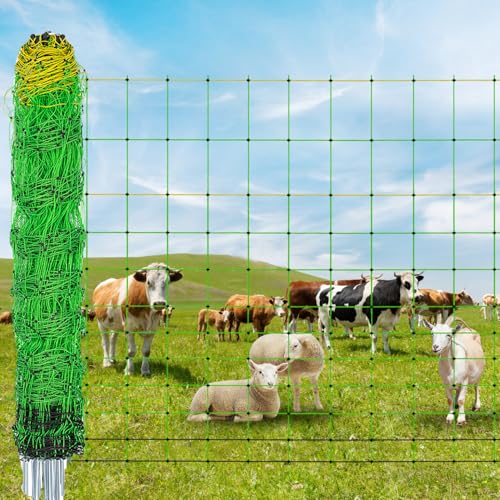 | Best OverallElectric Net Fence for Goats | ★★★★★ | Check Price |
| 2 |  | Wall-Mount Goat Hay Feeder | ★★★★☆ | Check Price |
| 3 |  | Farm Innovators Heated Water Bucket | ★★★★☆ | Check Price |
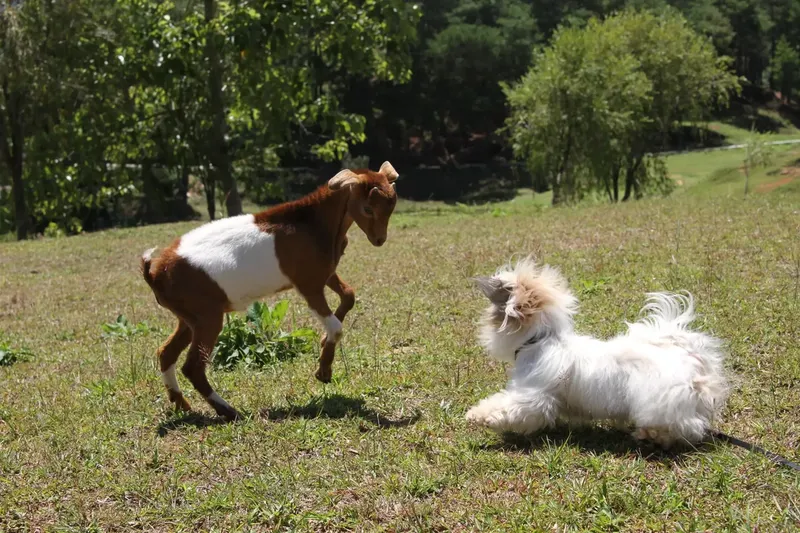
A pygmy goat barely reaching knee height next to a curious dog makes an adorable picture, but it raises a fair question for anyone keeping both. Dogs are predators by instinct, and pygmy goats are small prey animals, so the pairing carries real risk when it’s handled carelessly.
The good news is that thousands of homesteaders keep dogs and pygmy goats side by side every day. What separates a lifelong friendship from a dangerous mismatch comes down to the dog you pick and how carefully you manage those first few weeks together.
Can dogs and pygmy goats live together?
Yes, dogs and pygmy goats can absolutely live together, and plenty of them end up as genuine companions that graze and patrol the property side by side. The outcome rides far more on the individual dog than on the goat, since pygmy goats are gentle and almost never start trouble.
A calm, well-trained dog with low prey drive will share a yard with pygmy goats just fine. A bored, untrained, or high-energy one, though, can injure or kill a small goat in seconds, sometimes while it’s only trying to play.
Temperament matters more than size or reputation here. Plenty of little terriers are riskier around goats than a hundred-pound guardian dog that’s been bred for centuries to protect them.
Why pygmy goats need extra protection around dogs
In simple terms, pygmy goats are small prey animals, so a dog’s chase instinct puts them at far greater risk than full-sized goats ever face.
Pygmy goats are one of the smallest goat breeds, standing around 16 to 23 inches tall and weighing 35 to 50 pounds. That compact size leaves them far more vulnerable to dogs than your full-sized dairy or meat goats.
To a dog with strong hunting instincts, a small animal that darts away and bleats is basically an invitation to chase. Once that prey drive kicks in, even a friendly family pet may grab, shake, or pin a goat without meaning any real harm.
Pygmy goats also can’t outrun a determined dog the way a deer or a full-sized goat might. Baby pygmy goats are especially fragile, so kids should never be left within reach of a dog you don’t completely trust.
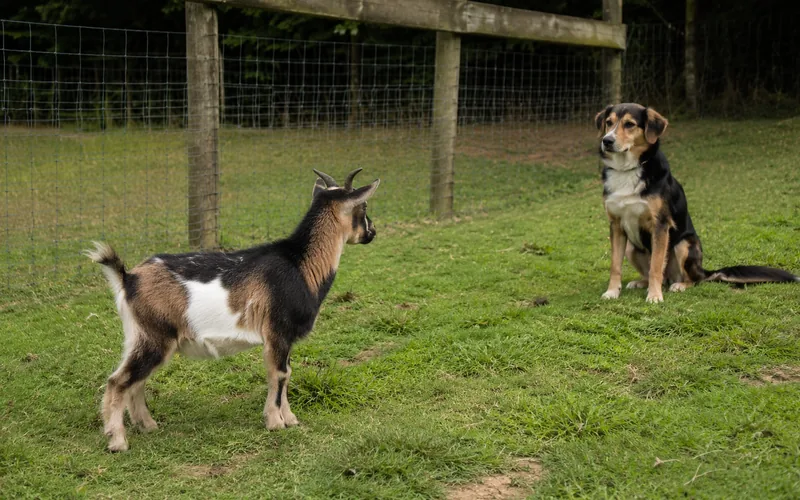
And remember, pygmy goats come with horns unless they’ve been disbudded, and a panicked goat will absolutely use them. An unsupervised scuffle can leave both animals hurt, not just the goat, which is exactly why early management matters so much.
Best dog breeds for living with pygmy goats
The short answer: the best dogs for pygmy goats are livestock guardian breeds and naturally calm, low-prey-drive companions.
Some dogs are built for life among livestock, while others were bred for jobs that clash with it completely. If you’re choosing a new dog specifically to live with pygmy goats, breed is the single most important call you’ll make.
Livestock guardian dog breeds
Livestock guardian dogs, or LGDs, were shaped over thousands of years to live with and protect herds, a working role extension specialists still recommend today. Raise one alongside goats from puppyhood, and it bonds with the herd and treats it as the family it’s meant to defend.
Great Pyrenees and Anatolian Shepherds are the most popular picks among goat owners. Maremmas, Komondors, Akbash, and Kangals handle the work just as well and settle naturally into a watchful, protective role.
Calm companion breeds
You don’t actually need a full guardian breed for a small backyard setup. Many laid-back family dogs adapt to pygmy goats just fine once they’ve been introduced the right way.
What really matters is low prey drive and a willingness to take training, not the name on the pedigree. A steady, gentle dog that ignores small running animals is a far better bet than an excitable one from a “friendly” breed.
| Dog type | Examples | Why they work |
|---|---|---|
| Livestock guardians | Great Pyrenees, Anatolian Shepherd, Maremma, Kangal | Bred to bond with and protect herds |
| Calm companions | Golden Retriever, Labrador, Bernese Mountain Dog, Basset Hound | Low prey drive, trainable, even-tempered |
| Mellow mixed breeds | Older or laid-back rescues | Individual temperament beats breed label |
Dog breeds to keep away from pygmy goats
High-prey-drive and high-energy breeds are the riskiest dogs to keep around small goats. A lot of them were bred to chase, hunt, or herd, and those instincts are stubbornly hard to train out.
Sighthounds like Greyhounds, hunting terriers like Jack Russells, and northern breeds like Siberian Huskies all sit near the top of the caution list. Herding breeds such as Border Collies and Australian Cattle Dogs may nip and chase goats relentlessly, stressing the herd even when no real attack ever happens.
That doesn’t make every dog of these breeds dangerous. It does mean you’ll need far more training, fencing, and supervision to keep everyone safe, and separate spaces are often the smarter call.
How to introduce a dog to your pygmy goats
A slow, structured introduction is the single best thing you can do for a safe outcome. Rushing those first meetings is exactly how accidents happen, so plan on a process measured in weeks, not minutes.
- Start with a barrier. Let the dog and goats see and smell each other through a sturdy fence or gate for several days before any direct contact.
- Use a leash for first contact. Keep the dog leashed and calm during early face-to-face meetings, rewarding relaxed behavior and ending the session the moment it gets overexcited.
- Supervise every interaction. Keep all early meetings short and fully supervised for at least two to three weeks before trusting them loose together.
- Allow off-leash time gradually. Only let the dog roam with the goats once it stays consistently calm, and never leave a new dog alone with pygmy goats until it has clearly earned that trust.
It also helps to feed the dog and goats apart during this stage, since competition over food is a classic flashpoint. Swapping bedding or rags between them lets each animal get used to the other’s scent before they ever meet face to face.
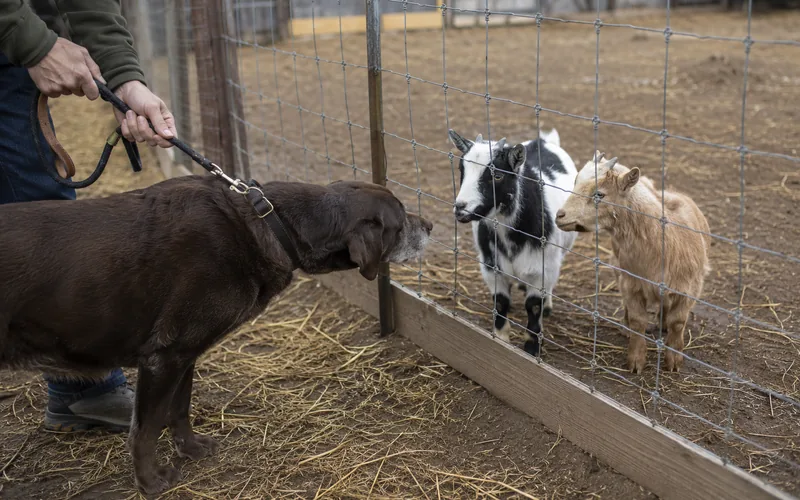
Secure fencing makes this whole process safer, so it’s worth reviewing the best types of goat fencing before that first introduction. Just keep in mind that pygmy goats can climb and test fences, so any barrier between species needs to actually hold.
Body language to watch during interactions
Put simply, watch for a stiff, staring, crouching dog and a constantly fleeing, loudly bleating herd, since both signal trouble.
Reading both animals during introductions tells you whether things are heading somewhere safe. Most attacks come with clear warning signs that owners simply miss in the moment.
In the dog, watch for a stiff body, a hard fixed stare, a low crouch, or a slow creep toward the goats. That’s prey drive talking, not play, and it means it’s time to separate them right away.
With the goats, watch for constant fleeing, loud distress bleating, huddling in a corner, or lowered horns. A herd that never settles around the dog after several weeks is telling you the pairing needs more work, or just isn’t safe.
Can dogs protect pygmy goats from predators?
The right dog does much more than coexist with pygmy goats, it actively protects them. Guarding the herd is the whole reason livestock guardian dogs exist in the first place.
Pygmy goats are easy targets for coyotes, foxes, stray dogs, and even large birds of prey, the usual predators of small livestock. A bonded LGD patrols the property, marks its territory, and drives off threats long before they reach the herd.
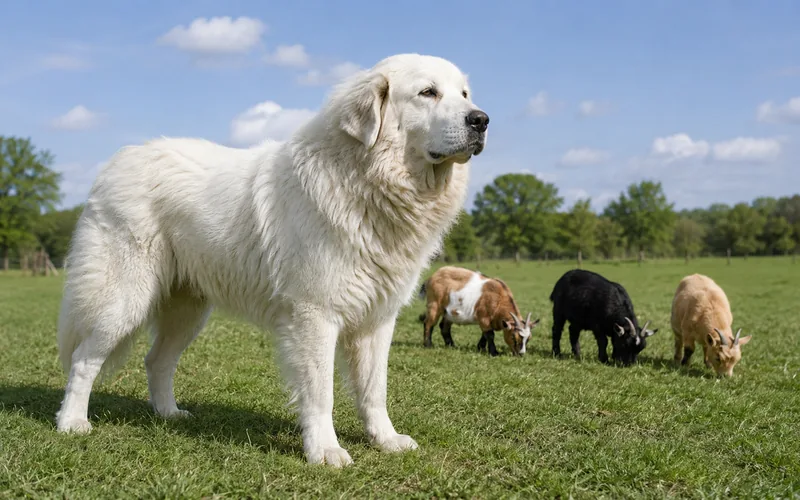
That protection is real and genuinely valuable, especially on open rural land. One good guardian dog can head off the kind of devastating predator losses that fencing and shelter alone simply can’t stop.
Even with a guardian on duty, it’s still smart to lock pygmy goats in a secure shelter overnight. Most predator attacks happen after dark, and a closed pen leaves both the goats and the dog one less thing to worry about.
That goes double if you keep ducks with your goats, since ducks draw foxes and raccoons in close.
When dogs and pygmy goats shouldn’t live together
Sometimes the safest decision is just to keep the two apart. If a dog has ever shown a strong prey response, chased livestock, or hurt a small animal, don’t gamble your pygmy goats on it suddenly changing.
You should also separate them if the goats stay panicked for weeks, if you can’t reliably supervise, or if your setup can’t keep the animals apart when needed. There’s no shame in managing them in different spaces, and a solid goat shelter gives the herd a safe retreat of its own.
When in doubt, give your pygmy goats a companion of their own kind instead. Goats are herd animals at heart, and even a single sheep can live with goats as steady, low-risk company.
Final Thoughts
Dogs and pygmy goats really can live together safely, and the right dog turns into both a guardian and a friend to the herd. It comes down to choosing a low-prey-drive or guardian breed and introducing them slowly under close supervision.
Pick the wrong dog or skip the careful introduction, though, and you put your goats at serious risk for no good reason. So take it slow, read the body language, and never leave a new dog alone with your pygmy goats until they’ve fully earned your trust.
Frequently Asked Questions
Pygmy goats are gentle and rarely cause problems, so the pairing comes down to the dog. A calm, low-prey-drive dog or a livestock guardian breed gets along well with pygmy goats, while a high-energy hunting or herding dog often sees them as something to chase.
Livestock guardian breeds are the best dogs to live with pygmy goats. Great Pyrenees and Anatolian Shepherds are the most popular choices, with Maremmas, Komondors, Akbash, and Kangals also excelling. Raised with the herd from puppyhood, they protect goats rather than chase them.
It can be safe with the right dog and a careful introduction. Start with a fence-line meeting, keep the dog leashed for first contact, and supervise every interaction for at least two to three weeks. Never leave a new dog alone with pygmy goats until you fully trust it.
Yes, and raising a guardian-breed puppy alongside pygmy goats is the ideal way to build a lasting bond. Supervise closely, since puppies are bouncy and can accidentally hurt or frighten small goats during play while they learn calm herd manners.