| # | Product | Our Rating | ||
|---|---|---|---|---|
| 1 | 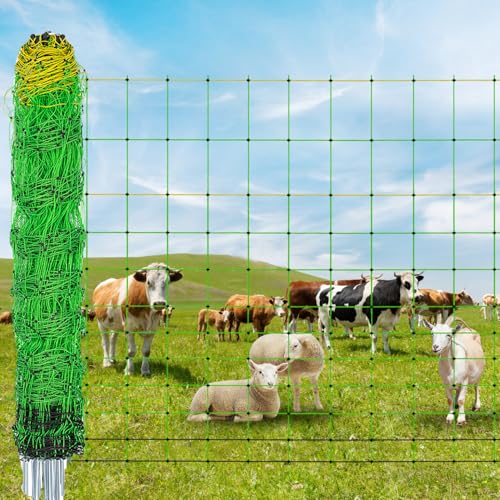 | Best OverallElectric Net Fence for Goats | ★★★★★ | Check Price |
| 2 |  | Wall-Mount Goat Hay Feeder | ★★★★☆ | Check Price |
| 3 |  | Farm Innovators Heated Water Bucket | ★★★★☆ | Check Price |
Tethering looks like the simplest way to let a goat nibble down a patch of weeds without building a fence. Stake, chain, collar, and the job is done.
The reality is messier. A goat on a line can tangle, choke, overheat, or become an easy target, and those outcomes happen faster than most new owners expect.
That doesn’t make tethering automatically wrong. With the right setup and constant attention, it’s a genuine tool for short grazing sessions, holding a goat during chores, or clearing one stubborn strip of brush.
This guide covers when tethering is acceptable, the dangers to plan around, the tethering methods that actually work, the gear that keeps a staked goat safe, and the alternatives worth considering instead.
Is tethering goats actually a good idea?
The real answer to “can goats be tethered” is a qualified yes. It comes down to how you do it, for how long, and which goat is on the line.
For full-time containment, no. A tether is one of the riskiest ways to hold a goat, and it should never stand in for proper fencing or a secure pen.
For short, supervised tasks, it can be reasonable. Brief grazing on a roadside strip, restraining a goat during hoof trimming, or clearing a fence line while you work nearby all count as defensible uses.
The deciding factor is supervision. A tethered goat you can see and reach within seconds is in a completely different situation than one left alone in a back field.
Goats are also herd animals, so a single staked goat away from its companions will often panic, pace, and pull against the line. That stress alone is a good reason to keep every session short.
The disadvantages of tethering goats
Put simply, the biggest risks are strangulation, tangling, predator attacks, heat stress, and isolating a herd animal.
The biggest danger is strangulation. A goat that wraps the line around a post, a sapling, or its own legs can choke in under a minute once it panics and pulls.
Tangling is the next problem. Even a calm goat will step over the chain, loop it around a hock, and end up hobbled or thrown onto its side, unable to right itself.
Then there are predators, a constant threat for any staked animal. A tethered goat can’t run, hide, or fight back, which leaves it exposed to predators like coyotes, loose dogs, and foxes that would never catch a goat behind a fence.
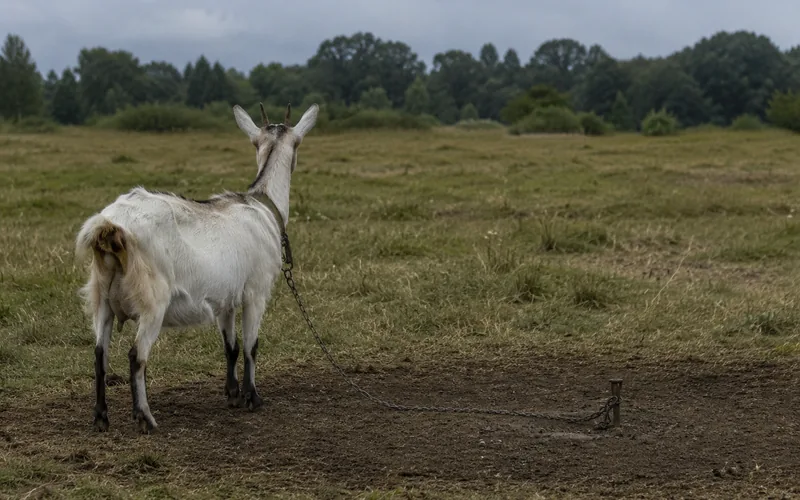
On top of that, heat and weather pile on more risk. A goat that drifts out of its shade radius can overheat fast, and a sudden storm leaves it with nowhere to take cover.
There are quieter costs too. Tethered goats graze a tight circle down to bare dirt, churn the ground into mud, and miss the steady movement that keeps their rumen and feet healthy.
Goats you should never tether
The short answer: kids, pregnant does, sick goats, and flighty or untrained animals should never be staked out.
Kids are the worst candidates. Young goats are quick, curious, and light enough to flip themselves with a tangled line, and many breeders refuse to tether anything under about 20 pounds.
Pregnant does should stay off the tether as well. They need room to lie down, shift position, and move freely, and the stress of restraint can contribute to kidding complications.
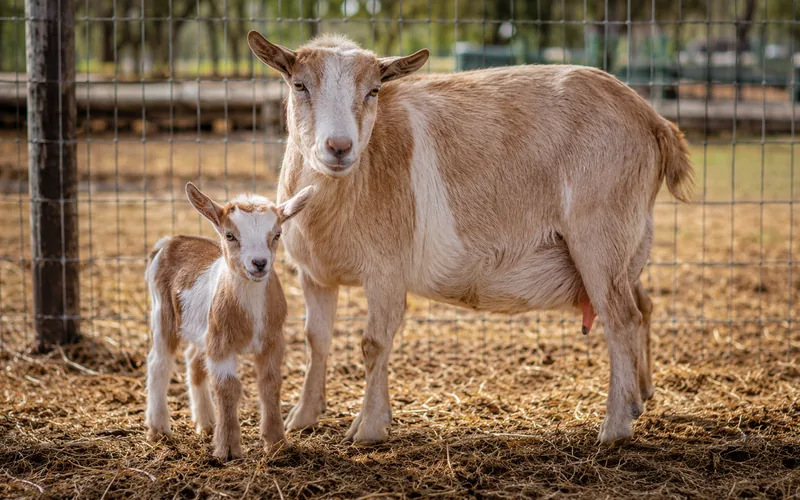
Sick or recovering goats belong in a pen, not on a stake. Isolation and limited access to food and water slow healing and pile on stress at the worst possible time.
Flighty, nervous, or untrained goats are dangerous on a tether too. A high-strung Nigerian Dwarf or a herd-bound first-timer will hit the end of the line at a dead run, and that’s exactly how neck and leg injuries happen.
Calm, older, halter-trained animals are the only goats that should ever spend time staked out.
Tethering methods that actually work
Here’s what matters: a sliding run line is safest, a swivel stake suits one goat, and plain posts or aerial runners cause the most trouble.
Not all tether setups carry the same risk. The system you choose decides how often the line tangles and how much room the goat has to hurt itself.
Four basic methods show up again and again among experienced owners. They range from genuinely workable to best avoided entirely.
The post-to-post run line
A run line is the safest of the common setups. You stretch a cable between two solid anchors and clip the goat’s lead to a ring that slides along it, much like a dog run.
The goat gets a long, narrow grazing lane instead of a tight circle, and the sliding ring stops the line from coiling around a single point. Keep the cable taut with no more than a foot of slack so the goat can’t get a leg over it.
The swivel ground stake
A swivel stake is the most popular option for a single goat. A metal stake drives into the ground and a swivel loop at the top lets the chain rotate as the goat circles, which cuts down on wrapping.
Drive the stake at least two feet down on flat, obstacle-free ground. The swivel is the whole point, so a stake without one will let the chain shorten with every lap until the goat is pinned against it.
Re-check the stake after heavy rain, since soft ground loosens its grip and a determined goat can pull it free. A dragged stake bouncing along on a chain becomes a hazard the goat will then bolt from in a panic.
The single tie-out post
Tying a goat to a plain post or tree is the setup that causes the most trouble. With nothing to swivel, the goat winds the line tighter on every pass until it chokes itself against the post.
If you truly have no other option, add an inline swivel and keep the lead very short. Better still, skip this method completely and use a run line.
Overhead aerial runners
An aerial runner suspends the line on a cable strung between two high points, letting a short drop lead hang down to the goat. In theory it keeps the line off the ground and reduces tangling.
In practice, goats are climbers and jumpers, so a swinging overhead lead just tempts them to rear, hook a leg, or strangle. Most owners who try it end up back on a ground-level run line.
Choosing the right tether gear
The gear does most of the safety work. Cheap rope and a flimsy clip are exactly how tethering accidents begin.
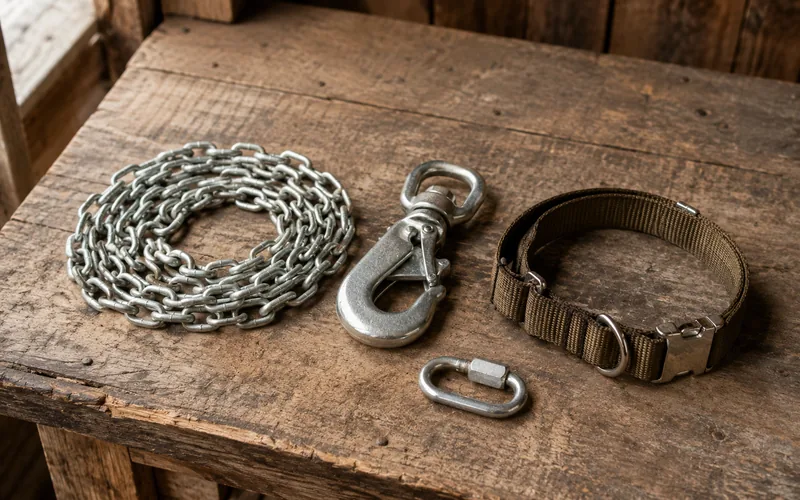
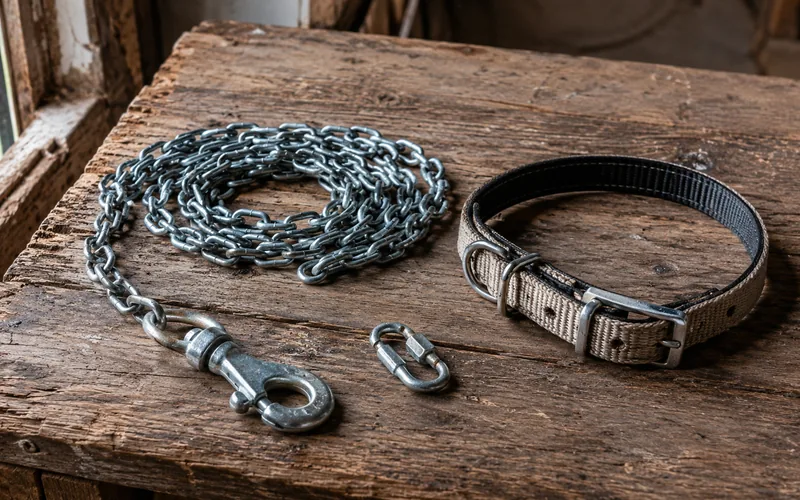
Use a lightweight steel chain for the line itself, since goats chew through rope and nylon in minutes and frayed rope becomes a choking hazard. A 15 to 20 foot chain gives enough grazing room without piling up dangerous slack.
Every connection point needs a heavy-duty swivel snap so the line can rotate freely on both ends. A breakaway link rated to snap under a hard pull is cheap insurance, freeing a trapped goat before the pressure can injure it.
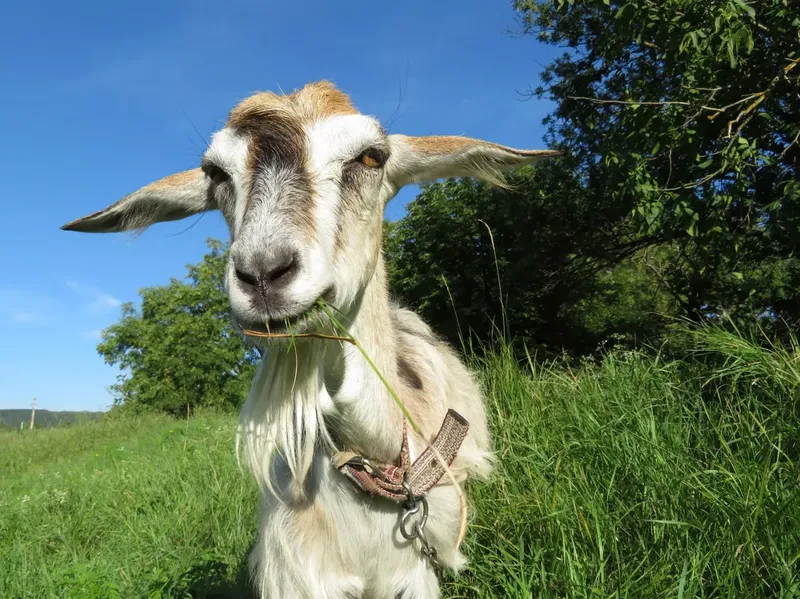
The collar matters as much as the line. A snug, properly fitted collar or a chest harness spreads pressure safely, while a loose collar can slip over the head or catch on the jaw.
| Gear | Best choice | Why it matters |
|---|---|---|
| Tether line | 15 to 20 ft lightweight steel chain | Goats chew through rope; chain resists tangling and choking |
| Connectors | Heavy-duty swivel snaps on both ends | Let the line rotate so it cannot coil and shorten |
| Safety link | Rated breakaway link | Snaps under a hard pull and frees a trapped goat |
| Anchor | Swivel ground stake, driven 2 ft deep | Rotates with the goat and holds against pulling |
| Collar | Snug fitted collar or chest harness | Spreads pressure and will not slip over the head |
How to tether a goat safely
Put plainly, use a calm trained goat, a cleared radius, a driven swivel stake, and constant supervision.
Start with the right animal and a clear, hazard-free spot. Walk the full radius first and remove anything the chain could wrap, including saplings, fence posts, water troughs, and farm equipment.
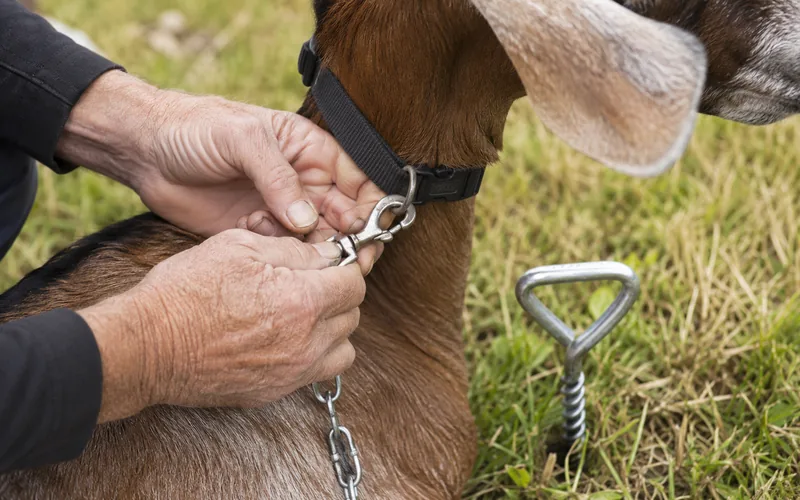
Drive the stake fully into level ground with a four-pound sledgehammer, or set it with a mattock, then test it with a hard pull. Clip the chain to the stake swivel and to the goat’s collar, both through heavy swivel snaps.
Train the goat before you trust the setup. Experienced owners spend up to two weeks teaching a goat to respect the line, staying close and stepping in the moment it tangles.
Check the collar fit as well, leaving about two fingers of space so it can’t slip over the head or choke. The same goat-care fundamentals of clean water, shade, and daily handling matter even more once an animal is restrained on a line.
Keep the radius free of climbing temptations as well, because goats are relentless and will test and climb a fence or anything else within reach. Anything they can scramble onto becomes a strangulation point.
How long can you tether a goat?
Treat tethering as a sessions-only activity measured in hours, never a daily routine. Most experienced owners cap a single session at three to four hours and never leave a goat staked overnight.
Shorter is safer in heat. On a hot afternoon, an hour with frequent checks is plenty, while a mild morning might stretch to a few supervised hours of grazing.
Build the habit of checking water at every single visit, since a tethered goat drinks more in heat and can tip or drain a bucket fast. An empty bucket on a hot afternoon is an emergency, not a minor oversight.
The hard rule is presence. If you can’t stay home and check the goat every 30 minutes, it belongs behind a fence rather than on a line, no matter how good the gear is.
Shade, water, and weather safety
Here’s the key point: shade and water must stay within the goat’s reach, and skip tethering in extreme weather.
A tethered goat must reach shade and fresh water inside its grazing circle at all times. Heat builds quickly, and a goat that grazes out of the shade has no way to cool itself down.
Position the stake so a tree, shelter, or shade cloth always falls within the chain’s reach. Set a tip-proof water bucket in the same zone and make sure the goat can’t wind the line around it.
Skip tethering altogether in extreme heat, hard rain, or strong wind. A staked goat can’t retreat to a dry corner the way it could inside a simple goat shelter, so rough weather turns a short session into a welfare problem.
Daily timing matters too, and it shapes how long a goat can stay out safely on any given day. Hot afternoons call for shorter sessions and more frequent checks.
Is it legal to tether a goat?
Tethering livestock is legal in many places, but not everywhere. A number of states, counties, and cities restrict or ban continuous tethering of farm animals, and some tie it directly to animal-welfare standards covering shade, water, and supervision.
Check your local ordinances before you stake a goat, especially inside city or suburban limits. Zoning and animal-welfare codes change from one county to the next, and a setup that’s fine on a rural farm may be flat-out banned in town.
Where tethering is allowed, the rules often still demand constant access to water, shade, and a quick-release setup. Meeting those welfare basics keeps you on the right side of the law and keeps the goat safer at the same time.
Safer alternatives to tethering
The better options are simple: portable electric netting, permanent fencing, or a small pen all beat a tether.
Portable electric netting is the best alternative for most owners. You can set a section of net fence in minutes, move it to fresh forage whenever you like, and the goats stay contained and protected without any choking risk.
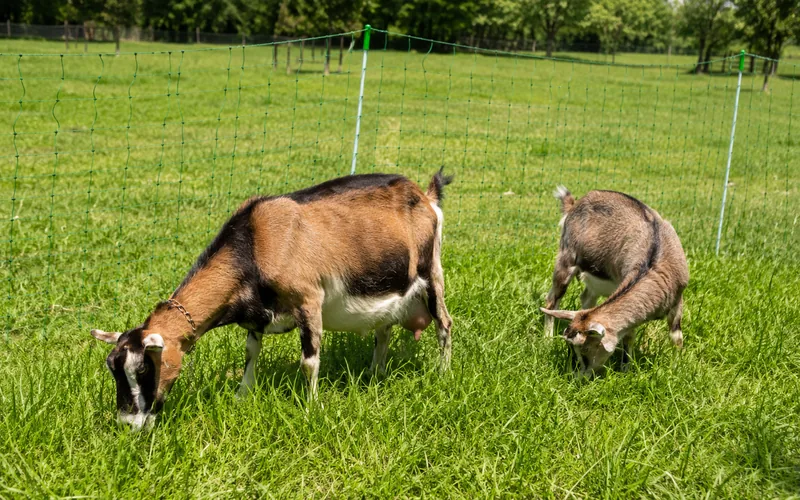
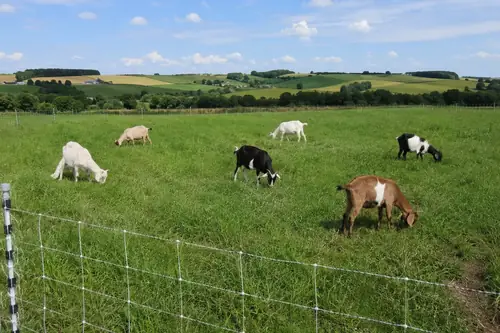
Permanent fencing is the gold standard if your budget allows. Pairing solid woven-wire goat fencing with a dry shelter solves the containment problem for good, giving goats real freedom while keeping predators out.
Rotational grazing with movable fencing also spreads manure and parasites more evenly than a single staked circle. The pasture recovers, and the goats get cleaner forage with far less worm pressure.
A small pen or paddock beats a tether even on a tight budget. Any enclosure lets a goat move, lie down, and stay with its herd, which removes nearly every danger that comes with a line.
If you only need to clear brush, consider moving a portable pen rather than staking a single goat. It keeps the herd together and erases most of the risk in one step.
Final Thoughts
Goats can be tethered, but the practice sits at the risky end of goat keeping and deserves to be treated that way. It works only as a short, closely watched tool for a calm, trained adult goat on safe gear.
For anything longer than a supervised grazing session, fencing wins every time. Build a secure paddock or set up portable netting, and you’ll trade the constant worry of a staked goat for a setup that keeps the whole herd safe.
Frequently Asked Questions
It is okay only for short, supervised grazing on safe gear, never as full-time containment. A tethered goat should be a calm, trained adult on a swivel stake and chain, checked every 30 minutes and never left alone or out overnight.
The main disadvantages are strangulation from a wrapped line, tangling and leg injuries, total exposure to predators, heat stress when a goat grazes out of shade, and the loneliness of separating a herd animal. Tethered goats also overgraze a tight circle down to bare dirt.
Keep tether sessions to a few hours at most, and shorter in heat, with a check at least every 30 minutes. Never tether a goat overnight or while you are away from home. If you cannot supervise it, the goat belongs behind a fence.
A 15 to 20 foot lightweight steel chain is best, since goats chew through rope in minutes. Add a heavy-duty swivel snap on both ends and a rated breakaway link so the line rotates freely and releases under a hard pull.