| # | Product | Our Rating | ||
|---|---|---|---|---|
| 1 |  | Best OverallYOHKOH Portable Livestock Shelter | ★★★★★ | Check Price |
| 2 |  | Stall Dry Pine Pellet Bedding | ★★★★☆ | Check Price |
| 3 |  | Wibeelee Rubber Stall Mat | ★★★★☆ | Check Price |
Goats need shelter, but it is far simpler than most new owners imagine. You do not need a fancy barn, just a dry, draft-free space the herd can get into.
The mistake people make is overthinking the building and underthinking the basics. Get the size, the dryness, and the airflow right, and almost any structure will work.
This guide walks through the shelter types that actually work, how big to build, what to put on the floor, and how to adjust for cold and hot climates.
What Makes a Good Goat Shelter?
A good goat shelter does three simple things: it stays dry, it blocks wind and drafts, and it gives the whole herd room to lie down. Everything else is a bonus.
Goats handle cold remarkably well thanks to their thick coats, but they have almost no tolerance for being wet or standing in a draft. A damp, poorly ventilated shelter causes more respiratory illness than cold weather ever will.
That is the balance to aim for: openings high up near the roofline to let moisture and ammonia escape, with no cold draft blowing across the goats at floor level. A dry bed and good airflow beat a heater every time.
The open side or door should face away from your prevailing wind and weather. A shelter that catches the wind is barely a shelter at all, while the same building turned the other way stays snug.
Types of Goat Shelters
There is no single right shelter, only the one that fits your climate, budget, and herd. Here are the four setups that work for most keepers.
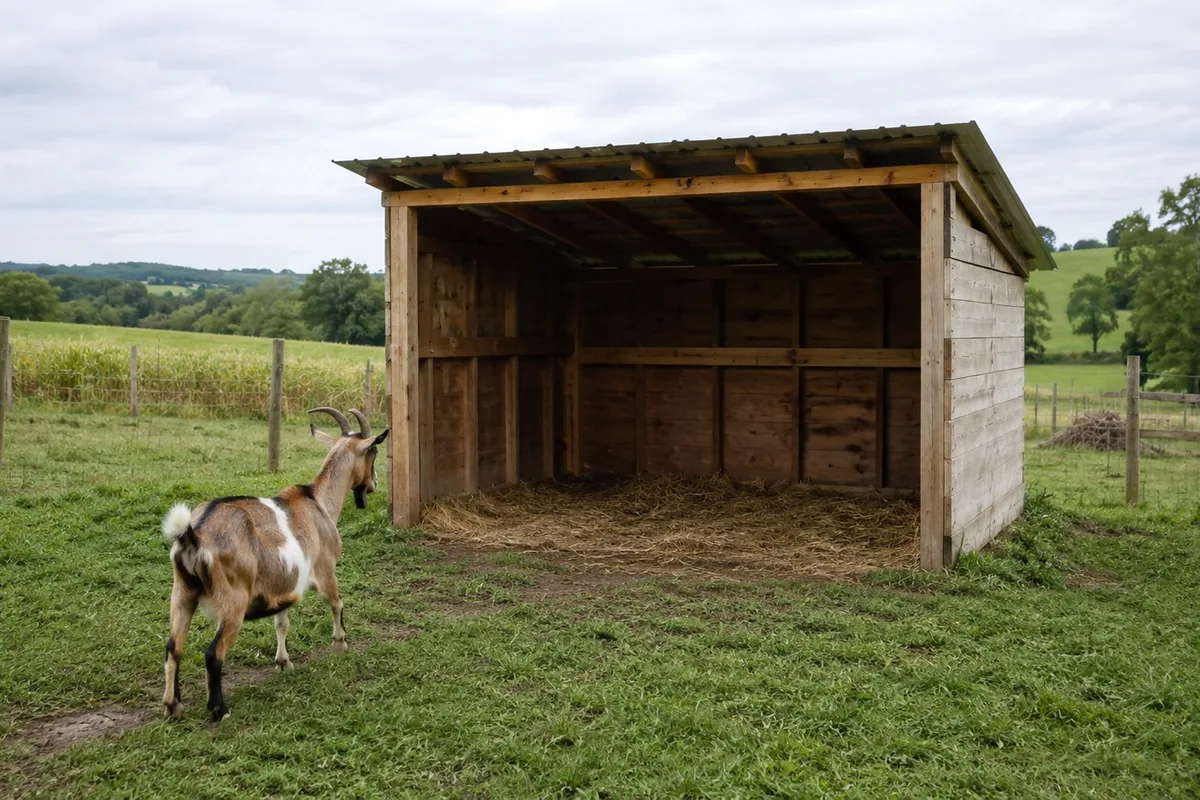
Three-sided run-in sheds are the most popular choice and the easiest to build. Goats come and go as they please, which suits their nature, and the open front gives constant ventilation. This is the default recommendation for mild and moderate climates.
Enclosed barns are best for cold climates, kidding season, and anyone who wants to lock goats in at night for predator safety. They hold warmth better but demand good ridge or eave ventilation so moisture does not build up inside.
Hoop houses and portable shelters are cheap, quick, and movable, which makes them ideal for rotational grazing and renters. A simple cattle-panel hoop covered with a tarp shelters several goats for very little money, and a ready-made portable shed saves the build entirely.
Repurposed structures stretch a budget the furthest. Old garden sheds, calf hutches, large dog houses for miniature breeds, and corners of an existing barn all make fine goat shelters with minor tweaks. Some owners even keep miniatures partly indoors, though there are real trade-offs to keeping goats in the house.
Whatever you choose, pair the shelter with secure containment, because a shelter is only half the setup and goats are escape artists who need the right fencing around it.
How Big Should a Goat Shelter Be?
Sizing is where shelters succeed or fail. Too small and you get crowding, bullying, and damp, trampled bedding that never dries out.
Plan for 15 to 20 square feet of indoor space per standard goat and 10 to 15 square feet per miniature breed like a Nigerian Dwarf or Pygmy. These are minimums, and goats are happier with more.
At 8 weeks old, kids housed together need at least 10 to 15 square feet each.
| Herd | Indoor space | Example shelter |
|---|---|---|
| 2-3 miniatures | 30-45 sq ft | 6x8 ft shed |
| 4-6 standard goats | 80-120 sq ft | 12x12 ft run-in |
| 6-10 standard goats | 120-200 sq ft | 12x16 ft barn |
| Doe with kids | +25-30 sq ft | 5x5 kidding stall |
For a small backyard herd, a 12x12 or 12x16 footprint is a reliable starting point, and the same logic applies whether you build new or convert a structure, as owners weighing a 12x2 barn layout often discover. When you are unsure, build bigger than you think you need.
Flooring and Bedding
The floor matters more than the walls for day-to-day comfort and health. The goal is a surface that stays dry and is easy to keep clean.
A dirt or packed-earth floor topped with deep bedding is the most practical option for most shelters. It drains, it is gentle on hooves, and it is cheap to maintain.
Straw and pine pellets or shavings are the two go-to bedding materials. In winter, many keepers use the deep litter method, adding fresh bedding on top of the old so the composting layer underneath generates gentle warmth.
If your shelter has a concrete floor, lay rubber stall mats down first. Bare concrete is cold, hard on joints, and draws heat out of resting goats, while a mat plus bedding fixes all three. Keep the bed dry above all else, since wet bedding is what drives hoof rot and respiratory problems.
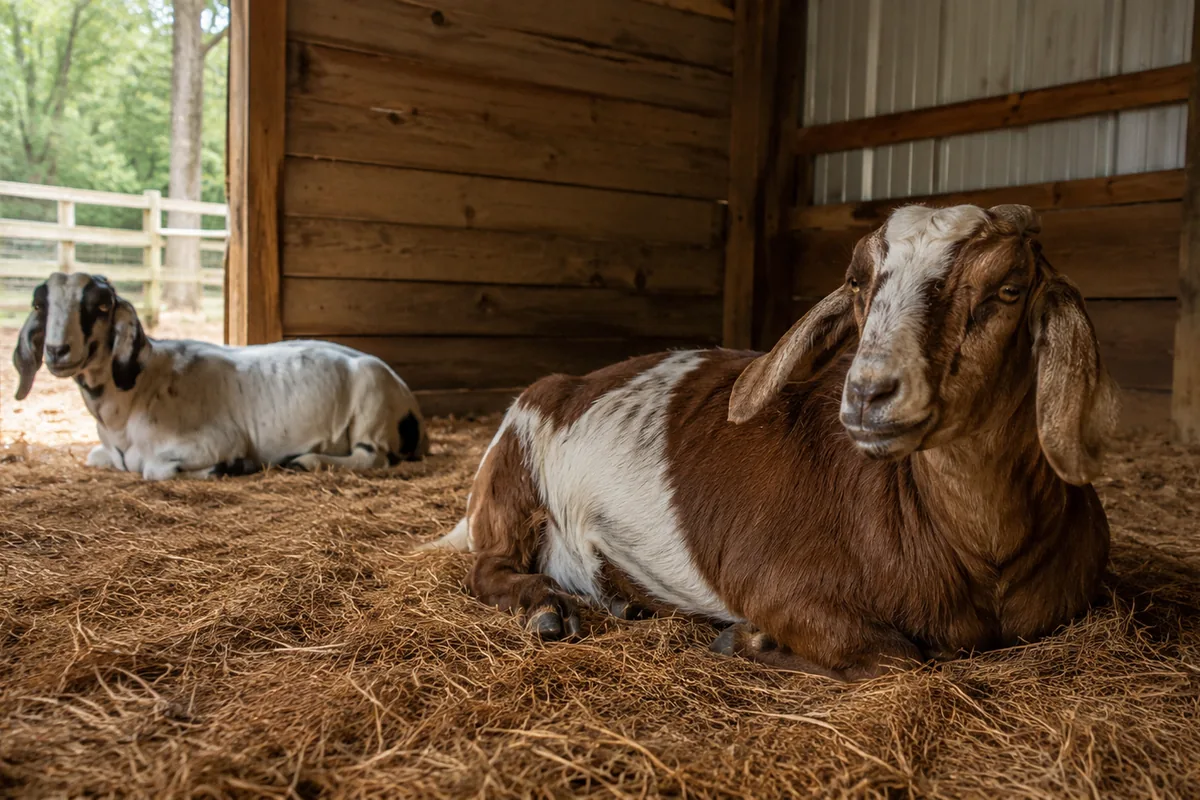
Cold Weather vs Hot Weather
The same shelter needs different management depending on your climate. Goats are far more sensitive to heat and damp than to dry cold.
In cold weather, close the shelter down to block wind, pile on deep bedding for warmth, and resist the urge to add a heat lamp. Heat lamps cause barn fires every winter, and a healthy goat in dry bedding does not need one. Keep ventilation up high so moisture still escapes even when the shelter is buttoned up.
In hot weather, the priorities flip to shade and airflow. Open everything up, make sure there is constant cross-ventilation, and provide shade outside the shelter too, whether from trees, a shade cloth, or the building itself. Goats will seek out cool, breezy spots, and plenty of fresh water becomes critical.
Year-round, the rule stays the same: dry and draft-free in winter, shaded and breezy in summer. Build for both and the herd stays healthy in any season.
Sources and Further Reading
Compiled and cross-checked against established livestock and extension references:
- University extension publications (Penn State, Oklahoma State, Maryland) on goat housing and shelter
- American Dairy Goat Association (ADGA) management resources
- Langston University, Meat Goat Production Handbook, facilities chapter
- National goat and small-ruminant fact sheets on ventilation and bedding
Shelter needs vary by climate, herd size, and predator pressure. Keep it dry, keep it draft-free, give the herd room, and the structure itself can be as simple as you like.
Frequently Asked Questions
Goats need a dry, draft-free space with a roof and at least three solid walls, large enough for the whole herd to lie down out of wind and rain. A simple three-sided run-in shed facing away from prevailing wind works for most climates. The shelter does not need to be heated or fancy, but it must stay dry inside, because goats tolerate cold far better than wet and drafts.
Plan for 15 to 20 square feet of indoor shelter space per standard goat and 10 to 15 square feet per miniature breed. A small herd of four to six standard goats does well with a shelter around 12x12 to 12x16 feet. Bigger is almost always better, since crowding leads to bullying and damp bedding, and you want room for a separate kidding area at breeding time.
No. Healthy adult goats grow a thick winter coat and stay warm in an unheated shelter as long as it is dry and draft-free with deep, dry bedding. Heat lamps are a serious fire risk in barns full of dry bedding and hair, and they are rarely necessary. The exceptions are newborn kids and sick goats, which may need a safe supplemental heat source under close supervision.
Goats should always have access to some form of shelter, even if it is just a simple windbreak and a dry, roofed spot. They will use it during rain, wind, snow, and harsh sun. A goat forced to stand out in cold rain with no dry place to go is at real risk of hypothermia and illness, so a basic shelter is not optional.
A dirt or packed-earth floor with deep, dry bedding on top is the most practical and comfortable option. Straw and pine pellets or shavings are the most common bedding, layered using the deep litter method in winter for extra warmth. Over concrete, add rubber stall mats for insulation and joint comfort, then bedding, because bare concrete is cold and hard on hooves.