Ask anyone who has kept goats for more than a season and you’ll hear the same warning: the fence is never as tall as you think it is. What looks like a solid barrier to a cow is a gentle suggestion to a goat.
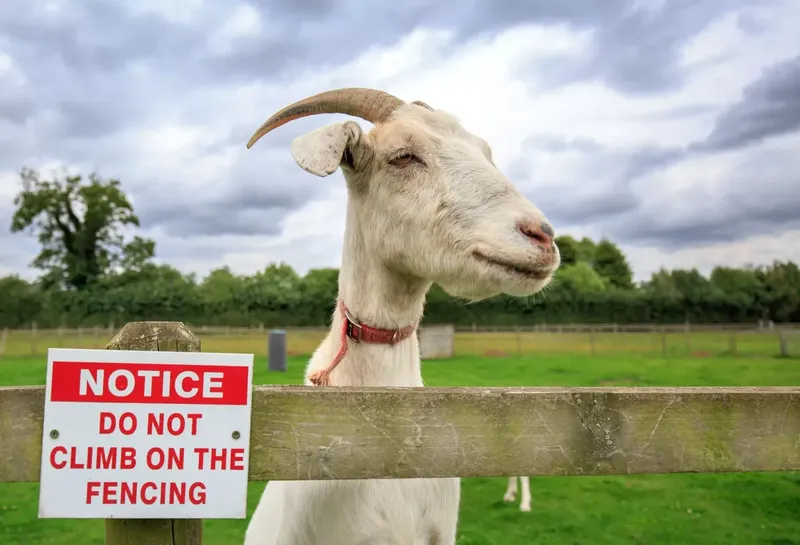
So can goats climb fences? Absolutely, and they do it better than almost any other animal on the farm, using tricks most owners never see coming.
Escapes are not just annoying. A loose goat can wreck a garden, wander into a road, or meet a predator before you even notice it is gone.
This guide explains exactly how goats beat fences, how high the common breeds can launch themselves, and the containment fixes that finally hold. By the end you’ll know what to build instead of guessing and rebuilding.
Can goats climb fences, or just jump them?
The short answer is yes, and climbing is usually the bigger threat than a flat-out jump.
Goats do both, sometimes in a single escape. Knowing the difference is what helps you pick a fence that actually works.
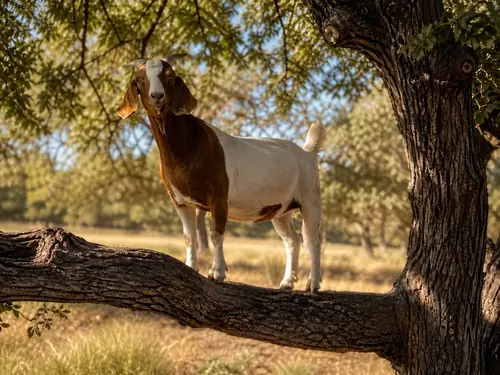
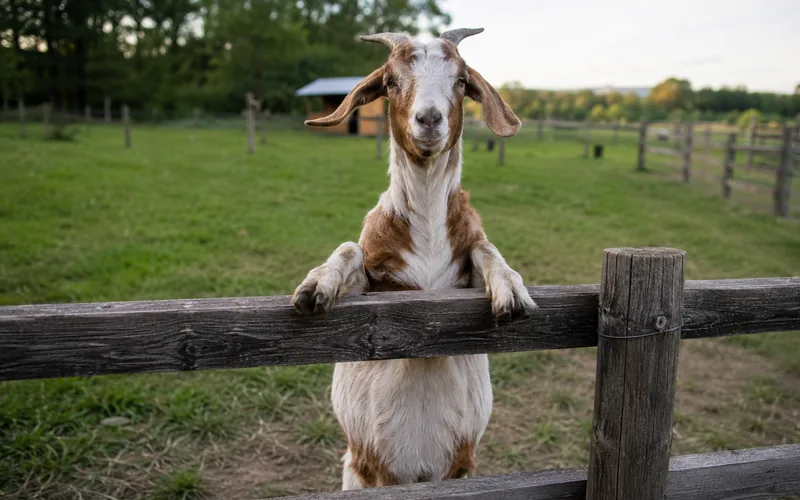
Climbing is the move most owners underestimate. The goat plants its front hooves on a horizontal wire, rail, or wide mesh opening, then walks its back legs up until it tips over the top.
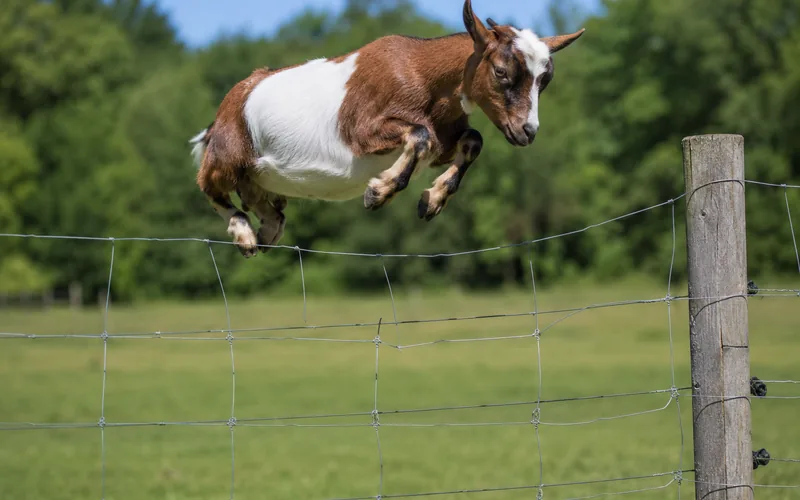
Jumping is the brute-force route. Give one a short run-up and it’ll spring straight up and clear a surprising height, especially the lighter breeds.
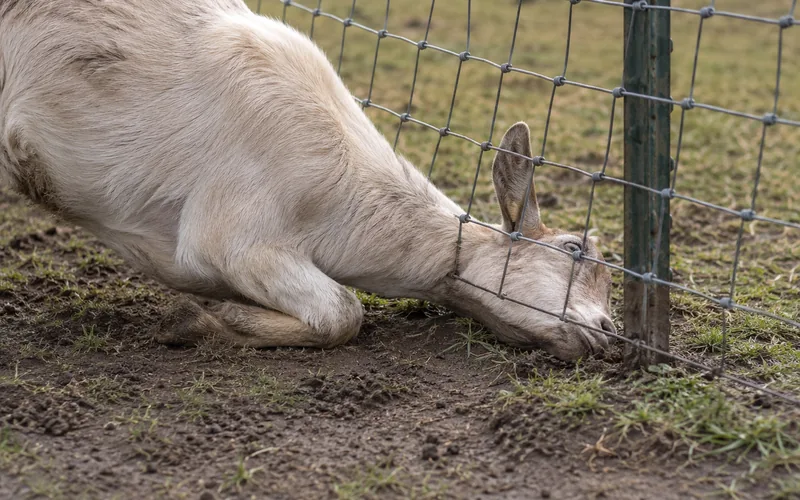
Then there’s the sneaky third option: going under or through. A goat will drop to its knees and shove beneath a loose bottom edge, or squeeze through any gap that fits its head.
How high can goats jump?
Most goats clear a 4-foot fence, and athletic breeds like Alpines and Nigerian Dwarfs push close to 5 feet.
How far a goat can jump comes down to breed, age, and motivation. The lighter, more athletic types clear far more than their size suggests, while heavy meat breeds tend to stay closer to the ground.
The numbers below reflect what a fit, healthy goat manages from a standing or short-run start. Chasing food or a mate, or bolting from a scare, one will often beat its own normal limit.
| Breed | Typical jump height | Climbs well? |
|---|---|---|
| Nigerian Dwarf | Up to 4.5 to 5 ft | Yes, excellent |
| Pygmy | Up to 4 ft | Yes |
| Alpine | Up to 4.5 to 5 ft | Yes, very athletic |
| Nubian | 3.5 to 4 ft | Moderate |
| Boer | 3 to 4 ft | Poor, prefers leaning |
| Kids (any breed) | Surprisingly high for size | Yes, very |
The takeaway is simple. If your herd has dwarf breeds, dairy goats, or kids in it, build your fence around their athleticism, not the herd average.
Why your goats keep getting out
Put simply, goats escape out of boredom, hunger, crowding, hormones, bad weather, or fear, rarely pure mischief.
Goats rarely break out for no reason. Once you spot the motive, you can remove the trigger instead of just raising the barrier.
Boredom tops the list. Goats are curious and clever, and a bored one treats the fence as a puzzle to crack.
Food comes a close second. The grass really does look greener over there, and a goat will work hard to reach fresh browse once its own paddock is grazed down.
Crowding pushes them out, too. Run a pen past its sensible stocking rate per acre and the competition sends lower-ranked goats looking for space.
Hormones can turn a calm goat into an athlete overnight. Bucks during the breeding season, and does in heat, will test every weak point to reach each other.
Fear does the rest. A goat startled by a predator circling the pen can clear a fence it normally respects, which is why secure containment and predator control go hand in hand.
Weather sends them looking, too. Goats hate cold rain, and a herd without a dry, draft-free spot has a daily reason to break toward better shelter.
Habit plays a quieter role. Goats lean and rub on the same weak section day after day, and a fence that sags even slightly soon becomes a low point worth jumping.
Fences that actually stop a climbing goat
Here’s what matters most: five-foot no-climb woven wire backed by a single hot wire stops the widest range of escape artists.
The right barrier takes away both the height advantage and the foothold. These are the options that survive daily goat abuse.
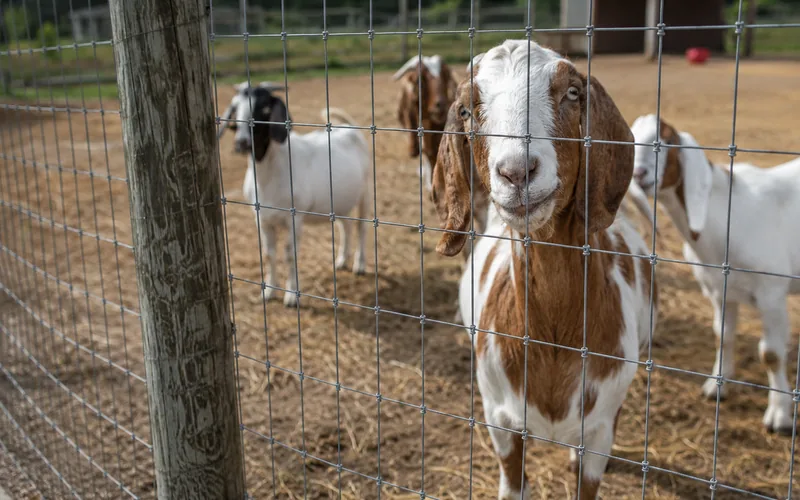
No-climb woven wire is the gold standard for a permanent perimeter. Its small two-by-four-inch openings are too tight for hooves to grip and too small to catch horns, so it handles climbing and head-sticking in one go.
Electric netting is the easiest movable option. It’s ideal for rotational grazing and temporary paddocks, though it needs a strong charger and regular checks to stay hot enough to earn respect.
Livestock and cattle panels are nearly indestructible and perfect for small pens and kidding areas. The large squares can trap horned goats, though, so save them for enclosures rather than long boundaries.
High-tensile electric is the budget choice for big acreage, running several charged wires on sturdy posts. Spacing is everything with this one, and extension fencing guidelines put the lower strands close together so kids cannot slip underneath.
Material matters as much as height, and goat fencing options vary widely in how well they hold a determined animal. The cheapest fence is almost always the one you only put up once.
The foothold problem most owners miss
A fence is only as tall as the nearest object a goat can stand on. That’s the single most common reason a fence that looks tall enough still fails.
Anything within a few feet of the fence line turns into a launch pad. Hay feeders, water troughs, stumps, rock piles, even a slope, they all shorten your effective fence height.
A five-foot fence next to a three-foot woodpile is really a two-foot fence. Goats will spot that math long before you do.
Wide horizontal rails cause the same problem, only built right into the fence. Each rail is a rung, which makes a post-and-rail fence basically a ladder with your goats’ name on it.
The fix is a clear buffer zone running the whole fence line. Keep feeders, structures, and anything climbable toward the middle of the paddock, not the edges.
Signs your fence is about to fail
Most escapes are predictable if you read the warning signs early. A quick walk along the fence line each week catches the weak spots before a goat does.
- Leaning or sagging wire, which hands goats a lower point to climb or vault.
- Loose or wobbly posts, because a goat that can rock a post will eventually flatten it.
- Worn paths or rub marks along one stretch, a clear sign the herd is already testing it.
- Gaps opening at the bottom, where goats have started digging or shoving underneath.
Fix any of these fast, since a weakness one goat finds is a weakness the whole herd quickly learns. Weekly inspections are standard advice in agricultural fencing research for exactly that reason.
How to goat-proof a fence step by step
In short, you raise the height, remove the footholds, and add electric deterrence, in that order.
You do not always need to tear everything down. Work through these steps in order and most fences can be upgraded to hold.
- Set the height to five feet for active breeds, kids, and bucks. Four feet only suits calm, heavy adults.
- Switch to small-mesh no-climb wire so there are no footholds and no head traps.
- Run an offset hot wire about six inches inside the fence near the top. This stops leaning and climbing before a goat can get a grip.
- Add a hot wire low down to discourage goats from pushing under or rooting at the base.
- Clear the buffer zone by moving every climbable object away from the fence line.
- Tighten and brace everything, because a sagging fence on weak posts becomes a goat trampoline within a season.
For everyday management, a secure fence beats the alternatives hands down. It’s far safer than tying a goat out on a tether, which leaves animals exposed to tangling and predators.
A solid fence also lets you stop worrying about how long the herd stays out, because goats can only be safely left on pasture for hours when the boundary genuinely holds. Containment is the foundation every other freedom rests on.
The bottom line on climbing goats
Goats climb, jump, lean, and squeeze better than any other common livestock, and they practice daily. Treating your fence as a one-and-done job is exactly the mistake that lets them out.
Build to five feet with small no-climb mesh, run a hot wire, and keep the fence line clear of anything they can stand on. Do that and even your springiest Nigerian Dwarf will finally stay put.
Frequently Asked Questions
Most standard goats can clear a four-foot fence from a standing position, and athletic breeds push close to five feet with a short run-up. Smaller breeds like Nigerian Dwarfs are deceptively springy and jump far higher than their size suggests. Because of this, five feet is the safe minimum wherever you keep active or young goats.
Many can, especially miniature breeds, young goats, and bucks chasing a doe in heat. A four-foot fence only reliably holds calm, heavy adults with nothing nearby to climb on. If your goats are agile or motivated, add height or a hot wire rather than trusting four feet alone.
Woven wire with small two-by-four-inch openings is the gold standard, because the mesh is too tight for hooves to grip and too small to trap horns. Pair it with a single electrified offset wire near the top to stop leaning and climbing. This combination beats field fence, welded wire, or cattle panels for keeping determined goats inside.
Yes. Despite their size, Nigerian Dwarfs are some of the best jumpers and climbers in the goat world, easily clearing fences that hold larger breeds. Plan on a full five feet for them, with no rails, ledges, or feeders near the fence line. Treat the smallest goat in your herd as your worst escape artist.