| # | Product | Our Rating | ||
|---|---|---|---|---|
| 1 |  | Best OverallElectric Net Fence for Goats | ★★★★★ | Check Price |
| 2 |  | Wall-Mount Goat Hay Feeder | ★★★★☆ | Check Price |
| 3 |  | Farm Innovators Heated Water Bucket | ★★★★☆ | Check Price |
Property owners with existing pine trees often hit a wall when planning goat enclosures. Cutting down mature trees means losing natural shelter and browse that goats actively seek out.
The answer depends entirely on the species of pine growing in the area. Once you know which varieties offer real nutritional benefits and which carry serious reproductive risks, the pen design falls into place.
Why Pine Trees Make Practical Pen Features
Mature pine trees create natural canopy cover that reduces heat stress during summer. The shade alone keeps ground temperatures noticeably cooler than wide-open areas of the pen.
Dense pine stands also serve as effective windbreaks during cold weather. Goats lose body heat fast in wind-driven rain and sleet, so those natural barriers cut down on the need for enclosed shelter space.
Pine canopy intercepts rainfall too, cutting down on mud in high-traffic zones. Drier ground means fewer hoof problems and less frequent bedding changes inside adjacent shelters.
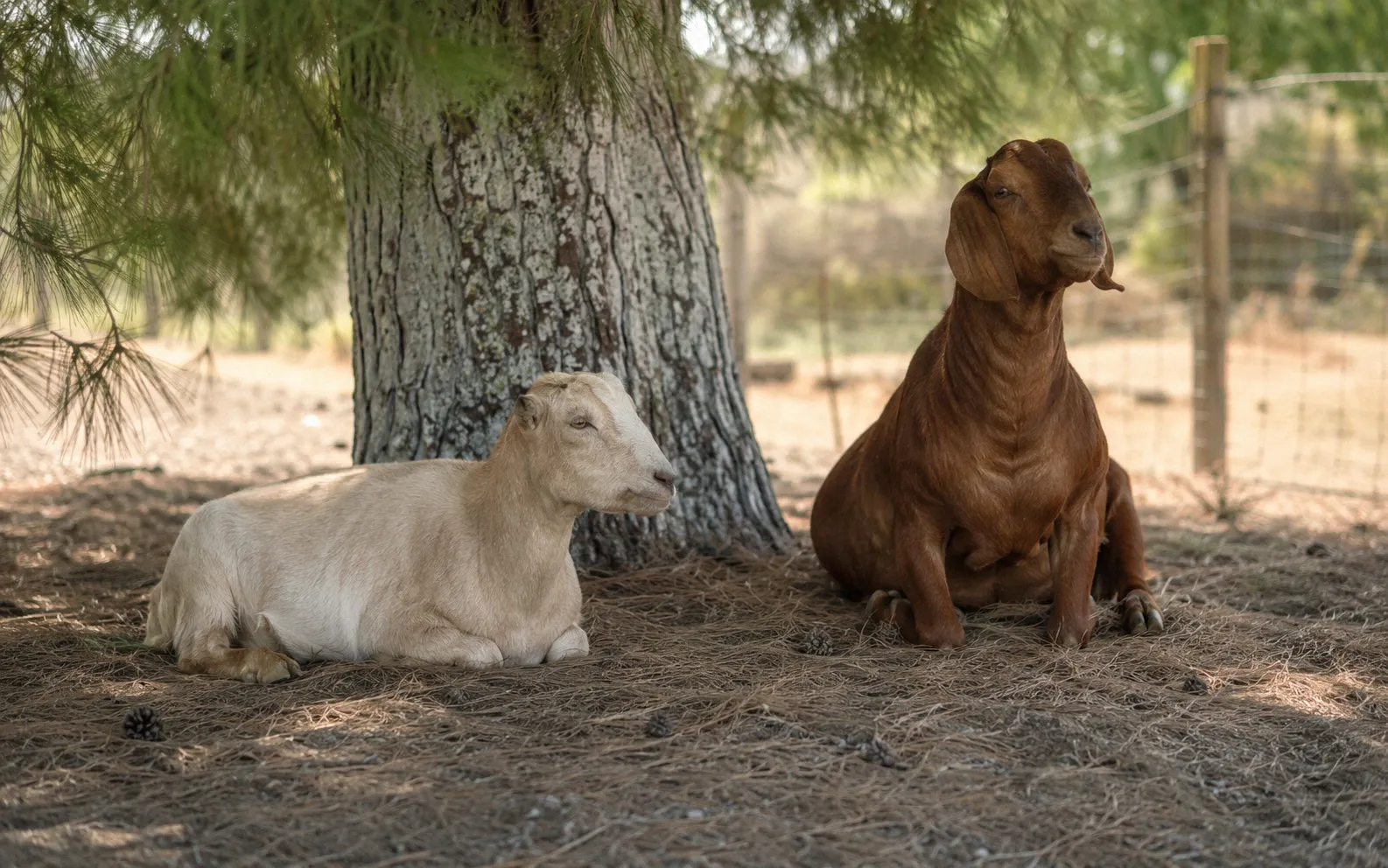
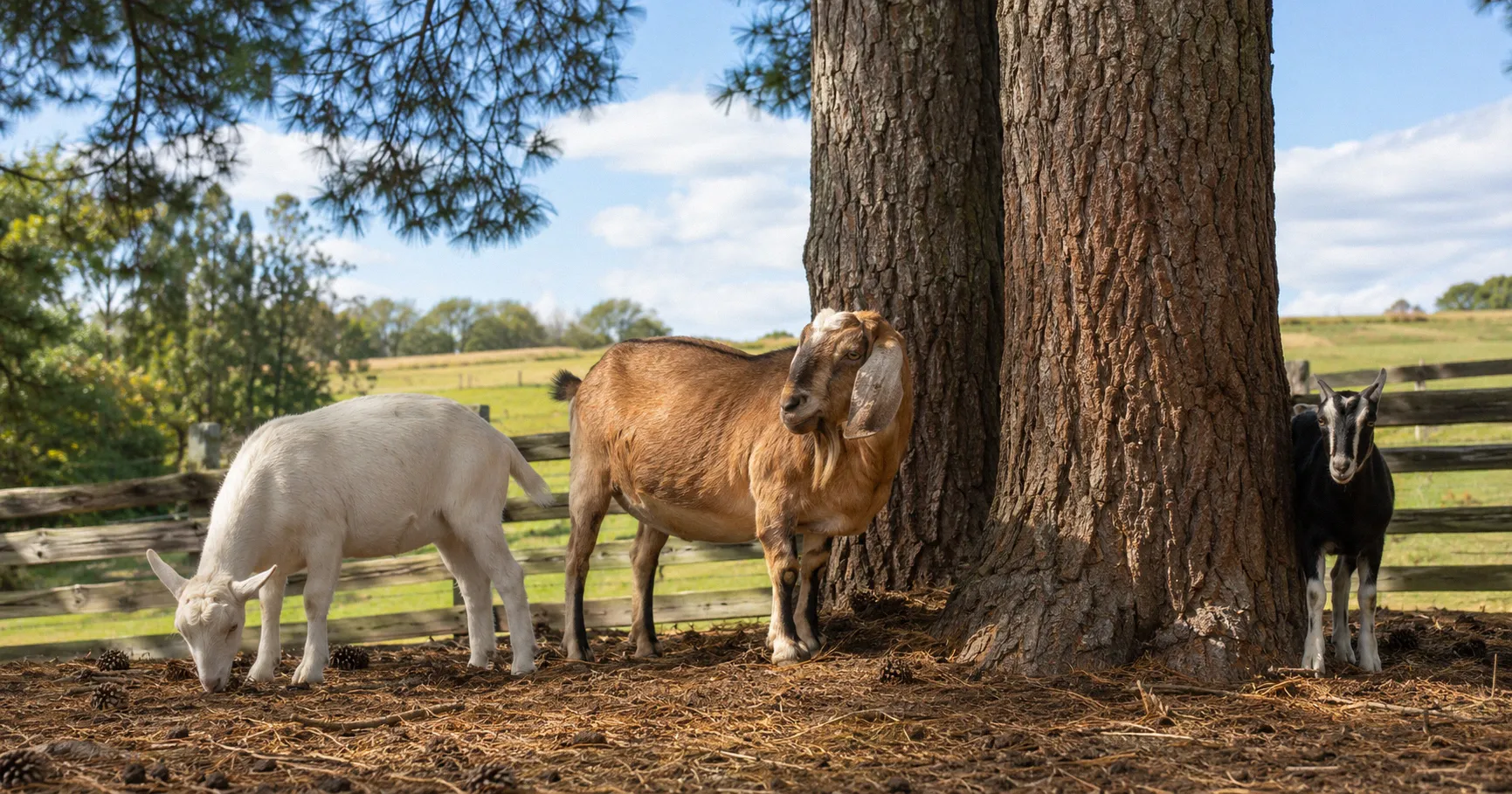
Shelter aside, pine trees also give goats something to do. Goats are browsers by nature, and they’ll strip bark, chew needles, and rub against trunks all day long.
That stimulation cuts down on boredom behaviors like fence chewing and excessive mounting.
Trunks double as natural scratching posts. They’ll rub their horns, necks, and sides against the rough bark to scratch off shedding coats and deal with external parasites.
Pine Species That Are Safe Inside a Goat Pen
White pine, Scotch pine, Douglas fir, Fraser fir, and Blue spruce are all non-toxic and safe for goats to browse. Here’s how each one compares.
White pine ranks as the most goat-friendly option. Its soft needles contain high levels of Vitamin C and mild terpenes that support respiratory health during winter.
Scotch pine is another reliable choice, though its pricklier needles mean some goats eat less of it voluntarily. Douglas fir, Fraser fir, and Blue spruce all fall into the safe category too.
The Virginia Cooperative Extension confirms that these common ornamental and timber pines do not carry harmful concentrations of toxic compounds for ruminants. If you’re planting new trees for a goat pen, white pine grows fast and handles browsing pressure better than most alternatives.
| Species | Safety | Notes |
|---|---|---|
| White Pine | Safe | Soft needles, high Vitamin C, fast growth |
| Scotch Pine | Safe | Prickly needles, some goats avoid heavy browsing |
| Douglas Fir | Safe | Popular Christmas tree species, well-tolerated |
| Fraser Fir | Safe | Soft, dense needles goats readily consume |
| Blue Spruce | Safe | Stiff needles but non-toxic, moderate browse interest |
| Ponderosa Pine | Toxic | Contains isocupressic acid, causes abortion |
| Lodgepole Pine | Toxic | Same toxic compound as ponderosa |
| Monterey Pine | Toxic | Unsafe for all goats, especially pregnant does |
Dangerous Pine Species to Keep Away From Goats
Three pine species have no place inside a goat pen: ponderosa pine, lodgepole pine, and Monterey pine.
All three contain isocupressic acid in their needles, bark, and resin. According to Colorado State University, this diterpene acid disrupts blood flow to the uterus in pregnant does, triggering late-term abortion during the final two months of gestation.
The danger doesn’t stop with fresh foliage either. Dried ponderosa needles on the ground retain isocupressic acid for weeks, so even a dead branch blown into the pen creates a hazard for bred does.
Yew trees need their own warning here. Yew isn’t a pine, but its needle-bearing branches look similar enough that some owners confuse the two.
Every part of a yew tree (Taxus genus) is lethal to goats, often within hours of ingestion.
Health Benefits Goats Get From Safe Pine Browse
Pine needles from safe species are more nutritious than most people expect, especially in winter when fresh forage runs thin.
Vitamin C content in white pine needles reaches levels roughly five times higher than oranges by weight. That extra Vitamin C helps the immune system hold up during cold-weather stress and respiratory infections.
Tannins and terpenes found in pine bark and needles act as natural anthelmintics, meaning they help control internal parasites like roundworms and coccidia. Plenty of breeders report lower fecal egg counts in herds that browse pine regularly, which backs up its longstanding reputation as a natural dewormer.
Pine bark provides trace minerals and crude fiber that round out a hay-based winter diet. Volatile oils from fresh needles can also clear nasal passages and ease respiratory congestion.
Most goats naturally ramp up pine consumption once winter pastures go dormant. That seasonal shift fills the exact nutritional gaps in their diet, making pine a practical winter forage supplement.
How Much Pine Browse Is Safe for Your Herd
As a general rule, one mature pine tree per 10 to 12 goats keeps consumption at a safe level.
Moderation matters even with safe species. Goats eating nothing but pine bark, needles, and branch tips every day can develop digestive upset and liver stress from accumulated terpenes.
A good rule of thumb: stick to one mature tree per 10 to 12 goats in the pen. At that ratio, the herd browses at a pace the tree can recover from without getting stripped bare.
Dry pine needles present a separate risk. Fallen needles become brittle and sharp enough to puncture the rumen wall or lodge in the esophagus.
Sweep up heavy needle buildup around feeding areas and water troughs regularly.
Use the most caution with pregnant does. Even with safe species, limiting pine browse during the final trimester reduces any marginal risk from concentrated terpene intake during a vulnerable period.
Consider using pine chips for bedding instead of allowing heavy browse access for late-gestation does.
Protecting Pine Trees Inside the Pen
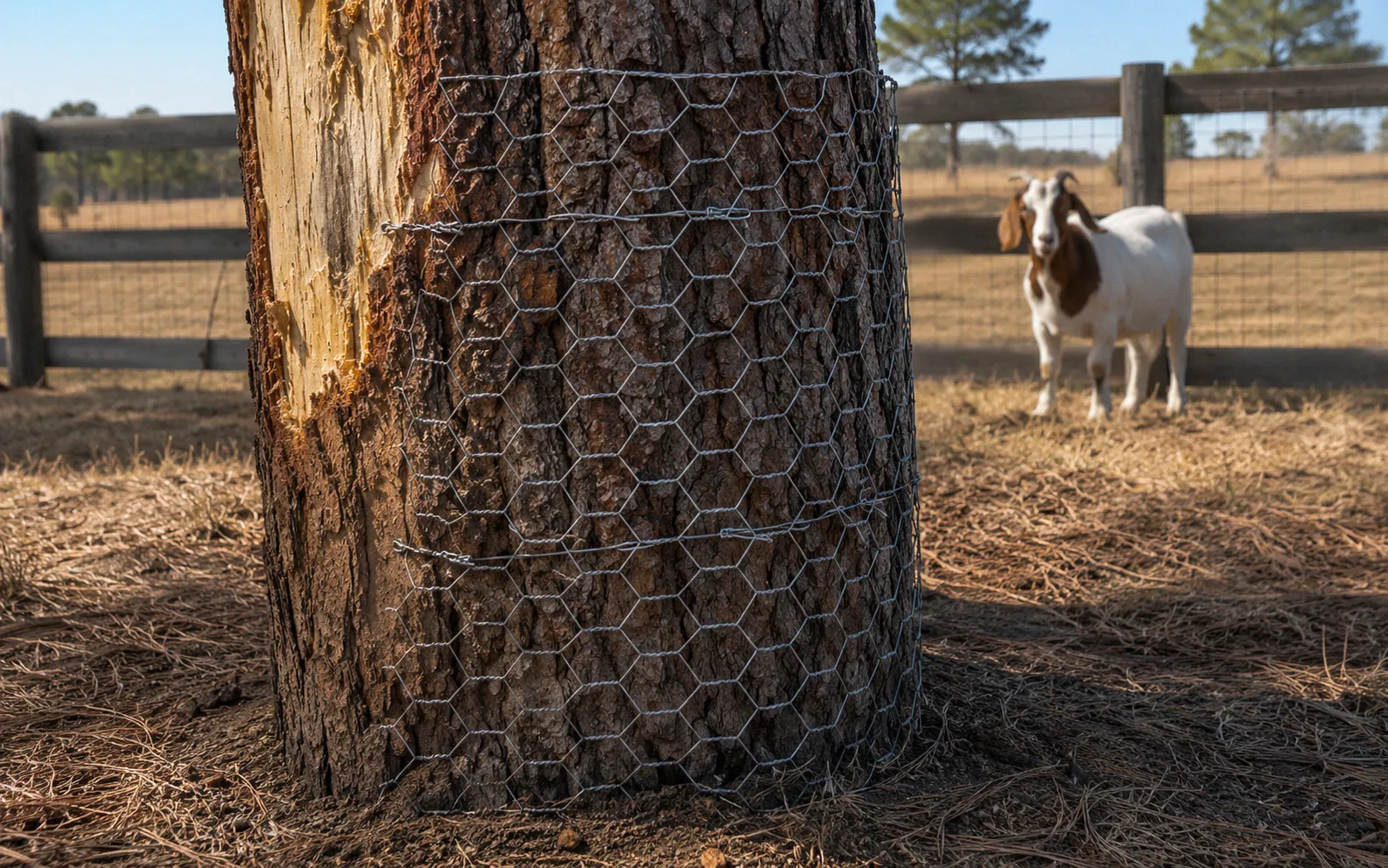
Chicken wire trunk guards and rotational grazing are the two best methods to prevent bark girdling.
Goats will strip bark up to six feet high on any unprotected trunk. Once they strip bark all the way around the trunk, the tree dies from girdling.
Wrap trunks with chicken wire or hardware cloth from ground level to five feet. This blocks bark stripping while still letting goats reach lower branches and fallen needles.
Secure the mesh with wire ties, not nails, to avoid trunk damage.
Rotational access works well for properties with multiple trees. Fencing off sections of the pen and cycling goats through them gives each group of trees a recovery window between browsing sessions.
New saplings need full enclosure. Put up a circular fence at least four feet in diameter around each young tree so goats can’t reach the trunk or low branches until it’s tall enough to handle browsing pressure.
Plan your layout so protected pines don’t block drainage paths or crowd feeding stations. Spacing trees at least 15 feet apart gives goats room to move and prevents dominant animals from cornering lower-ranking herd members.
Signs of Pine Toxicity in Goats
The earliest warning signs include appetite loss, lethargy, and watery nasal discharge, especially after a goat browses an unfamiliar tree. Catching toxicity early makes the difference between a manageable situation and a veterinary emergency.
Initial symptoms include loss of appetite, lethargy, and watery nasal discharge. If a goat suddenly turns down grain after eating fine the day before, take a closer look at what it’s been browsing.
In pregnant does, vaginal discharge and premature udder development signal a potential pine-induced abortion. These signs typically appear 48 to 72 hours after the doe consumes toxic pine material.
Contact a veterinarian immediately if multiple animals show symptoms at the same time. Herd-wide lethargy or appetite loss after access to an unidentified tree suggests a toxic species is present somewhere in or near the pen area.
Frequently Asked Questions
Pregnant does can safely browse white pine, Scotch pine, Douglas fir, and Fraser fir in moderate amounts. Keep them completely away from ponderosa, lodgepole, and Monterey pine at all stages of pregnancy, as isocupressic acid causes late-term abortion even in small doses.
Goats occasionally investigate pine cones but rarely eat them. The hard, woody scales offer no nutritional value and most goats lose interest after a brief sniff or taste. Pine cones left in the pen pose no safety concern.
Goats can safely eat untreated Christmas trees from safe species like white pine, Scotch pine, and Fraser fir. Never feed commercially sold Christmas trees unless you confirm they were not sprayed with fire retardant, colorant, or preservatives, as all three are toxic to livestock.
Unprotected pine trees in a goat pen will eventually die from bark girdling. Goats strip bark in a ring around the trunk, cutting off nutrient flow. Trunk guards made from chicken wire or hardware cloth prevent this damage while still allowing needle and branch browsing.