| # | Product | Our Rating | ||
|---|---|---|---|---|
| 1 | 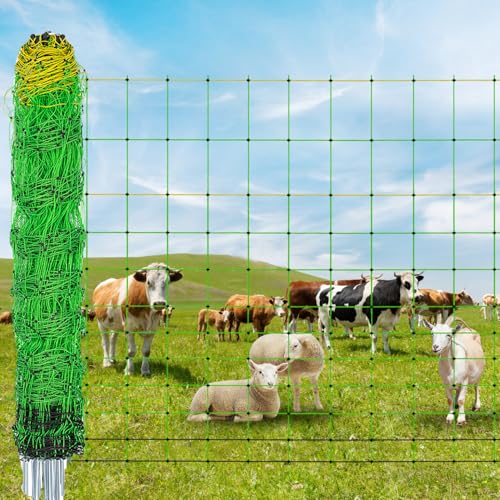 | Best OverallElectric Net Fence for Goats | ★★★★★ | Check Price |
| 2 |  | Wall-Mount Goat Hay Feeder | ★★★★☆ | Check Price |
| 3 |  | Farm Innovators Heated Water Bucket | ★★★★☆ | Check Price |
Goats descended from wild mountain species that spent entire days crossing exposed ridgelines, rocky slopes, and open grasslands. That ancestry means they’re wired for outdoor living and actually prefer it to being closed inside a barn around the clock.
The real question isn’t whether goats can handle time outside. It’s understanding what conditions keep those hours safe and where the line sits between productive pasture access and genuine risk to the herd.
How long can goats safely stay outside?
In mild weather between 50°F and 80°F, most adult goats can safely spend 8 to 12 hours outside with no issues.
That said, the exact number shifts based on weather, the goat’s age and health, and how well the outdoor space is set up.
Mild weather (50°F to 80°F)
This temperature range is the sweet spot. Adult goats can comfortably stay outside for a full 10 to 12 hours when temperatures sit between 50°F and 80°F with low humidity.
Most owners release the herd after morning chores and bring them back in around sunset. As long as shade, water, and shelter are accessible, there’s no biological reason to restrict daytime pasture access during mild conditions.
These long outdoor stretches are genuinely good for them. All that browsing keeps the rumen working the way it should, the movement builds stronger hooves and joints, and the sunlight gives them vitamin D that barn-kept goats almost never get enough of.
Hot weather (above 85°F)
Here’s something that surprises a lot of new owners: heat is actually harder on goats than cold. They don’t have efficient sweat glands, so panting and finding shade are pretty much their only tools for cooling down.
Once air temperature climbs above 85°F, outdoor time should drop to 4 to 6 hours. Schedule that window for early morning or late evening when the sun is low and ground temperatures haven’t peaked.
Humidity makes heat worse. A goat at 80°F with 85% humidity faces more thermal stress than one at 90°F with 30% humidity because moisture in the air blocks the cooling effect of panting.
Cold and wet conditions
Dry cold is far less dangerous than most owners expect. A healthy adult goat with a full winter coat can handle temperatures down to 0°F as long as hair stays dry and wind exposure is limited.
Rain changes everything. A wet goat can develop hypothermia at 40°F when wind is blowing because water pulls body heat away 25 times faster than dry air.
Freezing rain, sleet, or sustained downpours mean the herd should reach enclosed shelter within 2 to 3 hours.
Wind chill factor
Wind strips body heat even in moderate temperatures. A 35°F day with sustained 20 mph wind feels closer to 24°F on exposed skin and coat, pushing a comfortable afternoon into a dangerous one.
Properties in high-wind corridors need solid windbreaks like tall fencing, dense tree lines, or permanent structures positioned to block prevailing gusts. Orient shelter openings away from the dominant wind direction so goats can escape airflow without being driven back outside.
Can you leave goats outside while at work?
A standard 8 to 10 hour workday falls within the safe range for healthy adult goats in mild weather. Set up shelter, water, and secure fencing before you leave, and plan to bring them inside before dark if you get home after sunset.
What goats need when left outside for hours
Three things have to be in place before you leave goats outside for any stretch of time. Skip even one, and outdoor time goes from healthy to risky no matter what the forecast says.
Shelter they can reach voluntarily
Goats must have access to a covered structure at all times when they’re outside. This doesn’t mean forcing them indoors.
It means placing a three-sided run-in shed, a barn with an open door, or a lean-to within the grazing area so they can choose to use it.
It doesn’t need to be fancy. It just needs to block rain, cut the midday sun, and break the wind when a cold snap rolls through.
Give each adult goat 15 to 20 square feet of floor space so nobody gets crowded out when the whole herd piles in at once.
Elevate the shelter floor 4 to 6 inches above ground level to prevent rainwater from pooling inside. A packed gravel base covered with straw bedding keeps hooves dry and provides insulation during colder months.
Fresh water available all day
A mature goat drinks 2 to 4 gallons of water daily, and that number climbs past 5 gallons during peak summer heat. Automatic waterers or large-capacity troughs work best for herds spending 8 or more hours outside.
Goats are notoriously selective about their water. They’ll refuse anything that smells stale, looks cloudy, or has algae growing in it, even when they’re genuinely thirsty.
Scrub troughs weekly and refill with clean water every morning before turnout.
In winter, unheated troughs freeze quickly. Heated bucket bases or insulated waterers prevent ice formation and keep the herd drinking consistently, which also reduces urinary calculi risk in bucks and wethers.
Secure perimeter fencing
Good fencing keeps your goats in and keeps predators out. That’s really the whole job description.
Standard woven wire at 4 feet minimum height with a strand of electric wire along the top gets it done on most properties.
Goats test fence integrity daily. Weak joints, loose staples, and gaps at the base get exploited within hours.
Walk the perimeter at least weekly and fix damage before it becomes an escape route or a predator entry point.
Horned goats are a special case. They wedge their horns into wire squares and get trapped, sometimes injuring themselves badly while trying to pull free.
Use panels with openings too small for horns to pass through, or switch to cattle panels with wider vertical gaps that horns slide through cleanly.
Predator risks during extended outdoor time
Longer outdoor hours mean more predator exposure. This single factor is why most experienced goat owners lock their herds in a secure structure every night without exception.
Daytime threats
More goats are killed by stray and feral dogs during daylight than by any other predator in the United States. One dog can take down multiple animals in a frenzied attack that’s over in minutes.
Foxes target smaller goats and unweaned kids during daylight when adults are spread across the pasture. Hawks, golden eagles, and other raptors present a genuine threat to kids weighing under 15 pounds, especially in open fields without overhead tree cover.
Nighttime threats
Coyotes cause more goat deaths after dark than any other predator in North America. They hunt in pairs or small packs and can clear a standard 4-foot fence when prey is visible on the other side.
Mountain lions, bears, and bobcats present regional threats that intensify after sunset. Raccoons are a less obvious danger but can injure kids and transmit diseases like rabies and leptospirosis through bites and scratches.
Livestock guardian options
A livestock guardian dog is the most effective defense for herds spending extended hours outside. Breeds including Great Pyrenees, Anatolian Shepherds, Akbash, and Maremmas bond with goats from puppyhood and deter most predators through sheer presence.
Donkeys and llamas can help, but they’re only reliable against a single coyote or a lone stray dog. When a pack shows up or something bigger comes through, they simply don’t have the fight in them to hold the line.
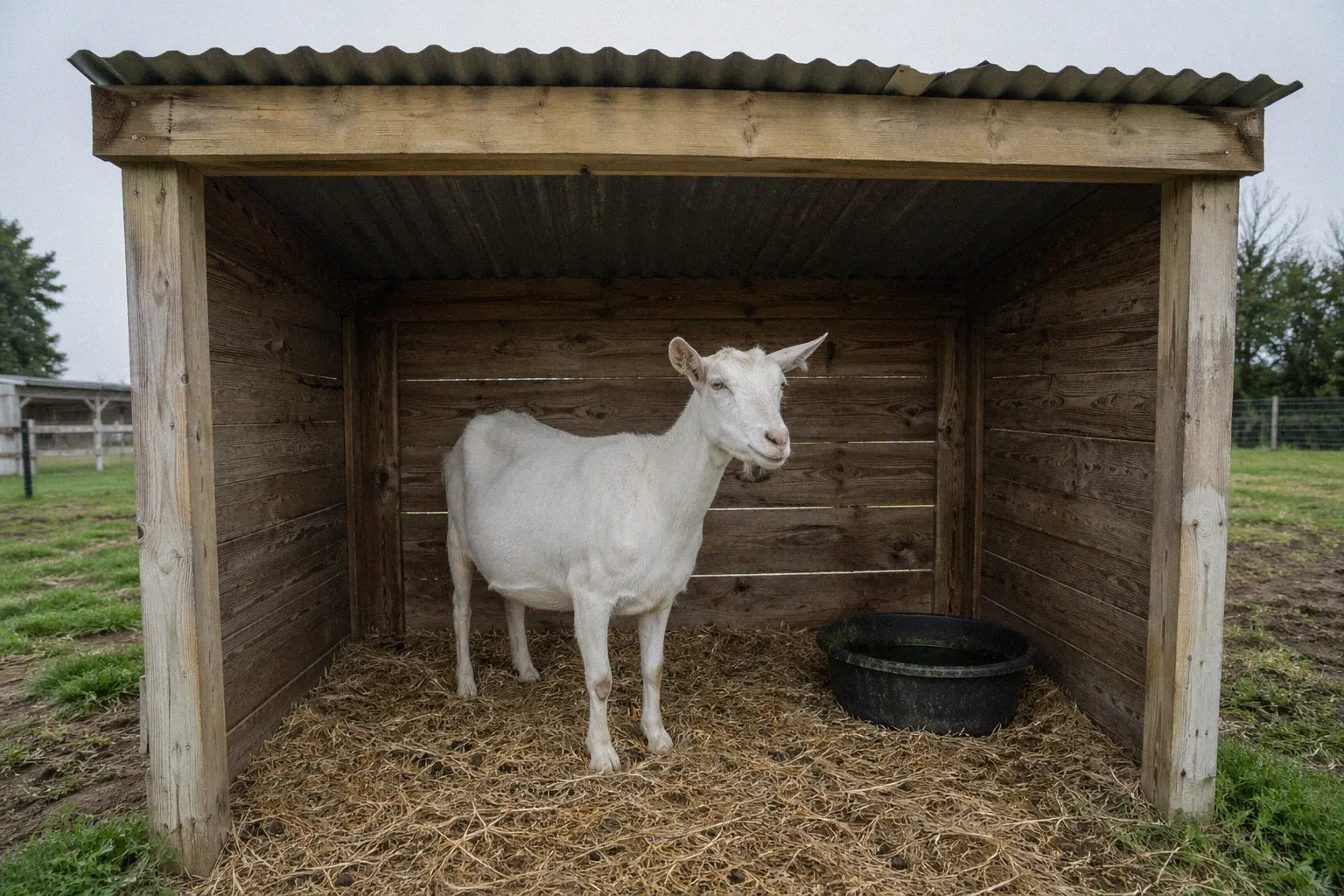
Pairing guardian animals with strong fencing works better than relying on either strategy alone. The fence delays predator entry while the guardian responds.
This layered defense gives the herd the highest survival rate during long outdoor hours.
Multiple guardian dogs work better than a single one for larger properties or herds over 20 animals. A lone LGD can’t cover a 10-acre pasture and sleep at the same time, so two dogs working in shifts close the gap that predators would otherwise exploit.
Do certain breeds handle outdoor hours better than others?
Yes, and it’s a bigger gap than most people expect. The genetics behind a Nigerian Dwarf and a Spanish meat goat create very different thresholds for heat, cold, and sustained exposure.
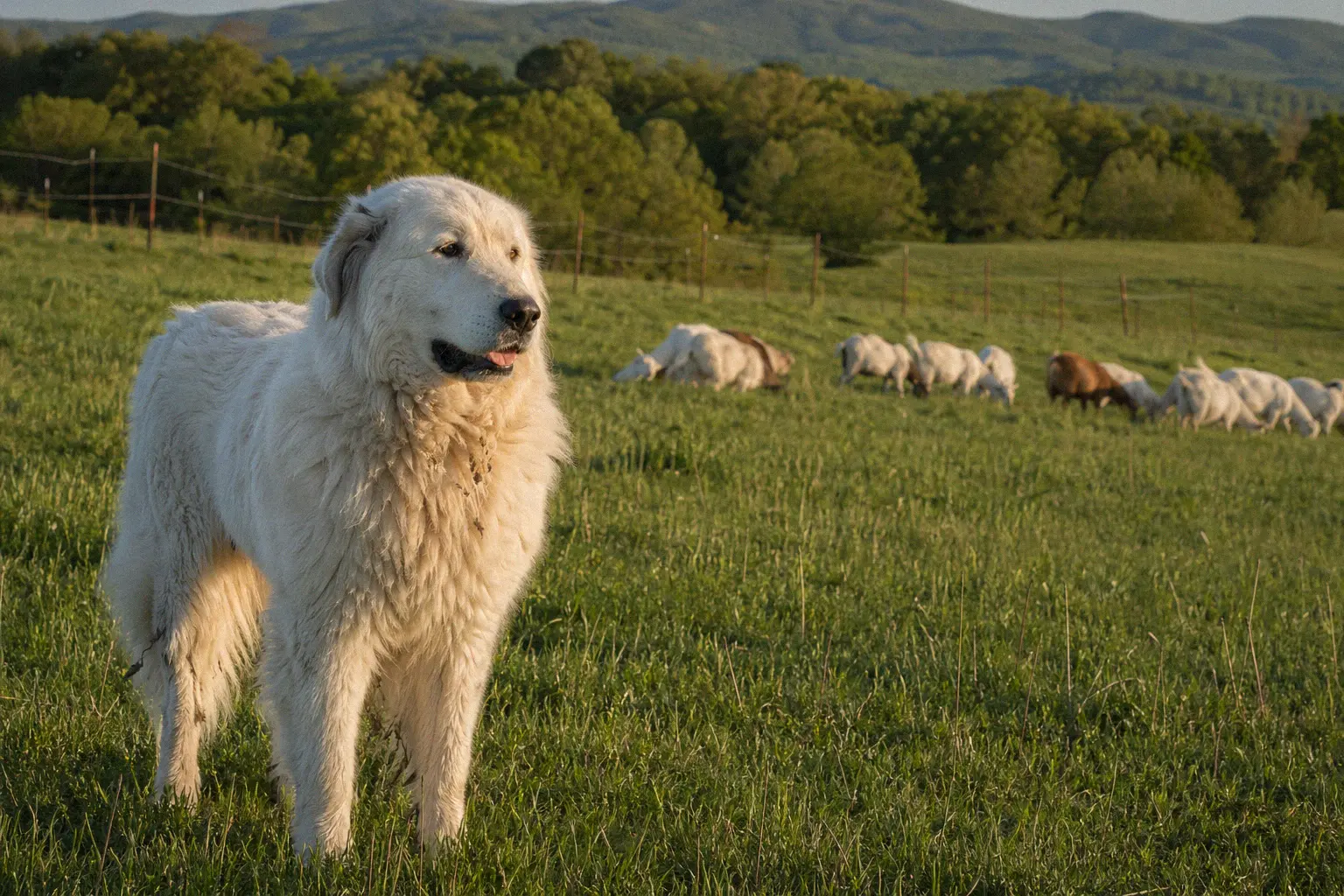
Boer, Kiko, and Spanish goats were bred for life on open rangeland with minimal human intervention. They’re the toughest category across the board (heat, cold, rough ground, you name it) and can comfortably spend a full day outside with just basic shelter and water.
Your Nubians, Saanens, LaManchas, Alpines, and Oberhaslis are a different story. These dairy breeds do fine outdoors in moderate conditions but they’re noticeably more sensitive to heat stress and extended rain exposure than their meat-breed counterparts.
Then there’s fiber goats. Angoras and Cashmeres carry thick fleece that turns into a heat trap once summer kicks in.
They need shorter outdoor windows above 80°F, and rain is a real problem because wet fiber clings to the skin for hours and opens the door to fungal infections.
On the smaller end, Nigerian Dwarf and Pygmy goats lose body heat faster than full-sized animals because of their higher surface-area-to-mass ratio. Warm weather doesn’t bother them much, but below 30°F they need to come in sooner than bigger breeds that carry more thermal mass.
Mixed herds with multiple breed types should follow the schedule of the most sensitive breed present. If you run Angoras alongside Boers, the Angoras set the outdoor limit, not the Boers.
| Breed Type | Max Outdoor Hours (Mild) | Max Outdoor Hours (Hot) | Cold Tolerance |
|---|---|---|---|
| Meat (Boer, Kiko, Spanish) | 10–12 | 6–8 | High |
| Dairy (Nubian, Saanen, Alpine) | 8–10 | 4–6 | Moderate |
| Fiber (Angora, Cashmere) | 8–10 | 3–5 | High (dry cold only) |
| Miniature (Pygmy, Nigerian Dwarf) | 8–10 | 4–6 | Low |
Shorter windows for kids, seniors, and pregnant does
Age and reproductive status shift the safe outdoor duration significantly. What works for a healthy two-year-old doe doesn’t apply to a week-old kid or a doe in late gestation.
Newborn kids under two weeks old should stay in a protected kidding area with their dam. They can’t regulate their own body temperature yet and they have zero instinct to avoid predators.
On a warm day they’ll dehydrate faster than you’d expect, so supervised outdoor sessions of 1 to 2 hours in mild weather are plenty at this stage.
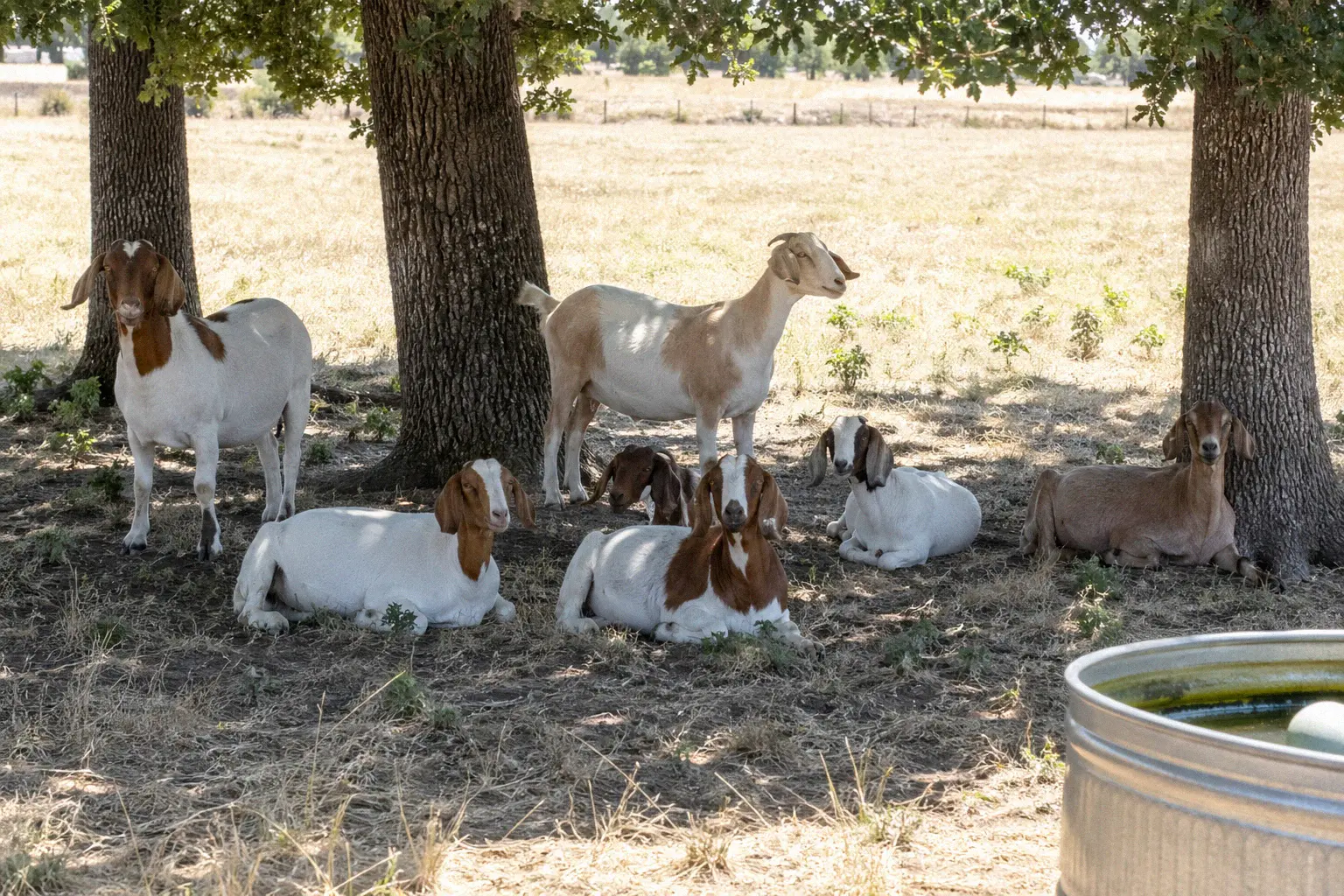
Kids between two weeks and three months old can handle 4 to 6 hours outside during moderate temperatures as long as their dam stays with them. Bring them inside before dark, provide shelter from any rain, and watch for separation from the rest of the herd.
Older goats, roughly 8 years and up, start showing the wear with stiff joints, worn-down teeth, and a sluggish immune system. They still benefit from time outside, but you may need to shorten their pasture rotations and get them under cover sooner when the weather turns.
Pregnant does in their final 6 weeks of gestation carry heavy metabolic demands, and their mobility and stress tolerance both drop noticeably. Temperature extremes can trigger pregnancy toxemia or premature labor, so limit outdoor time to 4 to 6 hours and keep them off steep or rocky ground.
Sick or recently injured goats also belong in the shorter-window group. A goat recovering from foot rot, respiratory infection, or a predator encounter burns extra energy on healing and can’t afford the additional stress of extended outdoor exposure until it’s fully recovered.
Signs a goat has been outside too long
The two clearest warning signs are open-mouth panting in hot weather and visible shivering in cold. Goats don’t vocalize distress, so you have to read their body language to catch problems early.
Heat stress indicators
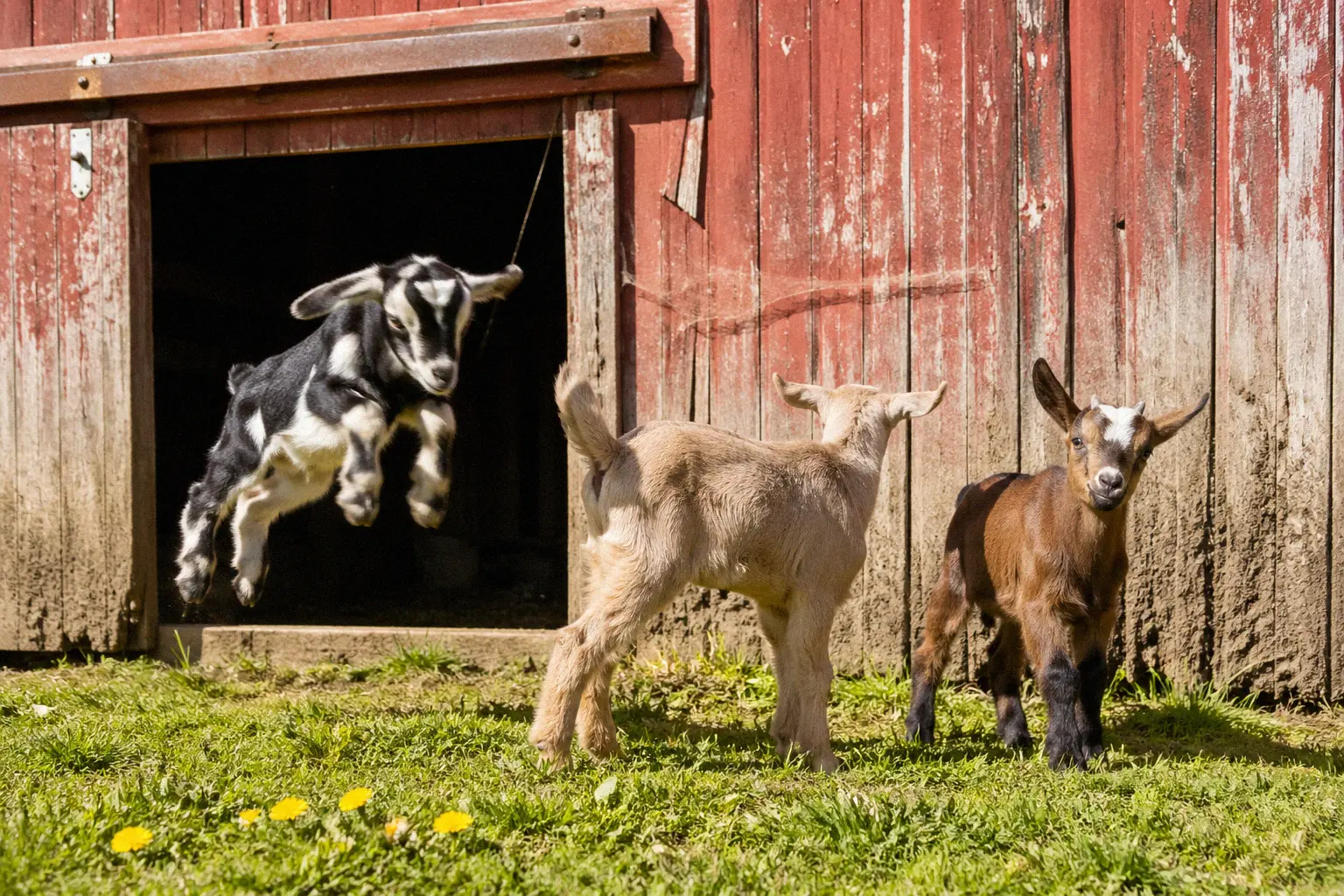
Open-mouth panting is the first red flag. Healthy goats breathe through the nose at 15 to 30 breaths per minute, so visible mouth breathing with the tongue hanging out means the cooling system is overwhelmed.
After that, you’ll notice drooling, lethargy, and a complete refusal to eat as their core temperature climbs. If you spot a goat standing off by itself with its head hanging low and ears drooped on a hot day, get shade and cool water to it immediately.
Rectal temperature above 104°F confirms active heat stress. Normal range for adults is 101.5°F to 103.5°F.
Anything above 106°F risks organ damage and requires emergency cooling by applying water to the belly, inner legs, and neck.
Cold stress indicators
Shivering is the earliest and most visible sign. Once a goat is visibly trembling, it’s already losing heat faster than metabolic activity can replace it.
After that comes tight huddling, a reluctance to stand, and ears that feel ice-cold when you touch them. If a goat goes down in wet or cold conditions and won’t get back up, that’s an emergency.
Get it into dry shelter, wrap it in blankets, and offer warm (not hot) water.
Hypothermia sets in once rectal temperature drops below 100°F, and in kids, that can happen within 30 minutes of wet, windy exposure. Adults hold out longer, but a soaked coat and steady wind will strip heat fast regardless of body size.
How to adjust outdoor time by season
Spring and fall allow full-day access of 10 to 12 hours, summer calls for a split schedule around peak heat, and winter drops to 4 to 6 hours on calm days.
What works in April won’t work in August, so adjusting the routine with the seasons is far more effective than running a fixed schedule all year.
Spring
This is prime time for outdoor access. Temperatures are comfortable, pasture is coming in strong, and parasite loads haven’t ramped up to their summer peak yet.
Allow full-day access of 10 to 12 hours during spring. Watch for sudden afternoon thunderstorms and keep shelter doors open so the herd can get out of rain without waiting for you.
Summer
Flip the schedule once sustained heat arrives. Turn goats out at first light (around 5 to 6 AM), bring them into shade or the barn by late morning (10 to 11 AM), and offer a second outdoor window in the evening (5 to 7 PM) once the worst heat passes.
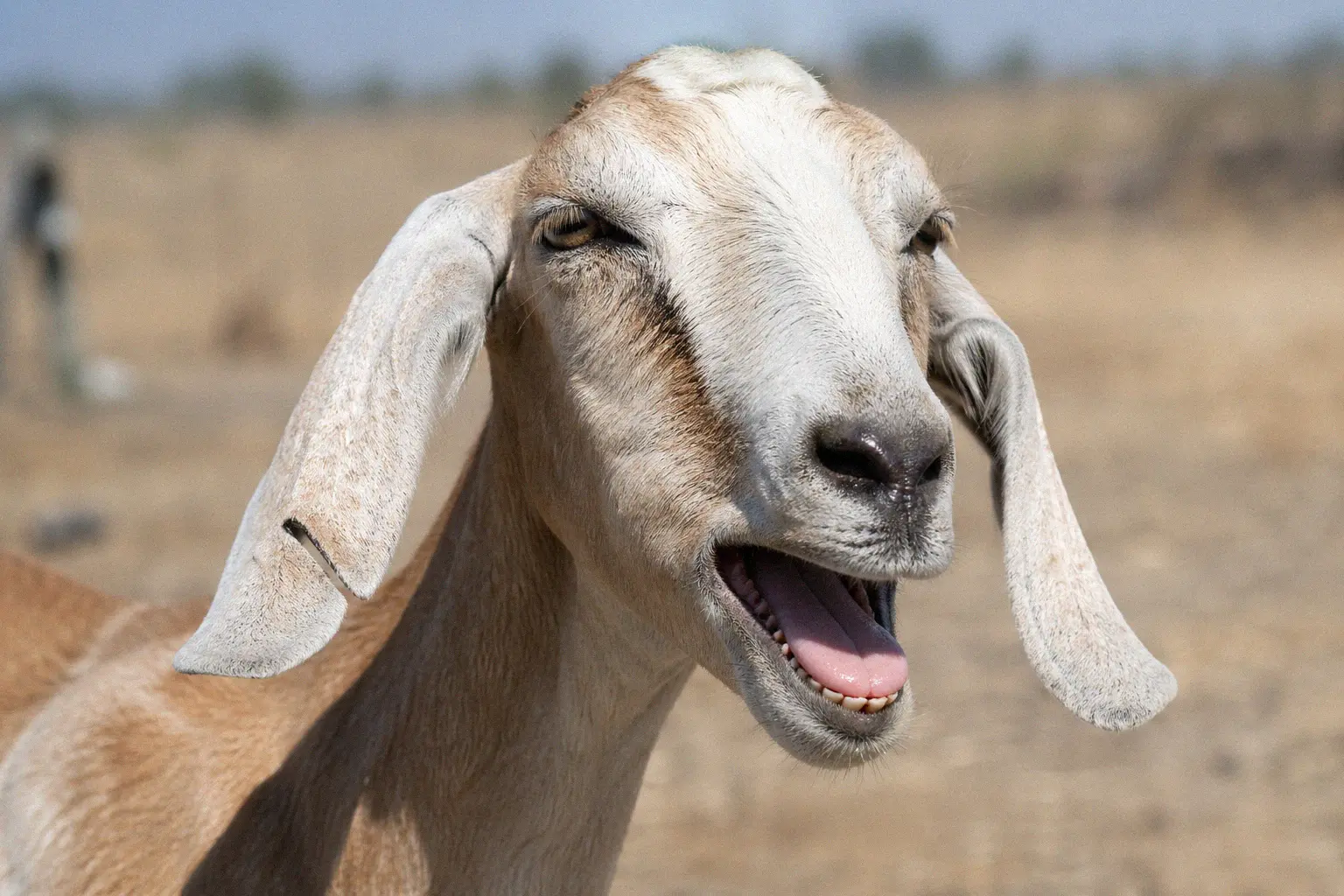
Add extra water stations and mix a capful of apple cider vinegar into each trough to encourage drinking and support rumen pH during heat stress.
Fall
Fall mirrors spring in most climates. Extend outdoor hours as temperatures drop from summer highs and take advantage of final pasture growth before dormancy.
Begin shifting the return-to-barn time earlier as daylight shortens. Goats should be locked inside before full dark in any area where coyotes, stray dogs, or other nocturnal predators are present.
Winter
Reduce outdoor access to 4 to 6 hours on clear, calm days and keep the herd inside during precipitation, sustained wind, or temperatures below 10°F. Morning turnout after the sun has warmed the air above freezing works best.
Increase hay rations through the winter months because goats burn significantly more calories maintaining body heat. A goat that goes outside on a cold morning without adequate rumen fill chills faster than one with a full belly of roughage generating fermentation heat.
Building a safe outdoor space
The four essentials are secure fencing, a centrally placed shelter, a clean water station, and a grazing area free of toxic plants. Get these right from the start and you won’t need to hover over the herd every hour.
Start with perimeter fencing at 4 feet minimum for standard breeds and 5 feet for agile climbers like Alpines and Nigerian Dwarfs. Woven wire with 2x4 inch spacing at the bottom prevents kids from slipping through, and a hot wire along the top deters jumping.
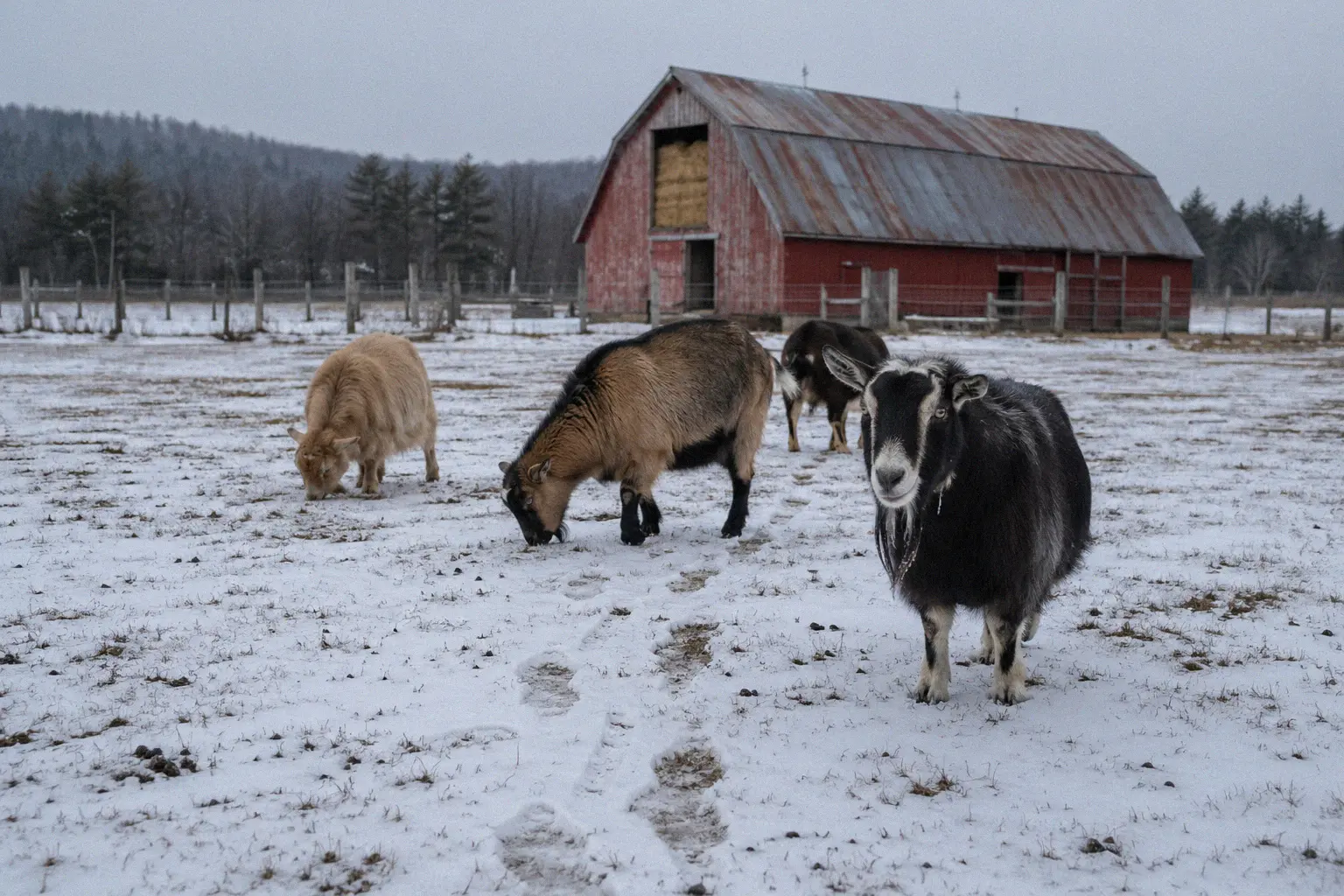
Place the run-in shelter centrally within the grazing area so every section of pasture is within reasonable walking distance. Build it sturdy enough to handle wind loading and snow accumulation if you’re in a northern climate.
Position the water station on level ground away from the shelter entrance to reduce mud buildup. Goats walking repeatedly between shelter and water on saturated soil creates conditions for foot rot, which is expensive and time-consuming to treat.
Walk the entire grazing area and pull every toxic plant you find. Rhododendron, azalea, yew, wild cherry, and mountain laurel are the most common killers, and goats will absolutely taste-test something they’ve never seen before without a second thought.
Never tether goats as a substitute for proper fencing. Tethering prevents escape from predators, creates strangulation risk, and generates chronic stress that suppresses immune function over time.
When goats share pasture with cattle or other livestock, provide separate shelter space and dedicated feeding areas for the goat herd to reduce competition injuries and social stress.
Should goats stay out overnight?
In most situations, no. The herd should come in at dusk.
That’s when predators get active, temperatures drop hard, and you can’t see what’s happening out there.
Locking goats in a secure barn or shed from sunset to sunrise eliminates the highest-risk window of every day. Combined with morning turnout, this routine gives the herd a solid 8 to 12 hours of outdoor access during daylight when conditions are safest and you can monitor them.
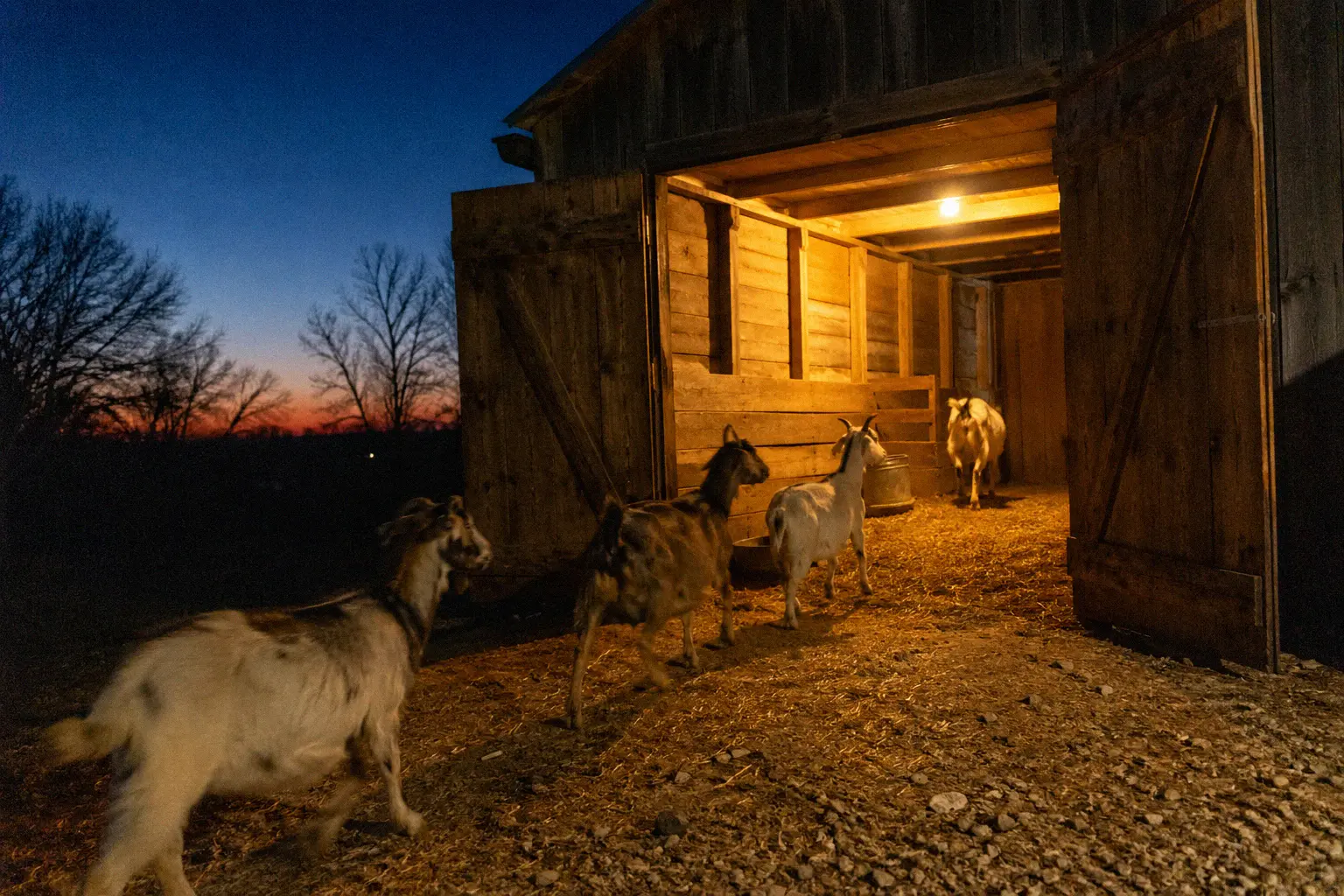
A small number of owners in low-predator regions with bonded livestock guardian dogs do leave herds outside overnight year-round. This demands fencing rated for coyote exclusion (5 feet minimum with a buried wire apron along the base), an LGD that sleeps among the goats, and shelter the herd can enter voluntarily.
Even in mild summer weather where overnight lows stay comfortable, bringing goats inside at dusk adds a layer of security that costs nothing but 10 minutes of effort. The risk-reward math favors locked-up nights in almost every scenario.
One overnight loss to a predator erases months of investment in feed, veterinary care, and breeding. The 10 minutes it takes to close a barn door each evening is the cheapest insurance available to any goat owner.
Final Thoughts
Goats do better outside. They’re healthier, calmer, and more productive when they’ve got room to browse and move under open sky for hours each day.
Locking them in a barn around the clock creates more problems than it solves.
What it comes down to is having the right setup: shelter they can reach, clean water, solid fencing, and a plan for predators. Once that’s in place, leaving goats outside for hours isn’t something to worry about.
It’s how they’re meant to live.
Bring the herd in before dark, adjust the schedule for seasonal extremes, and give kids, seniors, and pregnant does the extra attention their bodies demand. Follow that pattern consistently and your goats will thrive with every hour they spend outdoors.
Frequently Asked Questions
Healthy adult goats can stay outside for 8 to 12 hours during mild weather between 50°F and 80°F. They need access to shelter, clean water, and secure fencing the entire time. Extreme heat, freezing rain, or strong winds reduce that safe window.
Dry cold down to 0°F is manageable for healthy adults with a full winter coat and wind protection. Wet cold is far more dangerous. A goat exposed to rain and wind can develop hypothermia at 40°F because water pulls heat from the body 25 times faster than dry air.
Leaving goats completely unsupervised for an entire weekend is risky. Most experienced owners arrange for someone to check on the herd at least once every 12 hours to refill water, verify fencing, and watch for signs of injury or illness.
Predator attacks, especially from coyotes and stray dogs, cause the most deaths in goats left outside without adequate fencing or a livestock guardian dog. Weather-related emergencies like hypothermia and heat stroke are the second leading cause.