| # | Product | Our Rating | ||
|---|---|---|---|---|
| 1 | 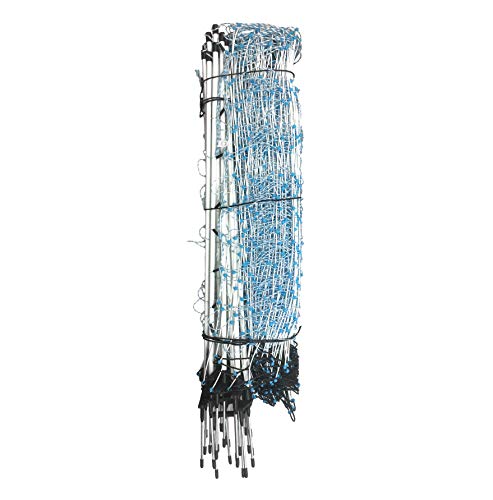 | Best OverallStarkline Electric Sheep & Goat Netting (164 ft) | ★★★★★ | Check Price |
| 2 |  | Solar Fence Charger (1.2J, 45 Mile) | ★★★★☆ | Check Price |
| 3 |  | Safe-Guard Fenbendazole Liquid (125ml) | ★★★★☆ | Check Price |
“How many goats can I run on my land?” sounds like it should have a one-number answer. It does have one, sort of, but the keepers who thrive are the ones who understand why the number moves.
The textbook answer is 6 to 8 goats per acre of good pasture. The honest answer is that your acre’s forage, your parasite management, and whether you rotate matter more than the acreage itself.
This guide gives you the real stocking numbers, the worm math that punishes overstocking, and the simple rotation setup that lets small acreage carry more goats safely.
How Many Goats Can One Acre Support?
Start with the classic livestock yardstick: the animal unit. One 1,000-pound cow is one animal unit, and one cow’s worth of forage feeds roughly 6 goats, which is where the 6-goats-per-acre baseline comes from on land that would carry a cow per acre.
From there, adjust for what is actually growing. Lush, improved pasture in a rain-fed region carries 8 standard goats per acre through the growing season, while a rocky, droughty, or beaten-down acre might honestly feed 2.
Goat size moves the number too. Nigerian Dwarfs and Pygmies eat roughly half to two-thirds of what a standard doe does, so an acre that carries 6 Nubians carries 8 to 10 minis.
A real slope cuts the number by a third to a half, since overgrazed hillsides erode.
And remember what goats actually prefer: browse over grass, roughly 60 percent brush and weeds to 40 percent grazing when given the choice. An acre with brushy edges and weedy variety feeds goats better than a perfect grass monoculture of the same size.
Goat Stocking Rate Chart
Use these as planning numbers for the growing season, with hay carrying the herd through winter no matter what your acreage is.
| Land Type | Standard Goats Per Acre | Mini Goats Per Acre |
|---|---|---|
| Excellent improved pasture | 6-8 | 8-10 |
| Average mixed pasture | 4-6 | 6-8 |
| Brushy, overgrown land | 8-10 while browse lasts | 10-12 while browse lasts |
| Poor, dry, or rocky ground | 2-3 | 3-4 |
| Dry lot (no grazing) | Any number at ~200-250 sq ft each | Same model, slightly less space |
Two notes keep this chart honest. Brush land carries a crowd only until the browse is eaten, at which point its real number drops to the poor-ground row, and every row assumes you are still providing free-choice minerals and quality hay whenever forage falls short.
If your county offers an agricultural exemption, the math runs through animal units there too. Requirements vary by state and county, so call your appraisal district for the minimum acreage and animal units they expect before counting on the tax break.
Why Overstocking Creates a Worm Problem
Here is the part the simple stocking numbers hide: the real limit on goats per acre is usually parasites, not forage. Crowd the acre and you build a worm factory.
The barber pole worm, the number one killer of goats, runs its whole cycle through pasture. Eggs leave in manure, larvae climb the bottom few inches of grass, and goats eat them back in with every bite of short grazing.
Overstocking accelerates every step. More goats per acre means more eggs per square foot, grass grazed shorter means goats eating exactly where larvae concentrate, and no rest means the cycle never breaks.
The symptoms of that math show up as pale eyelids, bottle jaw, and dead goats in late summer. If your herd needs deworming constantly, the honest diagnosis is usually too many goats on too little rotated ground.
How to Set Up Rotational Grazing
Rotation is how small acreage carries a real herd safely, and it is simpler than the grazing books make it sound. Divide, graze, move, rest.
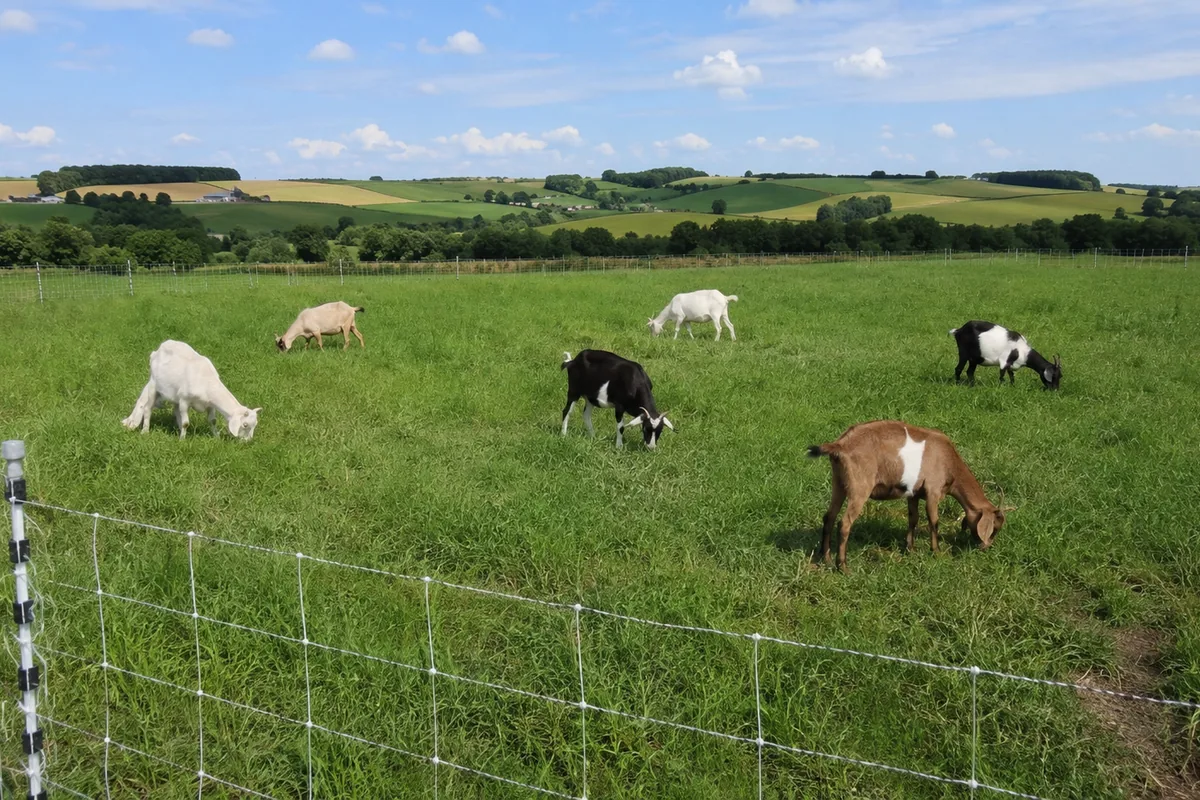
Split your ground into at least 4 paddocks, graze each for no more than about a week, and do not come back until it has rested 3 to 4 weeks minimum. That rest gap matters because most barber pole larvae on pasture die within about 30 days, so a 30-plus-day return cycle starves the parasite while the grass regrows.
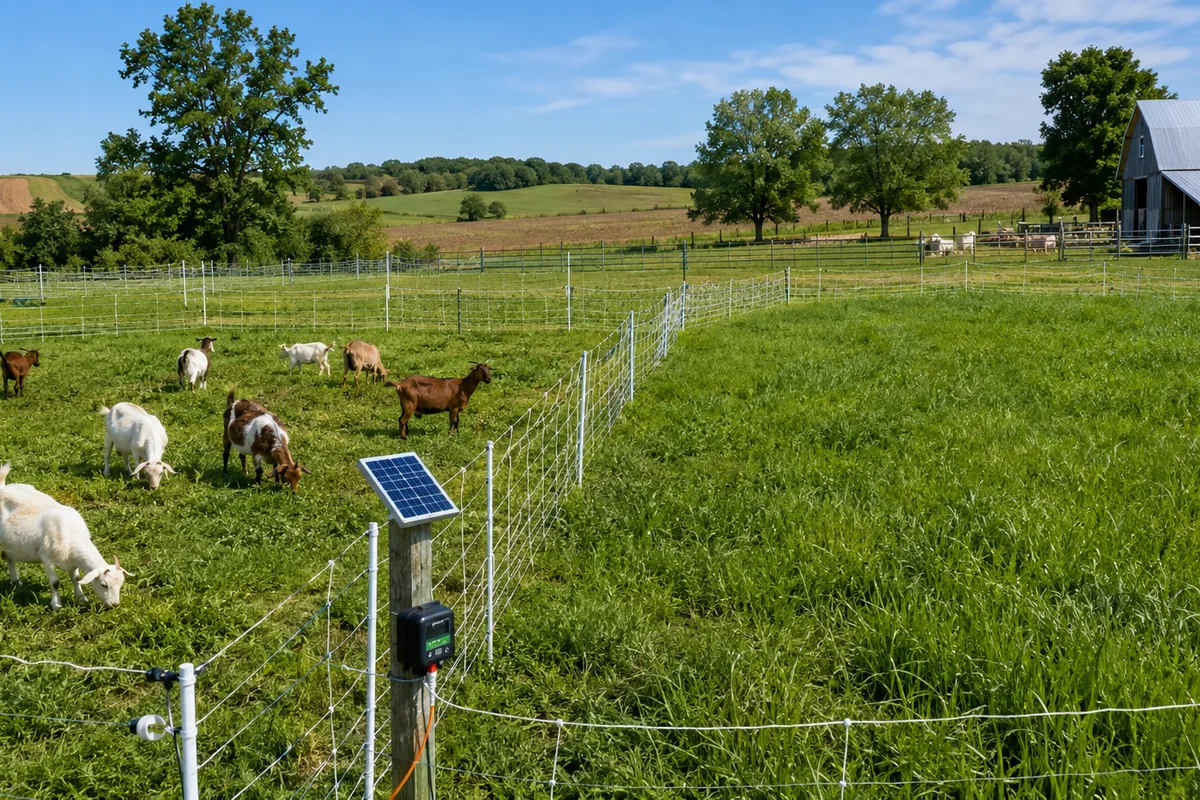
Portable electric netting makes this practical on any layout. A couple of 164-foot rolls and a solar energizer subdivide an acre in an afternoon, move in an hour, and double as serious predator deterrence, and goats respect a hot net far better than they respect most permanent fencing.
Move the herd when the pasture is grazed to about 4 inches, never shorter. Grazing below that height is exactly where the larvae live, and leaving residual height is what lets a paddock recover in weeks instead of months.
One acre run this way, as four quarter-acre paddocks on a weekly rotation, genuinely outperforms two acres of continuous grazing. That is the whole trick: rest is forage you did not have to buy.
The same rotation works when goats and horses share a pasture, keeping worms down for both.
How Fast Do Goats Clear an Acre of Brush?
Brush clearing is where goats earn their keep, and the rates are impressive. A small homestead herd of 8 to 10 goats works through an acre of heavy brush in roughly 4 to 8 weeks, eating poison ivy, blackberry, honeysuckle, and scrub that nothing else will touch.
Commercial outfits compress that timeline by stacking density. Thirty-plus goats inside a tight netting cell strip an acre in days, then the cell moves, which is the model rental herds use on solar farms and city hillsides.
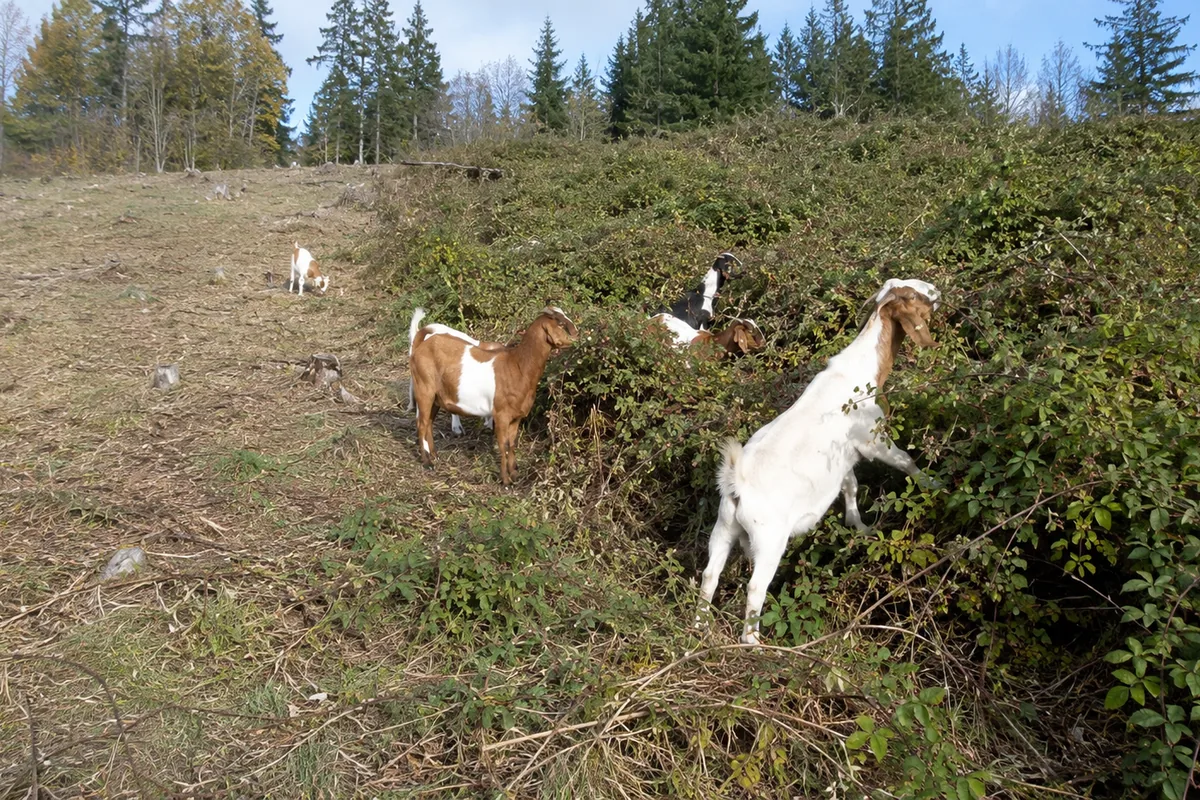
Set expectations correctly: goats defoliate, they do not bulldoze. They strip leaves, bark, and anything within standing reach, killing much of the brush over repeated passes, but stems and stumps need a mower or loppers afterward.
One safety pass comes first. Before turning goats into any overgrown lot, walk it for the plants that can genuinely hurt them, because a hungry clearing crew is far less picky than a pastured pet.
Can You Keep Goats Without Pasture?
Yes, and it deserves more respect than it gets. The dry lot model, a roomy dirt paddock with hay fed year-round, raises perfectly healthy goats on properties with no grazing at all.
Give each goat about 200 to 250 square feet of pen space, 15 to 25 square feet of draft-free shelter, and platforms or spools to climb, since bored goats invent worse hobbies. Feed free-choice hay, keep loose minerals out, and manage manure on a schedule.
The hidden bonus is parasitological: with no pasture, the barber pole cycle mostly collapses, and dry lot herds commonly need a fraction of the deworming a grazed herd does. You trade hay cost for worm control and predictability.
Plenty of suburban and small-lot keepers run this model with a pair of wethers or minis. The acreage question stops mattering when the answer is a well-built pen and a hay budget.
Budget that hay with real numbers. A goat eats roughly 2 to 4 percent of its body weight in dry matter daily, which works out to about 4 to 5 pounds of hay for a standard doe and around 2 pounds for a mini when no pasture is contributing.
In bale math, a standard goat on full hay runs through roughly two 50-pound square bales a week, call it a ton of hay per goat per year with waste included. Whatever your acre fails to grow, that is the formula that fills the gap, and pricing it before you buy goats beats discovering it in February.
Sources and Further Reading
Compiled and cross-checked against established livestock and extension references:
- Langston University, Meat Goat Production Handbook, grazing management chapters
- University extension stocking rate and small ruminant grazing guides (Oklahoma State, Penn State, Maryland)
- American Consortium for Small Ruminant Parasite Control, pasture management for barber pole worm
- Merck Veterinary Manual, gastrointestinal parasites of goats
Stock for your worst month, not your best, and let rotation do the heavy lifting. The acre takes care of the goats when the rest periods take care of the acre.
Frequently Asked Questions
A well-managed acre of quality pasture supports roughly 6 to 8 standard-size goats or 8 to 10 Nigerian Dwarfs and Pygmies, assuming you also feed hay through winter. An acre of dense brush carries more while the browse lasts, and a thin, droughty, or overgrazed acre may honestly support only 2 or 3. The land's actual forage, not the acreage number, is what feeds goats.
Plan on roughly 1.5 to 2 acres of decent pasture for 10 standard goats, ideally split into 3 or 4 paddocks you rotate through. With miniature breeds, 10 goats fit comfortably on about an acre and a half of good ground. If you have less land than that, the dry lot model works at any acreage: about 200 to 250 square feet of pen per goat plus year-round hay.
A small herd of 8 to 10 goats typically clears an acre of heavy brush in 4 to 8 weeks, while commercial clearing outfits running 30-plus goats inside electric netting do the same acre in a matter of days. The goats strip leaves and bark rather than removing stems, so expect to follow with cutting, and expect regrowth to need a second pass later in the season.
Goats win on entry cost, land efficiency, and handling, since one cow eats about as much as 6 goats and a starter pair of goats costs a fraction of a single cow. Cows win on fencing, parasites, and labor per pound, because cattle stay behind simple fences and tolerate worms that flatten goats. On small acreage, goats are usually the more practical and affordable choice; at scale, cattle economics take over.
Yes, completely. Plenty of healthy goats live in dirt paddocks with zero grazing, eating free-choice hay with loose minerals and fresh water, and the model has a real advantage: dramatically lower barber pole worm pressure, since the parasite cycle depends on pasture. Give each goat about 200 to 250 square feet of outdoor pen, 15 to 25 square feet of shelter, and things to climb, and a dry lot herd thrives.