
| # | Product | Our Rating | ||
|---|---|---|---|---|
| 1 | 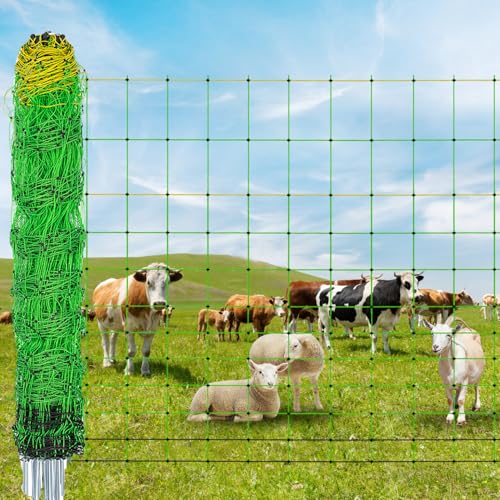 | Best OverallElectric Net Fence for Goats | ★★★★★ | Check Price |
| 2 |  | Wall-Mount Goat Hay Feeder | ★★★★☆ | Check Price |
| 3 |  | Farm Innovators Heated Water Bucket | ★★★★☆ | Check Price |
Plenty of new goat owners fall for the same daydream: a friendly little goat curled up on the couch like a dog. The idea is charming, and a handful of viral videos make it look effortless.
The reality is messier, louder, and more complicated than those clips suggest. Before you turn a spare bedroom into a goat suite, it helps to know exactly what you are signing up for and where the line between a sweet idea and a daily headache actually sits.
Can goats live in the house, really?
Yes, a goat can physically survive inside a house. People do it, usually with miniature breeds, and the animal won’t drop dead from being indoors.
Whether it should live there is a different question entirely. Goats are livestock with strong instincts to climb, browse, and roam in a group, and a carpeted living room satisfies none of those needs.
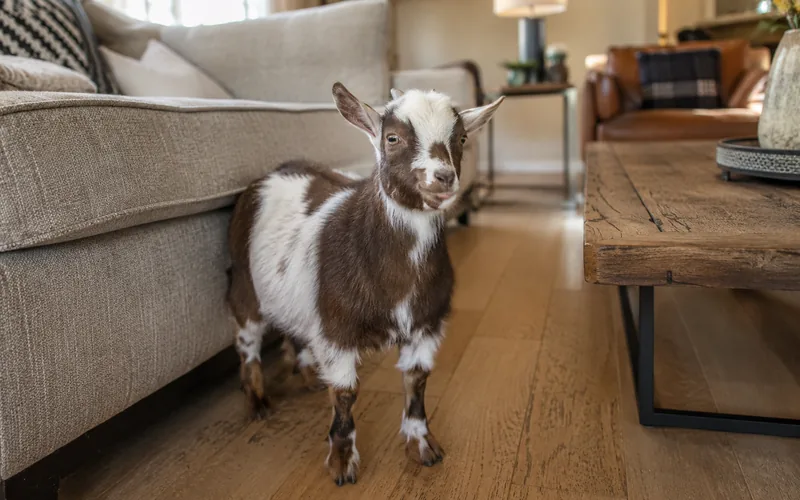
The honest verdict from most experienced keepers is that permanent indoor life is unfair to the goat and exhausting for the owner. A short stint inside for a genuine reason is sensible, but a goat treated as a full-time house pet tends to become stressed, destructive, and unwell over time.
Why a goat is not built for indoor life
The short answer: goats are ruminants and natural browsers built for near-constant grazing and movement, not indoor life.
To see why the indoor dream falls apart, look at how a goat’s body actually works. Goats are ruminants, which means they rely on a large fermentation chamber called the rumen to digest food almost constantly throughout the day.
That system is built for steady grazing and browsing on fibrous plants, not a couple of feedings on a kitchen schedule. A goat that can’t nibble and forage for most of its waking hours is prone to rumen upset, bloat, and the kind of slow decline that’s hard to catch until it’s serious.
It’s why goats graze for hours: the rumen depends on near-constant fiber to keep contracting, and a meals-on-a-schedule routine throws that rhythm off.
Movement matters just as much as diet. In the wild, goats spend their days walking, balancing on rocks, and testing every surface they can reach.
Indoors, that energy has nowhere to go. The same instinct that makes goats relentless climbers turns a bookshelf, countertop, or staircase into a jungle gym, and a bored goat grows anxious when it can’t burn that energy off the way nature intended.
The mess no one prepares you for
Put simply, goats can’t be reliably house-trained and leave droppings throughout the day.
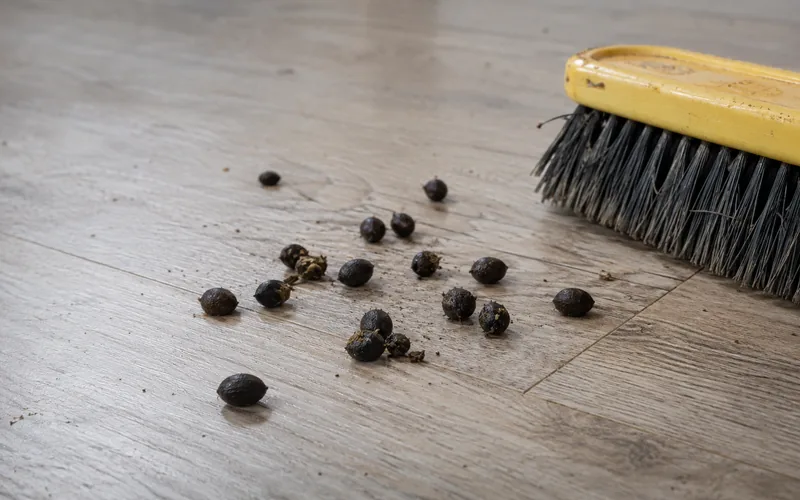
This is the part that ends most indoor goat experiments. A single goat produces dozens of droppings every day, scattered as small pellets wherever the animal happens to be standing.
They have almost no control over the timing, so the idea of a tidy bathroom routine just doesn’t apply. Owners who try litter boxes report partial success at best, often around two-thirds of the time, which still leaves fresh droppings on the floor, the rug, and the furniture daily.
Realistically, you’ll sweep or mop several times a day to stay ahead of it, and it gets old fast.
Diapers exist, and some owners lean on them for short stretches. Left on too long, though, they trap moisture against the skin and lead to irritation and infections, so they’re a patch, not a fix.
Then there’s the smell. Droppings and urine break down into ammonia, which concentrates fast in a closed room and stings the eyes and lungs.
Intact males make it dramatically worse, since bucks carry a heavy musk that clings to everything around them. Even with constant cleaning, a house with a resident goat starts to smell like a barn within days.
Chewing, climbing, and toxic houseplants
In plain terms, a curious goat chews cords and toxic plants and climbs onto anything.
Goats explore the world with their mouths, and indoors that curiosity gets expensive. Electrical cords, baseboards, furniture legs, shoes, books, and remote controls are all fair targets for a bored goat.
This is not misbehavior you can train away. Mouthing and chewing are how goats investigate their surroundings, so the only real defense is removing temptation entirely.
Horns add another wrinkle indoors. An accidental headbutt or a horn snagged on furniture can wreck your home and hurt the goat, which is part of why many pet keepers start with disbudded kids.
Houseplants raise the stakes from annoying to dangerous. Common indoor varieties such as azalea, philodendron, pothos, and rhododendron are toxic to goats, and a single curious bite can become a veterinary emergency.
Lilies, oleander, and English ivy belong on the no-go list too, and specialists who catalog plants toxic to goats warn that signs escalate from drooling to collapse within hours.
Climbing compounds every other risk. A goat that hops onto a counter can reach cleaning chemicals, medications, or that toxic plant you thought was safely out of the way, which is the same reason goats are relentless climbers outdoors as well. Goat-proofing a home is closer to baby-proofing for a determined toddler who can also jump four feet straight up.
Slick floors, hooves, and other hidden hazards
Here’s what matters: hard, slick floors and trapped humidity quietly harm a goat’s legs, hooves, and lungs.
There’s another problem hiding right under a goat’s feet. Hooves evolved for dirt, rock, and grass, not polished tile or hardwood.
On slick flooring, goats slip and splay their legs, which strains joints and tendons over time. Kids raised on smooth surfaces can even develop lasting leg and posture problems.
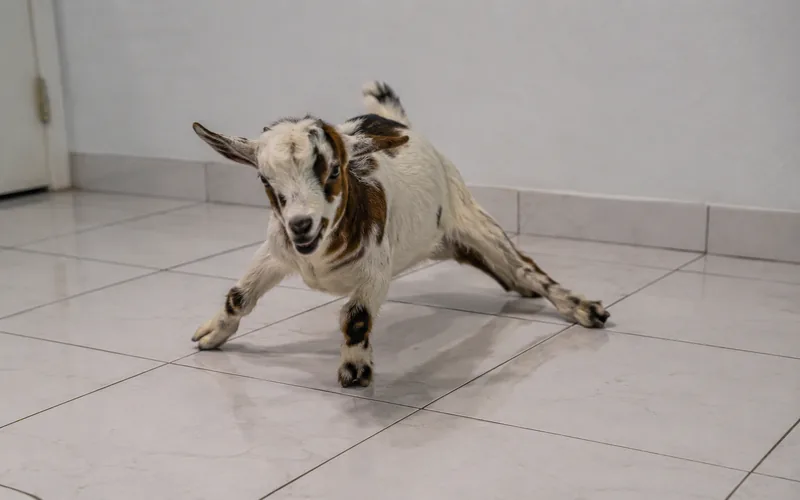
Hooves keep growing and need regular trimming, and a goat that never walks on abrasive ground wears them down far too slowly. That means more frequent trims and a higher risk of overgrowth and hoof rot in a damp indoor space.
Indoor humidity is its own quiet hazard. Goats do best in dry, well-ventilated air, and a closed house traps the moisture from their breath, urine, and water bucket. That brews exactly the damp conditions where respiratory trouble thrives.
One goat indoors is a welfare problem
As a rule, never keep just one goat, since lone herd animals grow anxious and noisy.
Even if you solved the mess and the chewing, a deeper issue remains. Goats are herd animals, and a single goat kept alone is a stressed goat, full stop.
A lone goat cries, paces, and develops anxious behaviors because isolation goes against everything in its nature. The standard advice is to never keep just one, which means an indoor setup instantly doubles every challenge you already have.
Noise is the next surprise. A bored or lonely goat bleats loudly and often, and that sound carries straight through walls to every room and, frequently, to the neighbors.
Add the constant need to move and climb, and it becomes clear that even a roomy house can’t give a goat what a modest yard can. The animal isn’t being difficult. It’s just trying to be a goat in a space that was never built for one.
Is it even legal where you live?
Often, no. Many cities and HOAs classify goats as livestock and either limit or ban them outright.
Here’s a question the cute videos never raise: you may not even be allowed to keep a goat. Most cities and suburbs classify goats as livestock, not pets, and zoning codes treat them accordingly.
Plenty of residential areas ban livestock outright, set minimum lot sizes, or require permits, and those rules apply whether the goat sleeps in a barn or on your bed. Homeowner association covenants often add another layer of restrictions on top of city code.
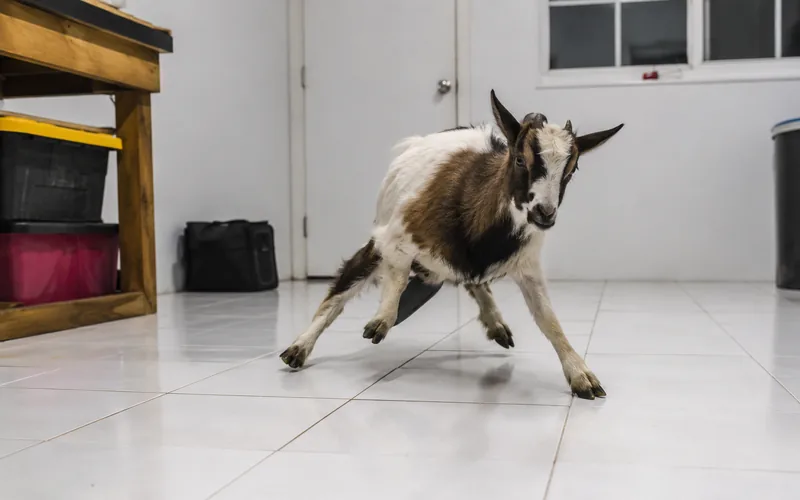
Bringing the animal indoors does not create a loophole. Many of the same hurdles that face anyone raising goats in town apply to an indoor goat too, and an ordinance violation can mean fines or an order to remove the animal.
Always check your local code, and ideally your deed and HOA rules, before you fall in love with the idea. It is far better to learn the limits early than to rehome a pet you’ve bonded with.
When bringing a goat indoors makes sense
Yes, but only temporarily, such as for a newborn, sick, or injured goat that needs close care.
None of this means a goat should never set hoof inside. There are real, time-limited situations where indoor care is the right call, and good keepers use them regularly.
The most common is a newborn kid that’s weak, rejected, or chilled, since these babies need warmth and bottle feeding every few hours. Sick or injured goats also benefit from a quiet indoor space where you can monitor them closely and keep them out of bad weather.
The key word in every case is temporary. The goal is always to return the animal to a herd and a proper outdoor setup as soon as it is strong enough.
For a bottle kid, that means other kids its own age, since adult goats can hurt a small kid.
| Indoor situation | Reasonable? | Typical duration |
|---|---|---|
| Newborn or rejected kid needing bottle feeding | Yes | Days to a few weeks |
| Sick or injured goat under close watch | Yes | Until recovered |
| Shelter during a severe storm or cold snap | Yes | Hours to a day or two |
| A goat kept as a full-time house pet | No | Not recommended |
When you do bring one inside, set up a contained, easy-to-clean area such as a mudroom, bathroom, or garage corner rather than giving it the run of the house. Stock it with hay, fresh water, and a warm, dry bed, and plan the move back outdoors from the start.
Rubber mats or deep straw give far better footing than bare tile, and a baby gate contains the goat without crating it. Keep any heat lamp for a chilled newborn well out of reach.
Which goats handle indoor time best
Miniature breeds win here. Nigerian Dwarfs and Pygmy goats handle short indoor stays better than full-size dairy breeds.
If you’re weighing a goat as a companion animal, breed makes a real difference for the temporary, semi-indoor situations above. Smaller breeds are easier to manage and tend to be calmer around people.
Nigerian Dwarfs and Pygmy goats top almost every list for good reason. They are compact, sociable, and hardy, which makes short indoor stints far more practical than they would be with a full-size dairy goat.
| Breed | Mature weight | Indoor-stint suitability |
|---|---|---|
| Nigerian Dwarf | 20 to 30 lb | Best for short stays; small and friendly |
| Pygmy | 35 to 75 lb | Good; sturdy and people-oriented |
| Dwarf Nigerian cross | 25 to 50 lb | Good; manageable size |
| Standard dairy breed | 100 to 200+ lb | Poor; too large for indoor handling |
Just remember that small size doesn’t turn a goat into a cat. Even the friendliest Nigerian Dwarf still needs a companion, outdoor time, and browse, so a manageable breed only makes the temporary moments easier, not full-time living workable.
What an indoor goat really costs
Bottom line up front: the goat itself is cheap, but cleanup, repairs, and ongoing care are not.
Beyond the daily hassle, an indoor goat quietly drains your wallet. The animal itself is the cheapest part of the equation.
You still need at least two goats, hay year round, mineral supplements, and routine veterinary care like vaccines, deworming, and hoof trims. None of that changes because the goat lives inside.
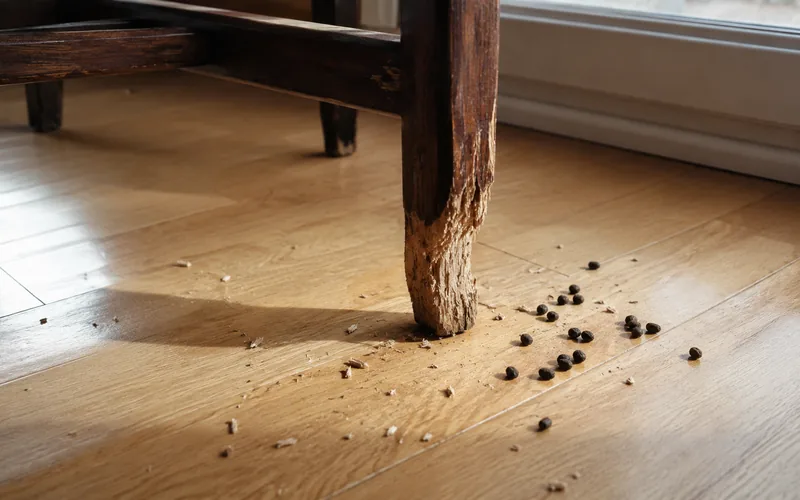
Then come the indoor-specific costs. Ruined flooring, chewed furniture, replaced cords, constant cleaning supplies, diapers, and odor control add up fast, and serious damage to walls or wiring can climb into real money.
Hay, minerals, and routine vet care run a few hundred dollars per goat each year before any household damage. A single chewed cord or a bloat emergency can wipe out whatever you imagined saving.
A secure outdoor setup, by contrast, pays for itself. A one-time investment in solid fencing and a simple shelter protects your house, keeps the goats healthier, and ends the endless cleanup.
Warning signs an indoor goat is struggling
Watch for nonstop bleating, appetite loss, pacing, teeth grinding, or a dull coat.
If you’re already keeping a goat inside, watch for the signs it isn’t coping. Goats hide discomfort well, so the early ones are easy to miss.
Constant or escalating bleating usually points to boredom, loneliness, or stress. A goat that stops eating, grinds its teeth, or stands hunched may be dealing with rumen trouble or pain and needs a vet promptly.
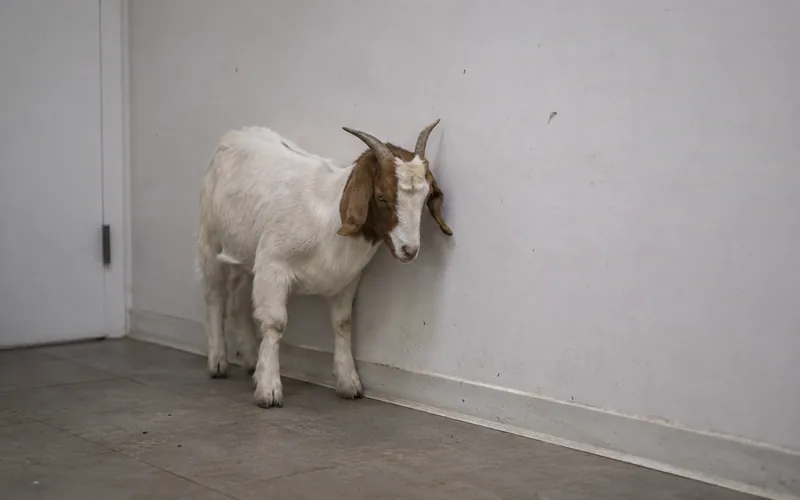
Repetitive pacing, chewing on walls, or pulling its own hair are classic signs of a frustrated, under-stimulated animal. Loose stool, a dull coat, or sudden weight changes all suggest the indoor diet and environment are falling short.
Any of these is a cue to rethink the arrangement. In most cases, moving the goat to a companion and a proper outdoor space resolves the behavior faster than any indoor fix.
A better middle ground than the living room
Here’s the good news: the bond people want from a house goat is completely doable outdoors. The trick is to build the goat a great space close to home instead of moving it into yours.
A simple three-sided run-in shelter or small barn, paired with a secure paddock, gives your goats everything the house cannot. Sizing matters more than most people expect, and a well-built goat shelter does not need to be expensive or complicated to do the job.
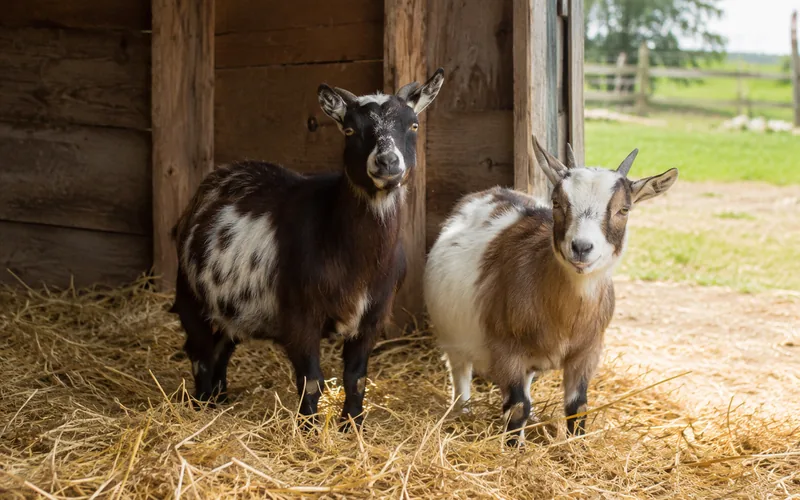
Comfort comes down to the details. Deep, dry bedding such as pine shavings keeps goats warm and clean, and a sturdy fence keeps them safely contained while they climb and play.
Companionship solves the loneliness problem properly. Keep at least two goats together, give them things to climb and browse, and spend time with them in their space, and you get the affection of a pet goat without sacrificing your floors or their health.
The bottom line
So, can goats be kept in the house? Technically yes, but for almost everyone the honest answer is that they should not be, at least not permanently.
Their digestion, their instincts, their droppings, their noise, and often your local laws all push in the same direction. A goat thrives with a companion, room to roam, daily browse, and a dry shelter, and a living room cannot deliver any of that.
Save the indoor space for the moments that truly call for it, like a fragile newborn or a recovering patient. For everyday life, give your goats a proper outdoor home and visit often, and both you and the goats will be far happier for it.
Frequently Asked Questions
No. Goats drop dozens of small pellets a day with almost no sphincter control, so they cannot be reliably house-trained. Some owners report litter boxes working maybe 60 to 70 percent of the time, which still leaves droppings on floors and furniture every single day.
Yes, and it builds fast. Droppings and urine release ammonia in an enclosed room, and intact bucks carry a strong musky scent that is almost impossible to manage indoors. Even with daily cleaning, a house with a goat in it develops a barn-like odor.
It depends on local zoning, livestock ordinances, and HOA rules. Many residential and suburban areas classify goats as livestock and ban them outright or set minimum lot sizes, regardless of whether the animal lives indoors or out. Always check your city code before getting one.
Nigerian Dwarfs and Pygmy goats are the usual choices because they are small, hardy, and friendly. Even so, they are not house pets. They still need a companion goat, outdoor space, and daily browse to stay healthy and calm.
Temporarily, yes. Newborn, rejected, or chilled kids often spend their first days or weeks indoors for warmth and round-the-clock bottle feeding. The goal is always to move them out to a herd and shelter once they are strong enough to regulate their own temperature.