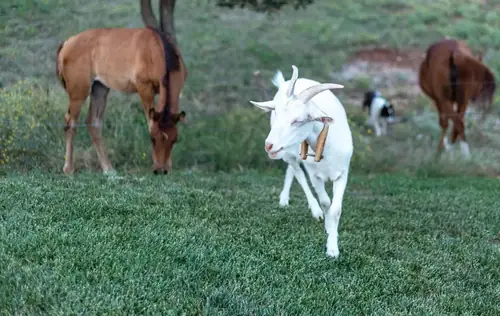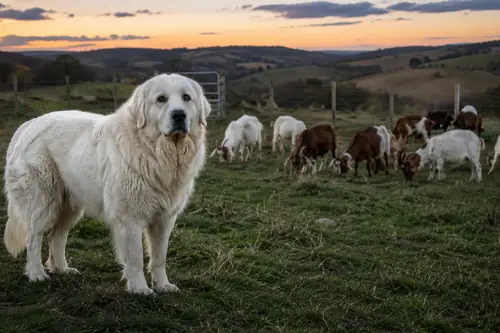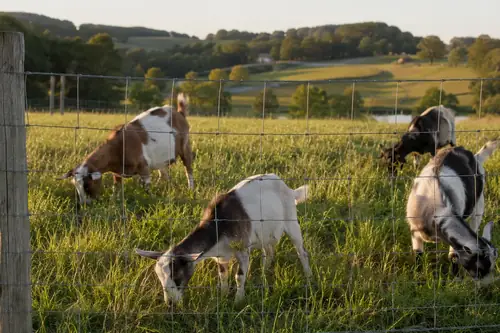
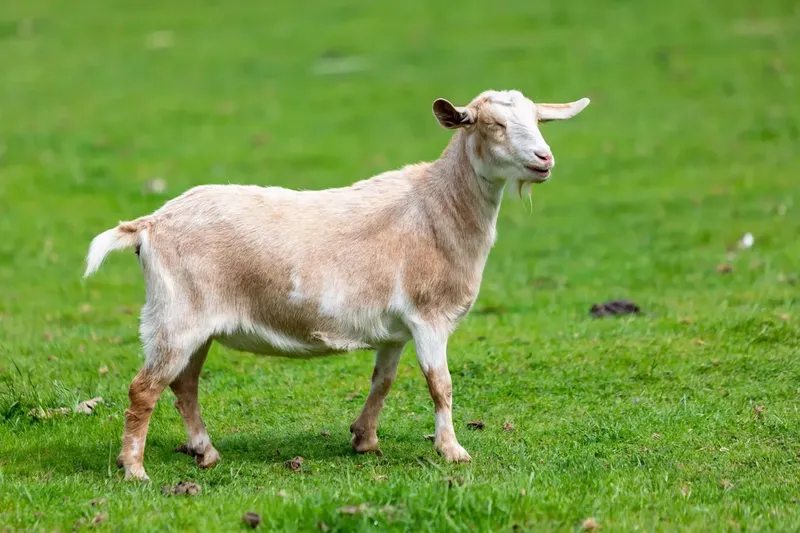
A goat on a hillside is doing exactly what it’s built to do. The same animal that can strip an overgrown bank to bare dirt in a week is also the one homesteaders rent out to stabilize fire-prone slopes.
Goats get blamed for collapsed banks and credited with saving them, sometimes on the same stretch of hillside. That contradiction is really the whole story, and it comes down to a few management choices most new owners never hear about.
This guide covers what slope damage looks like, the angle where risk turns serious, the warning signs, and the setup that keeps soil in place.
What Slope Damage From Goats Actually Looks Like
In short, goats only harm a slope when overgrazing strips its protective cover, and the damage then surfaces as bare ground, cut hoof trails, and gullies.
Slope failure from grazing is rarely a single dramatic event. It builds quietly, in three overlapping stages, and the time to act is well before the last one.
The first stage is defoliation. Goats strip the leaves, stems, and groundcover until the hillside changes color, trading green canopy for patches of stubble and exposed earth.
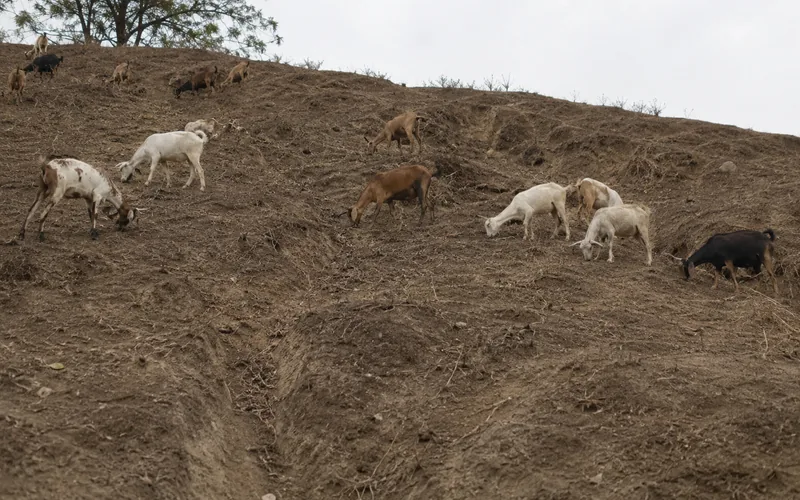
Next comes trailing. Goats walk the same lines across a slope until their hooves cut narrow paths, and on a hillside those paths act like little channels that gather and speed up rainwater.
Last is soil loss. Once the cover is gone and the trails are cut, the next hard rain carries topsoil downhill, rilling the surface and eventually opening gullies that no amount of regrazing will close on its own.
Why Goats Are Harder on a Hillside Than Other Stock
The short version: goats browse plants low, chase the steepest spots, and bunch up, which punishes a fragile hillside harder than cattle or sheep do.
So why do goats in particular earn the erosion reputation when plenty of animals graze slopes? Three traits stack against them.
First, goats are browsers, not just grazers, eating brush and broadleaf plants low. Where a cow tears grass and a sheep nips the tops, a goat works a plant down toward the crown, which slows or stops regrowth and the root anchoring that comes with it.
Second, goats actively seek the steep, brushy, unstable spots other livestock refuse. The agility that lets them climb a near-vertical bank also puts grazing pressure on precisely the ground least able to recover.
Third, goats are social and follow one another, so they bunch up. A herd drifting as a group hammers one section to dirt while the rest sits untouched, and that uneven overgrazing does the real damage.
None of this makes goats a bad fit for hills. It just means the margin for error is thinner, so stock fewer goats per acre on a slope than on the flat.
The Angle Where Goats Start to Break Ground
Put simply, erosion risk spikes past roughly 30 degrees, the point where a goat’s gait changes and its hooves start shearing the soil crust.
There is a rough threshold worth knowing here. Biomechanics research on goats walking inclines found they change their entire movement strategy somewhere between a 20 and 30 degree slope.
On gentler ground, a goat’s forelimbs act mostly as brakes, and its weight stays settled over the surface. Past roughly 30 degrees, those forelimbs switch to driving the body upward, the hooves shear harder for grip, and that extra force fractures a fragile soil crust.
That shift matches what graziers see, which is why slope angle is the first thing to check before you turn goats out.
| Slope angle | Erosion risk with goats | Management approach |
|---|---|---|
| Under 10° | Low | Graze near normal stocking, still rotate |
| 10° to 20° | Moderate | Reduce stocking, short grazing windows |
| 20° to 30° | High | Light, brief grazing only, long rest |
| Over 30° | Severe | Avoid grazing; keep in permanent deep-rooted cover |
The table is a starting point, not a guarantee. Soil type, rainfall, and existing plant cover all move the line, and a sandy 15 degree bank in a wet climate can erode faster than a well-grassed 25 degree slope in a dry one.
Warning Signs a Slope Is Starting to Slip
Here’s the tell: bare patches, hoof trails, exposed roots, rills, and sediment fans all mean grazing has tipped into erosion.
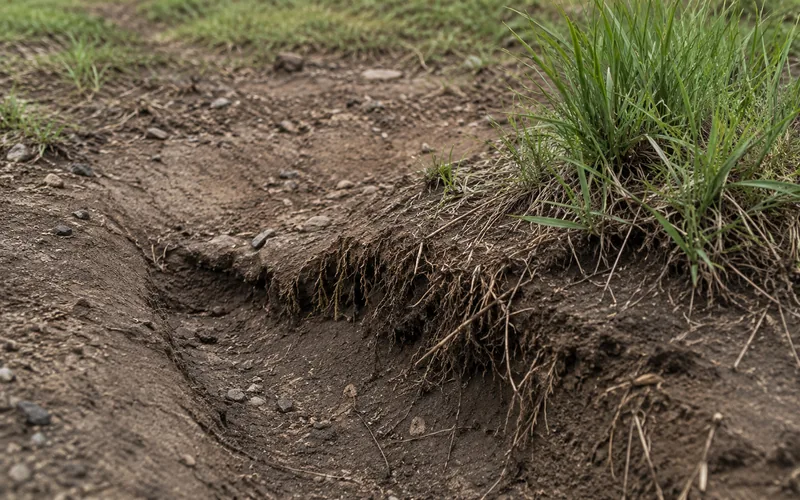
The keepers who never lose a hillside are simply the ones who read it early. Here are the signals a slope is tipping from grazed to damaged, roughly in the order they appear.
- Bare patches widening between plants instead of a continuous canopy
- Visible hoof trails cutting horizontal or diagonal lines across the face
- Exposed roots and stones where the soil surface used to sit
- Rills, the small finger-like channels that form after rain
- Sediment fans of washed-down soil collecting at the base of the slope
- Plants failing to green up in the days after the herd is moved off
Catch it at the bare-patch stage and a few weeks of rest fixes it. Wait until rills and sediment fans show up, and you’re repairing erosion rather than preventing it, which is far slower and costlier.
Grazing a Hill Without Losing the Soil
The key is restraint: stock light, rotate often, fence along the contour, and always leave living cover behind.
The good news is that keeping goats on a slope safely isn’t complicated, and these four habits do almost all the work.
Stock light and watch the ground. Cut your flat-land numbers by a third to a half on any real slope, and treat the appearance of bare dirt within a day or two as the signal to move, regardless of the calendar.
Rotate and rest. Divide the hillside and graze each section briefly, then keep the herd off until cover fully regrows, which on a slope means weeks, not days. A run of fencing that actually holds goats makes this practical, and a hot electric net both subdivides the slope and doubles as predator protection.
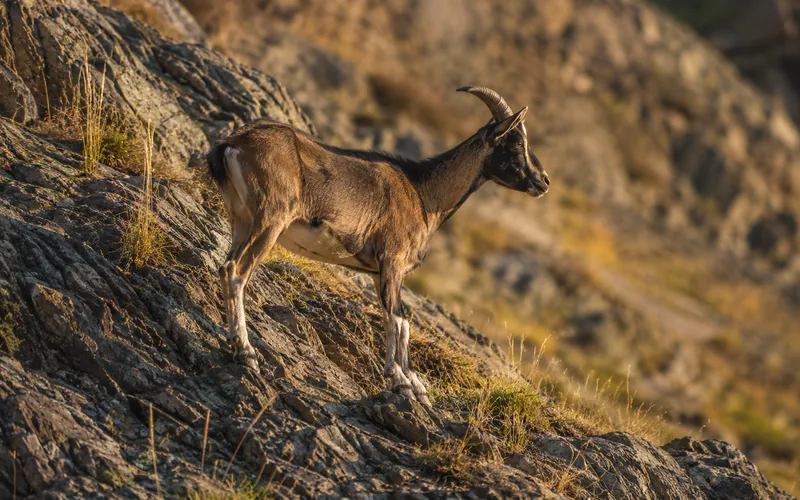
Fence along the contour. Running fence lines across the slope rather than straight up and down encourages goats to travel sideways, and over time that movement smooths into terrace-like paths instead of vertical runoff channels.
Leave residual cover. Pull the herd while there’s still a layer of living plants holding the surface, and never graze down to bare crust. That leftover canopy is what intercepts raindrops and keeps roots alive to anchor the soil through the next storm.
When Goats Fix a Slope Instead of Wrecking It
Yes, managed well, goats turn into an erosion-control tool, clearing brush and pressing seed into the ground on short, targeted passes.
Managed deliberately, the same animal that can strip a hillside becomes one of the better tools for protecting one. It’s the side of the story the “goats cause erosion” headlines miss.
Targeted, short-duration grazing is used on purpose to clear flammable brush from steep banks, hillsides, and utility corridors that machines cannot safely reach. The crew leaves before the goats overgraze, which is the whole model behind rental herds on solar farms and city slopes.
That same appetite for brush is why goats and cattle make such good pasture partners.
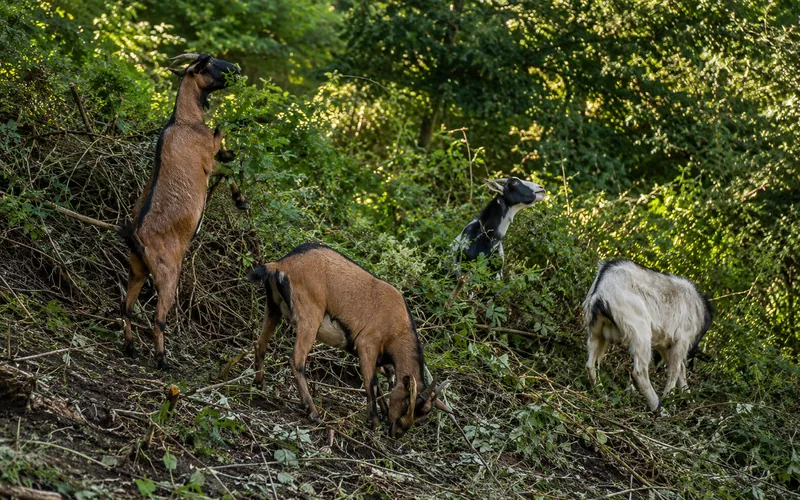
There is a soil-building bonus too. As goats graze a slope in controlled passes, their droppings work into the ground and feed the very plants whose roots hold it together.
The difference between wrecking a slope and saving it is never the goat. It is the grazing window, and a managed herd that comes and goes is an asset where a herd left standing is a liability.
Bringing a Stripped Slope Back to Life
Recovery starts by pulling the herd off, then reseeding deep-rooted cover and resting the slope a full growing season before any goat returns.
If a hillside is already bare and starting to wash, the first move is the hardest one to accept: take the animals off completely. Nothing recovers while it is still being grazed.
Then rebuild cover from the surface down. Seed a deep-rooted, spreading mix of grasses and legumes into a light straw mulch to hold seed and soil while it germinates, and on the steepest faces lay erosion-control blankets or coir logs across the contour.
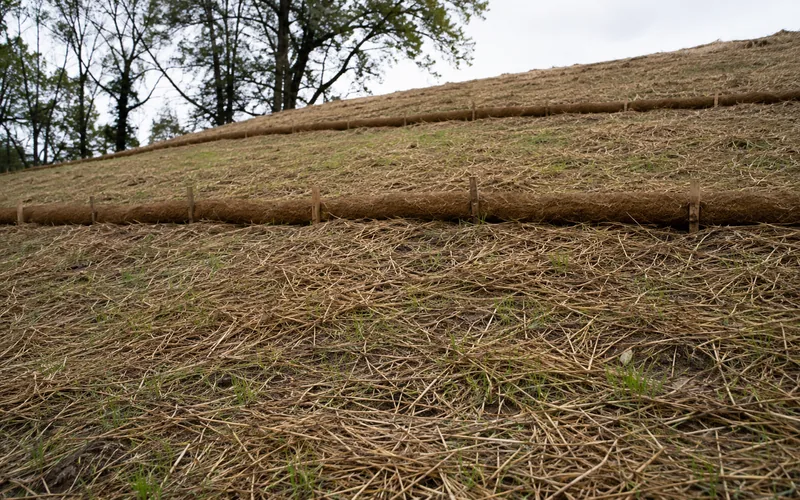
Give it a full growing season of rest at minimum, longer on poor ground, and resist the urge to bring the herd back early. Roots, not green tops, stabilize a slope, and they take a season to rebuild once grazed out.
Once cover is genuinely re-established, you can reintroduce goats, but only on the light, rotated, contour-fenced system above. The slope that failed once will fail faster if it goes back to continuous grazing.
Sources and Further Reading
Compiled and cross-checked against livestock, extension, and peer-reviewed references:
- The Limb Kinetics of Goat Walking on the Slope With Different Angles, peer-reviewed gait research (strategy shift between 20 and 30 degrees)
- National Park Service, Effects of Mountain Goats on Soils and Plant Communities
- University extension grazing-management and rotational-grazing guides (Oklahoma State, Penn State, Maryland Small Ruminant Program)
- USDA NRCS conservation guidance on prescribed grazing and slope stabilization
Goats do not have to cost you a hillside, and they can help you keep one. Graze it in short, light, rotated passes and leave living cover behind, and the same herd that could have stripped the bank ends up holding it in place.
Frequently Asked Questions
Far fewer than flat ground of the same acreage, because a hillside grows less forage and recovers slower. A practical starting point is to cut your normal stocking rate by a third to a half on any slope steeper than about 15 degrees, then watch the ground rather than the headcount. If bare patches appear within a few days of turning goats in, you have too many goats for that hillside and need to pull them sooner.
Goats do not trigger sudden landslides on their own, but severe overgrazing is a recognized contributor to slow slope failure and shallow slips. When roots that bind the topsoil die off, saturated soil after heavy rain can shear away on steep ground. The danger is greatest on slopes over 30 degrees that have been grazed to bare dirt, which is exactly the situation rotation is meant to prevent.
Goats are usually harder on a slope than sheep. Sheep nip grass and leave the crown and roots to regrow, while goats browse plants down hard and seek out the steep, brushy spots other livestock avoid. That combination puts the most grazing pressure on the least stable ground, so a slope grazed by goats needs shorter grazing windows and longer rest than the same slope grazed by sheep.
Plan on a full growing season of complete rest for a slope that has been grazed to bare soil, and longer on poor or droughty ground. The goal is to let deep-rooted grasses and groundcover re-establish a continuous canopy before any animal returns. Returning goats too early, before roots have rebuilt, simply restarts the erosion cycle and wastes the recovery you paid for in lost grazing.
Use deep-rooted, spreading species that knit the soil together, such as a mix of native bunchgrasses, clover, vetch, and where it suits your climate something like crown vetch or switchgrass. Seed into a light straw mulch to hold the seed and slow runoff while it germinates. On the steepest sections, erosion-control blankets or coir logs laid across the contour buy the new roots time to take hold.