 guide
guide Can Goats Cause Slope Erosion? When Your Herd Helps or Wrecks a Hill
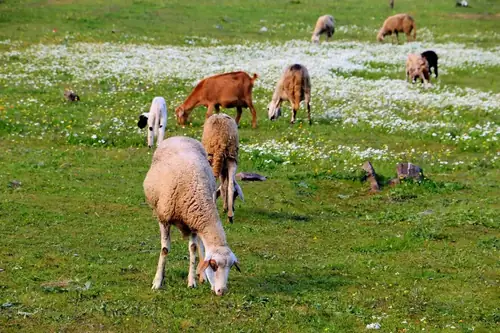
Goats can strip a hillside bare or hold it together, depending on how you graze. Here is the angle, the warning signs, and the setup that keeps soil in place.

A proper goat shelter is one of the most critical factors in keeping goats healthy, happy, and productive. Unlike cattle or horses, goats have almost zero tolerance for wet conditions, and they'll test every fence, gate, and latch you put in front of them.
We may earn a small commission through links on this page, at no extra cost to you. As an Amazon Associate, we earn from qualifying purchases. Ratings reflect our own editorial evaluation.
Every goat needs a dry, well-ventilated shelter with enough room to move freely and escape herd mates. Plan for a minimum of 15-20 square feet of indoor space per standard goat and 10-15 square feet per miniature breed like Nigerian Dwarfs or Pygmies.
For a small herd of 4-6 goats, a 12x12 or 12x16 shelter works as a starting point, though bigger is almost always better. The shape and layout of your barn matters more than most folks realize.
Long, narrow barns create bottlenecks where dominant goats trap subordinate ones. An open floor plan with multiple exits prevents bullying and gives every goat access to food, water, and resting areas.
| # | Product | Our Rating | ||
|---|---|---|---|---|
| 1 | 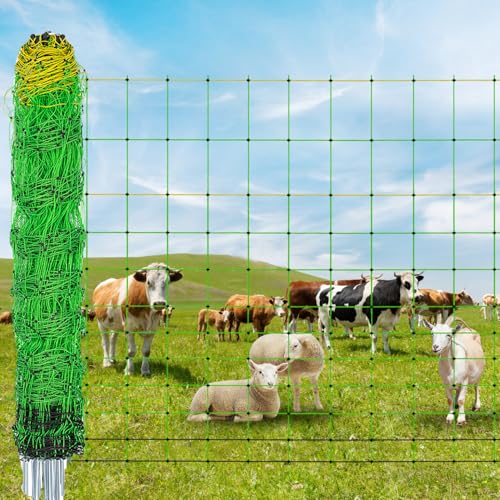 | Best OverallElectric Net Fence for Goats | ★★★★★ | Check Price |
| 2 |  | Wall-Mount Goat Hay Feeder | ★★★★☆ | Check Price |
| 3 |  | Farm Innovators Heated Water Bucket | ★★★★☆ | Check Price |
Kidding stalls should be separate, roughly 5x5 feet each, with solid walls for privacy. Ventilation is non-negotiable.
Ammonia from urine buildup causes respiratory infections faster than cold temperatures ever will. Your barn needs openings near the roofline or ridge vents to let moisture escape while staying draft-free at goat level.
In cold climates, a fully enclosed barn with good airflow beats a three-sided shelter. In mild climates, a three-sided goat shed or run-in facing away from prevailing winds works great.
Dirt floors with deep bedding are the most practical option. Concrete cleans easily but feels cold and hard on hooves without thick bedding.
Raised wooden platforms give goats a dry, elevated sleeping spot they love, especially on damp ground. Whatever you pick, make sure water drains away from the shelter and never pools inside.
Hold a lit match or lighter near your barn's ventilation openings on a cold morning. If the flame flickers, you have airflow. If it doesn't move, your ventilation is inadequate and ammonia is building up.
| Goat Type | Indoor Space (sq ft) | Outdoor Space (sq ft) | Kidding Stall |
|---|---|---|---|
| Standard Breed | 15-20 | 200-250 | 5x5 ft |
| Miniature Breed | 10-15 | 130-200 | 4x4 ft |
| Buck (separate) | 20-25 | 200+ | N/A |
| Doe + Kids | 25-30 | 250+ | 5x5 ft |
Goats will find and exploit every weak spot in your fence, so build for escape artists from the start. They climb, jump, push, lean, and squeeze through gaps that look impossibly small.
Your most reliable options are woven wire (field fencing), cattle panels, and electric fencing. Woven wire at 4 feet works for most breeds, but athletic breeds like Nubians and Alpines may need 5-foot fencing.
Cattle panels (16-foot welded wire panels) are incredibly sturdy and nearly impossible for goats to damage. They're ideal for pens, feedlots, and barn areas.
They cost more per foot but last decades with zero maintenance.
Electric fencing works great as a deterrent when used correctly. A single strand about 12 inches off the ground along the inside of your perimeter fence teaches goats to respect boundaries fast.
Most goats only touch it once or twice before they stay back. For rotational grazing, electric net fencing (like ElectroNet) is a popular portable option, though it needs a good charger and regular monitoring.
Never use barbed wire for goats. Their loose skin and curiosity make it extremely dangerous, and they'll get tangled and injured.
Chain link works but is expensive for large areas. Board fencing looks nice but goats chew wood and can squeeze between boards spaced too wide.
Good goat fencing also means goat-proof latches on every gate, because goats learn to open simple hooks and even some spring-loaded latches surprisingly quickly.
Test your electric fence weekly with a fence tester. Goats learn fast. If the fence is off even once, they'll test it every day after that.
| Fence Type | Height | Cost/ft | Durability |
|---|---|---|---|
| Woven Wire | 4-5 ft | $1.50-3 | Excellent |
| Cattle Panels | 4-5 ft | $3-5 | Excellent |
| Electric (5-strand) | 4 ft | $0.50-1 | Good |
| Board Fence | 4 ft | $4-8 | Fair |
The biggest threats to goats are domestic dogs, coyotes, and mountain lions. A livestock guardian dog is the best year-round defense.
Domestic and feral dogs are the number one livestock predator in the U.S., not coyotes or wolves. A single large dog can kill adult goats, and many owners don't realize their pet has prey drive until it's triggered by running livestock.
Coyotes target kids and small breeds at dawn and dusk. Foxes and raccoons are nighttime threats to newborns and miniature breeds like Nigerian Dwarfs and Pygmies.
Mountain lions are ambush predators that can kill multiple goats in one night, and bears will attack shelters if they smell feed inside. Raccoons carry rabies, distemper, and roundworm, and any raccoon active during daylight may be rabid.
Your best defense starts with secure nighttime housing. Lock goats in a solid structure every evening with no gaps larger than 3 inches and hardware cloth, not chicken wire, over ventilation openings.
Nothing beats a livestock guardian dog for year-round predator protection. One well-trained LGD can protect 30 to 50 goats, and their presence alone keeps many predators away.
Guardian llamas and donkeys work against canine predators if an LGD isn't practical, though neither stops a mountain lion. Clear brush within 100 feet of barns and remove feed attractants like open containers, fallen fruit, and garbage.
A livestock guardian dog is the single best investment for goat safety. A trained Great Pyrenees or Anatolian can protect your whole herd around the clock.
| Predator | Threat Level | Active Hours | Best Defense |
|---|---|---|---|
| Domestic Dogs | Very High | Anytime | Strong fencing + LGD |
| Coyotes | High | Dawn/Dusk | LGD + secure night housing |
| Mountain Lions | High (regional) | Night | Multiple LGDs + cleared brush |
| Foxes | Moderate (kids) | Night | Enclosed shelter + hardware cloth |
| Raccoons | Low-Moderate | Night | Sealed barn + no feed attractants |
| Bears | High (regional) | Dusk/Night | Electric fence + secured feed storage |
Pine shavings and straw are your two best bedding options, and many goat owners use both depending on the situation. The three most common bedding materials are pine shavings, straw, and hay, each with different trade-offs.
Pine shavings absorb moisture and control odor better than anything else. They're especially good in kidding stalls and smaller pens where you want maximum absorbency.
They're readily available at feed stores and easy to spread. If dust is a concern, go with kiln-dried shavings since they produce far less dust than air-dried varieties.
Straw is the most popular bedding for larger barns and shelters. It provides good insulation in winter, costs less than shavings, and works perfectly with the deep litter method.
With deep litter, you add fresh straw on top instead of cleaning weekly. The bottom layers compost in place, generating gentle warmth that helps keep the barn warmer during cold months.
Most goat owners using deep litter do a full cleanout 2-4 times per year, typically in spring and fall. Pine needles and bark are generally safe for goats, and many enjoy browsing on them.
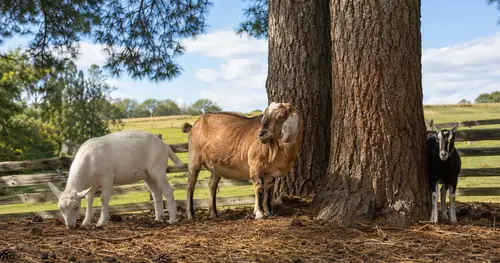
Pine trees in your pen provide shade and natural enrichment. Just clear fallen branches and sharp stumps regularly to prevent injuries.
| Bedding Type | Absorbency | Cost | Best Use |
|---|---|---|---|
| Pine Shavings (kiln-dried) | Excellent | Moderate | Kidding stalls, small pens |
| Straw | Good | Low | Large barns, deep litter method |
| Hay (waste) | Fair | Low | Supplement only |
| Wood Pellets | Excellent | High | Small pens, odor control |
Yes, goats can share barn space with chickens, ducks, and other poultry as long as you manage feed and moisture separately. Many small farms house them together successfully, and the arrangement benefits both species.
Chickens in particular make great barn companions. They eat spilled grain, pick through goat manure for insects and larvae, and help control fly populations naturally.
They take up minimal extra space and roost above the goat area on dedicated perches.
The catch is feed management. Chicken feed often contains additives harmful to goats, and goat feed isn't right for chickens either.
Use separate, species-specific feeders and place chicken feeders where only chickens can reach, like elevated platforms or chicken-only enclosures. Pygmy goats and chickens coexist particularly well because Pygmies are small and gentle.
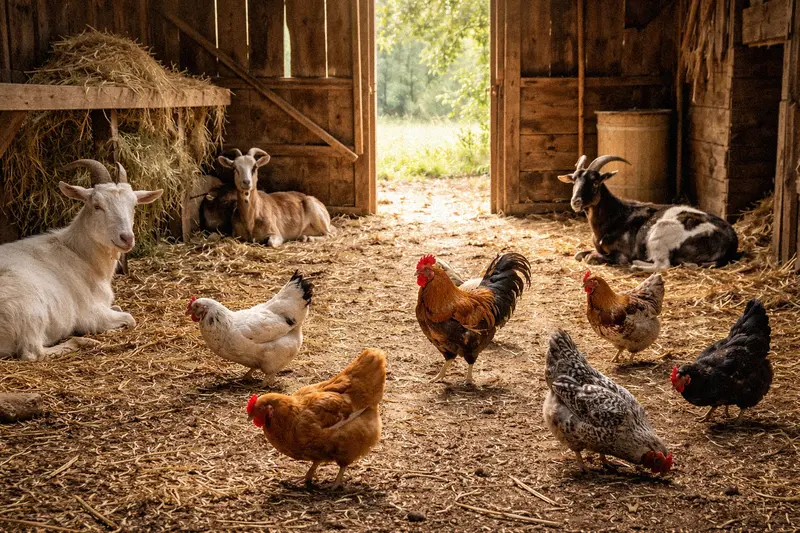
They rarely bother chickens, and many hobby farmers keep a few Pygmies with laying hens in the same barn with great success.
Ducks and goats also get along fine. Ducks tend to be calmer than chickens and less likely to be underfoot.
The tricky part with ducks is their love of water. They need water deep enough to dunk their heads, and they turn everything around their water source into a muddy mess.
Since goats despise wet conditions, place duck water stations well away from goat sleeping and feeding areas. A divided outdoor space or separate duck zone within the barn works well.
Goats can live with most other livestock, but success depends on the species, individual temperaments, and how you set up shared space. Dogs and goats can absolutely be friends, though the introduction process matters enormously.
Livestock guardian dogs like Great Pyrenees, Anatolian Shepherds, and Maremmas are bred to protect goats and bond with them naturally. Pet dogs are a different story since many, even well-behaved ones, have prey drive that makes them dangerous around goats.
If you want Pygmy goats and a family dog to coexist, introduce them slowly with the dog on a leash. Never leave them unsupervised until you're completely confident in the dog's behavior.
Goats, pigs, and chickens can share a barn, but they need careful management. Pigs root and wallow, creating muddy conditions goats hate, and they tend to be food-aggressive at shared feeders.
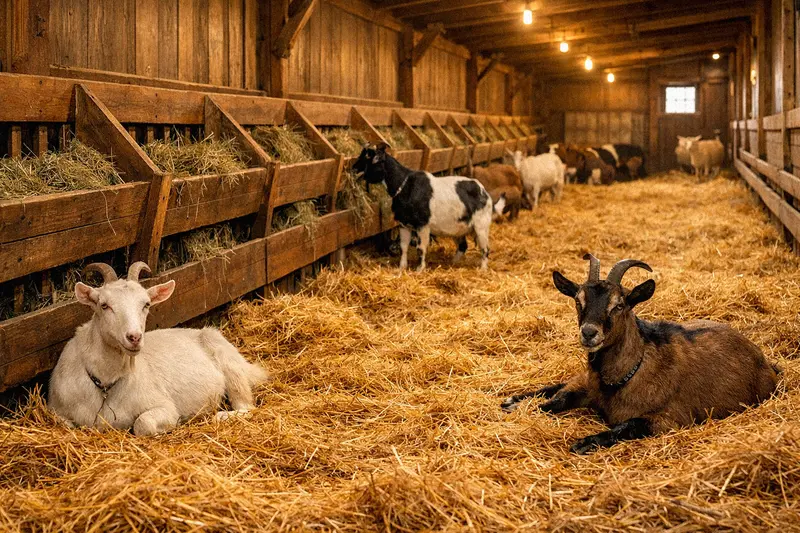
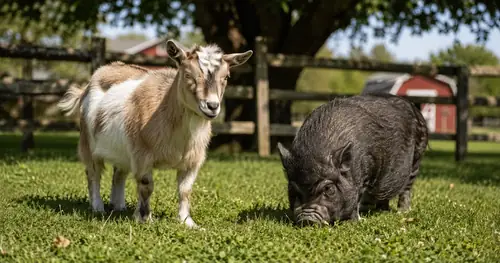
Provide separate feeding stations and give goats elevated areas pigs can't access. Mini pigs and fainting goats are a popular combo on hobby farms, and their similar sizes make cohabitation easier, though separate feeding is still a must.
Sheep and goats are natural companions that use pasture more efficiently together. Goats browse shrubs and weeds while sheep graze grass, so they complement each other well.
The main caution is mineral supplementation. Goats need copper in their minerals, but copper is toxic to sheep in the quantities goats require.
Keep both on a sheep-safe mineral and supplement goats with copper boluses separately.
When introducing a new dog to goats, keep the dog leashed and let the goats approach first. Watch the dog's body language closely. A stiff posture, fixed stare, or raised hackles are warning signs of prey drive.
Goats aren't meant for full-time indoor living, no matter what social media makes it look like. Keeping them inside creates real problems for both the goat and you, and honestly it's not fair to the animal long-term.
Goats can't be reliably house-trained. They lack the den instincts that motivate dogs and cats to keep their area clean.
They urinate and defecate frequently throughout the day, and while diapers work briefly on baby goats, it's not a sustainable solution. Adult goats produce a significant volume of waste daily.
Beyond the bathroom issue, goats chew on everything. Electrical cords, furniture, curtains, drywall, shoes, and anything within reach will be nibbled or destroyed.
They climb on furniture, knock things over, and a bored indoor goat causes more damage than most people imagine.
That said, temporary indoor housing sometimes makes sense. Bottle-fed kids often spend their first few weeks inside, especially in cold weather or if rejected by their mother.
Sick or injured goats may need indoor recovery time. Some owners successfully keep goats in dedicated indoor spaces with washable floors, removable bedding, and goat-proofed environments, but they still need daily outdoor time, exercise, and companionship from other goats.
You can absolutely raise goats in urban or suburban settings with the right planning and breed selection. More cities now allow miniature goats, following the same trend that legalized backyard chickens in many municipalities.
Before bringing goats home, check your local zoning ordinances. Many cities allow Nigerian Dwarfs and Pygmies but prohibit full-sized breeds.
Regulations usually specify maximum animal counts, minimum lot size, setback requirements from property lines, and whether bucks are permitted. Most ordinances ban bucks due to their strong odor during breeding season.
Space is where most urban keepers run into trouble. You need at least 200 square feet of outdoor space per goat, plus a dry shelter of 10-15 square feet per goat.
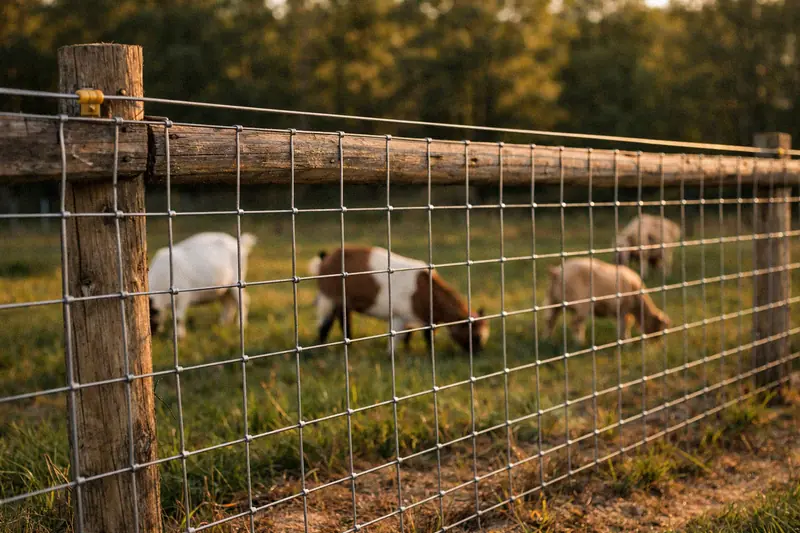
A standard suburban backyard supports 2-3 miniature goats if managed well. Rotational grazing isn't realistic in small yards, so provide hay as primary forage and use the yard for exercise and enrichment.
Noise is the other thing that trips up urban goat keepers. Does and wethers are generally quiet, but a doe in heat gets loud, and any goat left alone will scream until someone listens.
Keeping at least two goats reduces stress-related noise dramatically. Good fencing, enrichment like climbing structures and toys, and routine care keep goats calm and content.
Many urban keepers find neighbors are actually delighted by the goats. Some owners claim their goats as a lawn maintenance team rather than pets, which in certain jurisdictions affects zoning rules and tax implications.
Before buying goats for a suburban lot, introduce yourself to every adjacent neighbor and ask about concerns. One supportive neighbor can defend you at a zoning hearing; one angry neighbor can shut you down.
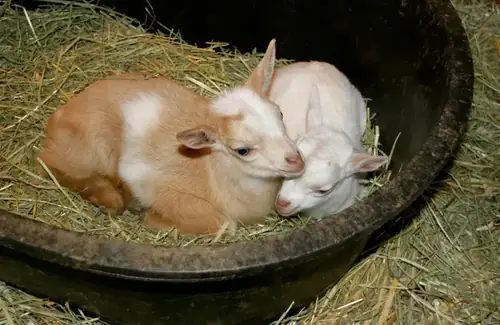
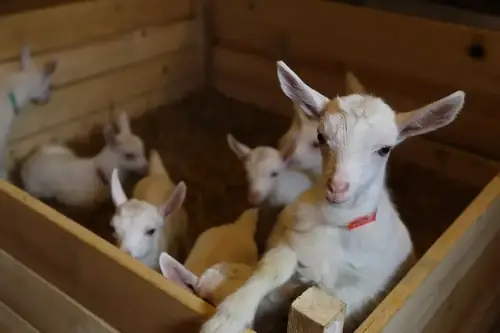
Newborn kids need a warm, draft-free space separate from the main herd for their first 1-2 weeks of life. They're vulnerable to hypothermia, drafts, and being stepped on by larger goats, so getting their housing right is critical.
Proper kid housing can mean the difference between thriving babies and devastating losses. Keep kids and their mother in a kidding stall, a 5x5-foot enclosed pen with solid walls at least 3 feet high.
This private space lets the doe bond with her kids without interference from the rest of the herd. It also prevents larger goats from accidentally injuring the newborns.
Line the stall with thick, clean straw and make sure it's completely draft-free. Once kids are 2-3 weeks old and steady on their feet, they can start integrating with the main herd gradually.
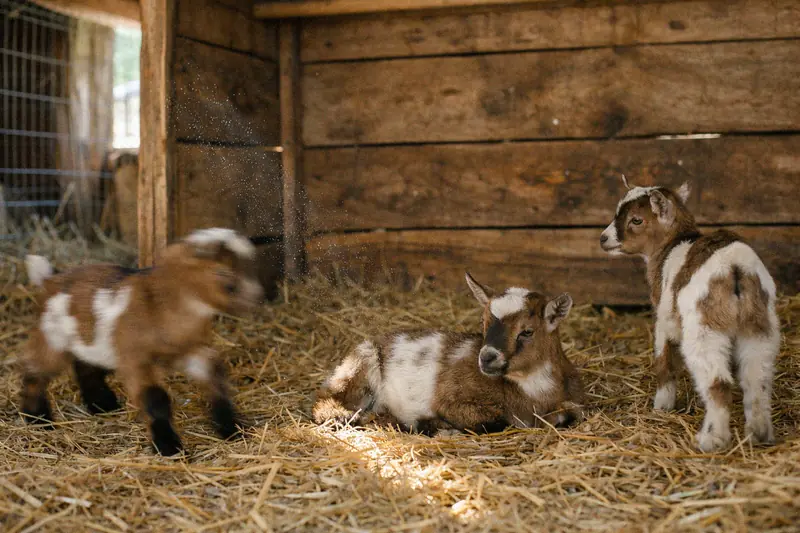
Provide kid-only areas where small goats can escape pushy adults. Creep feeders and creep areas, spaces with openings large enough for kids but too small for adults, give young goats safe access to feed and rest.
This becomes especially important from 8 weeks onward as kids are weaning and learning to eat solid food. Around 8 weeks, kids can generally be housed together without their mothers.
They're social, active, and benefit from playing with other kids their age. Make sure their pen has no gaps they can squeeze through since 8-week-old kids are tiny and remarkably flexible.
A pen that holds an adult goat won't necessarily contain a determined kid.
Goat manure is one of the best natural fertilizers you'll find, and managing it is way simpler than most livestock waste. Unlike cow or horse manure, goat droppings come in small, dry pellets that are easy to handle and break down quickly.
Fresh goat manure can go directly on gardens with less risk of burning plants than chicken or horse manure, though composting is still the ideal approach. Mix it with used bedding (straw or shavings), keep the pile moist, and turn it every few weeks.
A well-managed compost pile produces rich, dark fertilizer in 3-6 months. If you use deep litter bedding, the cleanout material is essentially pre-composted since the bottom layers have been breaking down for months already.
That's one of the big perks of deep litter: warmth in winter and partially composted fertilizer at cleanout time. Some owners sell or give away composted manure to gardeners and landscapers.

In urban and suburban settings, a steady supply of free organic fertilizer goes a long way toward neighborly goodwill. Weather affects manure consistency too.
Wet seasons produce softer, messier droppings that need more frequent bedding changes. Cold, dry weather makes firmer pellets that are easier to manage.
Understanding these seasonal patterns helps you plan your bedding and cleanout schedule.
Goats are an effective, eco-friendly alternative to herbicides and machinery for clearing overgrown land, reducing wildfire risk, and controlling invasive species. Government agencies at every level have figured this out.
The U.S. federal government uses goat herds on national forests, military bases, and federal land reserves to clear brush and reduce fire fuel loads. Cities like Portland, Seattle, and San Francisco hire herds for municipal vegetation management in parks and along hillsides.
The goats eat brush, weeds, and invasive plants that would otherwise require expensive mechanical removal or chemical treatment. For goat owners, commercial land clearing can be a profitable enterprise.
Companies typically charge by the acre and provide portable electric fencing to contain the herd. Goats rotate through sections, clearing brush and fertilizing soil as they go.
This works especially well on steep slopes and environmentally sensitive areas where heavy equipment can't operate safely. On your own property, 6-10 goats can clear about an acre of moderate brush in 2-4 weeks depending on vegetation density and breed.
Larger breeds eat more, but smaller breeds navigate tight spaces and steep terrain better. Rotational grazing with portable fencing ensures thorough clearing without overgrazing any single area.
Plan for a minimum of 15-20 square feet of indoor shelter space per standard-sized goat and 200-250 square feet of outdoor space. Miniature breeds need 10-15 square feet indoors and at least 130-200 square feet outdoors. More space reduces stress, bullying, parasite loads, and disease.
Goats can tolerate cold temperatures surprisingly well, but they must have a dry, draft-free shelter to escape rain, snow, and wind. Wet, windy conditions are far more dangerous to goats than cold alone. A three-sided shelter with deep straw bedding is the minimum for mild winters, while fully enclosed barns are recommended in areas with harsh winters.
Woven wire fencing (4-5 feet tall) and cattle panels are the most reliable options. Electric fencing works well as a deterrent, especially when combined with physical fencing. Never use barbed wire for goats because their loose skin and curious nature make injuries inevitable.
Yes, goats and chickens coexist well in most situations. Chickens help control flies and eat spilled grain. The main concern is keeping feeds separate because chicken feed can contain additives harmful to goats. Provide species-specific feeders and elevated roosting areas for chickens.
Goat manure is one of the best natural fertilizers available. It comes in dry pellets that are easy to handle and can be applied directly to gardens with less risk of burning plants than chicken or horse manure. Composting for 3-6 months produces even better results.
Many cities now allow miniature goat breeds like Nigerian Dwarfs and Pygmies. Check your local zoning ordinances for rules on livestock. Most urban goat regulations specify maximum animal counts, minimum lot sizes, and setback requirements. Bucks are usually prohibited due to odor. A standard suburban backyard can typically support 2-3 miniature goats.
Pine shavings and straw are the two most popular options. Pine shavings offer superior absorbency and odor control, while straw is less expensive and works well with the deep litter method. Many goat owners use pine shavings in kidding stalls and smaller pens and straw in larger barn areas.
Livestock guardian dogs like Great Pyrenees and Anatolian Shepherds are bred to live with and protect goats. Pet dogs require careful, supervised introductions and should never be left alone with goats until you are completely confident in their behavior. Many pet dogs have prey drive that makes them dangerous around goats.
It depends on your bedding method. With the deep litter method, you add fresh straw on top and do a full cleanout 2-4 times per year. Standard stall cleaning should happen weekly or whenever bedding gets visibly wet or smells of ammonia. Kidding stalls need fresh bedding before each use.
Healthy adult goats rarely need supplemental heat since their thick coats handle cold well as long as they stay dry and out of the wind. Heat lamps are only recommended for newborn kids in freezing conditions, and even then they pose a fire risk. Good ventilation, deep straw bedding, and a draft-free shelter are more effective than heaters.
Yes, goats and sheep are natural companions that use pasture efficiently together since goats browse shrubs while sheep graze grass. The only major caution is copper. Goats need copper in their minerals, but it's toxic to sheep at those levels. Use a sheep-safe mineral for both and give goats copper boluses separately.
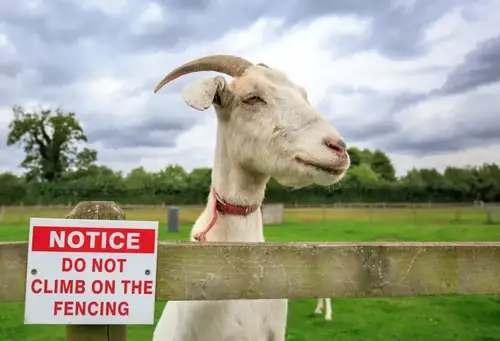
guide Goats can strip a hillside bare or hold it together, depending on how you graze. Here is the angle, the warning signs, and the setup that keeps soil in place.
 guide
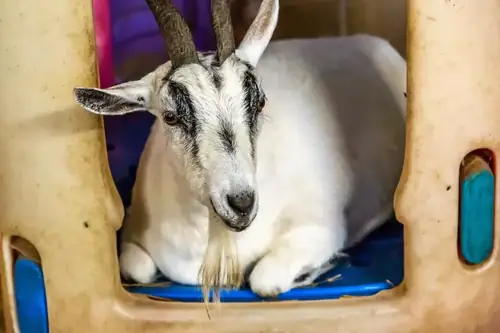
guide Goats climb, jump, and wriggle past fences that hold every other animal. See how high each breed clears, why they escape, and the fixes that actually contain them.
 guide
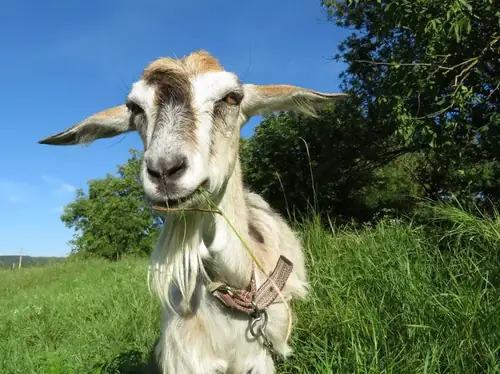
guide Thinking about keeping a goat indoors? Here's an honest look at what indoor goats really involve, when it works, and when it doesn't.
 guide
guide Wondering if goats can be tethered? Learn the real risks, the tethering methods that actually work, the right gear, legal limits, and safer alternatives.
 guide
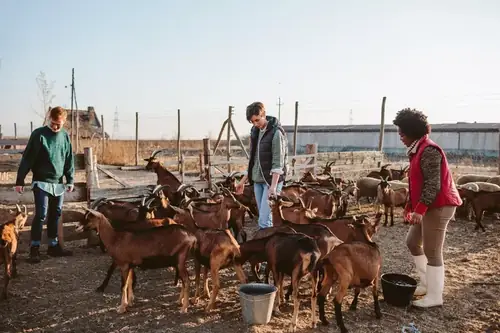
guide Keep goats and you are sitting on free garden gold. Here is how to turn those droppings into rich, plant-ready fertilizer the right way.
 guide
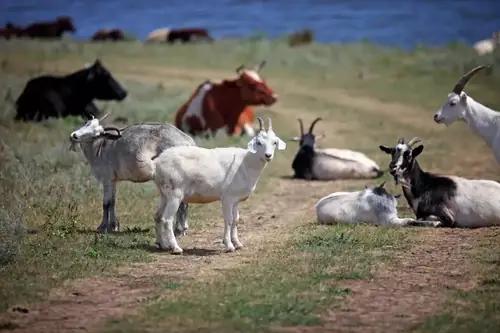
guide Goats and cows can graze together without fighting in most setups. Learn when conflict happens, the deadly feed risk, fencing, and how to introduce them safely.
 guide
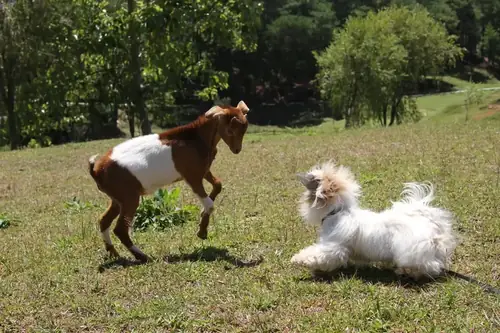
guide Wondering if your dog and pygmy goats can share a yard? Whether it works depends on the dog's breed, prey drive, and how you introduce them.
 guide
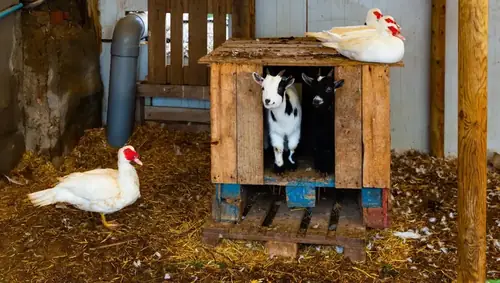
guide Can ducks and goats coexist? Yes, with the right setup. Learn the feed, water, and duckling risks plus how to house them together safely.
 guide
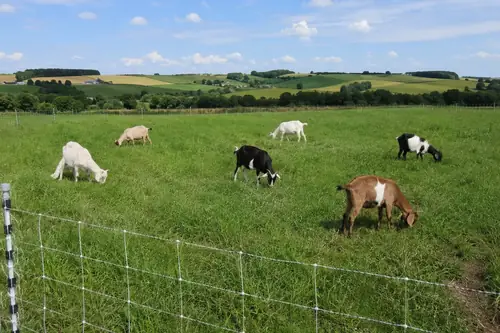
guide Plan for 6 to 8 goats per acre of good pasture, more on brush, fewer on poor ground. Get the stocking chart, rotation setup, and the parasite math that matters.
 guide
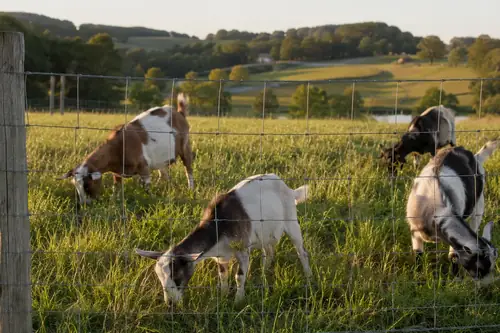
guide Goats are escape artists, so the right fence matters. Compare woven wire, electric netting, and panels, learn the heights that hold goats, and avoid the common mistakes.
 guide
guide Coyotes and loose dogs kill more goats than anything else. Learn which predators threaten your herd, how to read an attack, and the layered defenses that actually work.
 guide
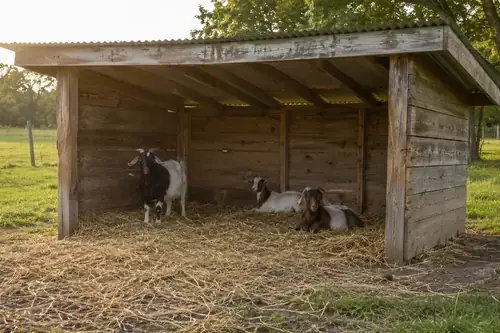
guide A goat shelter just needs to be dry, draft-free, and big enough. Compare run-in sheds, barns, and portable huts, get sizing by herd, and see simple DIY setups.