| # | Product | Our Rating | ||
|---|---|---|---|---|
| 1 | 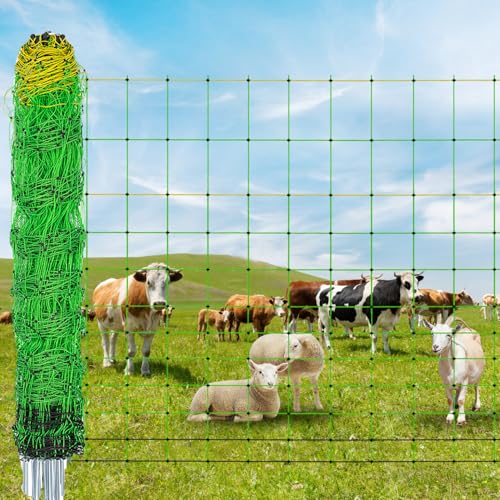 | Best OverallElectric Net Fence for Goats | ★★★★★ | Check Price |
| 2 |  | Wall-Mount Goat Hay Feeder | ★★★★☆ | Check Price |
| 3 |  | Farm Innovators Heated Water Bucket | ★★★★☆ | Check Price |
Mixed flocks are everywhere on small homesteads right now, and ducks paired with goats is one of the most common combinations people ask about. The appeal is obvious, both animals are hardy, friendly, and happy on pasture.
The honest answer is more interesting than a simple yes. These two species get along fine on the surface, but a handful of management details quietly decide whether the arrangement thrives or turns into a vet bill.
After years of running mixed pasture on my own place, I’ve learned the problems are predictable. Every one of them is preventable, too.
Can Ducks and Goats Coexist?
Yes. Once their feed and water are kept separate, conflict between ducks and goats is uncommon.
Ducks and goats share space comfortably because their instincts barely overlap. Goats browse on brush and tree leaves, ducks dabble for slugs and bugs, and neither sees the other as a rival or a threat.
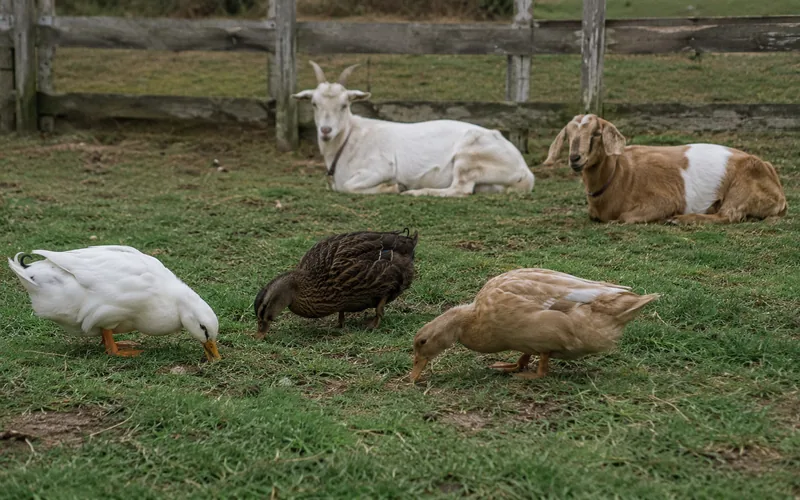
You’ll rarely see real aggression between them. A drake might posture during breeding season, and a bossy goat might shove a duck off a feed pan, but full-blown fighting is uncommon.
The risks are almost never about temperament. They come down to feed, water, and size differences, and that’s good news, because all three are things you control directly.
Why Feed Is the Biggest Risk
In short, medicated duck feed can poison goats, so the two species must always eat apart.
The biggest threat in a shared setup isn’t a peck or a headbutt, it’s the feed bowl.
Most commercial duck and chick starters are medicated with amprolium to prevent coccidiosis in poultry. Goats that eat poultry feed can also pick up too much copper and too much protein, neither of which a goat’s rumen is built to handle.
The result can be ruminal acidosis or fatal bloat, and ongoing copper buildup can cause copper toxicity over time. A goat raiding the duck feeder is a genuine emergency, not a minor nuisance.
The fix is simple: feed each species somewhere the other can’t reach. Ducks should eat inside a low, covered creep or a goat-proof feeder that goats are too large to enter, while goat minerals and grain stay up where ducks can’t foul them.
Rule of thumb: If a goat can reach the duck feed, assume it eventually will. Build the separation into the layout, do not rely on supervision.
Here is what each species can share and what must stay apart.
| Resource | Share it? | Why |
|---|---|---|
| Pasture and browse | Yes | Different diets, no competition |
| Shade and shelter footprint | Usually | Add a low duck zone goats cannot enter |
| Feed and grain | Never | Medicated duck feed can poison goats |
| Drinking water | No | Ducks foul water goats need clean |
| Loose minerals | No | Goat copper minerals can harm ducks |
The Daily Water Battle
Put simply, ducks foul shared water fast, so goats need their own clean, raised source.
Ducks are messy with water by design. They splash, dunk their heads, and turn any open trough into muddy soup within hours.
Goats, by contrast, are fussy drinkers and refuse water that looks dirty. A goat that drinks less from a fouled trough is more prone to dehydration and urinary problems.
Give the ducks their own low pool or pan inside their zone, and keep the goats’ water source higher and apart. Elevating goat water on a block or hanging a bucket keeps duck mess out of it.
Protecting Ducklings From Goats
The main danger is accidental trampling, so raise ducklings separately until they are grown and quick on their feet.
Adult ducks handle themselves well around a goat herd. Ducklings are a different story entirely.
Goats are clumsy and curious, and a bouncing kid does not watch where it lands. A trampled duckling is the most common tragedy in mixed flocks, and it is almost always an accident, not aggression.
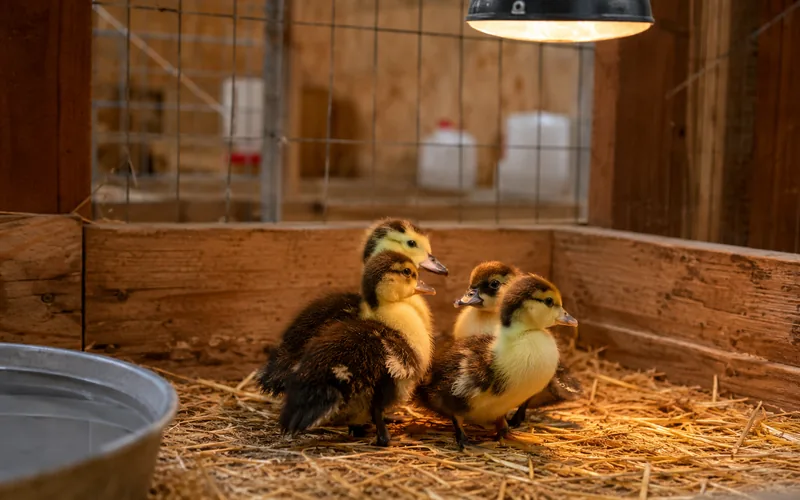
Raise ducklings in a separate brooder or hutch until they are nearly grown and quick on their feet. Only integrate them once they can easily dodge a playful or startled goat.
Space and Housing Requirements
Give each species enough room and its own sleeping area, and most crowding problems disappear.
Crowding turns peaceful animals into competitive ones. Most coexistence problems trace right back to a pen that’s simply too small for everyone in it.
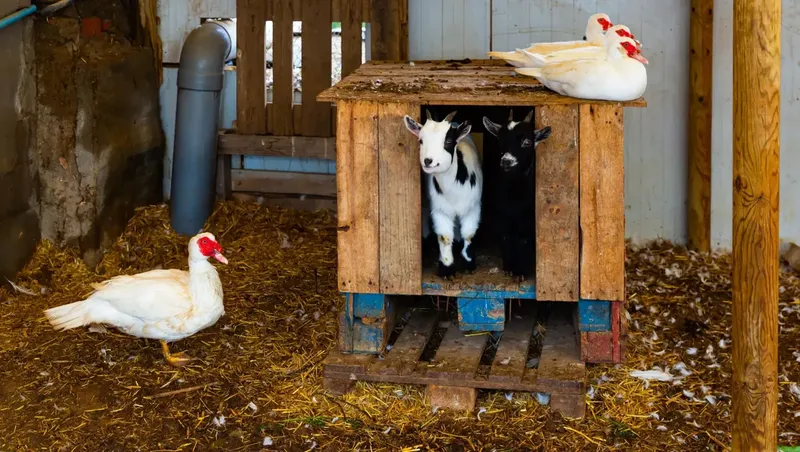
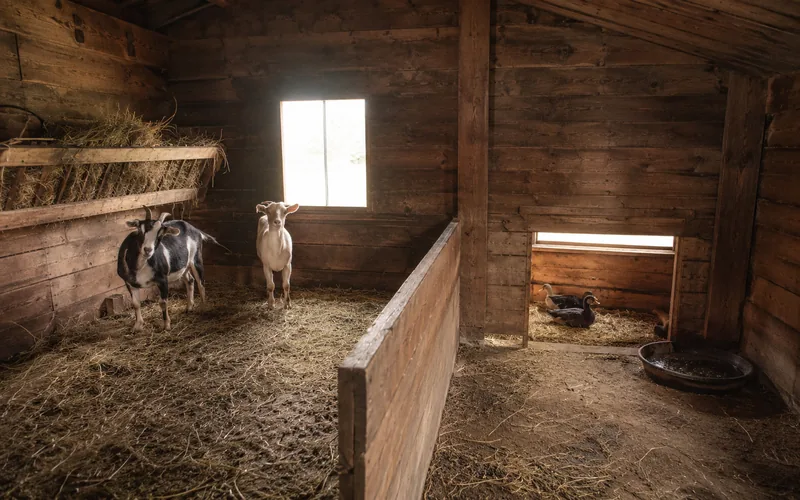
Goats need real room to move and a dry, draft-free shelter, and ducks need ground-level access plus their own low entry. A good shared barn has a goat side and a separate, lower duck nook where they can tuck in safely at night.
Most goat shelter layouts adapt easily to a duck corner.
Stocking density matters as much as total size. Plan your goat numbers per acre first, then add ducks, which need far less space.
The cleanest arrangement is usually shared range by day and separate quarters by night. That schedule gives ducks foraging freedom, protects them after dark, and keeps each species on its correct feed.
If you’re running a broader mixed flock, the same separate-feed and separate-roost rules apply to pigs and chickens too.
Shared Health and Predator Risks
Disease crossover between ducks and goats is rare; predators drawn to the ducks are the bigger shared concern.
Ducks and goats share very few diseases. They’re different enough biologically that cross-species illness is rare, which is part of why the pairing is so popular.
A couple of caveats still apply. Standing duck water and droppings can harbor bacteria like salmonella, so keep those wet zones away from goat feeding areas.
Ducks also attract foxes, raccoons, hawks, and owls, and a predator drawn in for the ducks may test a young kid too. Raccoons are a double threat, since they also carry rabies and roundworm that can spread to goats.
Secure night housing and solid fencing protect the whole barnyard, not just one species.
The Benefits of Raising Ducks With Goats
Ducks earn their keep as natural pest control and easy company, without competing for browse.
Once you’ve nailed the basics, the upsides are real. Ducks hoover up slugs, snails, flies, and insect larvae that bother grazing animals.
They also till and fertilize lightly as they forage, adding life and activity to a goat pen. Many keepers simply enjoy the calm, mixed-species atmosphere.
That said, ducks are not a substitute for goat companionship. Goats are herd animals and need at least one other goat, so think of ducks as a bonus rather than a friend.
If you want a non-goat companion that bonds more closely, see whether dogs and pygmy goats can live together or how one sheep does living with goats.
How to Introduce Ducks and Goats Safely
Go slow: separate the feed first, introduce them across a fence, then supervise short shared sessions.
A slow, structured introduction heads off almost every problem. Rushing animals into a shared pen is where things tend to go sideways.
- Set up separate feed and water first. Build the goat-proof duck feeder and split water sources before the animals ever meet.
- Quarantine new arrivals. Keep new ducks or goats apart for a couple of weeks to confirm they are healthy.
- Introduce across a fence. Let them see and smell each other through a barrier for several days.
- Supervise the first shared sessions. Allow short, watched periods together during the day and step in if a goat crowds the ducks.
- House apart at night at first. Give ducks and any ducklings protected quarters until you trust the herd around them.
- Watch the body language. Calm grazing and mutual ignoring means it is working, persistent chasing means you need more space or separation.
Done this way, most ducks and goats settle into an easy routine within a week or two.
Frequently Asked Questions
Yes. Goats and ducks are both peaceful grazers and usually ignore each other in a shared pasture. The two non-negotiables are separate feeding stations, since medicated duck feed can poison goats, and a goat-proof water source for the ducks. Most conflicts come from feed, water, or crowding, not from aggression between the species.
That is one of the best setups, especially when you are starting out. Letting them share pasture during the day gives the ducks foraging room and the goats company, while separate night housing protects ducks and ducklings from being stepped on and keeps each species on its own correct feed.
Another goat is always the best companion, since goats are herd animals that need their own kind. Among other species, ducks, chickens, sheep, and livestock guardian dogs all pair well. Ducks are a good low-conflict choice because they do not compete for browse and help control slugs and insects.
Goats are herbivores and will not hunt or eat ducks. The real danger is accidental, a goat jumping or landing on a duckling, or a pushy goat headbutting a duck away from feed. Adult ducks usually stay clear of the herd, but young ducklings need protection until they are big enough to move quickly.