
| # | Product | Our Rating | ||
|---|---|---|---|---|
| 1 |  | Best OverallElectric Net Fence for Goats | ★★★★★ | Check Price |
| 2 |  | Wall-Mount Goat Hay Feeder | ★★★★☆ | Check Price |
| 3 |  | Farm Innovators Heated Water Bucket | ★★★★☆ | Check Price |
If you keep goats, you are sitting on a steady supply of one of the best organic fertilizers a gardener can buy. Most owners haul that goat poop off as waste without realizing what they are throwing away.
The droppings your herd leaves behind hold the same nutrients you would otherwise pay for by the bag. With a little know-how, that pile behind the barn becomes richer soil, stronger plants, and a noticeably bigger harvest.
Can goat poop be used as fertilizer?
Yes, and it ranks among the best manures you can put on a garden. Goat droppings feed plants slowly, improve soil structure, and rarely scorch roots the way fresher, wetter manures can.
Goats are ruminants, so their digestive system breaks plant matter down thoroughly before it ever leaves the body. That gives you a clean, nearly odorless pellet that is easy to scoop, store, and spread.
Those pellets are often called a “cold” manure. They stay dry enough to handle without the overpowering smell of chicken or hog waste.
What makes goat manure such a good fertilizer
Goat manure works so well because it delivers all three major plant macronutrients in a balanced, slow-release form. You get nitrogen for leafy growth, phosphorus for strong roots and blooms, and potassium for overall plant health.
The droppings also add organic matter that loosens heavy clay and helps sandy soil hold water. Earthworms and soil microbes feed on that material, and the biological activity is what turns plain dirt into living, productive ground.
On a lightly grazed slope, the same pellets feed the plants whose roots hold the hillside together.
On top of the big three nutrients, goat pellets supply trace minerals like calcium and magnesium that keep plants vigorous. They also sit near neutral on soil pH, sidestepping the acidity problems some other amendments cause.
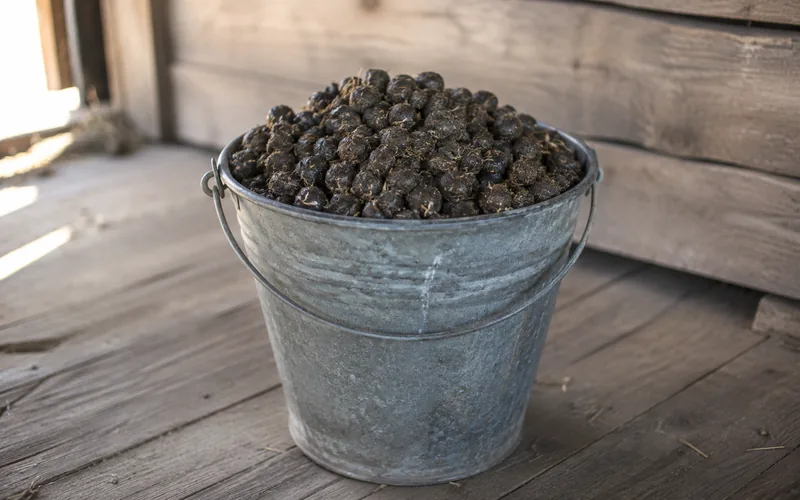
The pelletized shape matters more than people expect. Each dropping carries its own air pockets, so a pile breaks down evenly and composts faster than the dense, wet mats other livestock leave behind.
Goat manure also sits at roughly a 22-to-1 carbon-to-nitrogen ratio, which is close to the sweet spot composters aim for. That balance means it heats up and cures with very little fuss.
Goat manure vs other animal manures
Goat manure consistently lands near the top when you line up the common barnyard fertilizers. It carries solid nutrient levels in a dry, low-odor package that most other animals simply cannot match.
Here is how the usual options stack up against one another.
| Manure | Typical N-P-K | Texture | Best feature |
|---|---|---|---|
| Goat | 1.5 / 1.5 / 3 | Dry pellets | Balanced, low odor, composts fast |
| Sheep | 1.5 / 1 / 3 | Dry pellets | Very similar to goat, slightly less nitrogen |
| Cow | 0.6 / 0.4 / 0.5 | Wet, heavy | Mild and gentle, but bulky and low in nutrients |
| Horse | 0.7 / 0.3 / 0.6 | Wet, strawy | Heats up fast, yet loaded with weed seeds |
| Chicken | 1.1 / 0.8 / 0.5 | Wet, hot | Very high nitrogen, but burns plants if used fresh |
Cow and horse manure arrive wet and bulky, so you haul more weight for fewer nutrients per load. Chicken manure packs a punch but runs so hot that it scorches roots unless it is fully composted first.
Goat droppings split the difference nicely, giving you respectable nutrient numbers without the burn risk of poultry waste or the sheer volume of cattle manure.
If you pasture goats with horses, hot-compost both manures, since horse manure is loaded with weed seeds.
How to compost goat manure
Composting is the safest way to turn raw droppings into finished fertilizer. The process kills weed seeds and parasites while concentrating the nutrients your plants crave.
You can technically side-dress established plants with raw goat pellets, since they are dry and mild. Still, composting first takes that risk off the table and hands you a more uniform, ready-to-use product.
1. Collect the manure and bedding. Every time you muck out the shelter, scoop the pellets along with soiled straw into a bin or pile. Used pine shavings compost right alongside the droppings and add useful carbon.
2. Balance the mix. Goat manure is fairly balanced on its own, but tossing in dry leaves, shredded cardboard, or extra bedding keeps the carbon and nitrogen in check.
3. Add water and air. Keep the pile about as damp as a wrung-out sponge, then turn it every week or two with a fork to feed oxygen to the microbes doing the work.
4. Let it heat up. A working pile climbs to 130°F to 150°F in the center, which is hot enough to destroy weed seeds, parasites, and harmful bacteria.
5. Cure it. After two to three months the pile cools, shrinks, and turns dark, crumbly, and earthy-smelling. That finished compost is ready for the garden.
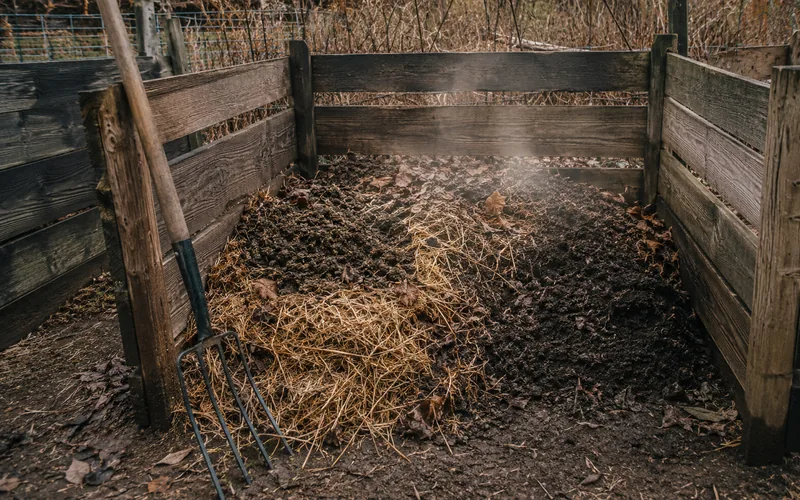
Skip the turning and let a pile sit untouched, and it’ll still break down on its own. Cold composting like that simply takes longer, often six months to a year, and it never gets hot enough to reliably kill weed seeds.
How to apply goat manure in the garden
Finished goat compost can go almost anywhere, from vegetable beds to flower borders to fruit trees. Work it into the top few inches of soil or spread it as a nutrient-rich mulch around existing plants.
For new beds, lay down a 2 to 3 inch layer of compost and till it into the top 6 inches of soil before planting. This builds a reserve of slow-release nutrients the roots can draw on all season.
To feed plants already in the ground, side-dress with a thin ring of compost around the base, keeping it an inch or two off the stems. Water it in well so the nutrients soak down to the root zone.
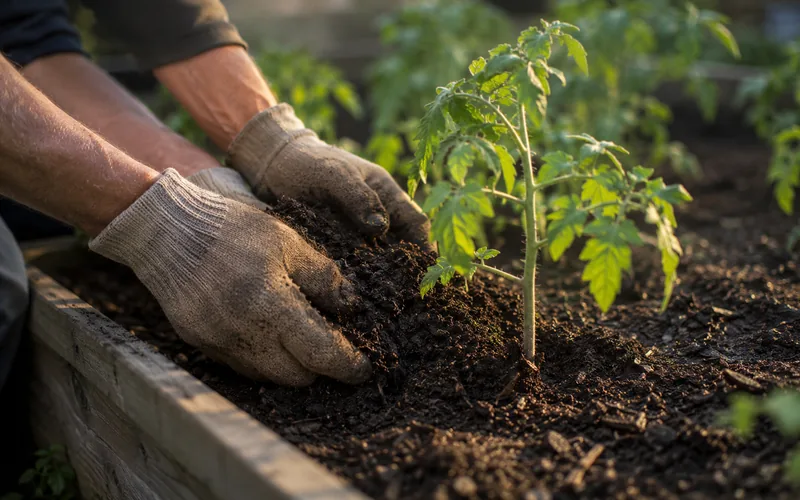
Goat manure suits heavy feeders especially well, including tomatoes, peppers, squash, corn, and leafy greens. A single goat can crank out close to a ton of manure a year, so the supply adds up fast.
Because that volume stacks up so fast, matching herd size to the land you have keeps the manure from piling up faster than your garden can use it.
Can goat manure burn plants?
Fresh goat manure rarely burns plants the way fresh chicken or horse manure can, since the dry pellets release their nitrogen slowly. Composting first erases even that small risk, which matters most for tender seedlings and anything you plan to eat raw.
How to make goat manure tea
Manure tea is a liquid feed that delivers nutrients straight to the roots in a form plants absorb fast. It’s the quickest way to give a tired midseason garden a real boost.
To make it, scoop a few shovelfuls of composted goat manure into a burlap sack or an old pillowcase. Tie it off and suspend it in a 5-gallon bucket of water like an oversized tea bag.
Let it steep for one to three days, stirring once a day, until the water turns the color of weak tea. Dilute that concentrate with fresh water until it looks light brown, then pour it around the base of your plants.
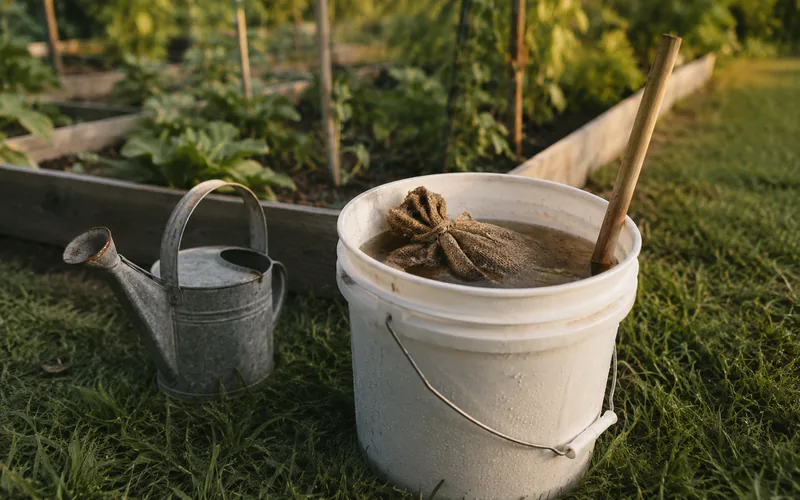
Use the tea every couple of weeks during the growing season for a steady feed. Avoid splashing it on leaves you plan to eat, and always wash garden produce well before it reaches the table.
Disadvantages of using goat manure
Goat manure is forgiving, but it isn’t completely foolproof. The main drawbacks are weed seeds, lingering parasites, and a slow nutrient release that impatient gardeners sometimes find frustrating.
Goats browse a huge variety of plants, and plenty of seeds survive the trip through the gut. Spreading un-composted manure can sow a fresh crop of weeds right in your beds.
Fresh droppings may also carry parasites or bacteria like E. coli, which is a real concern on root crops and leafy greens eaten raw. Hot composting clears both issues by killing seeds and pathogens before the manure ever touches your food.
The slow release is the trade-off for all that soil-building power. Goat manure won’t green a plant up overnight the way a synthetic feed does, but it keeps improving your soil season after season.
Even small-scale keepers come out ahead here. Backyard owners in town and tight spaces can compost their goats’ waste instead of bagging it for the trash.
Final Thoughts
Goat poop is far too valuable to treat as garbage. Those tidy little pellets carry the nitrogen, phosphorus, and potassium your garden needs, wrapped in a form that is clean, mild, and easy to handle.
Compost the droppings for a couple of months, work the finished product into your beds, and brew a little manure tea whenever plants need a lift. Do that, and the herd that already earns its keep will quietly grow you a better garden too.
Frequently Asked Questions
The main drawbacks are weed seeds that survive digestion, parasites or bacteria in fresh droppings, and a slow nutrient release that will not green a plant up overnight. Hot composting fixes the first two problems by killing seeds and pathogens, and the slow release is actually a benefit for long-term soil health.
In an active compost pile that is kept moist and turned regularly, goat manure breaks down into finished compost in about two to three months. Left in a cold pile without turning, it can take six months to a year to fully cure.
You can side-dress established plants with raw goat pellets because they are dry and mild and rarely burn roots. For vegetable beds and anything eaten raw, it is safer to compost the manure first to remove weed seeds and any pathogens.
Yes, composted goat manure is excellent for vegetables. It feeds heavy feeders like tomatoes, peppers, squash, and leafy greens with a steady supply of nitrogen, phosphorus, and potassium while improving the soil's structure and moisture retention.
Work a 2 to 3 inch layer of finished goat compost into new beds, or side-dress existing plants with a thin ring of about one to two cups around the base. Keep it an inch or two off the stems and water it in.