| # | Product | Our Rating | ||
|---|---|---|---|---|
| 1 |  | Best OverallWeaver Leather Livestock Goat Collar | ★★★★★ | Check Price |
| 2 |  | Manna Pro Goat Treats | ★★★★☆ | Check Price |
| 3 |  | HoAoOo Pet Training Clicker with Wrist Strap | ★★★★☆ | Check Price |
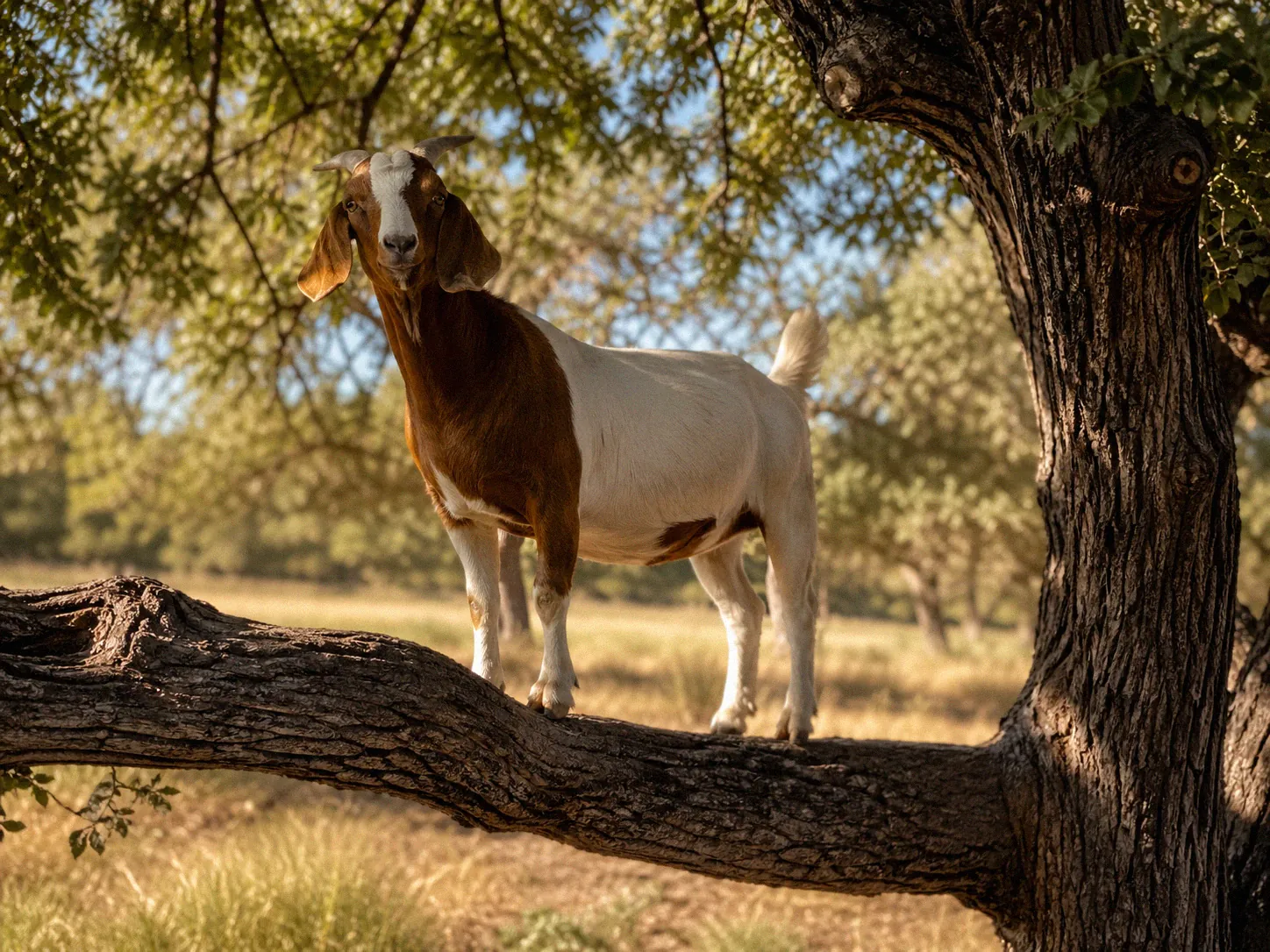
Photos of goats perched in Moroccan argan trees go viral almost every year, and they always spark the same question. The short answer is that goat hooves are purpose-built for gripping rough surfaces, which makes trees just another obstacle to conquer.
The longer answer involves specialized anatomy, foraging instincts refined over thousands of years, and a multi-million-dollar argan oil industry that’s turned these climbing goats into both a scientific curiosity and an ethical controversy. Below, we’ll break down how it works, which breeds are most likely to try it, and what to do when your herd starts treating pasture trees like playground equipment.
Why Do Goats Climb Trees?
Goats climb trees to reach food, satisfy curiosity, and escape ground-level discomfort.
Goats are browsers, not grazers. While cattle and sheep crop grass at ground level, goats naturally reach upward for leaves, bark, twigs, and fruit.
A leaning trunk or a low-hanging branch is just another path to food they can’t get from the ground. That upward reach is hardwired — you’ll see it in every domestic breed.
Curiosity plays an equal role. Kids especially treat anything climbable as a personal challenge, and once one goat pioneers a route into a tree, the rest of the herd typically follows within minutes.
Drought and seasonal food shortages kick the behavior into overdrive. In arid regions like southwestern Morocco, ground-level browse dries up fast during the hot months.
The only green leaves remaining hang high in the canopy. When ground forage disappears, climbing shifts from a quirk to a full-blown survival strategy.
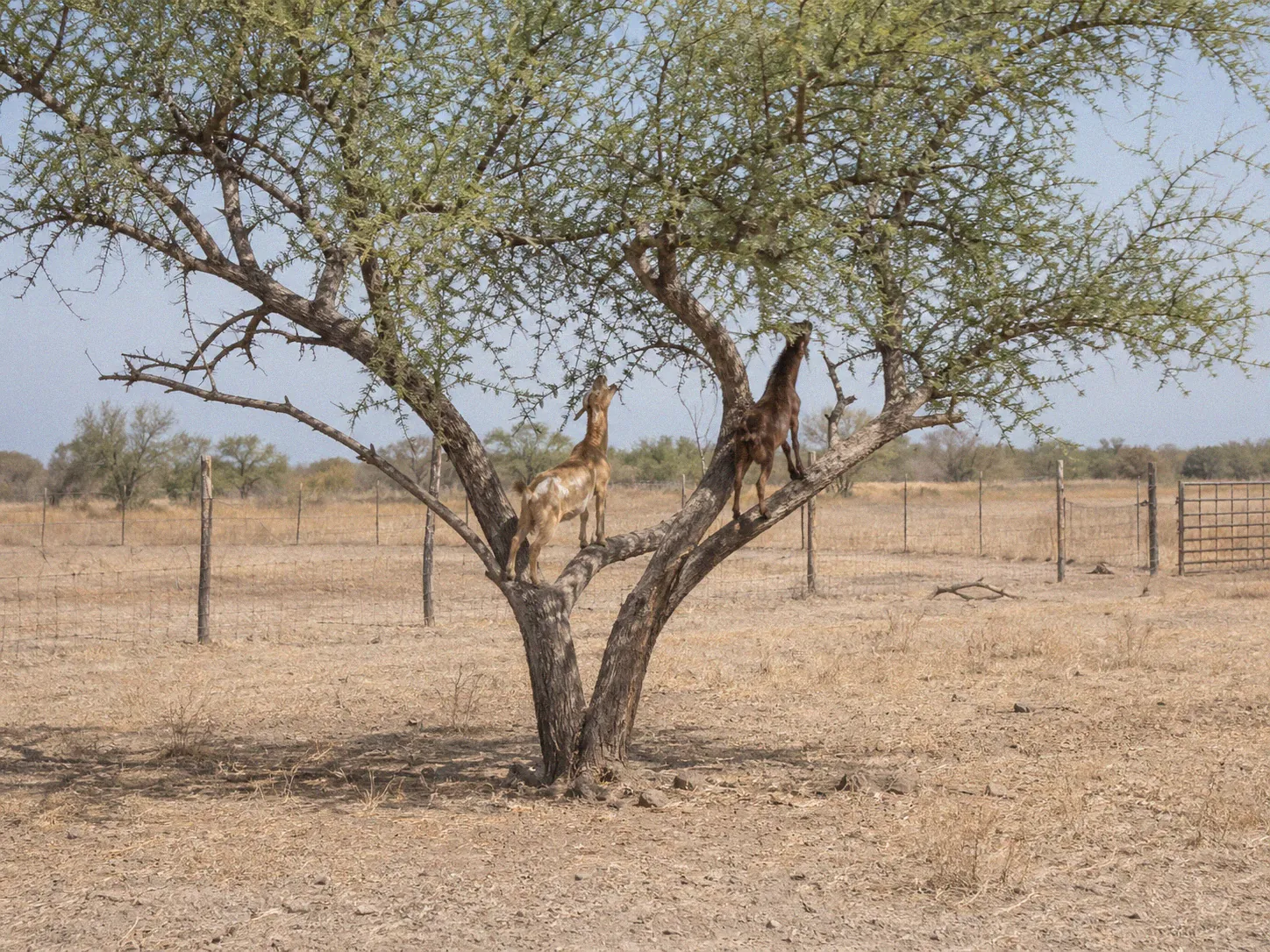
Some goats climb simply to escape wet or waterlogged ground. Elevated branches keep their moisture-sensitive hooves dry and provide a vantage point for scanning the surroundings.
That impulse taps into the same defensive instinct that draws mountain goats to exposed cliff ledges thousands of feet above a valley floor. Height equals safety in the goat brain, regardless of whether the threat is a predator or a puddle.
There’s a social angle, too. Dominant goats often claim the highest perches in a tree, forcing lower-ranking members to find their own spots.
The rest of the herd climbs to separate branches rather than compete for the same feeding space on the ground. In big herds, that vertical spread keeps fighting down and food access up.
How Goat Hooves Make Tree Climbing Possible
What makes tree climbing possible? It comes down to the hoof.
Each goat hoof splits into two independent toes, and each toe has a hard keratin outer wall surrounding a soft, rubbery inner pad.
That design works exactly like a climbing shoe. The hard edge bites into narrow bark ridges while the soft pad conforms to irregular surfaces for maximum grip.
Behind each main hoof sit the dewclaws, two small vestigial digits positioned higher on the back of the leg. On flat ground they barely make contact with the surface.
On steep inclines, though, they dig into the bark and work as rear anchors. That’s what keeps the goat from sliding backward on angled trunks and branches.
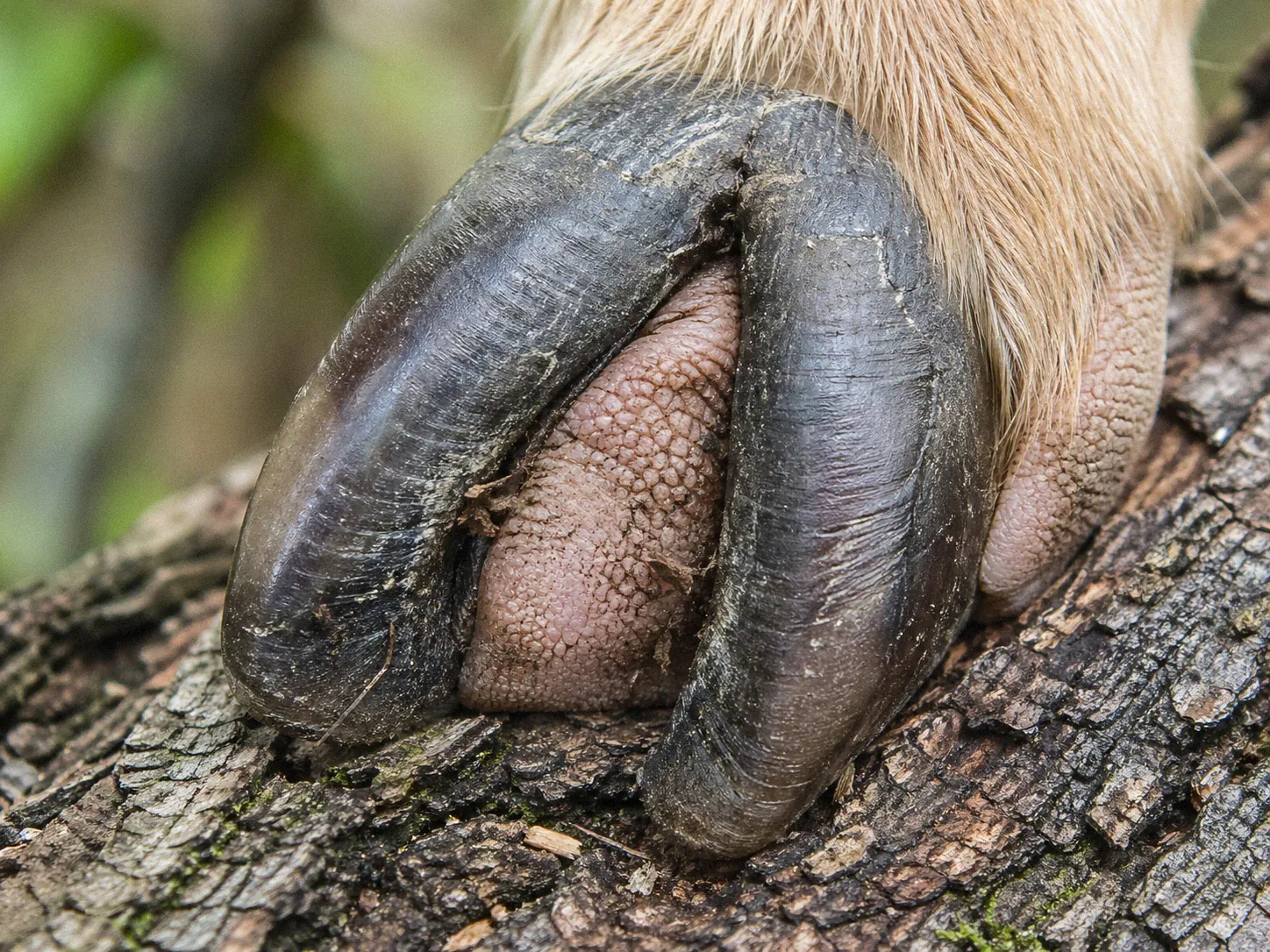
Goats also carry their weight low by design. Short legs and a compact torso hold the center of gravity close to whatever surface they occupy.
That low profile is the same structural advantage that allows goats to traverse near-vertical rock faces that would defeat most other four-legged animals. It keeps the goat stable even when a branch shifts or sways underfoot.
The rear legs do the heavy lifting when it’s time to launch. Goats push off in short, controlled bursts rather than long arcing leaps, which lets them land on a specific branch with precision.
Anyone who has watched their goats clear a barrier from a standstill has already witnessed that same explosive hind-leg power directed at a different obstacle. In a tree, that strength translates to rapid vertical movement between branch levels.
The split-toe design also lets goats pinch a narrow branch from both sides at once, spreading their weight across a wider contact patch than a solid hoof ever could. Put it all together — low stance, muscular rear end, soft-pad traction — and you’ve got an animal that can grip bark, stone, metal, and just about anything else.
Morocco’s Argan Tree Goats
The world’s most famous tree-climbing goats live along the coast of southwestern Morocco, clustered between Essaouira and Agadir. They scale argan trees (Argania spinosa), a thorny, drought-resistant species that produces small olive-sized fruit goats find irresistible.
Herders in the Souss-Massa region have allowed their flocks to forage in argan groves for centuries. The trees cover roughly 2.5 million acres of semi-arid terrain and provide the raw material behind Morocco’s lucrative argan oil industry.
That industry now exports hundreds of millions of dollars’ worth of product annually for use in cosmetics, hair treatments, and culinary applications worldwide. The link between goats, argan trees, and global beauty shelves goes back further than you’d think.
A 2017 study published in Frontiers in Ecology and the Environment changed how scientists understand this relationship. Led by ecologist Jose Fedriani, the research team discovered that goats don’t fully digest the hard argan nuts.
Instead, they spit them out intact during rumination, scattering viable seeds across the landscape. That process effectively makes the goats accidental reforesters for the very trees they feed on.
There’s a catch, though. Overgrazing cancels the dispersal benefit entirely when herd sizes aren’t controlled, because too many goats strip canopies bare and trample seedlings before they can take root.
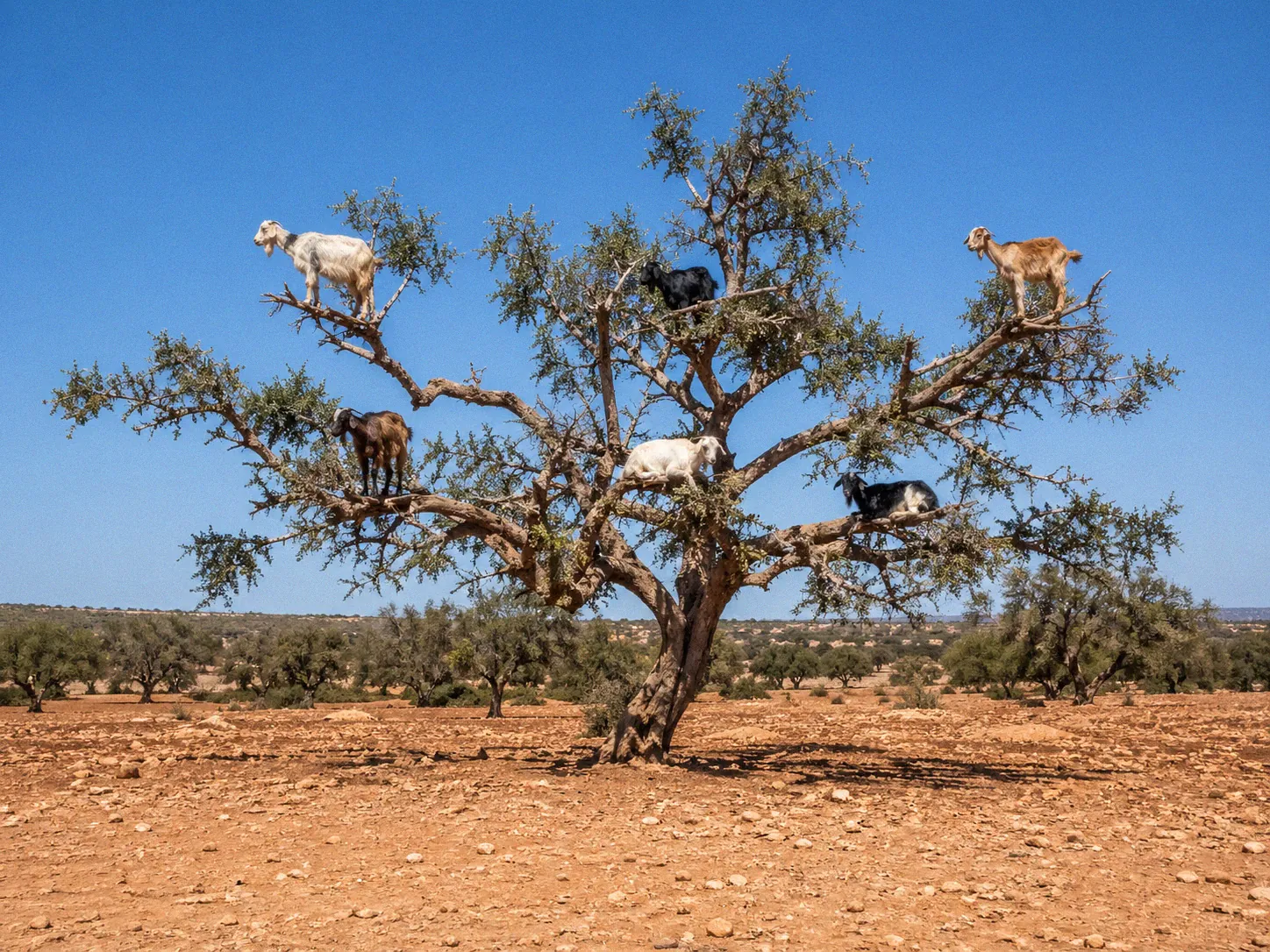
The tourism side of the story isn’t as charming. Investigations by World Animal Protection and field reporting from National Geographic found that some roadside operators along the Marrakech-to-Essaouira highway physically place goats in trees and hold them there for hours.
These operators charge passing tourists for photographs while the animals endure prolonged exposure. Veterinarian Adnan El Aji documented heat stress, dehydration, and limb injuries among the goats subjected to this treatment.
Not every argan-climbing goat is a prop for cameras. Genuine free-range foraging still takes place across rural groves throughout the region, managed by herding families who have maintained the practice for generations.
If you visit Morocco, the simplest way to tell the difference is location. Goats clustered on branches along a busy highway shoulder are almost certainly staged, while goats scattered deep inside a grove far from the road are foraging naturally.
Which Goat Breeds Climb Best
Lighter breeds like Nigerian Dwarfs and Pygmies climb best, while heavy Boer goats rarely bother.
Body weight is the single biggest predictor. Lighter breeds hold an obvious advantage on branches that may measure only a few inches in diameter, and their lower mass translates to less joint stress when they jump back down.
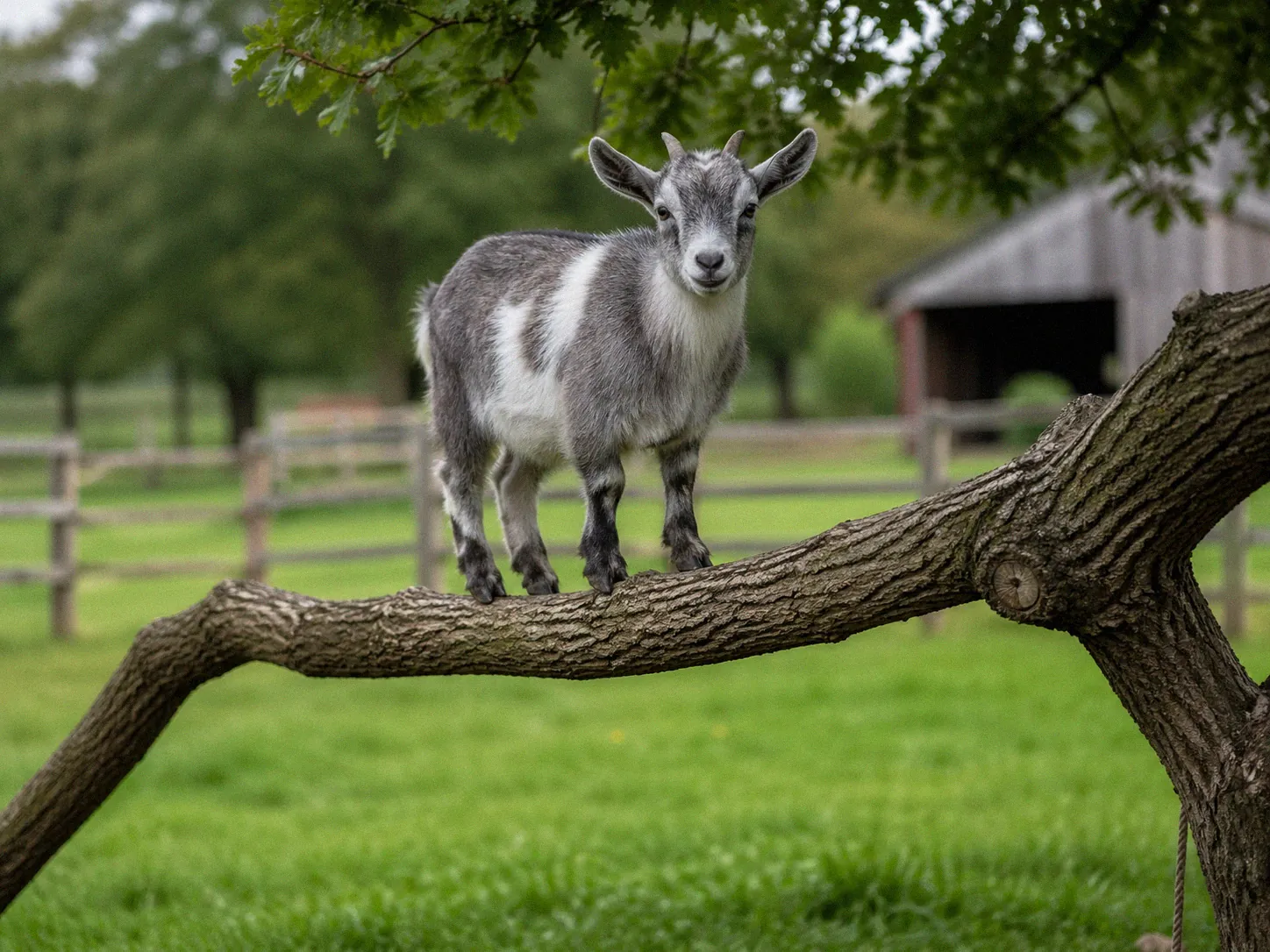
Nigerian Dwarf goats top the climbing charts. Adults weigh 60 to 80 pounds and stand under two feet tall at the shoulder, with a well-earned reputation for appearing in places no owner ever intended.
Their compact frame and extremely low center of gravity make them natural climbers on trees, rock formations, vehicles, and fence rails alike. It’s tough to find another domestic breed that matches their agility and sheer nosiness.
Pygmy goats share that same climbing drive. Stockier than Nigerian Dwarfs but still compact at 60 to 85 pounds, Pygmies combine relentless curiosity with genuine physical agility.
Alpine and Oberhasli goats fall in the middle of the range. These medium-sized dairy breeds weigh 130 to 155 pounds but retain strong climbing instincts rooted in their Swiss mountain ancestry.
Nubians and Saanens are noticeably less adventurous overhead. At 135 to 175 pounds, their heavier frames place significantly more force on branches and make any fall substantially more dangerous.
Boer goats sit at the bottom of the climbing spectrum. Bred for meat production, adults regularly push past 200 pounds and don’t have the agility or the interest for tree climbing.
Young Boer kids still give it a try before their rapid growth catches up with their ambition. That adventurous window closes fast once they start putting on weight.
Age matters as much as breed genetics. Kids under six months will climb anything within reach regardless of their breeding, while mature does and heavy bucks tend to stay grounded unless hunger supplies genuine motivation.
Run a mixed herd and the contrast becomes obvious. The Pygmies will occupy the branches while the Boers graze comfortably beneath them.
Risks of Goats Climbing Trees
Falls are the most immediate danger. A goat that loses its footing from as little as six feet up can break a leg, crack ribs, or sustain internal bruising that doesn’t show visible symptoms for days.
Heavier breeds face the worst outcomes because impact force scales directly with body weight. Even a moderate fall that a 70-pound Pygmy walks off can cause serious damage to a 175-pound Nubian.
Getting stuck happens more often than you’d expect. Goats climb upward with bold confidence but frequently freeze when they try to come back down, especially on steep or smooth-barked trunks.
A panicked goat will thrash against surrounding branches and injure itself far worse than a clean fall would have. Owners often discover the situation only after hearing distress calls from across the pasture.
Branch breakage triggers sudden, uncontrolled drops. Dead limbs, thin lateral branches, and sections of wood weakened by internal rot can snap under even a 70-pound goat without warning.
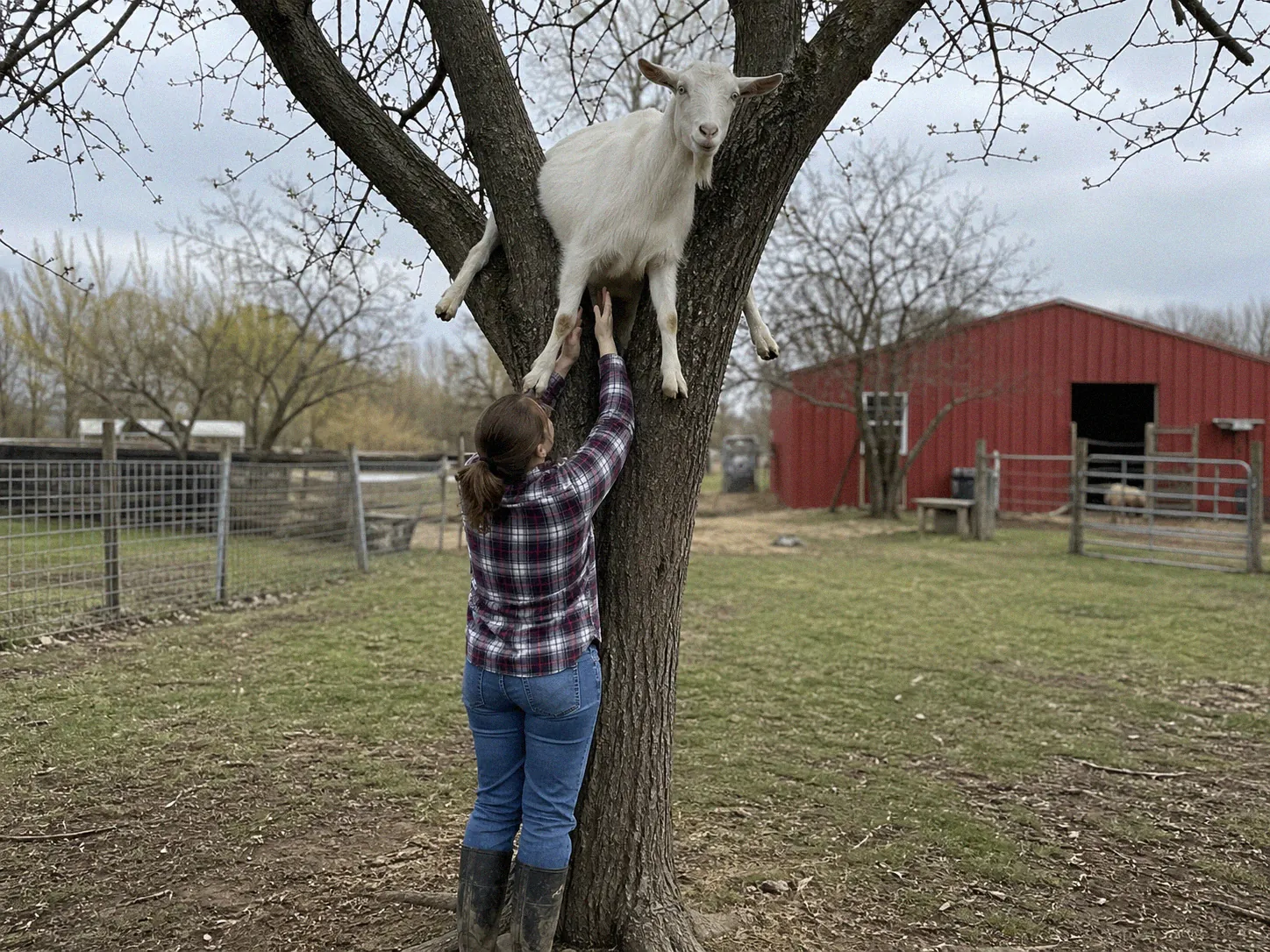
Toxic foliage is a sneakier problem. Goats browsing freely through a tree canopy may eat maple leaves in quantities large enough to trigger hemolytic anemia from gallic acid exposure.
Wilted cherry leaves, yew needles, and black walnut foliage carry similar toxicity risks. A goat perched in a tree has unrestricted access to volumes of these leaves it would only encounter in small, harmless quantities at ground level.
Then there’s entrapment. V-shaped branch forks can trap horns and suspend a goat by its head, cutting off blood flow within minutes.
Cloven hooves occasionally wedge between bark plates on older hardwoods and pin the leg in place. Both situations require immediate human intervention because the goat cannot free itself.
Can Goats Climb Back Down From Trees?
Most can, provided the trunk angle is gradual enough for hooves to grip. Steep, smooth-barked species like beech cause the most trouble — that’s when goats freeze and need to be lifted out.
How to Keep Goats Out of Trees
Prune lower branches to at least five feet off the ground. Goats need an initial foothold to begin any climb, and removing the lowest limbs eliminates the launch point entirely.
This single step stops the majority of casual climbers without requiring any additional hardware or expense. It also protects the bark from rubbing damage caused by goats standing against the trunk.
Wrap exposed trunks with hardware cloth or welded wire from ground level to four feet high. The smooth metal surface offers hooves nothing to grip, and the barrier doubles as protection against chewing and horn damage.
Secure the wire with zip ties or fencing staples so persistent goats can’t peel the material off. Inspect it monthly, since determined goats will test weak points repeatedly.
Fence off fruit trees, ornamental plantings, and any species with toxic foliage when pruning alone doesn’t solve the problem. Standard four-foot goat fencing contains most breeds, though Nigerian Dwarfs and Pygmies may require five-foot panels because they jump far higher than their size would suggest.
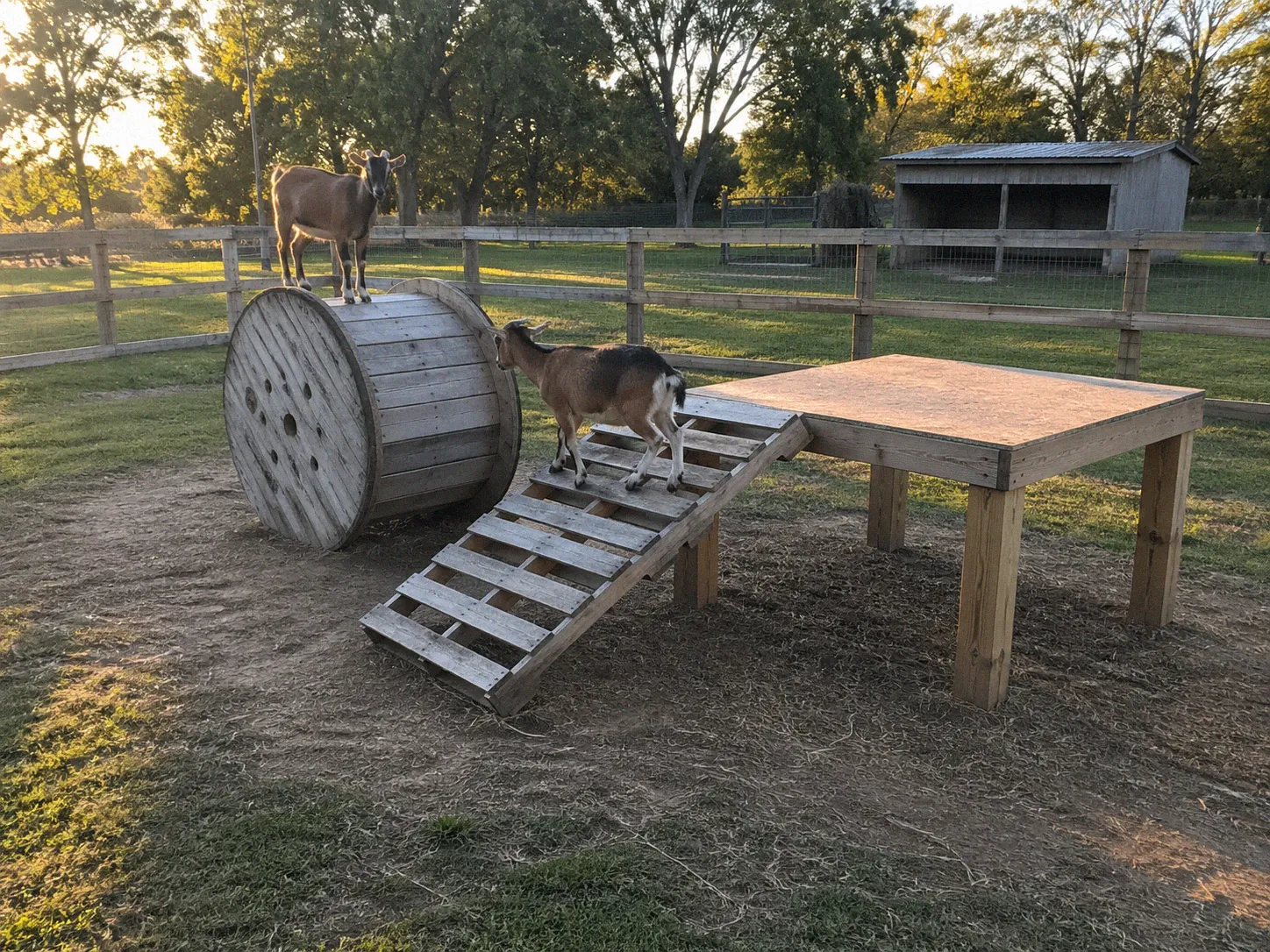
Redirect the climbing instinct rather than simply blocking every outlet. Goats with access to purpose-built climbing structures lose interest in trees pretty quickly.
Wooden cable spools turned on their sides, stacked shipping pallets, large rock mounds, and angled plywood ramps all serve the purpose. Place platforms at two or three staggered heights and space them far enough apart that dominant goats can’t monopolize every elevated spot in the pen.
Keep pastures stocked with adequate browse-height forage year-round. Goats head for the canopy mainly when ground-level food runs thin, and a well-managed pasture with diverse shrubs and mixed vegetation removes the primary incentive to climb.
Rotational grazing maintains that supply through every season. It takes hunger, the strongest motivator behind most tree climbing, out of the equation entirely.
Can You Train Goats Not to Climb Trees?
Not really — climbing is instinct, not a learned habit. The best strategy is managing the environment: limit tree access, offer climbing alternatives, and keep ground-level browse plentiful.
Save your goat training sessions for habits they can actually learn, like leading on a halter.
Final Thoughts
Goats are engineered from the hoof up to climb. Split toes with rubber-like grip pads, a low center of gravity, and explosive hind legs mean that any tree with accessible branches becomes a potential target.
The behavior stretches back thousands of years through wild ancestors that survived by moving across terrain no predator could follow. That climbing drive isn’t going away, so working with it beats trying to fight it.
For owners, the real question is not whether your goats can climb trees — they absolutely can. It’s whether letting them do so fits your specific setup.
If the trees in your pasture are sturdy, nontoxic, and wide-branching, allowing your smaller breeds to scramble through the lower limbs is harmless enrichment they’ll genuinely enjoy. If you have fragile fruit trees, toxic species, or heavy breeds that risk serious injury in a fall, a few strategic pruning cuts and a set of trunk wraps solve the problem cleanly and permanently.
Frequently Asked Questions
Yes. Kids start attempting to climb within their first week of life, and by two to three weeks they can scramble onto low branches with ease. Their light body weight, usually 5 to 10 pounds, means most branches hold them safely. Supervision still matters because kids get stuck more frequently than adults and can panic at heights.
Mountain goats (Oreamnos americanus) rarely climb trees. Their natural habitat is alpine rock and cliff faces above the treeline, where trees are sparse or absent entirely. Domestic goats descended from the wild bezoar ibex (Capra aegagrus) are far more likely to climb trees because they live in lowland environments where trees are everywhere.
In Morocco's argan groves, goats routinely reach 25 to 30 feet above the ground. On domestic farms, most tree climbing stays below 10 feet because common pasture trees lack the dense branching structure that argan trees provide. The limiting factor is almost always branch availability rather than the goat's physical ability.