| # | Product | Our Rating | ||
|---|---|---|---|---|
| 1 |  | Best OverallREDMOND Goat Mineral Supplement (5 lb) | ★★★★★ | Check Price |
| 2 |  | Wholesome Harvest 16% Goat Feed (10 lb) | ★★★★☆ | Check Price |
| 3 |  | Manna Pro Goat Treats | ★★★★☆ | Check Price |
Baby goats can absolutely drink cow milk, and plenty of farmers have raised healthy kids on it. It isn’t the perfect substitute for goat milk, but it works well in a pinch when a doe dies, rejects her kid, or just doesn’t produce enough.
Feeding Baby Goats Cow Milk
The first thing every newborn kid needs is colostrum from its mother within the first few hours of life. Colostrum is packed with antibodies that no substitute can replicate, so get that into the kid before you switch to anything else.
Once colostrum is handled, whole cow milk from the store is a solid backup. It has less fat and protein than goat milk, but the difference isn’t dramatic enough to cause problems for most kids.
Goat formula for dogs uses similar goat milk products, showing how versatile goat dairy is across species.
How Much Milk to Feed a Baby Goat?
During the first week, feed about 4 ounces every 4 hours, roughly 4 to 5 feedings per day. By week two, you can bump that up to 6 to 8 ounces per feeding and drop down to 4 feedings daily.
From 3 weeks to 8 weeks, gradually increase bottle size while reducing frequency to 3 times a day. Most kids are ready to wean between 8 and 12 weeks once they’re eating hay and grain consistently.
Watch your kid’s body condition as you go. If ribs are showing, increase the amount; if stools get loose, back off a little.
If the kid develops scours, having electrolyte solutions ready can prevent dehydration from becoming life-threatening.
Nutrition of the Young Goat: Birth to Breeding
Always use whole cow milk, never skim or 2%. The fat content matters because kids need those calories for growth and keeping warm.
Goat milk runs about 3.8% fat compared to whole cow milk at 3.25%. That gap is small enough that most kids do just fine without any adjustments.
If you want to close the gap, add a tablespoon of buttermilk per quart of cow milk. The cultures in buttermilk help the kid’s developing rumen break down the cow milk proteins more easily.
When and How Long to Bottle Feed Kids
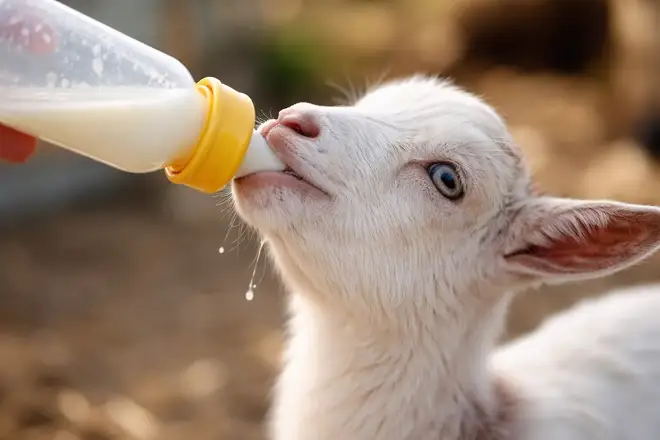
Use a Pritchard nipple on a standard soda bottle for the best results. These nipples mimic the shape and flow of a doe’s teat better than lamb nipples or human baby bottles.
Some kids take to the bottle immediately, while others fight it for a day or two. Hold the kid on your lap, tilt its head slightly up, and gently squeeze a few drops onto its tongue to get it started.
Start introducing hay around 2 weeks old and offer grain by 3 to 4 weeks. The sooner kids start eating solid food, the smoother the weaning process goes.
As their rumen develops, understanding what goats can digest helps you introduce the right solid foods at the right time.
Proper Care and Preparation of Cow’s Milk
Warm the milk to about 101 degrees Fahrenheit before each feeding. Cold milk can cause stomach cramps and scours in young kids.
Never microwave milk in the bottle because it creates hot spots that can burn the kid’s mouth. Heat it in a pot of warm water or use a bottle warmer instead.
Keep bottles and nipples clean between feedings. A quick wash with hot soapy water and a thorough rinse is all it takes to prevent bacterial growth.
Baby kittens can also drink goat milk in emergencies, and the same hygiene practices apply when bottle-feeding any young animal.
Growth Period After Weaning
Adult goats have zero need for milk of any kind. They’re ruminants that thrive on hay, browse, pasture, and supplemental grain.
Once a kid is weaned and eating solid food, fresh water is the only liquid it needs. Provide a loose mineral supplement formulated for goats, not cattle, since goats need copper and other trace minerals in different ratios.
Some owners add a splash of apple cider vinegar to the water for digestive support once kids are fully weaned.
The bottom line is straightforward: cow milk works as a temporary replacement for motherless kids when goat milk isn’t available. Keep it warm, keep it whole fat, and wean them onto solid feed as soon as they’re ready.
Frequently Asked Questions
During the first week, feed about 4 ounces every 4 hours. By week two, bump up to 6 to 8 ounces per feeding with 4 feedings daily. From 3 to 8 weeks, gradually increase bottle size while reducing to 3 feedings per day.
Use a Pritchard nipple on a standard soda bottle for best results. Start introducing hay around 2 weeks old and offer grain by 3 to 4 weeks. Most kids are ready to wean between 8 and 12 weeks.