| # | Product | Our Rating | ||
|---|---|---|---|---|
| 1 | 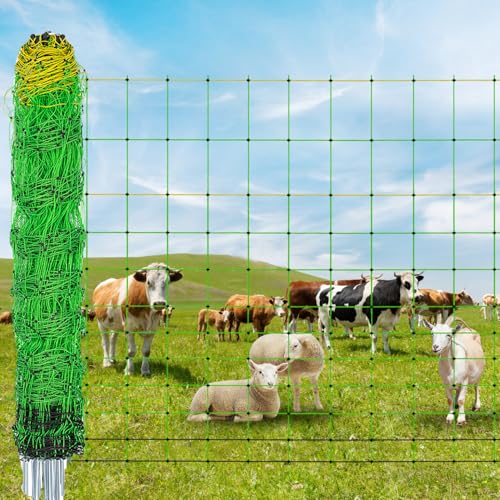 | Best OverallElectric Net Fence for Goats | ★★★★★ | Check Price |
| 2 |  | Wall-Mount Goat Hay Feeder | ★★★★☆ | Check Price |
| 3 |  | Farm Innovators Heated Water Bucket | ★★★★☆ | Check Price |
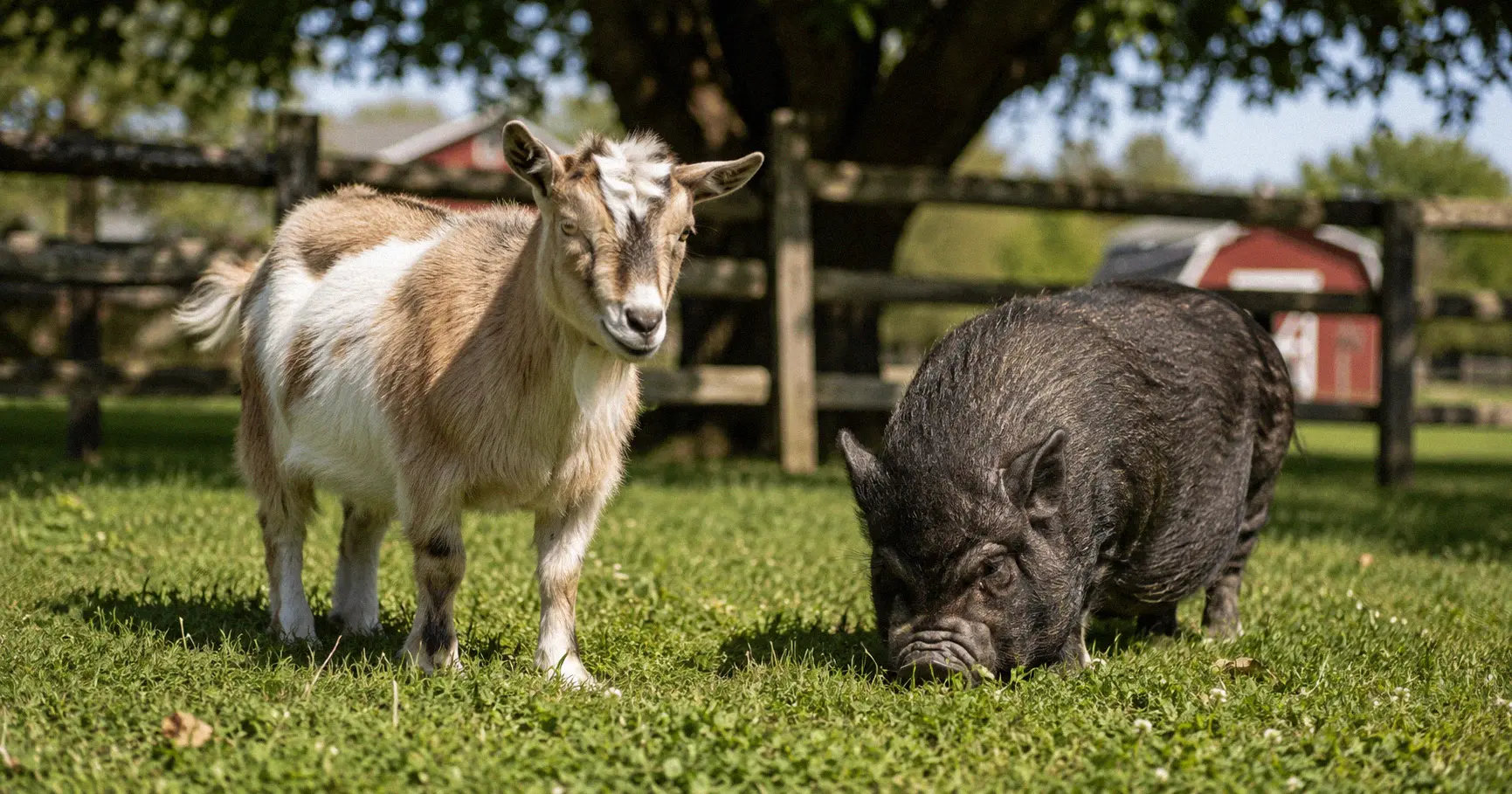
More hobby farmers and homesteaders are keeping pygmy goats and mini pigs on the same property than ever before. Both stay small enough for modest acreage, handle daily human interaction well, and genuinely crave companionship, making solitary housing a bad fit for either one.
But those surface-level similarities hide some real biological and behavioral differences that’ll make or break the arrangement within weeks. Pygmy goats are ruminant browsers with a four-chambered stomach, while mini pigs are monogastric omnivores that root through soil for a living.
Knowing what each species actually needs day to day is the most important step before putting them together.
Temperament Differences Between Pygmy Goats and Mini Pigs
Pygmy goats and mini pigs express dominance through very different signals, and those mismatched social cues are the top cause of early cohabitation failures.
Personality clashes cause more failed attempts than disease or diet mistakes combined. Knowing how each animal communicates and sorts out rank helps you predict whether a pairing will last.
How Pygmy Goats Behave in Groups
Pygmy goats are herd animals that need constant contact with companions. They settle social rank through head-butting, shoulder shoving, and mounting.
That behavior looks alarming but rarely causes injury among goats of similar size.
A solitary pygmy goat often develops excessive bleating, fence-pacing, and destructive chewing on feeders and structures. Pairing one with a different species helps ease that isolation stress, though most vets still recommend keeping at least two goats together.
A calm, low-prey-drive dog can be a good companion too, but it’s no substitute for another goat.
Mini Pig Social Patterns
Mini pigs bond fast, but they communicate through firm nudging, nipping, and varied grunts, not the head-to-head sparring goats rely on. Calmer breeds like the KuneKune and Juliana pig tend to accept other species more readily than Vietnamese Pot-Bellied pigs, which often get territorial around feeding areas.
Pigs sort out their hierarchy within the first 24 to 48 hours of meeting a new animal. A pig that sees a pygmy goat as lower-ranking will shove it away from water, feed, and shade throughout the day, and that’s why supervised introductions aren’t optional.
Do Pygmy Goats and Mini Pigs Form Real Bonds?
Yes, cross-species bonds between pygmy goats and mini pigs do develop, especially when both are introduced young. These friendships typically solidify over several weeks once each animal learns the other’s body language and neither feels threatened over food or resting areas.
Shared Living Arrangements That Actually Work
Your property’s layout directly affects daily management workload. Getting the spatial design wrong creates cascading problems with feeding, health, and behavior.
Pasture Cohabitation vs. Enclosed Pens
Open pasture works far better than a tight pen for keeping a pygmy goat and mini pig together. Goats browse on brush, weeds, and low-hanging branches while pigs root through topsoil for grubs and tubers, so the two rarely compete for the same food source in open pasture.
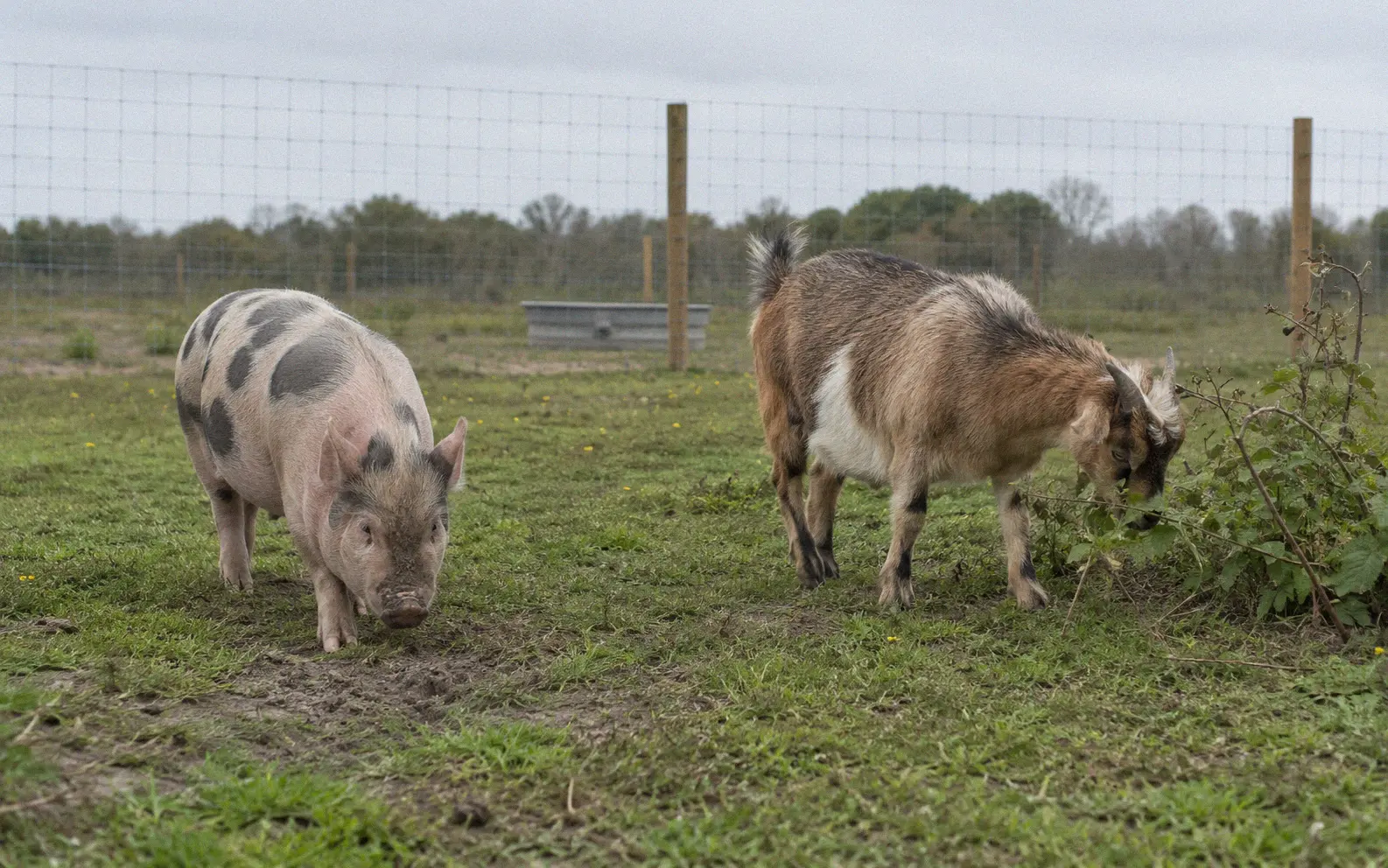
Enclosed pens amplify every source of tension because pigs churn the ground into slick mud within days, and goats struggle in wet conditions since prolonged moisture promotes hoof rot and bacterial infections. If that’s your only option, size it generously and rotate the animals through different sections to give the ground time to recover.
Minimum Space for Both Animals
A quarter acre is the practical starting point for one pygmy goat and one mini pig together. Each additional goat needs roughly 200 square feet of pasture, and each additional pig requires at least 50 square feet of rooting ground.
Tight setups magnify every problem on this list. Animals that get along fine on a half-acre lot may suddenly bite, charge, or guard resources when squeezed into a cramped run with no personal space.
Diseases and Parasites That Cross Between Species
The biggest hidden danger is cross-species parasite transfer and accidental copper poisoning from shared goat minerals.
Disease transmission gets the least attention from first-time owners, yet it causes the most severe outcomes. Both carry organisms that can jump the species barrier and escalate to a veterinary emergency within days.
Parasitic Risks from Pigs to Goats
Pigs harbor parasites, including Ascaris and Trichuris, that shed eggs into shared soil. Goats browsing where pigs have recently rooted can pick up those larvae, leading to intestinal inflammation, weight loss, and a thinning coat.
Rotational grazing cuts this risk by breaking the parasite lifecycle at its weakest point. Move goats through a section first, then cycle pigs in afterward.
This clears each species’ forage without cross-contamination.
Copper Toxicity and Mineral Imbalances
Goat mineral supplements and many commercial goat feeds contain copper sulfate at levels safe for ruminants but dangerous to pigs over time. A mini pig that regularly sneaks bites of goat feed accumulates copper in its liver until the damage becomes irreversible.
Sheep-safe mineral blocks remove copper entirely, but that leaves your pygmy goats deficient in a nutrient they need for immune function and coat quality. Complete separation at feeding time is the only reliable fix.
What Happens if a Mini Pig Eats Goat Feed?
Even small amounts of goat feed expose a mini pig to copper its liver can’t process efficiently. Over weeks of repeated access, copper accumulates silently until liver damage appears suddenly, marked by lethargy, appetite loss, and jaundice.
Veterinary Care for a Mixed Setup
Finding one vet who’s comfortable treating both small ruminants and mini pigs simplifies your whole routine. Large-animal vets typically handle goats well, while exotic-animal practitioners or swine specialists work better for mini pig care.
Each species follows a completely different vaccination and deworming schedule. Pygmy goats require CDT vaccinations and regular fecal egg counts to monitor barber pole worm loads, while mini pigs need protection against Erysipelas, Mycoplasma, and in some states Pseudorabies depending on regional disease pressure.
Dietary Needs and Separate Feeding Stations
Put simply, there’s no safe overlap between pygmy goat and mini pig diets, so they need fully separate feeding stations.
Feeding is where most mixed-species arrangements fall apart. Both animals will happily devour the other’s food any chance they get.
Pygmy Goat Nutritional Requirements
Pygmy goats do best on quality grass hay, natural browse from shrubs and brush, and a measured daily portion of goat-specific pellets. They also need free-choice access to a loose goat mineral supplement with copper, selenium, and zinc for immune and reproductive health.
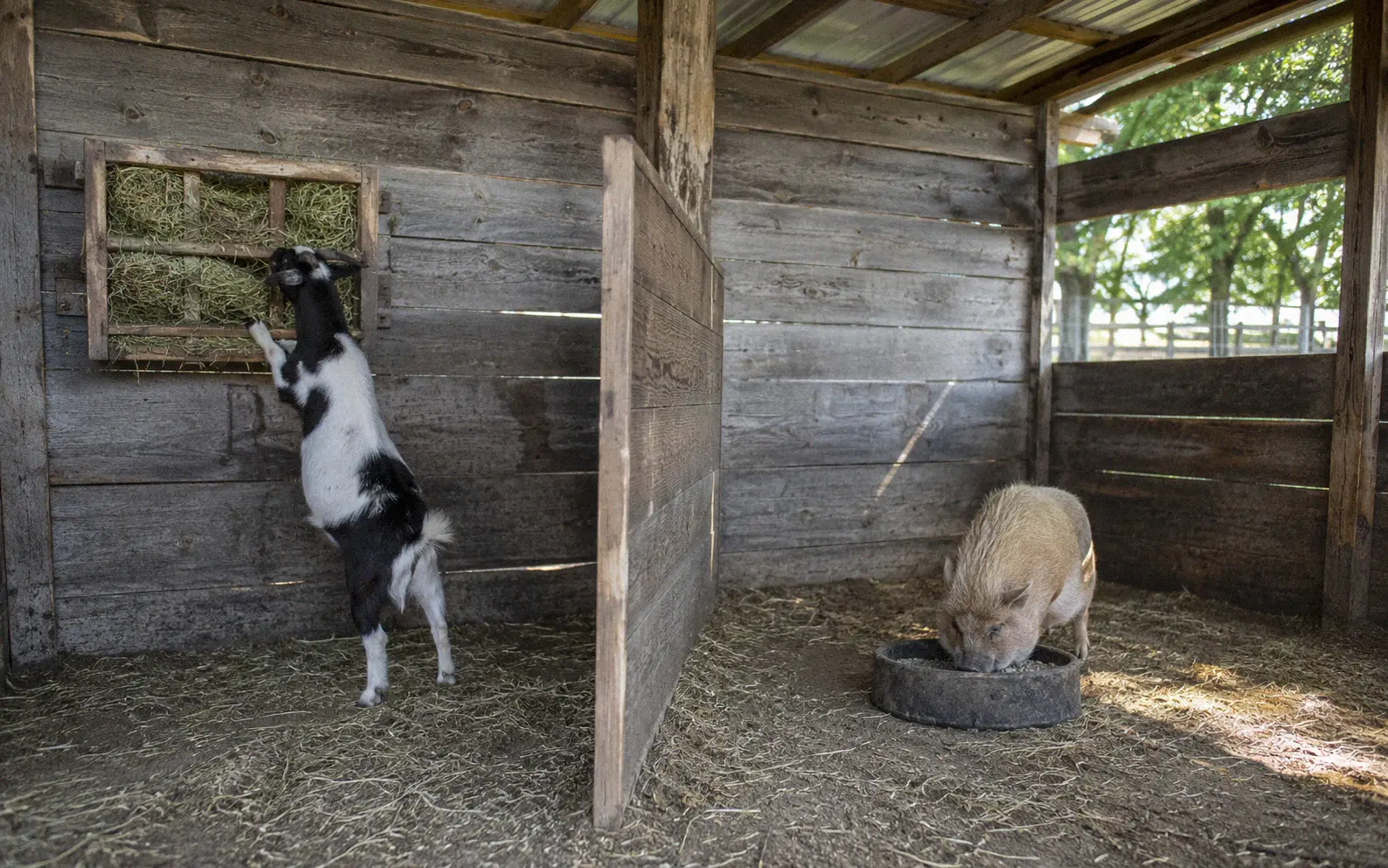
Their ruminant digestive system uses microbial fermentation in a four-chambered stomach to break down fibrous plant material. Feeding a pygmy goat grain-heavy pig rations disrupts rumen pH and can trigger ruminal acidosis, a painful metabolic emergency.
Mini Pig Dietary Basics
Mini pigs thrive on a formulated pellet that balances protein, fiber, and limited fat to prevent obesity. Leafy greens, raw vegetables, and small portions of low-sugar fruit round out the daily diet.
Unrestricted eating is the leading driver of joint disease, heart strain, and liver problems in mini pigs. A pig with open access to a goat hay feeder can gorge itself and develop intestinal compaction that needs emergency vet treatment.
Keeping Feed Separated
Stagger your feeding schedule or install physical barriers that only one species can navigate. A creep feeder with an opening too narrow for a pig’s broad snout keeps goat minerals and pellets safe without you standing guard.
Mounting goat feeders at shoulder height works too. Pygmy goats rear up comfortably while mini pigs can’t reach them.
Pick up all leftover feed within 20 to 30 minutes after each meal to eliminate the scavenging window that causes gradual copper buildup in pigs.
Shelter Design for Two Different Species
Pygmy goats need dry, draft-free housing with good ventilation and a raised sleeping platform off cold or damp ground. Moisture and ammonia from soiled bedding cause respiratory infections in goats faster than in almost any other backyard livestock.
Mini pigs prefer lower, enclosed shelters where they can burrow into deep straw or wood shavings. They handle humidity fine but overheat fast in summer without shade and a wallow or cooling pad.
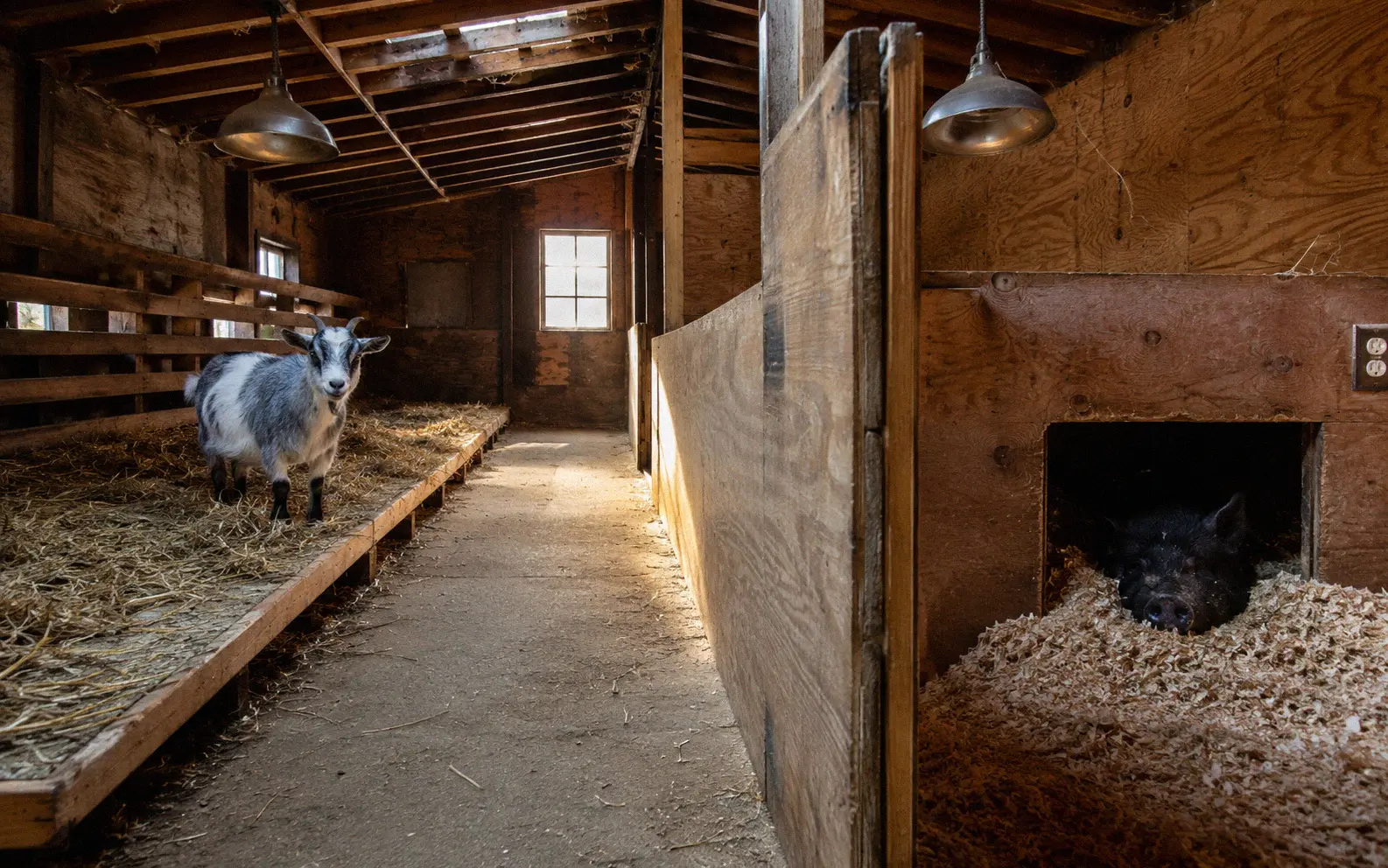
A shared barn split by a sturdy partition gives each species its own microclimate under one roof. Put the goat section on the higher, drier end with maximum airflow, and give the pig side a lower, better-insulated zone where deeper bedding stays effective longer.
Fencing Strategies for Goats and Pigs
Pygmy goats climb, jump, and squeeze through tight gaps while mini pigs root beneath fence lines and push through weak panels. Containing both behind the same perimeter means addressing vertical escapes and underground breakouts at once.
A four-foot welded wire fence with a strand of electric wire at pig snout height stops most mini pigs from pushing through. A second hot wire on the top rail keeps pygmy goats from climbing over the fence.
Bury the bottom six to eight inches of mesh below grade or pour a narrow concrete footer along the entire fence line to block rooting escapes. A determined mini pig can dig out in a single afternoon, and a goat will follow through within minutes.
A Gradual Introduction Timeline
A safe introduction takes two to three weeks of staged contact, and skipping steps usually backfires.
Rushing the first meeting between a pygmy goat and mini pig usually ends in charging or fear responses. A structured two-to-three-week timeline lets both animals adjust to each other’s presence and scent without face-to-face pressure.
During week one, house them in side-by-side enclosures separated by a fence panel so they can see and smell each other without physical contact. Look for relaxed postures and curiosity rather than fence-line aggression before moving on.
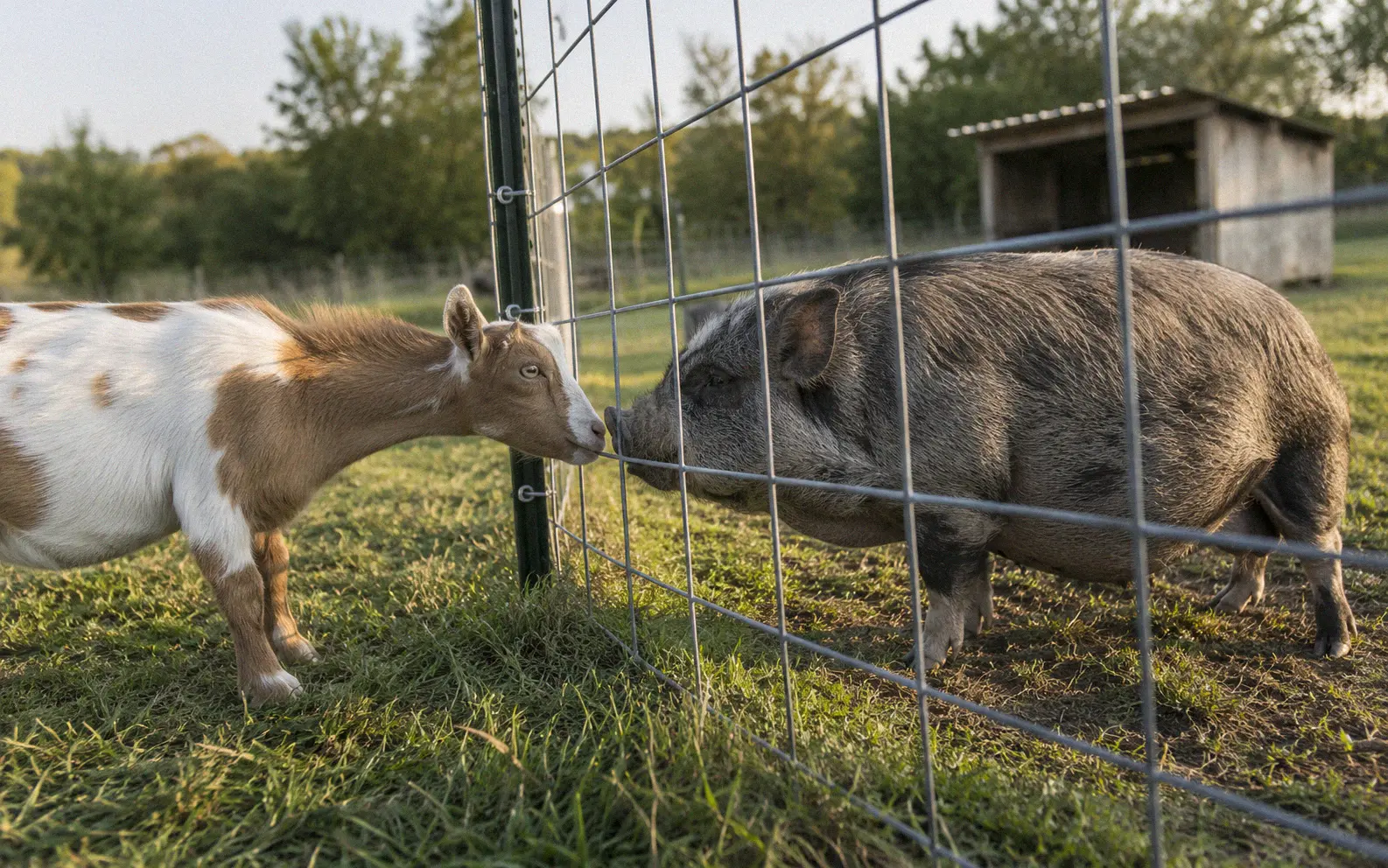
In week two, allow supervised face-to-face sessions of 15 to 30 minutes in neutral territory. Stay close enough to step in fast if the pig charges or the goat headbutts, and end each session before things escalate.
By week three, stretch shared time to several hours a day with both shelters open for retreat. Only remove the barrier for good after seven straight calm days, much like when introducing bucks to other goats.
Warning Signs That Cohabitation Isn’t Working
Not every pygmy goat and mini pig pairing will work out, no matter how closely you follow every guideline. Spotting incompatibility early prevents injuries, chronic stress, and lasting behavioral damage.
Persistent chasing, repeated biting that draws blood, or one animal refusing to eat near the other are clear signals the arrangement is failing. Unexplained weight loss over two to three weeks often points to chronic stress, even without visible aggression.
A pygmy goat that stops chewing cud or stands hunched in a corner has likely been bullied from its feed and grazing areas. A mini pig that vocalizes nonstop or abandons rooting may be dealing with sustained anxiety from the goat’s posturing.
Separate them immediately if you see open wounds, limping, or blood. Some animals just don’t have the temperament to share space with another species, and forcing it causes real suffering for both.
Final Thoughts
Keeping a pygmy goat and a mini pig together is doable when you respect that these are two fundamentally different species with distinct diets, disease risks, and shelter needs. Separate feeding, proper housing, secure fencing, and a patient introduction process tackle the root causes behind most cohabitation failures.
Owners who struggle with this pairing almost always trace the problem back to a shortcut in one of those four areas. Put in the time, infrastructure, and vet planning upfront, and you’ll set up two healthy animals to share a pasture comfortably for years.
Frequently Asked Questions
No. Goat minerals and feed contain copper levels that are toxic to pigs over time. Mini pig feed lacks the roughage and mineral balance goats need. Always maintain completely separate feeding stations with species-specific feed.
Plan for at least a quarter acre of outdoor area, with 200 square feet minimum per goat and 50 square feet per pig. Larger spaces reduce resource competition and lower stress for both animals.
Mini pigs are not typically aggressive toward goats, but they can bite when stressed or competing for food. A well-fed pig with adequate space rarely shows aggression. Remove any animal that repeatedly injures or threatens the other.
Yes. Goats need dry, elevated, draft-free shelters with good ventilation. Pigs prefer lower, enclosed areas where they can root into bedding. Shared shelters lead to stress, soiled bedding, and potential injuries from overnight crowding.