| # | Product | Our Rating | ||
|---|---|---|---|---|
| 1 | 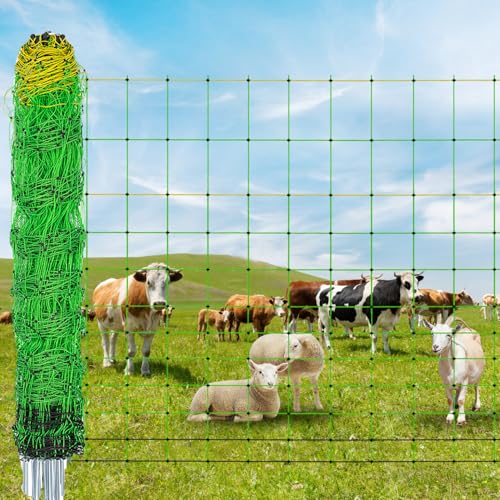 | Best OverallElectric Net Fence for Goats | ★★★★★ | Check Price |
| 2 |  | Wall-Mount Goat Hay Feeder | ★★★★☆ | Check Price |
| 3 |  | Farm Innovators Heated Water Bucket | ★★★★☆ | Check Price |
Keeping rams and goat bucks together isn’t recommended. I’ve seen the aftermath of this pairing too many times, and it usually ends with an injured or dead goat.
Rams are built differently than bucks, and that difference becomes dangerous when the two species share a pen.
If you’re short on space and thinking about housing them together, read this first.
Why rams and goat bucks are a bad mix
Rams are more aggressive than goat bucks. A ram’s natural instinct is to settle disputes by slamming its head into whatever is in front of it, and it does this with tremendous force.
Goat bucks butt heads too, but they’re lighter and less committed to the fight. The problem is the ram’s intensity, since sheep and goats usually share space without trouble.
A ram will keep driving forward long after a goat buck has tried to back off. The ram doesn’t recognize the goat’s submission signals because they’re different species with different body language.
This mismatch in fighting style and intensity is what leads to serious injuries. The goat buck ends up taking hits it was never built to absorb.
The skull difference that matters
This is the part most people don’t realize. Rams have a thick, bony plate at the base of their skull that acts as a built-in crash helmet.
It’s specifically evolved to absorb the impact of head-on collisions during breeding season competition.
Goat skulls are lighter and more narrow. They don’t have the same dense bone structure in the frontal area.
When a ram hits a goat buck with a full head-on charge, the goat’s skull can fracture.
Internal injuries are the real danger. A goat buck can take a hit from a ram and look fine on the outside, then stop eating a day later because of internal bruising or cracked ribs.
By the time you notice something is wrong, the damage may already be severe. Separate pens are the safest fix, and goat shelter setups make that easy to plan.
What happens during breeding season
If you think things are manageable outside of rut, breeding season changes everything. Rams in rut become single-minded about dominance, and they’ll attack anything they perceive as competition.
Bucks in rut are aggressive too, but a rutting ram is on another level. A 250-pound ram running at full speed can generate enough force to kill a goat buck with a single hit to the side.
Even outside of breeding season, hormonal surges can trigger sparring sessions that escalate quickly. A sturdy goat-proof fence doubles as good separation between combative males.
The safest approach is to keep rams and bucks separated year-round.
If you must keep them together
Some small farms genuinely don’t have the fencing or space for separate pens. If you absolutely must house a ram with goat bucks, take precautions.
Introduce them outside of breeding season in a neutral space where neither animal has established territory. Tethering either animal isn’t a safe alternative, and there are good reasons to avoid tethering goats.
Give them as much room as possible so the goat buck can retreat from confrontations. Have a large piece of plywood or a feed panel nearby to step between them if things escalate.
Watch them closely for the first several days. Check both animals daily for cuts, limping, or swelling around the head and rib area.
Any mixed pairing deserves that same close watch, including dogs and pygmy goats.
Separate them immediately during rut, no exceptions.
Feed separation is critical
Beyond the fighting issue, rams and goat bucks have different mineral needs that can cause real problems. Sheep are extremely sensitive to copper, and most goat minerals contain copper levels that are toxic to rams.
Set up separate feeding stations at least 10 feet apart. If possible, use headlocking stanchions so each animal eats only its own ration.
If separate stations aren’t practical, use a sheep-safe mineral for the shared group and supplement your goat bucks individually with copper boluses under your vet’s guidance. Getting the copper balance wrong can be fatal for the ram.
Final Thoughts
Rams and goat bucks aren’t good pen mates. The difference in skull structure, aggression level, and fighting style puts the goat buck at serious risk of injury or death.
If you can keep them separate, do it. If you can’t, introduce carefully, provide maximum space, separate during breeding season, and never share minerals between the two species.
Your goat’s life may depend on it.
Frequently Asked Questions
Keeping rams and goat bucks together isn't recommended. Rams have a thick bony plate in their skull that acts as a crash helmet, while goat skulls are lighter and more narrow. A full head-on charge from a ram can fracture a goat's skull.
There are very few benefits. The only practical reason would be limited space on a small farm. If you must house them together, introduce outside of breeding season, provide maximum space, and separate them immediately during rut.
Rams are more aggressive than goat bucks and don't recognize goat submission signals. The mismatch in fighting style leads to serious injuries. During breeding season, a 250-pound ram can generate enough force to kill a goat buck with a single hit.
The safest approach is to keep them separated year-round. If that isn't possible, introduce them in a large neutral space outside of breeding season, and separate them immediately during rut with no exceptions.