This question comes from two directions: people who spotted goat liver at a halal butcher or farmers market, and goat keepers staring at a fresh liver on slaughter day wondering if it is good to eat.
The answer to both is yes, goat liver is safe, genuinely nutritious, and delicious when handled right. The details worth knowing are the vitamin A ceiling, one pregnancy caution, and, for home-raised goats, a thirty-second inspection that decides whether that liver goes to the kitchen or the compost.
Is Goat Liver Safe to Eat?
Goat liver is eaten enthusiastically across much of the world, from South Asian fry-ups and Middle Eastern kibdeh to East African and Mediterranean preparations. Anywhere goat is on the menu, the liver is usually the prized cut.
Safety comes down to two simple rules. Cook it through, since liver can carry the same pathogens as any raw meat, and source it from a healthy animal, whether that means a reputable butcher or your own herd.
There is one sourcing nuance worth knowing: the liver is the body’s filter, so it concentrates medication residues. Commercial meat is covered by withdrawal regulations, and home-raised goats deserve the same respect, meaning a goat recently treated with dewormers or antibiotics should clear the full meat withdrawal time before slaughter.
Why Goat Liver Is Called Nature’s Multivitamin
Ounce for ounce, liver embarrasses nearly every other food on nutrient density. Goat liver delivers a heavy dose of heme iron, the most absorbable kind, along with vitamin B12 at many times the daily requirement, preformed vitamin A, copper, riboflavin, folate, and complete protein.
It manages that while staying lean and modest in calories, which is why traditional food cultures fed liver to growing children, new mothers, and anyone run down. For people fighting iron-deficiency anemia, few foods work harder.
The trace mineral load is the quiet bonus. Copper, selenium, and zinc all ride along in meaningful amounts, the same minerals that matter so much in a healthy goat’s own diet.
The Vitamin A Limit, and Who Should Be Careful
The one genuine caution with liver is the thing that makes it special: vitamin A. Liver stores it so densely that eating liver daily can, over time, push intake past safe levels.
The practical ceiling echoed by most health guidance is once or twice a week. At that frequency, liver is a nutritional powerhouse with margin to spare.
Pregnancy is the exception that deserves real respect. Because very high vitamin A intake in early pregnancy is linked to birth defects, health authorities advise limiting or avoiding liver, though fully cooked goat intestine is fine.
Children can eat liver in small, occasional portions, and the elderly benefit from its B12. The rule is the same for everyone: liver is a weekly treat, not a daily staple.
How to Inspect Liver from Your Own Goats
This is the section for slaughter day, and it is the part most articles skip. The liver is your single best window into the health of the animal, and it tells you plainly whether it should be eaten.
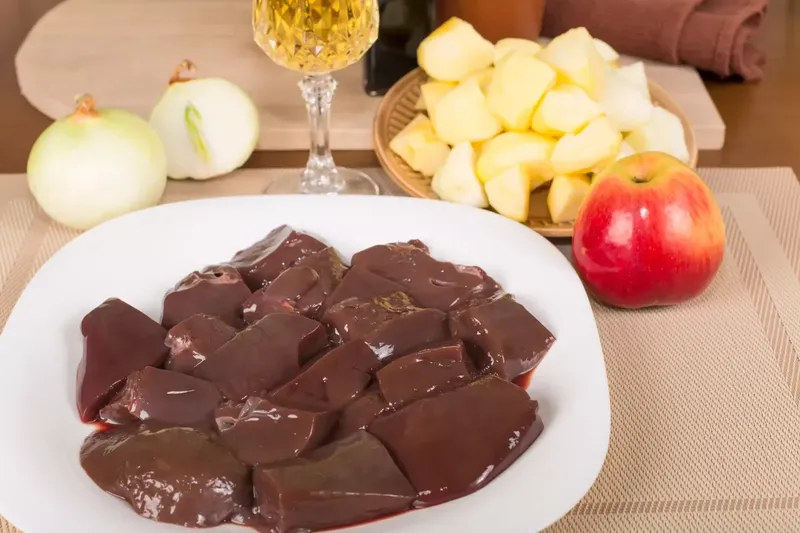
A healthy goat liver is smooth, glossy, deep reddish-brown, and consistent in color and texture, with clean edges. If that is what you are holding, it is kitchen-bound.
Discard the liver if you see any of these: white, yellow, or pale winding tracks through the tissue, which mean liver flukes have migrated through it; fluid-filled cysts or bladder-like sacs, which can be tapeworm stages; knots of thick greenish pus, which are abscesses; hard, gritty, calcified spots; or a liver that is overall pale, swollen, friable, or foul-smelling.
Finding fluke damage is also herd intelligence, because flukes thrive on wet pastures and snail habitat, and a tracked-up liver means the rest of the herd is exposed too. Fold that finding into your parasite control program and talk to your vet about flukicides, since standard barber pole dewormers do not touch flukes.
When in doubt, throw it out, and eat the rest of the goat with confidence. Liver problems do not condemn the carcass, only the organ itself.
How to Cook Goat Liver
Liver rewards a gentle hand and punishes overcooking, which turns any liver grainy and bitter. The classic preparation starts with a 30 to 60 minute soak in milk or lightly salted water to mellow the flavor.
Slice it thin, pat it dry, and cook it hot and fast, seared with onions in the universal style, or simmered into the spiced preparations that South Asian and Middle Eastern kitchens have perfected. Cooked through but just barely is the target, because the line between silky and shoe leather is about two minutes.
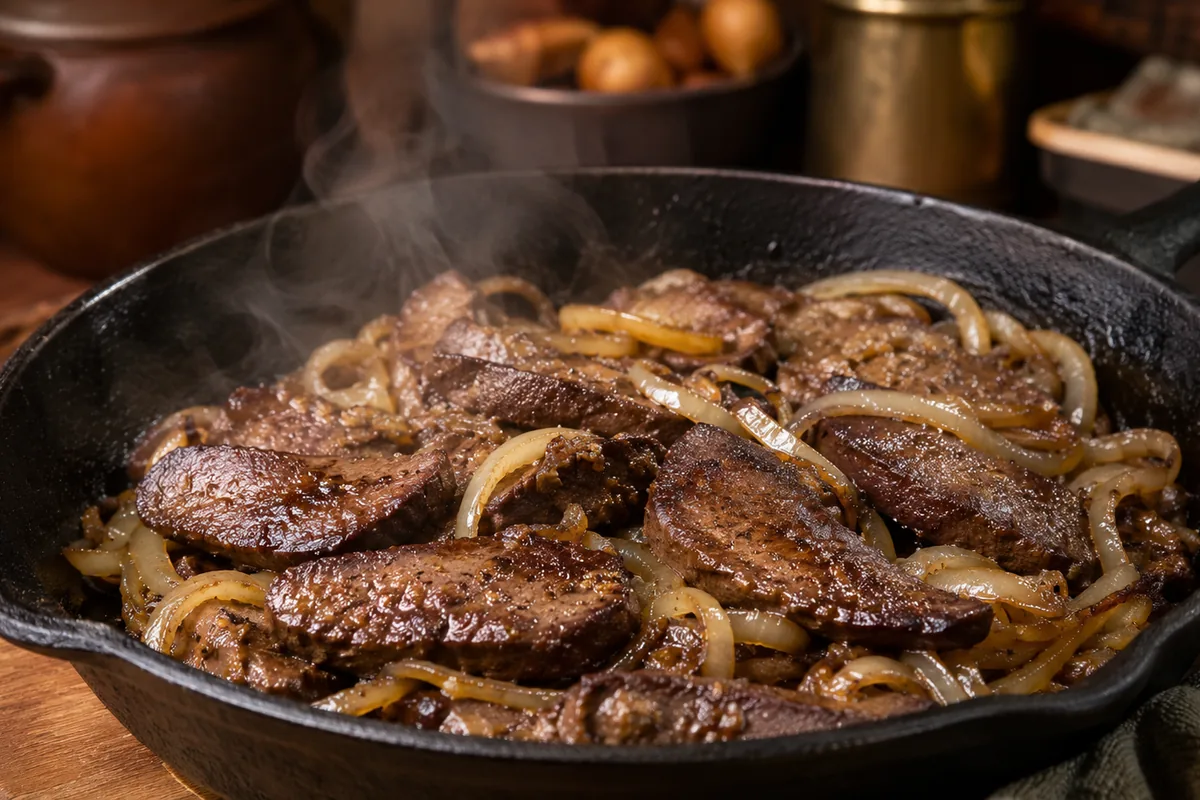
Strong companions are the traditional ones for a reason: onions, garlic, cumin, black pepper, chili, and a squeeze of lemon at the end. If you are new to liver entirely, goat liver with onions is the gentlest introduction the organ-meat world offers.
Sources and Further Reading
Compiled and cross-checked against established references:
- USDA FoodData Central, organ meat nutrient profiles
- NHS and FDA guidance on vitamin A and liver consumption in pregnancy
- Merck Veterinary Manual, liver flukes and parasitic conditions in goats
- University extension small ruminant slaughter and carcass inspection guides
Eaten weekly and inspected honestly, goat liver is one of the best things a goat can put on your table. Cook it kindly and it will return the favor.
Frequently Asked Questions
Yes, goat liver is one of the most nutrient-dense foods you can put on a plate, exceptionally rich in iron, vitamin B12, vitamin A, copper, and high-quality protein, while staying lean and low in calories. Cultures across the Middle East, South Asia, Africa, and the Mediterranean have prized it for generations. The only catch is its vitamin A concentration, which makes it an occasional food rather than a daily one.
Once or twice a week is the widely recommended ceiling for liver of any kind, goat included. Liver concentrates vitamin A so effectively that daily consumption over time can push intake into the excessive range. For most adults, a weekly liver meal captures the nutritional upside with plenty of safety margin.
Pregnant women are generally advised to limit or avoid liver, because very high vitamin A intake in early pregnancy is linked to birth defect risk. Health authorities like the NHS advise skipping liver during pregnancy entirely, and that caution applies to goat liver as much as beef or chicken liver.
Inspect it before anything else: a healthy liver is smooth, glossy, deep reddish-brown, and uniform in texture. Discard any liver with white or yellowish winding tracks, fluid-filled cysts, knots of abscess, hard calcified spots, or an overall pale, swollen, or crumbly appearance, since those point to liver flukes, tapeworm cysts, or infection. Also respect medication withdrawal times, because the liver is exactly where drug residues concentrate.
Goat liver tastes like a milder, slightly sweeter cousin of beef liver, with the same rich, mineral depth but less of the bitterness people object to. Young goat liver is more delicate than that of an older animal. A 30 to 60 minute soak in milk or lightly salted water before cooking softens the flavor further, which is the classic preparation trick.